Gizzard shad
Fish · Last reviewed 2026-08-11
A deep-bodied filter-feeding clupeid of American rivers and reservoirs, and the dominant forage fish in a very large number of them.
Background, not a fishing profile
This page is here so FishingHQ can describe a biological relationship accurately — usually because a fish covered elsewhere on the site feeds on this. It covers what it is, where it lives and the evidence behind that relationship, and deliberately nothing about methods, bait or tackle. Its presence here is not a statement that anybody fishes for it.
Gizzard shad are the forage species of the American interior. In reservoirs, large rivers and lakes across a huge area they are the most abundant fish present by biomass, and they support the largemouth bass, striped bass, catfish and crappie fisheries built on top of them.
The species gets its name from a muscular, gizzard-like stomach used to grind the detritus, algae and plankton it filters from the water. That diet means it does not compete with the predators that eat it, and it converts material nothing else can use into a large-bodied prey fish.
The complication for predators is size. Gizzard shad grow quickly and reach a body depth that puts adults beyond the gape of most of the fish that eat them, so predation is concentrated on the young of the year — which is why shad recruitment timing, rather than shad abundance, tends to be what determines a season's fishing.
The species is included because it appears by name in the recorded diets of several catalogue species and because those edges had nothing to point at.
Identification
No photograph of Gizzard shad has passed identity review yet, so none is shown. A photograph is published only once somebody has checked the animal in it against the diagnostic features described on this page.
- Scientific name
- Dorosoma cepedianum
- Family
- Clupeidae
- Water
- Freshwater, Brackish
- Conservation status
- Least Concern
- Regions
- North America
- Deep, laterally compressed silver body with a small, blunt, overhanging snout and a subterminal mouth.
- The last ray of the dorsal fin is drawn out into a long, thin filament — the most reliable field character.
- A dark shoulder spot behind the gill cover, prominent in young fish and fading with age.
- Strongly serrated belly keel, and no teeth in the jaws.
Size
- Typical
- 20–35 cm
- Large
- up to about 50 cm
Lifecycle and reproduction
Grows very fast in the first year, matures at two to three years and lives to about six or seven. Year-class strength varies enormously, and a strong shad year class changes the growth of every predator in the system.
Spawns in spring and early summer in shallow water, releasing adhesive eggs near the surface over any available substrate. Spawning is prolific and the resulting young of the year appear in immense numbers.
Feeding and senses
Filter-feeds on phytoplankton, zooplankton and organic detritus, grinding the material in a muscular gizzard-like stomach. Adults are almost entirely detritivorous and take no particulate animal prey of any size.
Vision and the lateral line coordinate dense shoaling. Because it filter-feeds, the species has no hunting sensory specialisation, and it cannot be caught by conventional angling for the same reason.
Through the year
Shoals in open water through the warm months and concentrates in deeper water in winter, where cold snaps can cause large die-offs. Those winter die-offs are themselves a predictable feeding event for predators and scavengers.
Distribution
Central and eastern North America, from the Great Lakes and the Mississippi basin south to the Gulf of Mexico and into Mexico, in rivers, reservoirs, lakes and brackish coastal water.
This is a biological range — where the species occurs, not a prediction that you will catch one. To browse the fishing geography FishingHQ holds, start at fishing places.
Why anglers care
Not caught on rod and line — it filter-feeds — but taken with cast nets by anglers for live and cut bait where permitted. Its significance is as the prey base that determines predator growth and location across much of the American interior.
Handling and returning
Dies almost immediately out of water and is difficult to keep alive even in a good bait tank, which is why it is more often used cut than live. Cast-netting rules vary by state and water.
Where to go next
Similar and related fish
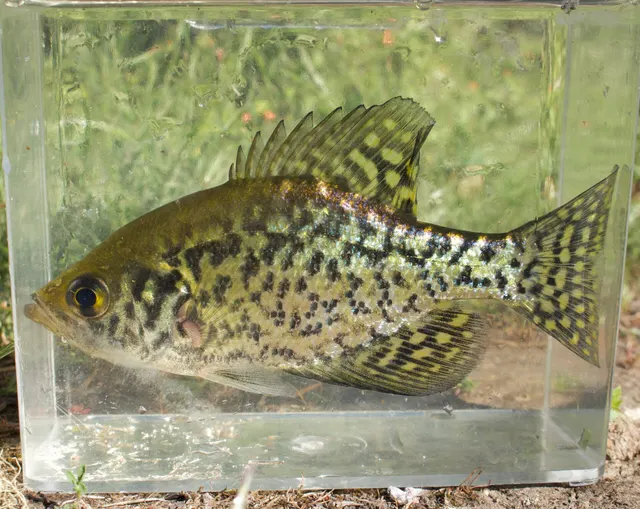 Black crappieYoung-of-year gizzard shad are a principal crappie prey through the warmer months, and the arrival of a strong shad year class changes crappie growth for a season.
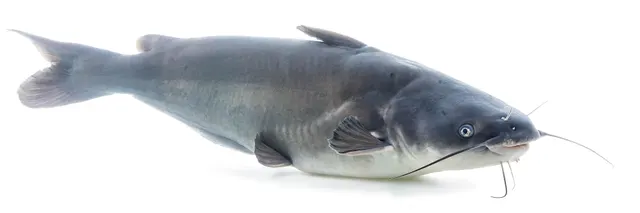 Blue catfishGizzard shad are the dominant prey of blue catfish in the reservoir systems where both occur, and winter shad die-offs are a substantial feeding event for them.
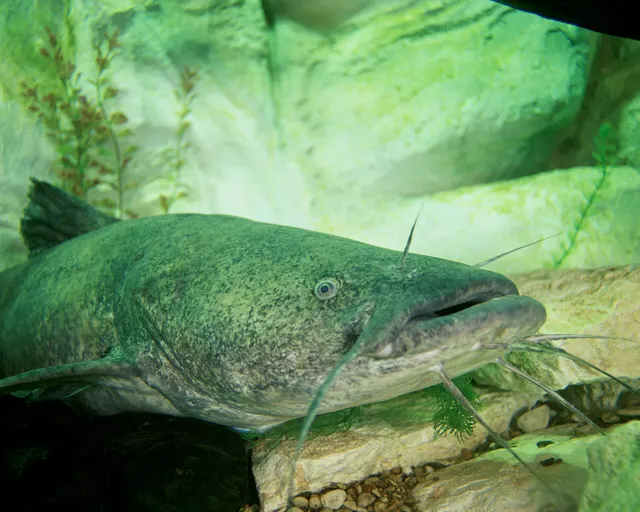 Flathead catfishFlathead catfish take live fish almost exclusively as adults, and gizzard shad are a principal item where they are abundant.
Where you will find it
Sources and evidence
- FishBase: a global information system on fishes — Froese, R. and D. Pauly, eds. — FishBase Consortium (Scientific institute)Relied on for: Species identity, binomial, family placement, size, distribution and recorded biology for this species.States this directlyPassage read and verified
- FAO Species Identification Guides for Fishery Purposes and the FAO Species Catalogues — Food and Agriculture Organization of the United Nations (Scientific institute)Relied on for: The regional species account describing identity, distribution and the role of this species in the fisheries and food webs it belongs to.States this directlyCitation checked — the work exists and is described correctly
Why the 4 connections on this page are here, and the sources
Similar and related fish
Backed by research — 3 connections
Supported by peer-reviewed research or fisheries science. The sources are listed and can be checked.
Black crappie
Recorded diet evidence identifies Dorosoma cepedianum as a food item of this predator at species level. The edge is written at that granularity and no further.
- FishBase: a global information system on fishes — Froese, R. and D. Pauly, eds. — FishBase Consortium (Scientific institute)Relied on for: Food items recorded for this predator, including Dorosoma cepedianum.States this directlyPassage read and verified
- FAO Species Identification Guides for Fishery Purposes and the FAO Species Catalogues — Food and Agriculture Organization of the United Nations (Scientific institute)Relied on for: Species account describing the diet of this predator in the region where Dorosoma cepedianum occurs.Background and mechanism onlyCitation checked — the work exists and is described correctly
Blue catfish
Recorded diet evidence identifies Dorosoma cepedianum as a food item of this predator at species level. The edge is written at that granularity and no further.
- FishBase: a global information system on fishes — Froese, R. and D. Pauly, eds. — FishBase Consortium (Scientific institute)Relied on for: Food items recorded for this predator, including Dorosoma cepedianum.States this directlyPassage read and verified
- FAO Species Identification Guides for Fishery Purposes and the FAO Species Catalogues — Food and Agriculture Organization of the United Nations (Scientific institute)Relied on for: Species account describing the diet of this predator in the region where Dorosoma cepedianum occurs.Background and mechanism onlyCitation checked — the work exists and is described correctly
Flathead catfish
Recorded diet evidence identifies Dorosoma cepedianum as a food item of this predator at species level. The edge is written at that granularity and no further.
- FishBase: a global information system on fishes — Froese, R. and D. Pauly, eds. — FishBase Consortium (Scientific institute)Relied on for: Food items recorded for this predator, including Dorosoma cepedianum.States this directlyPassage read and verified
- FAO Species Identification Guides for Fishery Purposes and the FAO Species Catalogues — Food and Agriculture Organization of the United Nations (Scientific institute)Relied on for: Species account describing the diet of this predator in the region where Dorosoma cepedianum occurs.Background and mechanism onlyCitation checked — the work exists and is described correctly
Where you will find it
Backed by research — 1 connection
Supported by peer-reviewed research or fisheries science. The sources are listed and can be checked.
The Great Lakes
Occurrence of the species in this system or along this coast: a statement about the animal's distribution, not a venue recommendation.
- FishBase: a global information system on fishes — Froese, R. and D. Pauly, eds. — FishBase Consortium (Scientific institute)Relied on for: Distribution, salinity tolerance and habitat association recorded for the species, including its occurrence in this system.States this directlyPassage read and verified
- The IUCN Red List of Threatened Species — International Union for Conservation of Nature (Conservation authority)Relied on for: Assessment and range description for the species, including the waters in which it occurs.Background and mechanism onlyCitation checked — the work exists and is described correctly
How FishingHQ labels evidence is explained in the evidence policy.