Rainbow smelt
Fish · Last reviewed 2026-08-11
A small, slender, cold-water smelt of northern lakes and coastal rivers, and the deep-water forage fish that lake trout and burbot depend on.
Background, not a fishing profile
This page is here so FishingHQ can describe a biological relationship accurately — usually because a fish covered elsewhere on the site feeds on this. It covers what it is, where it lives and the evidence behind that relationship, and deliberately nothing about methods, bait or tackle. Its presence here is not a statement that anybody fishes for it.
Rainbow smelt are small silver fish of cold water, anadromous in their native coastal range and landlocked across a very large number of northern lakes, some naturally and many by introduction.
In lakes they occupy deep, cold water through the summer and come into the shallows and up tributary streams to spawn at night in early spring — a run that is a substantial local event in parts of Canada and the northern United States, fished with dip nets under lights.
Their importance to FishingHQ is as prey. Lake trout, burbot, walleye, brook trout and landlocked salmon feed on smelt heavily, and in many lakes smelt abundance is the main determinant of how fast lake trout grow.
Smelt introductions have not been benign. In several systems introduced smelt have caused declines in native forage species and in the recruitment of native fish through predation on eggs and larvae, which is why moving them between waters is prohibited in many jurisdictions.
Identification
No photograph of Rainbow smelt has passed identity review yet, so none is shown. A photograph is published only once somebody has checked the animal in it against the diagnostic features described on this page.
- Scientific name
- Osmerus mordax
- Family
- Osmeridae
- Water
- Moves between fresh and salt water, Freshwater
- Conservation status
- Least Concern
- Regions
- North America, Arctic & Subarctic
- Slender silver fish with a distinct adipose fin behind the dorsal, marking it as a smelt.
- Large mouth for its size, with noticeable teeth on the jaws and prominent fangs on the tongue.
- Iridescent purple, blue and pink sheen along the flanks in fresh fish, which gives the species its name.
- Body translucent enough in life that the internal organs are faintly visible.
Size
- Typical
- 15–20 cm
- Large
- up to about 30 cm
Lifecycle and reproduction
Matures at two to three years and generally lives to about six. Growth and maximum size vary considerably between landlocked populations depending on temperature and food.
Spawns at night in early spring, running into tributary streams and onto shallow gravel shorelines as soon as the ice goes, and laying adhesive eggs that attach to gravel and debris. Spawning runs are brief and intense.
Feeding and senses
Feeds on zooplankton, mysids and amphipods, and larger individuals take small fish including juvenile smelt and the eggs and larvae of other species — the behaviour behind their impact on native fish where introduced.
Adapted to feeding in low light and at depth, with large eyes and effective night vision; the spawning run itself is nocturnal. The lateral line supports the shoaling that characterises them in open water.
Through the year
Occupies deep, cold water through summer and moves shallow in spring to spawn and again in autumn as surface water cools. Lake trout and burbot fishing patterns track those movements closely.
Distribution
Northern North America: coastal waters and rivers from New Jersey to Labrador and across the Arctic coast, together with extensive landlocked populations in the Great Lakes and northern inland lakes, some native and many introduced.
This is a biological range — where the species occurs, not a prediction that you will catch one. To browse the fishing geography FishingHQ holds, start at fishing places.
Why anglers care
Taken with dip nets during spawning runs and through the ice in some fisheries, chiefly for the table and for bait rather than as sport. Its significance here is as the deep-water forage base for the predators anglers do target.
Handling and returning
Soft, easily damaged and quick to die. Moving live smelt between waters is prohibited in many jurisdictions because of their documented effect on native fish; check locally before transporting any.
Where to go next
Similar and related fish
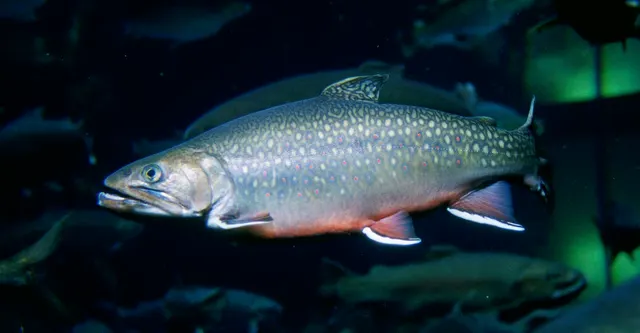 Brook troutWhere smelt occur, larger brook trout feed on them heavily, which is what produces the exceptional sizes reached in some smelt lakes.
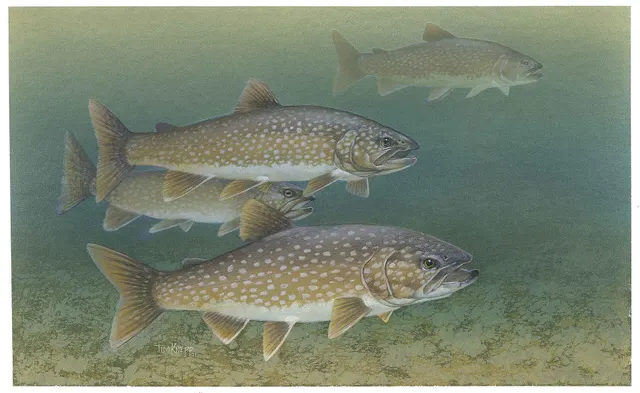 Lake troutWhere smelt have been introduced they frequently replace cisco as the principal prey, with consequences for lake trout growth and for the native forage community.
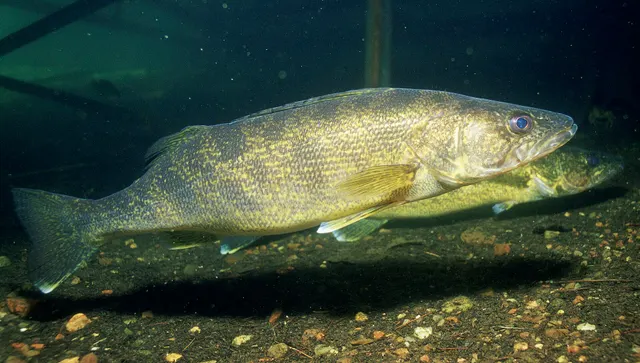 WalleyeSmelt are a principal walleye prey in northern lakes where they occur, taken in low light in the same conditions that suit the walleye's own vision.
Where you will find it
Sources and evidence
- FishBase: a global information system on fishes — Froese, R. and D. Pauly, eds. — FishBase Consortium (Scientific institute)Relied on for: Species identity, binomial, family placement, size, distribution and recorded biology for this species.States this directlyPassage read and verified
- FAO Species Identification Guides for Fishery Purposes and the FAO Species Catalogues — Food and Agriculture Organization of the United Nations (Scientific institute)Relied on for: The regional species account describing identity, distribution and the role of this species in the fisheries and food webs it belongs to.States this directlyCitation checked — the work exists and is described correctly
Why the 4 connections on this page are here, and the sources
Similar and related fish
Backed by research — 3 connections
Supported by peer-reviewed research or fisheries science. The sources are listed and can be checked.
Brook trout
Recorded diet evidence identifies Osmerus mordax as a food item of this predator at species level. The edge is written at that granularity and no further.
- FishBase: a global information system on fishes — Froese, R. and D. Pauly, eds. — FishBase Consortium (Scientific institute)Relied on for: Food items recorded for this predator, including Osmerus mordax.States this directlyPassage read and verified
- FAO Species Identification Guides for Fishery Purposes and the FAO Species Catalogues — Food and Agriculture Organization of the United Nations (Scientific institute)Relied on for: Species account describing the diet of this predator in the region where Osmerus mordax occurs.Background and mechanism onlyCitation checked — the work exists and is described correctly
Lake trout
Recorded diet evidence identifies Osmerus mordax as a food item of this predator at species level. The edge is written at that granularity and no further.
- FishBase: a global information system on fishes — Froese, R. and D. Pauly, eds. — FishBase Consortium (Scientific institute)Relied on for: Food items recorded for this predator, including Osmerus mordax.States this directlyPassage read and verified
- FAO Species Identification Guides for Fishery Purposes and the FAO Species Catalogues — Food and Agriculture Organization of the United Nations (Scientific institute)Relied on for: Species account describing the diet of this predator in the region where Osmerus mordax occurs.Background and mechanism onlyCitation checked — the work exists and is described correctly
Walleye
Recorded diet evidence identifies Osmerus mordax as a food item of this predator at species level. The edge is written at that granularity and no further.
- FishBase: a global information system on fishes — Froese, R. and D. Pauly, eds. — FishBase Consortium (Scientific institute)Relied on for: Food items recorded for this predator, including Osmerus mordax.States this directlyPassage read and verified
- FAO Species Identification Guides for Fishery Purposes and the FAO Species Catalogues — Food and Agriculture Organization of the United Nations (Scientific institute)Relied on for: Species account describing the diet of this predator in the region where Osmerus mordax occurs.Background and mechanism onlyCitation checked — the work exists and is described correctly
Where you will find it
Backed by research — 1 connection
Supported by peer-reviewed research or fisheries science. The sources are listed and can be checked.
The Great Lakes
Occurrence of the species in this system or along this coast: a statement about the animal's distribution, not a venue recommendation.
- FishBase: a global information system on fishes — Froese, R. and D. Pauly, eds. — FishBase Consortium (Scientific institute)Relied on for: Distribution, salinity tolerance and habitat association recorded for the species, including its occurrence in this system.States this directlyPassage read and verified
- The IUCN Red List of Threatened Species — International Union for Conservation of Nature (Conservation authority)Relied on for: Assessment and range description for the species, including the waters in which it occurs.Background and mechanism onlyCitation checked — the work exists and is described correctly
How FishingHQ labels evidence is explained in the evidence policy.