Common periwinkle
Fish · Last reviewed 2026-08-12
The small dark sea snail of rocky shores across the north Atlantic, gathered by hand for centuries, and a grazer rather than a filter feeder — which changes its safety profile substantially.
Safety: tides and being cut off — can cause serious injury or death. 3 more points apply here.
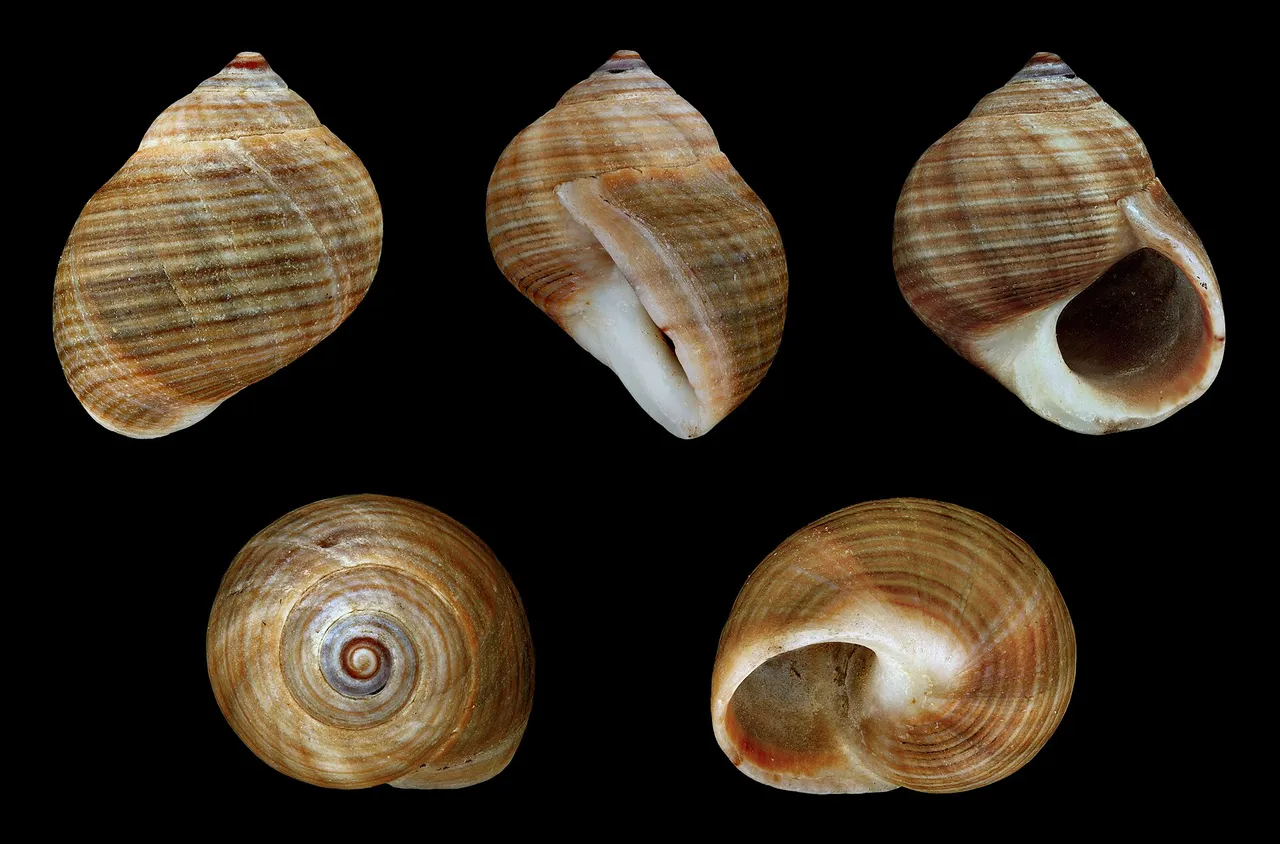
How this was identified, and who took it
Identified by: Identified on shell characters: a solid conical-ovate outline with a pointed apex, fine spiral grooving with darker banding over brown, an ovate aperture with a white columella and dark interior, and no umbilicus. These separate Littorina littorea from the smaller, blunter flat and rough periwinkles of the same shores. RECORDED AS AN EMPTY SHELL. A Pliocene fossil of the same species was rejected in its favour.H. Zell — CC BY-SA 3.0, via Wikimedia Commons — source, licence
Catching Common periwinkle
Everything here on fishing for it. Each entry opens the page behind it.
- Ground
Winkles are the small, dark, thick-shelled snails that cover rock, weed and crevices on sheltered rocky shores. They are gathered by hand, boiled and eaten with a pin, and the practice is old, widespread and almost entirely undocumented in modern fishing writing.
Biologically they matter here for one reason that is easy to miss: a periwinkle is a GRAZER, not a filter feeder. It rasps algae off rock with a radula rather than pumping and filtering seawater, so it does not concentrate algal biotoxins the way a mussel or a cockle does. That does not make it exempt from contamination — microbiological risk from sewage-affected shores is real for anything gathered from them — but it does mean the biotoxin framework that dominates bivalve safety does not apply in the same way, and saying so accurately is more useful than treating every shellfish alike.
They are also a serious ecological actor. Periwinkle grazing is one of the main forces controlling algal cover on north Atlantic rocky shores, and where they are removed at scale the shore looks different.
Identification
- Scientific name
- Littorina littorea
- Family
- Littorinidae
- Water
- Saltwater
- Conservation status
- Not assessed
- Regions
- Britain & Ireland, Northern Europe, Western Europe, North America, Arctic & Subarctic
- A solid, conical, spiralled shell with a pointed apex, usually 1–3 cm high.
- Dark grey-brown to black, sometimes with fine spiral banding; worn shells can appear paler.
- A smooth, rounded aperture with a dark horny operculum sealing it when withdrawn.
- Distinguished from the flat periwinkle, which is smaller, rounder, brightly coloured and lives on wracks, and from the rough periwinkle, which is smaller and ridged.
- Found on rock, boulder and weed on sheltered and moderately exposed shores, often in large numbers.
Size
- Typical
- 1.5–2.5 cm shell height.
- Large
- Over 3 cm.
Exceptional: Shell heights around 5 cm are recorded, though animals of that size are unusual and slow-grown.
Winkles through the year: present always, worth gathering sometimes
Periwinkles are sedentary, abundant and available year-round, so their seasonality is a matter of condition, access and shore behaviour rather than of presence.
THE ANIMALS MOVE UP AND DOWN THE SHORE WITH CONDITIONS rather than with the calendar. In hot dry weather and in hard frost they congregate in damp crevices, under weed and in pools; in mild wet conditions they spread out and graze actively across open rock. A shore that looks empty in July heat is not.
GRAZING ACTIVITY FOLLOWS WETNESS. Winkles feed when the rock is covered or wet and seal behind the operculum when it dries, so the visible animals at any moment are a function of how long the tide has been off the rock.
BREEDING IS EXTENDED RATHER THAN A SINGLE EVENT, with egg capsules released into the water over a long season, so there is no sharp spawning shutdown of the kind a bivalve has.
CONDITION IS BEST IN THE COLDER HALF OF THE YEAR in much of the range, which is the basis of the traditional winter and early-spring gathering season and is a food judgement rather than a biological constraint.
AND THE TIDE CYCLE IS THE REAL CALENDAR. Spring tides expose more shore for longer, which is when gathering happens, and the fortnightly rhythm matters far more than the month.
Backed by research — why, and the sources (2)
Supported by peer-reviewed research or fisheries science. The sources are listed and can be checked.
- The Fishes of the British Isles and North-West Europe — Macmillan, 1969 (Reference work)Relied on for: Distribution, habitat association, depth, ground preference and biology of fishes in British and north-west European waters.States this directlyCitation checked — the work exists and is described correctly
- FishBase: a global information system on fishes — Froese, R. and D. Pauly, eds. — FishBase Consortium (Scientific institute)Relied on for: Distribution, habitat association, depth range, size, reproduction and life-history parameters recorded for the species.States this directlyPassage read and verified
How big winkles get, and why the shore decides
A common periwinkle typically reaches one and a half to two and a half centimetres of shell height, with animals over three centimetres large and shells around five centimetres recorded — though animals of that size are unusual and slow-grown.
MEASUREMENT IS SHELL HEIGHT, apex to the base of the aperture, and it is the dimension any gauge or guidance uses.
SHORE POSITION AND EXPOSURE DECIDE GROWTH RATE. Animals on exposed shores grow more slowly and stay smaller than those in sheltered conditions, because feeding time is shorter and energy goes into holding on. Two populations a few hundred metres apart on the same headland can differ visibly in size.
GROWTH IS SLOW AND ANIMALS LIVE SEVERAL YEARS, so a large winkle is an old one and a shore stripped of large animals takes years rather than months to look the same again.
AND SIZE IS THE GATHERER'S ONLY REAL LEVER. There is no size gauge in most places and no rule to follow, so leaving the small ones and taking a scatter across a wide area is the whole of the restraint available. It matters more than it sounds: periwinkle grazing is one of the principal controls on algal cover on north Atlantic rocky shores, and a cleared patch changes visibly within a season.
Backed by research — why, and the sources (2)
Supported by peer-reviewed research or fisheries science. The sources are listed and can be checked.
- The Fishes of the British Isles and North-West Europe — Macmillan, 1969 (Reference work)Relied on for: Distribution, habitat association, depth, ground preference and biology of fishes in British and north-west European waters.States this directlyCitation checked — the work exists and is described correctly
- FishBase: a global information system on fishes — Froese, R. and D. Pauly, eds. — FishBase Consortium (Scientific institute)Relied on for: Distribution, habitat association, depth range, size, reproduction and life-history parameters recorded for the species.States this directlyPassage read and verified
Handling winkles: keep them breathing, purge them, and check they are alive
Winkles are the most forgiving catch on FishingHQ to handle and there are still three things that go wrong.
DO NOT SEAL THEM. Winkles travel alive in a net bag or an unsealed bucket, cool and damp. A sealed container or a sit in the sun kills them, and standing fresh water kills them faster.
PURGE IN CLEAN SEAWATER. Several hours or overnight in clean cool seawater lets the animals clear grit from the gut. Collect the water away from the gathering ground and away from any outfall. Purging removes grit and nothing else — it is not a safety step and treating it as one is the commonest misunderstanding about gathered shellfish.
CHECK THEY WITHDRAW. A live winkle pulls back behind its operculum when touched. Anything hanging limp is dead and goes back to the sea or in the bin before cooking, not after.
THE SAFETY PROFILE IS A GRAZER'S. A periwinkle rasps algae off rock rather than filtering seawater, so it does not concentrate algal biotoxins in the way a mussel or a cockle does, and the shellfish poisoning framework is not the primary concern. Microbiological contamination from sewage-affected shores is real and is controlled by where you gather rather than by what you do afterwards.
AND COOKING IS A SHORT BOIL, eaten with a pin. Overcooking makes them rubbery, and the operculum should be lifted out rather than eaten.
Official guidance — why, and the sources (2)
Stated by a fisheries authority, scientific institute or recognised angling body. Authoritative, but summarising rather than demonstrating.
- Fish and Fishery Products Hazards and Controls Guidance — US Food and Drug Administration, Center for Food Safety and Applied Nutrition, 2022 (Standards body)Relied on for: Seafood hazards and controls, including microbiological and biotoxin risk in molluscan shellfish and the handling practices that bear on them.States this directlyPassage read and verified
- The Fishes of the British Isles and North-West Europe — Macmillan, 1969 (Reference work)Relied on for: Distribution, habitat association, depth, ground preference and biology of fishes in British and north-west European waters.States this directlyCitation checked — the work exists and is described correctly
Higher up the shore than anything that has to stay wet, and a lid that makes it possible
Common periwinkles occupy the part of the shore that is barely marine, and the whole account is about how an animal with gills manages several hours a day in air.
THE OPERCULUM IS THE ADAPTATION. A periwinkle seals its shell with a horny plate, trapping moisture inside, and simply waits out the tide. That lets it occupy shore heights where a limpet or a mussel would dry out, and it is why periwinkles are often the most conspicuous animal on the middle and upper shore.
THE GROUND IS HARD SUBSTRATE WITH ALGAE ON IT. Rock, boulder, cobble, pier and harbour walls, breakwater, and among fucoid seaweeds — anywhere with a surface to graze. Periwinkles are algal grazers, rasping film and young weed off rock with a radula, and their distribution follows the algae rather than the shelter.
WHICH MAKES THEM A STRUCTURING FORCE ON THE SHORE. Heavy periwinkle grazing controls how much algae establishes on a rock surface, and their presence or absence changes the appearance of a shore substantially. That is unusual for an animal this small and it is why they appear in ecological accounts out of proportion to their size.
SHORE HEIGHT SORTS THE POPULATION. Individuals higher up feed for fewer hours and grow more slowly; lower-shore animals grow faster and larger. The same pattern the mussel page describes, from an animal that can move.
SALINITY AND EXPOSURE ARE BOTH WIDE. Periwinkles tolerate reduced salinity and occupy estuaries well up the gradient, and they occur from sheltered inlets to fairly exposed coast, becoming smaller and more crevice-bound where wave action is severe.
AND THE HABITAT IS THE FOOD-SAFETY QUESTION FOR ANYBODY GATHERING. Periwinkles are grazers rather than filter feeders, which changes their contamination profile from that of mussels and cockles but does not remove it. Whether any ground may be gathered from, and under what restriction, is a matter for the local competent authority.
Backed by research — why, and the sources (2)
Supported by peer-reviewed research or fisheries science. The sources are listed and can be checked.
- Good Fish Guide — Marine Conservation Society (Conservation authority)Relied on for: Assessment of the stock and the ground it occupies, including habitat and its sensitivity to gathering and disturbance.Background and mechanism onlyCitation checked — the work exists and is described correctly
- Cefas science, advice and data on marine and freshwater environments — Centre for Environment, Fisheries and Aquaculture Science (Government fisheries body)Relied on for: Habitat, ground type, distribution and gathering considerations for shellfish in British and north-west European waters.States this directlyCitation checked — the work exists and is described correctly
Lifecycle and reproduction
Planktonic larvae settle onto the shore after several weeks. Growth is slow and animals live several years, with individuals on exposed shores growing more slowly and staying smaller than those in sheltered conditions. Populations are long-established and site-faithful rather than mobile.
Sexes are separate and fertilisation is internal, with the female releasing egg capsules into the water where the larvae develop in the plankton before settling. Breeding occurs over an extended season rather than in a single event.
Feeding and senses
A grazer. It rasps microalgae, biofilm and young seaweed from rock surfaces with a radula — a toothed feeding ribbon — leaving the characteristic grazing tracks visible on rock at low water. This is the fact that separates its safety profile from a bivalve's: it does not filter and does not concentrate suspended biotoxins in the same way.
Simple eyes at the base of the tentacles detecting light and shadow, chemoreception for locating food and detecting predators, and a strong response to desiccation and to being dislodged. The animal withdraws and seals with the operculum, which is how it survives long exposure between tides.
Through the year
Present year-round and gathered whenever the shore is accessible. Animals move up and down the shore with conditions, congregating in damp crevices and under weed during exposure and grazing more actively when covered or when the shore is wet.
Distribution
North-east Atlantic from northern Norway and Iceland south to Iberia, including all around Britain and Ireland, and introduced and now abundant on the north-west Atlantic coast of North America. Rocky and boulder shores, harbour walls and weed-covered hard substrate from the upper shore down.
This is a biological range — where the species occurs, not a prediction that you will catch one. To browse the fishing geography FishingHQ holds, start at fishing places.
Why anglers care
Gathered for the table, traditionally and still commercially in parts of the range. For an angler they are also an indicator: heavy periwinkle grazing marks a shore with a strong algal turnover, and the same rocky ground holds the wrasse, blennies and crabs that make it worth fishing.
Handling and returning
Gathering is simple: pick them off rock and weed by hand. There is no gear, no size gauge in most places and no technique.
WHAT RESTRAINT LOOKS LIKE. Take a scatter across a wide area rather than clearing patches, leave the small ones, and put back every rock you turn the way you found it. Winkle grazing is one of the main controls on algal cover on north Atlantic shores, so removing them at scale changes the shore rather than merely reducing a population.
THE SAFETY POSITION IS DIFFERENT FROM A BIVALVE'S and it is worth being precise rather than cautious-by-default. A periwinkle grazes rather than filters, so it does not concentrate algal biotoxins in the way a mussel or a cockle does, and the paralytic and diarrhetic shellfish poisoning framework is not the primary concern here. Microbiological contamination from sewage-affected water is still real for anything gathered from the shore, and the sensible practice is to avoid gathering near outfalls, in harbours with poor water quality, or after heavy rainfall has flushed run-off onto the shore. Where a local authority publishes advice on the ground, follow it.
KEEPING AND PREPARING: keep them cool, damp and unsealed, and purge them in clean seawater before cooking. Discard any that do not withdraw when touched, since those are dead.
Going further
- Common periwinkle vs Common limpet — how to tell them apart.
- Common periwinkle vs Common whelk — how to tell them apart.
Safety
Tides and being cut off — Can cause serious injury or death
Gathering happens on intertidal ground at low water, facing down, with attention on the beach rather than the sea. Flats and gullies flood from behind, and people have drowned on ground they walked out over an hour earlier.
What reduces it: Know the tide and the exit before starting, and set a time to leave rather than leaving when the bag is full. Do not gather alone on unfamiliar intertidal ground, and tell somebody where you are.
Slips, trips and falls — Can cause injury needing treatment
Winkling is done on wet weed-covered rock at low water, looking down, moving constantly. Weed-covered boulders are among the most slippery surfaces on any shore and a fall onto rock is the realistic injury.
What reduces it: Footwear with grip, weight kept low, and no hurrying between boulders. Test weed-covered rock before committing weight to it.
Precautions that always apply here
- Check the tide before you go and know your exit route. Being cut off is the commonest way a shore session becomes a rescue.
- Tell somebody where you are going and when you expect to be back.
Check the rules before you fish
Fishing laws, bylaws, access rules, seasons, bait restrictions and permitted methods vary by location and can change. Check the current rules from the relevant authority and the water you intend to fish before fishing.
Check with:
- Current national or regional law for where you are fishing
- Current local bylaws
- The relevant fisheries authority
- The landowner, club or fishery whose water it is
- Any restrictions specific to the species or the method you intend to use
Where to go next
Similar and related fish
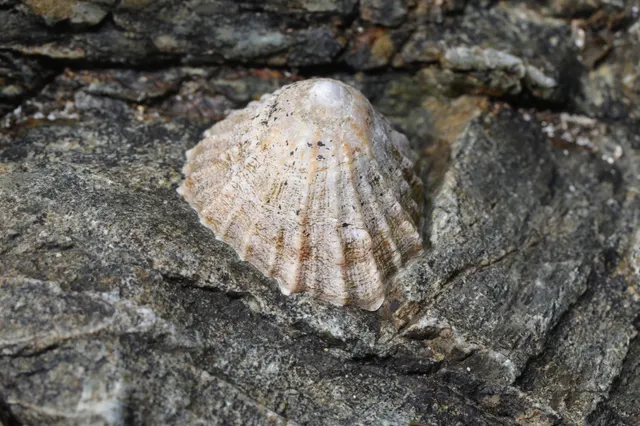 Common limpetThe two grazing gastropods of the same rocky shore, gathered on the same tide by the same people, and distinguished by the fact that one comes away with fingers and the other does not.
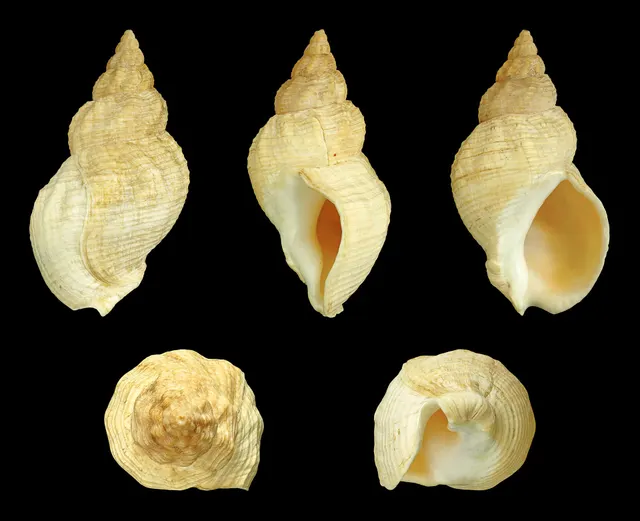 Common whelkTwo gastropods of the same shore system taken by quite different means — one potted on soft ground below the tide, the other picked off rock at low water — and both grazing or scavenging rather than filtering, which is what separates their safety profile from a bivalve's.
- Macaronesian topshellA topshell and a winkle: different families, and the inside of the shell says which.
Where it lives
Where you will find it
Sources and evidence
- FishBase: a global information system on fishes — Froese, R. and D. Pauly, eds. — FishBase Consortium (Scientific institute)Relied on for: Taxonomy, distribution, habitat association, growth and reproductive biology for the species, with SeaLifeBase as its sister database for non-finfish taxa.States this directlyPassage read and verified
Why the 6 connections on this page are here, and the sources
Similar and related fish
Backed by research — 3 connections
Supported by peer-reviewed research or fisheries science. The sources are listed and can be checked.
Common limpet
Two marine gastropods of the same habitat and the same gathering practice, joined so a reader can move between them.
- FishBase: a global information system on fishes — Froese, R. and D. Pauly, eds. — FishBase Consortium (Scientific institute)Relied on for: Distribution, habitat association and life history recorded for Buccinum undatum, Patella vulgata and Littorina littorea, including the rocky and soft-ground habitats each occupies.States this directlyPassage read and verified
- The IUCN Red List of Threatened Species — International Union for Conservation of Nature (Conservation authority)Relied on for: Assessment and range accounts for north-east Atlantic marine gastropods including Littorina littorea, and the habitats and pressures recorded for them.Background and mechanism onlyCitation checked — the work exists and is described correctly
Common whelk
Two marine gastropods placed alongside one another because a reader meeting one will reasonably ask about the other, and because the distinction between them is a practical one about how each is taken.
- FishBase: a global information system on fishes — Froese, R. and D. Pauly, eds. — FishBase Consortium (Scientific institute)Relied on for: Distribution, habitat association and life history recorded for Buccinum undatum, Patella vulgata and Littorina littorea, including the rocky and soft-ground habitats each occupies.States this directlyPassage read and verified
- The IUCN Red List of Threatened Species — International Union for Conservation of Nature (Conservation authority)Relied on for: Assessment and range accounts for north-east Atlantic marine gastropods including Littorina littorea, and the habitats and pressures recorded for them.Background and mechanism onlyCitation checked — the work exists and is described correctly
Macaronesian topshell
Phorcus sauciatus (F. C. L. Koch, 1845) is a trochid — family Trochidae — with a broad conical shell and a nacreous, pearly interior. Littorina littorea is a littorinid with a rounded turban shell and a dull interior, and is a northern European animal. The nacre is the quickest separator in the hand, and the ocean is the surest one.
- WoRMS — the World Register of Marine Species — WoRMS Editorial Board, hosted by the Flanders Marine Institute (VLIZ) (Scientific institute)Relied on for: The accepted names, naming authorities, taxonomic status, synonymy and families that separate these animals from one another.States this directlyPassage read and verified
How it is caught
What experienced anglers do — 1 connection
Widely and independently recommended by experienced anglers and specialist sources. This is real angling knowledge, not proof: controlled evidence for it is limited, and FishingHQ records it as convention rather than as a demonstrated effect.
Gathering winkles, whelks and limpets
An established gathering practice for this species, recorded as the convention it is rather than as a tested claim.
- General angling website restatements of established technique — Various (Credible secondary source)Relied on for: Widely restated practice associating this discipline with this place, recorded as practitioner consensus rather than as tested fact.Background and mechanism onlyCitation checked — the work exists and is described correctly
- Fishers' Craft and Lettered Art: Tracts on Fishing from the End of the Middle Ages — University of Toronto Press, 1997 (Scientific literature)Relied on for: That fishing traditions develop around the water and fish available to them, and the historical method of reading such traditions.States this directlyCitation checked — the work exists and is described correctly
Where it lives
Backed by research — 1 connection
Supported by peer-reviewed research or fisheries science. The sources are listed and can be checked.
Rocky shores and reefs
Habitat association recorded for the species rather than inferred from the fishery.
- FishBase: a global information system on fishes — Froese, R. and D. Pauly, eds. — FishBase Consortium (Scientific institute)Relied on for: Habitat association, depth range and distribution for the species, with SeaLifeBase as its sister database for non-finfish taxa.States this directlyPassage read and verified
A claim that a place contains the ground and conditions the animal is associated with. It is a distributional statement about the world and rests on reference works, and it deliberately asserts nothing about access or permission.
- The Fishes of the British Isles and North-West Europe — Macmillan, 1969 (Reference work)Relied on for: Distribution and habitat association of the inshore fauna of the British Isles and the north-east Atlantic.States this directlyCitation checked — the work exists and is described correctly
- FishBase: a global information system on fishes — Froese, R. and D. Pauly, eds. — FishBase Consortium (Scientific institute)Relied on for: Recorded distribution and habitat association for the species where held.Background and mechanism onlyPassage read and verified
- The IUCN Red List of Threatened Species — International Union for Conservation of Nature (Conservation authority)Relied on for: Range and recorded threats for the species where assessed.Background and mechanism onlyCitation checked — the work exists and is described correctly
Where you will find it
Backed by research — 1 connection
Supported by peer-reviewed research or fisheries science. The sources are listed and can be checked.
Morecambe Bay and the north-west England coast
A claim that a place contains the ground, water and seasonal conditions the species is associated with. It is a distributional statement about the world, it rests on the regional reference literature, and it deliberately asserts nothing about access, permission or catch.
- JNCC species and habitat conservation advice — Joint Nature Conservation Committee (Conservation authority)Relied on for: Habitat classification and description for the intertidal, coastal and freshwater habitats named, and the species characteristically associated with them.States this directlyCitation checked — the work exists and is described correctly
- Cefas science, advice and data on marine and freshwater environments — Centre for Environment, Fisheries and Aquaculture Science (Government fisheries body)Relied on for: Characterisation of UK inshore sediment, intertidal habitat and the shellfish beds associated with them.States this directlyCitation checked — the work exists and is described correctly
How FishingHQ labels evidence is explained in the evidence policy.