Common periwinkle vs Common whelk
How to tell them apart, and what follows from getting it right.
Why they get confused
Winkle and whelk are used interchangeably by a great many people, they appear beside each other on the same seafood stall boiled and shelled where no identification is possible at all, and a large periwinkle and a small whelk are both mid-sized brown-grey spiral shells. The confusion is mostly one of language, and it is compounded by a third animal — the dog whelk of the rocky shore — which is neither of these and is the one most often picked up believing it is.
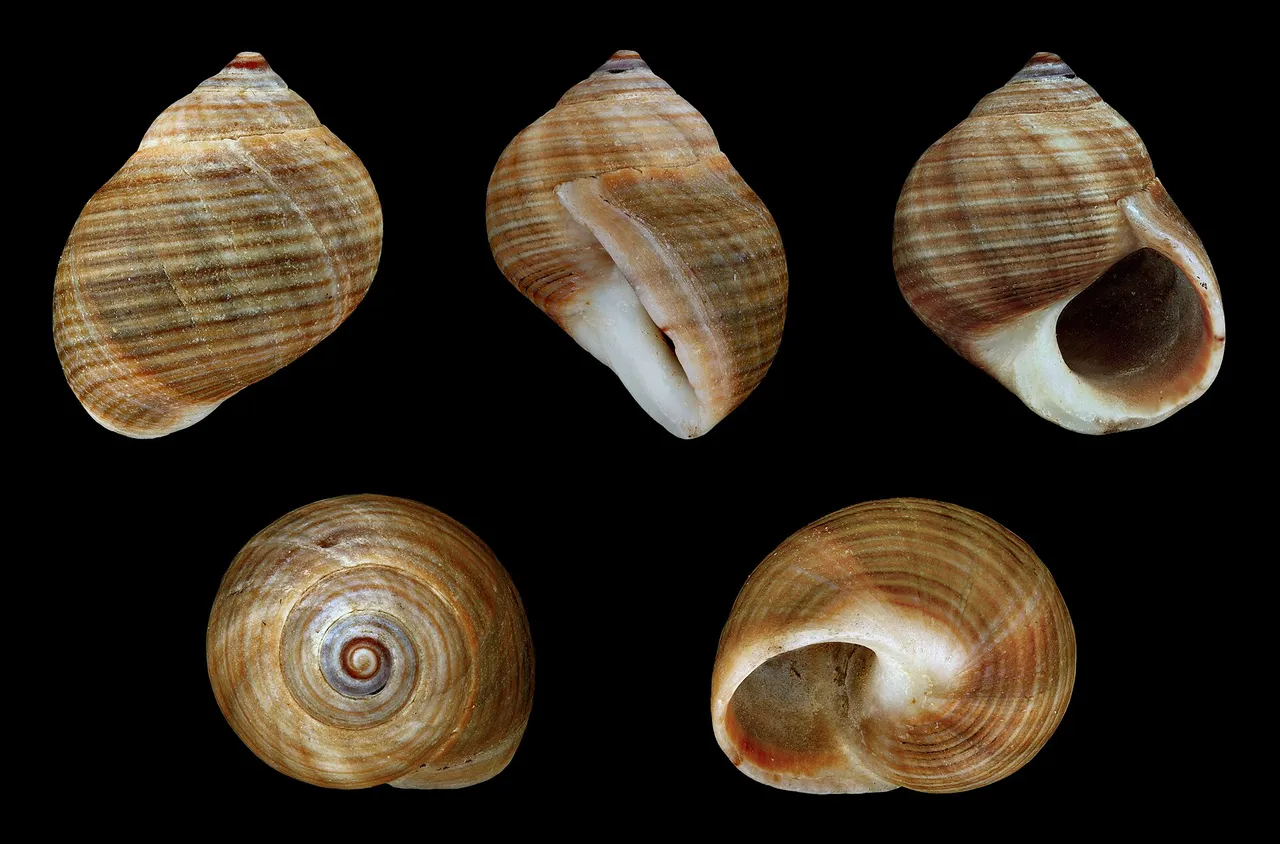
Common periwinkle
Littorina littorea — Littorinidae

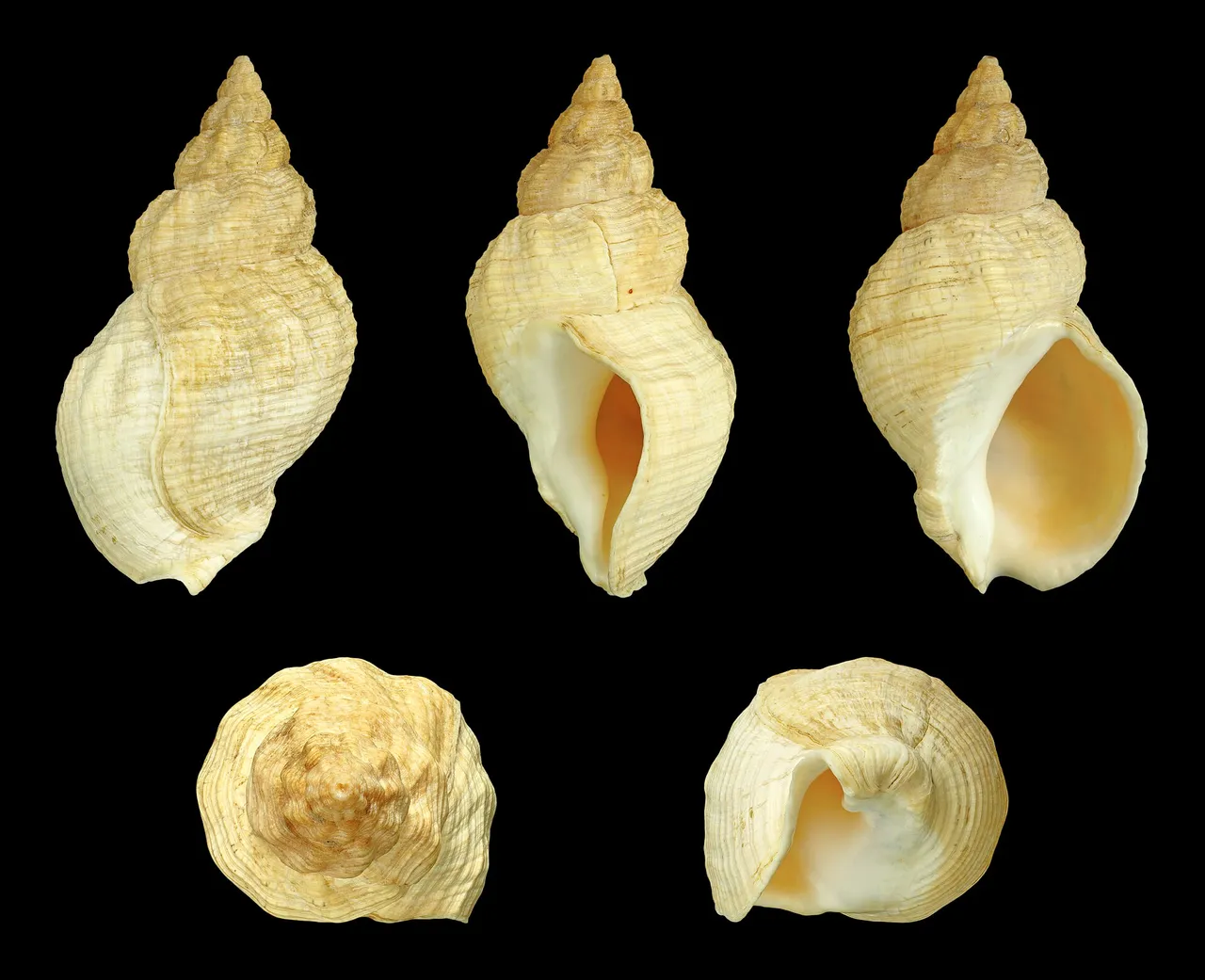
Common whelk
Buccinum undatum — Buccinidae

The differences
Each difference is marked with how far it can be trusted on its own. A single diagnostic character settles the identification; suggestive ones only narrow it.
| Character | Common periwinkle | Common whelk | Reliability |
|---|---|---|---|
| A notch at the front of the shell openingIdentification | None. The aperture is smooth and evenly rounded the whole way, sealed by a dark horny operculum when the animal withdraws. | A distinct siphonal canal — a groove or notch at the front of the aperture — through which the animal extends its siphon to smell. It is the single structural test and it works on an empty shell. | Diagnostic on its own |
| How big the shell isSize | Usually 1.5–2.5 cm high, over 3 cm is large, and shells around 5 cm are recorded but unusual and slow-grown. | Usually 6–8 cm high, over 10 cm is large, and shells around 12 cm are recorded in cold northern water. There is a gap between them that most individuals fall either side of. | Supporting — use with others |
| The surface and colour of the shellIdentification | Solid, conical, dark grey-brown to black with a pointed apex and sometimes fine spiral banding. Worn shells go paler but stay dark-toned. | Thick, chalky white to pale brown, with pronounced spiral ridging. A whelk shell feels heavy and sculptured; a winkle feels smooth and small. | Supporting — use with others |
| Which part of the shore it is onRange | Rock, boulder, harbour wall and weed-covered hard substrate from the upper shore down, frequently in large numbers on ground that dries out twice a day. | Sand, mud and mixed bottoms from the low intertidal down to several hundred metres. If it was picked off a rock in the middle of the shore it is not a common whelk. | Diagnostic on its own |
| What the animal eatsFeeding | A grazer, rasping microalgae and biofilm off rock with a toothed ribbon and leaving visible grazing tracks. Neither predator nor filter feeder. | A predator and scavenger that smells carrion through an extended siphon, walks to it over the bottom and feeds with a proboscis. That behaviour is what the baited pot exploits. | Supporting — use with others |
| How each one is taken, and what governs itHandling | Picked off rock and weed by hand. No gear, no technique, and in most places no size gauge — which puts the whole burden of restraint on the gatherer. | Baited pots on soft ground, lifted after a soak. Pot numbers, tags, marking and permitted grounds are controlled in many areas, minimum landing sizes have been raised in several, and the position changes. | Supporting — use with others |
Why it matters
Both are gastropods rather than bivalves, so neither filters seawater and neither concentrates algal biotoxins the way a mussel or a cockle does — the shellfish poisoning framework is not the primary concern for either, and saying so precisely beats a blanket warning. What differs is everything else. Whelks accumulate tetramine in the salivary glands, which is why the traditional preparation removes them; winkles do not. Whelks mature late, grow slowly and have no larval drift, so a cleared ground does not restock and a minimum size is doing real work; winkle grazing controls algal cover, so clearing patches changes the shore itself.
The full records
This page compares two species. Each of them has a complete record covering biology, behaviour, handling and the evidence behind all of it.
More about common periwinkle
Where it lives, how it is caught, and what else it is confused with.
Similar and related fish
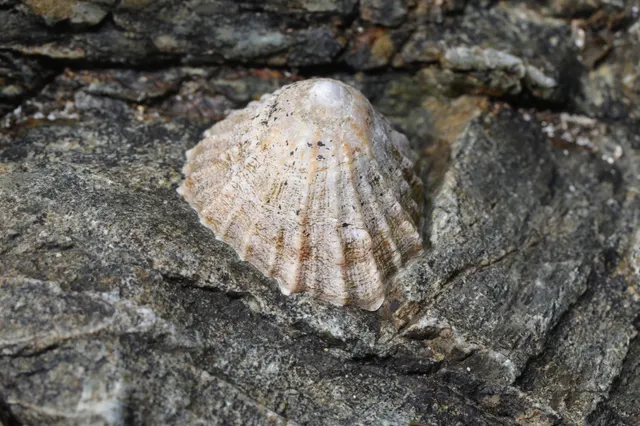 Common limpetThe two grazing gastropods of the same rocky shore, gathered on the same tide by the same people, and distinguished by the fact that one comes away with fingers and the other does not.
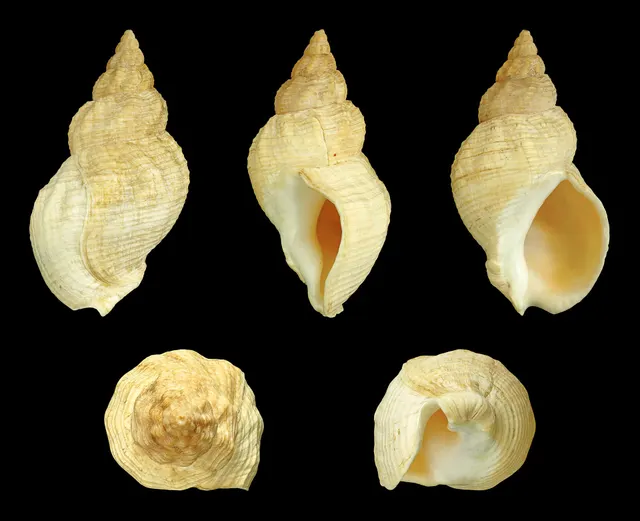 Common whelkTwo gastropods of the same shore system taken by quite different means — one potted on soft ground below the tide, the other picked off rock at low water — and both grazing or scavenging rather than filtering, which is what separates their safety profile from a bivalve's.
- Macaronesian topshellA topshell and a winkle: different families, and the inside of the shell says which.
How it is caught
Where it lives
Why the 5 connections on this page are here, and the sources
Similar and related fish
Backed by research — 3 connections
Supported by peer-reviewed research or fisheries science. The sources are listed and can be checked.
Common limpet
Two marine gastropods of the same habitat and the same gathering practice, joined so a reader can move between them.
- FishBase: a global information system on fishes — Froese, R. and D. Pauly, eds. — FishBase Consortium (Scientific institute)Relied on for: Distribution, habitat association and life history recorded for Buccinum undatum, Patella vulgata and Littorina littorea, including the rocky and soft-ground habitats each occupies.States this directlyPassage read and verified
- The IUCN Red List of Threatened Species — International Union for Conservation of Nature (Conservation authority)Relied on for: Assessment and range accounts for north-east Atlantic marine gastropods including Littorina littorea, and the habitats and pressures recorded for them.Background and mechanism onlyCitation checked — the work exists and is described correctly
Common whelk
Two marine gastropods placed alongside one another because a reader meeting one will reasonably ask about the other, and because the distinction between them is a practical one about how each is taken.
- FishBase: a global information system on fishes — Froese, R. and D. Pauly, eds. — FishBase Consortium (Scientific institute)Relied on for: Distribution, habitat association and life history recorded for Buccinum undatum, Patella vulgata and Littorina littorea, including the rocky and soft-ground habitats each occupies.States this directlyPassage read and verified
- The IUCN Red List of Threatened Species — International Union for Conservation of Nature (Conservation authority)Relied on for: Assessment and range accounts for north-east Atlantic marine gastropods including Littorina littorea, and the habitats and pressures recorded for them.Background and mechanism onlyCitation checked — the work exists and is described correctly
Macaronesian topshell
Phorcus sauciatus (F. C. L. Koch, 1845) is a trochid — family Trochidae — with a broad conical shell and a nacreous, pearly interior. Littorina littorea is a littorinid with a rounded turban shell and a dull interior, and is a northern European animal. The nacre is the quickest separator in the hand, and the ocean is the surest one.
- WoRMS — the World Register of Marine Species — WoRMS Editorial Board, hosted by the Flanders Marine Institute (VLIZ) (Scientific institute)Relied on for: The accepted names, naming authorities, taxonomic status, synonymy and families that separate these animals from one another.States this directlyPassage read and verified
How it is caught
What experienced anglers do — 1 connection
Widely and independently recommended by experienced anglers and specialist sources. This is real angling knowledge, not proof: controlled evidence for it is limited, and FishingHQ records it as convention rather than as a demonstrated effect.
Gathering winkles, whelks and limpets
An established gathering practice for this species, recorded as the convention it is rather than as a tested claim.
- General angling website restatements of established technique — Various (Credible secondary source)Relied on for: Widely restated practice associating this discipline with this place, recorded as practitioner consensus rather than as tested fact.Background and mechanism onlyCitation checked — the work exists and is described correctly
- Fishers' Craft and Lettered Art: Tracts on Fishing from the End of the Middle Ages — University of Toronto Press, 1997 (Scientific literature)Relied on for: That fishing traditions develop around the water and fish available to them, and the historical method of reading such traditions.States this directlyCitation checked — the work exists and is described correctly
Where it lives
Backed by research — 1 connection
Supported by peer-reviewed research or fisheries science. The sources are listed and can be checked.
Rocky shores and reefs
Habitat association recorded for the species rather than inferred from the fishery.
- FishBase: a global information system on fishes — Froese, R. and D. Pauly, eds. — FishBase Consortium (Scientific institute)Relied on for: Habitat association, depth range and distribution for the species, with SeaLifeBase as its sister database for non-finfish taxa.States this directlyPassage read and verified
A claim that a place contains the ground and conditions the animal is associated with. It is a distributional statement about the world and rests on reference works, and it deliberately asserts nothing about access or permission.
- The Fishes of the British Isles and North-West Europe — Macmillan, 1969 (Reference work)Relied on for: Distribution and habitat association of the inshore fauna of the British Isles and the north-east Atlantic.States this directlyCitation checked — the work exists and is described correctly
- FishBase: a global information system on fishes — Froese, R. and D. Pauly, eds. — FishBase Consortium (Scientific institute)Relied on for: Recorded distribution and habitat association for the species where held.Background and mechanism onlyPassage read and verified
- The IUCN Red List of Threatened Species — International Union for Conservation of Nature (Conservation authority)Relied on for: Range and recorded threats for the species where assessed.Background and mechanism onlyCitation checked — the work exists and is described correctly
Reviewed 2026-08-16. FishingHQ does not state what any rule is or where any rule applies. Where this page says the two species are managed differently, that is a reason to check the authority for the water you are on — not a statement of what it requires.