Common limpet
Fish · Last reviewed 2026-08-14
The conical shell clamped to rock on every exposed Atlantic shore, gathered for food worldwide, and an animal whose grip and homing behaviour are more interesting than its reputation suggests.
Safety: cliffs and rock platforms — can cause serious injury or death. 4 more points apply here.
How this was identified, and who took it
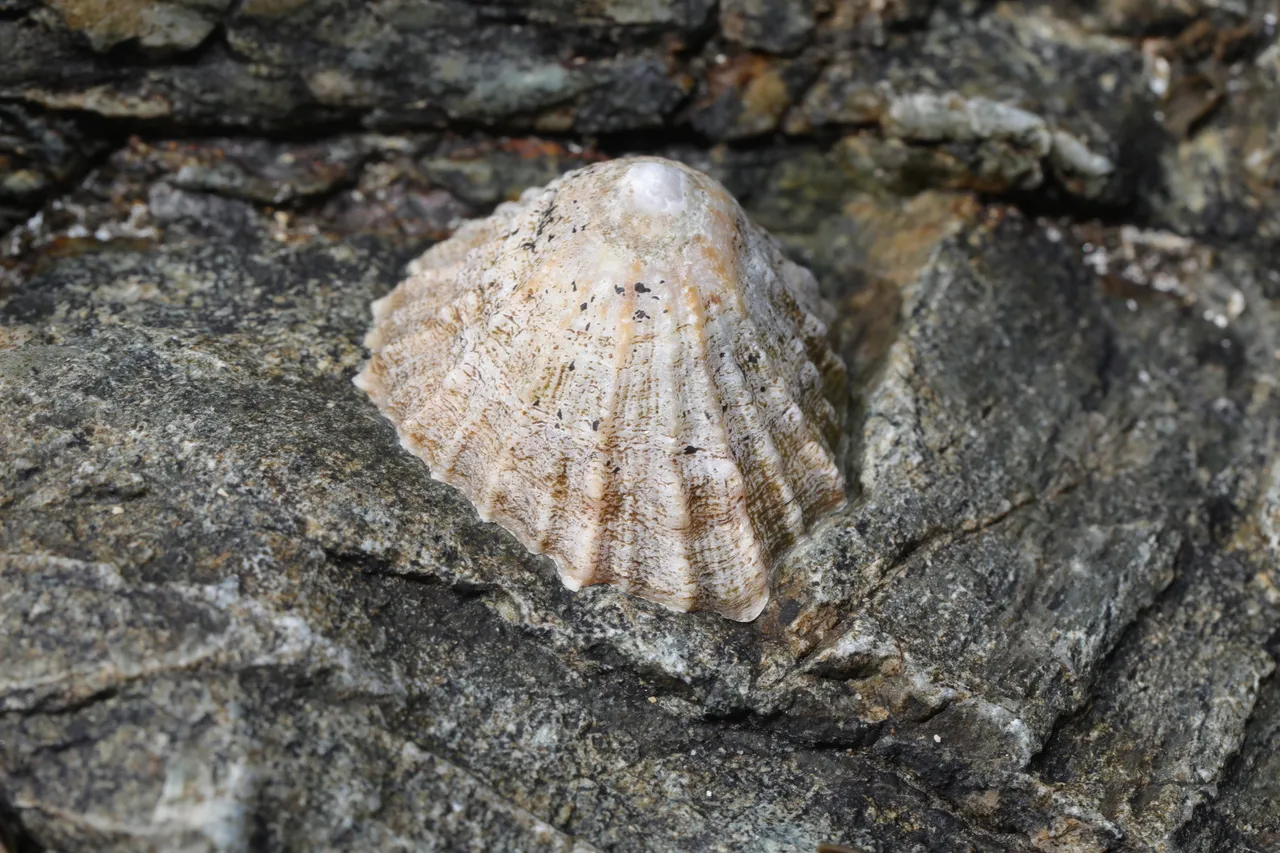
Identified by: The record's character is exactly what the frame shows: a simple conical shell with NO SPIRAL, roughly four centimetres across, ribbed in coarse radiating ridges from a slightly off-centre apex down to a scalloped margin bedded against the rock. This replaces two earlier candidates for this species, both of which were photographs of limpet home scars rather than limpets.Stephen James McWilliam — CC0, via iNaturalist — source, licenceCatching Common limpet
Everything here on fishing for it. Each entry opens the page behind it.
- Ground
A limpet is a grazing sea snail with a simple conical shell and an extraordinary hold on rock. It is the most conspicuous animal on an exposed rocky shore, it has been gathered for food everywhere it occurs, and it is present on FishingHQ because a model of species that includes squid, crab and urchin cannot exclude the one shore animal that is universally taken and almost never written about.
THE GRIP IS THE FAMOUS PROPERTY AND IT IS GENUINELY EXCEPTIONAL. A limpet clamps its shell to rock with a muscular foot and a thin film of mucus, generating an adhesion strong enough to resist wave force that removes almost everything else from the shore. The teeth of its feeding radula are among the strongest biological materials measured.
THE HOMING BEHAVIOUR IS THE INTERESTING ONE. Many limpets return to the same spot on the rock after each feeding excursion, and over time the shell and the rock wear into each other so that the animal fits its own scar precisely. That fit is what makes the seal work, and it is why a limpet knocked off and replaced elsewhere is unlikely to survive.
GRAZING SHAPES THE SHORE. Limpets rasping algae off rock are one of the principal controls on algal cover on north Atlantic shores, and where they are removed the rock greens over within a season.
AND THE GATHERING IS GLOBAL AND CULTURALLY WEIGHTED, from Canarian lapas to Hawaiian opihi, where it is both prized and among the most dangerous shore activities anywhere.
Identification
- Scientific name
- Patella vulgata
- Family
- Patellidae
- Water
- Saltwater
- Conservation status
- Not assessed
- Regions
- Britain & Ireland, Northern Europe, Western Europe, Mediterranean, West Africa
- A simple conical shell without a spiral, typically 2–6 cm across, ridged from apex to margin.
- Grey to fawn outside, frequently eroded and encrusted; the inside is pale with a horseshoe-shaped muscle scar.
- Clamped tightly to rock and effectively immovable when disturbed.
- Distinguished from the china limpet and the black-footed limpet by shell profile and by foot colour, which requires the animal to be lifted.
- Found on rock from the upper shore down, most abundant on exposed and moderately exposed coasts.
Size
- Typical
- 3–5 cm shell length.
- Large
- Over 6 cm.
Exceptional: Shell lengths around 7 cm are recorded. Animals on the upper shore grow taller and narrower than those lower down, so shell shape reflects position on the shore rather than only age.
Living on the most hostile surface on the shore
A limpet occupies bare rock in the intertidal zone, which means it spends a large part of every day out of water, in sun or frost, exposed to wave force that removes almost everything else.
THE HOME SCAR IS THE HABITAT WITHIN THE HABITAT. Many limpets return to the same spot after each feeding excursion, and over time shell and rock wear into each other until the fit is exact. That fit is what makes the seal watertight, which is what allows the animal to survive hours of exposure without drying out. A limpet knocked off and put back somewhere else has lost its habitat in a literal sense.
SHELL SHAPE RECORDS POSITION ON THE SHORE. Animals higher up grow taller and more conical, which reduces water loss and improves grip against wave impact; animals lower down are flatter. Shell profile is therefore a reading of where the animal lives rather than only of how old it is.
EXPOSURE SETS ABUNDANCE. Limpets are most abundant on exposed and moderately exposed rocky coast and scarce on sheltered, silty or weed-choked shore, because heavy wave action suppresses the algal canopy that would otherwise overgrow their grazing ground.
AND THE ANIMAL SHAPES ITS OWN HABITAT. Limpet grazing is one of the principal controls on algal cover on north Atlantic rocky shores. Remove the limpets from a patch and it greens over within a season, which is habitat use running in both directions.
Backed by research — why, and the sources (2)
Supported by peer-reviewed research or fisheries science. The sources are listed and can be checked.
- The Fishes of the British Isles and North-West Europe — Macmillan, 1969 (Reference work)Relied on for: Distribution, habitat association, depth, ground preference and biology of fishes in British and north-west European waters.States this directlyCitation checked — the work exists and is described correctly
- FishBase: a global information system on fishes — Froese, R. and D. Pauly, eds. — FishBase Consortium (Scientific institute)Relied on for: Distribution, habitat association, depth range, size, reproduction and life-history parameters recorded for the species.States this directlyPassage read and verified
Sex change with size, and why the biggest ones are the females
Limpet reproduction contains one fact that should change how anybody gathers them.
THEY CHANGE SEX AS THEY GROW. Common limpets begin life as males, and a proportion change to female as they get older and larger. The consequence is direct: the largest animals on a shore are disproportionately the breeding females.
SO TAKING THE BIGGEST IS THE OPPOSITE OF A SIZE LIMIT. In most fisheries, leaving the small ones and taking the large ones protects recruitment. Here it removes the female breeding stock, and a gatherer following ordinary shellfish instinct does the maximum damage available. Spreading the take across sizes and leaving the largest is the practice that follows from the biology.
SPAWNING IS BROADCAST AND WEATHER-TRIGGERED. Gametes are released into the water rather than deposited, chiefly in the colder months in much of the range, and the trigger is rough weather and falling temperature rather than a date. Rough seas both cue the release and disperse the gametes.
LARVAE ARE PLANKTONIC BUT ONLY BRIEFLY, settling onto rock after a short drift. That is a shorter dispersal window than most marine invertebrates have, so recruitment is comparatively local and a cleared shore restocks from nearby rather than from anywhere.
AND THERE IS NO PARENTAL CARE AND NO NEST. The strategy is numbers and timing, and the timing is a storm.
Backed by research — why, and the sources (2)
Supported by peer-reviewed research or fisheries science. The sources are listed and can be checked.
- The Fishes of the British Isles and North-West Europe — Macmillan, 1969 (Reference work)Relied on for: Distribution, habitat association, depth, ground preference and biology of fishes in British and north-west European waters.States this directlyCitation checked — the work exists and is described correctly
- FishBase: a global information system on fishes — Froese, R. and D. Pauly, eds. — FishBase Consortium (Scientific institute)Relied on for: Distribution, habitat association, depth range, size, reproduction and life-history parameters recorded for the species.States this directlyPassage read and verified
Present all year, gathered on the tide rather than the calendar
Limpets are sedentary and present year-round, so their seasonality is about access and condition rather than about availability.
THE TIDE IS THE SEASON THAT MATTERS. The working window is the spring-tide cycle: a big spring low exposes ground that a neap does not reach, and the largest animals live lowest on the shore. Gathering is therefore organised around the fortnightly cycle far more than around the month.
SWELL IS THE OTHER GATE AND IT IS A SAFETY ONE. The low exposed rock that holds the best limpets is unusable with any swell running, and that is a seasonal pattern on Atlantic coasts, where autumn and winter bring ground swell that closes the ground for days at a time.
CONDITION VARIES WITH THE BREEDING CYCLE. Animals are in poorer condition after spawning in the colder months and recover through spring and summer, which is the basis of the traditional preference for gathering in the warmer half of the year.
FEEDING ACTIVITY FOLLOWS WETNESS RATHER THAN SEASON. Limpets leave the scar to graze when the rock is wet — on the covering tide, in rain, at night — and clamp down when it dries. That is a daily rhythm, not an annual one.
AND WHERE CLOSED SEASONS EXIST they are set by an authority for local reasons, frequently around spawning or around a depleted shore, and nothing in this page indicates what any of them currently permit.
Backed by research — why, and the sources (2)
Supported by peer-reviewed research or fisheries science. The sources are listed and can be checked.
- The Fishes of the British Isles and North-West Europe — Macmillan, 1969 (Reference work)Relied on for: Distribution, habitat association, depth, ground preference and biology of fishes in British and north-west European waters.States this directlyCitation checked — the work exists and is described correctly
- FishBase: a global information system on fishes — Froese, R. and D. Pauly, eds. — FishBase Consortium (Scientific institute)Relied on for: Distribution, habitat association, depth range, size, reproduction and life-history parameters recorded for the species.States this directlyPassage read and verified
How big limpets get, and what the measurement is for
A common limpet typically reaches three to five centimetres of shell length, with animals over six centimetres large and shells around seven centimetres recorded.
SIZE IS MEASURED ACROSS THE BASE — the longest axis of the shell aperture — rather than by height, because height varies with position on the shore rather than with age and would be a poor comparator.
SHELL SHAPE IS A HABITAT SIGNAL, NOT A SIZE ONE. Animals on the upper shore are taller and narrower for the same base length, because a steeper cone loses less water and resists wave impact better. Two limpets of identical base length from different heights on the same rock can look like different species.
GROWTH IS SLOW AND ANIMALS LIVE MANY YEARS, so a large limpet represents a long occupancy of one spot on one rock.
AND SIZE CARRIES A REPRODUCTIVE MEANING HERE THAT IT DOES NOT CARRY IN MOST SPECIES. Because common limpets change sex with size, a size figure is also a sex figure: the largest animals are the females. Any size-based rule of thumb a gatherer applies should be read with that in mind, and the sensible practice is to take the middle and leave both ends.
Backed by research — why, and the sources (2)
Supported by peer-reviewed research or fisheries science. The sources are listed and can be checked.
- The Fishes of the British Isles and North-West Europe — Macmillan, 1969 (Reference work)Relied on for: Distribution, habitat association, depth, ground preference and biology of fishes in British and north-west European waters.States this directlyCitation checked — the work exists and is described correctly
- FishBase: a global information system on fishes — Froese, R. and D. Pauly, eds. — FishBase Consortium (Scientific institute)Relied on for: Distribution, habitat association, depth range, size, reproduction and life-history parameters recorded for the species.States this directlyPassage read and verified
Handling limpets: one clean strike, and what happens if you miss
Limpet handling is almost entirely about the moment of removal, because everything that goes wrong goes wrong there.
STRIKE FIRST, DO NOT TOUCH FIRST. An undisturbed limpet is holding on but not clamped, and a single sharp sideways blow removes it intact. A limpet that has been touched, nudged or shadowed clamps down, generating adhesion strong enough to resist wave force, and cannot then be removed without destroying it. A half-removed limpet dies on the rock for nothing, which is a welfare failure as much as a wasted animal.
SO THE PRACTICAL RULE IS ONE ATTEMPT PER ANIMAL. If it does not come off cleanly, leave it and move on.
KEEP THEM COOL, DAMP AND UNSEALED, and purge them in clean seawater before cooking. Discard any that do not respond to touch, since those are dead.
THE BIOTOXIN FRAMEWORK IS NOT THE PRIMARY CONCERN. A limpet grazes rather than filters, so it does not concentrate algal biotoxins the way a mussel or a cockle does, and the paralytic shellfish poisoning framework does not apply in the same way. Microbiological contamination from sewage-affected shores is real for anything gathered anywhere, and gathering away from outfalls, poor-quality harbours and post-rainfall run-off is the control that matters.
AND THE COOKING IS UNFORGIVING. Limpet is tough if overcooked and the traditional preparations — brief, hot, or long and slow — exist because the middle ground produces something inedible.
Official guidance — why, and the sources (2)
Stated by a fisheries authority, scientific institute or recognised angling body. Authoritative, but summarising rather than demonstrating.
- Fish and Fishery Products Hazards and Controls Guidance — US Food and Drug Administration, Center for Food Safety and Applied Nutrition, 2022 (Standards body)Relied on for: Seafood hazards and controls, including microbiological and biotoxin risk in molluscan shellfish and the handling practices that bear on them.States this directlyPassage read and verified
- The Fishes of the British Isles and North-West Europe — Macmillan, 1969 (Reference work)Relied on for: Distribution, habitat association, depth, ground preference and biology of fishes in British and north-west European waters.States this directlyCitation checked — the work exists and is described correctly
Lifecycle and reproduction
Larvae are planktonic for a short period before settling onto rock, after which the animal is effectively sedentary for life. Growth is slow and animals live many years. Individuals begin life as males and a proportion change to female as they grow older and larger, so the largest animals on a shore are disproportionately the breeding females — which is the fact that matters most when deciding what to take.
Gametes are released into the water, chiefly in the colder months in much of the range, triggered by rough weather and falling temperature. Because sex changes with size, removing the largest animals removes the female breeding stock rather than a random sample of the population.
Feeding and senses
A grazer. It leaves its scar on a rising or wet tide, rasps microalgae, biofilm and sporelings off the rock with a radula, and returns. Grazing tracks are visible on rock at low water. Limpet grazing is one of the principal forces controlling algal cover on north Atlantic rocky shores.
Simple eyes at the tentacle bases detecting light and shadow, chemoreception used in navigation, and — remarkably — an ability to return to a precise home scar after a feeding excursion, apparently by following its own mucus trail. Strong mechanoreception: the clamp response to touch is immediate and is what makes the animal difficult to remove.
Through the year
Present year-round and sedentary. Feeding excursions follow the tide and the wetting of the rock rather than the season. Spawning concentrates in the colder months and is triggered by rough weather. Animals move higher or lower on the shore only over long periods, so a shore that is cleared stays cleared until recruitment replaces it.
Distribution
North-east Atlantic from northern Norway south to Portugal, including all around Britain and Ireland. Rocky shores from the upper intertidal down to the low water mark, most abundant on exposed and moderately exposed coast. Related Patella species occupy Macaronesia, the Mediterranean and, in other genera, shores worldwide.
This is a biological range — where the species occurs, not a prediction that you will catch one. To browse the fishing geography FishingHQ holds, start at fishing places.
Why anglers care
A traditional bait as well as a food. The foot is tough, stays on a hook and is a long-established wrasse and mullet bait on rocky shores where it can be gathered on the spot. For an angler it is also a reading of the shore: dense limpet grazing marks exposed rock with high algal turnover and the wrasse, blennies and crabs that go with it.
Handling and returning
REMOVING ONE IS EASY ONLY IF IT DOES NOT SEE YOU COMING. An undisturbed limpet can be knocked sideways off its scar with a single sharp blow; one that has clamped in response to being touched is very difficult to remove without destroying it. That is a practical fact and it is also a welfare one, because a half-removed animal dies.
TAKE THE MIDDLE SIZES AND LEAVE THE LARGEST. Limpets change sex with size, so the biggest animals on a shore are the females. A gatherer who takes the largest is removing the breeding stock, which is the opposite of what a size-based rule usually achieves and is worth understanding rather than assuming.
SPREAD THE TAKE AND REPLACE THE ROCKS. Clearing a patch changes the shore visibly within a season because grazing controls the algae. Take a scatter across a wide area, leave plenty, and turn back every rock you moved.
THE SAFETY PROFILE IS A GRAZER'S. A limpet rasps rather than filters, so it does not concentrate algal biotoxins as a mussel does and the shellfish poisoning framework does not apply in the same way. Microbiological risk from sewage-affected water is real and the sensible practice is to avoid gathering near outfalls, in poor-quality harbours or after heavy rain has flushed run-off onto the shore.
AND THE GATHERING IS THE HAZARD, NOT THE ANIMAL. Limpets grow on wave-washed rock, and gathering the best of them means working in the surge zone. In Hawaii this is the shoreline activity with the worst fatality record; in Macaronesia and on Atlantic Europe the same physics applies. Watch a full set before committing to a ledge, stand higher than feels necessary, and treat a swell running on a calm day as the dangerous condition.
Going further
- Common limpet vs Common periwinkle — how to tell them apart.
Safety
Cliffs and rock platforms — Can cause serious injury or death
The best limpets grow low on exposed rock in the surge zone, so gathering them puts a person at the water's edge on wet rock with their attention down and their back to the sea. Being swept off by a set wave substantially larger than those preceding it is the characteristic accident, and it has a serious fatality record wherever limpets are prized.
What reduces it: Watch a full set of waves before committing to any ledge, read swell height and period rather than wind, stay higher on the shore than feels necessary, never turn your back on the sea, wear a buoyancy aid on exposed rock, and gather with somebody who can raise help.
Worse when:
- Any swell running, including on a windless sunny day, because ground swell arrives with no local warning.
- A rising tide, which brings the break progressively further up the rock.
- Unfamiliar ground, where which ledges are workable at which swell is entirely local knowledge.
Tides and being cut off — Can cause serious injury or death
Shore gathering is done on a falling tide with attention on the ground rather than on the water, and the flood returns across level rock and sand faster than a person expects, filling channels behind before covering the ground underfoot.
What reduces it: Know the time of low water and the time you intend to leave before starting, and leave at that time rather than when the gathering slows. Identify the route back and the channel that will close first. Do not gather alone on unfamiliar ground.
Slips, trips and falls — Can cause injury needing treatment
Gathering is done on wet, weed-covered, uneven rock while looking down and moving constantly, which is the combination that produces falls onto hard ground.
What reduces it: Studded or well-gripped footwear, weight kept low, and no hurrying between rocks. Test weed-covered surfaces before committing weight.
Precautions that always apply here
- Check the tide before you go and know your exit route. Being cut off is the commonest way a shore session becomes a rescue.
- Tell somebody where you are going and when you expect to be back.
Check the rules before you fish
Fishing laws, bylaws, access rules, seasons, bait restrictions and permitted methods vary by location and can change. Check the current rules from the relevant authority and the water you intend to fish before fishing.
Check with:
- Current national or regional law for where you are fishing
- Current local bylaws
- The relevant fisheries authority
- The landowner, club or fishery whose water it is
- Any restrictions specific to the species or the method you intend to use
Where to go next
Similar and related fish
Where it lives
More fish
Not related to this page — just the rest of the section. There is little else joined to this subject yet, and a short page should still lead somewhere.
Sources and evidence
- The IUCN Red List of Threatened Species — International Union for Conservation of Nature (Conservation authority)Relied on for: Assessment and habitat account for the species, including its range, the habitats it depends on and the pressures acting on it.States this directlyCitation checked — the work exists and is described correctly
- FishBase: a global information system on fishes — Froese, R. and D. Pauly, eds. — FishBase Consortium (Scientific institute)Relied on for: Distribution, habitat association, size and life history recorded for the species concerned.Background and mechanism onlyPassage read and verified
Why the 4 connections on this page are here, and the sources
Similar and related fish
Backed by research — 2 connections
Supported by peer-reviewed research or fisheries science. The sources are listed and can be checked.
Canary black limpet
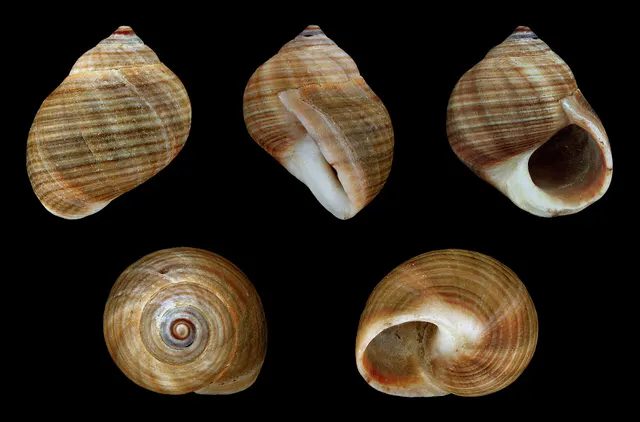
Patella candei A. d'Orbigny, 1840 is a Macaronesian species. Patella vulgata is a northern European one and does not occur in the Canaries or Madeira. They are not distinguished in the field so much as by ocean, and the practical consequence is regulatory rather than biological: the Macaronesian animal carries a legal minimum size and a closed season, and the northern one does not.
- WoRMS — the World Register of Marine Species — WoRMS Editorial Board, hosted by the Flanders Marine Institute (VLIZ) (Scientific institute)Relied on for: The accepted names, naming authorities, taxonomic status, synonymy and families that separate these animals from one another.States this directlyPassage read and verified
Common periwinkle
Two marine gastropods of the same habitat and the same gathering practice, joined so a reader can move between them.
- FishBase: a global information system on fishes — Froese, R. and D. Pauly, eds. — FishBase Consortium (Scientific institute)Relied on for: Distribution, habitat association and life history recorded for Buccinum undatum, Patella vulgata and Littorina littorea, including the rocky and soft-ground habitats each occupies.States this directlyPassage read and verified
- The IUCN Red List of Threatened Species — International Union for Conservation of Nature (Conservation authority)Relied on for: Assessment and range accounts for north-east Atlantic marine gastropods including Littorina littorea, and the habitats and pressures recorded for them.Background and mechanism onlyCitation checked — the work exists and is described correctly
How it is caught
What experienced anglers do — 1 connection
Widely and independently recommended by experienced anglers and specialist sources. This is real angling knowledge, not proof: controlled evidence for it is limited, and FishingHQ records it as convention rather than as a demonstrated effect.
Gathering winkles, whelks and limpets
An established gathering practice for this species, recorded as the convention it is rather than as a tested claim.
- General angling website restatements of established technique — Various (Credible secondary source)Relied on for: Widely restated practice associating this discipline with this place, recorded as practitioner consensus rather than as tested fact.Background and mechanism onlyCitation checked — the work exists and is described correctly
- Fishers' Craft and Lettered Art: Tracts on Fishing from the End of the Middle Ages — University of Toronto Press, 1997 (Scientific literature)Relied on for: That fishing traditions develop around the water and fish available to them, and the historical method of reading such traditions.States this directlyCitation checked — the work exists and is described correctly
Where it lives
Backed by research — 1 connection
Supported by peer-reviewed research or fisheries science. The sources are listed and can be checked.
Rocky shores and reefs
A distribution association between an animal and a kind of water, rather than a claim about any named mark.
- FishBase: a global information system on fishes — Froese, R. and D. Pauly, eds. — FishBase Consortium (Scientific institute)Relied on for: Distribution, habitat association and depth range recorded for the species, including its occurrence in the water body concerned.States this directlyPassage read and verified
- The IUCN Red List of Threatened Species — International Union for Conservation of Nature (Conservation authority)Relied on for: Assessment and range account for the species, including the systems and coasts it occupies.Background and mechanism onlyCitation checked — the work exists and is described correctly
A claim that a place contains the ground and conditions the animal is associated with. It is a distributional statement about the world and rests on reference works, and it deliberately asserts nothing about access or permission.
- The Fishes of the British Isles and North-West Europe — Macmillan, 1969 (Reference work)Relied on for: Distribution and habitat association of the inshore fauna of the British Isles and the north-east Atlantic.States this directlyCitation checked — the work exists and is described correctly
- FishBase: a global information system on fishes — Froese, R. and D. Pauly, eds. — FishBase Consortium (Scientific institute)Relied on for: Recorded distribution and habitat association for the species where held.Background and mechanism onlyPassage read and verified
- The IUCN Red List of Threatened Species — International Union for Conservation of Nature (Conservation authority)Relied on for: Range and recorded threats for the species where assessed.Background and mechanism onlyCitation checked — the work exists and is described correctly
How FishingHQ labels evidence is explained in the evidence policy.