Common limpet vs Common periwinkle
How to tell them apart, and what follows from getting it right.
Why they get confused
The two most abundant gatherable molluscs on a British rocky shore, sitting on the same rock at the same tide, both small, both grey-brown, both encrusted, and both routinely lumped together as 'winkles' by people who have only ever seen them from above at walking height. Anyone gathering either needs to know which is which, because they are prepared differently and regulated differently.
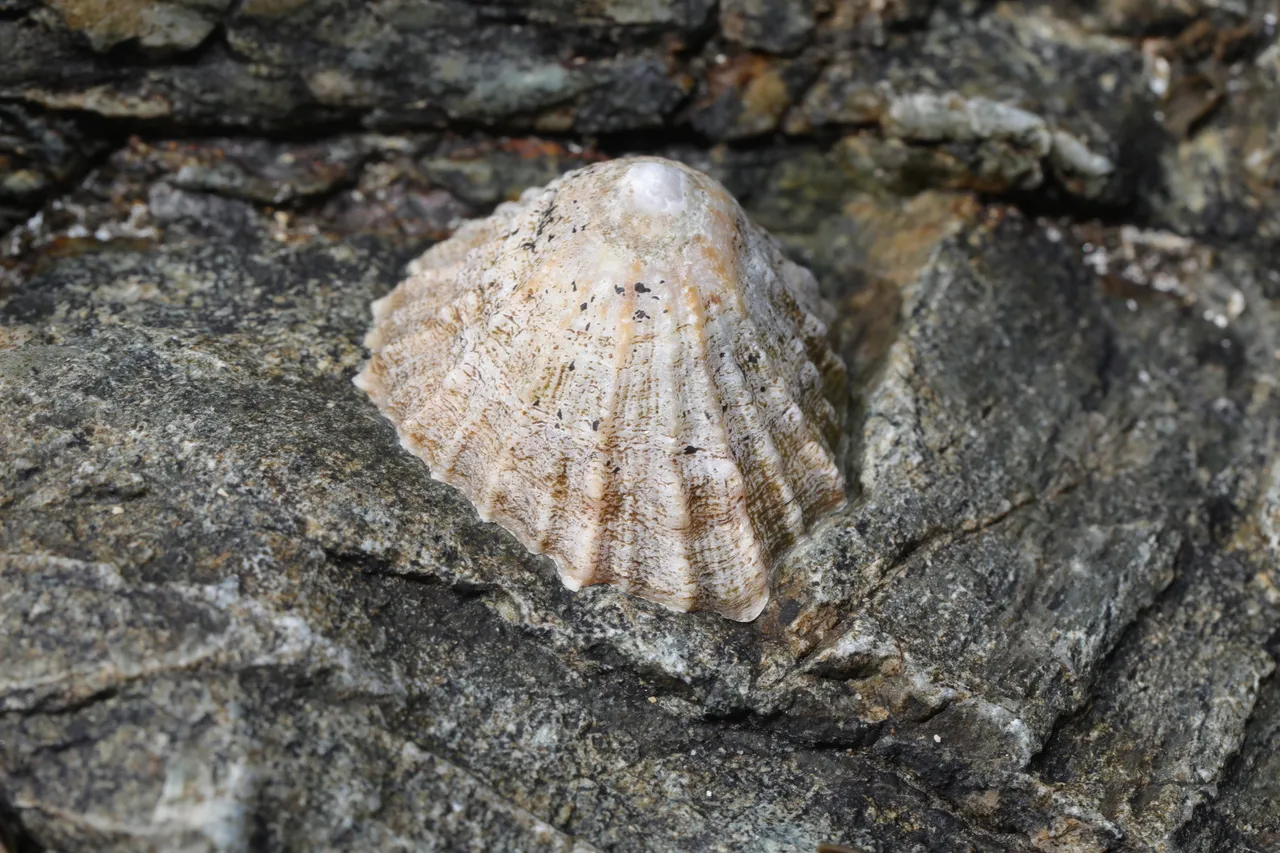
Common limpet
Patella vulgata — Patellidae
Common periwinkle
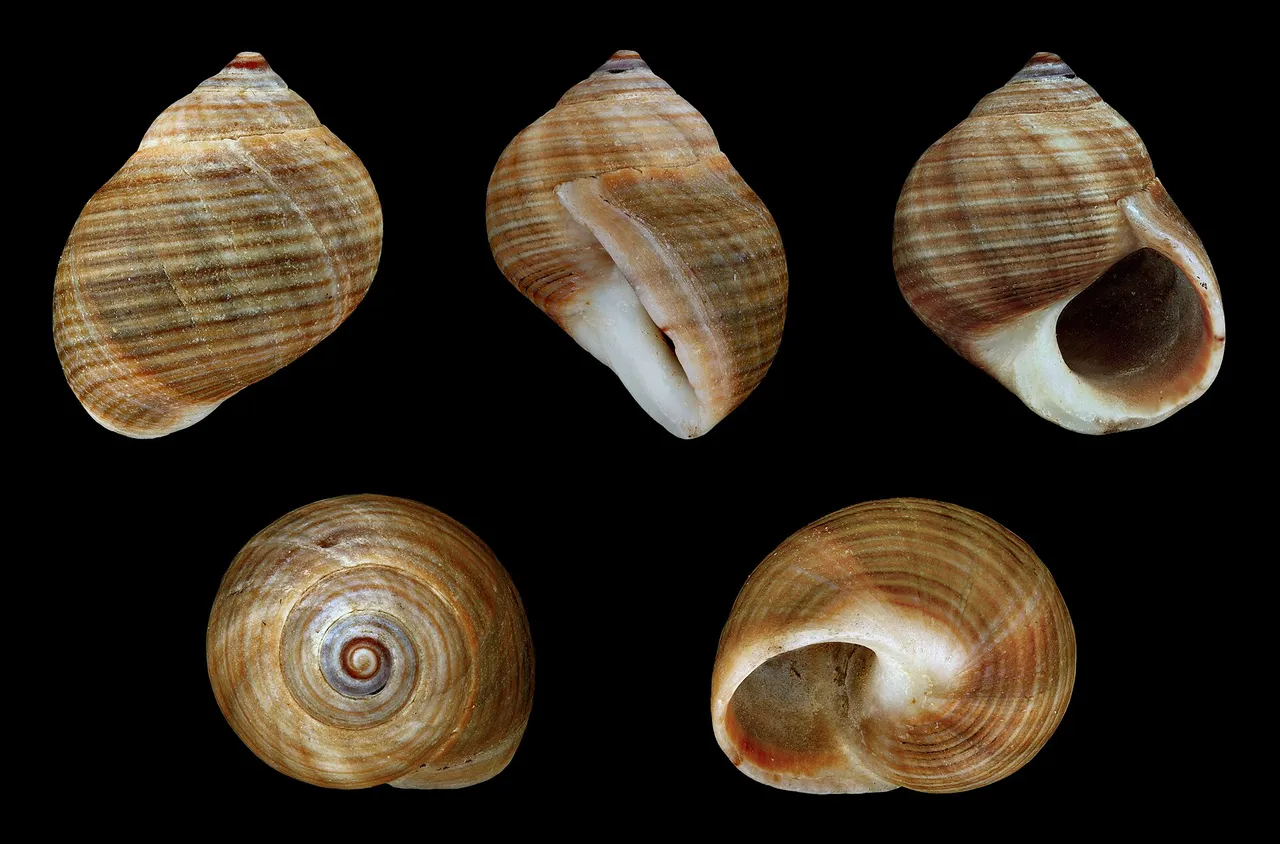
Littorina littorea — Littorinidae
The differences
Each difference is marked with how far it can be trusted on its own. A single diagnostic character settles the identification; suggestive ones only narrow it.
| Character | Common limpet | Common periwinkle | Reliability |
|---|---|---|---|
| Whether the shell spiralsIdentification | A plain cone with no spiral, no whorl and no visible suture — ridges run from the apex straight down to the rim. | A coiled spiral shell with visible whorls and a suture between them, ending in a rounded opening the animal can seal. | Diagnostic on its own |
| How it is attachedSeason | Clamped down onto rock by suction and muscle, and effectively immovable by hand once disturbed; it grinds its own scar into the stone. | Sits loose on rock and weed and can simply be picked up; it withdraws behind a horny operculum rather than clamping. | Diagnostic on its own |
| The opening, and whether there is a doorIdentification | The whole underside is one open aperture with the foot filling it; there is nothing to close. | A single round aperture closed by a hard operculum, which is what a periwinkle presents to the world when it is disturbed. | Supporting — use with others |
| Size and shell profileSize | Typically 3–5 cm across, and taller and narrower on the upper shore than lower down, so profile reflects position rather than age. | Smaller, usually a couple of centimetres, and much more consistent in shape wherever on the shore it is found. | Supporting — use with others |
| What each is doing on the rockFeeding | Grazes a territory of algal film with a rasping radula and returns to the same scar as the tide drops. | Grazes algae too, but wanders, and does not hold a fixed home scar to come back to. | Supporting — use with others |
Why it matters
Both are gathered for the table on British and Irish shores and neither should be gathered casually. Shellfish harvesting areas are classified and some are closed; the classification is the relevant authority's to state and it changes, so it must be checked against the current position of the food safety and local authority rather than assumed from a previous visit. The practical difference is also real: a periwinkle can be picked up without harming it, and a limpet usually cannot be removed without killing it, because prising breaks the seal and the shell edge. That alone is a reason to know which one is under your hand before you decide whether to lift it.
The full records
This page compares two species. Each of them has a complete record covering biology, behaviour, handling and the evidence behind all of it.
More about common limpet
Where it lives, how it is caught, and what else it is confused with.
Similar and related fish

How it is caught
Where it lives
Why the 4 connections on this page are here, and the sources
Similar and related fish
Backed by research — 2 connections
Supported by peer-reviewed research or fisheries science. The sources are listed and can be checked.
Canary black limpet
Patella candei A. d'Orbigny, 1840 is a Macaronesian species. Patella vulgata is a northern European one and does not occur in the Canaries or Madeira. They are not distinguished in the field so much as by ocean, and the practical consequence is regulatory rather than biological: the Macaronesian animal carries a legal minimum size and a closed season, and the northern one does not.
- WoRMS — the World Register of Marine Species — WoRMS Editorial Board, hosted by the Flanders Marine Institute (VLIZ) (Scientific institute)Relied on for: The accepted names, naming authorities, taxonomic status, synonymy and families that separate these animals from one another.States this directlyPassage read and verified
Common periwinkle
Two marine gastropods of the same habitat and the same gathering practice, joined so a reader can move between them.
- FishBase: a global information system on fishes — Froese, R. and D. Pauly, eds. — FishBase Consortium (Scientific institute)Relied on for: Distribution, habitat association and life history recorded for Buccinum undatum, Patella vulgata and Littorina littorea, including the rocky and soft-ground habitats each occupies.States this directlyPassage read and verified
- The IUCN Red List of Threatened Species — International Union for Conservation of Nature (Conservation authority)Relied on for: Assessment and range accounts for north-east Atlantic marine gastropods including Littorina littorea, and the habitats and pressures recorded for them.Background and mechanism onlyCitation checked — the work exists and is described correctly
How it is caught
What experienced anglers do — 1 connection
Widely and independently recommended by experienced anglers and specialist sources. This is real angling knowledge, not proof: controlled evidence for it is limited, and FishingHQ records it as convention rather than as a demonstrated effect.
Gathering winkles, whelks and limpets
An established gathering practice for this species, recorded as the convention it is rather than as a tested claim.
- General angling website restatements of established technique — Various (Credible secondary source)Relied on for: Widely restated practice associating this discipline with this place, recorded as practitioner consensus rather than as tested fact.Background and mechanism onlyCitation checked — the work exists and is described correctly
- Fishers' Craft and Lettered Art: Tracts on Fishing from the End of the Middle Ages — University of Toronto Press, 1997 (Scientific literature)Relied on for: That fishing traditions develop around the water and fish available to them, and the historical method of reading such traditions.States this directlyCitation checked — the work exists and is described correctly
Where it lives
Backed by research — 1 connection
Supported by peer-reviewed research or fisheries science. The sources are listed and can be checked.
Rocky shores and reefs
A distribution association between an animal and a kind of water, rather than a claim about any named mark.
- FishBase: a global information system on fishes — Froese, R. and D. Pauly, eds. — FishBase Consortium (Scientific institute)Relied on for: Distribution, habitat association and depth range recorded for the species, including its occurrence in the water body concerned.States this directlyPassage read and verified
- The IUCN Red List of Threatened Species — International Union for Conservation of Nature (Conservation authority)Relied on for: Assessment and range account for the species, including the systems and coasts it occupies.Background and mechanism onlyCitation checked — the work exists and is described correctly
A claim that a place contains the ground and conditions the animal is associated with. It is a distributional statement about the world and rests on reference works, and it deliberately asserts nothing about access or permission.
- The Fishes of the British Isles and North-West Europe — Macmillan, 1969 (Reference work)Relied on for: Distribution and habitat association of the inshore fauna of the British Isles and the north-east Atlantic.States this directlyCitation checked — the work exists and is described correctly
- FishBase: a global information system on fishes — Froese, R. and D. Pauly, eds. — FishBase Consortium (Scientific institute)Relied on for: Recorded distribution and habitat association for the species where held.Background and mechanism onlyPassage read and verified
- The IUCN Red List of Threatened Species — International Union for Conservation of Nature (Conservation authority)Relied on for: Range and recorded threats for the species where assessed.Background and mechanism onlyCitation checked — the work exists and is described correctly
Reviewed 2026-08-16. FishingHQ does not state what any rule is or where any rule applies. Where this page says the two species are managed differently, that is a reason to check the authority for the water you are on — not a statement of what it requires.