How to identify common periwinkle
Littorina littorea · Littorinidae
The characters that identify common periwinkle, ranked by how far each one can be trusted on its own.
Safety: tides and being cut off — can cause serious injury or death. One more point applies here.
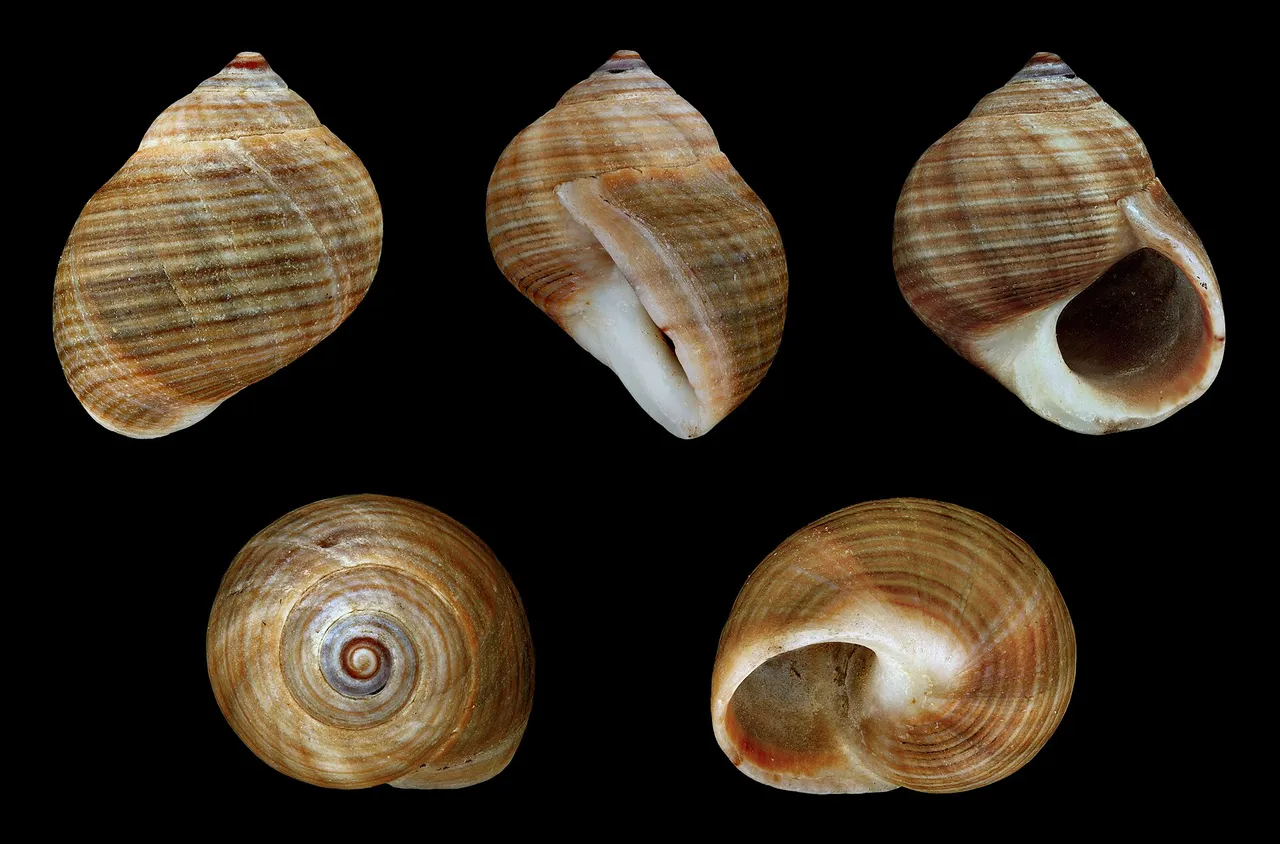
How this was identified, and who took it
Identified by: Identified on shell characters: a solid conical-ovate outline with a pointed apex, fine spiral grooving with darker banding over brown, an ovate aperture with a white columella and dark interior, and no umbilicus. These separate Littorina littorea from the smaller, blunter flat and rough periwinkles of the same shores. RECORDED AS AN EMPTY SHELL. A Pliocene fossil of the same species was rejected in its favour.H. Zell — CC BY-SA 3.0, via Wikimedia Commons — source, licenceLook at this first
Pick it up and look at the opening. A common periwinkle's aperture is a smooth continuous curve with no notch or groove at the front, and the shell above it is a solid cone with a pointed tip, usually between one and three centimetres tall.
Diagnostic — settles it on its own
Each of these settles the identification on its own. If one is clear, you have your answer.
No notch at the front of the shell opening
Hold the shell with the opening towards you and the tip upwards, and trace the edge of the opening all the way round. On this animal it is an unbroken smooth curve. Every whelk — common whelk, dog whelk, netted dog whelk — carries a distinct groove or spout at the front of that opening, through which it extends a siphon to smell. The presence or absence of that groove separates the grazing snails from the predatory ones and it is readable on an empty shell, which is why it is the test to learn.
Supporting — use with other characters
Real characters that are not conclusive by themselves. Use two or three together.
A solid cone with a pointed tip, one to three centimetres tall
Seen from the side the shell rises to a definite point rather than a rounded dome or a squat button. Height is a useful prior rather than a test: most animals are between one and three centimetres, over three is large, and shells around five centimetres are recorded but unusual and slow-grown. The flat periwinkle of the wracks is smaller, rounder and brightly coloured; the rough periwinkle is smaller and carries pronounced ridges you can feel with a thumbnail.
A dark horny lid sealing the opening
A live animal that has withdrawn pulls a tough dark plate across the opening behind it, fitting the aperture closely. That lid is what allows the species to sit out a full tidal exposure high on the shore without drying, and it is the reason a periwinkle can live further up the shore than most things that need to stay wet. Its presence confirms a live animal and its absence on a shell on the strandline means the animal is long gone.
Where on the shore it was found, and on what
This animal lives on rock, boulder, harbour wall and weed-covered hard ground from the upper shore downwards, frequently in large numbers on the same stretch. It grazes, so it leaves visible tracks rasped into the film on rock at low water. An identical-looking snail picked off sand or mud below the low-water line is not this species and is worth a second look, because habitat and feeding mode go together here and the safety profile follows the feeding mode rather than the shape.
What it gets confused with
- Flat periwinkle, which is smaller, distinctly rounder with a flattened tip, brightly coloured in yellow, orange, olive or brown, and lives on the wracks rather than on bare rock.
- Rough periwinkle, which is smaller again and carries pronounced spiral ridges that can be felt rather than only seen, and which occupies the upper shore and splash zone.
- Dog whelk, which is the animal most often picked up in mistake for a large winkle. It carries the front notch that a periwinkle lacks, it is a predator of barnacles and mussels rather than a grazer, and it should be left alone.
- Small common whelks, which share a general spiral shape but carry the siphonal notch, heavier spiral ridging and a chalky white to pale brown shell rather than a dark one.
Side by side: Common periwinkle vs Common limpet, Common periwinkle vs Common whelk.
Where this stops working
Colour does nothing here and should be ignored entirely: shells range from near-black through grey-brown, worn shells go noticeably paler, and fine spiral banding is present on some animals and absent on others. Juveniles of this species and adults of the smaller periwinkles overlap in size and are genuinely difficult, and the tip of a worn shell may have lost the point that would have settled it. The one great advantage of this family is that the diagnostic character is structural: the aperture and the notch survive the animal's death, boiling and years on a strandline, which is not true of any fish character on FishingHQ.
The full record
This page covers identification only. The Common periwinkle record covers behaviour, lifecycle, distribution, handling and the sources behind all of it.
Reviewed 2026-08-16.
More about this fish
Telling it apart is one question. Here are the others.
Similar and related fish
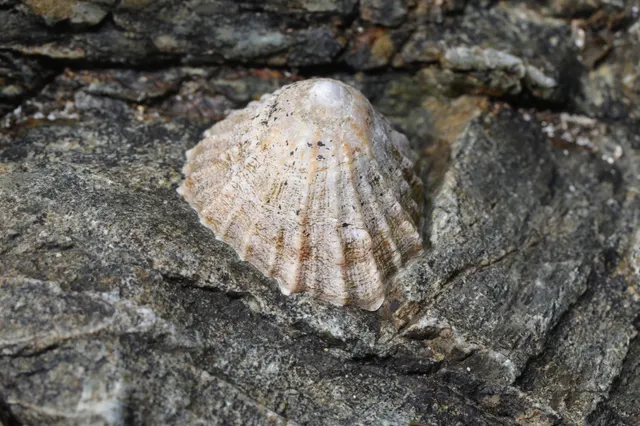 Common limpetThe two grazing gastropods of the same rocky shore, gathered on the same tide by the same people, and distinguished by the fact that one comes away with fingers and the other does not.
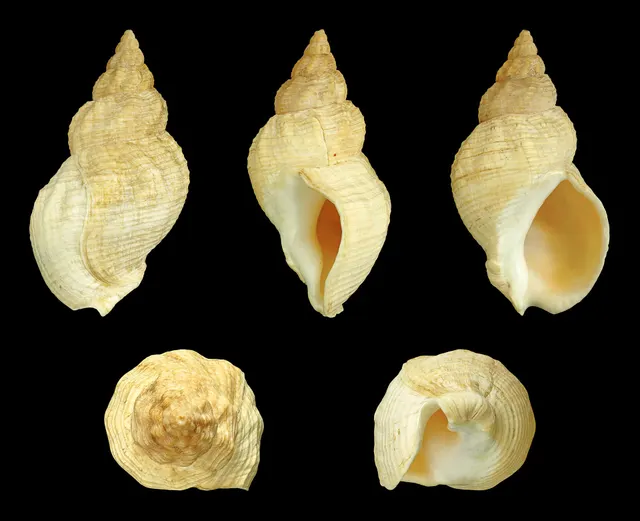 Common whelkTwo gastropods of the same shore system taken by quite different means — one potted on soft ground below the tide, the other picked off rock at low water — and both grazing or scavenging rather than filtering, which is what separates their safety profile from a bivalve's.
- Macaronesian topshellA topshell and a winkle: different families, and the inside of the shell says which.
How it is caught
Where it lives
Where you will find it
Why the 6 connections on this page are here, and the sources
Similar and related fish
Backed by research — 3 connections
Supported by peer-reviewed research or fisheries science. The sources are listed and can be checked.
Common limpet
Two marine gastropods of the same habitat and the same gathering practice, joined so a reader can move between them.
- FishBase: a global information system on fishes — Froese, R. and D. Pauly, eds. — FishBase Consortium (Scientific institute)Relied on for: Distribution, habitat association and life history recorded for Buccinum undatum, Patella vulgata and Littorina littorea, including the rocky and soft-ground habitats each occupies.States this directlyPassage read and verified
- The IUCN Red List of Threatened Species — International Union for Conservation of Nature (Conservation authority)Relied on for: Assessment and range accounts for north-east Atlantic marine gastropods including Littorina littorea, and the habitats and pressures recorded for them.Background and mechanism onlyCitation checked — the work exists and is described correctly
Common whelk
Two marine gastropods placed alongside one another because a reader meeting one will reasonably ask about the other, and because the distinction between them is a practical one about how each is taken.
- FishBase: a global information system on fishes — Froese, R. and D. Pauly, eds. — FishBase Consortium (Scientific institute)Relied on for: Distribution, habitat association and life history recorded for Buccinum undatum, Patella vulgata and Littorina littorea, including the rocky and soft-ground habitats each occupies.States this directlyPassage read and verified
- The IUCN Red List of Threatened Species — International Union for Conservation of Nature (Conservation authority)Relied on for: Assessment and range accounts for north-east Atlantic marine gastropods including Littorina littorea, and the habitats and pressures recorded for them.Background and mechanism onlyCitation checked — the work exists and is described correctly
Macaronesian topshell
Phorcus sauciatus (F. C. L. Koch, 1845) is a trochid — family Trochidae — with a broad conical shell and a nacreous, pearly interior. Littorina littorea is a littorinid with a rounded turban shell and a dull interior, and is a northern European animal. The nacre is the quickest separator in the hand, and the ocean is the surest one.
- WoRMS — the World Register of Marine Species — WoRMS Editorial Board, hosted by the Flanders Marine Institute (VLIZ) (Scientific institute)Relied on for: The accepted names, naming authorities, taxonomic status, synonymy and families that separate these animals from one another.States this directlyPassage read and verified
How it is caught
What experienced anglers do — 1 connection
Widely and independently recommended by experienced anglers and specialist sources. This is real angling knowledge, not proof: controlled evidence for it is limited, and FishingHQ records it as convention rather than as a demonstrated effect.
Gathering winkles, whelks and limpets
An established gathering practice for this species, recorded as the convention it is rather than as a tested claim.
- General angling website restatements of established technique — Various (Credible secondary source)Relied on for: Widely restated practice associating this discipline with this place, recorded as practitioner consensus rather than as tested fact.Background and mechanism onlyCitation checked — the work exists and is described correctly
- Fishers' Craft and Lettered Art: Tracts on Fishing from the End of the Middle Ages — University of Toronto Press, 1997 (Scientific literature)Relied on for: That fishing traditions develop around the water and fish available to them, and the historical method of reading such traditions.States this directlyCitation checked — the work exists and is described correctly
Where it lives
Backed by research — 1 connection
Supported by peer-reviewed research or fisheries science. The sources are listed and can be checked.
Rocky shores and reefs
Habitat association recorded for the species rather than inferred from the fishery.
- FishBase: a global information system on fishes — Froese, R. and D. Pauly, eds. — FishBase Consortium (Scientific institute)Relied on for: Habitat association, depth range and distribution for the species, with SeaLifeBase as its sister database for non-finfish taxa.States this directlyPassage read and verified
A claim that a place contains the ground and conditions the animal is associated with. It is a distributional statement about the world and rests on reference works, and it deliberately asserts nothing about access or permission.
- The Fishes of the British Isles and North-West Europe — Macmillan, 1969 (Reference work)Relied on for: Distribution and habitat association of the inshore fauna of the British Isles and the north-east Atlantic.States this directlyCitation checked — the work exists and is described correctly
- FishBase: a global information system on fishes — Froese, R. and D. Pauly, eds. — FishBase Consortium (Scientific institute)Relied on for: Recorded distribution and habitat association for the species where held.Background and mechanism onlyPassage read and verified
- The IUCN Red List of Threatened Species — International Union for Conservation of Nature (Conservation authority)Relied on for: Range and recorded threats for the species where assessed.Background and mechanism onlyCitation checked — the work exists and is described correctly
Where you will find it
Backed by research — 1 connection
Supported by peer-reviewed research or fisheries science. The sources are listed and can be checked.
Morecambe Bay and the north-west England coast
A claim that a place contains the ground, water and seasonal conditions the species is associated with. It is a distributional statement about the world, it rests on the regional reference literature, and it deliberately asserts nothing about access, permission or catch.
- JNCC species and habitat conservation advice — Joint Nature Conservation Committee (Conservation authority)Relied on for: Habitat classification and description for the intertidal, coastal and freshwater habitats named, and the species characteristically associated with them.States this directlyCitation checked — the work exists and is described correctly
- Cefas science, advice and data on marine and freshwater environments — Centre for Environment, Fisheries and Aquaculture Science (Government fisheries body)Relied on for: Characterisation of UK inshore sediment, intertidal habitat and the shellfish beds associated with them.States this directlyCitation checked — the work exists and is described correctly
Safety
Tides and being cut off — Can cause serious injury or death
Gathering happens on intertidal ground at low water, facing down, with attention on the beach rather than the sea. Flats and gullies flood from behind, and people have drowned on ground they walked out over an hour earlier.
What reduces it: Know the tide and the exit before starting, and set a time to leave rather than leaving when the bag is full. Do not gather alone on unfamiliar intertidal ground, and tell somebody where you are.
Slips, trips and falls — Can cause injury needing treatment
Winkling is done on wet weed-covered rock at low water, looking down, moving constantly. Weed-covered boulders are among the most slippery surfaces on any shore and a fall onto rock is the realistic injury.
What reduces it: Footwear with grip, weight kept low, and no hurrying between boulders. Test weed-covered rock before committing weight to it.