Florida
Fishing regions · Last reviewed 2026-08-14
A peninsula between two seas with more distinct fisheries than most countries: flats, reef, offshore, backcountry, spring-fed rivers and a bass fishery, all within a day of each other.
Safety: weather and lightning — can cause serious injury or death. 3 more points apply here.
Being listed here is not permission to fish. What that meansClose
Access, fishing rights, seasons, licences, local bylaws and permitted methods vary and can change. Check current access, permission, local regulations, closures and restrictions before you travel or fish. FishingHQ describes what the ground is and names who holds the answer; it does not hold the answer itself.
Find the authority for a jurisdiction · What FishingHQ does and does not cover
Florida is a jurisdiction-tier record because a single state contains more genuinely different fisheries than most nations, and because a hundred and one of FishingHQ's species pages reach North America with a large share of them living here.
TWO SEAS AND A REEF BETWEEN THEM. The Gulf of Mexico on one side, the Atlantic on the other, and at the southern tip the only living coral barrier reef in the continental United States. Those three systems produce three separate fisheries within a short distance.
THE FLATS ARE THE INTERNATIONAL DISTINCTION. Shallow sand, marl and seagrass flats in the Keys and along both coasts hold bonefish, permit and tarpon, and sight-fishing them from a poled skiff is a discipline that was largely invented here and exported worldwide.
THE BACKCOUNTRY IS THE OTHER HALF. Mangrove creeks, bays and estuarine backwaters hold snook, redfish and spotted seatrout, and it is the fishery most Floridians actually do.
OFFSHORE IS DEEP AND CLOSE. The Gulf Stream runs near the Atlantic coast, putting blue water and billfish within a short run, and the Gulf side offers reef and structure fishing for snapper and grouper.
AND THE FRESHWATER FISHERY IS SUBSTANTIAL AND OFTEN OVERLOOKED. Largemouth bass in lakes and canals, peacock bass established in the south-east canal system, and clear spring-fed rivers with their own character — a genuinely separate fishing world inside the same state.
What fishing here is like
A subtropical peninsula holding several distinct fisheries in close proximity: sight-fishing shallow flats for bonefish, permit and tarpon; mangrove and estuarine backcountry for snook, redfish and seatrout; reef and offshore fishing on both coasts with the Gulf Stream close to the Atlantic shore; and a substantial freshwater fishery of lakes, canals and spring-fed rivers. Participation is very high, the guiding industry is large and professionalised, and the state's fisheries management is unusually visible in public life.
What you can target here
One entry per fish, grouped by how you would be fishing — because the answer is a different one from the rocks and from a boat. Each entry says how strongly the sources support it and how much evidence sits behind it. These are documented catches, not a forecast, and none of it is a statement that you may fish any particular ground.
From the shore · 5
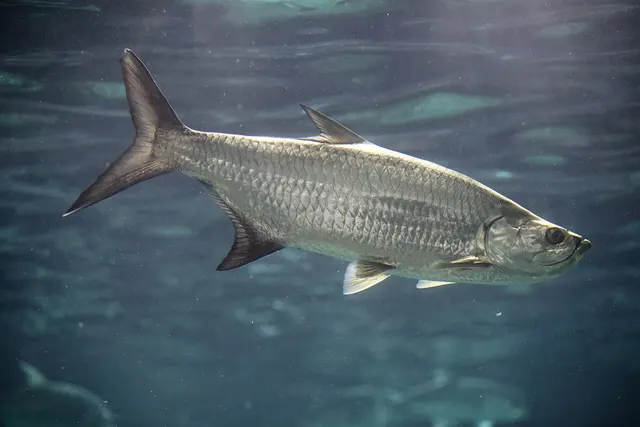 Atlantic tarponRepeatedly reported2 places · 3 fishery accounts · 2 independent sourcesSeven Mile Bridge, Bahia Honda BridgeOver bridge
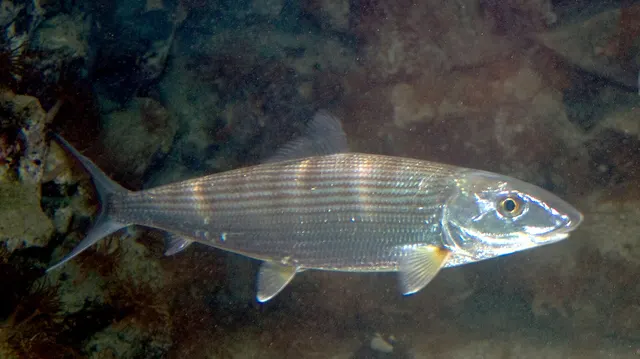 BonefishRepeatedly reported1 place · 2 fishery accounts · 2 independent sourcesThe Islamorada flatsOver shallow flat
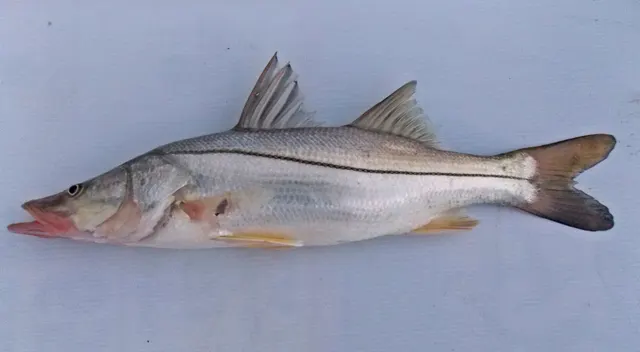 Common snookRepeatedly reported2 places · 2 fishery accounts · 1 sourceSeven Mile Bridge, Bahia Honda BridgeOver bridge
- Great barracudaRecorded here2 placesSeven Mile Bridge, Bahia Honda BridgeOver bridge
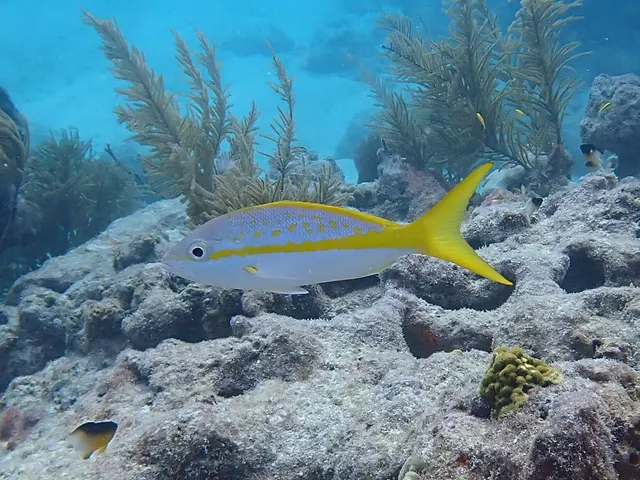 Yellowtail snapperRecorded here1 placeSeven Mile BridgeOver bridge
From a boat · 11
- Atlantic tarponRepeatedly reported4 places · 5 fishery accounts · 2 independent sourcesSeven Mile Bridge, Bahia Honda Bridge, The Islamorada flats, The Florida Bay backcountryOver bridge, mangrove shore, shallow flat
- BonefishRepeatedly reported1 place · 2 fishery accounts · 2 independent sourcesThe Islamorada flatsOver shallow flat
- Common snookRepeatedly reported3 places · 3 fishery accounts · 1 sourceSeven Mile Bridge, The Florida Bay backcountry, Bahia Honda BridgeOver bridge, mangrove shore
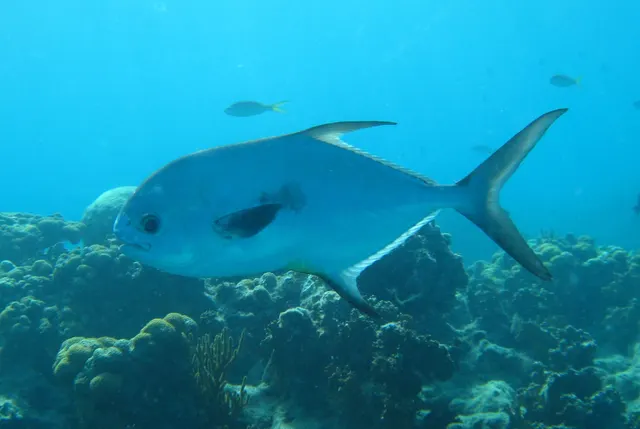 PermitRepeatedly reported2 places · 1 fishery account · 1 sourceThe Islamorada flats, Seven Mile BridgeOver bridge, shallow flat
- Yellowtail snapperRepeatedly reported2 places · 1 fishery account · 1 sourceThe Upper Keys reef line, Seven Mile BridgeOver bridge, reef
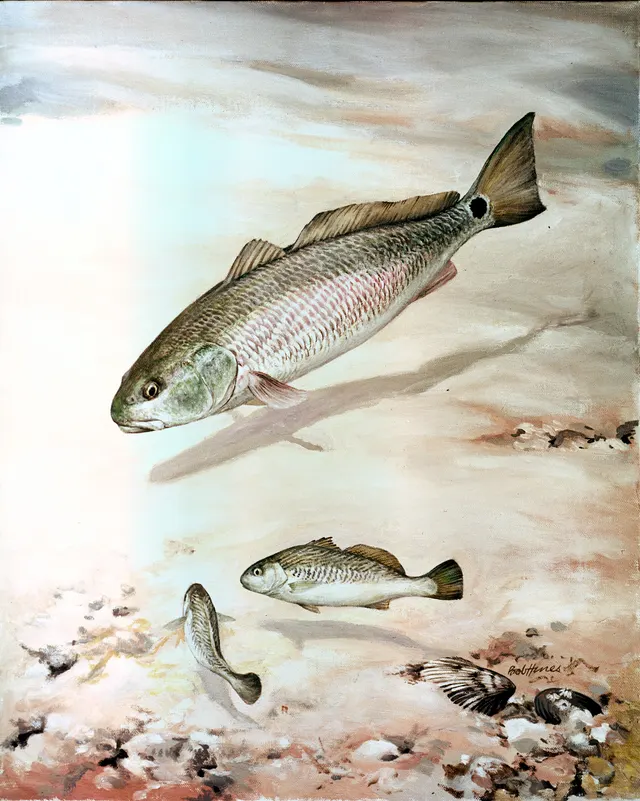 Red drumRepeatedly reported1 place · 1 fishery account · 1 sourceThe Florida Bay backcountryOver mangrove shore
Also documented from a boat: Sailfish · King mackerel · Spotted seatrout · Great barracuda · Cobia
On a charter · 5
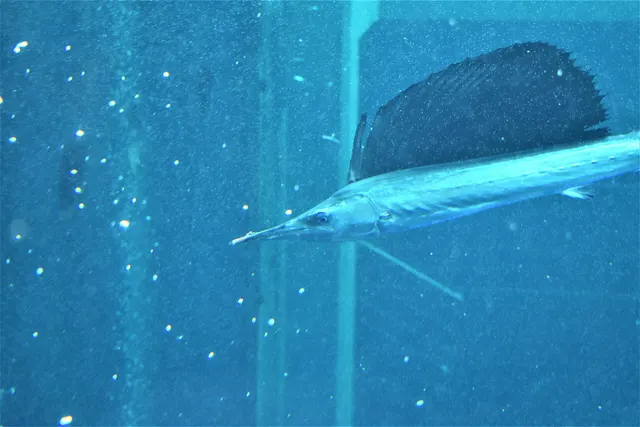 SailfishRepeatedly reported1 place · 1 fishery account · 1 sourceThe Keys offshore groundsOver sea area
- Yellowtail snapperRepeatedly reported1 place · 1 fishery account · 1 sourceThe Upper Keys reef lineOver reef
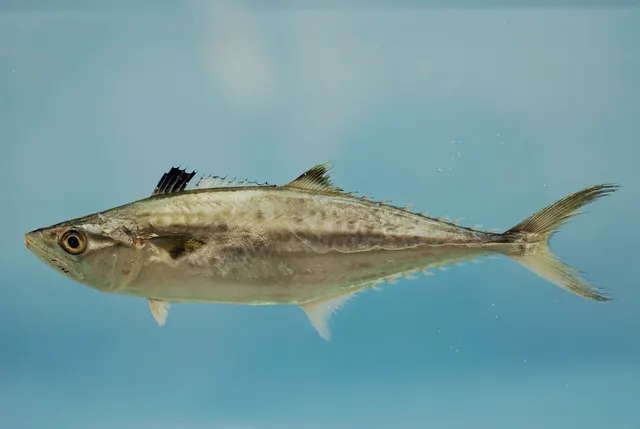 King mackerelRecorded here2 places · 1 fishery account · 1 sourceThe Upper Keys reef line, The Keys offshore groundsOver reef, sea area
- CobiaRecorded here2 placesThe Upper Keys reef line, The Keys offshore groundsOver reef, sea area
- Great barracudaRecorded here1 placeThe Upper Keys reef lineOver reef
Fly fishing · 7
- BonefishRepeatedly reported1 place · 2 fishery accounts · 2 independent sourcesThe Islamorada flatsOver shallow flat
- Atlantic tarponRepeatedly reported2 places · 2 fishery accounts · 1 sourceThe Islamorada flats, The Florida Bay backcountryOver mangrove shore, shallow flat
- Common snookRepeatedly reported1 place · 1 fishery account · 1 sourceThe Florida Bay backcountryOver mangrove shore
- PermitRepeatedly reported1 place · 1 fishery account · 1 sourceThe Islamorada flatsOver shallow flat
- Red drumRepeatedly reported1 place · 1 fishery account · 1 sourceThe Florida Bay backcountryOver mangrove shore
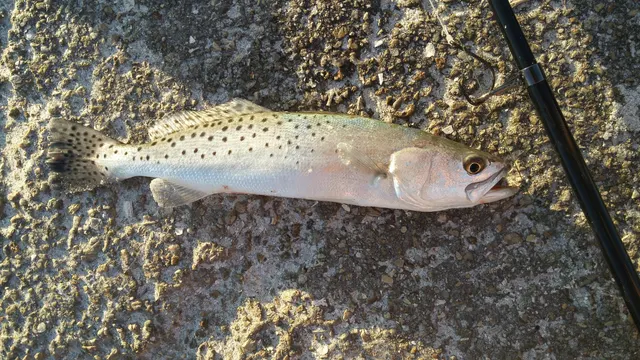 Spotted seatroutRecorded here1 place · 1 fishery account · 1 sourceThe Florida Bay backcountryOver mangrove shore
Also documented fly fishing: Great barracuda
What these strengths mean
- Repeatedly reported
- Several independent public accounts. Enough to say it happens more than once; not enough to call it a fishery.
- Recorded here
- At least one credible public account of this species being caught here. That is all it means.
- How breadth is counted
- A fish documented at six marks is shown as six marks: breadth never raises the strength on its own. A fishery account describes the fishing; a recorded catch reports one specific catch. How evidence is weighed.
How people fish here
6 methods are recorded on the places documented here, counted from the records themselves rather than from what is practised in the country. Each opens a full guide to the technique.
Livebaiting at sea
Recorded at 6 places here, over bridge, mangrove shore, reef, sea area.
Presenting a living fish where a predator will find it — the most effective method for many species and the one with the clearest welfare questions attached.
Documented on the same ground: Atlantic tarpon, Bonefish, Common snook, Permit, Red drum, Sailfish.
Spinning
Recorded at 4 places here, over bridge, mangrove shore, shallow flat.
Casting an artificial lure and retrieving it so that it moves like something alive — the most direct form of lure fishing.
Documented on the same ground: Atlantic tarpon, Bonefish, Common snook, Permit, Red drum, Cobia.
Ledgering
Recorded at 3 places here, over bridge, reef.
Fishing a bait on the bottom held by a weight, with no float — the simplest way to fish at distance, in depth, or in wind.
Documented on the same ground: Atlantic tarpon, Common snook, Yellowtail snapper, Cobia, Great barracuda, King mackerel.
Jigging
Recorded at 2 places here, over reef, sea area.
Working a weighted lure with a rising-and-falling motion, usually vertically, so it behaves like a wounded or fleeing baitfish.
Documented on the same ground: Sailfish, Yellowtail snapper, Cobia, Great barracuda, King mackerel.
Saltwater fly fishing
Recorded at 2 places here, over mangrove shore, shallow flat.
Fly fishing adapted to the sea: heavier lines, corrosion-proof tackle, fish that run rather than fight, and wind as the permanent constraint.
Documented on the same ground: Atlantic tarpon, Bonefish, Common snook, Permit, Red drum, Cobia.
Trolling
Recorded at 1 place here, over sea area.
Towing lures or baits behind a moving boat to cover large volumes of water and locate scattered fish.
Documented on the same ground: Sailfish, Cobia, King mackerel.
These are the methods documented at the places FishingHQ holds here. A species listed beside a method is documented on the same ground, which is not the same as being taken that way — where a source establishes the method a fish was caught on, it is stated on that place’s own page. All fishing methods.
What dominates
Flats fishing from a poled skiff, sight-casting with fly or light spinning tackle, which is the state's international signature. Backcountry and inshore fishing in mangrove, bay and estuary for snook, redfish and seatrout. Pier, bridge and surf fishing along both coasts, which is the accessible form. Offshore trolling and live-baiting for sailfish, marlin, mahi-mahi and tuna, particularly on the Atlantic side where the Gulf Stream runs close. Reef and wreck bottom fishing for snapper and grouper. Freshwater bass fishing on lakes and canals. Lobster diving in season, a mass-participation event in the Keys. Spearfishing on reef and wreck.
The water available
Shallow sand, marl and seagrass flats, extensive in the Keys and along both coasts; mangrove shoreline, creeks and estuarine bays forming the backcountry; the only living coral barrier reef in the continental United States, running along the Keys; the Gulf Stream close inshore on the Atlantic side, bringing blue water within a short run; a broad shallow shelf on the Gulf side with hard bottom, reef and wreck; a vast interior of shallow lakes, marsh and canal; clear limestone spring-fed rivers of constant temperature; and the Everglades system connecting fresh water to the coast.
How the rules are structured
Fisheries are administered by the state wildlife and fisheries commission within state waters and by federal authorities beyond them, with the regional fishery management council responsible for reef fish and pelagic species offshore. Instruments include size and bag limits, closed seasons for particular species, slot limits protecting both small and large fish for several inshore species, gear restrictions, and a substantial network of protected areas. Several species — including tarpon, bonefish and snook in various respects — carry particular protection or catch-and-release requirements. The Keys sit within a national marine sanctuary with its own zoning, including no-take research areas. The lobster fishery has a defined season including a distinct sport season that is a mass participation event. Freshwater and saltwater fishing are separately licensed. FishingHQ does not state what any current rule is.
Who to ask
- The state fish and wildlife conservation commission, for state waters, inshore species, licensing and the freshwater fishery.
- The regional fishery management council and the federal fisheries service, for reef fish and pelagic species in federal waters.
- The national marine sanctuary authority for the Keys, whose zoning governs what may happen where along the reef.
- The national park authority where fishing takes place inside Everglades, Biscayne or Dry Tortugas waters.
- The state health authority, for shellfish harvesting area classification and closures.
Words you will meet
- Flats
- Shallow sand, marl or seagrass bottom, frequently less than a metre deep, over which fish can be seen and cast to. The ground the sight-fishing discipline is conducted on, and the reason Florida matters internationally in angling.
- Backcountry
- The mangrove creeks, bays and shallow estuarine water behind the coast, particularly in the Keys and the Everglades. A separate fishery from the flats with its own species and its own navigation problems.
- Poling
- Pushing a shallow-draught skiff across a flat with a long pole from a raised platform, silently, while the angler on the bow looks for fish. The propulsion method the whole discipline depends on.
- Grand slam
- Taking a bonefish, a permit and a tarpon in the same day. A locally invented achievement that has become an international benchmark for flats fishing, and a fair indication of what the fishery is organised around.
- Mini-season
- The short sport lobster season preceding the commercial one, a mass-participation event in the Keys with substantial safety and enforcement implications. A regulatory object that has become a cultural one.
Conditions and hazards
Heat, sun and dehydration are the constant background risks, and they are underestimated on a flat where the water reflects the light. Thunderstorms build quickly in the warm months and lightning is a genuine hazard on open water — Florida records more lightning strikes than anywhere else in the United States. Hurricanes affect the state seasonally and reshape both coastline and fishery. Shallow-water navigation is a real hazard: running aground on a flat at speed causes injury and damages seagrass, and the backcountry is a maze in which people get lost. The lobster mini-season concentrates very large numbers of divers in the water over a short period and has a recurring casualty record. Alligators occur in fresh and brackish water and are a genuine consideration in the interior and the Everglades. Sharks are common inshore and are principally a consideration when handling hooked fish.
Flats, backcountry, reef and Gulf Stream in one state
Florida's environments are worth separating carefully, because a visitor who conflates them will plan the wrong trip.
THE FLATS ARE SHALLOW, HARD-BOTTOMED AND CLEAR. Sand, marl and seagrass in less than a metre of water, extensive in the Keys and along both coasts, with fish visible and castable. Clarity is the requirement, and it is why the fishery is so weather-dependent: wind and cloud remove the ability to see.
THE BACKCOUNTRY IS SHELTERED, TURBID AND STRUCTURED. Mangrove creeks, shallow bays and estuarine basins behind the coast, where the water is coloured, the cover is dense and the fish are found by reading structure rather than by seeing them.
THE REEF IS A GENUINE CORAL BARRIER, running along the Keys — the only one in the continental United States — with the associated snapper, grouper and reef community, and with the conservation framework that follows from it.
THE GULF STREAM RUNS CLOSE ON THE ATLANTIC SIDE, bringing genuinely oceanic water within a short run of shore and putting billfish, mahi-mahi and tuna within reach of a modest boat. That proximity is unusual and it is why the Atlantic coast has the offshore reputation it does.
THE GULF SIDE IS A BROAD SHALLOW SHELF with hard bottom, ledges and wreck, producing a bottom fishery rather than a blue-water one, and a much longer run to deep water.
AND THE INTERIOR IS FRESH AND VERY LARGE — shallow lakes, marsh, canal systems and spring-fed rivers of constant temperature, which behave nothing like the coast and hold a completely separate fishery.
Backed by research — why, and the sources (2)
Supported by peer-reviewed research or fisheries science. The sources are listed and can be checked.
- NOAA National Ocean Service education on estuaries and the National Estuarine Research Reserve System — National Oceanic and Atmospheric Administration, United States (Government fisheries body)Relied on for: Estuarine and coastal structure and function in North American waters, and the nursery role of estuarine and seagrass habitat.States this directlyCitation checked — the work exists and is described correctly
- FishBase: a global information system on fishes — Froese, R. and D. Pauly, eds. — FishBase Consortium (Scientific institute)Relied on for: Distribution, habitat association and life history of the species occurring in the area.States this directlyPassage read and verified
Three fisheries, three species lists
Florida's catch divides by environment more cleanly than in most places, and the lists barely overlap.
THE FLATS HOLD THE SIGHT-FISHING SPECIES. Bonefish over sand and marl, permit over coral and wrecks as well as flats, and tarpon moving through channels and along beaches on their seasonal migration. All three are largely released, and all three carry particular protection.
THE BACKCOUNTRY HOLDS THE INSHORE SET. Common snook in mangrove and around structure, red drum on flats and in creeks, spotted seatrout over grass, and black drum and sheepshead around structure and pilings.
THE REEF AND OFFSHORE BOTTOM HOLD SNAPPER AND GROUPER. Red snapper, yellowtail snapper, gag grouper and goliath grouper occupy hard bottom, reef and wreck, with goliath grouper protected and recovering after decades of closure.
BLUE WATER HOLDS THE PELAGICS: sailfish, blue marlin, mahi-mahi, wahoo, king mackerel, cobia and tuna, reachable within a short run on the Atlantic side.
THE FRESHWATER FISHERY IS LARGEMOUTH BASS FIRST, in lakes, marsh and canal, with a genuine trophy reputation, alongside crappie, bluegill and catfish.
BUTTERFLY PEACOCK BASS ARE AN ESTABLISHED INTRODUCTION in the south-eastern canal system, deliberately stocked and now a recognised urban fishery — an unusual case of a successful and intentional tropical introduction.
AND SPINY LOBSTER IS THE NON-FINFISH CATCHES THAT MATTERS, taken by divers in a season that has become a mass-participation event with its own culture and its own casualty record.
Backed by research — why, and the sources (2)
Supported by peer-reviewed research or fisheries science. The sources are listed and can be checked.
- NOAA National Ocean Service education on estuaries and the National Estuarine Research Reserve System — National Oceanic and Atmospheric Administration, United States (Government fisheries body)Relied on for: Estuarine and coastal structure and function in North American waters, and the nursery role of estuarine and seagrass habitat.States this directlyCitation checked — the work exists and is described correctly
- FishBase: a global information system on fishes — Froese, R. and D. Pauly, eds. — FishBase Consortium (Scientific institute)Relied on for: Distribution, habitat association and life history of the species occurring in the area.States this directlyPassage read and verified
Poling a skiff, working a mangrove, running the stream
Florida's disciplines are distinct enough that practitioners of one may never do another.
FLATS FISHING FROM A POLED SKIFF IS THE SIGNATURE. A guide pushes a shallow-draught boat across a flat with a pole from a raised platform, silently, while the angler on the bow looks for fish and casts to them. It is a hunting discipline conducted in inches of water, it demands accurate casting under pressure, and it was largely developed here.
BACKCOUNTRY FISHING IS THE OPPOSITE IN TEMPERAMENT — reading structure in coloured water, casting to mangrove edges, docks and creek mouths for snook and redfish, and it is what most Florida anglers actually do.
PIER, BRIDGE AND SURF FISHING IS THE ACCESSIBLE FORM, requiring no boat, and it produces a genuinely wide species list along both coasts.
OFFSHORE TROLLING AND LIVE-BAITING works the Gulf Stream edge for billfish and pelagics on the Atlantic side, with a substantial charter and tournament culture attached.
REEF AND WRECK BOTTOM FISHING takes snapper and grouper, with barotrauma management and descending devices now standard practice given the depths involved.
LOBSTER DIVING IN SEASON is a mass activity in the Keys, and the short sport season preceding the commercial one concentrates enormous numbers of people in the water at once.
BASS FISHING ON THE LAKES AND CANALS is a major discipline with a tournament structure, and the canal peacock bass fishery is a distinctive urban variant.
AND SPEARFISHING IS WELL ESTABLISHED on reef and wreck, subject to the sanctuary zoning and to species and gear rules.
What experienced anglers do — why, and the sources (2)
Widely and independently recommended by experienced anglers and specialist sources. This is real angling knowledge, not proof: controlled evidence for it is limited, and FishingHQ records it as convention rather than as a demonstrated effect.
- General angling website restatements of established technique — Various (Credible secondary source)Relied on for: Widely restated practice associating this discipline or technique with this place, recorded as practitioner consensus rather than as tested fact.Background and mechanism onlyCitation checked — the work exists and is described correctly
- Fishers' Craft and Lettered Art: Tracts on Fishing from the End of the Middle Ages — University of Toronto Press, 1997 (Scientific literature)Relied on for: That fishing traditions develop around the water and fish available to them, and the historical method of reading such traditions from their documentary record.States this directlyCitation checked — the work exists and is described correctly
A subtropical year of migrations, heat and storms
Florida has a real seasonal structure despite its latitude, and it is driven by water temperature, migration and weather rather than by cold.
WINTER AND EARLY SPRING IS THE SETTLED SEASON. Cooler water, lower humidity, fewer storms and clear conditions make it the best flats period, and it is when bonefish and permit fishing is most reliable. Cold fronts push through, dropping water temperature sharply and moving fish into deeper channels and basins — a genuine and consequential event for inshore fishing.
SPRING IS THE TARPON MIGRATION. Tarpon move along the coasts and through the Keys in a well-defined seasonal migration, and the fishery organised around it is one of the most intense in North American angling.
SUMMER IS HOT, WET AND STORMY. Afternoon thunderstorms are near-daily, lightning is a serious hazard, water temperatures rise to the point of stressing fish, and the fishing shifts to early morning, late evening and night. It is also the offshore and lobster season.
AUTUMN BRINGS THE HURRICANE PEAK, and storms reshape flats, cut new channels, destroy seagrass and alter fisheries for years afterwards. A hurricane is a habitat event rather than merely a weather one.
SNOOK ARE COLD-SENSITIVE, and severe cold events have caused large-scale mortality in the past — which is why they carry closed seasons in some periods and why unusual cold is a fisheries event in Florida.
AND THE FRESHWATER SEASON RUNS ON ITS OWN CYCLE, with bass spawning in the cooler months — the opposite of the northern pattern — and the spring-fed rivers holding constant temperature year-round.
Backed by research — why, and the sources (2)
Supported by peer-reviewed research or fisheries science. The sources are listed and can be checked.
- NOAA National Ocean Service education on estuaries and the National Estuarine Research Reserve System — National Oceanic and Atmospheric Administration, United States (Government fisheries body)Relied on for: Estuarine and coastal structure and function in North American waters, and the nursery role of estuarine and seagrass habitat.States this directlyCitation checked — the work exists and is described correctly
- FishBase: a global information system on fishes — Froese, R. and D. Pauly, eds. — FishBase Consortium (Scientific institute)Relied on for: Distribution, habitat association and life history of the species occurring in the area.States this directlyPassage read and verified
State, federal, sanctuary and park, on the same piece of water
Florida's regulatory structure has more overlapping layers than almost anywhere else on FishingHQ, and knowing which applies is the practical skill.
THE STATE COMMISSION ADMINISTERS STATE WATERS, inshore species, licensing and the whole freshwater fishery, and it is the body most anglers deal with.
FEDERAL AUTHORITIES GOVERN BEYOND STATE WATERS, with the regional fishery management council responsible for reef fish and pelagic species. State and federal seasons and limits for the same species can differ, which is a recurring source of confusion and of political dispute.
THE KEYS SIT INSIDE A NATIONAL MARINE SANCTUARY with detailed zoning, including no-take research-only areas, and the zone a boat is in decides what may happen there.
NATIONAL PARK WATERS ADD A FOURTH LAYER in the Everglades, Biscayne and Dry Tortugas, with their own rules and permits.
SLOT LIMITS ARE A CHARACTERISTIC INSTRUMENT HERE, protecting both small and large fish for several inshore species — a design that reflects the fact that the largest fish are frequently the most reproductively valuable.
SEVERAL SPECIES ARE RELEASE-ONLY OR SPECIALLY PROTECTED, including tarpon and bonefish in various respects, and goliath grouper was closed to harvest for decades.
SEPARATE LICENCES APPLY TO FRESHWATER AND SALTWATER FISHING, with additional endorsements for particular species and activities.
AND FISHINGHQ DOES NOT STATE WHAT ANY OF THIS CURRENTLY PERMITS. Florida's seasons and limits change frequently and differ between state and federal waters on the same species.
Official guidance — why, and the sources (2)
Stated by a fisheries authority, scientific institute or recognised angling body. Authoritative, but summarising rather than demonstrating.
- Code of Conduct for Responsible Fisheries — Food and Agriculture Organization of the United Nations, Rome, 1995 (Standards body)Relied on for: Principles for the management of fisheries, including licensing, closed seasons, size limits and the treatment of small-scale and shared stocks.States this directlyCitation checked — the work exists and is described correctly
- Good Fish Guide — Marine Conservation Society (Conservation authority)Relied on for: Assessment of fisheries and the management measures applied to them, including the instruments used and their purpose.Background and mechanism onlyCitation checked — the work exists and is described correctly
Flats, backcountry, slot and mini-season
Florida's angling vocabulary has been exported worldwide, and several of the terms carry precise meanings that travel badly.
FLATS NAMES SHALLOW HARD-BOTTOMED WATER over which fish can be seen and cast to. It is not a synonym for shallow water generally: a flat implies clarity, a firm bottom and the possibility of sight fishing, and the word does most of its work by implying a discipline.
BACKCOUNTRY NAMES THE MANGROVE AND ESTUARINE MAZE behind the coast, and it implies shelter, colour and structure — the opposite conditions from the flats and a different fishery entirely.
POLING NAMES THE PROPULSION and, by extension, the whole approach: silent, slow, elevated, visual. A poling platform on a skiff is the physical marker of the discipline.
SLOT LIMIT NAMES A RULE WITH A BIOLOGICAL ARGUMENT BEHIND IT — keep only fish between a minimum and a maximum, protecting juveniles at one end and the large, disproportionately productive breeders at the other. Florida uses it extensively and it is worth understanding as reasoning rather than as an arbitrary number.
MINI-SEASON NAMES THE SHORT SPORT LOBSTER OPENING before the commercial season, and it has become a cultural event with a substantial safety record attached.
GRAND SLAM NAMES BONEFISH, PERMIT AND TARPON IN A DAY, a locally invented benchmark that now defines flats fishing internationally.
AND A COLD FRONT IS A FISHING TERM HERE rather than a weather one: it names the specific event that drops inshore water temperature, moves fish off the flats and into basins, and changes the fishing for days.
What experienced anglers do — why, and the sources (2)
Widely and independently recommended by experienced anglers and specialist sources. This is real angling knowledge, not proof: controlled evidence for it is limited, and FishingHQ records it as convention rather than as a demonstrated effect.
- General angling website restatements of established technique — Various (Credible secondary source)Relied on for: Widely restated practice associating this discipline or technique with this place, recorded as practitioner consensus rather than as tested fact.Background and mechanism onlyCitation checked — the work exists and is described correctly
- Fishers' Craft and Lettered Art: Tracts on Fishing from the End of the Middle Ages — University of Toronto Press, 1997 (Scientific literature)Relied on for: That fishing traditions develop around the water and fish available to them, and the historical method of reading such traditions from their documentary record.States this directlyCitation checked — the work exists and is described correctly
From commercial netting to a release fishery, in one lifetime
Florida's fishing history contains one of the sharpest policy reversals in American fisheries and a habitat story that is still running.
THE EARLY COMMERCIAL FISHERY WAS EXTENSIVE, with netting, sponging and turtle fisheries along both coasts, and the Keys supported a working maritime economy long before it supported a sporting one.
THE SPORT FISHERY DEVELOPED FROM THE EARLY TWENTIETH CENTURY, with the Keys and the Gulf Stream attracting anglers and writers, and the flats fishery emerging as a recognised discipline within the middle of the century.
THE NET BAN WAS THE POLICY REVERSAL. A state constitutional amendment approved by voters in the mid-1990s prohibited entangling nets in state waters, ending large parts of the inshore commercial fishery and reallocating inshore resources decisively towards recreational and small-scale use. Few fisheries decisions anywhere have been taken so directly by public vote.
SPECIES PROTECTION FOLLOWED. Goliath grouper was closed to harvest for decades and has recovered substantially; snook, tarpon and bonefish acquired protective measures; and slot limits became standard for inshore species.
THE EVERGLADES AND WATER MANAGEMENT IS THE HABITAT STORY. A century of drainage, channelisation and altered freshwater flow changed the salinity, timing and productivity of Florida Bay and the estuaries, with consequences for seagrass, for nursery habitat and for the fisheries that depend on them. Restoration is now one of the largest environmental engineering programmes anywhere.
SEAGRASS DIE-OFFS AND ALGAL BLOOMS have recurred and are directly linked to water quality and flow.
AND HURRICANES PUNCTUATE ALL OF IT, reshaping flats and channels and resetting parts of the fishery periodically.
Official guidance — why, and the sources (2)
Stated by a fisheries authority, scientific institute or recognised angling body. Authoritative, but summarising rather than demonstrating.
- Fishers' Craft and Lettered Art: Tracts on Fishing from the End of the Middle Ages — University of Toronto Press, 1997 (Scientific literature)Relied on for: The historical development of fishing practice and its transmission, and the method of reading a fishing tradition from its documentary record.States this directlyCitation checked — the work exists and is described correctly
- Code of Conduct for Responsible Fisheries — Food and Agriculture Organization of the United Nations, Rome, 1995 (Standards body)Relied on for: Principles for fisheries management including the treatment of traditional, small-scale and shared fisheries, against which historical arrangements can be read.Background and mechanism onlyCitation checked — the work exists and is described correctly
A guiding culture, a tournament culture and an argument about access
Florida's angling culture is large, professionalised and unusually engaged with management.
THE GUIDING INDUSTRY IS SUBSTANTIAL AND SKILLED. Flats and backcountry guiding is a recognised profession with a strong apprenticeship culture, and the knowledge held by experienced guides — of tides, of individual flats, of fish behaviour — is a genuine body of expertise.
RELEASE IS THE NORM IN THE SIGHT FISHERIES. Tarpon, bonefish and permit are overwhelmingly released, and the ethic around handling them is well developed — keeping fish in the water, minimising fight time, reviving properly — which FishingHQ's handling material explains the mechanism for.
TOURNAMENT CULTURE IS LARGE across offshore, inshore and bass fishing, with a professional circuit and substantial money involved.
THE LOBSTER MINI-SEASON IS A MASS CULTURAL EVENT, with very large numbers of people in the water over two days and a recurring record of diving and boating incidents that the authorities plan for annually.
ACCESS AND ALLOCATION ARE PERMANENTLY CONTESTED. State versus federal seasons, commercial versus recreational allocation, and the reef fish argument in particular are live public issues, and Florida anglers are unusually politically engaged with fisheries management as a result.
WATER QUALITY IS NOW A PUBLIC ANGLING ISSUE. Algal blooms, seagrass loss and Everglades restoration are followed closely by the angling community, which has become a significant constituency for habitat policy.
AND THE FRESHWATER AND SALTWATER CULTURES BARELY OVERLAP, which is worth saying: a Florida bass angler and a Keys flats guide are in the same state and in different sports.
What experienced anglers do — why, and the sources (2)
Widely and independently recommended by experienced anglers and specialist sources. This is real angling knowledge, not proof: controlled evidence for it is limited, and FishingHQ records it as convention rather than as a demonstrated effect.
- General angling website restatements of established technique — Various (Credible secondary source)Relied on for: Widely restated practice associating this discipline or technique with this place, recorded as practitioner consensus rather than as tested fact.Background and mechanism onlyCitation checked — the work exists and is described correctly
- Fishers' Craft and Lettered Art: Tracts on Fishing from the End of the Middle Ages — University of Toronto Press, 1997 (Scientific literature)Relied on for: That fishing traditions develop around the water and fish available to them, and the historical method of reading such traditions from their documentary record.States this directlyCitation checked — the work exists and is described correctly
On a flat you are the tallest thing for a mile, and the storm builds in an hour
The dangerous thing here is not a wave or a current. It is the sky, and the reason it catches anglers specifically is a matter of geometry.
FLORIDA RECORDS MORE LIGHTNING THAN ANYWHERE ELSE IN THE UNITED STATES, and the warm-month pattern is a daily one: convection builds through the morning, storms form in the afternoon, and they build fast — the interval between a benign sky and an active cell overhead can be under an hour. That is short enough that a person who decides to leave when the storm looks close has already decided too late, because leaving a backcountry flat is measured in tens of minutes.
AND ON A FLAT, THE ANGLER IS THE HIGHEST POINT FOR A CONSIDERABLE DISTANCE. Standing on a poling platform, holding a graphite rod, over shallow saltwater, under an open sky with no structure anywhere, is close to a worked example of what not to be in a thunderstorm.
SO THE DECISION RULE IS EARLIER THAN INSTINCT SUGGESTS. Watch the building cells rather than the arriving ones, start back on the first serious build rather than the first thunder, and get the rods down and low in the hull rather than fishing on under a dark sky. If thunder can be heard, the storm is already within striking distance.
HURRICANES ARE A DIFFERENT CATEGORY and are not a fishing decision: the response to one is an evacuation decision made by an authority rather than a weather judgement made by an angler.
THE SECOND HAZARD IS THAT SHALLOW WATER IS NAVIGATIONALLY HOSTILE. Running aground on a flat at speed injures the people aboard and scars seagrass that takes many years to recover, so it is a safety failure and an environmental one at once. The backcountry is a maze of mangrove creeks that look identical, and the flats offer no landmarks at all in poor light — people get genuinely lost here, close to civilisation. Carry the means of navigating that does not depend on recognising the scenery, and carry a way of calling for help.
THE THIRD IS THE SUN, RELENTLESS RATHER THAN DRAMATIC. Subtropical light reflected off shallow water and white sand is intense from both directions, and a long day on a flat produces dehydration that degrades judgement before symptoms appear. Most poor decisions late in a Florida day are a hydration problem in a different hat.
AND THE ANIMALS ARE A HANDLING QUESTION MORE THAN AN ENCOUNTER ONE. Alligators occur through fresh and brackish water in the interior and the Everglades and are a genuine consideration for anybody wading, launching or working the water's edge — do not clean fish at a launch ramp, do not wade where they are known to be, and treat a fed alligator as a dangerous one. Sharks are common inshore and are principally a consideration around hooked and released fish, which is a reason to release in the water and away from the boat rather than a reason to stay out of it. Check current regulations with the state authority before keeping anything; they are specific, they differ by water, and they change.
Official guidance — why, and the sources (3)
Stated by a fisheries authority, scientific institute or recognised angling body. Authoritative, but summarising rather than demonstrating.
- NOAA National Weather Service marine forecasts and marine weather services — National Oceanic and Atmospheric Administration, United States (Government fisheries body)Relied on for: Marine forecasting, warning products, sea state and swell information, and the coastal and offshore zones at which those forecasts are issued.States this directlyCitation checked — the work exists and is described correctly
- RNLI water safety guidance: cold water shock and Float to Live — Royal National Lifeboat Institution (Water-safety or diver-training authority)Relied on for: Cold water shock and the immersion response, and water-safety guidance for shore anglers and small-craft users.States this directlyPassage read and verified
- General angling website restatements of established technique — Various (Credible secondary source)Relied on for: Widely restated descriptions of regional angling practice and of the conditions under which it is undertaken, recorded as practitioner consensus rather than as scholarship.Background and mechanism onlyCitation checked — the work exists and is described correctly
Some of what lives here
Fish recorded here that FishingHQ holds a reviewed photograph of. It is not a complete list of what Florida holds, and it is not a prediction that you will catch any of them — it is a way in to the ones we can show you.
- BonefishA silver bottom-feeder of tropical shallows, hunted on sight in knee-deep water, that runs further than anything of its size.
Brian Gratwicke — CC BY 2.0, via Wikimedia Commons
- PermitA large, deep-bodied jack of tropical flats and wrecks, famously difficult on fly and the third fish of the flats grand slam.
Robert Webster — CC BY-SA, via iNaturalist
- Atlantic tarponA huge, ancient, air-breathing fish of tropical Atlantic coasts that jumps repeatedly when hooked and is almost never eaten — fished purely for the encounter.
Daiju Azuma — CC BY-SA 4.0, via Wikimedia Commons
- Common snookA structure-hugging ambush predator of tropical American coasts, marked by a hard black lateral line, that moves freely between the sea and fresh water.
jose_colorado-dapa — CC BY-SA 4.0, via Wikimedia Commons
- Spotted seatroutA drum-family inshore predator of American southern estuaries, marked with distinct round black spots and armed with two prominent canine teeth.
Quinn — CC BY, via iNaturalist
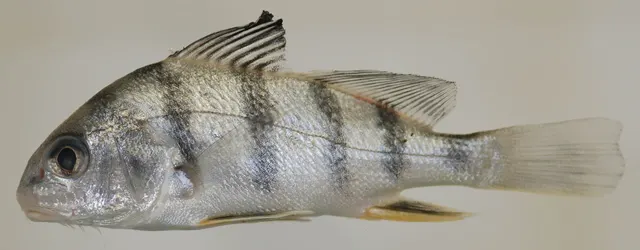 Black drumThe largest of the drums, reaching over fifty kilograms, with chin barbels, crushing throat teeth and a drumming call audible from a boat.
Smithsonian Environmental Research Center — CC BY 2.0, via Wikimedia Commons
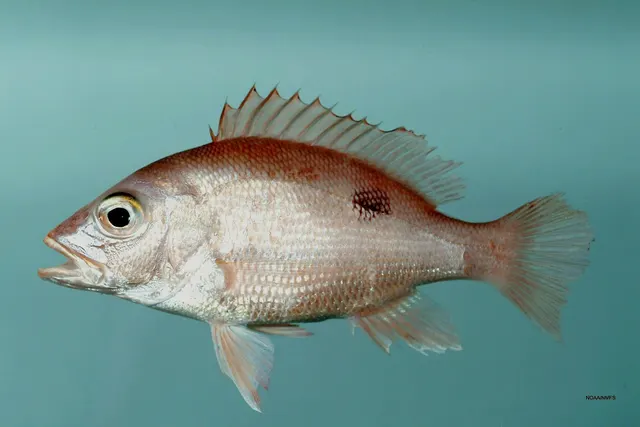 Northern red snapperThe Gulf of Mexico's emblematic reef fish — long-lived, structure-bound, subject to the most contested recreational quota in American fishing, and a barotrauma case study.
SEFSC Pascagoula Laboratory, NOAA/NMFS — public domain, via Wikimedia Commons
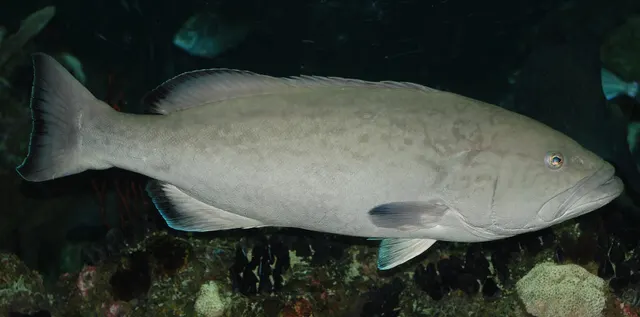 Gag grouperA protogynous grouper of the American south-east whose entire male population comes from sex-changed females — which makes size-selective fishing a demographic problem, not just a numerical one.
Jarek Tuszyński — CC BY 4.0, via Wikimedia Commons
Places within this area
Publicly documented fishing geography. FishingHQ describes what the ground is; it does not say whether you may fish it, and every one of these sends that question to the body that holds the answer. Browse every place in this part of the world.
Who to ask before fishing any of these
FishingHQ does not know the current access position here. Florida requires a saltwater fishing licence to fish from shore, a pier, a bridge or a jetty as well as from a boat, with exemptions that depend on age, residency and whether the trip is on a licensed charter. Several species are catch-and-release only, some carry separate permits or stamps, and fishing for sharks from shore requires its own permit and an educational course. Much of the Keys sits inside a National Marine Sanctuary whose zones restrict where and how fishing is permitted, on boundaries that are invisible from the water, and federal rules apply to some species beyond state waters. Measures change. Check the current position with the state wildlife authority and with the sanctuary before going.
Seven Mile Bridge
Bridge · Salt water
The long span between Marathon and Little Duck Key, crossing one of the widest tidal gaps in the chain, with heavy current running through the pilings and deep scoured water either side of them.
Open to wind from both sides; the water state is set by the tide through the gap rather than by swell.
Particular to this ground: boat traffic and being seen, sun, dehydration and fatigue, drowning and immersion.
Severe hazards of Florida apply here: weather and lightning.
Particular to this water: Florida requires a saltwater fishing licence to fish from shore, a pier, a bridge or a jetty as well as from a boat, with exemptions including anglers under 16, older residents, and anglers on a licensed charter. Separate permits or stamps apply to some species. Check current requirements with the state wildlife authority. Bonefish and tarpon are catch-and-release species here. A large tarpon must remain in the water throughout the release. These are the rules that define this fishery, and they change; confirm the current position with the authority.
Bahia Honda Bridge
Bridge · Salt water
The old and new spans at Bahia Honda, crossing a deep natural channel between the Atlantic and the Gulf side, with the deepest water of any gap in the chain running beneath them.
Open, with the tide the dominant influence.
Particular to this ground: boat traffic and being seen, sun, dehydration and fatigue, drowning and immersion.
Severe hazards of Florida apply here: weather and lightning.
Particular to this water: Florida requires a saltwater fishing licence to fish from shore, a pier, a bridge or a jetty as well as from a boat, with exemptions including anglers under 16, older residents, and anglers on a licensed charter. Separate permits or stamps apply to some species. Check current requirements with the state wildlife authority. Bonefish and tarpon are catch-and-release species here. A large tarpon must remain in the water throughout the release. These are the rules that define this fishery, and they change; confirm the current position with the authority.
The Islamorada flats
Shallow flat · Salt water
Shin-to-knee-deep water over hard sand and turtle grass on the ocean side of the Upper Keys, fished by sight from a poled skiff or on foot, with channels and potholes breaking the grass.
Shallow and wind-exposed: a flat that is unfishable in a strong breeze is not a matter of swell but of visibility.
Particular to this ground: sun, dehydration and fatigue, boat traffic and being seen.
Severe hazards of Florida apply here: weather and lightning.
Particular to this water: Most of this water lies inside the Florida Keys National Marine Sanctuary, which carries a network of zones with their own rules on where and how fishing is permitted. Zone boundaries and conditions are set by the sanctuary, not by the state licence, and being listed here is not permission to fish any particular spot. Bonefish and tarpon are catch-and-release species here. A large tarpon must remain in the water throughout the release. These are the rules that define this fishery, and they change; confirm the current position with the authority.
The Florida Bay backcountry
Mangrove shore · Salt water
A maze of uninhabited mangrove islands, basins and channels on the Gulf side of the Upper and Middle Keys, where the structure the fish hold to is root and shoreline rather than any river channel.
Sheltered by the islands. Fishable when the ocean side is not.
Particular to this ground: sun, dehydration and fatigue, boat traffic and being seen.
Severe hazards of Florida apply here: weather and lightning.
Particular to this water: Most of this water lies inside the Florida Keys National Marine Sanctuary, which carries a network of zones with their own rules on where and how fishing is permitted. Zone boundaries and conditions are set by the sanctuary, not by the state licence, and being listed here is not permission to fish any particular spot. Bonefish and tarpon are catch-and-release species here. A large tarpon must remain in the water throughout the release. These are the rules that define this fishery, and they change; confirm the current position with the authority.
The Upper Keys reef line
Reef · Salt water
The coral reef tract running parallel to the ocean side of the Keys a few miles offshore, with patch reefs inside it and the drop into deep water immediately outside.
Open Atlantic side, worked from boats.
Particular to this ground: boat traffic and being seen, sun, dehydration and fatigue.
Severe hazards of Florida apply here: weather and lightning.
Particular to this water: Most of this water lies inside the Florida Keys National Marine Sanctuary, which carries a network of zones with their own rules on where and how fishing is permitted. Zone boundaries and conditions are set by the sanctuary, not by the state licence, and being listed here is not permission to fish any particular spot. Several species on this reef carry closed seasons, size limits or full protection, and the rules differ by sanctuary zone.
The Keys offshore grounds
Sea area · Salt water
The blue water outside the reef line on the Atlantic side, where the bottom falls away and the Florida Current runs, and where the offshore charter fleet trolls.
Open ocean beyond the reef.
Particular to this ground: boat traffic and being seen.
Severe hazards of Florida apply here: weather and lightning.
Particular to this water: Florida requires a saltwater fishing licence to fish from shore, a pier, a bridge or a jetty as well as from a boat, with exemptions including anglers under 16, older residents, and anglers on a licensed charter. Separate permits or stamps apply to some species. Check current requirements with the state wildlife authority. Offshore species carry their own seasons and limits, several of them federal rather than state.
Islamorada
Charter departure port · Salt water
A village strung along the Upper Keys with marinas on both the ocean and the bay side, and the departure point for the flats skiffs, backcountry boats and offshore charters that work the water around it.
Particular to this ground: boat traffic and being seen.
Severe hazards of Florida apply here: weather and lightning.
Particular to this water: A departure point, not a fishing mark. What the boats catch is recorded against the flats, the backcountry, the reef and the offshore ground. Fishing for sharks from shore in Florida requires a no-cost permit and completion of an educational course, renewed annually. It is not required when fishing from a vessel.
Safety
Weather and lightning — Can cause serious injury or death
Florida records more lightning strikes than anywhere else in the United States, and afternoon thunderstorms build rapidly in the warm months. An angler on an open flat or a boat is the highest point over water. Hurricanes affect the state seasonally and are a life-threatening event rather than a weather inconvenience.
What reduces it: Watch the sky and the radar rather than waiting for thunder, get off the water at the first sign of building storms, and never continue fishing a flat with a cell approaching. Treat hurricane warnings as absolute and evacuate rather than assess.
Worse when:
- Summer afternoons, when convective storms build almost daily.
- On an open flat or in a small boat, with no shelter and nothing higher nearby.
- During the hurricane season, when a distant storm can produce dangerous conditions locally.
Sun, dehydration and fatigue — Can cause injury needing treatment
Subtropical sun reflected off shallow clear water and white sand is intense, and long days on a flat or a boat produce heat exhaustion and dehydration that degrade judgement before obvious symptoms appear.
What reduces it: Cover up rather than relying on sunscreen alone, wear polarised eye protection, carry substantially more water than seems necessary, and treat fatigue as a safety condition rather than a comfort one.
Species that bite — Can cause injury needing treatment
Alligators occur in fresh and brackish water throughout the interior and the Everglades, and are a genuine hazard to people wading, launching or working the water's edge. Sharks are common inshore and are principally a consideration around hooked and released fish.
What reduces it: Do not wade or swim in fresh or brackish water where alligators occur, keep away from the water's edge at dawn and dusk in those areas, and never feed them. Release hooked fish promptly and away from working sharks.
Boat safety — Can cause injury needing treatment
Shallow-water navigation causes groundings at speed, which injure occupants and scar seagrass. The backcountry is a maze of similar-looking mangrove creeks in which people become lost, and the flats offer no landmarks in poor light.
What reduces it: Run on plotted routes and known channels, slow down in unfamiliar shallow water, carry navigation that does not depend on a phone battery, and tell somebody your plan before entering the backcountry.
Further safety reading
- Boat safety for anglers — Shallow-water groundings, a backcountry that is a maze of similar mangrove creeks, and flats with no landmarks in poor light are the state's characteristic navigation hazards.
- Sun, dehydration and fatigue — Subtropical sun reflected off shallow clear water and white sand produces heat exhaustion before obvious symptoms appear, over long unshaded days.
- Weather, lightning and open water — Florida records more lightning strikes than anywhere else in the United States, and an angler on an open flat is the highest point over water.
Check the rules before you fish
Fishing laws, bylaws, access rules, seasons, bait restrictions and permitted methods vary by location and can change. Check the current rules from the relevant authority and the water you intend to fish before fishing.
Check with:
- Current national or regional law for where you are fishing
- Current local bylaws
- The relevant fisheries authority
- The landowner, club or fishery whose water it is
- Any restrictions specific to the species or the method you intend to use
Where to go next
What swims here
- Atlantic blue marlinOccurs in the deep blue water off both coasts, reachable from the Atlantic side on a short run because of the Gulf Stream's proximity.
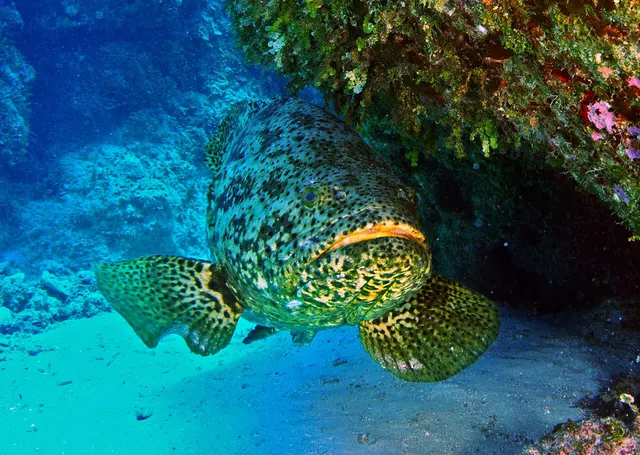 Atlantic goliath grouperUses mangrove as juvenile habitat and wreck and ledge as an adult, and its recovery after decades of harvest closure is one of the state's clearest conservation outcomes.
- Atlantic tarponMoves along both coasts and through the Keys on a well-defined seasonal migration, supporting one of the most intense sport fisheries in North America.
- Black drumOccupies bays, passes and structure over soft and shell bottom, hunting buried prey by scent and lateral line.
- BonefishFeeds over shallow sand and marl flats, principally in the Keys, and is the species the state's sight-fishing discipline was built around.
- Butterfly peacock bassDeliberately established in the south-eastern canal system and now a recognised urban fishery — an unusual case of an intentional and successful tropical introduction.
- CobiaMoves along both coasts seasonally, associating with structure, rays and other large slow-moving animals.
- Common snookOccupies mangrove, structure and passes in the backcountry and along both coasts, and is cold-sensitive enough that severe cold events have caused mass mortality.
11 more
- Florida pompano Fish
- Gag grouper Fish
- King mackerel Fish
- Largemouth bass Fish
- Mahi-mahi Fish
- Northern red snapper Fish
- Permit Fish
- Sailfish Fish
- Sheepshead Fish
- Spotted seatrout Fish
- Yellowtail snapper Fish
How this compares
Rules and access
- Close seasonsState and federal seasons for the same species can differ, and the reef fish seasons in particular are administrative objects revised annually rather than biological ones.
- Size limits and retentionSlot limits protecting both small and large fish are a characteristic Florida instrument, reflecting the fact that the largest fish are frequently the most reproductively valuable.
Environment and conservation
- Fish stocks and sustainabilityA century of drainage and altered freshwater flow changed the salinity and productivity of Florida Bay and the estuaries, and seagrass loss there is a direct fisheries problem.
- Marine protected areas and spearfishingThe Keys sit inside a national marine sanctuary with detailed zoning including no-take research areas, and the zone a boat is in decides what may happen there.
Sources and evidence
- NOAA National Ocean Service education on estuaries and the National Estuarine Research Reserve System — National Oceanic and Atmospheric Administration, United States (Government fisheries body)Relied on for: Estuarine and coastal structure and function in North American waters, and the nursery role of estuarine and seagrass habitat.States this directlyCitation checked — the work exists and is described correctly
- FishBase: a global information system on fishes — Froese, R. and D. Pauly, eds. — FishBase Consortium (Scientific institute)Relied on for: Distribution, habitat association and life history of the species occurring in the area.States this directlyPassage read and verified
- Code of Conduct for Responsible Fisheries — Food and Agriculture Organization of the United Nations, Rome, 1995 (Standards body)Relied on for: Principles for the management of fisheries, including licensing, closed seasons, size limits and the treatment of small-scale and shared stocks.States this directlyCitation checked — the work exists and is described correctly
- Good Fish Guide — Marine Conservation Society (Conservation authority)Relied on for: Assessment of fisheries and the management measures applied to them, including the instruments used and their purpose.Background and mechanism onlyCitation checked — the work exists and is described correctly
Why the 31 connections on this page are here, and the sources
What swims here
Backed by research — 19 connections
Supported by peer-reviewed research or fisheries science. The sources are listed and can be checked.
Atlantic blue marlin
A distribution association between an animal and a kind of water, rather than a claim about any named mark.
- NOAA National Ocean Service education on estuaries and the National Estuarine Research Reserve System — National Oceanic and Atmospheric Administration, United States (Government fisheries body)Relied on for: Estuarine, seagrass and coastal habitat function in North American waters, and the nursery role of shallow habitat for the species concerned.Background and mechanism onlyCitation checked — the work exists and is described correctly
- FishBase: a global information system on fishes — Froese, R. and D. Pauly, eds. — FishBase Consortium (Scientific institute)Relied on for: Distribution, habitat association, depth range and life history recorded for the species.States this directlyPassage read and verified
Atlantic goliath grouper
A distribution association between an animal and a kind of water, rather than a claim about any named mark.
- NOAA National Ocean Service education on estuaries and the National Estuarine Research Reserve System — National Oceanic and Atmospheric Administration, United States (Government fisheries body)Relied on for: Estuarine, seagrass and coastal habitat function in North American waters, and the nursery role of shallow habitat for the species concerned.Background and mechanism onlyCitation checked — the work exists and is described correctly
- FishBase: a global information system on fishes — Froese, R. and D. Pauly, eds. — FishBase Consortium (Scientific institute)Relied on for: Distribution, habitat association, depth range and life history recorded for the species.States this directlyPassage read and verified
Atlantic tarpon
A distribution association between an animal and a kind of water, rather than a claim about any named mark.
- NOAA National Ocean Service education on estuaries and the National Estuarine Research Reserve System — National Oceanic and Atmospheric Administration, United States (Government fisheries body)Relied on for: Estuarine, seagrass and coastal habitat function in North American waters, and the nursery role of shallow habitat for the species concerned.Background and mechanism onlyCitation checked — the work exists and is described correctly
- FishBase: a global information system on fishes — Froese, R. and D. Pauly, eds. — FishBase Consortium (Scientific institute)Relied on for: Distribution, habitat association, depth range and life history recorded for the species.States this directlyPassage read and verified
Black drum
A distribution association between an animal and a kind of water, rather than a claim about any named mark.
- NOAA National Ocean Service education on estuaries and the National Estuarine Research Reserve System — National Oceanic and Atmospheric Administration, United States (Government fisheries body)Relied on for: Estuarine, seagrass and coastal habitat function in North American waters, and the nursery role of shallow habitat for the species concerned.Background and mechanism onlyCitation checked — the work exists and is described correctly
- FishBase: a global information system on fishes — Froese, R. and D. Pauly, eds. — FishBase Consortium (Scientific institute)Relied on for: Distribution, habitat association, depth range and life history recorded for the species.States this directlyPassage read and verified
Bonefish
A distribution association between an animal and a kind of water, rather than a claim about any named mark.
- NOAA National Ocean Service education on estuaries and the National Estuarine Research Reserve System — National Oceanic and Atmospheric Administration, United States (Government fisheries body)Relied on for: Estuarine, seagrass and coastal habitat function in North American waters, and the nursery role of shallow habitat for the species concerned.Background and mechanism onlyCitation checked — the work exists and is described correctly
- FishBase: a global information system on fishes — Froese, R. and D. Pauly, eds. — FishBase Consortium (Scientific institute)Relied on for: Distribution, habitat association, depth range and life history recorded for the species.States this directlyPassage read and verified
Butterfly peacock bass
A distribution association between an animal and a kind of water, rather than a claim about any named mark.
- NOAA National Ocean Service education on estuaries and the National Estuarine Research Reserve System — National Oceanic and Atmospheric Administration, United States (Government fisheries body)Relied on for: Estuarine, seagrass and coastal habitat function in North American waters, and the nursery role of shallow habitat for the species concerned.Background and mechanism onlyCitation checked — the work exists and is described correctly
- FishBase: a global information system on fishes — Froese, R. and D. Pauly, eds. — FishBase Consortium (Scientific institute)Relied on for: Distribution, habitat association, depth range and life history recorded for the species.States this directlyPassage read and verified
Cobia
A distribution association between an animal and a kind of water, rather than a claim about any named mark.
- NOAA National Ocean Service education on estuaries and the National Estuarine Research Reserve System — National Oceanic and Atmospheric Administration, United States (Government fisheries body)Relied on for: Estuarine, seagrass and coastal habitat function in North American waters, and the nursery role of shallow habitat for the species concerned.Background and mechanism onlyCitation checked — the work exists and is described correctly
- FishBase: a global information system on fishes — Froese, R. and D. Pauly, eds. — FishBase Consortium (Scientific institute)Relied on for: Distribution, habitat association, depth range and life history recorded for the species.States this directlyPassage read and verified
Common snook
A distribution association between an animal and a kind of water, rather than a claim about any named mark.
- NOAA National Ocean Service education on estuaries and the National Estuarine Research Reserve System — National Oceanic and Atmospheric Administration, United States (Government fisheries body)Relied on for: Estuarine, seagrass and coastal habitat function in North American waters, and the nursery role of shallow habitat for the species concerned.Background and mechanism onlyCitation checked — the work exists and is described correctly
- FishBase: a global information system on fishes — Froese, R. and D. Pauly, eds. — FishBase Consortium (Scientific institute)Relied on for: Distribution, habitat association, depth range and life history recorded for the species.States this directlyPassage read and verified
Florida pompano
A distribution association between an animal and a kind of water, rather than a claim about any named mark.
- NOAA National Ocean Service education on estuaries and the National Estuarine Research Reserve System — National Oceanic and Atmospheric Administration, United States (Government fisheries body)Relied on for: Estuarine, seagrass and coastal habitat function in North American waters, and the nursery role of shallow habitat for the species concerned.Background and mechanism onlyCitation checked — the work exists and is described correctly
- FishBase: a global information system on fishes — Froese, R. and D. Pauly, eds. — FishBase Consortium (Scientific institute)Relied on for: Distribution, habitat association, depth range and life history recorded for the species.States this directlyPassage read and verified
Gag grouper
A distribution association between an animal and a kind of water, rather than a claim about any named mark.
- NOAA National Ocean Service education on estuaries and the National Estuarine Research Reserve System — National Oceanic and Atmospheric Administration, United States (Government fisheries body)Relied on for: Estuarine, seagrass and coastal habitat function in North American waters, and the nursery role of shallow habitat for the species concerned.Background and mechanism onlyCitation checked — the work exists and is described correctly
- FishBase: a global information system on fishes — Froese, R. and D. Pauly, eds. — FishBase Consortium (Scientific institute)Relied on for: Distribution, habitat association, depth range and life history recorded for the species.States this directlyPassage read and verified
King mackerel
A distribution association between an animal and a kind of water, rather than a claim about any named mark.
- NOAA National Ocean Service education on estuaries and the National Estuarine Research Reserve System — National Oceanic and Atmospheric Administration, United States (Government fisheries body)Relied on for: Estuarine, seagrass and coastal habitat function in North American waters, and the nursery role of shallow habitat for the species concerned.Background and mechanism onlyCitation checked — the work exists and is described correctly
- FishBase: a global information system on fishes — Froese, R. and D. Pauly, eds. — FishBase Consortium (Scientific institute)Relied on for: Distribution, habitat association, depth range and life history recorded for the species.States this directlyPassage read and verified
Largemouth bass
A distribution association between an animal and a kind of water, rather than a claim about any named mark.
- NOAA National Ocean Service education on estuaries and the National Estuarine Research Reserve System — National Oceanic and Atmospheric Administration, United States (Government fisheries body)Relied on for: Estuarine, seagrass and coastal habitat function in North American waters, and the nursery role of shallow habitat for the species concerned.Background and mechanism onlyCitation checked — the work exists and is described correctly
- FishBase: a global information system on fishes — Froese, R. and D. Pauly, eds. — FishBase Consortium (Scientific institute)Relied on for: Distribution, habitat association, depth range and life history recorded for the species.States this directlyPassage read and verified
Mahi-mahi
A distribution association between an animal and a kind of water, rather than a claim about any named mark.
- NOAA National Ocean Service education on estuaries and the National Estuarine Research Reserve System — National Oceanic and Atmospheric Administration, United States (Government fisheries body)Relied on for: Estuarine, seagrass and coastal habitat function in North American waters, and the nursery role of shallow habitat for the species concerned.Background and mechanism onlyCitation checked — the work exists and is described correctly
- FishBase: a global information system on fishes — Froese, R. and D. Pauly, eds. — FishBase Consortium (Scientific institute)Relied on for: Distribution, habitat association, depth range and life history recorded for the species.States this directlyPassage read and verified
Northern red snapper
A distribution association between an animal and a kind of water, rather than a claim about any named mark.
- NOAA National Ocean Service education on estuaries and the National Estuarine Research Reserve System — National Oceanic and Atmospheric Administration, United States (Government fisheries body)Relied on for: Estuarine, seagrass and coastal habitat function in North American waters, and the nursery role of shallow habitat for the species concerned.Background and mechanism onlyCitation checked — the work exists and is described correctly
- FishBase: a global information system on fishes — Froese, R. and D. Pauly, eds. — FishBase Consortium (Scientific institute)Relied on for: Distribution, habitat association, depth range and life history recorded for the species.States this directlyPassage read and verified
Permit
A distribution association between an animal and a kind of water, rather than a claim about any named mark.
- NOAA National Ocean Service education on estuaries and the National Estuarine Research Reserve System — National Oceanic and Atmospheric Administration, United States (Government fisheries body)Relied on for: Estuarine, seagrass and coastal habitat function in North American waters, and the nursery role of shallow habitat for the species concerned.Background and mechanism onlyCitation checked — the work exists and is described correctly
- FishBase: a global information system on fishes — Froese, R. and D. Pauly, eds. — FishBase Consortium (Scientific institute)Relied on for: Distribution, habitat association, depth range and life history recorded for the species.States this directlyPassage read and verified
Sailfish
A distribution association between an animal and a kind of water, rather than a claim about any named mark.
- NOAA National Ocean Service education on estuaries and the National Estuarine Research Reserve System — National Oceanic and Atmospheric Administration, United States (Government fisheries body)Relied on for: Estuarine, seagrass and coastal habitat function in North American waters, and the nursery role of shallow habitat for the species concerned.Background and mechanism onlyCitation checked — the work exists and is described correctly
- FishBase: a global information system on fishes — Froese, R. and D. Pauly, eds. — FishBase Consortium (Scientific institute)Relied on for: Distribution, habitat association, depth range and life history recorded for the species.States this directlyPassage read and verified
Sheepshead
A distribution association between an animal and a kind of water, rather than a claim about any named mark.
- NOAA National Ocean Service education on estuaries and the National Estuarine Research Reserve System — National Oceanic and Atmospheric Administration, United States (Government fisheries body)Relied on for: Estuarine, seagrass and coastal habitat function in North American waters, and the nursery role of shallow habitat for the species concerned.Background and mechanism onlyCitation checked — the work exists and is described correctly
- FishBase: a global information system on fishes — Froese, R. and D. Pauly, eds. — FishBase Consortium (Scientific institute)Relied on for: Distribution, habitat association, depth range and life history recorded for the species.States this directlyPassage read and verified
Spotted seatrout
A distribution association between an animal and a kind of water, rather than a claim about any named mark.
- NOAA National Ocean Service education on estuaries and the National Estuarine Research Reserve System — National Oceanic and Atmospheric Administration, United States (Government fisheries body)Relied on for: Estuarine, seagrass and coastal habitat function in North American waters, and the nursery role of shallow habitat for the species concerned.Background and mechanism onlyCitation checked — the work exists and is described correctly
- FishBase: a global information system on fishes — Froese, R. and D. Pauly, eds. — FishBase Consortium (Scientific institute)Relied on for: Distribution, habitat association, depth range and life history recorded for the species.States this directlyPassage read and verified
Yellowtail snapper
A distribution association between an animal and a kind of water, rather than a claim about any named mark.
- NOAA National Ocean Service education on estuaries and the National Estuarine Research Reserve System — National Oceanic and Atmospheric Administration, United States (Government fisheries body)Relied on for: Estuarine, seagrass and coastal habitat function in North American waters, and the nursery role of shallow habitat for the species concerned.Background and mechanism onlyCitation checked — the work exists and is described correctly
- FishBase: a global information system on fishes — Froese, R. and D. Pauly, eds. — FishBase Consortium (Scientific institute)Relied on for: Distribution, habitat association, depth range and life history recorded for the species.States this directlyPassage read and verified
How people fish here
What experienced anglers do — 4 connections
Widely and independently recommended by experienced anglers and specialist sources. This is real angling knowledge, not proof: controlled evidence for it is limited, and FishingHQ records it as convention rather than as a demonstrated effect.
Fly fishing
A discipline that is characteristic of the place rather than merely possible there, joined so a reader can move between the place and the practice.
- General angling website restatements of established technique — Various (Credible secondary source)Relied on for: Widely restated practice associating this discipline with this place, recorded as practitioner consensus rather than as tested fact.Background and mechanism onlyCitation checked — the work exists and is described correctly
- Fishers' Craft and Lettered Art: Tracts on Fishing from the End of the Middle Ages — University of Toronto Press, 1997 (Scientific literature)Relied on for: That fishing traditions develop around the water and fish available to them, and the historical method of reading such traditions.States this directlyCitation checked — the work exists and is described correctly
Lure fishing
A discipline that is characteristic of the place rather than merely possible there, joined so a reader can move between the place and the practice.
- General angling website restatements of established technique — Various (Credible secondary source)Relied on for: Widely restated practice associating this discipline with this place, recorded as practitioner consensus rather than as tested fact.Background and mechanism onlyCitation checked — the work exists and is described correctly
- Fishers' Craft and Lettered Art: Tracts on Fishing from the End of the Middle Ages — University of Toronto Press, 1997 (Scientific literature)Relied on for: That fishing traditions develop around the water and fish available to them, and the historical method of reading such traditions.States this directlyCitation checked — the work exists and is described correctly
Sea fishing
A discipline that is characteristic of the place rather than merely possible there, joined so a reader can move between the place and the practice.
- General angling website restatements of established technique — Various (Credible secondary source)Relied on for: Widely restated practice associating this discipline with this place, recorded as practitioner consensus rather than as tested fact.Background and mechanism onlyCitation checked — the work exists and is described correctly
- Fishers' Craft and Lettered Art: Tracts on Fishing from the End of the Middle Ages — University of Toronto Press, 1997 (Scientific literature)Relied on for: That fishing traditions develop around the water and fish available to them, and the historical method of reading such traditions.States this directlyCitation checked — the work exists and is described correctly
Spearfishing
A discipline that is characteristic of the place rather than merely possible there, joined so a reader can move between the place and the practice.
- General angling website restatements of established technique — Various (Credible secondary source)Relied on for: Widely restated practice associating this discipline with this place, recorded as practitioner consensus rather than as tested fact.Background and mechanism onlyCitation checked — the work exists and is described correctly
- Fishers' Craft and Lettered Art: Tracts on Fishing from the End of the Middle Ages — University of Toronto Press, 1997 (Scientific literature)Relied on for: That fishing traditions develop around the water and fish available to them, and the historical method of reading such traditions.States this directlyCitation checked — the work exists and is described correctly
How this compares
What experienced anglers do — 1 connection
Widely and independently recommended by experienced anglers and specialist sources. This is real angling knowledge, not proof: controlled evidence for it is limited, and FishingHQ records it as convention rather than as a demonstrated effect.
The Gulf of Mexico
Two places a reader would reasonably weigh against one another, joined where the comparison teaches something about both. It is also how the larger geography is linked to what sits inside it.
- General angling website restatements of established technique — Various (Credible secondary source)Relied on for: Widely restated practice associating this discipline with this place, recorded as practitioner consensus rather than as tested fact.Background and mechanism onlyCitation checked — the work exists and is described correctly
- Fishers' Craft and Lettered Art: Tracts on Fishing from the End of the Middle Ages — University of Toronto Press, 1997 (Scientific literature)Relied on for: That fishing traditions develop around the water and fish available to them, and the historical method of reading such traditions.States this directlyCitation checked — the work exists and is described correctly
Safety reading
Official guidance — 3 connections
Stated by a fisheries authority, scientific institute or recognised angling body. Authoritative, but summarising rather than demonstrating.
Boat safety for anglers
A place is joined to the safety topic that explains a hazard genuinely characteristic of it, so the mechanism is reachable rather than restated as a weak warning.
- RNLI water safety guidance: cold water shock and Float to Live — Royal National Lifeboat Institution (Water-safety or diver-training authority)Relied on for: Cold water shock and the immersion response, shore angling hazards, small-craft guidance and the circumstances in which water users are most often killed.States this directlyPassage read and verified
- RoSPA water safety information and UK accidental drowning statistics — Royal Society for the Prevention of Accidents (Water-safety or diver-training authority)Relied on for: Accidental drowning statistics and the circumstances in which recreational water users are most often killed.Background and mechanism onlyPassage read and verified
Sun, dehydration and fatigue
A place is joined to the safety topic that explains a hazard genuinely characteristic of it, so the mechanism is reachable rather than restated as a weak warning.
- NOAA National Weather Service marine forecasts and marine weather services — National Oceanic and Atmospheric Administration, United States (Government fisheries body)Relied on for: Marine forecasting, thunderstorm and tropical cyclone warning practice, and the products issued for coastal and offshore waters.States this directlyCitation checked — the work exists and is described correctly
- Met Office shipping forecast, inshore waters forecast and marine warnings — Met Office, United Kingdom (Government fisheries body)Relied on for: Inshore waters forecasting, sea state, swell and the marine warning products issued for European coastal waters.Background and mechanism onlyCitation checked — the work exists and is described correctly
Weather, lightning and open water
A place is joined to the safety topic that explains a hazard genuinely characteristic of it, so the mechanism is reachable rather than restated as a weak warning.
- NOAA National Weather Service marine forecasts and marine weather services — National Oceanic and Atmospheric Administration, United States (Government fisheries body)Relied on for: Marine forecasting, thunderstorm and tropical cyclone warning practice, and the products issued for coastal and offshore waters.States this directlyCitation checked — the work exists and is described correctly
- Met Office shipping forecast, inshore waters forecast and marine warnings — Met Office, United Kingdom (Government fisheries body)Relied on for: Inshore waters forecasting, sea state, swell and the marine warning products issued for European coastal waters.Background and mechanism onlyCitation checked — the work exists and is described correctly
Rules and access
Official guidance — 2 connections
Stated by a fisheries authority, scientific institute or recognised angling body. Authoritative, but summarising rather than demonstrating.
Close seasons
A place joined to the regulatory concept whose structure it illustrates. The edge asserts that the concept applies here, never what any current rule says.
- Code of Conduct for Responsible Fisheries — Food and Agriculture Organization of the United Nations, Rome, 1995 (Standards body)Relied on for: Principles for the management of fisheries, including licensing, closed seasons, size limits and the treatment of small-scale and shared stocks.States this directlyCitation checked — the work exists and is described correctly
- Good Fish Guide — Marine Conservation Society (Conservation authority)Relied on for: Assessment of fisheries and the management measures applied to them, including the instruments used and their purpose.Background and mechanism onlyCitation checked — the work exists and is described correctly
Size limits and retention
A place joined to the regulatory concept whose structure it illustrates. The edge asserts that the concept applies here, never what any current rule says.
- Code of Conduct for Responsible Fisheries — Food and Agriculture Organization of the United Nations, Rome, 1995 (Standards body)Relied on for: Principles for the management of fisheries, including licensing, closed seasons, size limits and the treatment of small-scale and shared stocks.States this directlyCitation checked — the work exists and is described correctly
- Good Fish Guide — Marine Conservation Society (Conservation authority)Relied on for: Assessment of fisheries and the management measures applied to them, including the instruments used and their purpose.Background and mechanism onlyCitation checked — the work exists and is described correctly
Environment and conservation
Backed by research — 2 connections
Supported by peer-reviewed research or fisheries science. The sources are listed and can be checked.
Fish stocks and sustainability
An environmental pressure that is specific to this place rather than general to fishing, joined so the issue is anchored to a real example.
- The IUCN Red List of Threatened Species — International Union for Conservation of Nature (Conservation authority)Relied on for: Assessment of the species and habitats affected, and the pressures acting on them, including habitat change and exploitation.States this directlyCitation checked — the work exists and is described correctly
- Code of Conduct for Responsible Fisheries — Food and Agriculture Organization of the United Nations, Rome, 1995 (Standards body)Relied on for: Principles for responsible fisheries management, precaution, gear selectivity and the treatment of shared and small-scale fisheries.Background and mechanism onlyCitation checked — the work exists and is described correctly
Marine protected areas and spearfishing
An environmental pressure that is specific to this place rather than general to fishing, joined so the issue is anchored to a real example.
- Reef Fish Spawning Aggregations: Biology, Research and Management — Springer, Fish & Fisheries Series vol. 35, 2012 (Scientific literature)Relied on for: The vulnerability of aggregating and site-attached species and the role of spatial protection in managing them.States this directlyCitation checked — the work exists and is described correctly
- Good Fish Guide — Marine Conservation Society (Conservation authority)Relied on for: Assessment of fisheries and the management measures applied to them, including spatial protection.Background and mechanism onlyCitation checked — the work exists and is described correctly
How FishingHQ labels evidence is explained in the evidence policy.