Sight fishing and blind searching
Explainer · Last reviewed 2026-08-18
Two ways of finding a fish with a fly, requiring different equipment, different water and different temperaments — and the choice between them is made by the light and the ground rather than by preference.
Every fly cast into salt water is one of two things: aimed at a fish somebody can see, or aimed at water somebody has reason to believe holds one. Naming the two makes the choice deliberate.
SIGHT FISHING IS HUNTING. The angler moves, looks, finds a fish and presents to it, and the whole sequence is a stalk. It requires clear water, a light background, elevation or a shallow enough angle to see through the surface, and sun. It is the most engaging fishing available with a fly rod and it is also the most conditional: lose the light and it stops being possible within minutes.
IT ALSO REQUIRES SEEING, WHICH IS A SKILL RATHER THAN AN ATTRIBUTE. Beginners look for fish and see none; experienced anglers look for a shadow, a shape that is the wrong colour for the bottom, a movement against the current, a nervous patch of surface, a tail, a wake. Almost nobody sees a whole fish first. Polarised lenses are not optional here — they are the equipment that makes the discipline possible.
BLIND SEARCHING IS COVERING WATER SYSTEMATICALLY. The angler works a beach, a weed edge, a gully or a harbour wall on a plan — fan casting, moving a fixed distance, covering the productive band and then moving on — and relies on ground knowledge, tide and conditions rather than on seeing anything.
IT IS NOT THE LESSER OPTION, WHICH IS WORTH SAYING PLAINLY. Most fish caught on a fly in northern European salt water are caught blind, because the water is not clear enough, the light is not good enough and the fish are not shallow enough for anything else. A discipline that treats blind fishing as a consolation is a discipline that will be idle most of the year in Britain, Ireland, Denmark and the Baltic.
THE TWO NEED DIFFERENT TACKLE EMPHASES. Sight fishing rewards accuracy at short range, a fly that lands quietly and a fast first cast, because a moving fish gives one chance. Blind searching rewards distance, a line that can be worked for hours without fatigue, and a fly that fishes at a consistent depth through a long retrieve.
AND THE DECISION IS FREQUENTLY MADE FOR YOU BY THE LIGHT. Overcast, low sun, a ripple, coloured water or a dark bottom all remove sight fishing as an option regardless of what anybody would prefer. The useful habit is to arrive knowing which of the two the day is, and to have the tackle for it.
Learning to see, which is a skill rather than an eyesight test
Anglers who cannot see fish assume their eyes are the problem. Almost always the problem is what they are looking for, and it is teachable in an afternoon.
DO NOT LOOK FOR A FISH. A fish underwater is not fish-shaped from above — it is a shadow, a movement against a still background, a flash as a flank turns, a wake, a puff of disturbed sand, a tail breaking the surface. Experienced flats anglers describe seeing 'nervous water' or 'a grey shape' rather than a bonefish, and the beginner scanning for a bonefish outline sees nothing while standing next to one.
THE SHADOW IS EASIER THAN THE FISH, particularly in shallow water with sun. A fish's shadow on a pale bottom is darker, sharper and larger than the fish, and it is what most people learn to see first.
LIGHT DECIDES EVERYTHING AND IT IS MANAGEABLE. Sun behind you and high is the best condition there is; sun in front turns the surface into a mirror. That means the direction you walk a flat, a harbour wall or a bank is a decision rather than an accident, and turning round to fish the other way is frequently the whole fix.
POLARISED GLASSES ARE NOT AN ACCESSORY. They remove the surface reflection that is the actual obstacle, and the tint matters: copper and amber lift contrast in shallow and coloured water, grey suits bright open conditions. Fishing without them is fishing with the water switched off.
HEIGHT BUYS ANGLE. A metre of elevation dramatically increases how much of the water you can see into, which is why flats fishing is done from a poled skiff's bow and why a harbour wall is a better place to spot mullet from than the water's edge.
MOVE SLOWLY AND STOP OFTEN. Most fish are spotted while standing still, and most are spooked while walking. The heron is the model and it is not a metaphor.
AND KNOW WHEN TO STOP TRYING. Cloud, chop, depth or coloured water genuinely remove the possibility, and an angler continuing to hunt for fish they cannot see is fishing badly while feeling diligent. That is when the record's other half applies: search the water systematically, cover it with a fly, and read the ground instead of the fish.
What experienced anglers do — why, and the sources (4)
Widely and independently recommended by experienced anglers and specialist sources. This is real angling knowledge, not proof: controlled evidence for it is limited, and FishingHQ records it as convention rather than as a demonstrated effect.
- Sea Angler — Bauer Media (Specialist angling publication)Relied on for: British sea angling practice including shore fishing for bass, pollack and mullet, the ground each is found over and the conditions each is fished in.FishingHQ's interpretation of what it saysCitation checked — the work exists and is described correctly
- FAO Species Identification Guides for Fishery Purposes and the FAO Species Catalogues — Food and Agriculture Organization of the United Nations (Scientific institute)Relied on for: Habitat association and feeding biology of coastal and tropical marine species, from regional identification guides prepared for fishery purposes.States this directlyCitation checked — the work exists and is described correctly
- Still Water Fly-Fishing — Andre Deutsch, 1952 (Specialist angling publication)Relied on for: Stillwater fly practice: line density and depth, leader construction, fly selection against the food present, and trout behaviour in still water.States this directlyCitation checked — the work exists and is described correctly
- Trout & Salmon — Bauer Media (Specialist angling publication)Relied on for: British game angling practice across river and stillwater, including the presentation each water and each fish demands.States this directlyCitation checked — the work exists and is described correctly
Safety
Further safety reading
- Sun, dehydration and fatigue — Sight fishing is conducted in the brightest available light because the light is what makes it possible, standing in shallow water with the sun overhead and reflection from below, for hours, with the eyes working continuously. Sunburn from beneath and eye strain are occupational rather than incidental.
Where to go next
Fish this applies to
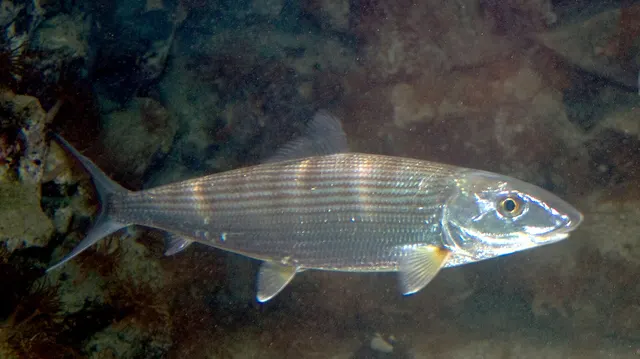 BonefishThe fish that defines the discipline. Bonefish feed on hard sand and turtle grass in water shallow enough to expose their tails, they are visible only to a trained eye, and casting blind at a flat catches nothing — so the fishing is finding first and casting second.
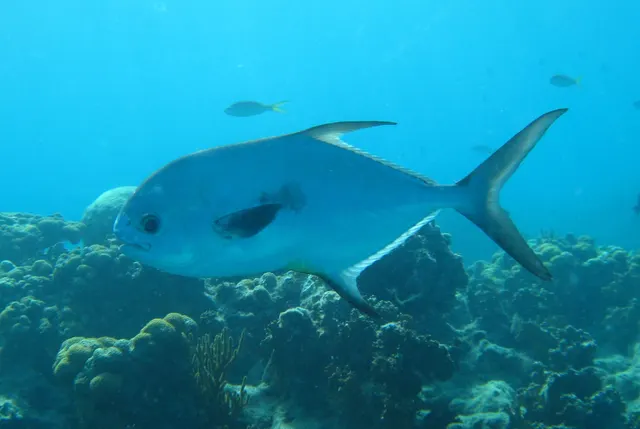 PermitThe hardest version of the same problem, and the reason the record separates spotting from catching. Permit are found the same way bonefish are and refuse far more often, which means the skill that locates them is not the skill that converts them.
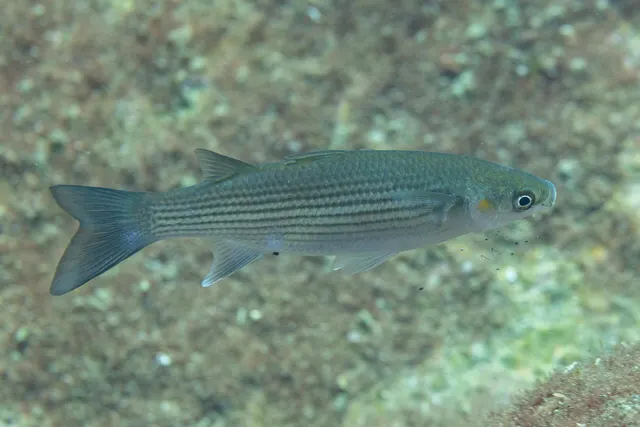 Thick-lipped grey mulletThe British sight-fishing target, and evidence that the technique is not a tropical import. Mullet are visible in harbours, estuaries and shallow bays through the summer, they can be watched feeding for an hour before a cast is made, and they punish a fly lined over them exactly as a flats fish does.
Where it matters
- Saltwater fly fishingEvery cast is aimed at a fish somebody can see or at water somebody has reason to believe holds one, and the light and the ground decide which — not the angler's preference.
- Sea fishingReachable from the sea-fishing side for the same reason, and because blind searching is how most fish are caught on a fly in northern European salt water.
Water and ground
Related reading
How this compares
Sources and evidence
- The Ecology of Vision — Clarendon Press, Oxford, 1979 (Scientific literature)Relied on for: How light behaves in and at the surface of water, how fish vision is adapted to it, and the limits it places on seeing into water from above.States this directlyCitation checked — the work exists and is described correctly
- Trout & Salmon — Bauer Media (Specialist angling publication)Relied on for: Long-running published description of British game angling practice, including casting, line choice, leader construction and the move from fresh water to salt.FishingHQ's interpretation of what it saysCitation checked — the work exists and is described correctly
- Still Water Fly-Fishing — Andre Deutsch, 1952 (Specialist angling publication)Relied on for: Stillwater fly practice including line handling, retrieve, leader construction and the reasoning behind each.States this directlyCitation checked — the work exists and is described correctly
- Sea Angler — Bauer Media (Specialist angling publication)Relied on for: Long-running published description of British sea angling practice by ground type, including the species and conditions coastal fly fishing addresses.FishingHQ's interpretation of what it saysCitation checked — the work exists and is described correctly
- General angling website restatements of established technique — Various (Credible secondary source)Relied on for: Widely restated descriptions of coastal fly fishing practice and equipment convention, recorded as practitioner consensus rather than as scholarship.Background and mechanism onlyCitation checked — the work exists and is described correctly
Why the 9 connections on this page are here, and the sources
Fish this applies to
What experienced anglers do — 3 connections
Widely and independently recommended by experienced anglers and specialist sources. This is real angling knowledge, not proof: controlled evidence for it is limited, and FishingHQ records it as convention rather than as a demonstrated effect.
Bonefish
A fish or a water joined to the fly-fishing mechanism it is a worked example of, written only where the subject's own behaviour or physical character is what this page explains. The direction is the one FishingHQ writes this kind of connection in, and the one it already uses 176 times, and it is also the semantically correct one: the mechanism explains the fish, not the reverse.
- FAO Species Identification Guides for Fishery Purposes and the FAO Species Catalogues — Food and Agriculture Organization of the United Nations (Scientific institute)Relied on for: Distribution, habitat association and feeding biology of tropical inshore and reef species, from regional identification guides prepared for fishery purposes.States this directlyCitation checked — the work exists and is described correctly
- FishBase: a global information system on fishes — Froese, R. and D. Pauly, eds. — FishBase Consortium (Scientific institute)Relied on for: Recorded environment, depth range, feeding biology and distribution of the tropical species named.States this directlyPassage read and verified
Permit
A fish or a water joined to the fly-fishing mechanism it is a worked example of, written only where the subject's own behaviour or physical character is what this page explains. The direction is the one FishingHQ writes this kind of connection in, and the one it already uses 176 times, and it is also the semantically correct one: the mechanism explains the fish, not the reverse.
- FAO Species Identification Guides for Fishery Purposes and the FAO Species Catalogues — Food and Agriculture Organization of the United Nations (Scientific institute)Relied on for: Distribution, habitat association and feeding biology of tropical inshore and reef species, from regional identification guides prepared for fishery purposes.States this directlyCitation checked — the work exists and is described correctly
- FishBase: a global information system on fishes — Froese, R. and D. Pauly, eds. — FishBase Consortium (Scientific institute)Relied on for: Recorded environment, depth range, feeding biology and distribution of the tropical species named.States this directlyPassage read and verified
Thick-lipped grey mullet
A fish or a water joined to the fly-fishing mechanism it is a worked example of, written only where the subject's own behaviour or physical character is what this page explains. The direction is the one FishingHQ writes this kind of connection in, and the one it already uses 176 times, and it is also the semantically correct one: the mechanism explains the fish, not the reverse.
- Sea Angler — Bauer Media (Specialist angling publication)Relied on for: British sea angling practice including shore fishing for bass, pollack and mullet, the ground each is found over and the presentation each takes.FishingHQ's interpretation of what it saysCitation checked — the work exists and is described correctly
- FAO Species Identification Guides for Fishery Purposes and the FAO Species Catalogues — Food and Agriculture Organization of the United Nations (Scientific institute)Relied on for: Distribution, habitat and feeding biology of coastal and tropical marine species, from regional identification guides prepared for fishery purposes.States this directlyCitation checked — the work exists and is described correctly
- Freshwater Fishes of the British Isles — HarperCollins (New Naturalist 75), 1992 (Reference work)Relied on for: Life history, feeding biology, habitat requirement and seasonal behaviour of the freshwater fishes of the British Isles.States this directlyCitation checked — the work exists and is described correctly
- FishBase: a global information system on fishes — Froese, R. and D. Pauly, eds. — FishBase Consortium (Scientific institute)Relied on for: Recorded environment, depth range, feeding biology and distribution of the species named.States this directlyPassage read and verified
Where it matters
What experienced anglers do — 2 connections
Widely and independently recommended by experienced anglers and specialist sources. This is real angling knowledge, not proof: controlled evidence for it is limited, and FishingHQ records it as convention rather than as a demonstrated effect.
Saltwater fly fishing
A link from a practice or a piece of equipment to the explanation or mechanism it rests on.
- Trout & Salmon — Bauer Media (Specialist angling publication)Relied on for: Long-running published description of British game angling practice, including casting, line choice and the move from fresh water to salt.FishingHQ's interpretation of what it saysCitation checked — the work exists and is described correctly
- Still Water Fly-Fishing — Andre Deutsch, 1952 (Specialist angling publication)Relied on for: Stillwater fly practice including line handling, retrieve, leader construction and the reasoning behind each.States this directlyCitation checked — the work exists and is described correctly
Sea fishing
Which branch of fishing the record sits in.
- Sea Angler — Bauer Media (Specialist angling publication)Relied on for: Long-running published description of British sea angling practice including small-craft, kayak and coastal fly fishing.FishingHQ's interpretation of what it saysCitation checked — the work exists and is described correctly
- General angling website restatements of established technique — Various (Credible secondary source)Relied on for: Widely restated descriptions of kayak and coastal fly practice and equipment convention, recorded as practitioner consensus rather than as scholarship.Background and mechanism onlyCitation checked — the work exists and is described correctly
Water and ground
What experienced anglers do — 1 connection
Widely and independently recommended by experienced anglers and specialist sources. This is real angling knowledge, not proof: controlled evidence for it is limited, and FishingHQ records it as convention rather than as a demonstrated effect.
Mudflats and intertidal sandflats
A fish or a water joined to the fly-fishing mechanism it is a worked example of, written only where the subject's own behaviour or physical character is what this page explains. The direction is the one FishingHQ writes this kind of connection in, and the one it already uses 176 times, and it is also the semantically correct one: the mechanism explains the fish, not the reverse.
- FAO Species Identification Guides for Fishery Purposes and the FAO Species Catalogues — Food and Agriculture Organization of the United Nations (Scientific institute)Relied on for: Distribution, habitat association and feeding biology of tropical inshore and reef species, from regional identification guides prepared for fishery purposes.States this directlyCitation checked — the work exists and is described correctly
- FishBase: a global information system on fishes — Froese, R. and D. Pauly, eds. — FishBase Consortium (Scientific institute)Relied on for: Recorded environment, depth range, feeding biology and distribution of the tropical species named.States this directlyPassage read and verified
Related reading
What experienced anglers do — 1 connection
Widely and independently recommended by experienced anglers and specialist sources. This is real angling knowledge, not proof: controlled evidence for it is limited, and FishingHQ records it as convention rather than as a demonstrated effect.
Turbidity and visibility
A link from a practice or a piece of equipment to the explanation or mechanism it rests on.
- Trout & Salmon — Bauer Media (Specialist angling publication)Relied on for: Long-running published description of British game angling practice, including casting, line choice and the move from fresh water to salt.FishingHQ's interpretation of what it saysCitation checked — the work exists and is described correctly
- Still Water Fly-Fishing — Andre Deutsch, 1952 (Specialist angling publication)Relied on for: Stillwater fly practice including line handling, retrieve, leader construction and the reasoning behind each.States this directlyCitation checked — the work exists and is described correctly
How this compares
What experienced anglers do — 1 connection
Widely and independently recommended by experienced anglers and specialist sources. This is real angling knowledge, not proof: controlled evidence for it is limited, and FishingHQ records it as convention rather than as a demonstrated effect.
Polarised glasses and eye protection
A navigational link between a technique and the piece of equipment that makes it possible.
- Trout & Salmon — Bauer Media (Specialist angling publication)Relied on for: Long-running published description of British game angling practice, including casting, line choice and the move from fresh water to salt.FishingHQ's interpretation of what it saysCitation checked — the work exists and is described correctly
- Still Water Fly-Fishing — Andre Deutsch, 1952 (Specialist angling publication)Relied on for: Stillwater fly practice including line handling, retrieve, leader construction and the reasoning behind each.States this directlyCitation checked — the work exists and is described correctly
Safety reading
What experienced anglers do — 1 connection
Widely and independently recommended by experienced anglers and specialist sources. This is real angling knowledge, not proof: controlled evidence for it is limited, and FishingHQ records it as convention rather than as a demonstrated effect.
Sun, dehydration and fatigue
A fly-fishing technique joined to the harm its own mechanics create, rather than to the general hazards of being near water. Written where the technique itself is the risk factor — a weighted fly accelerating past a head, a wader standing in current, a line manager on a rock platform with a swell running.
- RNLI water safety guidance: cold water shock and Float to Live — Royal National Lifeboat Institution (Water-safety or diver-training authority)Relied on for: Water safety guidance including cold water shock, sudden immersion and the behaviour that reduces both.States this directlyPassage read and verified
- Trout & Salmon — Bauer Media (Specialist angling publication)Relied on for: British game angling practice including wading, river safety and the handling of a weighted fly under load.FishingHQ's interpretation of what it saysCitation checked — the work exists and is described correctly
How FishingHQ labels evidence is explained in the evidence policy.