Kite fishing
Method · Last reviewed 2026-08-10
Using a kite to carry a bait away from the boat and hold it struggling at the surface — an ancient Pacific method and a modern big-game one, arrived at twice.
Safety: overhead power lines — can cause serious injury or death. 6 more points apply here.
Overhead power lines — Can cause serious injury or death
A kite on a long conductive line is the classic electrocution hazard. This applies to the shore and inshore versions of the method rather than the offshore one, and it is lethal rather than injurious.
What reduces it: Never fly a kite anywhere near overhead power lines, and look up before setting one rather than after. Do not fly in thunderstorm conditions at all.
Kite fishing is one of the few techniques on FishingHQ that was invented independently in completely different centuries for completely different reasons.
The old version is Pacific and Southeast Asian, and it is genuinely ancient: a kite carries a line and a lure or bait out over water a person cannot reach from shore or from a small canoe, with the kite doing the work a rod and reel would otherwise do. In several traditions the lure was a mass of spider web rather than a hook, entangling the teeth of the fish.
The modern version is offshore big-game fishing, and it solves a different problem. A kite flown from the boat carries the line out and holds it UP, so that a live bait hangs from the surface with only the bait in the water — no line, no leader and no swivel visible below the surface, and the bait struggling at the top where it is conspicuous. For surface-feeding predators, particularly sailfish, that presentation is close to unimprovable, and it also allows several baits to be spread well away from the boat's noise and wake.
What makes it demanding is that it is a system with a lot of parts: kite, kite line, release clips, the fishing line, the bait, and wind that has to be within a usable range. Too little and the kite will not fly; too much and it cannot be controlled. Most serious practitioners carry several kites cut for different wind strengths.
What it is
Using a kite to carry a fishing line away from the angler and to suspend a bait at or just below the surface with no line, leader or terminal hardware visible in the water beneath it. Practised traditionally from shore and small craft across the Pacific and Southeast Asia, and in modern offshore fishing from boats.
What it is for
To present a live bait struggling at the surface with nothing visible beneath it, and to place baits well away from the boat's noise, wake and shadow.
Setting it up
- Match the kite to the wind. Carry several cut for different strengths, because one kite covers a narrow band and the wind decides whether the method happens.
- The bait does the work. It must be lively, and it must be changed the moment it is not.
- Set the release clip so it frees the line on a take rather than on a gust — this is the adjustment that decides whether fish are hooked or lost.
- Watch the bait, not the rod. The visual take at the surface is the bite indication.
- Keep the lines separated and know which is which before a fish takes, because sorting that out afterwards does not work.
What it catches
How it works
The kite flies on its own line from a dedicated reel. The fishing line runs to the kite line through a release clip, so that the fishing line is carried out and held aloft; a bait suspended beneath hangs from the surface, splashing. When a fish takes, the release clip lets the fishing line go and the fight is normal from that point. Several lines can be flown from one kite using clips at different points, spreading baits across a wide area away from the boat.
Conditions
A steady breeze is the binding requirement — enough to fly the kite reliably and not so much that it cannot be controlled. Beyond that the method suits surface-oriented predators over open water, and it is most associated with sailfish fishing though it works for a range of species that feed at or near the surface. Sea state matters mainly through its effect on working the deck.
Common mistakes
- Trying to fly a kite outside its wind range rather than changing it.
- Fishing a tired bait because changing it is inconvenient.
- Release clips set too tight, so takes are dropped, or too loose, so gusts trip them.
- Letting lines cross, which ends the session rather than the drift.
- Watching the rod instead of the bait.
Advantages
- Presents a live bait with no line, leader or hardware in the water below it.
- Places baits well away from the boat's noise and wake.
- Allows several baits to be spread across a wide area from one platform.
- The take is visible at the surface, which is both effective and the reason people love it.
Limitations
- Entirely dependent on wind within a usable range. No wind, no method.
- A system with many components, each of which can fail or tangle.
- Requires live bait and the means to keep it alive.
- Demanding to run with several lines, and unforgiving of disorganisation on deck.
Safety
Overhead power lines is set out at the top of this page, where it cannot be missed.
Weather and lightning — Can cause serious injury or death
Flying a line into the sky in unsettled weather is a lightning hazard by definition, and offshore there is nowhere to go.
What reduces it: Do not fly kites in unsettled or building conditions. Get the kite down and leave early rather than late — the forecast matters more here than for almost any other method on FishingHQ.
Line under tension — Can cause injury needing treatment
Multiple lines under tension in a confined deck space, with a kite line, several fishing lines and release clips all loaded. A hand caught in a line that suddenly takes load is injured, and a tangle under tension is difficult to clear safely.
What reduces it: Keep the deck organised and know where every line is before a fish takes. Keep hands out of the line path. Cut rather than clear a tangle under load.
Precautions that always apply here
- Look up before you cast. Carbon rods conduct, and contact with overhead lines is regularly fatal.
- Wear a buoyancy aid or lifejacket. Cold water incapacitates strong swimmers within a minute, long before swimming ability matters.
- Tell somebody where you are going and when you expect to be back.
- Carry a charged phone in a waterproof case, or another means of calling for help.
Where to go next
Related techniques
Compared with
History and culture
More methods
Not related to this page — just the rest of the section. There is little else joined to this subject yet, and a short page should still lead somewhere.
Sources and evidence
- FAO fishing gear types and fishing technology information — Food and Agriculture Organization of the United Nations (Scientific institute)Relied on for: The classification of kite-assisted line fishing as a recognised gear technique with traditional distribution in the Pacific and Southeast Asia.States this directlyCitation checked — the work exists and is described correctly
- IGFA International Angling Rules and World Record Requirements — International Game Fish Association (Angling or fisheries organisation)Relied on for: That kite fishing is a recognised angling method within the offshore rule framework, and the conventions governing release clips and line handling.FishingHQ's interpretation of what it saysPassage read and verified
Why the 5 connections on this page are here, and the sources
What it catches
What experienced anglers do — 2 connections
Widely and independently recommended by experienced anglers and specialist sources. This is real angling knowledge, not proof: controlled evidence for it is limited, and FishingHQ records it as convention rather than as a demonstrated effect.
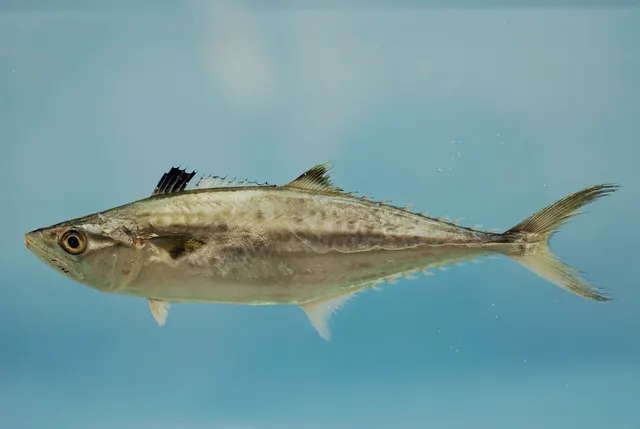
King mackerel
A practitioner claim about how Scomberomorus cavalla is commonly fished, following from where and how it feeds.
- General angling website restatements of established technique — Various (Credible secondary source)Relied on for: Widely restated practitioner accounts of fishing for king mackerel.Citation checked — the work exists and is described correctly
- Sea Angler — Bauer Media (Specialist angling publication)Relied on for: Practitioner treatment of the methods used for king mackerel and comparable species.Citation checked — the work exists and is described correctly
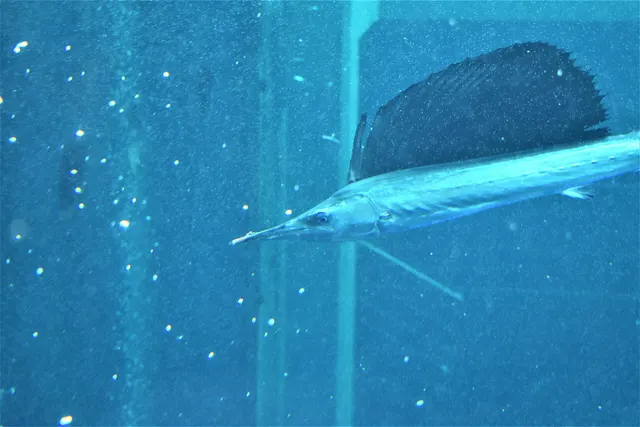
Sailfish
A practitioner claim about the pairing of a method with the species it was refined around.
- IGFA International Angling Rules and World Record Requirements — International Game Fish Association (Angling or fisheries organisation)Relied on for: That kite fishing is a recognised angling method within the offshore rule framework, with conventions for release clips and live bait.Passage read and verified
- Sea Angler — Bauer Media (Specialist angling publication)Relied on for: Practitioner treatment of kite fishing technique for surface-feeding billfish.Citation checked — the work exists and is described correctly
Related techniques
Official guidance — 1 connection
Stated by a fisheries authority, scientific institute or recognised angling body. Authoritative, but summarising rather than demonstrating.
Sea fishing
A method claim resting on the gear literature, which classifies kite-assisted line fishing as a distinct technique with a traditional distribution as well as a modern one.
- FAO fishing gear types and fishing technology information — Food and Agriculture Organization of the United Nations (Scientific institute)Relied on for: The classification of kite-assisted line fishing as a recognised gear technique with traditional distribution in the Pacific and Southeast Asia.States this directlyCitation checked — the work exists and is described correctly
- IGFA International Angling Rules and World Record Requirements — International Game Fish Association (Angling or fisheries organisation)Relied on for: That kite fishing is a recognised angling method within the offshore rule framework.FishingHQ's interpretation of what it saysPassage read and verified
Compared with
What experienced anglers do — 1 connection
Widely and independently recommended by experienced anglers and specialist sources. This is real angling knowledge, not proof: controlled evidence for it is limited, and FishingHQ records it as convention rather than as a demonstrated effect.
Livebaiting at sea
A comparison between two methods that share a dependency and differ in presentation.
- Sea Angler — Bauer Media (Specialist angling publication)Relied on for: Practitioner treatment of live bait presentation and bait care.Citation checked — the work exists and is described correctly
- IGFA International Angling Rules and World Record Requirements — International Game Fish Association (Angling or fisheries organisation)Relied on for: The conventions governing live bait and release clips in offshore angling.Passage read and verified
History and culture
Official guidance — 1 connection
Stated by a fisheries authority, scientific institute or recognised angling body. Authoritative, but summarising rather than demonstrating.
Pacific island spearfishing
A historical claim about gear distribution drawn from the gear literature.
- FAO fishing gear types and fishing technology information — Food and Agriculture Organization of the United Nations (Scientific institute)Relied on for: The classification of kite-assisted line fishing as a technique with traditional distribution in the Pacific and Southeast Asia.States this directlyCitation checked — the work exists and is described correctly
- Fishers' Craft and Lettered Art: Tracts on Fishing from the End of the Middle Ages — University of Toronto Press, 1997 (Scientific literature)Relied on for: That pre-industrial fishing technology includes methods with no European lineage.FishingHQ's interpretation of what it saysCitation checked — the work exists and is described correctly
How FishingHQ labels evidence is explained in the evidence policy.