Ice fishing
Method · Last reviewed 2026-08-10
Fishing through a hole cut in ice — a normal winter method across northern Europe and North America, and one where the ice itself is the principal hazard.
Safety: drowning and immersion — can cause serious injury or death. 3 more points apply here.
Ice fishing is vertical fishing through a hole. The tackle is short, the presentation is directly below the angler, and the methods are jigging, static baits and tip-ups that signal a take on an unattended line. In northern Europe, Russia and North America it is not an eccentricity but the normal way to fish for several months of the year.
What makes it worth covering carefully is that the fishing is straightforward and the environment is not. Ice thickness varies within metres, is weakened by current, springs, inflows and pressure ridges, and gives very little warning. Every serious ice fishing tradition has a strong culture of ice assessment, and the equipment carried — picks, rope, flotation — is safety kit rather than convenience.
In Britain and Ireland ice fishing is effectively not practised, because the ice does not reliably form to a safe thickness. FishingHQ covers the method because the platform is not a British site, and states plainly that ice which is safe somewhere is not evidence that ice is safe anywhere.
What it is
Fishing through a hole cut or augered in the ice covering a frozen water, using short rods, jigging tackle, or tip-up devices that signal a take on a set line.
What it is for
To fish waters that are otherwise inaccessible for months of the year, and to reach fish holding in deep water beneath the ice. Perch, pike, and various salmonids are the usual catch in Europe.
Setting it up
- Assess the ice before anything else, and keep assessing as you move — thickness varies enormously across a single water.
- Never go onto ice alone, and never without ice picks worn where you can reach them.
- Use short rods and light line; presentation is vertical and depth control is everything.
- Fish small and slow — cold fish do not chase.
- Move between holes rather than waiting; locating fish matters more than presentation under ice.
What it catches
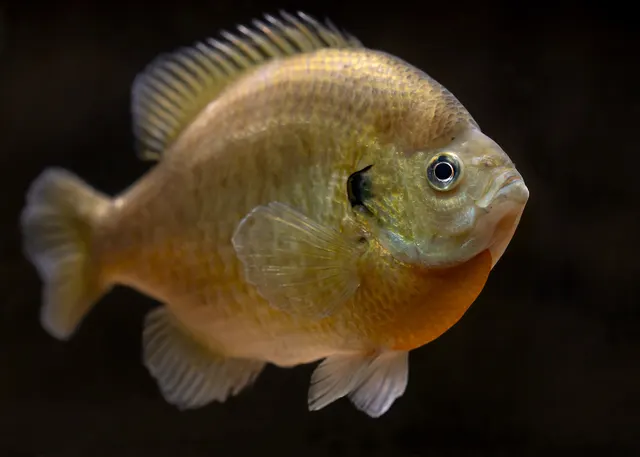 BluegillBluegill remain active under ice and are among the principal winter panfish across their range, taken on very small baits at a precisely held depth.
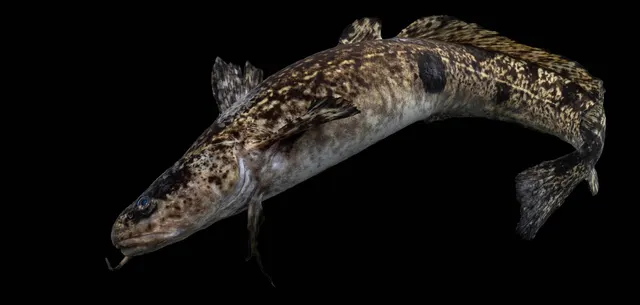 BurbotScented dead baits fished static after dark and through the ice.
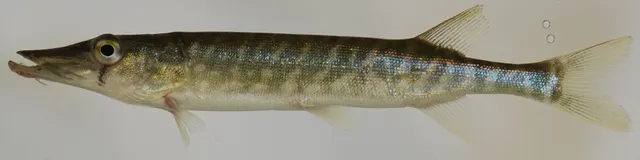 Chain pickerelSpoons and spinners worked through weed, and a mainstay of hard-water fishing.
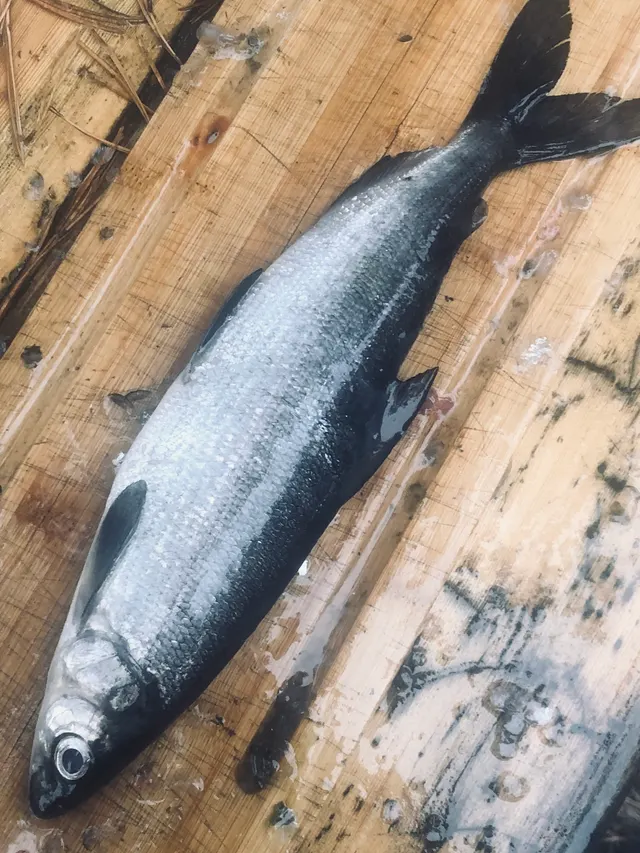 Common whitefishAcross Scandinavia and the Baltic states, whitefish are a principal ice-fishing target taken on very small jigs at a located depth — the same problem as the hegene, solved through a hole.
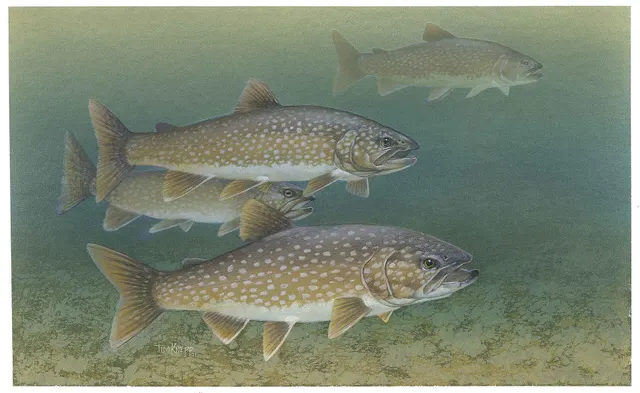 Lake troutIn much of their range lake trout are most accessible in winter, when the whole lake is at a uniform cold temperature and the fish are shallower than at any other time of year.
- VendaceVery small jigs through the ice, which is how it is recreationally fished in the Nordic countries.
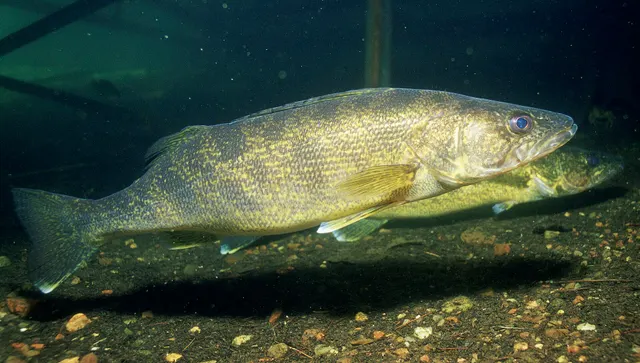 WalleyeA major ice-fishing target across the northern part of the range, and the low-light adaptation that makes it catchable at dusk works equally well under a hole in a frozen lake.
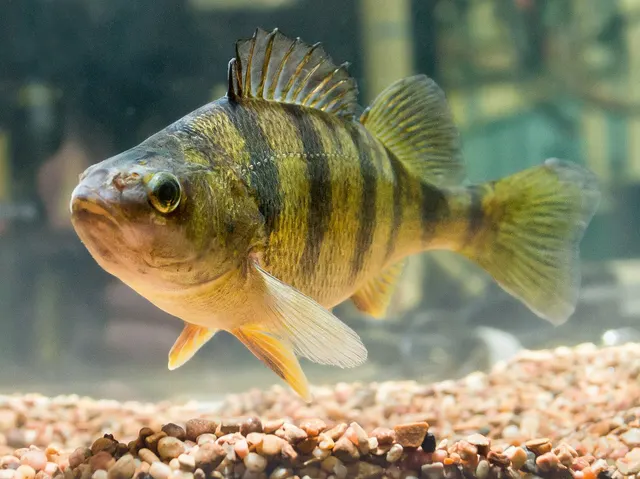 Yellow perchShoals tightly in deep water in winter, which makes it one of the principal ice-fishing species across the northern part of its range.
How it works
With the water covered, presentation is necessarily vertical. Small jigs are worked directly below the hole, static baits are suspended at a set depth, and tip-ups hold a baited line with a flag mechanism that releases when a fish runs. Fish under ice are typically in cold, low-light, low-oxygen conditions and are correspondingly slow, so presentations are small, slow and persistent.
Conditions
Ice fishing requires sustained sub-zero conditions that produce ice of adequate and consistent thickness. Clear, hard ice is far stronger than white, air-filled or refrozen slush of the same thickness. Current, inflows, springs, and anything projecting through the ice all create locally thin or weak areas that are not visible from the surface.
Common mistakes
- Judging ice by its thickness at the edge, or by what it was yesterday.
- Treating white or refrozen ice as equivalent in strength to clear ice of the same thickness.
- Going alone, or without picks, rope and flotation.
- Fishing near inflows, outflows or over current without recognising that the ice there is weaker.
- Working a lure too fast for genuinely cold fish.
Advantages
- Access to water that cannot be fished at all in winter by any other means.
- Direct vertical presentation with excellent depth control.
- Simple, portable, inexpensive tackle.
- Fish are often concentrated, so locating them produces fast sport.
Limitations
- Entirely dependent on safe ice, which is unpredictable and locally variable.
- Vertical presentation only, over a very small area per hole.
- Severe cold makes handling tackle and fish difficult.
- Not practicable in maritime climates where ice does not reliably form.
Where people fish it
2 places FishingHQ holds name this among the ways they are fished. Being named here describes what sources report, not that the method is permitted — check the local rules before you fish.
Päijänne, Saimaa
Safety
Drowning and immersion — Can cause serious injury or death
Ice fails without warning, and a person who goes through is immediately in near-freezing water, under a lid, with a hole that is hard to find and edges that break away when gripped. Cold water shock arrives within seconds and the ability to self-rescue is lost within minutes.
What reduces it: Never go onto ice alone. Wear ice picks around your neck where both hands can reach them — they are the single most effective self-rescue tool because they let you grip ice that a hand cannot. Carry a throw rope and flotation. Assess ice continuously as you move, drilling test holes rather than trusting appearance, and avoid current, inflows and any area where something projects through the ice.
Worse when:
- Early and late in the season, when ice is forming or degrading
- Over current, springs, inflows and outflows, where ice is thin regardless of what surrounds it
- After a thaw and refreeze, which produces weak white ice that looks the same as strong clear ice
Hypothermia — Can cause serious injury or death
Long static periods in sub-zero conditions, frequently with wet hands from handling fish and tackle, produce a steady heat loss that impairs judgement before it produces obvious symptoms.
What reduces it: Shelter, a means of getting warm, dry spare gloves, hot drinks, and a companion who will notice that you have stopped making sense before you do.
Precautions that always apply here
- Tell somebody where you are going and when you expect to be back.
- Carry a charged phone in a waterproof case, or another means of calling for help.
Further safety reading
- Cold water shock and immersion — Going through ice puts a person into near-freezing water under a lid, which is cold water shock in its most severe form.
Where to go next
Skills behind it
- Jigging: a word covering several different techniquesVertical by necessity, with very small lures and very short rods.
- The fishing year: what each season changesA discipline that exists only during one state of the water, on waters whose year is organised by ice rather than by the four temperate seasons.
- Water temperature and fish activityThe extreme case, and it inverts the usual advice. Under ice the water is at its most stable and often warmest at depth, fish are concentrated and feeding slowly rather than not at all, and the small, slow, precisely-placed presentation the method uses is a direct consequence of a metabolism running at its floor.
Compared with
History and culture
Sources and evidence
Why the 14 connections on this page are here, and the sources
What it catches
What experienced anglers do — 8 connections
Widely and independently recommended by experienced anglers and specialist sources. This is real angling knowledge, not proof: controlled evidence for it is limited, and FishingHQ records it as convention rather than as a demonstrated effect.
Bluegill
Established angling practice for this species, recorded as convention. The note states the property of the animal or its water that makes the method the answer.
- IGFA International Angling Rules and World Record Requirements — International Game Fish Association (Angling or fisheries organisation)Relied on for: Recognition of the species as an established sport fish and the angling methods and tackle classes conventionally used for it.States this directlyPassage read and verified
- General angling website restatements of established technique — Various (Credible secondary source)Relied on for: Widely restated practice connecting this species and method.Background and mechanism onlyCitation checked — the work exists and is described correctly
Burbot
A practitioner claim about how Lota lota is commonly fished, following from where and how it feeds.
- General angling website restatements of established technique — Various (Credible secondary source)Relied on for: Widely restated practitioner accounts of fishing for burbot.Citation checked — the work exists and is described correctly
- Sea Angler — Bauer Media (Specialist angling publication)Relied on for: Practitioner treatment of the methods used for burbot and comparable species.Citation checked — the work exists and is described correctly
Chain pickerel
A practitioner claim about how Esox niger is commonly fished, following from where and how it feeds.
- General angling website restatements of established technique — Various (Credible secondary source)Relied on for: Widely restated practitioner accounts of fishing for chain pickerel.Citation checked — the work exists and is described correctly
- Sea Angler — Bauer Media (Specialist angling publication)Relied on for: Practitioner treatment of the methods used for chain pickerel and comparable species.Citation checked — the work exists and is described correctly
Common whitefish
A statement about how a species is fished outside Europe, resting on restated international practice rather than on the British angling literature.
- General angling website restatements of established technique — Various (Credible secondary source)Relied on for: Widely restated descriptions of regional angling practice, recorded as consensus rather than as scholarship.States this directlyCitation checked — the work exists and is described correctly
- IGFA International Angling Rules and World Record Requirements — International Game Fish Association (Angling or fisheries organisation)Relied on for: International recreational angling practice and the record framework that documents which species are pursued and how.Background and mechanism onlyPassage read and verified
Lake trout
Established angling practice for this species, recorded as convention. The note states the property of the animal or its water that makes the method the answer.
- IGFA International Angling Rules and World Record Requirements — International Game Fish Association (Angling or fisheries organisation)Relied on for: Recognition of the species as an established sport fish and the angling methods and tackle classes conventionally used for it.States this directlyPassage read and verified
- General angling website restatements of established technique — Various (Credible secondary source)Relied on for: Widely restated practice connecting this species and method.Background and mechanism onlyCitation checked — the work exists and is described correctly
Vendace
The record separates two situations cleanly. In the Nordic countries this is a commercial and subsistence species with a recreational ice fishery; in Britain it is legally protected and must not be fished for. The edge belongs to the first and the record states the second.
- Northern Norway sea-fishing tour operators and camps — Specialist Nordic sea-fishing holiday operators and registered fishing camps (Practitioner report)Relied on for: Documents which fishery and which technique takes this species.States this directlyCitation checked — the work exists and is described correctly
- Freshwater Fishes of the British Isles — HarperCollins (New Naturalist 75), 1992 (Reference work)Relied on for: Independently corroborates the species' recreational capture and range.Background and mechanism onlyCitation checked — the work exists and is described correctly
Walleye
A practitioner claim about a species-method pairing.
- General angling website restatements of established technique — Various (Credible secondary source)Relied on for: Widely restated practitioner accounts of walleye as a principal ice-fishing target.Citation checked — the work exists and is described correctly
- Angling Times — Bauer Media (Specialist angling publication)Relied on for: Contemporary treatment of ice fishing technique in the angling press.Citation checked — the work exists and is described correctly
Yellow perch
A practitioner claim about a species-method pairing.
- General angling website restatements of established technique — Various (Credible secondary source)Relied on for: Widely restated practitioner accounts of yellow perch as a principal ice-fishing target.Citation checked — the work exists and is described correctly
- Angling Times — Bauer Media (Specialist angling publication)Relied on for: Contemporary treatment of ice fishing technique in the angling press.Citation checked — the work exists and is described correctly
Skills behind it
Official guidance — 1 connection
Stated by a fisheries authority, scientific institute or recognised angling body. Authoritative, but summarising rather than demonstrating.
Jigging: a word covering several different techniques
One of the four techniques the word covers.
- FAO fishing gear types and fishing technology information — Food and Agriculture Organization of the United Nations (Scientific institute)Relied on for: Vertical line fishing methods and gear classification.States this directlyCitation checked — the work exists and is described correctly
What experienced anglers do — 1 connection
Widely and independently recommended by experienced anglers and specialist sources. This is real angling knowledge, not proof: controlled evidence for it is limited, and FishingHQ records it as convention rather than as a demonstrated effect.
The fishing year: what each season changes
A link from a practice, an environment or a geography to the mechanism it rests on. It asserts that the mechanism is load-bearing here rather than merely relevant, which is the test applied throughout this file.
- Angling Times — Bauer Media (Specialist angling publication)Relied on for: Contemporary UK and European coarse, match and predator practice as reported by practitioners, including how conditions are read on the waters named.FishingHQ's interpretation of what it saysCitation checked — the work exists and is described correctly
- General angling website restatements of established technique — Various (Credible secondary source)Relied on for: Widely restated descriptions of how the condition named governs the practice named, recorded as practitioner consensus rather than as scholarship.Background and mechanism onlyCitation checked — the work exists and is described correctly
Backed by research — 1 connection
Supported by peer-reviewed research or fisheries science. The sources are listed and can be checked.
Water temperature and fish activity
A method or discipline joined to the mechanism that changes how it is conducted. Written where the method's own practice differs because of the mechanism — a different bait, a different season, a different handling routine, a decision not to eat something — and refused where the mechanism is merely true of the fish being caught.
- Freshwater Fishes of the British Isles — HarperCollins (New Naturalist 75), 1992 (Reference work)Relied on for: Life history, physiological tolerance, seasonal behaviour and feeding biology of European freshwater fishes.States this directlyCitation checked — the work exists and is described correctly
- FishBase: a global information system on fishes — Froese, R. and D. Pauly, eds. — FishBase Consortium (Scientific institute)Relied on for: Recorded environment, temperature and oxygen tolerance, feeding biology and distribution of the species named.States this directlyPassage read and verified
- Sea Angler — Bauer Media (Specialist angling publication)Relied on for: British sea angling practice including seasonality, conditions and the conduct of shore and boat fishing.FishingHQ's interpretation of what it saysCitation checked — the work exists and is described correctly
- Freshwater Fishing — Macdonald & Jane's, 1975 (Specialist angling publication)Relied on for: Comprehensive angling practice across disciplines, including seasonal behaviour and the conditions each method is worked in.States this directlyCitation checked — the work exists and is described correctly
Compared with
What experienced anglers do — 1 connection
Widely and independently recommended by experienced anglers and specialist sources. This is real angling knowledge, not proof: controlled evidence for it is limited, and FishingHQ records it as convention rather than as a demonstrated effect.
Jigging
Vertical jigging is the principal ice fishing presentation.
- Angling Times — Bauer Media (Specialist angling publication)Relied on for: Ice fishing presentation practice.Citation checked — the work exists and is described correctly
- Sea Angler — Bauer Media (Specialist angling publication)Relied on for: Vertical jigging technique from a separate tradition.Citation checked — the work exists and is described correctly
Safety reading
Official guidance — 1 connection
Stated by a fisheries authority, scientific institute or recognised angling body. Authoritative, but summarising rather than demonstrating.
Cold water shock and immersion
Immersion in cold water is the dominant fatal mechanism.
- RNLI water safety guidance: cold water shock and Float to Live — Royal National Lifeboat Institution (Water-safety or diver-training authority)Relied on for: Cold water shock physiology and the response to sudden immersion.States this directlyPassage read and verified
History and culture
What experienced anglers do — 1 connection
Widely and independently recommended by experienced anglers and specialist sources. This is real angling knowledge, not proof: controlled evidence for it is limited, and FishingHQ records it as convention rather than as a demonstrated effect.
Ice fishing cultures
A record joined to the history behind it. Historical placement rests on the documentary and scholarly sources cited; where the tradition is living rather than documented, the claim is kept at the level those sources support.
- FAO fishing gear types and fishing technology information — Food and Agriculture Organization of the United Nations (Scientific institute)Relied on for: Classification and description of world fishing gears, including traps, weirs, handlines, droplines and longlines.States this directlyCitation checked — the work exists and is described correctly
- Fishers' Craft and Lettered Art: Tracts on Fishing from the End of the Middle Ages — University of Toronto Press, 1997 (Scientific literature)Relied on for: Historical fishing gear, its organisation and the legal and economic context in which it was used.States this directlyCitation checked — the work exists and is described correctly
How FishingHQ labels evidence is explained in the evidence policy.