Surface controller rig
Rig · Last reviewed 2026-08-18
A weighted float that provides casting weight while leaving a buoyant bait sitting freely on the surface behind it.
Safety: fish welfare — can cause injury needing treatment.
What it is for
To deliver an unweighted floating bait to a fish feeding at the surface, at a range it could not otherwise be cast, while leaving the bait itself free of any weight or resistance that would make it behave differently from the free offerings around it.
Components, from rod to hook
- Main line, greased to float or sunk at the last stretch depending on the refusal problem being solved.
- A controller float — weighted at one end so it sits low in the surface film — running on the line or fixed by a swivel.
- A bead and swivel below it, stopping the controller and joining the trace.
- A long trace, commonly far longer than beginners expect, of fine or fluorocarbon line.
- A hook mounted so the buoyant bait sits naturally: a band, a hair, or the bait hooked directly.
What it does in the water
The controller lands and settles low in the surface film with most of its bulk beneath it, so wind acts on very little of it. The trace and bait continue past on landing and settle out in front, unweighted, sitting exactly as a free offering does. Fish approach from below and can be watched doing it. A confident take is a visible engulfing followed by the fish turning down, at which point the line draws tight against the controller and the hook takes hold; the resistance the fish meets is the controller's mass and water drag rather than a lead. A refusal is equally visible — the fish rises, inspects, and drifts off — and is nearly always information about the trace rather than about the bait.
When to use it
Warm weather on stillwaters and slow rivers, when fish are visibly high in the water and taking floating food. It is highly situational: in cold water, in coloured water, or when nothing is showing at the surface, it is the wrong arrangement entirely and no amount of skill compensates.
Common mistakes
- Striking the instant the bait disappears, which pulls it out of a mouth that has not yet closed and turned.
- Using a trace so short that the controller sits in the fish's view alongside the bait.
- Leaving line lying across the surface between rod and controller, which fish refuse far more reliably than they refuse baits.
- Fishing it in a wind that pushes the controller and drags the bait unnaturally across the surface.
- Continuing to fish surface baits after fish have stopped taking them, rather than reading the refusals as a signal to change.
How this rig behaves, and where it goes wrong
Surface fishing has one structural problem: the bait weighs almost nothing. A floating crust, a dog biscuit or a piece of bread cannot be cast anywhere. Adding weight to solve that would sink it, which defeats the point.
A controller solves it by putting the casting weight somewhere the bait is not. The controller is a partly weighted float that sits IN the surface film, carrying enough mass to cast; the bait sits on a length of line behind it, unweighted and free. The angler gains range and keeps a bait that behaves like a free offering.
What makes the rig demanding is that everything happens in view. The fish can be seen, the bait can be seen, and the take can be seen — and so can the line, which is the problem. Line lying on the surface casts a shadow and dents the film, and a fish that has approached a floating bait several times has usually been refused by the line rather than by the bait. Sinking the last stretch, using a longer trace than feels necessary, and greasing or degreasing deliberately are all attempts at the same thing.
The other demand is the strike. A fish takes at the surface where the angler can see it, and the reflex is to strike immediately, which pulls the bait out of an open mouth. The correct response is to wait until the fish has turned down.
Safety
Fish welfare — Can cause injury needing treatment
Surface fishing concentrates fish at close range in warm shallow water and encourages long periods of visible feeding, and a fish hooked in warm low-oxygen water recovers considerably less well than the same fish would in cooler conditions.
What reduces it: Treat warm still weather as a reason to shorten the fight and the time out of water rather than to extend the session, keep the fish in the water while unhooking, and stop fishing when the water is warm enough that fish are visibly distressed on release.
Where to go next
Fish it is built for
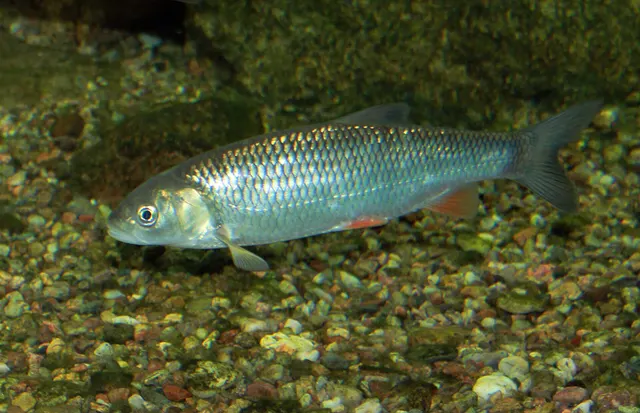 ChubChub take floating baits confidently and are frequently fished for with a controller on rivers, where the float also carries the bait downstream to fish that cannot be approached.
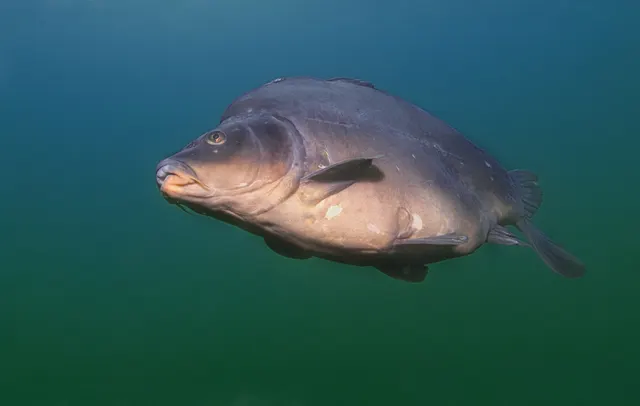 Common carpFloating baits for carp are the discipline the controller was developed for, and the long trace and line-shyness problems are both carp problems first.
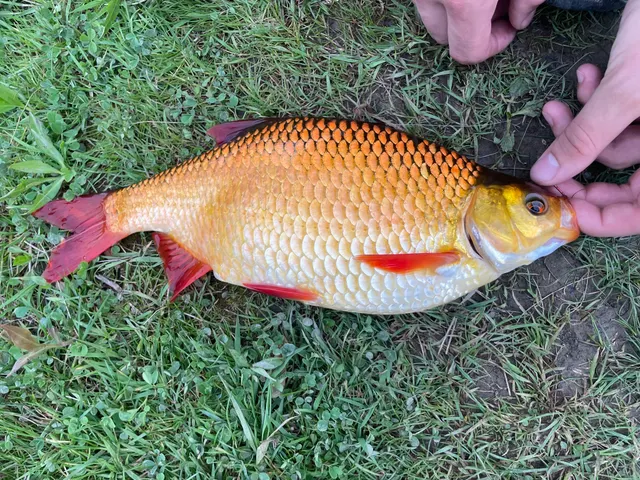 RuddA surface-feeding shoal fish that takes floating baits readily, and one of the few species where the approach works in cooler conditions than carp will.
How it is fished
What it is made of
Worth understanding first
- Choosing a rig for the conditionsThe answer when fish are feeding at the surface: the casting weight goes into a float and the bait is left unweighted. It is the only arrangement on the map presenting above the water rather than in or on the bottom.
- How fish seeThe rig's characteristic failure is a refusal at the last moment, and it is nearly always the line rather than the bait that is refused. What a fish can resolve looking up through a surface film is the mechanism behind every fix this rig uses.
- Water temperature and fish activitySurface feeding is a warm-water behaviour. The rig is highly situational and the temperature is most of what decides whether it is the right choice at all.
- What a rig isThe clearest case in FishingHQ of an arrangement designed around where the weight is NOT — the casting mass is deliberately separated from the bait by the length of the trace.
Sources and evidence
Why the 9 connections on this page are here, and the sources
Fish it is built for
What experienced anglers do — 3 connections
Widely and independently recommended by experienced anglers and specialist sources. This is real angling knowledge, not proof: controlled evidence for it is limited, and FishingHQ records it as convention rather than as a demonstrated effect.
Chub
That anglers conventionally choose this arrangement when targeting this fish. It is a claim about practice rather than about the fish, and it does not assert that the arrangement is necessary or that it will succeed.
- Coarse Fishing — A. & C. Black, 1912 (Specialist angling publication)Relied on for: Classical coarse angling practice: terminal arrangements, shotting, float attachment and bite registration in still and running water.States this directlyCitation checked — the work exists and is described correctly
- Angling Times — Bauer Media (Specialist angling publication)Relied on for: Contemporary UK coarse and match angling practice as reported by practitioners, including pole, float and surface rig convention.States this directlyCitation checked — the work exists and is described correctly
Common carp
That anglers conventionally choose this arrangement when targeting this fish. It is a claim about practice rather than about the fish, and it does not assert that the arrangement is necessary or that it will succeed.
- Coarse Fishing — A. & C. Black, 1912 (Specialist angling publication)Relied on for: Classical coarse angling practice: terminal arrangements, shotting, float attachment and bite registration in still and running water.States this directlyCitation checked — the work exists and is described correctly
- Angling Times — Bauer Media (Specialist angling publication)Relied on for: Contemporary UK coarse and match angling practice as reported by practitioners, including pole, float and surface rig convention.States this directlyCitation checked — the work exists and is described correctly
Rudd
That anglers conventionally choose this arrangement when targeting this fish. It is a claim about practice rather than about the fish, and it does not assert that the arrangement is necessary or that it will succeed.
- Coarse Fishing — A. & C. Black, 1912 (Specialist angling publication)Relied on for: Classical coarse angling practice: terminal arrangements, shotting, float attachment and bite registration in still and running water.States this directlyCitation checked — the work exists and is described correctly
- Angling Times — Bauer Media (Specialist angling publication)Relied on for: Contemporary UK coarse and match angling practice as reported by practitioners, including pole, float and surface rig convention.States this directlyCitation checked — the work exists and is described correctly
How it is fished
What experienced anglers do — 1 connection
Widely and independently recommended by experienced anglers and specialist sources. This is real angling knowledge, not proof: controlled evidence for it is limited, and FishingHQ records it as convention rather than as a demonstrated effect.
Surface fishing for coarse fish
That a method conventionally uses this terminal arrangement, drawn from published description of practice rather than from any claim that it must.
- Coarse Fishing — A. & C. Black, 1912 (Specialist angling publication)Relied on for: Classical coarse angling practice: terminal arrangements, shotting, float attachment and bite registration in still and running water.States this directlyCitation checked — the work exists and is described correctly
- Angling Times — Bauer Media (Specialist angling publication)Relied on for: Contemporary UK coarse and match angling practice as reported by practitioners, including pole, float and surface rig convention.States this directlyCitation checked — the work exists and is described correctly
What it is made of
What experienced anglers do — 1 connection
Widely and independently recommended by experienced anglers and specialist sources. This is real angling knowledge, not proof: controlled evidence for it is limited, and FishingHQ records it as convention rather than as a demonstrated effect.
Non-slip loop knot
An arrangement joined to the knot that actually builds it, written where the knot is characteristic of that arrangement rather than merely possible in it. This is the edge a reader travels: they arrive looking for the arrangement and need the connection it depends on.
- Freshwater Fishing — Macdonald & Jane's, 1975 (Specialist angling publication)Relied on for: Comprehensive angling practice: reel filling, leader and dropper construction, and the connections each arrangement rests on.States this directlyCitation checked — the work exists and is described correctly
- Coarse Fishing — A. & C. Black, 1912 (Specialist angling publication)Relied on for: Classical coarse angling practice: hooklengths, loops, droppers and the terminal arrangements built from them.States this directlyCitation checked — the work exists and is described correctly
- Sea Angler — Bauer Media (Specialist angling publication)Relied on for: British sea angling practice: shock leaders, multi-hook trace construction and the dropper loops a trace is built from.FishingHQ's interpretation of what it saysCitation checked — the work exists and is described correctly
- General angling website restatements of established technique — Various (Credible secondary source)Relied on for: Widely restated descriptions of established connection convention, recorded as practitioner consensus rather than as scholarship.Background and mechanism onlyCitation checked — the work exists and is described correctly
Worth understanding first
What experienced anglers do — 4 connections
Widely and independently recommended by experienced anglers and specialist sources. This is real angling knowledge, not proof: controlled evidence for it is limited, and FishingHQ records it as convention rather than as a demonstrated effect.
Choosing a rig for the conditions
An arrangement joined to the guidance that selects it. That guidance names eleven rigs against four questions and pointed at none of them, so a reader following the procedure to its conclusion could not reach the answer.
- Sea Angler — Bauer Media (Specialist angling publication)Relied on for: British sea angling practice: how tide, wind, swell and water clarity change where and how a mark is fished.FishingHQ's interpretation of what it saysCitation checked — the work exists and is described correctly
- Freshwater Fishing — Macdonald & Jane's, 1975 (Specialist angling publication)Relied on for: Comprehensive angling practice across disciplines, including water reading, seasonal condition and the tackle each demands.States this directlyCitation checked — the work exists and is described correctly
How fish see
A link from an arrangement to the concept that explains why it is built the way it is, so this page carries the mechanism rather than restating it.
- Coarse Fishing — A. & C. Black, 1912 (Specialist angling publication)Relied on for: Classical coarse angling practice: terminal arrangements, shotting, float attachment and bite registration in still and running water.States this directlyCitation checked — the work exists and is described correctly
- Angling Times — Bauer Media (Specialist angling publication)Relied on for: Contemporary UK coarse and match angling practice as reported by practitioners, including pole, float and surface rig convention.States this directlyCitation checked — the work exists and is described correctly
Water temperature and fish activity
A link from an arrangement to the concept that explains why it is built the way it is, so this page carries the mechanism rather than restating it.
- Coarse Fishing — A. & C. Black, 1912 (Specialist angling publication)Relied on for: Classical coarse angling practice: terminal arrangements, shotting, float attachment and bite registration in still and running water.States this directlyCitation checked — the work exists and is described correctly
- Angling Times — Bauer Media (Specialist angling publication)Relied on for: Contemporary UK coarse and match angling practice as reported by practitioners, including pole, float and surface rig convention.States this directlyCitation checked — the work exists and is described correctly
What a rig is
A link from an arrangement to the concept that explains why it is built the way it is, so this page carries the mechanism rather than restating it.
- Coarse Fishing — A. & C. Black, 1912 (Specialist angling publication)Relied on for: Classical coarse angling practice: terminal arrangements, shotting, float attachment and bite registration in still and running water.States this directlyCitation checked — the work exists and is described correctly
- Angling Times — Bauer Media (Specialist angling publication)Relied on for: Contemporary UK coarse and match angling practice as reported by practitioners, including pole, float and surface rig convention.States this directlyCitation checked — the work exists and is described correctly
How FishingHQ labels evidence is explained in the evidence policy.