When fish feed, and why timing is not a rule
Explainer · Last reviewed 2026-08-14
Fish feed when the balance between how easily they can catch food and how easily something can catch them tips in their favour, which is why dawn and dusk are good and why that is not a law.
Every angler is told that dawn and dusk are the best times to fish, and it is broadly true and frequently wrong. The mechanism is worth having rather than the rule.
FEEDING IS A TRADE-OFF, NOT A SCHEDULE. A fish feeds when the expected gain from eating exceeds the expected cost of exposing itself to being eaten. Anything that shifts that balance shifts feeding — light, turbidity, cover, prey abundance, temperature, hunger.
LOW LIGHT SHIFTS IT IN THE PREDATOR'S FAVOUR. At dawn and dusk, a predator with good low-light vision can see prey silhouetted against a brighter surface while remaining hard to see itself. That asymmetry is why the light edges produce, and it is a mechanism rather than a superstition.
SO ANYTHING THAT REPRODUCES THE ASYMMETRY WORKS TOO. Coloured water after rain, a heavy overcast, a chop breaking up the surface, or the shadow line at the edge of a harbour light all give the same advantage — which is why a dull day can fish like an extended dusk and a bright still day can be difficult all through.
PREY BEHAVIOUR SETS THE OTHER HALF. Many prey species migrate vertically, moving up at night and down by day, or move with the tide. Predators feed when prey is available and reachable, so the timing of the fishing frequently reflects the prey's schedule rather than the predator's preference.
TIDE OVERRIDES TIME OF DAY ON THE COAST. On tidal water, the state of tide moves food and concentrates it against structure, and a mark fishes on a stage of tide regardless of the hour. A dawn slack can be dead and a midday spring flood excellent.
TEMPERATURE OVERRIDES BOTH AT THE EXTREMES. In very cold water fish feed in short windows around the warmest part of the day; in very warm water they feed at night because the day is intolerable.
AND HUNGER IS THE VARIABLE NOBODY CAN SEE. A fish that fed heavily yesterday may not feed today, and a fish that has not fed for a week will feed at a time the rule says it should not. That is why the rule fails often enough to be worth understanding rather than obeying.
Finding a particular water's windows, which is a record-keeping problem
The record above explains why no general timing rule survives contact with a specific water. That leaves the reader with a real question — how do you find out when THIS water fishes — and the answer is unglamorous and reliable.
THE WINDOWS ARE PROPERTIES OF THE PLACE, AND THEY ARE STABLE. A mark that fishes on the last two hours of the flood tends to keep doing so, because the reason is physical: the depth over a bar, the moment a gully floods, the point at which a current starts running over a feature. A stillwater that produces at first light does so because of overnight oxygen and low light, and that recurs. These are not superstitions; they are local facts that happen not to generalise.
WHICH MAKES THE FINDING METHOD RECORD-KEEPING RATHER THAN THEORY. Note the time, the state of tide or the river level, the wind direction, the light, and what happened. Four or five sessions is enough to start seeing a pattern on a mark; a season is enough to be confident. Almost nobody does this, and it is the single largest difference between anglers who consistently catch on a water and anglers who do not.
RECORD THE BLANKS TOO, and this is the part that gets skipped. A pattern built only from successful sessions cannot distinguish 'this state produces' from 'this is when I usually go'. The blanks are what make the record informative rather than confirmatory.
AND WATCH FOR THE CONFOUND OF YOUR OWN HABITS. Most anglers fish evenings because of work, weekends because of life, and settled weather because it is pleasant. A log that shows evening success may be showing evening attendance. If a pattern matters, test it by fishing the state you have been avoiding.
WHAT TO ASK OTHER PEOPLE, AND HOW. 'When does it fish?' invites folklore. 'What state of tide were you fishing?' and 'was that on a spring?' get facts, and a tackle shop or a club member will usually give them accurately because they are not opinions.
THE ONE GENERALISATION THAT SURVIVES is the weakest and most useful: the productive periods are usually when something is CHANGING — the light at either end of the day, the tide starting or stopping, a river rising or clearing, wind getting up or dropping. That is not a rule about times of day. It is a reason to be present at transitions rather than to fish the settled middle of them, and it holds because change is what moves food and what removes a prey fish's advantages.
What experienced anglers do — why, and the sources (4)
Widely and independently recommended by experienced anglers and specialist sources. This is real angling knowledge, not proof: controlled evidence for it is limited, and FishingHQ records it as convention rather than as a demonstrated effect.
- Freshwater Fishing — Macdonald & Jane's, 1975 (Specialist angling publication)Relied on for: Comprehensive angling practice across disciplines, including water reading, seasonal condition and session conduct.States this directlyCitation checked — the work exists and is described correctly
- Sea Angler — Bauer Media (Specialist angling publication)Relied on for: British sea angling practice: how tide, wind, light and water clarity change where and how a mark is fished.FishingHQ's interpretation of what it saysCitation checked — the work exists and is described correctly
- Freshwater Fishes of the British Isles — HarperCollins (New Naturalist 75), 1992 (Reference work)Relied on for: Life history, physiological tolerance, feeding biology and seasonal behaviour of European freshwater fishes.States this directlyCitation checked — the work exists and is described correctly
- FishBase: a global information system on fishes — Froese, R. and D. Pauly, eds. — FishBase Consortium (Scientific institute)Relied on for: Recorded environment, temperature and oxygen tolerance, depth range and feeding biology of the species named.States this directlyPassage read and verified
Where to go next
Fish this applies to
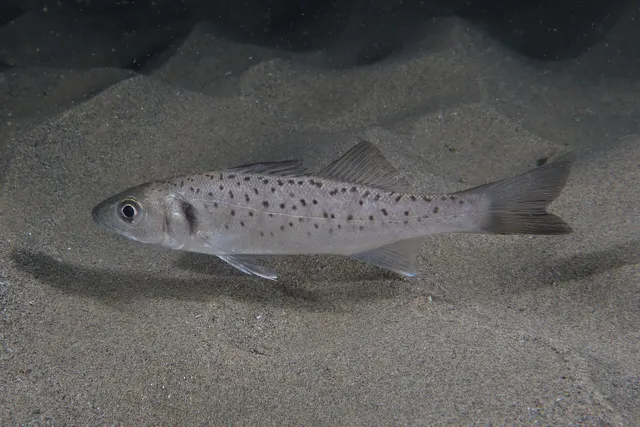 European sea bassA coastal predator feeding on the tide rather than on the clock is the clearest demonstration that state of tide overrides time of day on the shore.
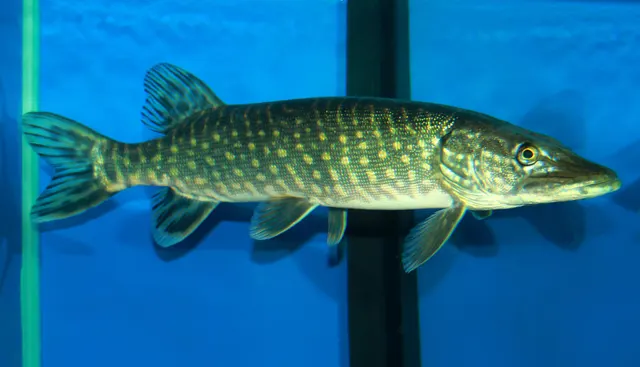 Northern pikeAn ambush predator that feeds in short windows and then digests for days is why a fish can fail to feed at the time the rule says it should.
Related reading
- Getting bait where you want itHow much to introduce and when depends on whether fish are feeding at all, which is the question that record refuses to answer with a table — and the reason feeding is a judgement rather than a schedule.
- Water temperature and what it does to a fishTemperature sets how much a fish needs to eat and how quickly it digests, which decides how often the feeding window opens at all.
- Wind, and where it puts the foodA ripple shifts the predator-prey balance the same way low light does, which is why a wind-blown shore can fish like an extended dusk.
Sources and evidence
- The Ecology of Vision — Clarendon Press, Oxford, 1979 (Scientific literature)Relied on for: The ecology of vision in aquatic animals, including the effect of light level, water colour and turbidity on what a fish can see and at what range.States this directlyCitation checked — the work exists and is described correctly
- Functions of shoaling behaviour in teleosts — In: Pitcher TJ (ed.) Behaviour of Teleost Fishes, 2nd edn. Chapman & Hall, London, 1993 (Scientific literature)Relied on for: The functions of shoaling behaviour in teleosts, including predator avoidance, foraging efficiency and the conditions under which shoals form and break.States this directlyCitation checked — the work exists and is described correctly
- General angling website restatements of established technique — Various (Credible secondary source)Relied on for: Widely restated angling practice and belief, recorded as practitioner consensus rather than as tested fact.Background and mechanism onlyCitation checked — the work exists and is described correctly
Why the 5 connections on this page are here, and the sources
Fish this applies to
Official guidance — 2 connections
Stated by a fisheries authority, scientific institute or recognised angling body. Authoritative, but summarising rather than demonstrating.
European sea bass
The reason it behaves as it does, explained rather than merely listed.
- FishBase: a global information system on fishes — Froese, R. and D. Pauly, eds. — FishBase Consortium (Scientific institute)Relied on for: Temperature tolerance, oxygen requirement, activity pattern and habitat association recorded for the species concerned.Background and mechanism onlyPassage read and verified
- Understanding the Complexity of Catch-and-Release in Recreational Fishing — Reviews in Fisheries Science 15:75–167, 2007 (Scientific literature)Relied on for: The factors determining post-release survival in recreational fishing, including water temperature, fight duration, air exposure and handling.States this directlyCitation checked — the work exists and is described correctly
Northern pike
The reason it behaves as it does, explained rather than merely listed.
- FishBase: a global information system on fishes — Froese, R. and D. Pauly, eds. — FishBase Consortium (Scientific institute)Relied on for: Temperature tolerance, oxygen requirement, activity pattern and habitat association recorded for the species concerned.Background and mechanism onlyPassage read and verified
- Understanding the Complexity of Catch-and-Release in Recreational Fishing — Reviews in Fisheries Science 15:75–167, 2007 (Scientific literature)Relied on for: The factors determining post-release survival in recreational fishing, including water temperature, fight duration, air exposure and handling.States this directlyCitation checked — the work exists and is described correctly
Related reading
What experienced anglers do — 1 connection
Widely and independently recommended by experienced anglers and specialist sources. This is real angling knowledge, not proof: controlled evidence for it is limited, and FishingHQ records it as convention rather than as a demonstrated effect.
Getting bait where you want it
A link from a practice or a piece of equipment to the mechanism or explanation it rests on.
- Freshwater Fishes of the British Isles — HarperCollins (New Naturalist 75), 1992 (Reference work)Relied on for: Distribution, habitat requirement, feeding behaviour and life history of the freshwater fishes of Britain and Ireland named here.States this directlyCitation checked — the work exists and is described correctly
- FishBase: a global information system on fishes — Froese, R. and D. Pauly, eds. — FishBase Consortium (Scientific institute)Relied on for: Recorded distribution, habitat association and feeding behaviour of the freshwater species named.States this directlyPassage read and verified
Official guidance — 2 connections
Stated by a fisheries authority, scientific institute or recognised angling body. Authoritative, but summarising rather than demonstrating.
Water temperature and what it does to a fish
The reason it behaves as it does, explained rather than merely listed.
- FishBase: a global information system on fishes — Froese, R. and D. Pauly, eds. — FishBase Consortium (Scientific institute)Relied on for: Temperature tolerance, oxygen requirement, activity pattern and habitat association recorded for the species concerned.Background and mechanism onlyPassage read and verified
- Understanding the Complexity of Catch-and-Release in Recreational Fishing — Reviews in Fisheries Science 15:75–167, 2007 (Scientific literature)Relied on for: The factors determining post-release survival in recreational fishing, including water temperature, fight duration, air exposure and handling.States this directlyCitation checked — the work exists and is described correctly
Wind, and where it puts the food
The reason it behaves as it does, explained rather than merely listed.
- FishBase: a global information system on fishes — Froese, R. and D. Pauly, eds. — FishBase Consortium (Scientific institute)Relied on for: Temperature tolerance, oxygen requirement, activity pattern and habitat association recorded for the species concerned.Background and mechanism onlyPassage read and verified
- Understanding the Complexity of Catch-and-Release in Recreational Fishing — Reviews in Fisheries Science 15:75–167, 2007 (Scientific literature)Relied on for: The factors determining post-release survival in recreational fishing, including water temperature, fight duration, air exposure and handling.States this directlyCitation checked — the work exists and is described correctly
How FishingHQ labels evidence is explained in the evidence policy.