Water temperature and what it does to a fish
Explainer · Last reviewed 2026-08-14
A fish's body temperature is the water's temperature, so temperature sets its metabolic rate, its oxygen demand, its digestion speed and therefore how much and how often it needs to eat.
Water temperature is the master variable in fishing, and the reason is physiological rather than behavioural.
ALMOST ALL FISH ARE ECTOTHERMS. Their body temperature is the temperature of the water around them, so every chemical process in the animal runs faster when the water is warm and slower when it is cold. That single fact generates most of what anglers observe about seasons and feeding.
METABOLIC RATE RISES WITH TEMPERATURE, ROUGHLY EXPONENTIALLY. A fish in cold water needs less energy, digests more slowly and therefore needs to eat less often. The same fish in warm water burns energy faster, digests faster and must feed more. This is why winter fishing rewards small baits fished slowly and summer fishing rewards larger, more frequent offerings.
BUT THE CURVE HAS A PEAK AND THEN FALLS. Every species has an optimum band. Below it activity declines; above it the fish becomes stressed, and above that it stops feeding entirely and moves to find cooler water. Warm is not simply better, and the top of the range is more dangerous to a fish than the bottom.
OXYGEN RUNS THE OPPOSITE WAY, WHICH IS THE CRUEL PART. Warm water holds less dissolved oxygen precisely when the fish needs more of it. That squeeze — higher demand, lower supply — is what makes summer heat genuinely dangerous and is why fish congregate at inflows, springs, weirs and deeper cooler layers when it arrives.
SPECIES DIFFER AND THE DIFFERENCES ARE PREDICTIVE. Trout and char need cold and are the first to suffer in heat. Carp, catfish and tench tolerate warmth. Pike sit between. In a mixed water, temperature decides which species is worth fishing for on a given day.
RATE OF CHANGE MATTERS AS MUCH AS ABSOLUTE VALUE. A sharp drop shuts fish down more than a stable cold spell does, because the animal has not acclimatised.
AND THE PRACTICAL POINT IS THAT A THERMOMETER TELLS YOU MORE THAN A CALENDAR. Two days in the same month can be different fishing propositions, and the water temperature rather than the date is what says which.
Salinity is the other axis, and in some seas it does more of the work
Temperature is the variable this page is about and it is not the only one organising a fish community. Across a large part of northern Europe the more important axis is how salt the water is — and unlike temperature, salinity varies along a coast rather than through a year.
THE BALTIC IS THE CLEAREST CASE ANYWHERE. Salinity falls from something near ocean strength at the Danish straits to nearly fresh at the head of the Gulf of Bothnia, over a distance a fish can cover. The community follows it the whole way: marine species thin out eastward and northward, freshwater species extend outward into what is nominally the sea, and in the middle both are present. Pike, perch and zander live and spawn in the Swedish and German coastal lagoons. Sea trout feed along a shore that does not freeze because it is brackish. Neither of those is possible in the North Sea a few hundred kilometres west.
WHICH MEANS THE SAME LATITUDE PRODUCES TWO DIFFERENT FISHERIES. A mark on the Swedish west coast holds cod, mackerel and plaice. A mark on the Swedish east coast at the same latitude holds pike, perch and herring. The temperature is nearly identical; the salt is not.
AND SALINITY MOVES, WHICH IS THE PART THAT MATTERS DAY TO DAY. In an estuary the salt wedge advances and retreats with the tide and with river discharge, so a species following a preferred salinity moves with it — which is why estuary fishing frequently tracks a boundary rather than a place. In a lagoon, evaporation in summer can raise salinity above the open sea's. In the Baltic, a rare inflow of dense salt water through the Danish straits changes conditions in deep basins for years.
THE PHYSIOLOGY UNDERNEATH IT. A fish in fresh water is constantly taking on water and excreting it; in salt water it is constantly losing water and drinking to replace it. Species differ enormously in how wide a range they can manage and how fast they can switch, which is why a diadromous fish needs time in brackish water to make the transition and why a species with a narrow tolerance is confined to a stretch of coast that looks continuous.
WHAT TO DO WITH IT. Where a coast has a salinity gradient, ask where you are on it before asking what the temperature is. It will tell you more about what is there.
Backed by research — why, and the sources (4)
Supported by peer-reviewed research or fisheries science. The sources are listed and can be checked.
- ICES Advice on fishing opportunities, catch and effort — International Council for the Exploration of the Sea (Scientific institute)Relied on for: Hydrography, salinity structure and stock distribution across the European sea areas assessed, including the Baltic salinity gradient and the north-east Atlantic shelf.States this directlyCitation checked — the work exists and is described correctly
- EMODnet — the European Marine Observation and Data Network — The European Commission, assembled from the national hydrographic offices, geological surveys and marine institutes of the member states (Scientific institute)Relied on for: Charted bathymetry, seabed substrate and coastal characterisation for the European sea basins, assembled from the national hydrographic and geological surveys.Background and mechanism onlyCitation checked — the work exists and is described correctly
- Freshwater Fishes of the British Isles — HarperCollins (New Naturalist 75), 1992 (Reference work)Relied on for: Distribution, habitat requirement and life history of European freshwater fishes, including their responses to flow, temperature and salinity.States this directlyCitation checked — the work exists and is described correctly
- The European Environment Agency's assessments of Europe's waters, seas and coasts — European Environment Agency, Copenhagen (Conservation authority)Relied on for: Assessment of Europe's surface waters, including hydromorphological modification, regulation, abstraction and barriers to migration.States this directlyCitation checked — the work exists and is described correctly
Where to go next
Fish this applies to
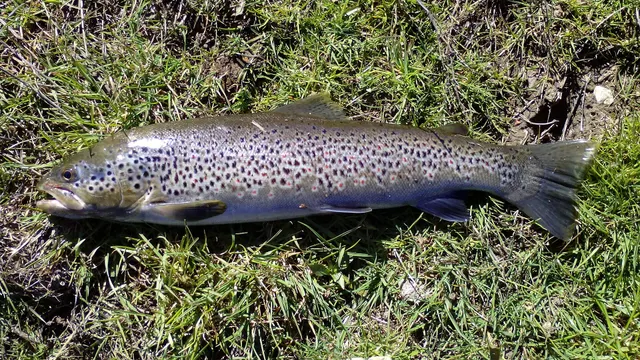 Brown troutA cold-water salmonid with a narrow thermal optimum is the clearest case of temperature setting where a species can be and when it will feed.
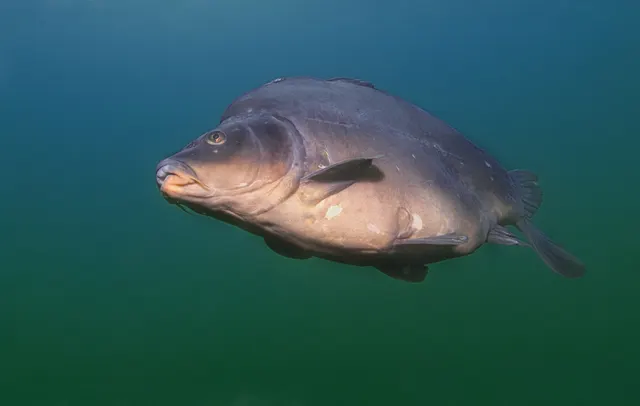 Common carpA warm-water cyprinid tolerant of conditions that would kill a trout is the other end of the same relationship, and the contrast is what makes the mechanism legible.
Water and ground
Where this applies
- The Baltic SeaThe sea that makes the salinity argument: the community changes along the gradient rather than with the seasons, and pike in the sea is the visible consequence.
- The Donegal coast and its sea loughsDonegal Bay has been recorded holding around nineteen degrees through much of October in named years, which is a North Atlantic Drift effect rather than a local one. It is the mechanism behind both a late autumn shore season and the bluefin fishery offshore, and it is why this coast does not behave like its latitude.
- West CorkThe estuaries of this coast hold a species assemblage a reader would expect several hundred kilometres further south. What makes it possible is warm oceanic water reaching a shallow, sheltered, south-facing shore — the fish are at the northern edge of a range rather than out of it, and the mechanism is temperature rather than chance.
Related reading
- How to handle a fish you have caughtWarm water holds less oxygen while the fish needs more, so the margin for slow handling shrinks exactly when a beginner is most likely to be slow.
- Warm-water fishing, and the oxygen problemThe oxygen squeeze is a direct consequence of the temperature relationship: solubility falls as demand rises, and the two curves cross where the trouble starts.
- Weather fronts, and what can honestly be saidA front changes air and then water temperature, and that mechanism is understood where the pressure mechanism is not.
- When fish feed, and why timing is not a ruleTemperature sets how much a fish needs to eat and how quickly it digests, which decides how often the feeding window opens at all.
Sources and evidence
- FishBase: a global information system on fishes — Froese, R. and D. Pauly, eds. — FishBase Consortium (Scientific institute)Relied on for: Temperature tolerance, oxygen requirement, activity pattern and life-history parameters recorded for the species concerned.States this directlyPassage read and verified
- A review of catch-and-release angling mortality with implications for no-take reserves — Reviews in Fish Biology and Fisheries 15:129–154, 2005 (Scientific literature)Relied on for: A review of catch-and-release angling mortality, including the effect of water temperature, hooking location, air exposure and handling on survival.States this directlyCitation checked — the work exists and is described correctly
Why the 10 connections on this page are here, and the sources
Fish this applies to
Official guidance — 2 connections
Stated by a fisheries authority, scientific institute or recognised angling body. Authoritative, but summarising rather than demonstrating.
Brown trout
The reason it behaves as it does, explained rather than merely listed.
- FishBase: a global information system on fishes — Froese, R. and D. Pauly, eds. — FishBase Consortium (Scientific institute)Relied on for: Temperature tolerance, oxygen requirement, activity pattern and habitat association recorded for the species concerned.Background and mechanism onlyPassage read and verified
- Understanding the Complexity of Catch-and-Release in Recreational Fishing — Reviews in Fisheries Science 15:75–167, 2007 (Scientific literature)Relied on for: The factors determining post-release survival in recreational fishing, including water temperature, fight duration, air exposure and handling.States this directlyCitation checked — the work exists and is described correctly
Common carp
The reason it behaves as it does, explained rather than merely listed.
- FishBase: a global information system on fishes — Froese, R. and D. Pauly, eds. — FishBase Consortium (Scientific institute)Relied on for: Temperature tolerance, oxygen requirement, activity pattern and habitat association recorded for the species concerned.Background and mechanism onlyPassage read and verified
- Understanding the Complexity of Catch-and-Release in Recreational Fishing — Reviews in Fisheries Science 15:75–167, 2007 (Scientific literature)Relied on for: The factors determining post-release survival in recreational fishing, including water temperature, fight duration, air exposure and handling.States this directlyCitation checked — the work exists and is described correctly
Water and ground
Backed by research — 1 connection
Supported by peer-reviewed research or fisheries science. The sources are listed and can be checked.
Brackish water
A link from a practice, an environment or a geography to the mechanism it rests on. It asserts that the mechanism is load-bearing here rather than merely relevant, which is the test applied throughout this file.
- ICES Advice on fishing opportunities, catch and effort — International Council for the Exploration of the Sea (Scientific institute)Relied on for: Hydrography, stratification, salinity structure and stock distribution across the European sea areas assessed, which is the physical basis for the mechanism named.States this directlyCitation checked — the work exists and is described correctly
- NOAA National Ocean Service education on estuaries and the National Estuarine Research Reserve System — National Oceanic and Atmospheric Administration, United States (Government fisheries body)Relied on for: Estuarine and coastal process: salt wedges, stratification, tidal exchange and the way water of different densities behaves where it meets.States this directlyCitation checked — the work exists and is described correctly
Where this applies
Backed by research — 3 connections
Supported by peer-reviewed research or fisheries science. The sources are listed and can be checked.
The Baltic Sea
A link from a practice, an environment or a geography to the mechanism it rests on. It asserts that the mechanism is load-bearing here rather than merely relevant, which is the test applied throughout this file.
- ICES Advice on fishing opportunities, catch and effort — International Council for the Exploration of the Sea (Scientific institute)Relied on for: Hydrography, stratification, salinity structure and stock distribution across the European sea areas assessed, which is the physical basis for the mechanism named.States this directlyCitation checked — the work exists and is described correctly
- NOAA National Ocean Service education on estuaries and the National Estuarine Research Reserve System — National Oceanic and Atmospheric Administration, United States (Government fisheries body)Relied on for: Estuarine and coastal process: salt wedges, stratification, tidal exchange and the way water of different densities behaves where it meets.States this directlyCitation checked — the work exists and is described correctly
The Donegal coast and its sea loughs
A link from a coast to the physical mechanism that governs its fishing, which is a claim about coastal process or hydrography rather than about angling.
- ICES Advice on fishing opportunities, catch and effort — International Council for the Exploration of the Sea (Scientific institute)Relied on for: Ecoregion description, stock distribution and the hydrography of the sea areas named, including seasonal inshore movement.States this directlyCitation checked — the work exists and is described correctly
- Cefas science, advice and data on marine and freshwater environments — Centre for Environment, Fisheries and Aquaculture Science (Government fisheries body)Relied on for: Marine environmental science for north-west European shelf seas, including sediment character, coastal process and inshore monitoring.States this directlyCitation checked — the work exists and is described correctly
West Cork
A link from a coast to the physical mechanism that governs its fishing, which is a claim about coastal process or hydrography rather than about angling.
- ICES Advice on fishing opportunities, catch and effort — International Council for the Exploration of the Sea (Scientific institute)Relied on for: Ecoregion description, stock distribution and the hydrography of the sea areas named, including seasonal inshore movement.States this directlyCitation checked — the work exists and is described correctly
- Cefas science, advice and data on marine and freshwater environments — Centre for Environment, Fisheries and Aquaculture Science (Government fisheries body)Relied on for: Marine environmental science for north-west European shelf seas, including sediment character, coastal process and inshore monitoring.States this directlyCitation checked — the work exists and is described correctly
Related reading
Official guidance — 4 connections
Stated by a fisheries authority, scientific institute or recognised angling body. Authoritative, but summarising rather than demonstrating.
How to handle a fish you have caught
The reason it behaves as it does, explained rather than merely listed.
- FishBase: a global information system on fishes — Froese, R. and D. Pauly, eds. — FishBase Consortium (Scientific institute)Relied on for: Temperature tolerance, oxygen requirement, activity pattern and habitat association recorded for the species concerned.Background and mechanism onlyPassage read and verified
- Understanding the Complexity of Catch-and-Release in Recreational Fishing — Reviews in Fisheries Science 15:75–167, 2007 (Scientific literature)Relied on for: The factors determining post-release survival in recreational fishing, including water temperature, fight duration, air exposure and handling.States this directlyCitation checked — the work exists and is described correctly
Warm-water fishing, and the oxygen problem
The reason it behaves as it does, explained rather than merely listed.
- FishBase: a global information system on fishes — Froese, R. and D. Pauly, eds. — FishBase Consortium (Scientific institute)Relied on for: Temperature tolerance, oxygen requirement, activity pattern and habitat association recorded for the species concerned.Background and mechanism onlyPassage read and verified
- Understanding the Complexity of Catch-and-Release in Recreational Fishing — Reviews in Fisheries Science 15:75–167, 2007 (Scientific literature)Relied on for: The factors determining post-release survival in recreational fishing, including water temperature, fight duration, air exposure and handling.States this directlyCitation checked — the work exists and is described correctly
Weather fronts, and what can honestly be said
The reason it behaves as it does, explained rather than merely listed.
- FishBase: a global information system on fishes — Froese, R. and D. Pauly, eds. — FishBase Consortium (Scientific institute)Relied on for: Temperature tolerance, oxygen requirement, activity pattern and habitat association recorded for the species concerned.Background and mechanism onlyPassage read and verified
- Understanding the Complexity of Catch-and-Release in Recreational Fishing — Reviews in Fisheries Science 15:75–167, 2007 (Scientific literature)Relied on for: The factors determining post-release survival in recreational fishing, including water temperature, fight duration, air exposure and handling.States this directlyCitation checked — the work exists and is described correctly
When fish feed, and why timing is not a rule
The reason it behaves as it does, explained rather than merely listed.
- FishBase: a global information system on fishes — Froese, R. and D. Pauly, eds. — FishBase Consortium (Scientific institute)Relied on for: Temperature tolerance, oxygen requirement, activity pattern and habitat association recorded for the species concerned.Background and mechanism onlyPassage read and verified
- Understanding the Complexity of Catch-and-Release in Recreational Fishing — Reviews in Fisheries Science 15:75–167, 2007 (Scientific literature)Relied on for: The factors determining post-release survival in recreational fishing, including water temperature, fight duration, air exposure and handling.States this directlyCitation checked — the work exists and is described correctly
How FishingHQ labels evidence is explained in the evidence policy.