The Baltic Sea
Fishing regions · Last reviewed 2026-08-13
A sea whose salinity falls from ocean strength at its entrance to almost fresh at its head, so that marine and freshwater fish occupy the same water and swap places along its length. No other European sea does this.
Being listed here is not permission to fish. What that meansClose
Access, fishing rights, seasons, licences, local bylaws and permitted methods vary and can change. Check current access, permission, local regulations, closures and restrictions before you travel or fish. FishingHQ describes what the ground is and names who holds the answer; it does not hold the answer itself.
Find the authority for a jurisdiction · What FishingHQ does and does not cover
The Baltic is the clearest case anywhere in Europe of a physical system explaining a fishery, and the physical fact is a salinity gradient.
WATER ENTERS THROUGH A NARROW, SHALLOW DOOR. The only connection to the North Sea is through the Danish straits — shallow sills and narrow channels that admit dense saline water only intermittently, in irregular inflow events driven by particular weather. Meanwhile an enormous freshwater load arrives from the rivers of a catchment covering much of northern and eastern Europe. Evaporation is low. The result is a sea that is diluted and stays diluted.
SO SALINITY FALLS ALONG ITS LENGTH. Near the entrance the water is brackish but recognisably marine. Moving north and east it declines steadily, and at the heads of the Gulf of Bothnia and the Gulf of Finland it approaches fresh. That single gradient is the organising fact of the whole system.
AND THE FISH SORT THEMSELVES ALONG IT. Marine species — cod, herring, flounder, turbot, garfish — reach as far in as the salinity allows and no further, becoming scarcer and frequently smaller toward the north. Freshwater species — pike, perch, roach, zander, bream — extend out into the sea itself, occupying coastal bays, reed beds and archipelago shallows in water too fresh to trouble them and too saline for most of their competitors. In the middle they overlap, and a single bay can hold pike and cod. That is not a curiosity; it is the defining character of Baltic fishing, and it is why a pike caught over a reed edge in salt water is an ordinary event here and an impossibility almost everywhere else.
THE SYSTEM IS ALSO PHYSICALLY UNUSUAL IN THREE FURTHER WAYS that shape the fishing. Tidal range is negligible, so water levels are governed by wind and air pressure rather than by the moon — an onshore gale raises the water and an offshore one lowers it, unpredictably. The sea is shallow and freezes over substantial areas in cold winters, which supports an extensive ice fishing culture. And the water column stratifies strongly, with a permanent halocline separating fresher surface water from denser saline deep water that is renewed only by those irregular inflows.
THAT LAST POINT IS THE ENVIRONMENTAL STORY. Because the deep water is renewed rarely, oxygen in it is consumed and not replaced, and large areas of the Baltic seabed are hypoxic or anoxic. Nutrient loading from a heavily populated and intensively farmed catchment has made this substantially worse. Cod eggs require particular salinity and oxygen conditions to remain neutrally buoyant and develop, and those conditions occur only in specific deep basins — so cod reproduction in the Baltic depends on a small number of places whose suitability depends on inflows that may not come.
What fishing here is like
Brackish, shallow, nearly tideless and cold, with an enormous archipelago coastline in the north and long sandy coasts in the south. The fishing is dominated by the salinity gradient: freshwater predators in the coastal shallows across most of the sea, marine species concentrated toward the entrance, and an overlap zone where both occur. Ice fishing is a major seasonal activity in the north. Shore, small-boat and kayak fishing all benefit from the absence of significant tide and from a sheltered archipelago, and are punished by the speed with which a shallow sea builds a short steep chop in wind.
How people fish here
2 methods are recorded on the places documented here, counted from the records themselves rather than from what is practised in the country. Each opens a full guide to the technique.
Saltwater fly fishing
Recorded at 1 place here, over rock mark.
Fly fishing adapted to the sea: heavier lines, corrosion-proof tackle, fish that run rather than fight, and wind as the permanent constraint.
Spinning
Recorded at 1 place here, over rock mark.
Casting an artificial lure and retrieving it so that it moves like something alive — the most direct form of lure fishing.
These are the methods documented at the places FishingHQ holds here. A species listed beside a method is documented on the same ground, which is not the same as being taken that way — where a source establishes the method a fish was caught on, it is stated on that place’s own page. All fishing methods.
What dominates
Coastal predator fishing for pike, perch and zander from small boats, kayaks and the shore dominates the recreational picture across most of the sea, with lure fishing the principal method. Sea trout fishing from the shore in the southern and western Baltic is a substantial and distinct tradition, conducted by wading and casting over shallow stony ground. Ice fishing for perch, pike and burbot is a major winter discipline in the north. Trolling for salmon and sea trout in open water is well established. Coastal herring fishing on multi-hook traces is widespread and traditional.
The water available
Rock and skerry archipelago in the north, with tens of thousands of islands and sheltered channels; sandy and stony coasts in the south; extensive shallow bays with reed and submerged vegetation; river mouths and low-salinity gulfs at the northern and eastern extremities; and a stratified deep basin structure offshore whose lower layer is frequently oxygen-poor. Ice cover over substantial areas in cold winters.
How the rules are structured
Nine countries border the Baltic and each administers its own recreational fishing rules, so a single sea is governed by nine national frameworks plus European Union instruments for the member states among them. Rules on licensing, seasons, size limits, bag limits and gear differ across borders that are frequently invisible at sea. Salmon and sea trout are managed under separate and more restrictive arrangements in most jurisdictions, and there are area-specific measures around river mouths and in particular basins. Nothing about a rule observed in one Baltic country transfers to another, and FishingHQ does not state what any current rule is.
Who to ask
- The national fisheries agency of the country whose waters are being fished — each Baltic state administers its own recreational sea fishing rules.
- HELCOM, the Baltic Marine Environment Protection Commission, for the environmental status of the sea as a whole.
- ICES, for stock assessment and scientific advice on the Baltic stocks.
- The European Union's common fisheries framework, for the member states among the bordering countries.
- Regional or county authorities where inshore and coastal management is devolved below national level, which it is in several Baltic states.
Words you will meet
- Skerry / skärgård / saaristo
- The archipelago: an extensive zone of rocky islands, islets and bare rock outcrops with sheltered channels between them, characteristic of the Swedish and Finnish Baltic coasts and forming the principal inshore fishing environment there.
- Halocline
- The boundary between the fresher surface layer and the denser saline deep water. It is permanent in the Baltic and it is why the deep water is renewed only by irregular inflows and is frequently oxygen-poor.
- Major Baltic Inflow
- An irregular event in which dense, saline, oxygenated North Sea water pushes through the Danish straits into the deep basins. These occur years apart and are the mechanism by which the deep Baltic is reoxygenated at all.
- Ice fishing / pilkki / pimpel
- Fishing through a hole cut in the ice, a major winter activity across the northern Baltic and its coastal waters, principally for perch, pike and burbot.
Conditions and hazards
The Baltic's hazards are not the ones a visitor from a tidal Atlantic coast expects. Tidal range is negligible, so being cut off by a rising tide is largely not the risk — but water level is governed by wind and pressure and can change by a substantial margin over hours with no astronomical warning. The sea is shallow, which means wind builds a short, steep, breaking sea extremely quickly and far faster than the same wind would on deeper water; conditions can become unmanageable for a small boat or a kayak in a short time. Water temperature is low for most of the year and immersion is the dominant mechanism of harm. Ice is a hazard of its own: thickness varies across a bay, is unreliable near inlets, outlets, currents and pressure ridges, and local guidance on it is authoritative rather than cautious. The archipelago's shelter is genuine and it ends abruptly at the outer islands, which is where people are caught out.
The gradient in practice: what changes as you go north
The most useful way to hold the Baltic in mind is as a single continuous transition rather than as a set of countries, because the species composition changes as a function of where you are along it and very little else.
AT THE ENTRANCE, in the Danish straits and the western Baltic, salinity is highest and the fauna is recognisably North Sea: cod, plaice, flounder, turbot, herring, garfish and mackerel, with sea trout along the shore. Shore fishing here is substantially a sea trout fishery over shallow stony ground, and it is conducted by wading and covering water rather than by static baiting.
MOVING EAST AND NORTH, the marine species thin out. Cod become confined to the deeper basins where salinity and oxygen still permit their eggs to develop. Flatfish persist but in fewer species. Herring remain abundant and become the backbone of both the commercial fishery and a widespread traditional recreational one on multi-hook traces.
AND THE FRESHWATER SPECIES COME OUT TO MEET THEM. Pike, perch, roach, bream and zander occupy the coastal shallows, the reed beds and the archipelago bays, in water that is technically sea and is fresh enough for them to spawn in. Pike in particular are a defining Baltic fish: large, abundant in the archipelagos, and taken from open salt water in a way that is unfamiliar to anybody who has only fished for them in lakes.
AT THE HEADS OF THE GULFS — the northern Bothnian Bay and the eastern Gulf of Finland — salinity is so low that the water is effectively fresh, and the fauna is a freshwater one with a few tolerant marine survivors.
WHICH MEANS THE SAME QUESTION HAS A DIFFERENT ANSWER EVERY TWO HUNDRED KILOMETRES, and it is a physical answer rather than a jurisdictional one. This is precisely the intelligence that cannot sit on a country page: the gradient does not stop at a border and neither does the explanation.
Backed by research — why, and the sources (2)
Supported by peer-reviewed research or fisheries science. The sources are listed and can be checked.
- FishBase: a global information system on fishes — Froese, R. and D. Pauly, eds. — FishBase Consortium (Scientific institute)Relied on for: Distribution, habitat association and salinity tolerance of the species named as characteristic of these waters.States this directlyPassage read and verified
- The IUCN Red List of Threatened Species — International Union for Conservation of Nature (Conservation authority)Relied on for: Assessment and habitat account for the species named, including the threats operating in this system.Background and mechanism onlyCitation checked — the work exists and is described correctly
What people actually do here: coastal predator fishing, sea trout wading and a winter on the ice
The Baltic's recreational fishing does not look like the sea fishing of the Atlantic coast, and the differences are all downstream of the salinity gradient and the absence of tide.
COASTAL PREDATOR FISHING IS THE DOMINANT ACTIVITY and it is essentially freshwater fishing conducted in the sea. Lure fishing for pike, perch and zander from small boats, kayaks and the shore across the archipelagos and shallow bays is what most Baltic anglers do most of the time, and the tackle, the lures and the reading of the water are all borrowed from lake fishing rather than from sea angling. A visitor arriving with beach-casting gear has brought the wrong thing.
SHORE SEA TROUT FISHING IS THE OTHER GREAT TRADITION and it is a distinct discipline with its own equipment and etiquette. It is conducted by wading out over shallow stony ground on the southern and western coasts, covering water methodically with fly or light spinning tackle, in cold conditions, frequently in winter. It is closer to saltwater fly fishing for bonefish in its rhythm than to anything else in northern Europe, and it is one of very few genuinely wadeable sea trout fisheries anywhere.
ICE FISHING IS A MAJOR WINTER DISCIPLINE IN THE NORTH and it is not a novelty. Fishing through a drilled hole for perch, pike and burbot across the frozen archipelagos and bays is a mainstream seasonal activity with its own tackle, its own competitions and its own safety culture. The absence of tide is part of what makes stable ice possible over such large areas of salt water.
TROLLING FOR SALMON AND SEA TROUT IN OPEN WATER is well established and is a boat discipline of a different character again — long lines, downriggers and planer boards over deep water, targeting fish that are feeding rather than migrating.
AND HERRING FISHING ON MULTI-HOOK TRACES is the traditional accessible fishery, worked from harbours, piers and small boats, and it is the Baltic equivalent of mackerel feathering elsewhere — the fishery most people start with.
WHAT IS ABSENT IS AS TELLING AS WHAT IS PRESENT. There is very little beach casting, no tide-race fishing, and almost no rock-mark tradition, because a nearly tideless sea does not produce the conditions those disciplines exist to exploit.
What experienced anglers do — why, and the sources (2)
Widely and independently recommended by experienced anglers and specialist sources. This is real angling knowledge, not proof: controlled evidence for it is limited, and FishingHQ records it as convention rather than as a demonstrated effect.
- ICES Advice on fishing opportunities, catch and effort — International Council for the Exploration of the Sea (Scientific institute)Relied on for: Stock assessment and scientific advice for Baltic stocks, including the environmental conditions the assessments rest on.States this directlyCitation checked — the work exists and is described correctly
- FishBase: a global information system on fishes — Froese, R. and D. Pauly, eds. — FishBase Consortium (Scientific institute)Relied on for: Distribution, salinity tolerance and habitat association of the species occurring in the Baltic.Background and mechanism onlyPassage read and verified
Archipelago, bay, open basin and ice: the four waters a Baltic angler fishes
The Baltic's environments divide into four types that behave so differently they might as well be different seas, and knowing which one you are looking at is the first practical judgement.
THE ARCHIPELAGO IS THE DEFINING ENVIRONMENT OF THE NORTH. Tens of thousands of rock islands, skerries and bare outcrops with sheltered channels between them, running for hundreds of kilometres along the Swedish and Finnish coasts. It is structurally complex, mostly shallow, and it offers shelter that makes small-boat and kayak fishing viable in a way an open coast never would. It also ends abruptly at the outer islands, and the transition from sheltered channel to open sea can be a single headland.
THE SHALLOW VEGETATED BAY IS WHERE THE FRESHWATER SPECIES LIVE. Reed beds, submerged vegetation, soft bottoms and warm water in summer — this is pike and perch habitat in the sea, and it is the environment that makes the Baltic unusual. It is also the environment most exposed to eutrophication and to the loss of the vegetation that makes it work.
THE SANDY AND STONY SOUTHERN COAST is a different proposition: long shallow shorelines with stony ground and modest exposure, which is the sea trout wading environment. It is fishable on foot over considerable distances and it produces a fishery organised around covering ground rather than around holding a position.
THE OPEN BASIN IS DEEP, STRATIFIED AND LARGELY OUT OF REACH from the shore. A permanent halocline separates fresher surface water from denser saline deep water, and because that deep water is renewed only by irregular inflows, large areas of the seabed are oxygen-poor or dead. That is where the cod reproduction problem lives, and it is invisible from any shoreline.
AND ICE IS THE FIFTH ENVIRONMENT BECAUSE IT IS A DIFFERENT SURFACE ENTIRELY. In cold winters substantial areas freeze, and a bay that was a boat fishery in September is walked on in February. Ice thickness varies across a single bay, is unreliable near inlets, outlets, currents and pressure ridges, and local guidance on it is authoritative rather than cautious.
WHAT UNITES THEM IS SHALLOWNESS, and it is why wind builds a short steep sea here so much faster than the same wind would on deeper water.
What experienced anglers do — why, and the sources (2)
Widely and independently recommended by experienced anglers and specialist sources. This is real angling knowledge, not proof: controlled evidence for it is limited, and FishingHQ records it as convention rather than as a demonstrated effect.
- ICES Advice on fishing opportunities, catch and effort — International Council for the Exploration of the Sea (Scientific institute)Relied on for: Stock assessment and scientific advice for Baltic stocks, including the environmental conditions the assessments rest on.States this directlyCitation checked — the work exists and is described correctly
- FishBase: a global information system on fishes — Froese, R. and D. Pauly, eds. — FishBase Consortium (Scientific institute)Relied on for: Distribution, salinity tolerance and habitat association of the species occurring in the Baltic.Background and mechanism onlyPassage read and verified
Who lives where along the gradient, and the fish you will not find
The Baltic's species composition is a function of position along the salinity gradient more than of anything else, and it produces combinations that exist nowhere else in Europe.
THE FRESHWATER PREDATORS ARE THE HEADLINE. Pike, perch and zander occupy the coastal shallows, reed beds and archipelago bays across most of the sea, in water that is technically marine. Baltic pike in particular are abundant, large and taken from open salt water over reed edges — an ordinary event here and effectively impossible on any Atlantic coast. Roach, bream and rudd extend out with them.
THE MARINE SPECIES REACH IN AS FAR AS THE SALINITY PERMITS AND STOP. Cod, herring, flounder, turbot, garfish and plaice are recognisably present near the entrance and thin out moving north and east, becoming scarcer and frequently smaller. Cod are now largely confined to the deeper basins where the specific salinity and oxygen conditions their eggs require still occur — and those conditions depend on irregular inflows of North Sea water that may not arrive.
SEA TROUT AND SALMON ARE THE MIGRATORY BACKBONE, running the rivers of the whole catchment and feeding in the sea, and they support both the shore fishery in the south and west and the open-water trolling fishery.
HERRING ARE THE ECOLOGICAL AND CULTURAL KEYSTONE, abundant throughout, supporting the commercial fishery, the traditional recreational one, and much of what eats anything.
AND BURBOT ARE THE WINTER SPECIALITY — the only freshwater cod, spawning under ice in midwinter, active in cold water when everything else has slowed, and a distinctly northern Baltic target.
WHAT IS MISSING IS INSTRUCTIVE. There are no true reef fish, no wrasse fishery of consequence, essentially no shellfish gathering culture of the Atlantic kind, and no crab or lobster potting worth the name — the salinity is simply too low for the crustacean and molluscan communities an Atlantic coast supports. Blue mussels are present and are small.
WHICH MEANS THE ANSWER TO 'WHAT CAN I CATCH HERE' CHANGES EVERY FEW HUNDRED KILOMETRES, and it changes as a function of where you are along the gradient rather than which country you are in.
Backed by research — why, and the sources (2)
Supported by peer-reviewed research or fisheries science. The sources are listed and can be checked.
- ICES Advice on fishing opportunities, catch and effort — International Council for the Exploration of the Sea (Scientific institute)Relied on for: Stock assessment and scientific advice for Baltic stocks, including the environmental conditions the assessments rest on.States this directlyCitation checked — the work exists and is described correctly
- FishBase: a global information system on fishes — Froese, R. and D. Pauly, eds. — FishBase Consortium (Scientific institute)Relied on for: Distribution, salinity tolerance and habitat association of the species occurring in the Baltic.Background and mechanism onlyPassage read and verified
A year with no tide, hard ice and a spring that arrives from the south
Baltic seasonality is unusual because the two variables that structure most temperate sea fishing — tide and Atlantic swell — are effectively absent, leaving temperature and ice to do all the work.
SPRING IS THE MOST PRODUCTIVE PERIOD AND IT MOVES NORTHWARD. As shallow bays warm ahead of the open sea, pike move into them, perch follow, and the coastal predator fishing that dominates the region comes alive. Because the Baltic spans a great range of latitude, that warming arrives weeks apart between the southern coast and the northern gulfs, and the same conditions occur at quite different dates along its length.
SUMMER PUSHES THE PREDATORS OUT OF THE SHALLOWS. Warm shallow water becomes uncomfortable and often poorly oxygenated, and pike in particular move to deeper, cooler water or to areas with better flow. The summer fishing shifts offshore and deeper, and shallow-bay fishing in a hot spell can be very poor without anything being wrong.
AUTUMN IS THE SECOND PEAK AND FREQUENTLY THE BEST. Cooling water brings predators back into accessible depths feeding hard before winter, and it is when the largest pike are most reliably encountered.
WINTER SPLITS THE SEA IN TWO. In the north, ice forms and an entire discipline becomes available; in the south and west, ice-free coasts support the shore sea trout fishery, which is at its best in cold conditions. So a Baltic winter is not a closed season — it is two different fisheries in two different places.
THE ABSENCE OF TIDE IS REPLACED BY WIND AND PRESSURE. Water level here is governed by wind and atmospheric pressure rather than by the moon, so it changes by substantial margins over hours with no astronomical warning. That is a genuine planning difference: there is no tide table to work from, and a shallow bay can drain or fill on a change of wind.
AND NONE OF THIS DESCRIBES A LEGAL SEASON. Nine countries border this sea and each sets its own closed periods, size limits and area measures, including specific and frequently restrictive arrangements around salmon and sea trout and around river mouths. What applies where you are is a matter for that country's competent authority, and the biological pattern above does not indicate it.
What experienced anglers do — why, and the sources (2)
Widely and independently recommended by experienced anglers and specialist sources. This is real angling knowledge, not proof: controlled evidence for it is limited, and FishingHQ records it as convention rather than as a demonstrated effect.
- RNLI water safety guidance: cold water shock and Float to Live — Royal National Lifeboat Institution (Water-safety or diver-training authority)Relied on for: Water safety guidance including cold water shock, immersion, and the decision-making that precedes a launch.States this directlyPassage read and verified
- Met Office shipping forecast, inshore waters forecast and marine warnings — Met Office, United Kingdom (Government fisheries body)Relied on for: Marine forecasting, the interpretation of wind and sea state, and the limits of a forecast for inshore conditions.Background and mechanism onlyCitation checked — the work exists and is described correctly
Nine countries, one sea, and a border that is invisible from a boat
The Baltic's regulatory shape is the clearest illustration on FishingHQ of why FishingHQ describes frameworks and refuses to state rules, and the reason is structural rather than cautious.
NINE COUNTRIES BORDER THIS SEA AND EACH ADMINISTERS ITS OWN RECREATIONAL FISHING. There is no Baltic recreational fishing regime. Licensing, closed seasons, size limits, bag limits, permitted gear, night fishing, boat registration and shore access are decided nationally, and in several countries devolved further to regional or county level. A single continuous body of water is therefore governed by nine national frameworks and a number of sub-national ones.
EUROPEAN UNION INSTRUMENTS SIT OVER SOME BUT NOT ALL OF THEM, applying to the member states among the bordering countries and covering some stocks and measures while leaving most recreational detail to national authorities. So the framework is layered as well as fragmented.
SALMON AND SEA TROUT ARE MANAGED SEPARATELY AND MORE RESTRICTIVELY in most jurisdictions, frequently with area-specific measures around river mouths and in particular basins, and with rules that differ between a river and the sea a kilometre away. This is the single most common way a visiting angler gets it wrong.
AND THE BORDERS ARE INVISIBLE AT SEA. In an archipelago spanning a national boundary, or on a gulf shared between countries, nothing on the water indicates which framework applies. Crossing a line in a small boat changes the licence required, the sizes permitted and the seasons in force, and the change is not signposted.
SCIENTIFIC AND ENVIRONMENTAL BODIES OPERATE AT SEA-BASIN SCALE while regulation does not. ICES provides stock assessment and advice for the Baltic stocks, and HELCOM addresses the environmental status of the sea as a whole. Both describe one system; neither issues the rules an angler must follow.
WHICH LEAVES THE PRACTICAL POSITION. Nothing about a rule observed in one Baltic country transfers to another. The national fisheries agency of the country whose water is being fished is the authority, regional bodies may narrow it further, and FishingHQ does not state what any current rule is. Establishing that before travelling is the whole of the advice, and in this sea it matters more than in most.
Official guidance — why, and the sources (2)
Stated by a fisheries authority, scientific institute or recognised angling body. Authoritative, but summarising rather than demonstrating.
- ICES Advice on fishing opportunities, catch and effort — International Council for the Exploration of the Sea (Scientific institute)Relied on for: Stock assessment and scientific advice for Baltic stocks, including the environmental conditions the assessments rest on.States this directlyCitation checked — the work exists and is described correctly
- FishBase: a global information system on fishes — Froese, R. and D. Pauly, eds. — FishBase Consortium (Scientific institute)Relied on for: Distribution, salinity tolerance and habitat association of the species occurring in the Baltic.Background and mechanism onlyPassage read and verified
Words that only mean something here: skärgård, halocline, pilkki and the Major Inflow
The Baltic's vocabulary is worth learning because several of the terms describe things that have no equivalent elsewhere, and using an approximate translation loses the fact.
SKÄRGÅRD, SAARISTO, SKJÆRGÅRD — THE ARCHIPELAGO. Usually rendered in English as 'archipelago', which undersells it. The word describes a specific landform: a zone of glacially scoured rock islands, islets and bare outcrops with sheltered channels between them, extending far offshore and forming a continuous fishable environment rather than a scattering of islands. It is the setting for most inshore fishing in the northern Baltic and it has no British or Mediterranean equivalent.
HALOCLINE — THE BOUNDARY BETWEEN FRESHER SURFACE WATER AND DENSER SALINE DEEP WATER. In most seas a halocline is seasonal or weak. Here it is permanent, and it is the reason the deep water is renewed only rarely and is frequently oxygen-poor. Anybody trying to understand why Baltic cod reproduction is so constrained is really trying to understand the halocline.
MAJOR BALTIC INFLOW — the irregular event in which dense, saline, oxygenated North Sea water pushes through the Danish straits into the deep basins. These occur years apart, depend on specific and prolonged weather, and are the only mechanism by which the deep Baltic is reoxygenated at all. It is a named phenomenon because it is rare enough to be individually significant.
PILKKI, PIMPEL — ICE FISHING, and specifically the small vertical jigging technique used through a hole. The words carry a whole discipline with them: the drill, the sled, the shelter, the tiny rods and the etiquette of the ice.
BRACKISH IS THE WORD DOING THE MOST WORK AND THE ONE MOST OFTEN MISUSED. It is not a synonym for estuarine. In the Baltic the entire sea is brackish, at a salinity that falls continuously along its length, and 'brackish' here describes an ocean rather than a river mouth.
AND THE ABSENCE OF SOME WORDS IS INFORMATIVE TOO. There is no local vocabulary of tides, springs and neaps, of rock marks, of surf tables, because the phenomena those words describe are not features of this sea.
What experienced anglers do — why, and the sources (2)
Widely and independently recommended by experienced anglers and specialist sources. This is real angling knowledge, not proof: controlled evidence for it is limited, and FishingHQ records it as convention rather than as a demonstrated effect.
- ICES Advice on fishing opportunities, catch and effort — International Council for the Exploration of the Sea (Scientific institute)Relied on for: Stock assessment and scientific advice for Baltic stocks, including the environmental conditions the assessments rest on.States this directlyCitation checked — the work exists and is described correctly
- FishBase: a global information system on fishes — Froese, R. and D. Pauly, eds. — FishBase Consortium (Scientific institute)Relied on for: Distribution, salinity tolerance and habitat association of the species occurring in the Baltic.Background and mechanism onlyPassage read and verified
A sea that fed a trading empire, and a fishery that shaped northern Europe
The Baltic's fishing history is unusually consequential — this is one of the few fisheries in the world that materially shaped the political geography around it.
HERRING BUILT THE HANSEATIC ECONOMY. From the medieval period, the herring fisheries of the western Baltic and the Sound supported an enormous salted-fish trade, and the wealth and organisation that grew around it was a foundation of the Hanseatic League's power. Salt, barrels, shipping and preservation technology were all pulled along by it. When the herring's distribution shifted in the late medieval period, the economic consequences were felt across northern Europe — one of the clearest historical cases of a fish stock moving and a political order moving with it.
THE CATHOLIC FAST DAYS WERE THE DEMAND SIDE, and preserved fish was the answer to them across a continent. Baltic salt herring travelled far inland, and the trade routes it created carried other things afterwards.
COASTAL SUBSISTENCE FISHING PERSISTED ALONGSIDE IT for centuries, and in the archipelagos it shaped settlement directly: island communities existed because the fishing supported them, using fixed traps, nets and small boats, with rights over particular waters held by families and villages. Much of the shoreline's cultural landscape — boathouses, drying racks, net sheds, small harbours — is the physical residue of that.
ICE FISHING IS A DIRECT INHERITANCE FROM SUBSISTENCE PRACTICE. Fishing through the ice for perch, pike and burbot was a winter food source long before it was a sport, and the modern recreational discipline sits on top of an unbroken tradition rather than being invented.
THE TWENTIETH CENTURY BROUGHT INDUSTRIAL PRESSURE AND THEN ENVIRONMENTAL COLLAPSE. Intensive trawling, and then eutrophication from a heavily populated and intensively farmed catchment, changed the sea profoundly: expanding oxygen-dead seabed, a cod stock in serious difficulty, and coastal vegetation loss affecting the shallow-bay habitat the freshwater predators depend on.
AND THE POLITICAL DIVISION OF THE COLD WAR SPLIT THE SEA IN TWO for four decades, with the eastern and western coasts developing separate fishing cultures, separate management and separate access. The reunification of Baltic fishing culture since is recent, and it is part of why a shared sea still has nine quite different recreational traditions on its shores.
What experienced anglers do — why, and the sources (2)
Widely and independently recommended by experienced anglers and specialist sources. This is real angling knowledge, not proof: controlled evidence for it is limited, and FishingHQ records it as convention rather than as a demonstrated effect.
- Fishers' Craft and Lettered Art: Tracts on Fishing from the End of the Middle Ages — University of Toronto Press, 1997 (Scientific literature)Relied on for: The historical development of European fishing practice, inland and coastal, and the social organisation around it.States this directlyCitation checked — the work exists and is described correctly
- ICES Advice on fishing opportunities, catch and effort — International Council for the Exploration of the Sea (Scientific institute)Relied on for: Stock assessment and advice for the Baltic stocks, including the historical trajectory of the herring and cod fisheries.Background and mechanism onlyCitation checked — the work exists and is described correctly
Everyman's right, the summer cottage and a culture that treats water as ordinary
Baltic fishing culture is shaped by an attitude to land and water that is genuinely different from the British or Mediterranean position, and it explains a great deal about how fishing is done here.
THE NORDIC RIGHT OF PUBLIC ACCESS IS THE BACKGROUND FACT. In Sweden, Finland and Norway a broad customary and codified right of access to land and water — allemansrätten, jokamiehenoikeus — means that being on the shore, on the water and among the islands is an ordinary expectation rather than a negotiated privilege. That produces a fishing culture with far less emphasis on ownership, permission and exclusivity than the British one, and far more emphasis on personal responsibility for behaviour. It is important to say that the right is not unlimited and does not by itself confer any fishing entitlement — licensing and fishing rules are separate — and what applies is a matter for the national competent authority.
THE SUMMER COTTAGE IS THE CENTRAL INSTITUTION. An enormous proportion of the population has access to a cottage on a lake or on the coast, frequently with a small boat, and fishing is embedded in that rather than being a separate hobby with its own subculture. This is why the archipelagos are used so intensively by ordinary families and why small-boat handling is a widespread competence rather than a specialism.
FISHING IS A FOOD ACTIVITY AS MUCH AS A SPORT, and there is less of the catch-and-release orthodoxy that dominates British coarse fishing. Perch, pike and herring are eaten routinely, and the preparation traditions — from pickled herring to the various fermented and salted preparations of the north — are part of the culture rather than an afterthought.
ICE CULTURE IS A SEASON OF ITS OWN with an unusual social character: sociable, competitive, family-oriented, and conducted on a surface that is only there for part of the year.
SAUNA, BOAT AND SHORE FORM A SINGLE COMPLEX in a way outsiders consistently underestimate, and any account of what a day's fishing here is like that leaves it out has missed something real.
AND THE ENVIRONMENTAL CONSCIOUSNESS IS UNUSUALLY HIGH, because the sea's problems — the dead seabed, the algal blooms, the cod — are visible, discussed publicly, and understood as shared across nine countries. That awareness is itself part of the fishing culture here.
What experienced anglers do — why, and the sources (2)
Widely and independently recommended by experienced anglers and specialist sources. This is real angling knowledge, not proof: controlled evidence for it is limited, and FishingHQ records it as convention rather than as a demonstrated effect.
- Fishers' Craft and Lettered Art: Tracts on Fishing from the End of the Middle Ages — University of Toronto Press, 1997 (Scientific literature)Relied on for: The historical development of European fishing practice, inland and coastal, and the social organisation around it.States this directlyCitation checked — the work exists and is described correctly
- ICES Advice on fishing opportunities, catch and effort — International Council for the Exploration of the Sea (Scientific institute)Relied on for: Stock assessment and advice for the Baltic stocks, including the historical trajectory of the herring and cod fisheries.Background and mechanism onlyCitation checked — the work exists and is described correctly
Some of what lives here
Fish recorded here that FishingHQ holds a reviewed photograph of. It is not a complete list of what The Baltic Sea holds, and it is not a prediction that you will catch any of them — it is a way in to the ones we can show you.
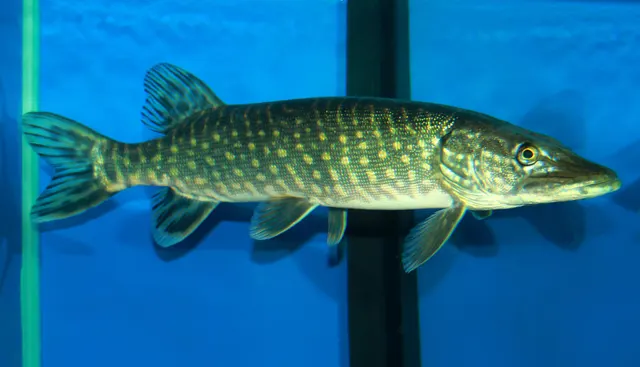 Northern pikeThe dominant freshwater ambush predator of the northern hemisphere: long, cryptic, and built for one violent acceleration rather than pursuit.
Karelj, Public domain, via Wikimedia Commons
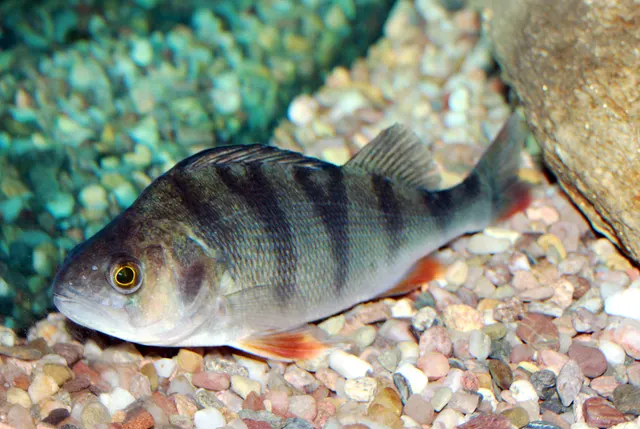 European perchA small, shoaling, spiny-finned predator that is both the most accessible predator to catch and the one most anglers first learn on.
Karelj, Public domain, via Wikimedia Commons
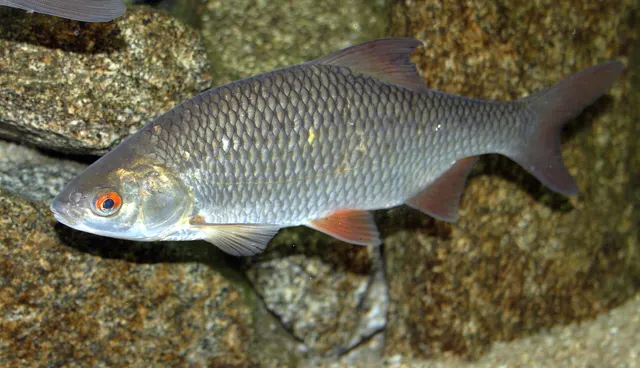 RoachThe most numerous and most frequently caught coarse fish across much of Europe, and the prey species that underpins the whole freshwater predator food web.
Karelj, Public domain, via Wikimedia Commons
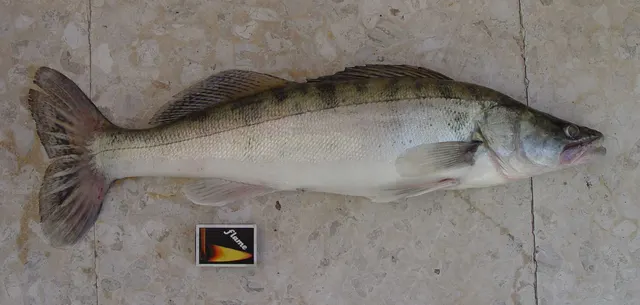 ZanderA shoaling freshwater predator built for hunting in low light and coloured water, and the fish that made a virtue of the conditions pike find difficult.
eLNuko — Public domain, via Wikimedia Commons
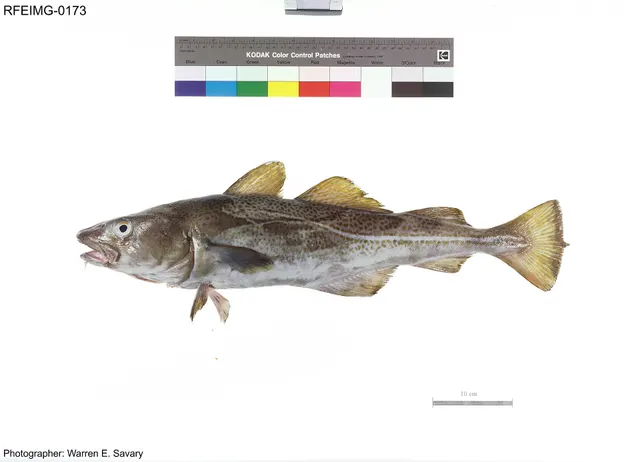 Atlantic codA large, heavily-built demersal predator of the North Atlantic, and the species whose commercial history is the standard example of stock collapse.
The U.S. Food and Drug Administration, Public domain, via Wikimedia Commons
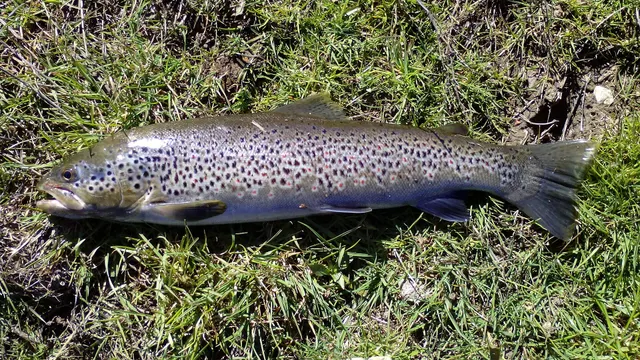 Brown troutA single, extraordinarily plastic species that appears as a tiny hill-stream fish, a deep-bodied loch trout and a silver sea-run migrant — all the same animal.
Robermix, CC0, via Wikimedia Commons
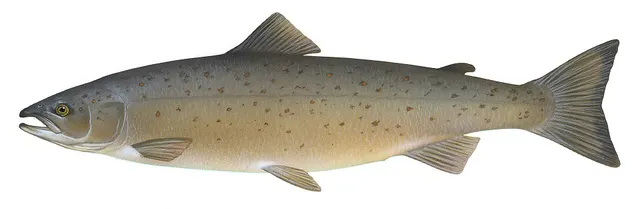 Atlantic salmonAn anadromous salmonid that migrates from its natal river to the North Atlantic and returns to spawn — and a species in serious, well-documented decline.
Knepp, Timothy, Public domain, via Wikimedia Commons
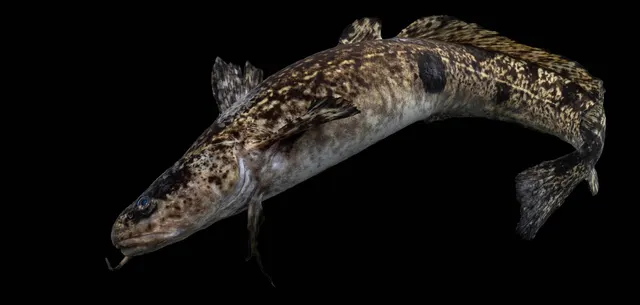 BurbotThe only freshwater cod, a nocturnal cold-water bottom predator with a single chin barbel that spawns under ice in midwinter.
U.S. Fish and Wildlife Service — public domain, via Wikimedia Commons
Places within this area
Publicly documented fishing geography. FishingHQ describes what the ground is; it does not say whether you may fish it, and every one of these sends that question to the body that holds the answer. Browse every place in this part of the world.
Who to ask before fishing any of these
FishingHQ does not know the current access position here. Sweden separates the right to BE somewhere from the right to take fish, and the arrangements governing each are different, bounded by water, method and species, and subject to change — so neither settles what may be done at this place today. Check the current position with the Swedish agency for marine and water management, and with the local fishery conservation area, before going. This water is tidal and transitional, so the freshwater regime may also apply above the tidal limit: FishingHQ does not know the current access position here. On the great majority of Swedish inland water the fishing right belongs to a landowner or to a fishery conservation area formed by the owners together, and the document is bought from them. Which waters are treated differently, and the seasons, methods and species measures that apply, all change. Check with the fishery conservation area or the rights-holder before going.
The east coast of Gotland
Rock mark · Brackish water
A limestone coast on the eastern side of the largest Baltic island, with flat wave-cut shelves, sea stacks left standing by an older shoreline, boulder reef and shallow brackish water extending well out.
Open to the central Baltic from north-east through south-east, with no tide but a wind-driven sea that gets up quickly over shallow ground.
Particular to this ground: cold water shock.
Safety
Further safety reading
- Boat safety for anglers — A shallow sea builds a short, steep, breaking sea far faster than the same wind would on deeper water, and the archipelago's shelter ends abruptly at the outer islands.
- Cold water shock and immersion — Water temperature is low for most of the year and immersion is the dominant mechanism of harm across the whole system, including in the sheltered archipelagos.
Check the rules before you fish
Fishing laws, bylaws, access rules, seasons, bait restrictions and permitted methods vary by location and can change. Check the current rules from the relevant authority and the water you intend to fish before fishing.
Check with:
- Current national or regional law for where you are fishing
- Current local bylaws
- The relevant fisheries authority
- The landowner, club or fishery whose water it is
- Any restrictions specific to the species or the method you intend to use
Where to go next
What swims here
- Atlantic codPresent as a distinct Baltic population whose eggs require particular salinity and oxygen conditions to remain suspended and develop — conditions that exist only in specific deep basins and only after saline inflows.
- Atlantic herringAbundant throughout and the backbone of both the commercial fishery and a widespread traditional recreational fishery on multi-hook traces.
- Atlantic salmonA separate Baltic stock complex feeding in the open sea and returning to rivers around its rim, which is the classic mixed-stock situation: open-water fishing intercepts fish from many rivers indiscriminately.
- Brown troutSea trout feed along the shallow stony coasts of the southern and western Baltic, supporting a distinct shore fishery conducted by wading and covering water.
- BurbotPresent in the low-salinity northern and eastern gulfs and a significant winter target through the ice there.
- European perchAbundant throughout the brackish coastal zone and the archipelagos, using the same structure-and-shoal behaviour it uses in a lake, in water too fresh to exclude it.
- European spratA principal forage fish of the open Baltic and a major component of the system's pelagic food web.
- Northern pikeThe defining Baltic fish: a freshwater predator occupying coastal bays, reed beds and archipelago shallows in water that is technically sea. It is the salinity gradient that makes this possible and it is unfamiliar to anybody who has only fished for pike in lakes.
Local knowledge
- Thermoclines and stratificationA permanent halocline rather than a seasonal thermocline, which is why the deep water here is not the refuge that depth is in a temperate lake.
- Water temperature and what it does to a fishThe sea that makes the salinity argument: the community changes along the gradient rather than with the seasons, and pike in the sea is the visible consequence.
How this compares
- Brackish waterThe largest brackish water body on earth, and the reason pike and perch are caught in the sea here. The salinity gradient the page describes is the mechanism this explains.
- The Black SeaThe instructive comparison, because they are the same kind of sea with one difference that changes everything. Both are nearly enclosed, both are strongly diluted by river inflow, both stratify, and both have deep water that loses its oxygen. The Baltic's stratification is weaker and its deep water is intermittently and increasingly anoxic; the Black Sea's is permanent and has been for millennia. A reader who understands one is most of the way to understanding the other, and the Baltic is what the Black Sea would look like earlier in the same process.
- The Finnish lake districtThe two halves of the Nordic fishing world and they share their fish: pike, perch and zander occupy the brackish Baltic archipelago and the humic inland lakes alike, which is a strong demonstration that for these species salinity matters less than structure, light and temperature.
Environment and conservation
Sources and evidence
- ICES Advice on fishing opportunities, catch and effort — International Council for the Exploration of the Sea (Scientific institute)Relied on for: Stock distribution, ecoregion boundaries and the physical description of the sea areas assessed, including salinity, depth and hydrography.States this directlyCitation checked — the work exists and is described correctly
- FishBase: a global information system on fishes — Froese, R. and D. Pauly, eds. — FishBase Consortium (Scientific institute)Relied on for: Distribution, salinity tolerance and habitat association of the species named as characteristic of these waters.States this directlyPassage read and verified
- Cefas science, advice and data on marine and freshwater environments — Centre for Environment, Fisheries and Aquaculture Science (Government fisheries body)Relied on for: Marine and freshwater environmental science, including the physical characterisation of shelf seas and the monitoring programmes that describe them.States this directlyCitation checked — the work exists and is described correctly
- ICES Advice on fishing opportunities, catch and effort — International Council for the Exploration of the Sea (Scientific institute)Relied on for: Ecoregion description, stock distribution and the hydrography of the area assessed.States this directlyCitation checked — the work exists and is described correctly
Why the 20 connections on this page are here, and the sources
What swims here
Backed by research — 10 connections
Supported by peer-reviewed research or fisheries science. The sources are listed and can be checked.
Atlantic cod
Occurrence of the species in this system or along this coast: a statement about the animal's distribution, not a venue recommendation.
- The Fishes of the British Isles and North-West Europe — Macmillan, 1969 (Reference work)Relied on for: Distribution and habitat association of fishes in British and north-west European waters.States this directlyCitation checked — the work exists and is described correctly
- FishBase: a global information system on fishes — Froese, R. and D. Pauly, eds. — FishBase Consortium (Scientific institute)Relied on for: Distribution, depth range and habitat association recorded for the species.States this directlyPassage read and verified
Atlantic herring
Occurrence of the species in this system or along this coast: a statement about the animal's distribution, not a venue recommendation.
- The Fishes of the British Isles and North-West Europe — Macmillan, 1969 (Reference work)Relied on for: Distribution and habitat association of fishes in British and north-west European waters.States this directlyCitation checked — the work exists and is described correctly
- FishBase: a global information system on fishes — Froese, R. and D. Pauly, eds. — FishBase Consortium (Scientific institute)Relied on for: Distribution, depth range and habitat association recorded for the species.States this directlyPassage read and verified
Atlantic salmon
Occurrence of the species in this system or along this coast: a statement about the animal's distribution, not a venue recommendation.
- Freshwater Fishes of the British Isles — HarperCollins (New Naturalist 75), 1992 (Reference work)Relied on for: Distribution and habitat association of European freshwater fishes, including their occurrence in brackish and coastal waters.States this directlyCitation checked — the work exists and is described correctly
- FishBase: a global information system on fishes — Froese, R. and D. Pauly, eds. — FishBase Consortium (Scientific institute)Relied on for: Salinity tolerance and distribution recorded for the species.States this directlyPassage read and verified
Brown trout
Occurrence of the species in this system or along this coast: a statement about the animal's distribution, not a venue recommendation.
- Freshwater Fishes of the British Isles — HarperCollins (New Naturalist 75), 1992 (Reference work)Relied on for: Distribution and habitat association of European freshwater fishes, including their occurrence in brackish and coastal waters.States this directlyCitation checked — the work exists and is described correctly
- FishBase: a global information system on fishes — Froese, R. and D. Pauly, eds. — FishBase Consortium (Scientific institute)Relied on for: Salinity tolerance and distribution recorded for the species.States this directlyPassage read and verified
Burbot
Occurrence of the species in this system or along this coast: a statement about the animal's distribution, not a venue recommendation.
- Freshwater Fishes of the British Isles — HarperCollins (New Naturalist 75), 1992 (Reference work)Relied on for: Distribution and habitat association of European freshwater fishes, including their occurrence in brackish and coastal waters.States this directlyCitation checked — the work exists and is described correctly
- FishBase: a global information system on fishes — Froese, R. and D. Pauly, eds. — FishBase Consortium (Scientific institute)Relied on for: Salinity tolerance and distribution recorded for the species.States this directlyPassage read and verified
European perch
Occurrence of the species in this system or along this coast: a statement about the animal's distribution, not a venue recommendation.
- Freshwater Fishes of the British Isles — HarperCollins (New Naturalist 75), 1992 (Reference work)Relied on for: Distribution and habitat association of European freshwater fishes, including their occurrence in brackish and coastal waters.States this directlyCitation checked — the work exists and is described correctly
- FishBase: a global information system on fishes — Froese, R. and D. Pauly, eds. — FishBase Consortium (Scientific institute)Relied on for: Salinity tolerance and distribution recorded for the species.States this directlyPassage read and verified
European sprat
Occurrence of the species in this system or along this coast: a statement about the animal's distribution, not a venue recommendation.
- The Fishes of the British Isles and North-West Europe — Macmillan, 1969 (Reference work)Relied on for: Distribution and habitat association of fishes in British and north-west European waters.States this directlyCitation checked — the work exists and is described correctly
- FishBase: a global information system on fishes — Froese, R. and D. Pauly, eds. — FishBase Consortium (Scientific institute)Relied on for: Distribution, depth range and habitat association recorded for the species.States this directlyPassage read and verified
Northern pike
Occurrence of the species in this system or along this coast: a statement about the animal's distribution, not a venue recommendation.
- Freshwater Fishes of the British Isles — HarperCollins (New Naturalist 75), 1992 (Reference work)Relied on for: Distribution and habitat association of European freshwater fishes, including their occurrence in brackish and coastal waters.States this directlyCitation checked — the work exists and is described correctly
- FishBase: a global information system on fishes — Froese, R. and D. Pauly, eds. — FishBase Consortium (Scientific institute)Relied on for: Salinity tolerance and distribution recorded for the species.States this directlyPassage read and verified
Roach
Occurrence of the species in this system or along this coast: a statement about the animal's distribution, not a venue recommendation.
- Freshwater Fishes of the British Isles — HarperCollins (New Naturalist 75), 1992 (Reference work)Relied on for: Distribution and habitat association of European freshwater fishes, including their occurrence in brackish and coastal waters.States this directlyCitation checked — the work exists and is described correctly
- FishBase: a global information system on fishes — Froese, R. and D. Pauly, eds. — FishBase Consortium (Scientific institute)Relied on for: Salinity tolerance and distribution recorded for the species.States this directlyPassage read and verified
Zander
Occurrence of the species in this system or along this coast: a statement about the animal's distribution, not a venue recommendation.
- Freshwater Fishes of the British Isles — HarperCollins (New Naturalist 75), 1992 (Reference work)Relied on for: Distribution and habitat association of European freshwater fishes, including their occurrence in brackish and coastal waters.States this directlyCitation checked — the work exists and is described correctly
- FishBase: a global information system on fishes — Froese, R. and D. Pauly, eds. — FishBase Consortium (Scientific institute)Relied on for: Salinity tolerance and distribution recorded for the species.States this directlyPassage read and verified
How people fish here
What experienced anglers do — 2 connections
Widely and independently recommended by experienced anglers and specialist sources. This is real angling knowledge, not proof: controlled evidence for it is limited, and FishingHQ records it as convention rather than as a demonstrated effect.
Lure fishing
The discipline that dominates fishing in this place, recorded as established practice rather than as a ranking.
- General angling website restatements of established technique — Various (Credible secondary source)Relied on for: Widely restated practice associating this discipline with this coast or system, recorded as practitioner consensus rather than as tested fact.Background and mechanism onlyCitation checked — the work exists and is described correctly
- Fishers' Craft and Lettered Art: Tracts on Fishing from the End of the Middle Ages — University of Toronto Press, 1997 (Scientific literature)Relied on for: That fishing traditions develop around the water and fish available to them, and the historical method of reading such traditions.States this directlyCitation checked — the work exists and is described correctly
Predator fishing
The discipline that dominates fishing in this place, recorded as established practice rather than as a ranking.
- General angling website restatements of established technique — Various (Credible secondary source)Relied on for: Widely restated practice associating this discipline with this coast or system, recorded as practitioner consensus rather than as tested fact.Background and mechanism onlyCitation checked — the work exists and is described correctly
- Fishers' Craft and Lettered Art: Tracts on Fishing from the End of the Middle Ages — University of Toronto Press, 1997 (Scientific literature)Relied on for: That fishing traditions develop around the water and fish available to them, and the historical method of reading such traditions.States this directlyCitation checked — the work exists and is described correctly
Local knowledge
Backed by research — 2 connections
Supported by peer-reviewed research or fisheries science. The sources are listed and can be checked.
Thermoclines and stratification
A link from a practice, an environment or a geography to the mechanism it rests on. It asserts that the mechanism is load-bearing here rather than merely relevant, which is the test applied throughout this file.
- ICES Advice on fishing opportunities, catch and effort — International Council for the Exploration of the Sea (Scientific institute)Relied on for: Hydrography, stratification, salinity structure and stock distribution across the European sea areas assessed, which is the physical basis for the mechanism named.States this directlyCitation checked — the work exists and is described correctly
- NOAA National Ocean Service education on estuaries and the National Estuarine Research Reserve System — National Oceanic and Atmospheric Administration, United States (Government fisheries body)Relied on for: Estuarine and coastal process: salt wedges, stratification, tidal exchange and the way water of different densities behaves where it meets.States this directlyCitation checked — the work exists and is described correctly
Water temperature and what it does to a fish
A link from a practice, an environment or a geography to the mechanism it rests on. It asserts that the mechanism is load-bearing here rather than merely relevant, which is the test applied throughout this file.
- ICES Advice on fishing opportunities, catch and effort — International Council for the Exploration of the Sea (Scientific institute)Relied on for: Hydrography, stratification, salinity structure and stock distribution across the European sea areas assessed, which is the physical basis for the mechanism named.States this directlyCitation checked — the work exists and is described correctly
- NOAA National Ocean Service education on estuaries and the National Estuarine Research Reserve System — National Oceanic and Atmospheric Administration, United States (Government fisheries body)Relied on for: Estuarine and coastal process: salt wedges, stratification, tidal exchange and the way water of different densities behaves where it meets.States this directlyCitation checked — the work exists and is described correctly
How this compares
Backed by research — 2 connections
Supported by peer-reviewed research or fisheries science. The sources are listed and can be checked.
Brackish water
A named water joined to the kind of habitat it is an example of, so the habitat page carries real examples and the place page can stop restating the physics.
- NOAA National Ocean Service education on estuaries and the National Estuarine Research Reserve System — National Oceanic and Atmospheric Administration, United States (Government fisheries body)Relied on for: The physical structure and ecology of estuarine, lagoon and coastal systems, including salinity gradients, exchange and nursery function.States this directlyCitation checked — the work exists and is described correctly
- Cefas science, advice and data on marine and freshwater environments — Centre for Environment, Fisheries and Aquaculture Science (Government fisheries body)Relied on for: Coastal and transitional water science, including salinity, water quality and the biology those conditions support.States this directlyCitation checked — the work exists and is described correctly
The Black Sea
A comparison written where a reader genuinely needs the two set side by side — either because they confuse them, or because the difference between them is the thing worth knowing.
- EMODnet — the European Marine Observation and Data Network — The European Commission, assembled from the national hydrographic offices, geological surveys and marine institutes of the member states (Scientific institute)Relied on for: Bathymetry, salinity and physical oceanography of European sea basins including the Black Sea.States this directlyCitation checked — the work exists and is described correctly
- The European Environment Agency's assessments of Europe's waters, seas and coasts — European Environment Agency, Copenhagen (Conservation authority)Relied on for: State-of-the-environment assessment of Europe's seas and surface waters, including eutrophication, nutrient loading and river continuity in the Danube and Black Sea catchment.States this directlyCitation checked — the work exists and is described correctly
What experienced anglers do — 1 connection
Widely and independently recommended by experienced anglers and specialist sources. This is real angling knowledge, not proof: controlled evidence for it is limited, and FishingHQ records it as convention rather than as a demonstrated effect.
The Finnish lake district
A claim that two places are worth reading against one another, because a reader choosing between them or generalising from one to the other needs to know how the underlying process differs.
- General angling website restatements of established technique — Various (Credible secondary source)Relied on for: Widely restated descriptions of which practices are conventionally used in the waters named, recorded as practitioner consensus rather than as scholarship.Background and mechanism onlyCitation checked — the work exists and is described correctly
- Sea Angler — Bauer Media (Specialist angling publication)Relied on for: Long-running published description of European sea angling practice by region and by ground type.FishingHQ's interpretation of what it saysCitation checked — the work exists and is described correctly
Safety reading
Official guidance — 2 connections
Stated by a fisheries authority, scientific institute or recognised angling body. Authoritative, but summarising rather than demonstrating.
Boat safety for anglers
A hazard characteristic of this place, connected to the safety topic that explains the mechanism.
- RNLI water safety guidance: cold water shock and Float to Live — Royal National Lifeboat Institution (Water-safety or diver-training authority)Relied on for: Cold water shock and the immersion response, tidal cut-off, shore angling hazards and small-craft guidance.States this directlyPassage read and verified
- RoSPA water safety information and UK accidental drowning statistics — Royal Society for the Prevention of Accidents (Water-safety or diver-training authority)Relied on for: Accidental drowning statistics and the circumstances in which recreational water users are most often killed.States this directlyPassage read and verified
Cold water shock and immersion
A hazard characteristic of this place, connected to the safety topic that explains the mechanism.
- RNLI water safety guidance: cold water shock and Float to Live — Royal National Lifeboat Institution (Water-safety or diver-training authority)Relied on for: Cold water shock and the immersion response, tidal cut-off, shore angling hazards and small-craft guidance.States this directlyPassage read and verified
- RoSPA water safety information and UK accidental drowning statistics — Royal Society for the Prevention of Accidents (Water-safety or diver-training authority)Relied on for: Accidental drowning statistics and the circumstances in which recreational water users are most often killed.States this directlyPassage read and verified
Environment and conservation
Official guidance — 1 connection
Stated by a fisheries authority, scientific institute or recognised angling body. Authoritative, but summarising rather than demonstrating.
Fish stocks and sustainability
An environmental pressure operating in this system, recorded rather than adjudicated.
- ICES Advice on fishing opportunities, catch and effort — International Council for the Exploration of the Sea (Scientific institute)Relied on for: Stock status, environmental pressures and the scientific basis for advice in the sea area concerned.States this directlyCitation checked — the work exists and is described correctly
- Good Fish Guide — Marine Conservation Society (Conservation authority)Relied on for: Stock and method assessment and the conservation measures applied to the fisheries.Background and mechanism onlyCitation checked — the work exists and is described correctly
How FishingHQ labels evidence is explained in the evidence policy.