Surf beaches
Habitat · Last reviewed 2026-08-10
Open sand and shingle shores where breaking waves lift food off the bottom — featureless-looking ground that is anything but.
Safety: tides and being cut off — can cause serious injury or death. 2 more points apply here.
- Water
- Saltwater
A surf beach looks like the least differentiated fishing environment there is: sand, water, waves. At low tide it becomes obvious that it is not. Gullies run parallel to and across the beach, bars stand between them, patches of rougher ground break the sand, and channels drain the beach as the tide falls. Fish use every one of those features.
The surf itself is the productive mechanism. Breaking waves and the undertow behind them lift sand, disturb worms and small crustaceans, and disorient small fish, creating a moving band of available food that advances and retreats with the tide. That is why a moderate surf almost always fishes better than a flat calm, and why the shallow water inside the breakers is frequently more productive than the deeper water beyond them.
The practical rule that follows is that reading a beach at low water is worth more than any amount of casting distance.
What characterises it
Open, exposed shores of sand or shingle with a gentle to moderate gradient and a wave-driven surf zone. The apparently uniform surface conceals a structured seabed: longshore bars and the gullies behind them, rip channels draining the beach, patches of clay, peat or rough ground, and — near river mouths and headlands — distinct changes in bottom type. All of these are visible at low water and invisible once the tide covers them.
What lives there
Intertidal and shallow subtidal sand supports burrowing invertebrates — lugworm, razor shells, sand eels, small crustaceans — which is the food base. Predatory fish follow the tide inshore to exploit it: bass working the surf tables, flatfish moving up with the water, and in colder months cod and whiting moving into the shallows. Productivity is concentrated in the disturbed band where the surf is actively working the bottom, which moves up and down the beach with the tide.
Through the year
In temperate north-east Atlantic conditions, warm-water species use surf beaches from late spring through autumn and cold-water species — cod, whiting, dab — through the winter. Winter storms rework the beach profile substantially, so the gullies and bars present in October may not be there in March; a beach needs re-reading each season. That pattern is regional rather than general: in the southern hemisphere the same logic runs on the opposite calendar, and on tropical and subtropical coasts the cycle is driven by monsoon and cyclone seasons rather than by winter at all. What travels is the mechanism — surf makes the food available — not the months. Within a session, the state of the tide dominates everything: a specific state of a specific tide over a specific feature is what beach fishing is organised around.
Some of what lives here
Fish recorded here that FishingHQ holds a reviewed photograph of. It is not a complete list of what Surf beaches holds, and it is not a prediction that you will catch any of them — it is a way in to the ones we can show you.
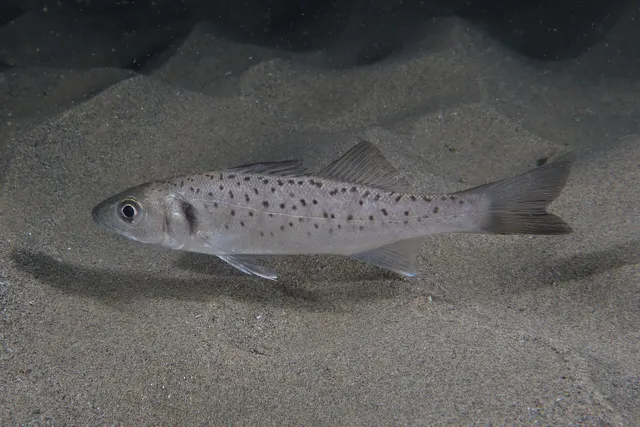 European sea bassA fast, predatory inshore fish that hunts in broken water and surf, and one of the most closely managed recreational species in European seas.
Julien Renoult — CC BY 4.0, via Wikimedia Commons
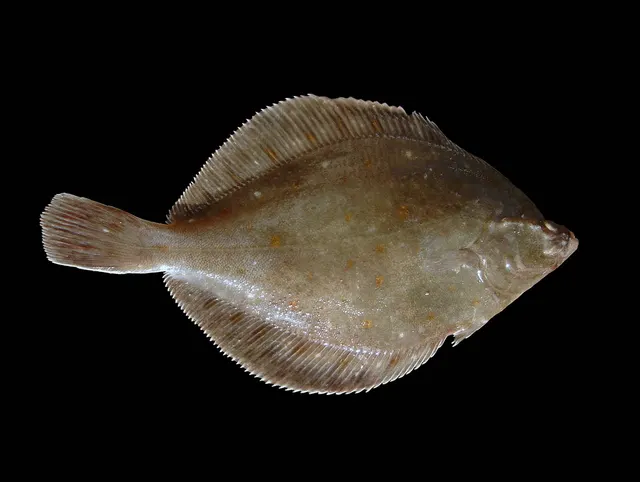 European plaiceA right-eyed flatfish with orange spots and a remarkable lifespan, and the representative flatfish for a body plan nothing else on FishingHQ shares.
Hans Hillewaert — CC BY-SA 4.0, via Wikimedia Commons
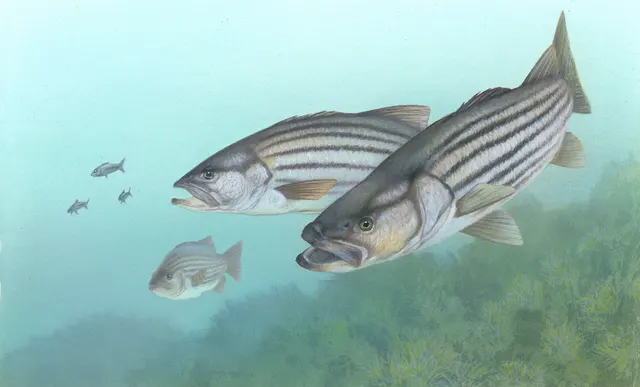 Striped bassA large anadromous predator of the North American Atlantic coast, fished from surf, rock, boat and river, and the subject of one of the better-known fishery recoveries.
Timothy Knepp — Public domain, via Wikimedia Commons
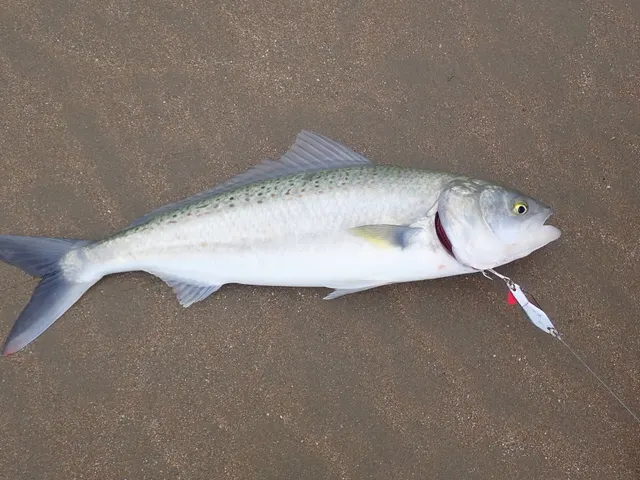 KahawaiA hard-fighting schooling predator of southern Australian and New Zealand coasts, called salmon in one country and kahawai in the other, and related to neither salmon nor trout.
zoology — CC0 1.0 Public Domain Dedication, via Wikimedia Commons
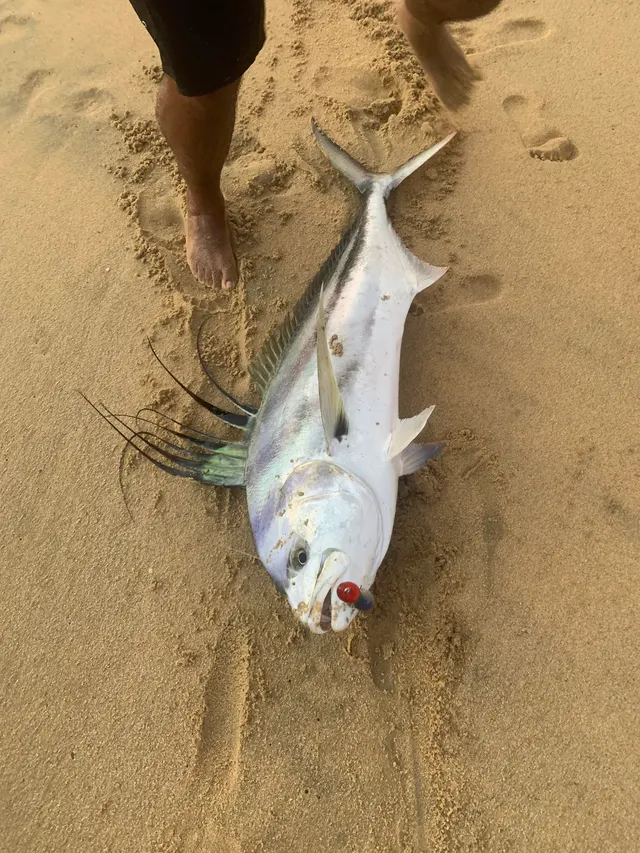 RoosterfishAn eastern Pacific surf predator with a seven-rayed dorsal comb it raises when hunting — the only member of its family, and one of the great shore sport fish.
CH Hemphill — CC BY, via iNaturalist
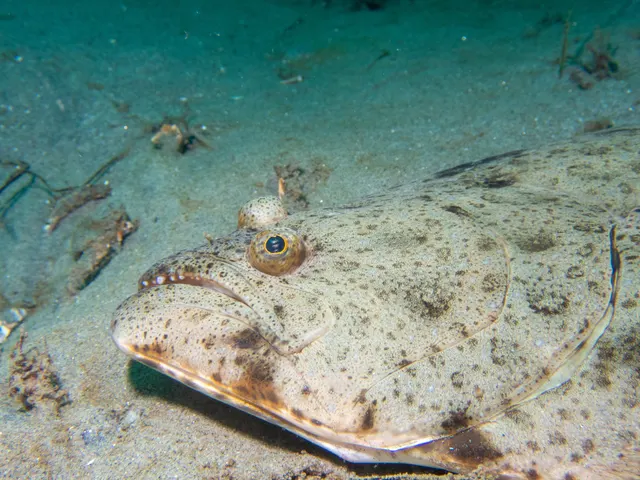 California halibutA large ambush flatfish of Pacific sand and surf, unusual in that individuals may be either left-eyed or right-eyed, with a mouth full of sharp teeth.
Mike Carr — CC BY, via iNaturalist
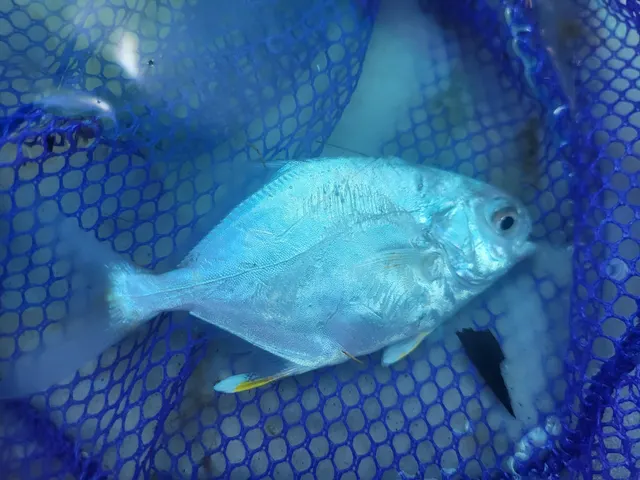 Florida pompanoA small, deep-bodied, hard-fighting jack of sandy surf beaches, feeding on sand fleas in the wash and prized out of proportion to its size.
Brandon McCracken — CC BY, via iNaturalist
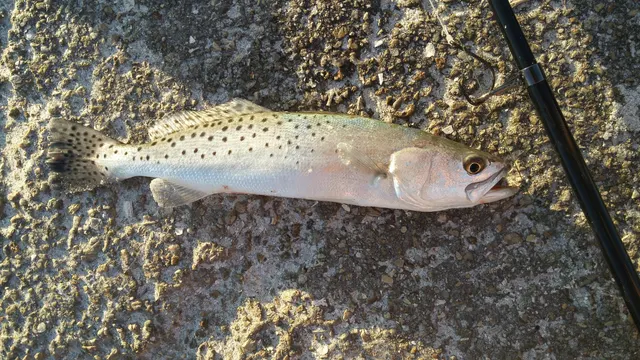 Spotted seatroutA drum-family inshore predator of American southern estuaries, marked with distinct round black spots and armed with two prominent canine teeth.
Quinn — CC BY, via iNaturalist
Safety
Tides and being cut off — Can cause serious injury or death
Beaches with rocky ends, causeway access or low-lying approaches cut off anglers on a rising tide, and the exit closes well before the water reaches where you are standing.
What reduces it: Work out when your exit closes before you start, set an alarm, and leave then. Tell somebody where you are.
Precautions that always apply here
- Check the tide before you go and know your exit route. Being cut off is the commonest way a shore session becomes a rescue.
- Tell somebody where you are going and when you expect to be back.
Further safety reading
- Weather, lightning and open water — Open beaches offer no shelter from either lightning or the deteriorating sea state that more often causes harm.
Where to go next
Fish found here
- BluefishDrives bait to the surface in the wash and is reachable from a beach, which combined with its willingness makes it one of the most democratic sea fisheries there is.
- California halibutLies part-buried on sand from the surf line out to moderate depths.
- DabDabs come genuinely close in over clean sand, closer than plaice, and a short cast into the first gully is widely held to do better than a long one.
- Dungeness crabThe habitat that makes the whole method possible: it feeds over open sand within casting range.
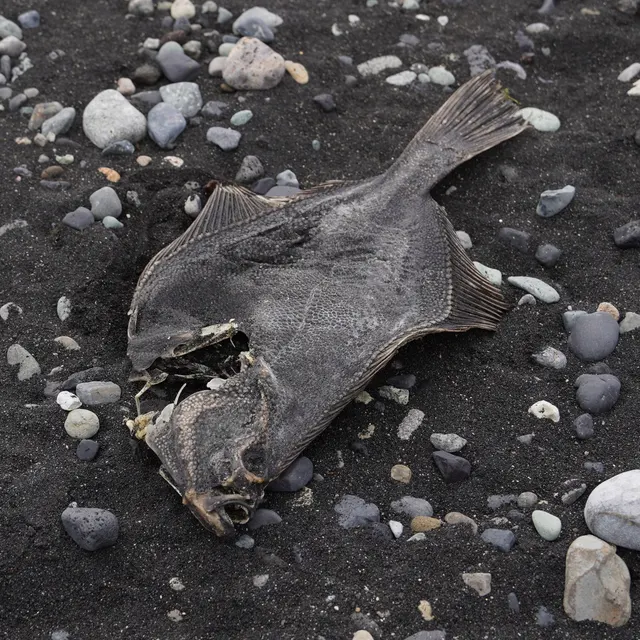 European flounderPresent on open sandy coast as well as in estuaries, though the estuary is where the species is concentrated.
- European plaicePlaice lie on and in clean sand, which is why they are one of the few species a surf beach holds reliably rather than only when the surf is working.
- European sea bassBass hunt in broken water where turbulence disorients prey — which is why surf beaches fish better with some sea running.
- Florida pompanoFeeds in the swash zone of sandy beaches on invertebrates exposed by the waves.
30 more
- Garfish Fish
- Giant African threadfin Fish
- Greater weever Fish
- Japanese sea bass Fish
- Kahawai Fish
- Leerfish Fish
- Lesser weever Fish
- Longtail tuna Fish
- Meagre Fish
- Queenfish Fish
- Razor clam Fish
- Roosterfish Fish
- Sand flathead Fish
- Sand whiting Fish
- Small-eyed ray Fish
- Small-spotted catshark Fish
- Spotted grunter Fish
- Spotted ray Fish
- Spotted seatrout Fish
- Starry smooth-hound Fish
- Striped bass Fish
- Striped red mullet Fish
- Striped seabream Fish
- Summer flounder Fish
- Thornback ray Fish
- Tope Fish
- Tub gurnard Fish
- Weakfish Fish
- Whiting Fish
- Yellowfin bream Fish
Reading this water
- Fishing the surfThe habitat page explains why surf makes a beach productive; this one explains what a gutter, bar and rip look like from the sand and how to present a bait in moving water.
- Reading a shingle beachSand and shingle are shaped by the same waves into opposite profiles, and reading one against the other is what makes both legible.
- Shooting heads and what a saltwater fly line is forThe water that demands the line and punishes the mistake. Distance is needed, wind is constant and usually onshore, and loose running line in moving water is dragged by every wave — which is why line management is discussed alongside the line itself rather than as an afterthought.
- Wind, and where it puts the foodThe surf table itself is a wind product. Onshore wind builds the broken water that suspends sand, food and fish in a few feet of depth, and its absence turns a productive beach into a flat one.
How this compares
Sources and evidence
Why the 44 connections on this page are here, and the sources
Fish found here
Backed by research — 38 connections
Supported by peer-reviewed research or fisheries science. The sources are listed and can be checked.
Bluefish
A habitat claim held to a scientific standard.
- FishBase: a global information system on fishes — Froese, R. and D. Pauly, eds. — FishBase Consortium (Scientific institute)Relied on for: That Pomatomus saltatrix is a pelagic neritic species of coastal waters, surf zones and estuaries in temperate and subtropical seas.States this directlyPassage read and verified
California halibut
A habitat association for Paralichthys californicus taken from the environment and distribution data on its FishBase summary.
- FishBase: a global information system on fishes — Froese, R. and D. Pauly, eds. — FishBase Consortium (Scientific institute)Relied on for: The environment, depth range and habitat description recorded for Paralichthys californicus.States this directlyPassage read and verified
Dab
A distributional claim about where a species is found, which is a claim about the world and rests on the standard regional reference works rather than on angling report.
- The Fishes of the British Isles and North-West Europe — Macmillan, 1969 (Reference work)Relied on for: Distribution, habitat association, identification and biology of the fishes of the British Isles and north-west Europe.States this directlyCitation checked — the work exists and is described correctly
- FAO Species Identification Guides for Fishery Purposes and the FAO Species Catalogues — Food and Agriculture Organization of the United Nations (Scientific institute)Relied on for: Diagnostic characters, habitat and depth range as set out in the FAO species identification sheets for the eastern Atlantic and Mediterranean.States this directlyCitation checked — the work exists and is described correctly
Dungeness crab
Metacarcinus magister is epibenthic on soft bottoms from the low intertidal down, which puts feeding crabs on the open sand in front of a surf beach. A crab that lived only on reef could not be snared from the shore at all.
- FAO Species Identification Guides for Fishery Purposes and the FAO Species Catalogues — Food and Agriculture Organization of the United Nations (Scientific institute)Relied on for: Identification, distribution, habitat and fishery description for the crustacean and reef species named here.States this directlyCitation checked — the work exists and is described correctly
European flounder
A distributional claim about where a species is found, which is a claim about the world and rests on the standard regional reference works rather than on angling report.
- The Fishes of the British Isles and North-West Europe — Macmillan, 1969 (Reference work)Relied on for: Distribution, habitat association, identification and biology of the fishes of the British Isles and north-west Europe.States this directlyCitation checked — the work exists and is described correctly
- FAO Species Identification Guides for Fishery Purposes and the FAO Species Catalogues — Food and Agriculture Organization of the United Nations (Scientific institute)Relied on for: Diagnostic characters, habitat and depth range as set out in the FAO species identification sheets for the eastern Atlantic and Mediterranean.States this directlyCitation checked — the work exists and is described correctly
European plaice
A habitat claim about substrate association, held to a scientific standard.
- The Fishes of the British Isles and North-West Europe — Macmillan, 1969 (Reference work)Relied on for: Substrate association of Pleuronectes platessa with sand and fine gravel.States this directlyCitation checked — the work exists and is described correctly
- FishBase: a global information system on fishes — Froese, R. and D. Pauly, eds. — FishBase Consortium (Scientific institute)Relied on for: Recorded habitat for Pleuronectes platessa.States this directlyPassage read and verified
European sea bass
Habitat use and feeding behaviour are documented.
- Cefas science, advice and data on marine and freshwater environments — Centre for Environment, Fisheries and Aquaculture Science (Government fisheries body)Relied on for: Bass habitat use, inshore movements and nursery area dependence.States this directlyCitation checked — the work exists and is described correctly
- FishBase: a global information system on fishes — Froese, R. and D. Pauly, eds. — FishBase Consortium (Scientific institute)Relied on for: Habitat and salinity tolerance records for Dicentrarchus labrax.States this directlyPassage read and verified
Florida pompano
A habitat association for Trachinotus carolinus taken from the environment and distribution data on its FishBase summary.
- FishBase: a global information system on fishes — Froese, R. and D. Pauly, eds. — FishBase Consortium (Scientific institute)Relied on for: The environment, depth range and habitat description recorded for Trachinotus carolinus.States this directlyPassage read and verified
Garfish
A habitat association resting on the standard regional reference works rather than on angling report.
- The Fishes of the British Isles and North-West Europe — Macmillan, 1969 (Reference work)Relied on for: Distribution, habitat association, feeding and biology of the fishes of the British Isles and north-west Europe.States this directlyCitation checked — the work exists and is described correctly
- FAO Species Identification Guides for Fishery Purposes and the FAO Species Catalogues — Food and Agriculture Organization of the United Nations (Scientific institute)Relied on for: Habitat association, prey and distribution as set out in the FAO species identification sheets for the region concerned.States this directlyCitation checked — the work exists and is described correctly
Giant African threadfin
A habitat association for Polydactylus quadrifilis taken from the environment and distribution data on its FishBase summary.
- FishBase: a global information system on fishes — Froese, R. and D. Pauly, eds. — FishBase Consortium (Scientific institute)Relied on for: The environment, depth range and habitat description recorded for Polydactylus quadrifilis.States this directlyPassage read and verified
Greater weever
A distributional claim about where a species is found, which is a claim about the world and rests on the standard regional reference works rather than on angling report.
- The Fishes of the British Isles and North-West Europe — Macmillan, 1969 (Reference work)Relied on for: Distribution, habitat association, identification and biology of the fishes of the British Isles and north-west Europe.States this directlyCitation checked — the work exists and is described correctly
- FAO Species Identification Guides for Fishery Purposes and the FAO Species Catalogues — Food and Agriculture Organization of the United Nations (Scientific institute)Relied on for: Diagnostic characters, habitat and depth range as set out in the FAO species identification sheets for the eastern Atlantic and Mediterranean.States this directlyCitation checked — the work exists and is described correctly
Japanese sea bass
A habitat association for Lateolabrax japonicus taken from the environment and distribution data on its FishBase summary.
- FishBase: a global information system on fishes — Froese, R. and D. Pauly, eds. — FishBase Consortium (Scientific institute)Relied on for: The environment, depth range and habitat description recorded for Lateolabrax japonicus.States this directlyPassage read and verified
Kahawai
A habitat claim held to a scientific standard.
- FishBase: a global information system on fishes — Froese, R. and D. Pauly, eds. — FishBase Consortium (Scientific institute)Relied on for: That Arripis trutta inhabits continental shelf waters including estuaries, bays and inlets, with juveniles schooling in shallow coastal areas and adults forming large schools along shores.States this directlyPassage read and verified
Leerfish
A habitat association for Lichia amia taken from the environment and distribution data on its FishBase summary.
- FishBase: a global information system on fishes — Froese, R. and D. Pauly, eds. — FishBase Consortium (Scientific institute)Relied on for: The environment, depth range and habitat description recorded for Lichia amia.States this directlyPassage read and verified
Lesser weever
A distributional claim about where a species is found, resting on the standard regional reference works rather than on angling report.
- The Fishes of the British Isles and North-West Europe — Macmillan, 1969 (Reference work)Relied on for: Distribution, habitat association, identification and biology of the fishes and inshore fauna of the British Isles and north-west Europe.States this directlyCitation checked — the work exists and is described correctly
- FAO Species Identification Guides for Fishery Purposes and the FAO Species Catalogues — Food and Agriculture Organization of the United Nations (Scientific institute)Relied on for: Diagnostic characters, family placement, habitat and depth range as set out in the FAO species identification sheets for the eastern Atlantic and Mediterranean.States this directlyCitation checked — the work exists and is described correctly
Longtail tuna
A habitat association for Thunnus tonggol taken from the environment and distribution data on its FishBase summary.
- FishBase: a global information system on fishes — Froese, R. and D. Pauly, eds. — FishBase Consortium (Scientific institute)Relied on for: The environment, depth range and habitat description recorded for Thunnus tonggol.States this directlyPassage read and verified
Meagre
A habitat association for Argyrosomus regius taken from the environment and distribution data on its FishBase summary.
- FishBase: a global information system on fishes — Froese, R. and D. Pauly, eds. — FishBase Consortium (Scientific institute)Relied on for: The environment, depth range and habitat description recorded for Argyrosomus regius.States this directlyPassage read and verified
Queenfish
Recorded over a depth range down to about 50 m across the Indo-West Pacific, hunting baitfish in shallow water — which is what makes it a shore lure target rather than a boat one.
- FishBase: a global information system on fishes — Froese, R. and D. Pauly, eds. — FishBase Consortium (Scientific institute)Relied on for: Environment, depth range, habitat association and distribution for Scomberoides commersonnianus.States this directlyPassage read and verified
Razor clam
Habitat association recorded for the species rather than inferred from the fishery.
- FishBase: a global information system on fishes — Froese, R. and D. Pauly, eds. — FishBase Consortium (Scientific institute)Relied on for: Habitat association, depth range and distribution for the species, with SeaLifeBase as its sister database for non-finfish taxa.States this directlyPassage read and verified
Roosterfish
A habitat claim held to a scientific standard.
- FishBase: a global information system on fishes — Froese, R. and D. Pauly, eds. — FishBase Consortium (Scientific institute)Relied on for: That Nematistius pectoralis inhabits shallow inshore areas and frequents sandy shores along beaches, with juveniles occurring in tide pools, and has a trophic level of 4.5.States this directlyPassage read and verified
Sand flathead
A habitat association for Platycephalus bassensis taken from the environment and distribution data on its FishBase summary.
- FishBase: a global information system on fishes — Froese, R. and D. Pauly, eds. — FishBase Consortium (Scientific institute)Relied on for: The environment, depth range and habitat description recorded for Platycephalus bassensis.States this directlyPassage read and verified
Sand whiting
A habitat association for Sillago ciliata taken from the environment and distribution data on its FishBase summary.
- FishBase: a global information system on fishes — Froese, R. and D. Pauly, eds. — FishBase Consortium (Scientific institute)Relied on for: The environment, depth range and habitat description recorded for Sillago ciliata.States this directlyPassage read and verified
Small-eyed ray
A distributional claim about where a species is found, which rests on the standard regional reference works rather than on angling report.
- The Fishes of the British Isles and North-West Europe — Macmillan, 1969 (Reference work)Relied on for: Distribution, habitat association, identification and biology of the sharks, skates and rays of the British Isles and north-west Europe.States this directlyCitation checked — the work exists and is described correctly
- FAO Species Identification Guides for Fishery Purposes and the FAO Species Catalogues — Food and Agriculture Organization of the United Nations (Scientific institute)Relied on for: Diagnostic characters, habitat and depth range as set out in the FAO species identification sheets for the eastern Atlantic and Mediterranean.States this directlyCitation checked — the work exists and is described correctly
Small-spotted catshark
A distributional claim about where a species is found, which rests on the standard regional reference works rather than on angling report.
- The Fishes of the British Isles and North-West Europe — Macmillan, 1969 (Reference work)Relied on for: Distribution, habitat association, identification and biology of the sharks, skates and rays of the British Isles and north-west Europe.States this directlyCitation checked — the work exists and is described correctly
- FAO Species Identification Guides for Fishery Purposes and the FAO Species Catalogues — Food and Agriculture Organization of the United Nations (Scientific institute)Relied on for: Diagnostic characters, habitat and depth range as set out in the FAO species identification sheets for the eastern Atlantic and Mediterranean.States this directlyCitation checked — the work exists and is described correctly
Spotted grunter
A habitat association for Pomadasys commersonnii taken from the environment and distribution data on its FishBase summary.
- FishBase: a global information system on fishes — Froese, R. and D. Pauly, eds. — FishBase Consortium (Scientific institute)Relied on for: The environment, depth range and habitat description recorded for Pomadasys commersonnii.States this directlyPassage read and verified
Spotted ray
A distributional claim about where a species is found, which rests on the standard regional reference works rather than on angling report.
- The Fishes of the British Isles and North-West Europe — Macmillan, 1969 (Reference work)Relied on for: Distribution, habitat association, identification and biology of the sharks, skates and rays of the British Isles and north-west Europe.States this directlyCitation checked — the work exists and is described correctly
- FAO Species Identification Guides for Fishery Purposes and the FAO Species Catalogues — Food and Agriculture Organization of the United Nations (Scientific institute)Relied on for: Diagnostic characters, habitat and depth range as set out in the FAO species identification sheets for the eastern Atlantic and Mediterranean.States this directlyCitation checked — the work exists and is described correctly
Spotted seatrout
A habitat association for Cynoscion nebulosus taken from the environment and distribution data on its FishBase summary.
- FishBase: a global information system on fishes — Froese, R. and D. Pauly, eds. — FishBase Consortium (Scientific institute)Relied on for: The environment, depth range and habitat description recorded for Cynoscion nebulosus.States this directlyPassage read and verified
Starry smooth-hound
A habitat association for Mustelus asterias taken from the environment and distribution data on its FishBase summary.
- FishBase: a global information system on fishes — Froese, R. and D. Pauly, eds. — FishBase Consortium (Scientific institute)Relied on for: The environment, depth range and habitat description recorded for Mustelus asterias.States this directlyPassage read and verified
Striped bass
A habitat claim held to a scientific standard.
- FishBase: a global information system on fishes — Froese, R. and D. Pauly, eds. — FishBase Consortium (Scientific institute)Relied on for: That Morone saxatilis inhabits coastal waters and bays, occurs in marine, fresh and brackish water, and enters rivers to spawn in spring.States this directlyPassage read and verified
Striped red mullet
A habitat association for Mullus surmuletus taken from the environment and distribution data on its FishBase summary.
- FishBase: a global information system on fishes — Froese, R. and D. Pauly, eds. — FishBase Consortium (Scientific institute)Relied on for: The environment, depth range and habitat description recorded for Mullus surmuletus.States this directlyPassage read and verified
Striped seabream
Recorded as demersal in marine and brackish water from the surface to 150 m and usually 10 to 20 m over sand and soft bottom. Its long, pointed snout is a rooting apparatus for soft ground, and it is the reason this fish and the rock-dwelling sparids do not compete.
- FishBase: a global information system on fishes — Froese, R. and D. Pauly, eds. — FishBase Consortium (Scientific institute)Relied on for: Environment, depth range, habitat association and distribution for Lithognathus mormyrus.States this directlyPassage read and verified
Summer flounder
A habitat association for Paralichthys dentatus taken from the environment and distribution data on its FishBase summary.
- FishBase: a global information system on fishes — Froese, R. and D. Pauly, eds. — FishBase Consortium (Scientific institute)Relied on for: The environment, depth range and habitat description recorded for Paralichthys dentatus.States this directlyPassage read and verified
Thornback ray
A habitat association for Raja clavata taken from the environment and distribution data on its FishBase summary.
- FishBase: a global information system on fishes — Froese, R. and D. Pauly, eds. — FishBase Consortium (Scientific institute)Relied on for: The environment, depth range and habitat description recorded for Raja clavata.States this directlyPassage read and verified
Tope
A distributional claim about where a species is found, which rests on the standard regional reference works rather than on angling report.
- The Fishes of the British Isles and North-West Europe — Macmillan, 1969 (Reference work)Relied on for: Distribution, habitat association, identification and biology of the sharks, skates and rays of the British Isles and north-west Europe.States this directlyCitation checked — the work exists and is described correctly
- FAO Species Identification Guides for Fishery Purposes and the FAO Species Catalogues — Food and Agriculture Organization of the United Nations (Scientific institute)Relied on for: Diagnostic characters, habitat and depth range as set out in the FAO species identification sheets for the eastern Atlantic and Mediterranean.States this directlyCitation checked — the work exists and is described correctly
Tub gurnard
A distributional claim about where a species is found, which is a claim about the world and rests on the standard regional reference works rather than on angling report.
- The Fishes of the British Isles and North-West Europe — Macmillan, 1969 (Reference work)Relied on for: Distribution, habitat association, identification and biology of the fishes of the British Isles and north-west Europe.States this directlyCitation checked — the work exists and is described correctly
- FAO Species Identification Guides for Fishery Purposes and the FAO Species Catalogues — Food and Agriculture Organization of the United Nations (Scientific institute)Relied on for: Diagnostic characters, habitat and depth range as set out in the FAO species identification sheets for the eastern Atlantic and Mediterranean.States this directlyCitation checked — the work exists and is described correctly
Weakfish
A habitat association for Cynoscion regalis taken from the environment and distribution data on its FishBase summary.
- FishBase: a global information system on fishes — Froese, R. and D. Pauly, eds. — FishBase Consortium (Scientific institute)Relied on for: The environment, depth range and habitat description recorded for Cynoscion regalis.States this directlyPassage read and verified
Whiting
A habitat association for Merlangius merlangus taken from the environment and distribution data on its FishBase summary.
- FishBase: a global information system on fishes — Froese, R. and D. Pauly, eds. — FishBase Consortium (Scientific institute)Relied on for: The environment, depth range and habitat description recorded for Merlangius merlangus.States this directlyPassage read and verified
Yellowfin bream
A habitat association for Acanthopagrus australis taken from the environment and distribution data on its FishBase summary.
- FishBase: a global information system on fishes — Froese, R. and D. Pauly, eds. — FishBase Consortium (Scientific institute)Relied on for: The environment, depth range and habitat description recorded for Acanthopagrus australis.States this directlyPassage read and verified
Reading this water
What experienced anglers do — 3 connections
Widely and independently recommended by experienced anglers and specialist sources. This is real angling knowledge, not proof: controlled evidence for it is limited, and FishingHQ records it as convention rather than as a demonstrated effect.
Fishing the surf
Reading surf features from the beach is a well-established practitioner skill with a clear physical basis.
- Sea Angler — Bauer Media (Specialist angling publication)Relied on for: Sea angling practice on shore and boat fishing in tidal conditions.States this directlyCitation checked — the work exists and is described correctly
- Freshwater Fishing — Macdonald & Jane's, 1975 (Specialist angling publication)Relied on for: Comparable reasoning about reading moving water and presenting bait in it, independently arrived at in the freshwater tradition.Background and mechanism onlyCitation checked — the work exists and is described correctly
Reading a shingle beach
Why it works, resting on shore-fishing practice reported consistently across independent practitioner sources rather than on experiment.
- Sea Angler — Bauer Media (Specialist angling publication)Relied on for: Contemporary UK sea angling practice as reported by practitioners, including shore technique, terminal tackle, regional ground and species behaviour.States this directlyCitation checked — the work exists and is described correctly
- Freshwater Fishing — Macdonald & Jane's, 1975 (Specialist angling publication)Relied on for: Comprehensive angling practice including terminal tackle, casting, leaders and the reasoning behind the choices.States this directlyCitation checked — the work exists and is described correctly
Shooting heads and what a saltwater fly line is for
A fish or a water joined to the fly-fishing mechanism it is a worked example of, written only where the subject's own behaviour or physical character is what this page explains. The direction is the one FishingHQ writes this kind of connection in, and the one it already uses 176 times, and it is also the semantically correct one: the mechanism explains the fish, not the reverse.
- Sea Angler — Bauer Media (Specialist angling publication)Relied on for: British sea angling practice including shore fishing for bass, pollack and mullet, the ground each is found over and the presentation each takes.FishingHQ's interpretation of what it saysCitation checked — the work exists and is described correctly
- FAO Species Identification Guides for Fishery Purposes and the FAO Species Catalogues — Food and Agriculture Organization of the United Nations (Scientific institute)Relied on for: Distribution, habitat and feeding biology of coastal and tropical marine species, from regional identification guides prepared for fishery purposes.States this directlyCitation checked — the work exists and is described correctly
Backed by research — 1 connection
Supported by peer-reviewed research or fisheries science. The sources are listed and can be checked.
Wind, and where it puts the food
A link from a practice, an environment or a geography to the mechanism it rests on. It asserts that the mechanism is load-bearing here rather than merely relevant, which is the test applied throughout this file.
- ICES Advice on fishing opportunities, catch and effort — International Council for the Exploration of the Sea (Scientific institute)Relied on for: Hydrography, stratification, salinity structure and stock distribution across the European sea areas assessed, which is the physical basis for the mechanism named.States this directlyCitation checked — the work exists and is described correctly
- NOAA National Ocean Service education on estuaries and the National Estuarine Research Reserve System — National Oceanic and Atmospheric Administration, United States (Government fisheries body)Relied on for: Estuarine and coastal process: salt wedges, stratification, tidal exchange and the way water of different densities behaves where it meets.States this directlyCitation checked — the work exists and is described correctly
How this compares
What experienced anglers do — 1 connection
Widely and independently recommended by experienced anglers and specialist sources. This is real angling knowledge, not proof: controlled evidence for it is limited, and FishingHQ records it as convention rather than as a demonstrated effect.
Mudflats and intertidal sandflats
A comparison a reader with the animal or the decision in front of them actually needs, joining two records that resolve one another.
- Cefas science, advice and data on marine and freshwater environments — Centre for Environment, Fisheries and Aquaculture Science (Government fisheries body)Relied on for: UK marine science: distribution, habitat association, shellfish and crustacean monitoring, and the biological basis of management advice.States this directlyCitation checked — the work exists and is described correctly
- FAO Species Identification Guides for Fishery Purposes and the FAO Species Catalogues — Food and Agriculture Organization of the United Nations (Scientific institute)Relied on for: Habitat, depth range and distribution as set out in the FAO species identification sheets for the region concerned.States this directlyCitation checked — the work exists and is described correctly
Safety reading
Official guidance — 1 connection
Stated by a fisheries authority, scientific institute or recognised angling body. Authoritative, but summarising rather than demonstrating.
Weather, lightning and open water
Water-safety guidance underlying this connection.
- RNLI water safety guidance: cold water shock and Float to Live — Royal National Lifeboat Institution (Water-safety or diver-training authority)Relied on for: Guidance on checking wind, sea state and weather before shore fishing.States this directlyPassage read and verified
How FishingHQ labels evidence is explained in the evidence policy.