Praia de Quarteira
Beach · Salt water · in Portugal
A straight south-facing town beach east of Vilamoura, backed by promenade, with groynes along its length and clean sand between them.
Safety: cliffs and rock platforms — can cause serious injury or death (general advice, not specific to this place). 2 more points apply here.
FishingHQ describes what this place is, not whether you may fish it. Access, permits and who to ask.
What you can catch here
Documented at this place, grouped by how you would be fishing, with how strongly the sources support each one. This is what has been written down, not a forecast, and being listed is never permission to fish.
From the shore · 3
- White seabreamRepeatedly reported1 place · 1 fishery account · 1 sourcePraia de QuarteiraOver beach
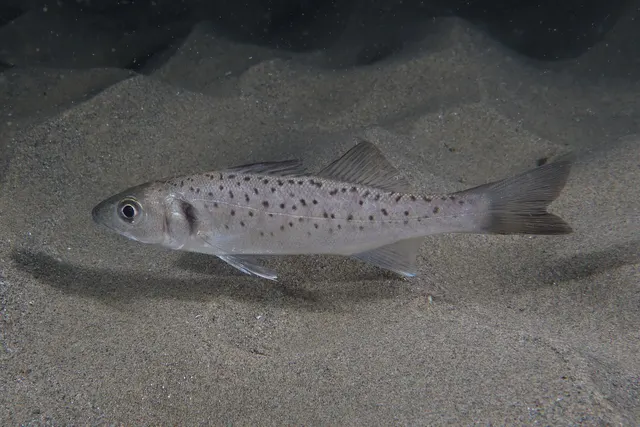 European sea bassRecorded here1 placePraia de QuarteiraOver beach
Photo: Julien Renoult, via Wikimedia Commons, CC BY 4.0; resized and trimmed to fit
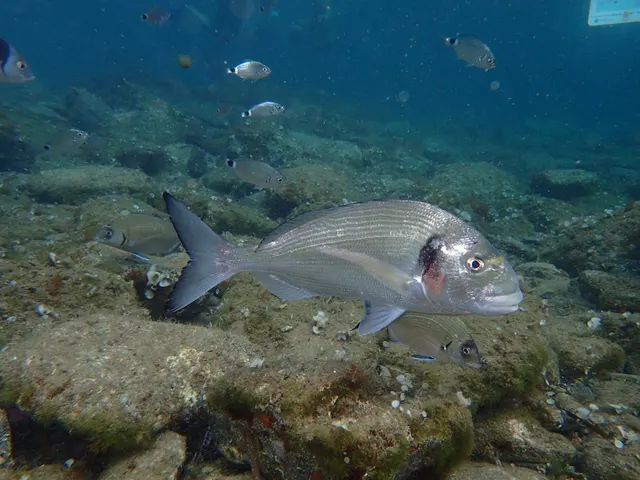 Gilthead breamRecorded here1 placePraia de QuarteiraOver beach
Photo: jujurenoult, via Wikimedia Commons, CC BY 4.0; resized


What these strengths mean
- Repeatedly reported
- Several independent public accounts. Enough to say it happens more than once; not enough to call it a fishery.
- Recorded here
- At least one credible public account of this species being caught here. That is all it means.
- How breadth is counted
- A fish documented at six marks is shown as six marks: breadth never raises the strength on its own. A fishery account describes the fishing; a recorded catch reports one specific catch. How evidence is weighed.
Also associated with this ground
Recorded as present here without a documented method or strength behind them.
Fish documented nearby, not here
Nothing below has been documented at Praia de Quarteira itself. Each one has been documented at a named place on the same ground, and the places are listed with it. Treat this as what the water around here holds rather than as a catch list for this mark.
Widely documented on this ground
Documented at three or more neighbouring places, fished a way this place is also fished. That is a pattern about the ground rather than about any one mark, and it is the closest this site comes to saying you will probably meet a fish somewhere nothing has been written about.
From the shore
- Flathead grey mullet — documented at The Ria Formosa; The Alvor estuary; The Fuseta channel
Also documented at neighbouring places
One or two accounts each, on the ground around here. Enough to know the fish is caught in these waters; not enough to say anything about this place.
From the shore
- European squid — documented at The Vilamoura moles
- Common octopus — documented at The Albufeira cliffs and coves
- Common sole — documented at The Ria Formosa
How people fish it
Practised here: Sea fishing.
Methods the sources name for this ground. Each one is explained in full on its own page.
- Ledgering
Fishing a bait on the bottom held by a weight, with no float — the simplest way to fish at distance, in depth, or in wind.
- Float fishing
Suspending a bait at a controlled depth beneath a buoyant indicator — the most visual, most controllable and most widely applicable method in angling.
- Spinning
Casting an artificial lure and retrieving it so that it moves like something alive — the most direct form of lure fishing.
Baits and lures for these fish
The baits and lures each of the fish above is commonly taken on, from that fish’s own page. This is what works for the fish, not a report of what people use on this particular water — local knowledge and the conditions on the day still decide.
Baits
- Peeler crab — for European sea bass, Gilthead bream
- Crab and shellfish — for European sea bass
- Prawns and shrimp — for Gilthead bream
- Ragworm — for European sea bass
- Sand eel — for European sea bass
Lures
- Jerkbaits — for European sea bass
- Metal jigs — for European sea bass
- Soft plastics — for European sea bass
- Streamers — for European sea bass
- Surface lures — for European sea bass
How to catch them: Bass fishing
Rods, reels and rigs for them: European sea bass
The ground and the water
- The ground
- A straight south-facing town beach east of Vilamoura, backed by promenade, with groynes along its length and clean sand between them.
- Exposure
- South-facing and sheltered.
Safety
Cliffs and rock platforms — Can cause serious injury or death
General safety for this kind of ground, not a finding about this place.
Long-period Atlantic swell breaks in irregular sets onto the low rock platforms used for shore fishing along the exposed west coast. Anglers are swept off by a wave substantially larger than those preceding it, frequently after an hour of ordinary conditions, and the water is deep and moving immediately below.
What reduces it: Read a swell forecast — height, period and direction — rather than a wind forecast, and treat a long period as the warning. Watch a full set before committing to a platform, never fish exposed rock alone, wear a buoyancy aid, and treat a windless sunny day with swell running as a hazardous day rather than a safe one.
Worse when:
- Long-period ground swell from a distant Atlantic depression, which gives no local warning at all.
- Rising tide, which brings the break progressively further up the platform.
- Unfamiliar ground, where which platforms are workable at which swell is entirely local knowledge.
Moving water and currents — Can cause serious injury or death
General safety for this kind of ground, not a finding about this place.
The long surf beaches generate strong, persistent rip currents, and river bars break heavily in swell. Percebes gathering in the surge zone of exposed rock is conducted in breaking water and has a serious fatality record.
What reduces it: Stay out of rip channels, recognisable as darker calmer water moving seaward between areas of breaking waves. Do not attempt goose barnacle gathering — it is licensed professional work. Treat river bar crossings as requiring local knowledge and the right state of tide.
Sun, dehydration and fatigue — Can cause injury needing treatment
General safety for this kind of ground, not a finding about this place.
Long summer sessions on shadeless rock produce dehydration and heat exhaustion, and both degrade judgement and coordination well before they produce collapse, on ground where both are what keep somebody safe.
What reduces it: Carry substantially more water than the session appears to need, fish the ends of the day rather than the middle of it in high summer, and treat shade and a stopping time as part of the plan.
Rules and access
Particular to this water: Portugal requires a recreational sea fishing licence, and separate conditions apply to spearfishing and to shellfish gathering. Minimum sizes, bag limits and closed seasons are set nationally and change. Check the current requirements with the Portuguese fisheries authority before fishing.
Beyond what is stated above, FishingHQ does not know the current access position here. Recreational sea fishing in mainland Portugal is licensed by the state, with separate categories for shore, boat and underwater fishing and separate arrangements again for shellfish gathering, and with quantity, size and species measures alongside. Licences, measures and closures change. Check the current position with the national fisheries directorate and with the local maritime authority before going.
Who holds the answer:
- The Directorate-General for Natural Resources, Safety and Maritime Services, which licenses recreational sea fishing in Portuguese waters.
- The local maritime authority, for access to structures and for local measures.
- The Direção-Geral de Recursos Naturais, Segurança e Serviços Marítimos, for recreational sea fishing and underwater fishing licensing.
- The Instituto da Conservação da Natureza e das Florestas, for inland fishing licences, seasons and protected freshwater species.
- The Instituto Português do Mar e da Atmosfera, for shellfish ground classification and biotoxin monitoring.
- The managing body of the relevant marine protected area or natural park, including the Ria Formosa and the south-west coast.
- The regional government of Madeira or the Azores for fishing in those autonomous regions, which is administered separately.
Nearby fishing
Other publicly documented places within about 40 km, by distance. Positions are approximate public geography and are never exact marks.
- Vilamoura marina — under 2 km · Charter departure port
- The Vilamoura moles — under 2 km · Mole
- The Albufeira cliffs and coves — 10–25 km · Cliff coast
- Praia de Faro — 10–25 km · Surf beach
- Armação de Pêra — 10–25 km · Beach
- The Ria Formosa — 10–25 km · Estuary
- The Fuseta channel — 25–40 km · Tidal channel
- The Algarve offshore grounds — 25–40 km · Sea area
Sources for this place
- Sea Angler — Bauer Media (Specialist angling publication)Relied on for: Long-running published description of British sea angling practice by region, ground type and named mark.FishingHQ's interpretation of what it saysCitation checked — the work exists and is described correctly
- General angling website restatements of established technique — Various (Credible secondary source)Relied on for: Widely restated public descriptions of which places are conventionally fished and how, recorded as practitioner consensus rather than as scholarship, and not relied on for access, permission or any current rule.Background and mechanism onlyCitation checked — the work exists and is described correctly
How FishingHQ labels evidence is explained in the evidence policy. Last reviewed 2026-08-16.
Something wrong or out of date?
If something on this page has changed, email us from your own account using the link that fits, with a link to where you saw the change if you can. Every report is checked by a person before anything is changed, and a report never appears on the site by itself. Please don’t send exact private marks.
Before you go
- Fish documented here
- 3 at this place itself. See them.
- Getting there
- Not recorded. FishingHQ holds no sourced description of the way in.
- Rules particular to this water
- Portugal requires a recreational sea fishing licence, and separate conditions apply to spearfishing and to shellfish gathering. Source not tied: no recorded source has been matched to this statement.
- Minimum sizes, bag limits and closed seasons are set nationally and change. Source not tied: no recorded source has been matched to this statement.
- Check the current requirements with the Portuguese fisheries authority before fishing. Source not tied: no recorded source has been matched to this statement.
Nothing here is watched for change. Sources and who to ask.
- Hazards particular to this place
- 1 recorded. Safety.
Check before you travel
- Whether you may fish here, and whether a licence or permit is needed — start with the Directorate-General for Natural Resources.
- The tide times and the forecast for the day you go.
- Anything recorded here was true when it was read; it is not watched for change.