The Netherlands
Fishing regions · Last reviewed 2026-08-18
A country largely built out of water, where the fishing licence is issued by the anglers' own federation and one document covers both the permission and the water it applies to.
Safety: drowning and immersion — can cause serious injury or death. 3 more points apply here.
Being listed here is not permission to fish. What that meansClose
Access, fishing rights, seasons, licences, local bylaws and permitted methods vary and can change. Check current access, permission, local regulations, closures and restrictions before you travel or fish. FishingHQ describes what the ground is and names who holds the answer; it does not hold the answer itself.
Find the authority for a jurisdiction · What FishingHQ does and does not cover
The Netherlands is a jurisdiction record because of an arrangement that exists nowhere else on FishingHQ: the licence is issued by the anglers.
ONE DOCUMENT, ISSUED BY THE FEDERATION, COVERS BOTH QUESTIONS. Membership of an affiliated angling association produces a single document that functions as the licence and, through a listing of waters attached to it, as the permission to fish a very large proportion of the country's water. Elsewhere in Europe those are two separate things obtained from two separate bodies — a state licence and a water permit. Here the anglers' own federated organisation holds the rights and issues the document, and the two questions collapse into one.
WHICH IS THE OPPOSITE OF GERMANY, NEXT DOOR, where a state examination produces a licence and a separate permit is bought from whoever owns the water. Two neighbouring countries with among the highest angling participation in Europe have arrived at opposite structures, and a reader crossing the border needs to know that.
WHAT IT DOES NOT COVER IS THE INTERESTING PART. A water not on the list needs its own arrangement, and additional permissions exist for night fishing, for a third rod and for particular methods. Sea fishing from the shore is a separate matter again.
THE COUNTRY IS BUILT OUT OF WATER AND THE FISHING FOLLOWS THE ENGINEERING. Canals, ditches, polder drains, engineered rivers, lakes formed by enclosure and by extraction, and the Delta works in the south-west. Almost all of it is managed water with a controlled level, and almost all of it holds fish. Pike, zander, perch and bream are the dominant catch, and Dutch predator fishing — particularly vertical jigging and light lure work from a small boat on canals and rivers — is a discipline the country has exported.
THE IJSSELMEER IS AN INLAND SEA MADE ON PURPOSE. A large arm of the sea was closed off by a dam within living memory and turned fresh, converting a marine fishery into a freshwater one in a few years. Very little else in Europe demonstrates so directly what salinity does.
THE COAST IS SHORT, SANDY AND HEAVILY ENGINEERED, with piers, moles, sluices and the Delta structures dominating shore access, and bass, flatfish, mullet and cod through the year. And in the north the Dutch Wadden is the western end of the great intertidal system.
What fishing here is like
A low, engineered country in which a very large share of the surface is water and almost none of it is unmanaged. Canals, ditches, polder drains and engineered river channels form a connected network across the whole landscape; large lakes have been created by enclosure and by sand extraction; and the south-west is dominated by the Delta works, a system of dams, barriers and sluices built after catastrophic flooding. The coast is short, sandy, heavily defended and lined with piers, moles and groyne fields, with the Dutch end of the Wadden intertidal system to the north. Levels almost everywhere are controlled, which means water depth, flow and even the direction of movement are management decisions rather than natural events.
How people fish here
6 methods are recorded on the places documented here, counted from the records themselves rather than from what is practised in the country. Each opens a full guide to the technique.
Spinning
Recorded at 3 places here, over canal section, estuary, lake.
Casting an artificial lure and retrieving it so that it moves like something alive — the most direct form of lure fishing.
Ledgering
Recorded at 2 places here, over estuary, lake.
Fishing a bait on the bottom held by a weight, with no float — the simplest way to fish at distance, in depth, or in wind.
Shore diving
Recorded at 2 places here, over estuary, lake.
Entering and leaving the water from land under your own power — the most accessible spearfishing and the one where the entry and exit are the dangerous part.
Drop shotting
Recorded at 1 place here, over canal section.
A finesse rig with the weight below the hook, letting a small soft plastic be worked in place, off the bottom, without moving anywhere.
Float fishing
Recorded at 1 place here, over canal section.
Suspending a bait at a controlled depth beneath a buoyant indicator — the most visual, most controllable and most widely applicable method in angling.
Kayak fishing
Recorded at 1 place here, over estuary.
A platform rather than a technique: quiet, shallow-draught access to water no other craft reaches, bought at the price of exposure, and a discipline where the decision not to launch is part of the skill.
These are the methods documented at the places FishingHQ holds here. A species listed beside a method is documented on the same ground, which is not the same as being taken that way — where a source establishes the method a fish was caught on, it is stated on that place’s own page. All fishing methods.
What dominates
Predator fishing for pike, zander and perch, which is the country's dominant and most exported discipline, including vertical jigging and light lure work from small boats on canals, rivers and lakes. Coarse and match fishing for bream, roach and carp on canals and polder water, with a strong competitive tradition. Carp fishing on the larger lakes and gravel pits. Shore sea fishing from pier, mole, sluice and beach for bass, flatfish, mullet and cod. Boat fishing on the Delta and offshore. Fly fishing for pike and perch on the shallow lakes, which is a genuine local speciality.
The water available
A connected network of canals, ditches and polder drains covering the whole country; engineered lowland river channels with groyne fields; large enclosed and extracted lakes including a former arm of the sea turned fresh; the Delta system of dams, barriers and sluices; brackish transition zones behind the barriers; short defended sand coast with piers, moles and groyne fields; and the western end of the Wadden intertidal flats and their barrier islands.
How the rules are structured
Dutch angling runs through a single document issued by the national angling federation and its member associations rather than by the state, which is unlike any other arrangement on FishingHQ. Membership produces the licence and, through a list of waters attached to it, the permission to fish a very large proportion of the country's fresh water — so the licence question and the permission question, which are separate everywhere else, are consolidated here. A water not on that list requires its own arrangement, and further permissions exist for night fishing, for additional rods and for particular methods. Sea fishing from the shore is treated separately and is subject to species and size measures, with sea bass in particular managed tightly and revised. Access to dikes, sluices, locks and the Delta structures is controlled by the authority that owns them, which is a flood-defence and navigation question rather than a fisheries one. The Wadden coast carries the heaviest tier of nature protection with zoning independent of any fishing rule. FishingHQ does not state what any current rule is: check with the federation and the local association, and separately with the water authority for structures.
Who to ask
- The national angling federation and the affiliated local association, which issue the document and define the list of waters it covers.
- The water authority and the national waterways agency, for access to dikes, sluices, locks, groynes and the Delta structures, which are working infrastructure.
- The ministry responsible for fisheries, for sea fishing measures, species and size limits.
- The national park and protected-area administration on the Wadden coast, for zoning that constrains access independently of fishing rules.
Words you will meet
- VISpas
- The document produced by membership of an affiliated angling association, functioning as the angling licence and, through the list of waters attached to it, as permission for a very large share of Dutch fresh water. It is issued by the anglers' own federated organisation rather than by the state.
- Polder
- Land reclaimed from water and kept dry by pumping, surrounded by dikes and drained by a network of ditches and canals at a controlled level. Polder water is fishable, holds a great deal of fish, and has a level that is a management decision rather than a natural one.
- Vertical jigging
- Fishing a soft plastic or jig directly beneath a slowly drifting boat, tracking the bottom, primarily for zander and perch. Developed to a high degree on Dutch canals, rivers and lakes and exported from here to much of European predator fishing.
- Snoekbaars
- The zander or pikeperch. A percid rather than a pike or a bass despite the name, dominant in Dutch turbid water because its eye is adapted to low light, and the target species of much of the country's lure fishing.
- Stuw and sluis
- A weir and a sluice or lock. Both are working water-management structures, both concentrate fish and anglers, and both are operated on a schedule decided by the water authority rather than by anything happening in the fishing.
Conditions and hazards
This is not a country with dramatic hazards and that is precisely why its casualties happen where they do. Canal and polder banks are frequently steep-sided, revetted and slippery, with no gradual margin and no easy exit from the water — somebody who goes in beside a canal may be unable to climb out along a considerable length of it. Water is cold enough for most of the year for cold water shock to decide an immersion within the first minute. Locks, sluices and weirs are working infrastructure that operates on a schedule: flow can start without warning, and the water below a structure can change from still to fast in moments. Commercial navigation on the larger channels generates wash and suction that arrives as a set rather than gradually. On the coast, the Delta barriers and the gaps between the islands run hard tidal streams that a small craft can be committed by, and the Wadden flats behave as they do along the whole system, with the flood arriving behind a person rather than in front. Wind on the large open lakes builds a short steep sea very quickly with no shelter to reach.
The licence the anglers issue themselves
Every other jurisdiction on FishingHQ separates two questions: may this person fish, and may they fish here. The Netherlands answers both with one document, and the reason is organisational rather than legal.
THE ANGLERS HOLD THE RIGHTS. A national federation of angling associations holds or leases the fishing rights on a very large share of Dutch fresh water. Membership of an affiliated association therefore produces both the licence and the permission at once, with a list of covered waters attached, and that list is extensive enough that most anglers most of the time need nothing else.
THIS IS THE OPPOSITE STRUCTURE TO GERMANY, WHICH SHARES A BORDER. There a state examination produces a licence, and a permit for the specific water is bought separately from a club, commune or owner. Two neighbouring countries with among the highest angling participation in Europe have arrived at opposite arrangements, and an angler crossing between them cannot carry either set of assumptions.
WHAT IS NOT COVERED IS WHERE THE CARE IS NEEDED. A water outside the list needs its own arrangement. Night fishing, additional rods and certain methods are handled by further permissions rather than being included. Those are precisely the things a visitor is most likely to assume are covered because so much else is.
SEA FISHING IS A SEPARATE QUESTION. Shore sea angling is treated differently from inland fishing and is subject to species and size measures, with sea bass in particular managed tightly and revised year to year in line with advice — which is a good example of a measure changing without any national law changing.
THE INFRASTRUCTURE OWNERS ARE THE OTHER AUTHORITY, and visitors underestimate them. Dikes, sluices, locks, groynes and the Delta barriers are flood-defence and navigation assets. Whether somebody may stand on one is a question for the water authority or the waterways agency and has nothing to do with fishing rights. A structure that concentrates fish is not thereby a fishing platform.
AND THE WADDEN CARRIES THE HEAVIEST CONSERVATION LAYER IN THE COUNTRY, with zoning that constrains access, vehicles, collection and timing regardless of any fishing rule.
WHAT A READER SHOULD DO. Ask the federation or the local association what the document covers and whether this water is on the list. Ask the water authority about any structure. FishingHQ holds neither answer.
Official guidance — why, and the sources (2)
Stated by a fisheries authority, scientific institute or recognised angling body. Authoritative, but summarising rather than demonstrating.
- Code of Conduct for Responsible Fisheries — Food and Agriculture Organization of the United Nations, Rome, 1995 (Standards body)Relied on for: The international framework within which national and regional fisheries authorities set, revise and enforce measures, and the principle that responsible fishing includes the safety of fishers.Background and mechanism onlyCitation checked — the work exists and is described correctly
- ICES Advice on fishing opportunities, catch and effort — International Council for the Exploration of the Sea (Scientific institute)Relied on for: That the stock advice European fisheries measures are set against is produced internationally and revised annually, which is the mechanism by which a national measure changes without the national law changing.States this directlyCitation checked — the work exists and is described correctly
A sea turned fresh on purpose, and what it proved
Nowhere in Europe shows more clearly what happens when people change water on purpose, because it has done so repeatedly and recently and the results are documented.
AN ARM OF THE SEA WAS CLOSED OFF AND BECAME A LAKE. A dam across a large marine inlet, completed within living memory, cut it off from the tide. Salinity fell, the marine fauna went, and within a few years a freshwater community established itself. A commercial fishery for marine species became a commercial fishery for freshwater ones. Nothing else in Europe demonstrates so directly and so quickly what salinity does to a fish community — it is a controlled experiment nobody designed as one.
THE DELTA WORKS DID THE SAME AT LARGER SCALE AND WITH MORE NUANCE. After catastrophic flooding, the south-west was rebuilt with dams, barriers and sluices, some closing estuaries completely and some — notably the storm surge barrier that stays open in ordinary conditions — deliberately preserving the tide behind them. The result is a set of adjacent water bodies at different points on the salinity and tidal scale, several of which have since been partially reopened to restore migration. Fish passes and managed exchange are now a live part of the engineering.
WHICH MAKES MIGRATION THE COUNTRY'S DEFINING FISHERIES PROBLEM. A landscape of dikes, pumps, weirs and barriers is a landscape of barriers to fish, and eel, smelt, shad, salmon and sea trout all need to pass. Dutch fish-pass engineering and the deliberate reopening of connections are a substantial and continuing programme, and the European eel's conservation status is the sharpest expression of what is at stake.
THE EVERYDAY FISHERY IS PREDATORS IN TURBID WATER. Zander dominate where the water is coloured, because their eye works in low light better than a pike's or a perch's; pike hold in the weedier, clearer margins; perch shoal everywhere. That is the ecological reason Dutch lure fishing developed as it did, and why vertical jigging — a method for fishing directly under a drifting boat in coloured water over a known depth — was worked out here and exported.
THE CANALS AND POLDER DRAINS ARE A REAL FISHERY, not a consolation. A connected network of managed water covering an entire country holds bream, roach, carp, perch, pike and zander, is accessible from almost anywhere, and supports a competitive match tradition of long standing.
AND THE COAST IS SHORT BUT PRODUCTIVE — bass and mullet around the structures, flatfish on the sand, cod in the colder months, and the Wadden nursery behind the islands feeding a great deal of the southern North Sea.
Backed by research — why, and the sources (6)
Supported by peer-reviewed research or fisheries science. The sources are listed and can be checked.
- Freshwater Fishes of the British Isles — HarperCollins (New Naturalist 75), 1992 (Reference work)Relied on for: Distribution, ecology, life history and conservation status of European freshwater fishes, including the migratory salmonids and the cyprinid and percid communities named.States this directlyCitation checked — the work exists and is described correctly
- FishBase: a global information system on fishes — Froese, R. and D. Pauly, eds. — FishBase Consortium (Scientific institute)Relied on for: Recorded distribution, habitat association and life history of the freshwater and migratory species named.States this directlyPassage read and verified
- ICES Advice on fishing opportunities, catch and effort — International Council for the Exploration of the Sea (Scientific institute)Relied on for: Ecoregion description, stock distribution and status, nursery function and the hydrography of the European sea areas assessed, including the Baltic, the North Sea, the Celtic Seas and the Iberian and Biscay shelf.States this directlyCitation checked — the work exists and is described correctly
- FAO Species Identification Guides for Fishery Purposes and the FAO Species Catalogues — Food and Agriculture Organization of the United Nations (Scientific institute)Relied on for: Identification, distribution and habitat association of the fishes and invertebrates of the Mediterranean, the Black Sea and the eastern central Atlantic.States this directlyCitation checked — the work exists and is described correctly
- FishBase: a global information system on fishes — Froese, R. and D. Pauly, eds. — FishBase Consortium (Scientific institute)Relied on for: Recorded distribution, depth range, habitat association, size and biology of the species named.States this directlyPassage read and verified
- The IUCN Red List of Threatened Species — International Union for Conservation of Nature (Conservation authority)Relied on for: Current global and regional conservation assessment for the species named, with the assessment date.Background and mechanism onlyCitation checked — the work exists and is described correctly
Steep banks, working structures, and water that starts moving on a schedule
There is nothing dramatic about Dutch water, and its casualties happen for exactly that reason.
THE BANKS ARE THE FIRST HAZARD AND THE LEAST RESPECTED. Canal, drain and engineered river banks are frequently steep-sided, revetted with stone or concrete, slippery, and without any gradual margin. Somebody who goes in does not wade out; they have to find a point where climbing out is possible, and along a good deal of that network there is not one within easy reach. In cold water, with heavy clothing, that is a serious situation created by a metre of drop.
COLD WATER SHOCK APPLIES HERE AS EVERYWHERE. For most of the year the water is cold enough to remove breathing control and swimming ability in the first minute, which is what turns the previous paragraph from an inconvenience into a fatality mechanism.
WORKING STRUCTURES OPERATE ON SOMEBODY ELSE'S SCHEDULE. Locks, sluices, weirs and pumping stations start and stop according to a water-management decision, not according to the weather or the fishing. Water below a structure can go from still to fast without warning, and the fish that gather there gather because of exactly that flow. Standing on such a structure is standing on operating infrastructure.
COMMERCIAL NAVIGATION GENERATES WASH AND DRAWDOWN. A large vessel passing in a confined channel pulls water away from the bank and returns it as a set of steep waves, and on a low bank that arrives as a genuine hazard for anybody standing at the edge or wading.
THE COAST AND THE DELTA RUN REAL CURRENT. The gaps between the barrier islands and the openings in the Delta barriers carry very large volumes at speed, and a small craft that has misjudged the timing is committed. The Wadden flats behave as they do along the whole system: ground flat enough that the flood arrives behind a person while the sand in front is still dry, creeks that fill first, and fog that removes the only navigation available.
THE BIG OPEN LAKES BUILD A SEA FASTER THAN THEIR SIZE SUGGESTS. Shallow water over a long fetch with no shelter produces a short, steep, breaking sea within a short time of the wind getting up, and there is frequently nowhere to run to.
AND ANYTHING GATHERED CARRIES ITS OWN FOOD-SAFETY QUESTION, classified and monitored by an authority rather than judged by appearance.
Official guidance — why, and the sources (3)
Stated by a fisheries authority, scientific institute or recognised angling body. Authoritative, but summarising rather than demonstrating.
- RNLI water safety guidance: cold water shock and Float to Live — Royal National Lifeboat Institution (Water-safety or diver-training authority)Relied on for: Cold water shock and the immersion response, tidal cut-off, and water-safety guidance for shore anglers and small-craft users.States this directlyPassage read and verified
- Met Office shipping forecast, inshore waters forecast and marine warnings — Met Office, United Kingdom (Government fisheries body)Relied on for: That inshore waters forecasts, sea state and swell are the operative inputs for shore and small-craft decisions in north-west European waters.States this directlyCitation checked — the work exists and is described correctly
- Shellfish classification — Food Standards Agency, 2026 (Government fisheries body)Relied on for: That shellfish harvesting areas are classified for food safety, that the classification governs what may be taken and how it must be treated, and that it is set and revised by the authority on monitoring results rather than fixed.States this directlyCitation checked — the work exists and is described correctly
Some of what lives here
Fish recorded here that FishingHQ holds a reviewed photograph of. It is not a complete list of what The Netherlands holds, and it is not a prediction that you will catch any of them — it is a way in to the ones we can show you.
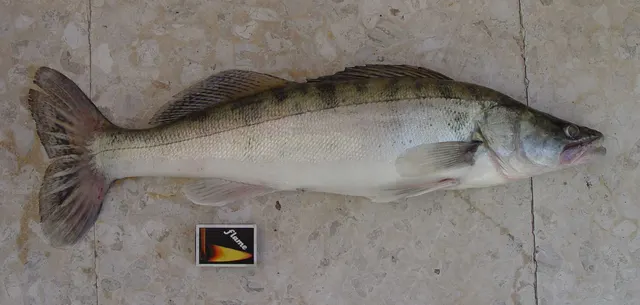 ZanderA shoaling freshwater predator built for hunting in low light and coloured water, and the fish that made a virtue of the conditions pike find difficult.
eLNuko — Public domain, via Wikimedia Commons
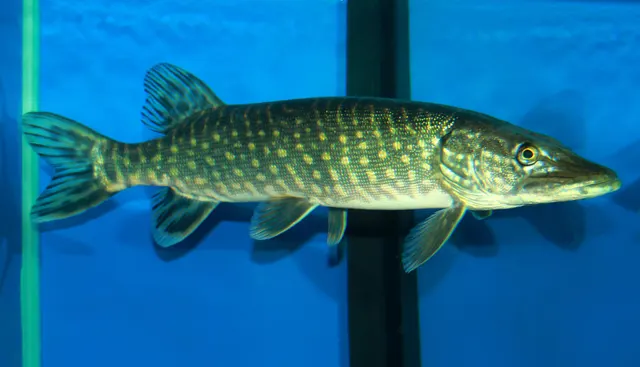 Northern pikeThe dominant freshwater ambush predator of the northern hemisphere: long, cryptic, and built for one violent acceleration rather than pursuit.
Karelj, Public domain, via Wikimedia Commons
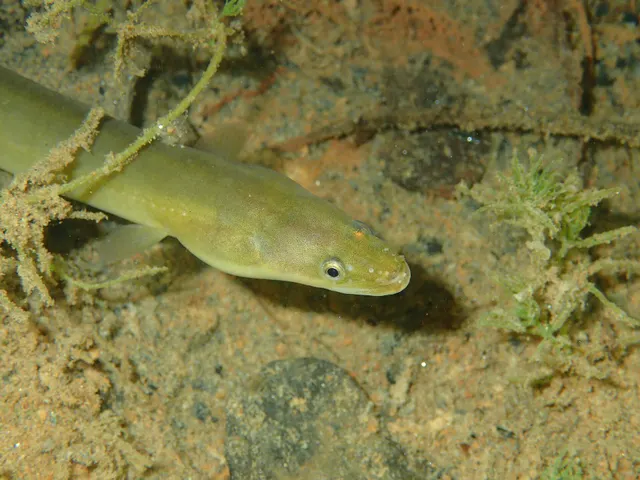 European eelA Critically Endangered fish that breeds in the Sargasso Sea, drifts to Europe as a transparent larva, lives decades in fresh water and returns once to spawn and die.
jujurenoult — CC BY 4.0, via Wikimedia Commons
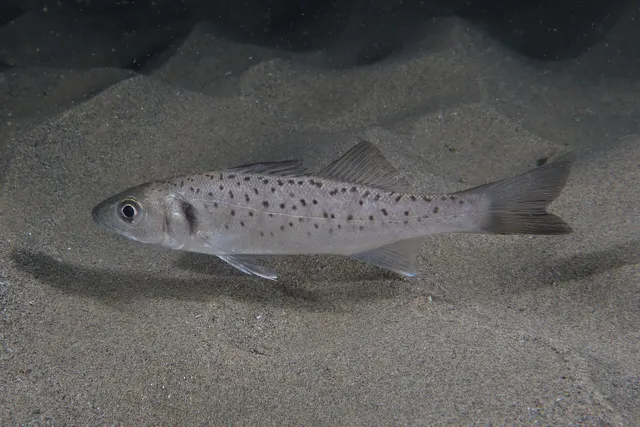 European sea bassA fast, predatory inshore fish that hunts in broken water and surf, and one of the most closely managed recreational species in European seas.
Julien Renoult — CC BY 4.0, via Wikimedia Commons
Places within this area
Publicly documented fishing geography. FishingHQ describes what the ground is; it does not say whether you may fish it, and every one of these sends that question to the body that holds the answer. Browse every place in this part of the world.
Who to ask before fishing any of these
FishingHQ does not know the current access position here. Shore angling on the Dutch coast is largely open, but species and size measures apply, sea bass in particular is managed tightly and changes year to year, and access to dikes, piers, sluices and the Delta works is controlled by the authority that owns the structure. Check the current position with the national angling federation and with the water authority before going.
FishingHQ does not know the current access position here. Dutch inland angling runs through a single document issued by the angling federation and its member associations, which functions as both the licence and the permission for the waters listed with it — and a water not on that list needs its own arrangement. Methods, seasons and the night-fishing and third-rod permissions are separate again, and all of them change. Check with the national angling federation and the local association before going.
The Oosterschelde
Estuary · Salt water
A former sea arm in the Dutch Delta, closed by a storm surge barrier designed to stay open in ordinary conditions so that the tide and the salt water are preserved behind it, with sand and mud flats, mussel and oyster beds, deep scoured channels and the rock of the barrier and the dikes.
Sheltered from swell by the barrier and the islands, and dominated by tidal streams and by wind across open water.
Particular to this ground: cold water shock, moving water and currents.
Severe hazards of The Netherlands apply here: drowning and immersion, tides and being cut off.
Particular to this water: This is working water-management or navigation infrastructure, operated to a schedule set by its authority rather than by anything happening in the fishing, and access to it is that authority's decision. This ground lies in or beside a marine protected area whose zoning constrains fishing, diving, anchoring and collection independently of any licence, with rules that differ between zones and boundaries that are not visible from the water.
The Grevelingenmeer
Lake · Salt water
A former sea arm dammed at both ends and left salt: the largest saltwater lake in western Europe, with no tide at all, sand and mud bottom, eelgrass, and a sluice providing a controlled exchange with the sea.
Severe hazards of The Netherlands apply here: drowning and immersion, moving water and currents, tides and being cut off.
Particular to this water: This is working water-management or navigation infrastructure, operated to a schedule set by its authority rather than by anything happening in the fishing, and access to it is that authority's decision. This ground lies in or beside a marine protected area whose zoning constrains fishing, diving, anchoring and collection independently of any licence, with rules that differ between zones and boundaries that are not visible from the water.
The Amsterdam canals
Canal section · Fresh water
A seventeenth-century ring of urban canals with vertical stone quay walls, moored houseboats, bridges and a controlled level flushed periodically by the water authority, holding a genuine predator population in the middle of a city.
Entirely sheltered; the variable is boat traffic rather than weather.
Particular to this ground: drowning and immersion.
Severe hazards of The Netherlands apply here: moving water and currents.
Particular to this water: This is working water-management or navigation infrastructure, operated to a schedule set by its authority rather than by anything happening in the fishing, and access to it is that authority's decision.
Safety
Drowning and immersion — Can cause serious injury or death
Canal, drain and engineered river banks are steep-sided, revetted and slippery with no gradual margin, so somebody who goes in cannot wade out and may find no climbable point for a considerable distance.
What reduces it: Wear flotation rather than carry it, identify an exit point before settling into a swim, do not fish a revetted edge alone in cold weather, and carry a means of calling for help on the person.
Moving water and currents — Can cause serious injury or death
Locks, sluices, weirs and pumping stations operate on a water-management schedule, so still water below a structure can become fast without warning — and the fish gather there precisely because of that flow. Passing commercial vessels pull water off the bank and return it as a set of steep waves.
What reduces it: Treat structures as operating infrastructure rather than platforms, stand back from the edge in a confined channel and watch upstream for shipping, and check with the water authority before fishing on or beside a structure at all.
Tides and being cut off — Can cause serious injury or death
On the Dutch Wadden flats the ground is level enough that the flood arrives behind a person while the sand in front is still dry, and the creeks fill first and fastest.
What reduces it: Do not go out onto the flats unaccompanied, set a leaving time from the tide, and treat water appearing behind you as the signal to leave immediately.
Worse when:
- In fog, which is frequent and removes the only navigation a flat offers.
Weather and lightning — Can cause injury needing treatment
The large open lakes are shallow with a long fetch and no shelter, so wind builds a short, steep, breaking sea within a short time and there is frequently nowhere to run to.
What reduces it: Plan a small-craft day on the forecast for the whole of it, stay within reach of a lee shore you can actually make, and treat a rising wind on shallow open water as a reason to come off rather than to move.
Further safety reading
- Cold water shock and immersion — Canal and polder banks are steep, revetted and slippery with no gradual margin, so somebody who goes in cannot wade out and may find no climbable point for a considerable distance — in water cold enough to decide it in the first minute.
Check the rules before you fish
Fishing laws, bylaws, access rules, seasons, bait restrictions and permitted methods vary by location and can change. Check the current rules from the relevant authority and the water you intend to fish before fishing.
Check with:
- Current national or regional law for where you are fishing
- Current local bylaws
- The relevant fisheries authority
- The landowner, club or fishery whose water it is
- Any restrictions specific to the species or the method you intend to use
Where to go next
What swims here
- European eelThe sharpest expression of the country's defining fisheries problem: a landscape of dikes, pumps, weirs and barriers is a landscape of barriers to a migratory fish, and the species' conservation status is what is at stake in the fish-pass programme.
- European sea bassAround the piers, moles, sluices and Delta structures that dominate shore access on a short and heavily engineered coast.
- Northern pikeAcross the canal, polder and lake network, holding in the weedier and clearer margins where the zander does not.
- ZanderThe dominant predator of Dutch turbid water, whose eye works in low light better than a pike's or a perch's — which is the ecological reason Dutch vertical jigging developed as it did.
Local knowledge
How this compares
Rules and access
Environment and conservation
Sources and evidence
- Freshwater Fishes of the British Isles — HarperCollins (New Naturalist 75), 1992 (Reference work)Relied on for: Distribution, ecology, life history and conservation status of European freshwater fishes, including the migratory salmonids and the cyprinid and percid communities named.States this directlyCitation checked — the work exists and is described correctly
- FishBase: a global information system on fishes — Froese, R. and D. Pauly, eds. — FishBase Consortium (Scientific institute)Relied on for: Recorded distribution, habitat association and life history of the freshwater and migratory species named.States this directlyPassage read and verified
- ICES Advice on fishing opportunities, catch and effort — International Council for the Exploration of the Sea (Scientific institute)Relied on for: Ecoregion description, stock distribution and status, nursery function and the hydrography of the European sea areas assessed, including the Baltic, the North Sea, the Celtic Seas and the Iberian and Biscay shelf.States this directlyCitation checked — the work exists and is described correctly
- FAO Species Identification Guides for Fishery Purposes and the FAO Species Catalogues — Food and Agriculture Organization of the United Nations (Scientific institute)Relied on for: Identification, distribution and habitat association of the fishes and invertebrates of the Mediterranean, the Black Sea and the eastern central Atlantic.States this directlyCitation checked — the work exists and is described correctly
- FishBase: a global information system on fishes — Froese, R. and D. Pauly, eds. — FishBase Consortium (Scientific institute)Relied on for: Recorded distribution, depth range, habitat association, size and biology of the species named.States this directlyPassage read and verified
- The IUCN Red List of Threatened Species — International Union for Conservation of Nature (Conservation authority)Relied on for: Current global and regional conservation assessment for the species named, with the assessment date.Background and mechanism onlyCitation checked — the work exists and is described correctly
- Sea Angler — Bauer Media (Specialist angling publication)Relied on for: Long-running published description of European sea angling practice by region and by ground type, including the destinations British anglers travel to.FishingHQ's interpretation of what it saysCitation checked — the work exists and is described correctly
- General angling website restatements of established technique — Various (Credible secondary source)Relied on for: Widely restated descriptions of which practices are conventionally used in the waters named, recorded as practitioner consensus rather than as scholarship.Background and mechanism onlyCitation checked — the work exists and is described correctly
Why the 11 connections on this page are here, and the sources
What swims here
Backed by research — 4 connections
Supported by peer-reviewed research or fisheries science. The sources are listed and can be checked.
European eel
That a species occurs in these waters, drawn from distribution science and stock assessment. It is a statement about where the animal lives and is not a statement that anybody will catch one, still less where.
- Freshwater Fishes of the British Isles — HarperCollins (New Naturalist 75), 1992 (Reference work)Relied on for: Distribution, habitat requirement and life history of European freshwater fishes, including their occurrence across the continental range named.States this directlyCitation checked — the work exists and is described correctly
- FishBase: a global information system on fishes — Froese, R. and D. Pauly, eds. — FishBase Consortium (Scientific institute)Relied on for: Recorded distribution and habitat association of the freshwater and migratory species named.States this directlyPassage read and verified
European sea bass
That a species occurs in these waters, drawn from distribution science and stock assessment. It is a statement about where the animal lives and is not a statement that anybody will catch one, still less where.
- FishBase: a global information system on fishes — Froese, R. and D. Pauly, eds. — FishBase Consortium (Scientific institute)Relied on for: Recorded distribution, depth range and habitat association of the species named, including its occurrence in the waters of the jurisdiction named.States this directlyPassage read and verified
- ICES Advice on fishing opportunities, catch and effort — International Council for the Exploration of the Sea (Scientific institute)Relied on for: Stock distribution and assessment across the European ecoregions, which is the basis for stating that a species occurs in a given national sea area.States this directlyCitation checked — the work exists and is described correctly
Northern pike
That a species occurs in these waters, drawn from distribution science and stock assessment. It is a statement about where the animal lives and is not a statement that anybody will catch one, still less where.
- Freshwater Fishes of the British Isles — HarperCollins (New Naturalist 75), 1992 (Reference work)Relied on for: Distribution, habitat requirement and life history of European freshwater fishes, including their occurrence across the continental range named.States this directlyCitation checked — the work exists and is described correctly
- FishBase: a global information system on fishes — Froese, R. and D. Pauly, eds. — FishBase Consortium (Scientific institute)Relied on for: Recorded distribution and habitat association of the freshwater and migratory species named.States this directlyPassage read and verified
Zander
That a species occurs in these waters, drawn from distribution science and stock assessment. It is a statement about where the animal lives and is not a statement that anybody will catch one, still less where.
- Freshwater Fishes of the British Isles — HarperCollins (New Naturalist 75), 1992 (Reference work)Relied on for: Distribution, habitat requirement and life history of European freshwater fishes, including their occurrence across the continental range named.States this directlyCitation checked — the work exists and is described correctly
- FishBase: a global information system on fishes — Froese, R. and D. Pauly, eds. — FishBase Consortium (Scientific institute)Relied on for: Recorded distribution and habitat association of the freshwater and migratory species named.States this directlyPassage read and verified
How people fish here
What experienced anglers do — 2 connections
Widely and independently recommended by experienced anglers and specialist sources. This is real angling knowledge, not proof: controlled evidence for it is limited, and FishingHQ records it as convention rather than as a demonstrated effect.
Match fishing
That a discipline is conventionally practised in these waters, drawn from published description of practice rather than from participation data, and labelled as consensus accordingly.
- Sea Angler — Bauer Media (Specialist angling publication)Relied on for: Long-running published description of European sea angling practice by region and destination, including where British anglers travel and what they fish for there.FishingHQ's interpretation of what it saysCitation checked — the work exists and is described correctly
- General angling website restatements of established technique — Various (Credible secondary source)Relied on for: Widely restated descriptions of which disciplines are conventionally practised in the waters named, recorded as practitioner consensus rather than as scholarship.Background and mechanism onlyCitation checked — the work exists and is described correctly
Predator fishing
That a discipline is conventionally practised in these waters, drawn from published description of practice rather than from participation data, and labelled as consensus accordingly.
- Sea Angler — Bauer Media (Specialist angling publication)Relied on for: Long-running published description of European sea angling practice by region and destination, including where British anglers travel and what they fish for there.FishingHQ's interpretation of what it saysCitation checked — the work exists and is described correctly
- General angling website restatements of established technique — Various (Credible secondary source)Relied on for: Widely restated descriptions of which disciplines are conventionally practised in the waters named, recorded as practitioner consensus rather than as scholarship.Background and mechanism onlyCitation checked — the work exists and is described correctly
Local knowledge
What experienced anglers do — 1 connection
Widely and independently recommended by experienced anglers and specialist sources. This is real angling knowledge, not proof: controlled evidence for it is limited, and FishingHQ records it as convention rather than as a demonstrated effect.
Fenland drains and lowland waterways
A link from a practice, an environment or a geography to the mechanism it rests on. It asserts that the mechanism is load-bearing here rather than merely relevant, which is the test applied throughout this file.
- Angling Times — Bauer Media (Specialist angling publication)Relied on for: Contemporary UK and European coarse, match and predator practice as reported by practitioners, including how conditions are read on the waters named.FishingHQ's interpretation of what it saysCitation checked — the work exists and is described correctly
- General angling website restatements of established technique — Various (Credible secondary source)Relied on for: Widely restated descriptions of how the condition named governs the practice named, recorded as practitioner consensus rather than as scholarship.Background and mechanism onlyCitation checked — the work exists and is described correctly
How this compares
What experienced anglers do — 1 connection
Widely and independently recommended by experienced anglers and specialist sources. This is real angling knowledge, not proof: controlled evidence for it is limited, and FishingHQ records it as convention rather than as a demonstrated effect.
Germany
A navigational link between two places a reader is genuinely choosing between or reasoning across, offered as orientation rather than as a ranking.
- Sea Angler — Bauer Media (Specialist angling publication)Relied on for: Long-running published description of European sea angling practice by region and destination, including where British anglers travel and what they fish for there.FishingHQ's interpretation of what it saysCitation checked — the work exists and is described correctly
- General angling website restatements of established technique — Various (Credible secondary source)Relied on for: Widely restated descriptions of which disciplines are conventionally practised in the waters named, recorded as practitioner consensus rather than as scholarship.Background and mechanism onlyCitation checked — the work exists and is described correctly
Safety reading
Official guidance — 1 connection
Stated by a fisheries authority, scientific institute or recognised angling body. Authoritative, but summarising rather than demonstrating.
Cold water shock and immersion
A link from the place to the substantial safety topic describing the mechanism that hurts people there, rather than a warning restated in prose on the record itself.
- RNLI water safety guidance: cold water shock and Float to Live — Royal National Lifeboat Institution (Water-safety or diver-training authority)Relied on for: Cold water shock and the immersion response, tidal cut-off, and water-safety guidance for shore anglers and small-craft users.States this directlyPassage read and verified
Rules and access
Official guidance — 1 connection
Stated by a fisheries authority, scientific institute or recognised angling body. Authoritative, but summarising rather than demonstrating.
Licences and permission
This points to the kind of rule that applies rather than to a rule itself. The same question is administered differently in each of these countries, so the page says that the answer is held elsewhere and changes.
- Code of Conduct for Responsible Fisheries — Food and Agriculture Organization of the United Nations, Rome, 1995 (Standards body)Relied on for: The international framework within which national and regional fisheries authorities set, revise and enforce measures, and the principle that the responsible authority rather than a third party holds the current position.Background and mechanism onlyCitation checked — the work exists and is described correctly
- ICES Advice on fishing opportunities, catch and effort — International Council for the Exploration of the Sea (Scientific institute)Relied on for: That the stock advice European measures are set against is produced internationally and revised annually, which is how a national measure changes without the national law changing.States this directlyCitation checked — the work exists and is described correctly
Environment and conservation
Backed by research — 1 connection
Supported by peer-reviewed research or fisheries science. The sources are listed and can be checked.
Fish stocks and sustainability
An environmental claim attached to the geography where it operates, resting on published stock assessment and conservation status rather than on advocacy.
- The IUCN Red List of Threatened Species — International Union for Conservation of Nature (Conservation authority)Relied on for: The conservation assessment of the species and stocks concerned, with the assessment date, which is the basis for treating the pressure on them as established rather than asserted.States this directlyCitation checked — the work exists and is described correctly
- ICES Advice on fishing opportunities, catch and effort — International Council for the Exploration of the Sea (Scientific institute)Relied on for: Stock status and the advice on which management measures for the stocks concerned are set and revised.States this directlyCitation checked — the work exists and is described correctly
How FishingHQ labels evidence is explained in the evidence policy.