European flounder vs European plaice
How to tell them apart, and what follows from getting it right.
Why they get confused
Two right-eyed flatfish of the same outline, taken on the same worm baits from the same beaches and lower estuaries, both of which can carry orange spots. They also hybridise, so an occasional fish shows features of both. Most confusion comes from sorting them by colour, which is the one character that does not work.
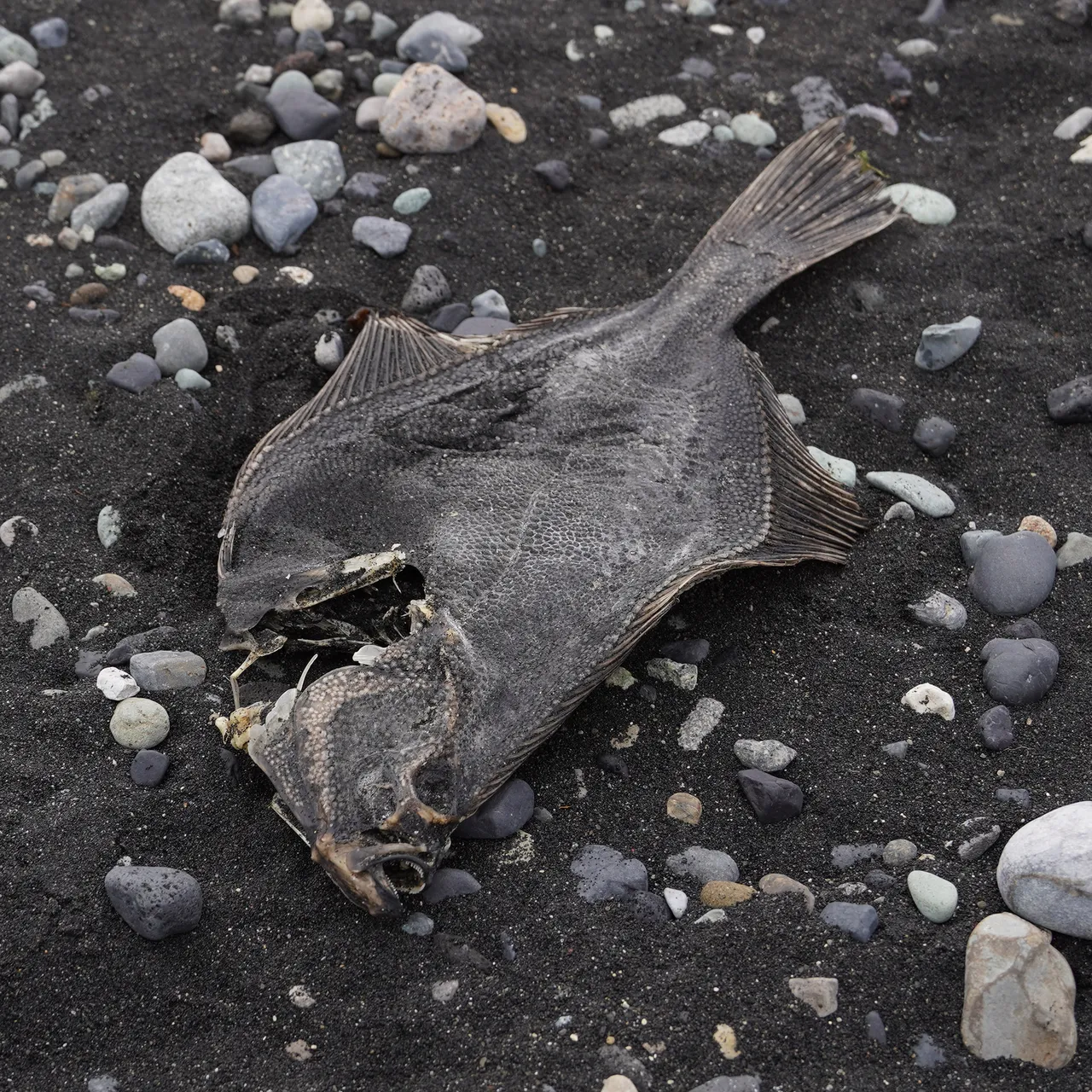
European flounder
Platichthys flesus — Pleuronectidae
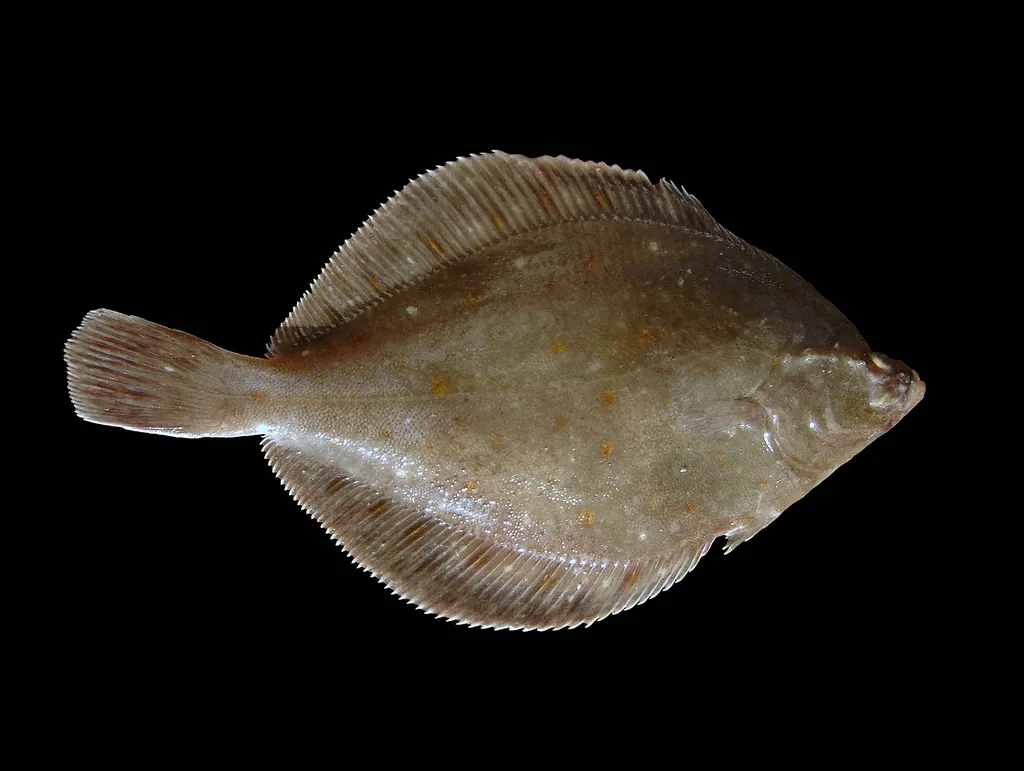
European plaice
Pleuronectes platessa — Pleuronectidae

The differences
Each difference is marked with how far it can be trusted on its own. A single diagnostic character settles the identification; suggestive ones only narrow it.
| Character | European flounder | European plaice | Reliability |
|---|---|---|---|
| Along the edge of the bodyIdentification | A row of prickly bony humps along the bases of the fins that edge the body, felt with a finger, and rough scales along the lateral line. | Smooth along the fin bases and along the lateral line, with small smooth scales throughout. | Diagnostic on its own |
| The head behind the eyesIdentification | No row of knobs on the head; the roughness is along the fins and lateral line instead. | A row of four to seven bony knobs running back from between the eyes towards the gill opening. | Diagnostic on its own |
| SpotsIdentification | Dull brown to grey-green, often with small orange or reddish spots that are dull and vague. | Bright orange or red spots on brown, which are the plaice's signature but fade on worn fish. | Suggestive only — varies |
| Which side the eyes are onIdentification | Usually the right, but left-eyed fish are common enough that a reversed flatfish in an estuary is usually a flounder. | On the right. A left-eyed plaice is a rarity. | Supporting — use with others |
| How far up the estuarySeason | The whole estuary and on into fresh water; it feeds in inches of water behind the advancing tide. | The sandy lower estuary in the warmer months and no further, in water with some depth over it. | Suggestive only — varies |
| How it finds a baitFeeding | Largely by scent and disturbance in water that is often coloured, which is why a creeping bait and a spoon that stirs silt are used. | Largely by sight in clear water and daylight, which is why plaice rigs carry beads and sequins. | Suggestive only — varies |
| HandlingHandling | Gives time to a bait and may take a small hook down; long-shanked fine-wire hooks and a crushed barb make release practical. | Picks at a bait with a small mouth and is usually hooked in the lip on a small hook; the same hook pattern suits it. | Supporting — use with others |
Why it matters
Where a minimum size applies it is set separately for each fish and district by district: of two English authorities read, both list flounder and only one lists plaice. It also decides where to fish. Flounder are in the wash and up the river; plaice want clean ground with depth, in daylight. A fish with features of both may be a hybrid and should be treated with the caution of the stricter rule.
The full species pages
This page compares two species. Each of them has a full page covering biology, behaviour, handling and the evidence behind all of it.
More about european flounder
Where it lives, how it is caught, and what else it is confused with.
How it is caught
- LedgeringLight bottom fishing with small hooks and ragworm is the everyday estuary flounder method.
- SpinningThe baited spoon — a small flashing blade above a baited hook, drawn slowly across the bottom — is a specialist flounder rig that works by stirring sediment, which is the signal a feeding flounder is tuned to.
- SurfcastingFished from open sandy beaches, though usually with much lighter gear than cod or bass fishing on the same ground.
Gear for this fish
- Peeler crabTakes better flounders than worm in many estuaries, particularly in spring when crabs are moulting.
- RagwormThe near-universal flounder bait, because it is the thing the fish is already eating in quantity on intertidal mud.
Where it lives
- Brackish waterFlounders tolerate very low salinity and are abundant in the brackish reaches of the Baltic and of British estuaries.
- EstuaryThe defining habitat. Flounders occupy the whole salinity gradient and are at home on the soft intertidal mud that other flatfish avoid.
- Lowland riversAdults ascend rivers well above the tidal limit, sometimes many miles inland. A flatfish caught in fresh water is a flounder until proved otherwise.
- Surf beachesPresent on open sandy coast as well as in estuaries, though the estuary is where the species is concentrated.
Why the 9 connections on this page are here, and the sources
How it is caught
What experienced anglers do — 3 connections
Widely and independently recommended by experienced anglers and specialist sources. This is real angling knowledge, not proof: controlled evidence for it is limited, and FishingHQ records it as convention rather than as a demonstrated effect.
Ledgering
A statement about how a species is fished, which is angling convention rather than biology and is labelled as such.
- Sea Angler — Bauer Media (Specialist angling publication)Relied on for: Contemporary UK and European sea angling practice as reported by practitioners, including ground, seasonal timing, bait and method convention.States this directlyCitation checked — the work exists and is described correctly
- General angling website restatements of established technique — Various (Credible secondary source)Relied on for: Widely restated descriptions of species behaviour and regional angling practice, recorded as consensus rather than as scholarship.Background and mechanism onlyCitation checked — the work exists and is described correctly
Spinning
A statement about how a species is fished, which is angling convention rather than biology and is labelled as such.
- Sea Angler — Bauer Media (Specialist angling publication)Relied on for: Contemporary UK and European sea angling practice as reported by practitioners, including ground, seasonal timing, bait and method convention.States this directlyCitation checked — the work exists and is described correctly
- General angling website restatements of established technique — Various (Credible secondary source)Relied on for: Widely restated descriptions of species behaviour and regional angling practice, recorded as consensus rather than as scholarship.Background and mechanism onlyCitation checked — the work exists and is described correctly
Surfcasting
A statement about how a species is fished, which is angling convention rather than biology and is labelled as such.
- Sea Angler — Bauer Media (Specialist angling publication)Relied on for: Contemporary UK and European sea angling practice as reported by practitioners, including ground, seasonal timing, bait and method convention.States this directlyCitation checked — the work exists and is described correctly
- General angling website restatements of established technique — Various (Credible secondary source)Relied on for: Widely restated descriptions of species behaviour and regional angling practice, recorded as consensus rather than as scholarship.Background and mechanism onlyCitation checked — the work exists and is described correctly
Gear for this fish
What experienced anglers do — 2 connections
Widely and independently recommended by experienced anglers and specialist sources. This is real angling knowledge, not proof: controlled evidence for it is limited, and FishingHQ records it as convention rather than as a demonstrated effect.
Peeler crab
A bait joined to the fish it is conventionally used for. Convention, recorded as convention.
- Sea Angler — Bauer Media (Specialist angling publication)Relied on for: Contemporary UK and European sea angling practice as reported by practitioners, including ground, seasonal timing, bait and method convention.States this directlyCitation checked — the work exists and is described correctly
- General angling website restatements of established technique — Various (Credible secondary source)Relied on for: Widely restated descriptions of species behaviour and regional angling practice, recorded as consensus rather than as scholarship.Background and mechanism onlyCitation checked — the work exists and is described correctly
Ragworm
A bait joined to the fish it is conventionally used for. Convention, recorded as convention.
- Sea Angler — Bauer Media (Specialist angling publication)Relied on for: Contemporary UK and European sea angling practice as reported by practitioners, including ground, seasonal timing, bait and method convention.States this directlyCitation checked — the work exists and is described correctly
- General angling website restatements of established technique — Various (Credible secondary source)Relied on for: Widely restated descriptions of species behaviour and regional angling practice, recorded as consensus rather than as scholarship.Background and mechanism onlyCitation checked — the work exists and is described correctly
Where it lives
Backed by research — 4 connections
Supported by peer-reviewed research or fisheries science. The sources are listed and can be checked.
Brackish water
A distributional claim about where a species is found, which is a claim about the world and rests on the standard regional reference works rather than on angling report.
- The Fishes of the British Isles and North-West Europe — Macmillan, 1969 (Reference work)Relied on for: Distribution, habitat association, identification and biology of the fishes of the British Isles and north-west Europe.States this directlyCitation checked — the work exists and is described correctly
- FAO Species Identification Guides for Fishery Purposes and the FAO Species Catalogues — Food and Agriculture Organization of the United Nations (Scientific institute)Relied on for: Diagnostic characters, habitat and depth range as set out in the FAO species identification sheets for the eastern Atlantic and Mediterranean.States this directlyCitation checked — the work exists and is described correctly
Estuary
A distributional claim about where a species is found, which is a claim about the world and rests on the standard regional reference works rather than on angling report.
- The Fishes of the British Isles and North-West Europe — Macmillan, 1969 (Reference work)Relied on for: Distribution, habitat association, identification and biology of the fishes of the British Isles and north-west Europe.States this directlyCitation checked — the work exists and is described correctly
- FAO Species Identification Guides for Fishery Purposes and the FAO Species Catalogues — Food and Agriculture Organization of the United Nations (Scientific institute)Relied on for: Diagnostic characters, habitat and depth range as set out in the FAO species identification sheets for the eastern Atlantic and Mediterranean.States this directlyCitation checked — the work exists and is described correctly
Lowland rivers
A distributional claim about where a species is found, which is a claim about the world and rests on the standard regional reference works rather than on angling report.
- The Fishes of the British Isles and North-West Europe — Macmillan, 1969 (Reference work)Relied on for: Distribution, habitat association, identification and biology of the fishes of the British Isles and north-west Europe.States this directlyCitation checked — the work exists and is described correctly
- FAO Species Identification Guides for Fishery Purposes and the FAO Species Catalogues — Food and Agriculture Organization of the United Nations (Scientific institute)Relied on for: Diagnostic characters, habitat and depth range as set out in the FAO species identification sheets for the eastern Atlantic and Mediterranean.States this directlyCitation checked — the work exists and is described correctly
Surf beaches
A distributional claim about where a species is found, which is a claim about the world and rests on the standard regional reference works rather than on angling report.
- The Fishes of the British Isles and North-West Europe — Macmillan, 1969 (Reference work)Relied on for: Distribution, habitat association, identification and biology of the fishes of the British Isles and north-west Europe.States this directlyCitation checked — the work exists and is described correctly
- FAO Species Identification Guides for Fishery Purposes and the FAO Species Catalogues — Food and Agriculture Organization of the United Nations (Scientific institute)Relied on for: Diagnostic characters, habitat and depth range as set out in the FAO species identification sheets for the eastern Atlantic and Mediterranean.States this directlyCitation checked — the work exists and is described correctly
Reviewed 2026-10-11. FishingHQ does not state what any rule is or where any rule applies. Where this page says the two species are managed differently, that is a reason to check the authority for the water you are on — not a statement of what it requires.