How to identify european plaice
Pleuronectes platessa · Pleuronectidae
The characters that identify european plaice, ranked by how far each one can be trusted on its own.
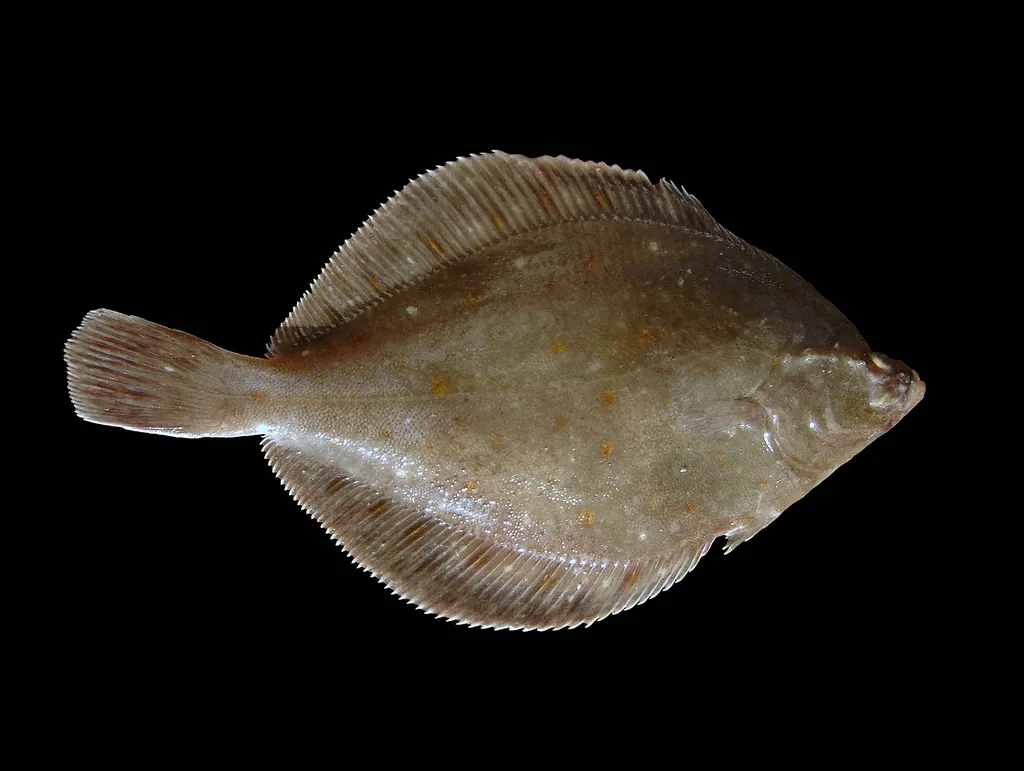
How this was identified, and who took it
Identified by: Specimen photograph on black showing the whole right-eyed fish. The orange spots on a smooth brown upper side are the diagnostic character and they are unambiguous here.Hans Hillewaert — CC BY-SA 4.0, via Wikimedia Commons — source, licenceLook at this first
Lay the fish coloured-side up with its head pointing away from you. If the eyes are on the right, you have a righteye flounder and can proceed. Then look for red or orange spots on a smooth brown back — that is a plaice.
Diagnostic — settles it on its own
Each of these settles the identification on its own. If one is clear, you have your answer.
Both eyes on the right side
The first check for any flatfish, and the one that halves the possibilities before anything else is considered. Lay the fish with the pigmented side up and the head away, and note which side the eyes are on. Plaice, dab, flounder and lemon sole are all right-eyed; turbot and brill are not.
Red or orange spots on the upper side
Irregularly scattered bright spots over a brown or greenish back. They are the plaice's signature and no other common right-eyed flatfish in the same ground carries them in the same form. They dull after death but do not disappear.
Supporting — use with other characters
Real characters that are not conclusive by themselves. Use two or three together.
A row of bony knobs behind the eyes
Run a thumb from the eyes backwards and a short ridge of hard bumps can be felt on the head. A structural character that works when the fish is dull, wet or has been in a box, and one that flounder does not share.
Skin that feels smooth
The upper side is slick to a hand run head to tail, where a flounder feels perceptibly rough. It is a comparative judgement and it needs a flounder in living memory to be useful.
What it gets confused with
- Flounder, which is the standing confusion — rough skin, no bony knobs, and spots that are dull rather than bright.
- Dab, which is smaller with a strongly curved lateral line above the pectoral fin.
- Plaice-flounder hybrids, which occur where the two spawn together and are intermediate throughout.
Side by side: European plaice vs Common sole.
Where this stops working
Plaice and flounder hybridise and the hybrids are genuinely intermediate in the exact characters this page ranks, which puts some fish beyond a field call. Spot colour dulls considerably after death and can be nearly grey on a fish that has been iced. The eyed-side check fails on the rare reversed individuals, which occur in most flatfish species at low frequency.
The full record
This page covers identification only. The European plaice record covers behaviour, lifecycle, distribution, handling and the sources behind all of it.
Reviewed 2026-08-14.
More about this fish
Telling it apart is one question. Here are the others.
Similar and related fish
How it is caught
- Drift fishingWorking a bait slowly across banks and the edges of mixed ground, which covers the patchy features plaice concentrate on rather than the sand between them.
- Float fishingOccasionally used over shallow clean ground in calm conditions to present a bait moving with the tide rather than static on the bottom.
- LedgeringA small bait presented on or just above clean and mixed ground, which is where plaice feed and how they are taken from shore and boat alike.
Where it lives
Where you will find it
- Chesil BeachA flatfish of the clean shingle and sand offshore of the barrier, moving inshore as water warms.
- The Channel shingle coastsUses the cleaner sand and mixed ground beyond the step rather than the mobile shingle itself, which supports very little infauna.
- The Lecale coast and Dundrum BayDundrum Bay shelves gently over several kilometres of clean sand under the Mournes, which is plaice ground, and it is the half of this coast that the reef either side of St John's Point is not.
- The north-east England coastOccupies the clean sand of the bays between the rock outcrops, which is the other half of a coast whose ground alternates over short distances.
- The Solway FirthFlatfish over the extensive sand flats are the constant of this firth, present through the year where the winter and summer species come and go.
- The Wadden SeaThe largest intertidal system on earth is a nursery of first importance for this species, so juveniles are abundant across the flats and a substantial share of the adults caught across the southern North Sea grew up here.
- The Wash and the Lincolnshire coastThe bay's enormous shallow warm flats are a nursery of national importance for this species, so juveniles are abundant here and a substantial share of the adults caught across the southern North Sea grew up in it.
- Weymouth BayA shallow, sheltered, predominantly sandy bay in the lee of Portland is plaice ground, and the shore fishery along Preston Beach and the boat fishery over the banks outside are the same fish at two depths.
Why the 14 connections on this page are here, and the sources
Similar and related fish
Backed by research — 1 connection
Supported by peer-reviewed research or fisheries science. The sources are listed and can be checked.
Common sole
An identification and behavioural comparison naming both binomials.
- FishBase: a global information system on fishes — Froese, R. and D. Pauly, eds. — FishBase Consortium (Scientific institute)Relied on for: That Solea solea and Pleuronectes platessa are both right-eyed flatfish of sand and mud bottoms in the North East Atlantic.States this directlyPassage read and verified
- The Fishes of the British Isles and North-West Europe — Macmillan, 1969 (Reference work)Relied on for: The morphological separation of sole from plaice by fin arrangement and mouth structure, and their differing activity patterns.States this directlyCitation checked — the work exists and is described correctly
How it is caught
What experienced anglers do — 3 connections
Widely and independently recommended by experienced anglers and specialist sources. This is real angling knowledge, not proof: controlled evidence for it is limited, and FishingHQ records it as convention rather than as a demonstrated effect.
Drift fishing
An established way this species is taken recreationally in north-west European waters.
- Sea Angler — Bauer Media (Specialist angling publication)Relied on for: Shore and boat practice in north-west European sea angling for the species and method described, presented across multiple independent contributors.States this directlyCitation checked — the work exists and is described correctly
- General angling website restatements of established technique — Various (Credible secondary source)Relied on for: Widely restated practice connecting this species to this method, recorded as practitioner consensus rather than as tested fact.Background and mechanism onlyCitation checked — the work exists and is described correctly
Float fishing
An established way this species is taken recreationally in north-west European waters.
- Sea Angler — Bauer Media (Specialist angling publication)Relied on for: Shore and boat practice in north-west European sea angling for the species and method described, presented across multiple independent contributors.States this directlyCitation checked — the work exists and is described correctly
- General angling website restatements of established technique — Various (Credible secondary source)Relied on for: Widely restated practice connecting this species to this method, recorded as practitioner consensus rather than as tested fact.Background and mechanism onlyCitation checked — the work exists and is described correctly
Ledgering
An established way this species is taken recreationally in north-west European waters.
- Sea Angler — Bauer Media (Specialist angling publication)Relied on for: Shore and boat practice in north-west European sea angling for the species and method described, presented across multiple independent contributors.States this directlyCitation checked — the work exists and is described correctly
- General angling website restatements of established technique — Various (Credible secondary source)Relied on for: Widely restated practice connecting this species to this method, recorded as practitioner consensus rather than as tested fact.Background and mechanism onlyCitation checked — the work exists and is described correctly
Where it lives
Backed by research — 2 connections
Supported by peer-reviewed research or fisheries science. The sources are listed and can be checked.
Seagrass beds
A habitat association resting on the regional identification and fisheries literature rather than on angling report.
- JNCC species and habitat conservation advice — Joint Nature Conservation Committee (Conservation authority)Relied on for: UK and European habitat classification and the conservation status of seagrass beds, including the species associated with them.States this directlyCitation checked — the work exists and is described correctly
- FAO Species Identification Guides for Fishery Purposes and the FAO Species Catalogues — Food and Agriculture Organization of the United Nations (Scientific institute)Relied on for: Habitat association and distribution of the species concerned.States this directlyCitation checked — the work exists and is described correctly
Surf beaches
A habitat claim about substrate association, held to a scientific standard.
- The Fishes of the British Isles and North-West Europe — Macmillan, 1969 (Reference work)Relied on for: Substrate association of Pleuronectes platessa with sand and fine gravel.States this directlyCitation checked — the work exists and is described correctly
- FishBase: a global information system on fishes — Froese, R. and D. Pauly, eds. — FishBase Consortium (Scientific institute)Relied on for: Recorded habitat for Pleuronectes platessa.States this directlyPassage read and verified
Where you will find it
Backed by research — 8 connections
Supported by peer-reviewed research or fisheries science. The sources are listed and can be checked.
Chesil Beach
A distribution association between an animal and a kind of water, rather than a claim about any named mark.
- The Fishes of the British Isles and North-West Europe — Macmillan, 1969 (Reference work)Relied on for: Distribution, habitat association, depth and ground preference of fishes in British and north-west European waters.States this directlyCitation checked — the work exists and is described correctly
- FishBase: a global information system on fishes — Froese, R. and D. Pauly, eds. — FishBase Consortium (Scientific institute)Relied on for: Distribution, habitat association and depth range recorded for the species.Background and mechanism onlyPassage read and verified
The Channel shingle coasts
Occurrence of the species in this system or along this coast: a statement about the animal's distribution, not a venue recommendation.
- The Fishes of the British Isles and North-West Europe — Macmillan, 1969 (Reference work)Relied on for: Distribution and habitat association of fishes in British and north-west European waters.States this directlyCitation checked — the work exists and is described correctly
- FishBase: a global information system on fishes — Froese, R. and D. Pauly, eds. — FishBase Consortium (Scientific institute)Relied on for: Distribution, depth range and habitat association recorded for the species.States this directlyPassage read and verified
The Lecale coast and Dundrum Bay
A claim that a coast or region contains the ground and conditions this species is associated with. It is a distributional statement about the world, it rests on the reference literature and on the institute that surveyed it, and it deliberately asserts nothing about access, permission or catch.
- The Fishes of the British Isles and North-West Europe — Macmillan, 1969 (Reference work)Relied on for: Distribution and habitat association of the marine fishes of the British Isles and north-west Europe, including which coasts and ground types a species occupies.States this directlyCitation checked — the work exists and is described correctly
- FishBase: a global information system on fishes — Froese, R. and D. Pauly, eds. — FishBase Consortium (Scientific institute)Relied on for: Recorded distribution, depth range and habitat association for the species named.States this directlyPassage read and verified
The north-east England coast
A claim that a place contains the ground and conditions the species is associated with. It is a distributional statement about the world, it rests on the regional reference literature, and it deliberately asserts nothing about access, permission or catch.
- The Fishes of the British Isles and North-West Europe — Macmillan, 1969 (Reference work)Relied on for: Distribution and habitat association of the marine and estuarine fishes of the British Isles, including which coasts and ground types a species occupies.States this directlyCitation checked — the work exists and is described correctly
- FishBase: a global information system on fishes — Froese, R. and D. Pauly, eds. — FishBase Consortium (Scientific institute)Relied on for: Recorded distribution, depth range and habitat association for the species named.States this directlyPassage read and verified
The Solway Firth
A distributional claim about where a species occurs, taken from reference works on the fishes of the region rather than from angling report. It states presence and habitat association and asserts nothing about a fishery.
- FishBase: a global information system on fishes — Froese, R. and D. Pauly, eds. — FishBase Consortium (Scientific institute)Relied on for: Distribution, habitat association, depth range and feeding behaviour recorded for the species concerned.States this directlyPassage read and verified
- The Fishes of the British Isles and North-West Europe — Macmillan, 1969 (Reference work)Relied on for: Distribution, habitat and biology of the fishes of the British Isles and north-west Europe.States this directlyCitation checked — the work exists and is described correctly
The Wadden Sea
A claim that a place contains the ground, water and seasonal conditions the species is associated with. It is a distributional statement about the world, it rests on the regional reference literature, and it deliberately asserts nothing about access, permission or catch.
- JNCC species and habitat conservation advice — Joint Nature Conservation Committee (Conservation authority)Relied on for: Habitat classification and description for the intertidal, coastal and freshwater habitats named, and the species characteristically associated with them.States this directlyCitation checked — the work exists and is described correctly
- ICES Advice on fishing opportunities, catch and effort — International Council for the Exploration of the Sea (Scientific institute)Relied on for: Ecoregion description, nursery function and the hydrography of the European sea areas assessed.States this directlyCitation checked — the work exists and is described correctly
The Wash and the Lincolnshire coast
A claim that a place contains the ground, water and seasonal conditions the species is associated with. It is a distributional statement about the world, it rests on the regional reference literature, and it deliberately asserts nothing about access, permission or catch.
- The Fishes of the British Isles and North-West Europe — Macmillan, 1969 (Reference work)Relied on for: Distribution and habitat association of the marine, estuarine and freshwater fishes of the British Isles, including which coasts, estuaries and ground types a species occupies.States this directlyCitation checked — the work exists and is described correctly
- FishBase: a global information system on fishes — Froese, R. and D. Pauly, eds. — FishBase Consortium (Scientific institute)Relied on for: Recorded distribution, depth range and habitat association for the species named.States this directlyPassage read and verified
Weymouth Bay
A claim that a coast or region contains the ground and conditions this species is associated with. It is a distributional statement about the world, it rests on the reference literature and on the institute that surveyed it, and it deliberately asserts nothing about access, permission or catch.
- The Fishes of the British Isles and North-West Europe — Macmillan, 1969 (Reference work)Relied on for: Distribution and habitat association of the marine fishes of the British Isles and north-west Europe, including which coasts and ground types a species occupies.States this directlyCitation checked — the work exists and is described correctly
- FishBase: a global information system on fishes — Froese, R. and D. Pauly, eds. — FishBase Consortium (Scientific institute)Relied on for: Recorded distribution, depth range and habitat association for the species named.States this directlyPassage read and verified