Common sole vs European plaice
How to tell them apart, and what follows from getting it right.
Why they get confused
Both are right-eyed flatfish of the same sandy ground, taken on the same baits, and both come over the gunwale as a brown oval. In a mixed catch on a dark beach, outline is all most people have to go on.
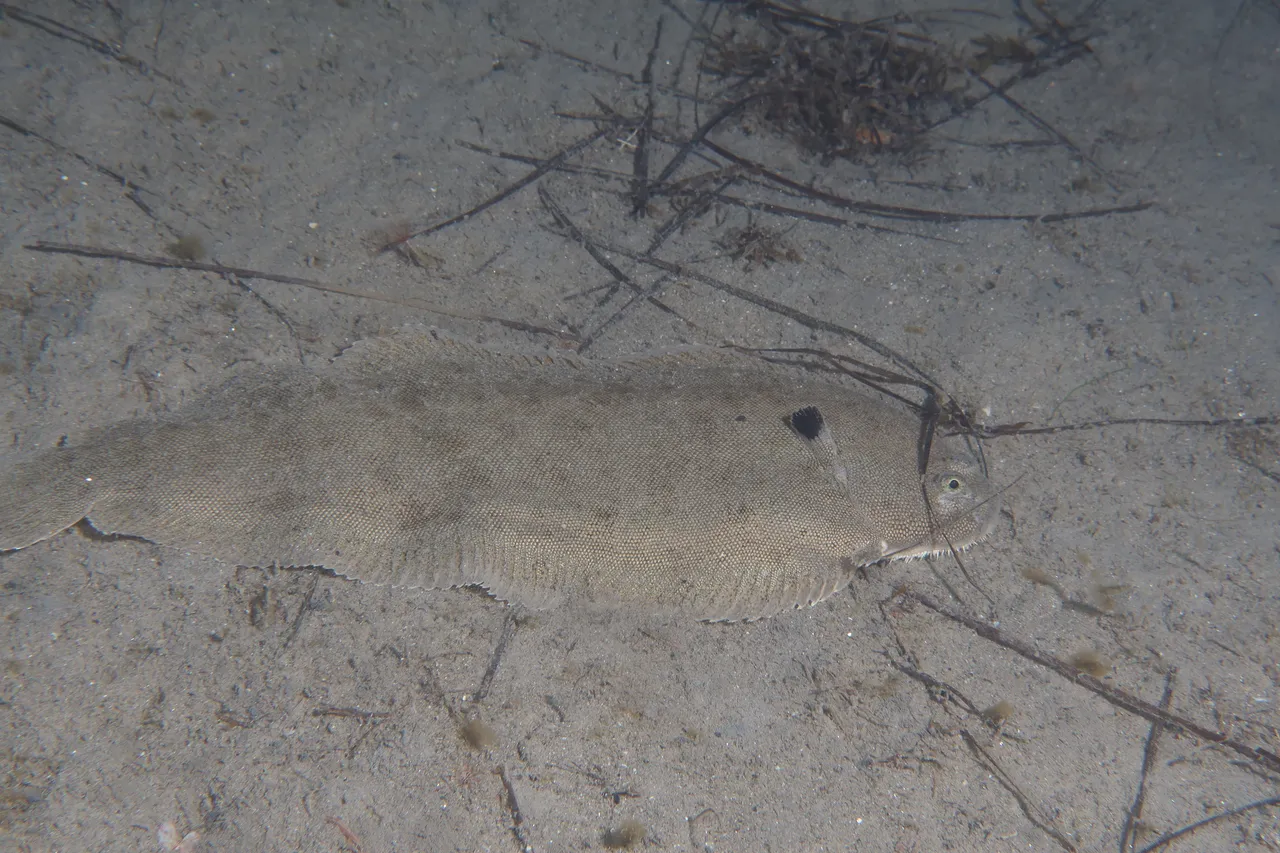
Common sole
Solea solea — Soleidae
European plaice
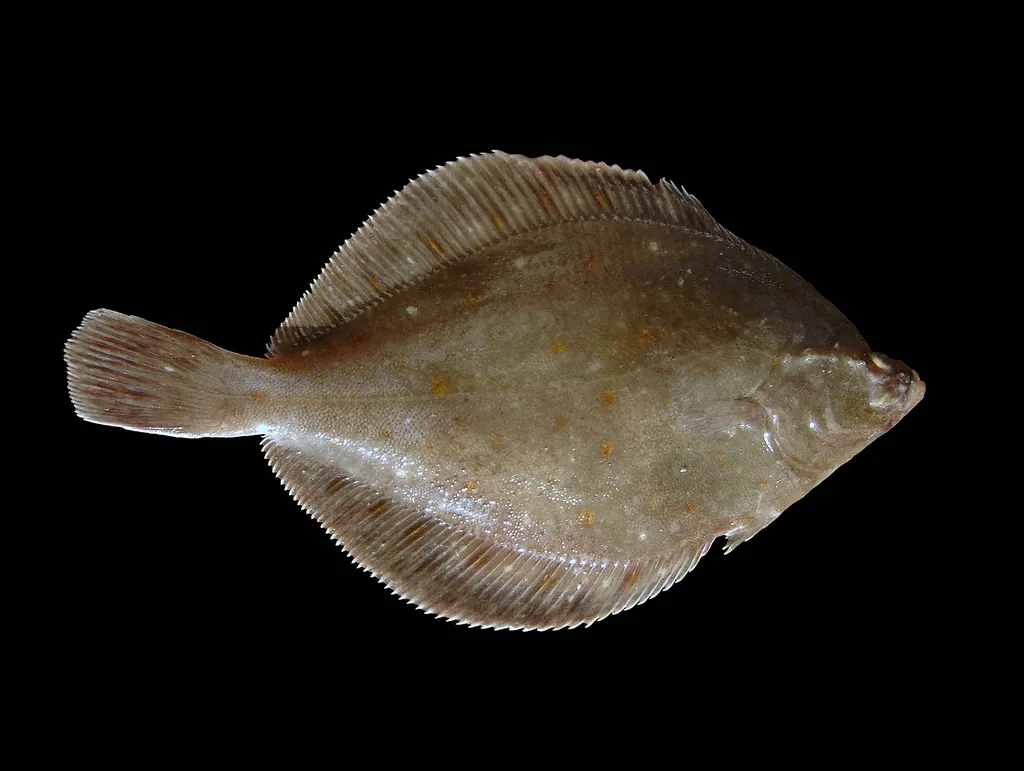
Pleuronectes platessa — Pleuronectidae

The differences
Each difference is marked with how far it can be trusted on its own. A single diagnostic character settles the identification; suggestive ones only narrow it.
| Character | Common sole | European plaice | Reliability |
|---|---|---|---|
| Body outlineIdentification | Long oval, almost tongue-shaped, with the dorsal and anal fins running to meet the tail. | Diamond-shaped, distinctly angular, with fins clearly separated from the caudal fin. | Diagnostic on its own |
| SpotsIdentification | Uniform brown, marbled at most, with no orange spotting. | Orange or red spots scattered over a smooth brown upper side. | Diagnostic on its own |
| Head and mouthIdentification | Small curved mouth set low, with the snout rounded over it. | Terminal mouth and a bony ridge of knobs running behind the eyes. | Supporting — use with others |
| SeasonSeason | Moves inshore as water warms, and is a warm-months fish over most of its range. | Available inshore over a longer season, with condition rather than presence changing through the year. | Suggestive only — varies |
Why it matters
Minimum sizes differ, and both are subject to size rules in most European waters. The orange spots are unmistakable once seen and are the fastest way to sort a mixed bag.
The full records
This page compares two species. Each of them has a complete record covering biology, behaviour, handling and the evidence behind all of it.
More about common sole
Where it lives, how it is caught, and what else it is confused with.
Similar and related fish
How it is caught
Why the 3 connections on this page are here, and the sources
Similar and related fish
Backed by research — 1 connection
Supported by peer-reviewed research or fisheries science. The sources are listed and can be checked.
European plaice
An identification and behavioural comparison naming both binomials.
- FishBase: a global information system on fishes — Froese, R. and D. Pauly, eds. — FishBase Consortium (Scientific institute)Relied on for: That Solea solea and Pleuronectes platessa are both right-eyed flatfish of sand and mud bottoms in the North East Atlantic.States this directlyPassage read and verified
- The Fishes of the British Isles and North-West Europe — Macmillan, 1969 (Reference work)Relied on for: The morphological separation of sole from plaice by fin arrangement and mouth structure, and their differing activity patterns.States this directlyCitation checked — the work exists and is described correctly
How it is caught
What experienced anglers do — 2 connections
Widely and independently recommended by experienced anglers and specialist sources. This is real angling knowledge, not proof: controlled evidence for it is limited, and FishingHQ records it as convention rather than as a demonstrated effect.
Ledgering
The page names estuaries beside beaches. In an estuary the presentation is a static bottom bait at short range, and the small hooks matter more than the cast.
- Sea Angler — Bauer Media (Specialist angling publication)Relied on for: Documents which fishery and which technique takes this species.States this directlyCitation checked — the work exists and is described correctly
- FishBase: a global information system on fishes — Froese, R. and D. Pauly, eds. — FishBase Consortium (Scientific institute)Relied on for: Independently corroborates the species' recreational capture and range.Background and mechanism onlyPassage read and verified
Surfcasting
The page names small hooks, ragworm or lugworm, hard on the bottom, from beaches and estuaries, at night. That is a specific and well-defined shore fishery rather than a general one.
- Sea Angler — Bauer Media (Specialist angling publication)Relied on for: Documents which fishery and which technique takes this species.States this directlyCitation checked — the work exists and is described correctly
- FishBase: a global information system on fishes — Froese, R. and D. Pauly, eds. — FishBase Consortium (Scientific institute)Relied on for: Independently corroborates the species' recreational capture and range.Background and mechanism onlyPassage read and verified
Reviewed 2026-08-10. FishingHQ does not state what any rule is or where any rule applies. Where this page says the two species are managed differently, that is a reason to check the authority for the water you are on — not a statement of what it requires.