Stick float rig
Rig · Last reviewed 2026-08-18
A float attached top and bottom so it can be held back against the current, presenting a bait that travels with the flow at a speed the angler chooses.
What it is for
To present a bait travelling downstream with the current at a speed the angler controls, on running water, within a distance the line can still be mended and the float held back. It is the arrangement that makes a river bait behave like loose feed rather than like something tethered.
Components, from rod to hook
- Main line direct from the reel, kept floating rather than sunk.
- The stick float, attached top and bottom — through a bottom eye and held at the top by float rubbers.
- Shot down the line, either spread evenly for a slow natural fall or bulked for a fast one.
- A smaller dropper shot near the hooklength, which registers the most delicate bites.
- A hooklength of finer line than the main line.
- A hook sized to the bait, usually small.
What it does in the water
The float cocks and begins travelling with the current, and the angler feeds line to it while keeping the rod high and the line off the water. Held back — by slowing the line leaving the reel — the float tilts slightly and the bait swings up and ahead of it, which is the presentation the rig exists for. Released, the bait falls back and settles. Working between those two states down a single trot is how the depth and speed are searched. Bites show as the float burying or, more often on a held-back trot, as it simply stopping or lifting, because the bait has been taken by a fish facing upstream into the flow.
When to use it
Running water at close to medium range — realistically within about two rod lengths plus a trot, because beyond that the line cannot be controlled. It is at its best in steady moderate flow of even depth. In very fast or very deep water a heavier float carrying more shot is needed; in still water the waggler is the correct arrangement and this one has no advantage at all.
Common mistakes
- Sinking the line, as one would with a waggler, which removes all control and makes the rig pointless.
- Letting the float travel at exactly the speed of the current, which presents the bait behind the terminal tackle and is the least effective option available.
- Fishing it at range, where the line between rod and float bellies in the current and drags the float off line.
- Setting the depth so the bait is off the bottom in water where the fish are on it, and never plumbing to find out.
- Striking at the float checking on bottom weed or gravel, and missing the take that follows because the bait has been moved.
How this rig behaves, and where it goes wrong
A stick float is attached to the line at both ends, which is the opposite of a waggler and is done for the opposite reason. A waggler is bottom-only so the line can be sunk away from the wind on still water. A stick float is top-and-bottom so the line stays ON the surface where the angler can control it, because on a river the current — not the wind — is the thing that must be worked with.
That control is the entire point. Line held between rod and float lets the angler slow the float against the current, which lifts the bait up and forward ahead of the float. A bait travelling slightly slower than the flow, ahead of the terminal tackle, is the single most effective presentation in running water, and no other arrangement on FishingHQ produces it.
The shot pattern does the rest. Shirt-button shotting — small shot spread evenly down the line — lets the bait fall slowly and naturally through the water column. Bulked shot gets it down fast through a fast top layer. Which of those is right is the actual decision on a river, and it changes through a session as the fish move.
Where to go next
Fish it is built for
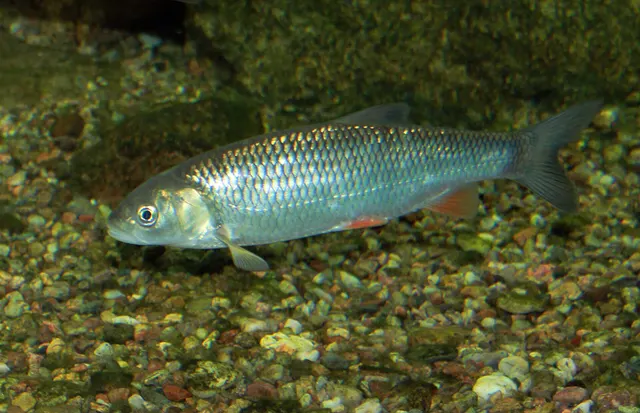 ChubTrotted baits down a chub swim are one of the standard river approaches, and the float allows the bait to be presented far down a swim the angler could not otherwise reach without disturbing it.
 DaceA fast-biting shoal fish of running water, and the species that most rewards the held-back presentation because it takes a rising bait.
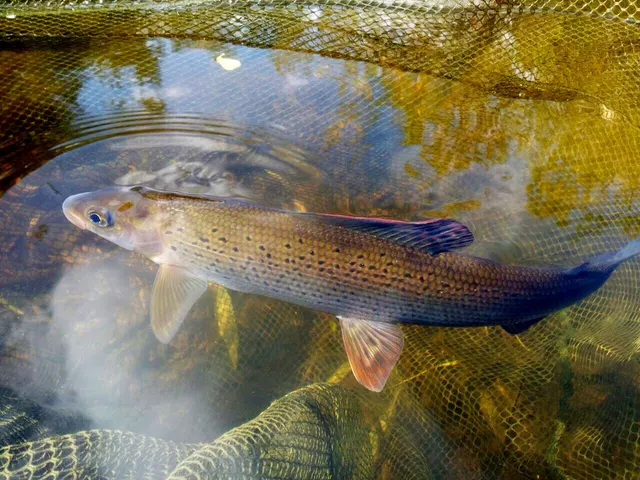 GraylingTrotting is the traditional bait approach to grayling in winter, on the same fast even-paced water the rig is designed for.
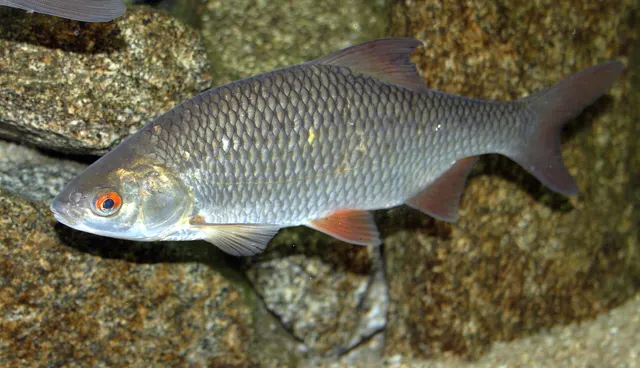 RoachThe classic catch of the trotted stick float on rivers, taken on a bait running slightly slower than the flow.
How it is fished
- Float fishingThe running-water half of float fishing. A reader who has only met the waggler has met the stillwater half and will present badly on a river.
- TrottingTrotting is the method and the stick float is the arrangement that makes it possible: a bait travelling downstream at a speed the angler sets, rather than at the speed of the water.
Worth understanding first
- Choosing a rig for the conditionsThe spine's answer for moving water with a float, attached top and bottom so the line stays on the surface and the float can be held back against the current. A waggler is the wrong answer on a river and the map had no other.
- Reading waterThe rig only works if the trot is aimed at something. Reading the crease, the pace change and the depth of a swim is what decides where the float is run and how hard it is held back.
- What a rig isA worked example of an arrangement whose defining property is its attachment points rather than its components — the same float, shot and hook attached differently is a different rig.
Instead of this
Sources and evidence
Why the 10 connections on this page are here, and the sources
Fish it is built for
What experienced anglers do — 4 connections
Widely and independently recommended by experienced anglers and specialist sources. This is real angling knowledge, not proof: controlled evidence for it is limited, and FishingHQ records it as convention rather than as a demonstrated effect.
Chub
That anglers conventionally choose this arrangement when targeting this fish. It is a claim about practice rather than about the fish, and it does not assert that the arrangement is necessary or that it will succeed.
- Coarse Fishing — A. & C. Black, 1912 (Specialist angling publication)Relied on for: Classical coarse angling practice: terminal arrangements, shotting, float attachment and bite registration in still and running water.States this directlyCitation checked — the work exists and is described correctly
- Angling Times — Bauer Media (Specialist angling publication)Relied on for: Contemporary UK coarse and match angling practice as reported by practitioners, including pole, float and surface rig convention.States this directlyCitation checked — the work exists and is described correctly
Dace
That anglers conventionally choose this arrangement when targeting this fish. It is a claim about practice rather than about the fish, and it does not assert that the arrangement is necessary or that it will succeed.
- Coarse Fishing — A. & C. Black, 1912 (Specialist angling publication)Relied on for: Classical coarse angling practice: terminal arrangements, shotting, float attachment and bite registration in still and running water.States this directlyCitation checked — the work exists and is described correctly
- Angling Times — Bauer Media (Specialist angling publication)Relied on for: Contemporary UK coarse and match angling practice as reported by practitioners, including pole, float and surface rig convention.States this directlyCitation checked — the work exists and is described correctly
Grayling
That anglers conventionally choose this arrangement when targeting this fish. It is a claim about practice rather than about the fish, and it does not assert that the arrangement is necessary or that it will succeed.
- Coarse Fishing — A. & C. Black, 1912 (Specialist angling publication)Relied on for: Classical coarse angling practice: terminal arrangements, shotting, float attachment and bite registration in still and running water.States this directlyCitation checked — the work exists and is described correctly
- Angling Times — Bauer Media (Specialist angling publication)Relied on for: Contemporary UK coarse and match angling practice as reported by practitioners, including pole, float and surface rig convention.States this directlyCitation checked — the work exists and is described correctly
Roach
That anglers conventionally choose this arrangement when targeting this fish. It is a claim about practice rather than about the fish, and it does not assert that the arrangement is necessary or that it will succeed.
- Coarse Fishing — A. & C. Black, 1912 (Specialist angling publication)Relied on for: Classical coarse angling practice: terminal arrangements, shotting, float attachment and bite registration in still and running water.States this directlyCitation checked — the work exists and is described correctly
- Angling Times — Bauer Media (Specialist angling publication)Relied on for: Contemporary UK coarse and match angling practice as reported by practitioners, including pole, float and surface rig convention.States this directlyCitation checked — the work exists and is described correctly
How it is fished
What experienced anglers do — 2 connections
Widely and independently recommended by experienced anglers and specialist sources. This is real angling knowledge, not proof: controlled evidence for it is limited, and FishingHQ records it as convention rather than as a demonstrated effect.
Float fishing
That a method conventionally uses this terminal arrangement, drawn from published description of practice rather than from any claim that it must.
- Coarse Fishing — A. & C. Black, 1912 (Specialist angling publication)Relied on for: Classical coarse angling practice: terminal arrangements, shotting, float attachment and bite registration in still and running water.States this directlyCitation checked — the work exists and is described correctly
- Angling Times — Bauer Media (Specialist angling publication)Relied on for: Contemporary UK coarse and match angling practice as reported by practitioners, including pole, float and surface rig convention.States this directlyCitation checked — the work exists and is described correctly
Trotting
That a method conventionally uses this terminal arrangement, drawn from published description of practice rather than from any claim that it must.
- Coarse Fishing — A. & C. Black, 1912 (Specialist angling publication)Relied on for: Classical coarse angling practice: terminal arrangements, shotting, float attachment and bite registration in still and running water.States this directlyCitation checked — the work exists and is described correctly
- Angling Times — Bauer Media (Specialist angling publication)Relied on for: Contemporary UK coarse and match angling practice as reported by practitioners, including pole, float and surface rig convention.States this directlyCitation checked — the work exists and is described correctly
Worth understanding first
What experienced anglers do — 3 connections
Widely and independently recommended by experienced anglers and specialist sources. This is real angling knowledge, not proof: controlled evidence for it is limited, and FishingHQ records it as convention rather than as a demonstrated effect.
Choosing a rig for the conditions
An arrangement joined to the guidance that selects it. That guidance names eleven rigs against four questions and pointed at none of them, so a reader following the procedure to its conclusion could not reach the answer.
- Sea Angler — Bauer Media (Specialist angling publication)Relied on for: British sea angling practice: how tide, wind, swell and water clarity change where and how a mark is fished.FishingHQ's interpretation of what it saysCitation checked — the work exists and is described correctly
- Freshwater Fishing — Macdonald & Jane's, 1975 (Specialist angling publication)Relied on for: Comprehensive angling practice across disciplines, including water reading, seasonal condition and the tackle each demands.States this directlyCitation checked — the work exists and is described correctly
Reading water
A link from an arrangement to the concept that explains why it is built the way it is, so this page carries the mechanism rather than restating it.
- Coarse Fishing — A. & C. Black, 1912 (Specialist angling publication)Relied on for: Classical coarse angling practice: terminal arrangements, shotting, float attachment and bite registration in still and running water.States this directlyCitation checked — the work exists and is described correctly
- Angling Times — Bauer Media (Specialist angling publication)Relied on for: Contemporary UK coarse and match angling practice as reported by practitioners, including pole, float and surface rig convention.States this directlyCitation checked — the work exists and is described correctly
What a rig is
A link from an arrangement to the concept that explains why it is built the way it is, so this page carries the mechanism rather than restating it.
- Coarse Fishing — A. & C. Black, 1912 (Specialist angling publication)Relied on for: Classical coarse angling practice: terminal arrangements, shotting, float attachment and bite registration in still and running water.States this directlyCitation checked — the work exists and is described correctly
- Angling Times — Bauer Media (Specialist angling publication)Relied on for: Contemporary UK coarse and match angling practice as reported by practitioners, including pole, float and surface rig convention.States this directlyCitation checked — the work exists and is described correctly
Instead of this
What experienced anglers do — 1 connection
Widely and independently recommended by experienced anglers and specialist sources. This is real angling knowledge, not proof: controlled evidence for it is limited, and FishingHQ records it as convention rather than as a demonstrated effect.
Waggler float rig
That one arrangement is recognisably a development of another, offered so a reader who knows the parent can reason about the variant instead of learning it from nothing.
- Coarse Fishing — A. & C. Black, 1912 (Specialist angling publication)Relied on for: Classical coarse angling practice: terminal arrangements, shotting, float attachment and bite registration in still and running water.States this directlyCitation checked — the work exists and is described correctly
- Angling Times — Bauer Media (Specialist angling publication)Relied on for: Contemporary UK coarse and match angling practice as reported by practitioners, including pole, float and surface rig convention.States this directlyCitation checked — the work exists and is described correctly
How FishingHQ labels evidence is explained in the evidence policy.