What actually happens to a released fish
Explainer · Last reviewed 2026-08-10
Releasing a fish is not the same as the fish surviving, and the difference is decided almost entirely by things the angler controls.
Catch-and-release is the default across most European freshwater angling and increasingly in sea angling, and it works — released fish do, in general, survive. But 'in general' hides an enormous range, and the range is not random. Post-release mortality varies from close to zero to a substantial fraction depending on a small number of factors, most of which the angler decides.
The factors that matter most, consistently, across the research literature are these.
HOOKING LOCATION. A fish hooked in the lip survives at far higher rates than one hooked deep in the throat or in the gills. Deep hooking is largely a function of how long a take is left before the strike, and of hook and bait choice.
AIR EXPOSURE. Time out of water is one of the strongest single predictors of post-release mortality, and the relationship is steep — the difference between fifteen seconds and two minutes is substantial rather than marginal. A fish held up for photographs while somebody finds a camera is a fish whose survival odds have measurably dropped.
EXHAUSTION AND TEMPERATURE. A fish played to complete exhaustion in warm, low-oxygen water may swim off strongly and die hours later. This is the mechanism behind barbel angling's recovery protocols and behind the practice of not fishing for salmonids in very warm water at all. It is also the reason 'it swam away fine' is not evidence of survival.
HANDLING. Dry hands and dry surfaces strip the mucus layer that keeps infection out. A fish dropped onto hard ground suffers internal injury. A large fish held vertically by the jaw takes its own weight on its spine.
None of this is an argument against catch-and-release. It is an argument that the release is part of the technique, and that it is the part with the highest variance in outcome.
The five things that make the largest difference
Use barbless or crushed-barb hooks. They come out cleanly, they shorten the unhooking, and the loss rate is far smaller than most anglers assume.
Strike promptly rather than letting a take develop. Deep hooking is a timing failure much more often than a tackle failure.
Keep the fish in the water where you can, and where you cannot, count the seconds. Have the camera ready before the fish is out, not after.
Wet your hands and everything the fish will touch. Use a mat or a cradle, and keep the fish low to the ground.
Rest the fish before letting go — supported, upright, facing into any flow, until it kicks hard and repeatedly. If it does not, keep holding it.
And one that is not a technique: if the water is very warm and very low, the honest answer is sometimes to stop fishing rather than to fish more carefully.
Backed by research — why, and the sources (2)
Supported by peer-reviewed research or fisheries science. The sources are listed and can be checked.
- Understanding the Complexity of Catch-and-Release in Recreational Fishing — Reviews in Fisheries Science 15:75–167, 2007 (Scientific literature)Relied on for: That post-release mortality varies widely by species, gear and handling, and that air exposure, exhaustion, water temperature and hooking location are among the strongest predictors.States this directlyCitation checked — the work exists and is described correctly
- Angling Trust guidance for anglers — Angling Trust (Angling or fisheries organisation)Relied on for: The fish-care practices recommended for handling and returning fish.States this directlyCitation checked — the work exists and is described correctly
Where to go next
Fish this applies to
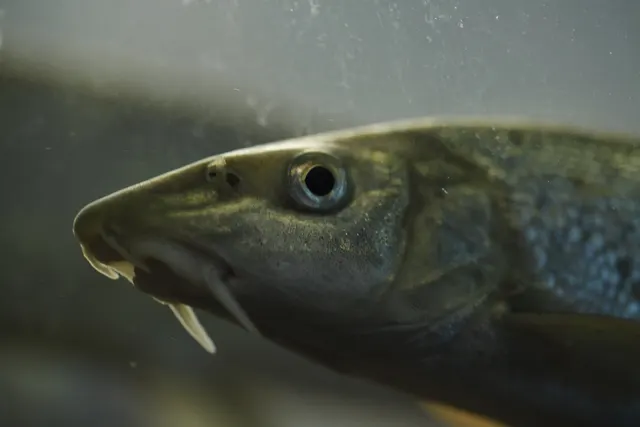 BarbelBarbel are the clearest example in fresh water of a fish that can be released successfully and die anyway.
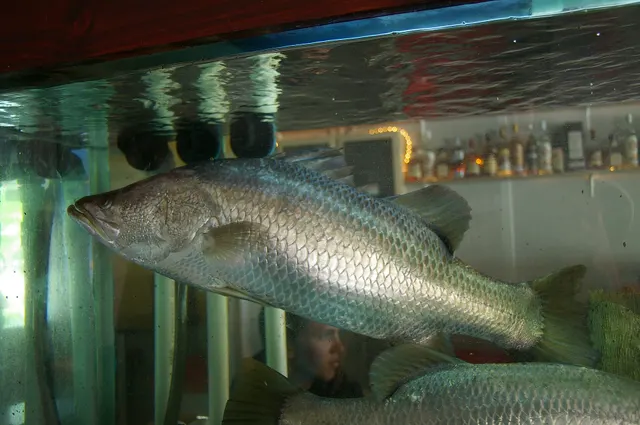 BarramundiBarramundi mature as males and change sex to female, so the large fish are the breeding females — which is why several jurisdictions apply an upper size limit as well as a lower one, and why releasing a big one properly actually matters.
- Flapper skateNo swim bladder, so a skate returned in good condition swims back down under its own power and tagging shows recaptures years later. Release here is not a gesture — but it depends entirely on fight length, support and air exposure.
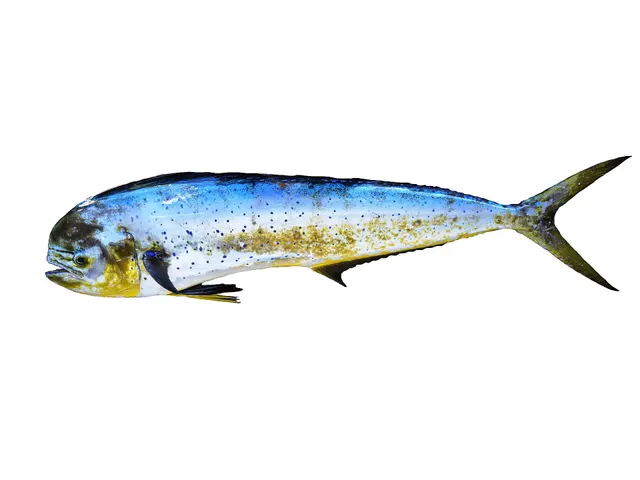 Mahi-mahiThe rare case where retention is straightforwardly defensible: mature at four to five months, maximum age four years, generation time about a year. A mahi-mahi replaces itself almost immediately.
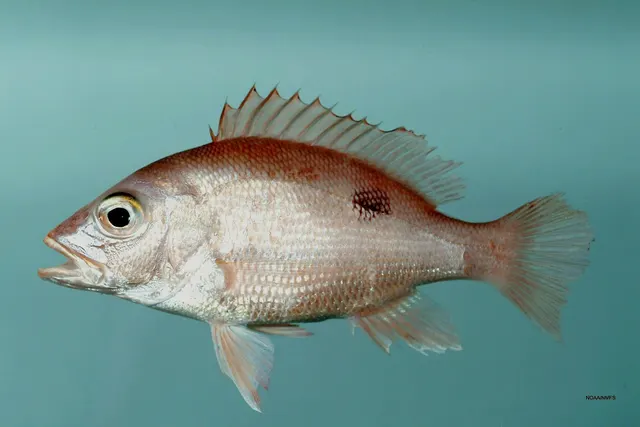 Northern red snapperThe textbook barotrauma species. A red snapper released at the surface from depth floats and dies, which is why descending devices went from a good idea to a requirement.
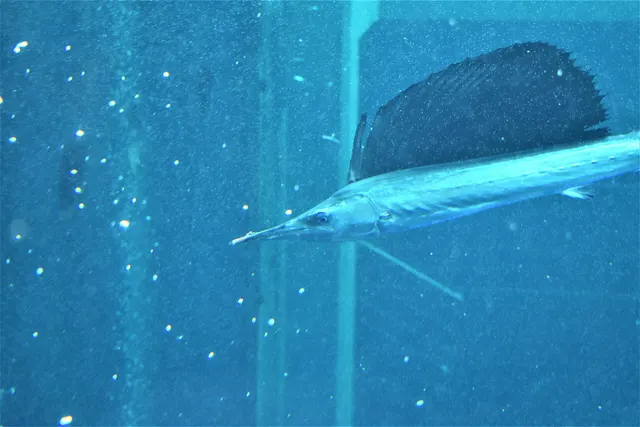 SailfishThe billfish fisheries moved to tag-and-release largely from within the sport, and circle hooks and short fights are the handling that makes it actually work.
- Small-spotted catsharkHardy, with no swim bladder, so almost all harm done to this species is avoidable handling harm rather than anything inherent to the capture.
- SpurdogNo swim bladder means a returned fish is not doomed by depth — so handling quality, not capture depth, decides whether release works.
1 more
- Tope Fish
Where it matters
- Big-game fishingThe discipline moved substantially to tag-and-release from within, and the handling that makes it work — circle hooks, short fights, fish kept in the water — is technique rather than sentiment.
- Deep-drop fishingBarotrauma from these depths is catastrophic and irreversible, so a deep-water fish brought up is effectively a fish taken — which moves the decision about what to keep to before the drop.
Gear this affects
Related reading
- Barbed and barbless hooksThe barb argument only matters because the fish is going back; what happens to it after release is the frame the whole question sits in.
- Dissolved oxygen and fishRecovery after a fight depends on the oxygen available.
- Fish growth, age and what a big fish representsThe case for releasing large fish rests on how long they take to replace.
- Spawning triggersFish are at their most vulnerable when concentrated to spawn.
- Swim bladders, buoyancy and barotraumaRelease survival for deep-water species depends on recompression.
- What stress does to a fishThe physiological cascade is what the survival record is measuring the consequences of, and it peaks after release rather than during the fight — which is why a fish that swims away strongly is not evidence of survival.
How this compares
- Do fish feel painThe case for careful handling does not depend on how the consciousness question resolves, because measurable harm falls with the same practices under every account on offer.
- Why fish are hooked deeply, and how to reduce itHooking location is among the strongest predictors of whether a released fish survives — stronger than the handling most anglers worry about.
Sources and evidence
- Understanding the Complexity of Catch-and-Release in Recreational Fishing — Reviews in Fisheries Science 15:75–167, 2007 (Scientific literature)Relied on for: The integrative evidence base on catch-and-release outcomes in recreational fishing.States this directlyCitation checked — the work exists and is described correctly
Why the 21 connections on this page are here, and the sources
Fish this applies to
Backed by research — 7 connections
Supported by peer-reviewed research or fisheries science. The sources are listed and can be checked.
Barbel
Post-release mortality mechanisms are documented in the catch-and-release literature.
- Understanding the Complexity of Catch-and-Release in Recreational Fishing — Reviews in Fisheries Science 15:75–167, 2007 (Scientific literature)Relied on for: That exhaustion, warm water and air exposure predict post-release mortality.States this directlyCitation checked — the work exists and is described correctly
Barramundi
A reproductive-biology claim with a direct consequence for release practice and for how a size limit should be read.
- FishBase: a global information system on fishes — Froese, R. and D. Pauly, eds. — FishBase Consortium (Scientific institute)Relied on for: Protandrous hermaphroditism in Lates calcarifer, with individuals maturing as males before sex inversion.States this directlyPassage read and verified
- Understanding the Complexity of Catch-and-Release in Recreational Fishing — Reviews in Fisheries Science 15:75–167, 2007 (Scientific literature)Relied on for: That the survival and condition of released fish depends on handling, and that release practice has population-level consequences.FishingHQ's interpretation of what it saysCitation checked — the work exists and is described correctly
Flapper skate
A record pointing at the mechanism that explains its own behaviour, so the explanation lives once rather than on every species page.
- The Fishes of the British Isles and North-West Europe — Macmillan, 1969 (Reference work)Relied on for: Distribution, habitat association, identification and biology of the sharks, skates and rays of the British Isles and north-west Europe.States this directlyCitation checked — the work exists and is described correctly
- FAO Species Identification Guides for Fishery Purposes and the FAO Species Catalogues — Food and Agriculture Organization of the United Nations (Scientific institute)Relied on for: Diagnostic characters, habitat and depth range as set out in the FAO species identification sheets for the eastern Atlantic and Mediterranean.States this directlyCitation checked — the work exists and is described correctly
Mahi-mahi
A population-dynamics claim held to a scientific standard, because it is the one place on FishingHQ where the conservation argument points toward taking fish rather than away from it.
- FishBase: a global information system on fishes — Froese, R. and D. Pauly, eds. — FishBase Consortium (Scientific institute)Relied on for: That Coryphaena hippurus reaches sexual maturity in four to five months, has a maximum reported age of four years, and a generation time of approximately 1.1 years.States this directlyPassage read and verified
- Good Fish Guide — Marine Conservation Society (Conservation authority)Relied on for: That growth rate, age at maturity and generation time are components of whether a stock can sustain harvest.States this directlyCitation checked — the work exists and is described correctly
Small-spotted catshark
A record pointing at the mechanism that explains its own behaviour, so the explanation lives once rather than on every species page.
- The Fishes of the British Isles and North-West Europe — Macmillan, 1969 (Reference work)Relied on for: Distribution, habitat association, identification and biology of the sharks, skates and rays of the British Isles and north-west Europe.States this directlyCitation checked — the work exists and is described correctly
- FAO Species Identification Guides for Fishery Purposes and the FAO Species Catalogues — Food and Agriculture Organization of the United Nations (Scientific institute)Relied on for: Diagnostic characters, habitat and depth range as set out in the FAO species identification sheets for the eastern Atlantic and Mediterranean.States this directlyCitation checked — the work exists and is described correctly
Spurdog
A record pointing at the mechanism that explains its own behaviour, so the explanation lives once rather than on every species page.
- The Fishes of the British Isles and North-West Europe — Macmillan, 1969 (Reference work)Relied on for: Distribution, habitat association, identification and biology of the sharks, skates and rays of the British Isles and north-west Europe.States this directlyCitation checked — the work exists and is described correctly
- FAO Species Identification Guides for Fishery Purposes and the FAO Species Catalogues — Food and Agriculture Organization of the United Nations (Scientific institute)Relied on for: Diagnostic characters, habitat and depth range as set out in the FAO species identification sheets for the eastern Atlantic and Mediterranean.States this directlyCitation checked — the work exists and is described correctly
Tope
A record pointing at the mechanism that explains its own behaviour, so the explanation lives once rather than on every species page.
- The Fishes of the British Isles and North-West Europe — Macmillan, 1969 (Reference work)Relied on for: Distribution, habitat association, identification and biology of the sharks, skates and rays of the British Isles and north-west Europe.States this directlyCitation checked — the work exists and is described correctly
- FAO Species Identification Guides for Fishery Purposes and the FAO Species Catalogues — Food and Agriculture Organization of the United Nations (Scientific institute)Relied on for: Diagnostic characters, habitat and depth range as set out in the FAO species identification sheets for the eastern Atlantic and Mediterranean.States this directlyCitation checked — the work exists and is described correctly
Official guidance — 2 connections
Stated by a fisheries authority, scientific institute or recognised angling body. Authoritative, but summarising rather than demonstrating.
Northern red snapper
A release-survival claim held to an authoritative standard, and the clearest case in FishingHQ of a specific technology adopted to fix a specific mortality.
- Understanding the Complexity of Catch-and-Release in Recreational Fishing — Reviews in Fisheries Science 15:75–167, 2007 (Scientific literature)Relied on for: That barotrauma from depth is a principal cause of post-release mortality and that release survival depends on the physical trauma of capture.States this directlyCitation checked — the work exists and is described correctly
Sailfish
A release-survival claim held above practitioner level because it justifies a change in practice.
- Understanding the Complexity of Catch-and-Release in Recreational Fishing — Reviews in Fisheries Science 15:75–167, 2007 (Scientific literature)Relied on for: That hook type, fight duration and handling materially affect the survival of released fish, and that circle hooks reduce deep hooking.States this directlyCitation checked — the work exists and is described correctly
- IGFA International Angling Rules and World Record Requirements — International Game Fish Association (Angling or fisheries organisation)Relied on for: That tag-and-release and circle hook practice are recognised within the sport's own rule framework.FishingHQ's interpretation of what it saysPassage read and verified
Where it matters
Backed by research — 2 connections
Supported by peer-reviewed research or fisheries science. The sources are listed and can be checked.
Big-game fishing
A claim about released-fish survival, held to a scientific standard because it is the justification for a change in practice.
- Understanding the Complexity of Catch-and-Release in Recreational Fishing — Reviews in Fisheries Science 15:75–167, 2007 (Scientific literature)Relied on for: That fight duration, hook type and handling materially affect the survival of released fish, and that circle hooks reduce deep hooking.States this directlyCitation checked — the work exists and is described correctly
- IGFA International Angling Rules and World Record Requirements — International Game Fish Association (Angling or fisheries organisation)Relied on for: That release and tagging practice is recognised within the sport's own rule framework.FishingHQ's interpretation of what it saysPassage read and verified
Deep-drop fishing
A release-survival claim held to a scientific standard, because it is the reason this page's conservation section exists.
- Understanding the Complexity of Catch-and-Release in Recreational Fishing — Reviews in Fisheries Science 15:75–167, 2007 (Scientific literature)Relied on for: That release survival depends on the physical trauma of capture, and that barotrauma is a principal cause of post-release mortality.States this directlyCitation checked — the work exists and is described correctly
- Good Fish Guide — Marine Conservation Society (Conservation authority)Relied on for: That longevity and late maturity are material to whether a stock can sustain harvest.States this directlyCitation checked — the work exists and is described correctly
Gear this affects
What experienced anglers do — 2 connections
Widely and independently recommended by experienced anglers and specialist sources. This is real angling knowledge, not proof: controlled evidence for it is limited, and FishingHQ records it as convention rather than as a demonstrated effect.
Hooks
Hook type is documented as a factor in post-release outcome.
- Angling Trust guidance for anglers — Angling Trust (Angling or fisheries organisation)Relied on for: Hook selection guidance in fish care practice.Citation checked — the work exists and is described correctly
- Angling Times — Bauer Media (Specialist angling publication)Relied on for: Contemporary barbless hook practice.Citation checked — the work exists and is described correctly
Landing and unhooking equipment
The equipment exists to serve the outcome the explainer describes.
- Angling Trust guidance for anglers — Angling Trust (Angling or fisheries organisation)Relied on for: Landing and unhooking equipment in fish care guidance.Citation checked — the work exists and is described correctly
- Angling Times — Bauer Media (Specialist angling publication)Relied on for: Contemporary fish care equipment practice.Citation checked — the work exists and is described correctly
Related reading
Backed by research — 6 connections
Supported by peer-reviewed research or fisheries science. The sources are listed and can be checked.
Barbed and barbless hooks
Catch and release: what happens to the fish carries the evidence this depends on.
- Understanding the Complexity of Catch-and-Release in Recreational Fishing — Reviews in Fisheries Science 15:75–167, 2007 (Scientific literature)Relied on for: Integrative treatment of what happens to a released fish.States this directlyCitation checked — the work exists and is described correctly
Dissolved oxygen and fish
Recovery after a fight depends on the oxygen available.
- FishBase: a global information system on fishes — Froese, R. and D. Pauly, eds. — FishBase Consortium (Scientific institute)Relied on for: Species and habitat data underlying this connection. Recovery after a fight depends on the oxygen available.States this directlyPassage read and verified
Fish growth, age and what a big fish represents
The case for releasing large fish rests on how long they take to replace.
- FishBase: a global information system on fishes — Froese, R. and D. Pauly, eds. — FishBase Consortium (Scientific institute)Relied on for: Species and habitat data underlying this connection. The case for releasing large fish rests on how long they take to replace.States this directlyPassage read and verified
Spawning triggers
Fish are at their most vulnerable when concentrated to spawn.
- FishBase: a global information system on fishes — Froese, R. and D. Pauly, eds. — FishBase Consortium (Scientific institute)Relied on for: Species and habitat data underlying this connection. Fish are at their most vulnerable when concentrated to spawn.States this directlyPassage read and verified
Swim bladders, buoyancy and barotrauma
Release survival for deep-water species depends on recompression.
- FishBase: a global information system on fishes — Froese, R. and D. Pauly, eds. — FishBase Consortium (Scientific institute)Relied on for: Species and habitat data underlying this connection. Release survival for deep-water species depends on recompression.States this directlyPassage read and verified
What stress does to a fish
Why it works, and what that rests on. The underlying claims are documented in the fisheries science and reference literature cited rather than restated from practice.
- Understanding the Complexity of Catch-and-Release in Recreational Fishing — Reviews in Fisheries Science 15:75–167, 2007 (Scientific literature)Relied on for: Review of catch-and-release science including physiological stress response, air exposure, handling and post-release survival.States this directlyCitation checked — the work exists and is described correctly
- Do we need species-specific guidelines for catch-and-release recreational angling? — Biodiversity and Conservation 14:1195–1209, 2005 (Scientific literature)Relied on for: Synthesis of recreational angling effects on fish including physiological disturbance and the variables that dominate outcome.States this directlyCitation checked — the work exists and is described correctly
How this compares
Backed by research — 2 connections
Supported by peer-reviewed research or fisheries science. The sources are listed and can be checked.
Do fish feel pain
Two biological records a reader will hold together, joined where the contrast between them is the informative part.
- Understanding the Complexity of Catch-and-Release in Recreational Fishing — Reviews in Fisheries Science 15:75–167, 2007 (Scientific literature)Relied on for: Review of catch-and-release science including physiological stress response, air exposure, handling and post-release survival.States this directlyCitation checked — the work exists and is described correctly
- Do we need species-specific guidelines for catch-and-release recreational angling? — Biodiversity and Conservation 14:1195–1209, 2005 (Scientific literature)Relied on for: Synthesis of recreational angling effects on fish including physiological disturbance and the variables that dominate outcome.States this directlyCitation checked — the work exists and is described correctly
Why fish are hooked deeply, and how to reduce it
The release page describes outcomes; this page describes the largest controllable input to them.
- A review of catch-and-release angling mortality with implications for no-take reserves — Reviews in Fish Biology and Fisheries 15:129–154, 2005 (Scientific literature)Relied on for: Review establishing hooking location among the strongest determinants of catch-and-release mortality, and the gear and timing factors that influence it.States this directlyCitation checked — the work exists and is described correctly
How FishingHQ labels evidence is explained in the evidence policy.