Bull trout
Fish · Last reviewed 2026-08-10
A large, cold-demanding North American char of high-quality mountain rivers, threatened across much of its range and protected in many waters.
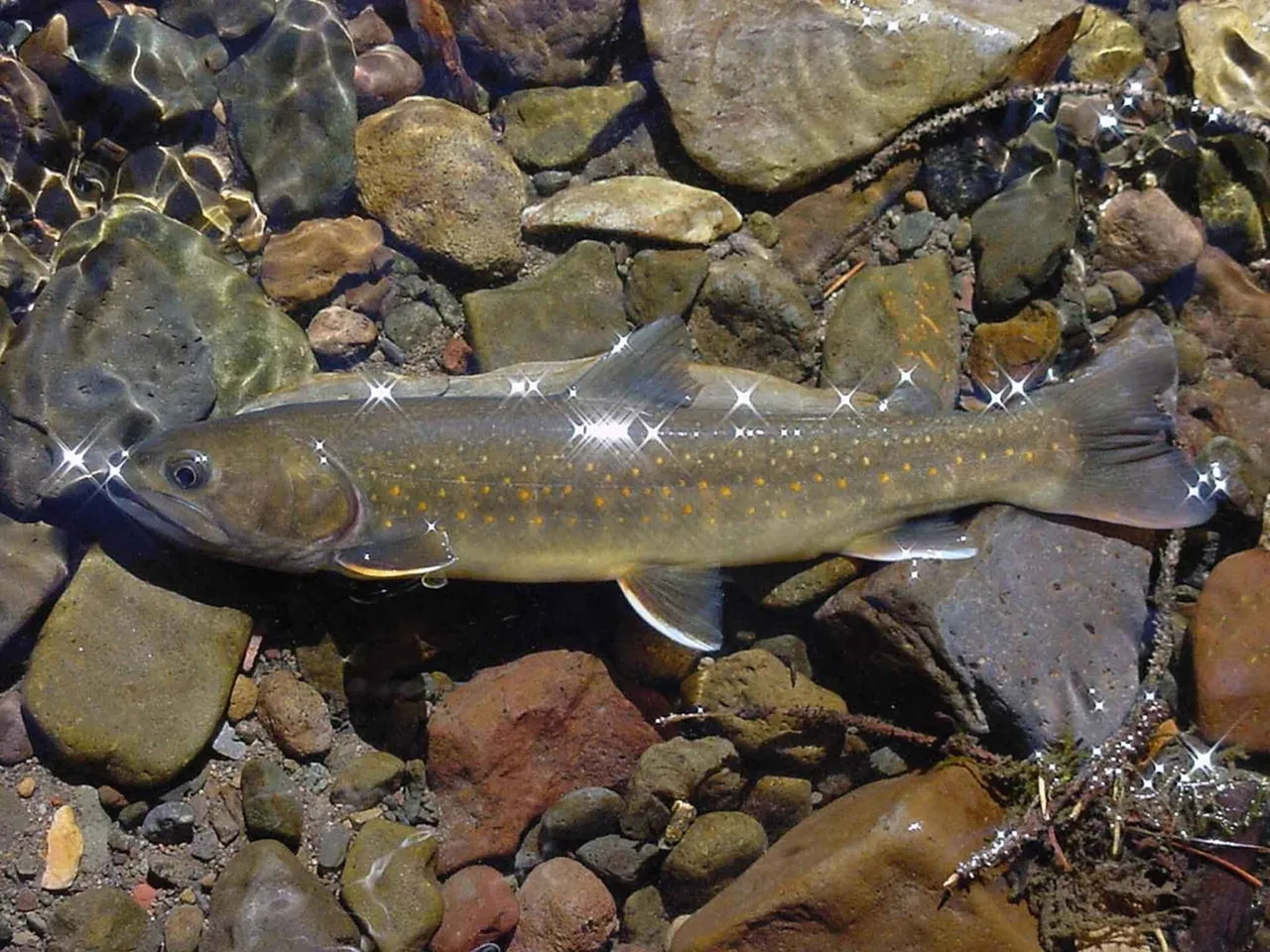
How this was identified, and who took it
Identified by: Identified on absences as much as presences, which is what 'no black, put it back' encodes. The back carries NO vermiculations, the flank carries pale cream and orange spots and NO black spots, and the dorsal fin is plain rather than barred as in Salvelinus fontinalis. White leading edges on the pelvic and anal fins place it among the chars. The dorsal is in frame, which is why this beat a sharper head portrait that crops it off.Bart Gammet, U.S. Fish and Wildlife Service — public domain, via Wikimedia Commons — source, licence
Catching Bull trout
Everything here on fishing for it. Each entry opens the page behind it.
- Ground
Bull trout is a char, not a trout, and it is the most demanding fish on FishingHQ about the water it lives in. It requires cold, clean, complex, connected rivers — the four conditions usually summarised as the reason it has declined so widely — and its presence is treated as an indicator of river health.
It is a large predatory char with pale spots on a darker ground, no black spotting anywhere, and a notably broad flat head that gives the species its name. Migratory forms move long distances between spawning tributaries and larger rivers or lakes, which is why barriers to migration hit it so hard.
It is listed as threatened in the United States and is of conservation concern in Canada, and in a great many waters it is fully protected.
How it is caught
Identification
- Scientific name
- Salvelinus confluentus
- Family
- Salmonidae
- Water
- Freshwater, Moves between fresh and salt water
- Conservation status
- Vulnerable
- Regions
- North America
- Pale cream, yellow or pink spots on a dark olive to brown body, with no black spots anywhere.
- A broad, flattened head that is large relative to the body — the origin of the name.
- White leading edges on the lower fins, less strongly contrasted with black than in brook trout.
- Slightly forked tail, and no vermiculation on the back, which separates it from brook trout.
Size
- Typical
- 0.5–2.5 kg (1.1–5.5 lb)
- Large
- 4–8 kg (8.8–18 lb)
Exceptional: FishBase records a maximum of 103 cm and 14.5 kg
The coldest, cleanest, most connected water a char can find
Bull trout have the most demanding habitat requirements of any salmonid on FishingHQ, and they are frequently summarised as needing the four Cs: cold, clean, complex and connected.
COLD IS NOT NEGOTIABLE. Bull trout require water substantially colder than most trout tolerate, with juvenile rearing and spawning restricted to reaches that stay cold through summer. That confines them to headwaters, groundwater-influenced reaches and deep cold lakes, and it is why warming is the species' principal long-term threat.
CLEAN MEANS THE GRAVEL. Spawning and incubation depend on clean loose gravel with water flowing through it; fine sediment from roads, logging or bank erosion suffocates eggs, and sedimentation is one of the best documented causes of decline.
COMPLEX MEANS COVER AND STRUCTURE. Juveniles are strongly associated with the streambed itself — interstitial spaces among cobble and boulder, undercut banks, woody debris — and they are more bottom-oriented than other juvenile salmonids.
CONNECTED MEANS THE WHOLE SYSTEM. Many populations are migratory, moving between headwater spawning reaches and downstream rivers or lakes to feed, over long distances. A culvert, a dam or a dewatered reach that breaks that path isolates a population, and isolated populations are the ones that disappear.
AND ADULTS ARE PISCIVOROUS, so a system also has to hold enough prey fish to support a large predatory char — which is why bull trout occupy fewer waters than the temperature map alone would predict.
Backed by research — why, and the sources (2)
Supported by peer-reviewed research or fisheries science. The sources are listed and can be checked.
- NASCO conservation and management of North Atlantic salmon — North Atlantic Salmon Conservation Organization (Government fisheries body)Relied on for: Anadromous salmonid biology, run timing, spawning habitat requirements and the management principles applied to them.States this directlyCitation checked — the work exists and is described correctly
- FishBase: a global information system on fishes — Froese, R. and D. Pauly, eds. — FishBase Consortium (Scientific institute)Relied on for: Distribution, habitat association, depth range, size, reproduction and life-history parameters recorded for the species.States this directlyPassage read and verified
Autumn redds in the coldest gravel, and a very long incubation
Bull trout spawning is a late, cold, headwater event, and its timing is the reason the species is so exposed.
SPAWNING IS IN LATE SUMMER AND AUTUMN, earlier than most char and trout in the same systems, and it occurs in headwater reaches with cold groundwater influence and clean gravel.
MIGRATORY ADULTS TRAVEL A LONG WAY TO REACH IT. Fish that have been feeding in a lake or a downstream river move upstream over substantial distances to spawn, which is the point at which connectivity failures bite. Resident populations complete the whole cycle in the headwater.
THE FEMALE CUTS A REDD in the gravel, as other salmonids do, and buries the eggs where flowing groundwater will oxygenate them.
INCUBATION IS EXTREMELY LONG because the water is so cold — eggs may sit in the gravel over the whole winter before hatching, and fry remain in the gravel for a further period after that. That extended vulnerable window is why fine sediment and winter scour matter so much more for this species than for an autumn-spawning trout in warmer water.
MATURITY IS LATE AND SPAWNING MAY NOT BE ANNUAL. Individual fish frequently skip years, which reduces effective population size and slows recovery.
AND HYBRIDISATION IS A REPRODUCTIVE THREAT IN ITS OWN RIGHT. Introduced brook trout hybridise with bull trout, producing largely sterile offspring, so the reproductive effort is lost entirely — a genuinely unusual mechanism of decline and a well-documented one.
Backed by research — why, and the sources (2)
Supported by peer-reviewed research or fisheries science. The sources are listed and can be checked.
- NASCO conservation and management of North Atlantic salmon — North Atlantic Salmon Conservation Organization (Government fisheries body)Relied on for: Anadromous salmonid biology, run timing, spawning habitat requirements and the management principles applied to them.States this directlyCitation checked — the work exists and is described correctly
- FishBase: a global information system on fishes — Froese, R. and D. Pauly, eds. — FishBase Consortium (Scientific institute)Relied on for: Distribution, habitat association, depth range, size, reproduction and life-history parameters recorded for the species.States this directlyPassage read and verified
A year organised around cold water and a long upstream journey
Bull trout seasonality is driven by temperature and by the migration the spawning requires, and it runs earlier than most anglers expect.
SPRING AND EARLY SUMMER ARE THE FEEDING PERIOD in the downstream rivers and lakes, where migratory fish grow on other fish. Water is cold, prey is available, and the fish are dispersed.
MIDSUMMER BEGINS THE UPSTREAM MOVEMENT. Migratory adults leave the feeding areas and move into the headwaters well before spawning, holding in cold reaches through the warmest part of the year. That staging period concentrates fish in a small amount of thermally suitable water, which is exactly when they are most vulnerable to disturbance and to high water temperature.
LATE SUMMER AND AUTUMN IS SPAWNING, in the coldest headwater gravel.
WINTER IS INCUBATION AND SURVIVAL. Eggs sit in the gravel for months, and adults that have spawned drop back downstream or overwinter in the system.
THERMAL REFUGES ARE THE SEASONAL BOTTLENECK. In a warming summer, the amount of water cold enough for bull trout shrinks, and the fish are compressed into it. That compression is the mechanism through which climate acts on this species, and it is a summer phenomenon rather than a gradual one.
MANY POPULATIONS ARE PROTECTED AND FISHING FOR THEM IS RESTRICTED OR PROHIBITED in parts of the range. This page describes the biology; the applicable rules come from the relevant authority and are not stated here.
Backed by research — why, and the sources (2)
Supported by peer-reviewed research or fisheries science. The sources are listed and can be checked.
- NASCO conservation and management of North Atlantic salmon — North Atlantic Salmon Conservation Organization (Government fisheries body)Relied on for: Anadromous salmonid biology, run timing, spawning habitat requirements and the management principles applied to them.States this directlyCitation checked — the work exists and is described correctly
- FishBase: a global information system on fishes — Froese, R. and D. Pauly, eds. — FishBase Consortium (Scientific institute)Relied on for: Distribution, habitat association, depth range, size, reproduction and life-history parameters recorded for the species.States this directlyPassage read and verified
Where bull trout live, and why the requirement is so narrow
Bull trout habitat requirements are among the most restrictive of any North American salmonid, and they are usually summarised as four things beginning with C.
COLD WATER IS THE FIRST AND STRICTEST. Bull trout need colder water than almost any other char or trout in their range, and populations are confined to headwaters and to systems fed by snowmelt, springs and glacial input. Warming at the downstream end of a catchment does not move the population downstream; it removes it.
CLEAN SUBSTRATE IS THE SECOND. Spawning uses clean gravel, and the eggs incubate over winter in it. Fine sediment from roads, logging and bank erosion fills the interstices and suffocates the eggs — a mechanism FishingHQ records for vendace, whitefish and dace as well, and one that appears wherever winter incubation on gravel does.
COMPLEX HABITAT IS THE THIRD. Bull trout need deep pools, undercut banks, large woody debris and the cover a natural channel provides. A river that has been straightened and cleared of wood is a river that has lost the structure the species uses at every life stage.
CONNECTIVITY IS THE FOURTH AND IT IS THE ONE PEOPLE FORGET. Many bull trout populations are migratory — moving between headwater spawning tributaries and larger rivers or lakes to feed — and those movements can be long. Dams, culverts and dewatered reaches fragment the population into isolated headwater remnants that are individually too small to persist.
TOGETHER THOSE FOUR REQUIREMENTS EXPLAIN THE CONSERVATION POSITION. Bull trout are protected across much of their US range, and the threats are the four Cs plus one more: hybridisation and competition with introduced brook trout, which occupy similar water and interbreed with them.
WHICH MEANS THE PRACTICAL ANGLING POSITION IS THAT MANY POPULATIONS MAY NOT BE FISHED FOR AT ALL, and where fishing is permitted it is closely regulated and frequently release-only. What is allowed differs by state, by province and by watershed, and it is not stated here.
Backed by research — why, and the sources (2)
Supported by peer-reviewed research or fisheries science. The sources are listed and can be checked.
- FishBase: a global information system on fishes — Froese, R. and D. Pauly, eds. — FishBase Consortium (Scientific institute)Relied on for: Distribution, habitat association, depth range, growth, maximum size and reproductive parameters recorded for the species.States this directlyPassage read and verified
- The IUCN Red List of Threatened Species — International Union for Conservation of Nature (Conservation authority)Relied on for: Global conservation assessment, range and recorded threats for the species.States this directlyCitation checked — the work exists and is described correctly
The bull trout year
Bull trout run to a calendar built around cold water and a long migration, and both halves matter to anybody encountering them.
SPAWNING IS IN LATE SUMMER AND AUTUMN, considerably earlier than most trout, in cold headwater tributaries over clean gravel. Adults dig redds as other salmonids do, and the eggs then incubate through the whole winter — a long exposure that makes clean, well-oxygenated gravel a much more demanding requirement than for a spring spawner.
THE MIGRATION TO SPAWNING WATER BEGINS MONTHS AHEAD. Migratory populations move out of lakes and larger rivers into the tributaries through spring and summer, so the fish are on the move for a substantial part of the year and are vulnerable to obstruction throughout it.
AUTUMN CONCENTRATIONS ON SPAWNING WATER ARE THE MOST SENSITIVE PERIOD, and many fisheries close their tributaries entirely for exactly that reason.
SUMMER FEEDING HAPPENS IN THE COLDEST WATER AVAILABLE. As larger rivers and lakes warm, bull trout retreat to cold refuges — spring inflows, deep lake water, snowmelt-fed reaches — which concentrates them into a small proportion of the total habitat and makes them acutely vulnerable to a warm year.
WINTER IS SPENT IN DEEPER, STABLE WATER, and growth continues slowly in cold conditions in a way it does not for warmer-water species.
THE PRACTICAL CONSEQUENCE OF ALL OF THIS is that bull trout are a fish encountered by anglers fishing for something else during the summer, in cold headwaters, at exactly the time the population is most stressed by temperature. Where they may be fished for at all, prompt release in the water without lifting is the relevant handling, and where they may not, the correct response to hooking one is to get it off and back as fast as possible.
Backed by research — why, and the sources (2)
Supported by peer-reviewed research or fisheries science. The sources are listed and can be checked.
- FishBase: a global information system on fishes — Froese, R. and D. Pauly, eds. — FishBase Consortium (Scientific institute)Relied on for: Distribution, habitat association, depth range, growth, maximum size and reproductive parameters recorded for the species.States this directlyPassage read and verified
- The IUCN Red List of Threatened Species — International Union for Conservation of Nature (Conservation authority)Relied on for: Global conservation assessment, range and recorded threats for the species.States this directlyCitation checked — the work exists and is described correctly
Lifecycle and reproduction
Slow-growing, late-maturing and long-lived, with migratory forms reaching a much greater size than resident stream forms. Populations depend on connectivity between spawning tributaries and adult habitat, and are fragmented wherever that connection is broken.
Spawns in autumn in cold, clean, groundwater-influenced tributary gravel, with females cutting redds. Egg and juvenile survival is highly sensitive to fine sediment and to temperature, which is why land use in headwaters affects the species so directly.
Feeding and senses
A strongly piscivorous char, taking other fish including salmonids as it grows, along with invertebrates when small. Feeding concentrates in low light.
Hunts in low light and cold clear water, using sight at short range in complex habitat — undercut banks, log jams and deep pools — rather than in open water.
Through the year
Migrates to spawning tributaries in late summer and autumn, returning to larger rivers or lakes afterwards. Movement is extensive in migratory populations and is the life-history stage most disrupted by dams and culverts.
Distribution
Coastal and mountain streams of Arctic, Pacific, and Missouri River drainages from extreme southern Yukon in Canada to headwaters of Columbia River drainage in northern Nevada, USA, and McCloud River drainage in northern California, USA
This is a biological range — where the species occurs, not a prediction that you will catch one. To browse the fishing geography FishingHQ holds, start at fishing places.
Why anglers care
Where fishing for it is permitted at all, a highly regarded native char taken on streamers, large flies and lures in cold mountain rivers. Its principal significance is now as a conservation indicator: bull trout presence signals a river that is cold, clean and connected. Regulations vary sharply between waters and many populations are fully protected. FishingHQ does not state what any rule is; check with the responsible authority before fishing water that holds this species.
Handling and returning
A cold-water fish that must not be played to exhaustion or held out of water in warm conditions. Use barbless hooks, keep the fish submerged, support it horizontally, and release it facing into current. Where the species is protected, any incidental capture should be released immediately without removal from the water.
Going further
- Bull trout vs Brook trout — how to tell them apart.
Where to go next
Similar and related fish
Where it lives
More fish
Not related to this page — just the rest of the section. There is little else joined to this subject yet, and a short page should still lead somewhere.
Sources and evidence
- FishBase: a global information system on fishes — Froese, R. and D. Pauly, eds. — FishBase Consortium (Scientific institute)Relied on for: Family, maximum size, depth and environment, distribution and the IUCN assessment for Salvelinus confluentus.States this directlyPassage read and verified
- The IUCN Red List of Threatened Species — International Union for Conservation of Nature (Conservation authority)Relied on for: The Vulnerable assessment for Salvelinus confluentus, assessed 01 August 1996.States this directlyCitation checked — the work exists and is described correctly
Why the 5 connections on this page are here, and the sources
Similar and related fish
Backed by research — 1 connection
Supported by peer-reviewed research or fisheries science. The sources are listed and can be checked.
Brook trout
An identification comparison naming both binomials: Salvelinus confluentus and Salvelinus fontinalis.
- FishBase: a global information system on fishes — Froese, R. and D. Pauly, eds. — FishBase Consortium (Scientific institute)Relied on for: Morphological and distributional data for Salvelinus confluentus and for Salvelinus fontinalis.States this directlyPassage read and verified
- The IUCN Red List of Threatened Species — International Union for Conservation of Nature (Conservation authority)Relied on for: Separate assessments treating Salvelinus confluentus and Salvelinus fontinalis as distinct species.States this directlyCitation checked — the work exists and is described correctly
How it is caught
What experienced anglers do — 2 connections
Widely and independently recommended by experienced anglers and specialist sources. This is real angling knowledge, not proof: controlled evidence for it is limited, and FishingHQ records it as convention rather than as a demonstrated effect.
Spinning
A practitioner claim about how Salvelinus confluentus is commonly fished, following from where and how it feeds.
- General angling website restatements of established technique — Various (Credible secondary source)Relied on for: Widely restated practitioner accounts of fishing for bull trout.Citation checked — the work exists and is described correctly
- Sea Angler — Bauer Media (Specialist angling publication)Relied on for: Practitioner treatment of the methods used for bull trout and comparable species.Citation checked — the work exists and is described correctly
Stillwater fly fishing
A practitioner claim about how Salvelinus confluentus is commonly fished, following from where and how it feeds.
- General angling website restatements of established technique — Various (Credible secondary source)Relied on for: Widely restated practitioner accounts of fishing for bull trout.Citation checked — the work exists and is described correctly
- Sea Angler — Bauer Media (Specialist angling publication)Relied on for: Practitioner treatment of the methods used for bull trout and comparable species.Citation checked — the work exists and is described correctly
Gear for this fish
What experienced anglers do — 1 connection
Widely and independently recommended by experienced anglers and specialist sources. This is real angling knowledge, not proof: controlled evidence for it is limited, and FishingHQ records it as convention rather than as a demonstrated effect.
Streamers
A practitioner claim about which lure family answers this species' feeding or holding behaviour.
- Trout & Salmon — Bauer Media (Specialist angling publication)Relied on for: Fly categories and their application to salmonids in running and still water.States this directlyCitation checked — the work exists and is described correctly
- Still Water Fly-Fishing — Andre Deutsch, 1952 (Specialist angling publication)Relied on for: Still-water fly categories, and the feeding observations they are chosen from.Background and mechanism onlyCitation checked — the work exists and is described correctly
Where it lives
Backed by research — 1 connection
Supported by peer-reviewed research or fisheries science. The sources are listed and can be checked.
Lowland rivers
A habitat association for Salvelinus confluentus taken from the environment and distribution data on its FishBase summary.
- FishBase: a global information system on fishes — Froese, R. and D. Pauly, eds. — FishBase Consortium (Scientific institute)Relied on for: The environment, depth range and habitat description recorded for Salvelinus confluentus.States this directlyPassage read and verified
How FishingHQ labels evidence is explained in the evidence policy.