Hastings and the Stade
Beach section · Salt water · in The Channel shingle coasts
A steep shingle beach beneath the sandstone cliffs of the East Hill, and the working shore of the largest beach-launched fishing fleet in Europe. Shingle over sand, with rock scars and reef running out at either end of the bay.
Safety: cold water shock — can cause serious injury or death. 2 more points apply here.
FishingHQ describes what this place is, not whether you may fish it. Access, permits and who to ask.
What you can catch here
Documented at this place, grouped by how you would be fishing, with how strongly the sources support each one. This is what has been written down, not a forecast, and being listed is never permission to fish.
From the shore · 4
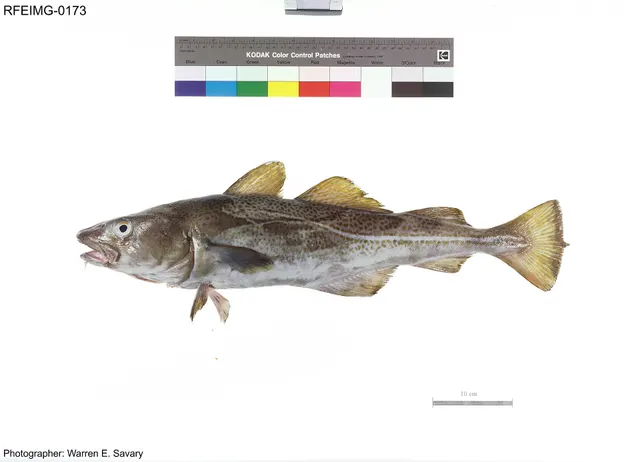 Atlantic codRegular local target1 placeHastings and the StadeOver beach sectionAround Jan–Feb, Nov–Dec
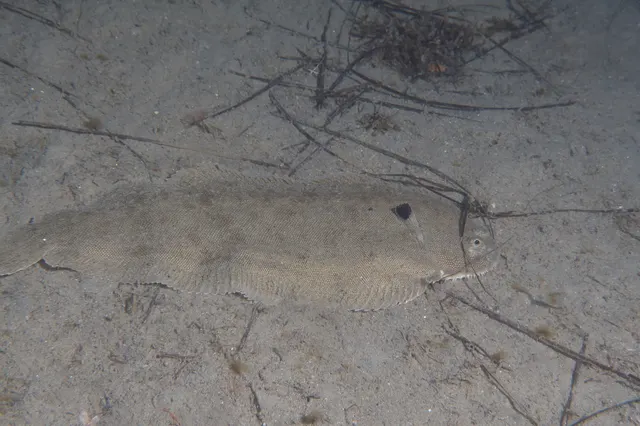 Common soleRegular local target1 placeHastings and the StadeOver beach sectionAround May–Sept
- Starry smooth-houndRegular local target1 placeHastings and the StadeOver beach sectionAround May–Sept
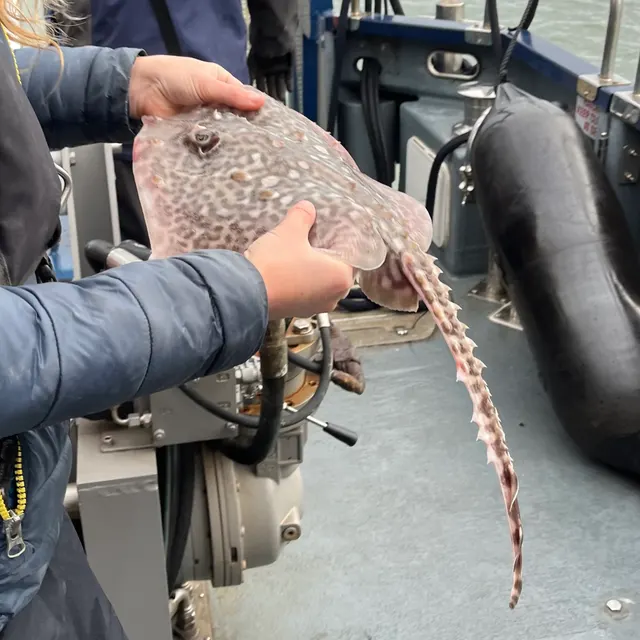 Thornback rayRegular local target1 placeHastings and the StadeOver beach section
What these strengths mean
- Regular local target
- Fishing sources describe this as a normal local target here, not merely as caught.
- How breadth is counted
- A fish documented at six marks is shown as six marks: breadth never raises the strength on its own. A fishery account describes the fishing; a recorded catch reports one specific catch. How evidence is weighed.
Also associated with this ground
Recorded as present here without a documented method or strength behind them.
Fish documented nearby, not here
Nothing below has been documented at Hastings and the Stade itself. Each one has been documented at a named place on the same ground, and the places are listed with it. Treat this as what the water around here holds rather than as a catch list for this mark.
Also documented at neighbouring places
One or two accounts each, on the ground around here. Enough to know the fish is caught in these waters; not enough to say anything about this place.
From the shore
- Conger eel — documented at Folkestone harbour arm
- Pollack — documented at Brighton Marina
- Black seabream — documented at Brighton Marina
- European squid — documented at Brighton Marina
How people fish it
Practised here: Sea fishing.
Methods the sources name for this ground. Each one is explained in full on its own page.
The ground and the water
- The ground
- A steep shingle beach beneath the sandstone cliffs of the East Hill, and the working shore of the largest beach-launched fishing fleet in Europe. Shingle over sand, with rock scars and reef running out at either end of the bay.
- Exposure
- Open to the Channel from south-west through south-east. The fleet launches and recovers across the open beach because there is no harbour, which is the fact the whole place is organised around.
- Depth
- Deep close in for a beach, off the steeper shingle sections.
- Tide and flow
- Strong lateral drift along the face, and a set that runs hard along the shore.
Through the year
Cod and whiting in winter, sole at night in the warmer months, bass and smoothhound through spring and summer.
The months the sources attach to each species here. Where a species carries no season it is listed underneath rather than assumed to run through the year.
| Species | J | F | M | A | M | J | J | A | S | O | N | D |
|---|---|---|---|---|---|---|---|---|---|---|---|---|
| Atlantic cod — regular local target, recorded in November, December, January, February. | ||||||||||||
| Common sole — regular local target, recorded in May, June, July, August, September. | ||||||||||||
| Starry smooth-hound — regular local target, recorded in May, June, July, August, September. |
Recorded here with no season stated: Thornback ray.
Safety
Cold water shock — Can cause serious injury or death
UK coastal and inland water is cold enough for most of the year to trigger the involuntary gasp and the loss of swimming ability that decides most immersion deaths, and it does so within the first minute, long before hypothermia is relevant.
What reduces it: Wear a buoyancy aid rather than carry one, carry a means of calling for help on the person rather than in a bag, and plan on the assumption that an unplanned entry into the water is survivable only if somebody knows immediately.
Drowning and immersion — Can cause serious injury or death
Waves break directly onto a steep shingle face without a dissipating surf zone, and the backwash runs fast down a slope of loose mobile pebbles into deep water immediately offshore. A person knocked down cannot get a footing on shifting material while being pulled downslope, and is in deep cold water within seconds.
What reduces it: Stand well back from the water's edge whenever any swell is running rather than at it, wear a buoyancy aid, do not fish alone at night, treat a building sea as a reason to leave rather than to retreat up the beach, tell somebody the plan and the return time, and carry a means of calling for help on the person rather than in a bag.
Worse when:
- Long-period ground swell arriving with no local wind, which produces much larger sets than the conditions suggest.
- Night sessions, when a set cannot be seen coming — which is when most of this fishing is done.
- Cold water, where cold water shock incapacitates a competent swimmer within the first minute.
Boat safety — Can cause injury needing treatment
This is a working beach on which commercial boats are launched and recovered by tractor across the shingle at all states of tide and light. An angler standing in a launch lane is standing in a road.
What reduces it: Keep clear of the launching areas and the winch gear entirely, and treat the working shore as the fleet's operating area rather than as a public beach with boats on it.
Rules and access
FishingHQ does not know the current access position here. Shore angling in England is not rod-licensed, but access rights, landowner permission, local authority and harbour byelaws, national and inshore fisheries measures, and site designations all apply and all change. Check the current position with the relevant inshore fisheries and conservation authority, the harbour or local authority, and the landowner before going.
Who holds the answer:
- The Inshore Fisheries and Conservation Authority for the district, which makes and enforces inshore byelaws.
- The Marine Management Organisation, for national recreational sea fishing measures in English waters.
- The local authority and, where one exists, the harbour authority, for access, byelaws and shellfish classification.
- The relevant Inshore Fisheries and Conservation Authority, which makes and enforces byelaws for the inshore district concerned.
- Natural England and the relevant protected site management body, where a shingle structure carries a conservation designation affecting access.
- The landowner or managing body for the beach itself, since access and parking are property matters rather than fisheries ones.
- The Maritime and Coastguard Agency and the RNLI, for safety guidance on this coast.
Nearby fishing
Other publicly documented places within about 40 km, by distance. Positions are approximate public geography and are never exact marks.
- Bexhill — 5–10 km · Beach
- Camber Sands — 10–25 km · Beach
- Eastbourne Pier — 10–25 km · Pier
- Bewl Water — 25–40 km · Reservoir
- Dungeness Point — 25–40 km · Shingle bank
- Beachy Head and the ledges — 25–40 km · Ledge
- Newhaven west arm — 25–40 km · Breakwater
Sources for this place
- Sea Angler — Bauer Media (Specialist angling publication)Relied on for: Long-running published description of British sea angling practice by region, ground type and named mark.FishingHQ's interpretation of what it saysCitation checked — the work exists and is described correctly
- General angling website restatements of established technique — Various (Credible secondary source)Relied on for: Widely restated public descriptions of which places are conventionally fished and how, recorded as practitioner consensus rather than as scholarship, and not relied on for access, permission or any current rule.Background and mechanism onlyCitation checked — the work exists and is described correctly
- RNLI water safety guidance: cold water shock and Float to Live — Royal National Lifeboat Institution (Water-safety or diver-training authority)Relied on for: Cold water shock and the immersion response, tidal cut-off, and water-safety guidance for shore anglers and small-craft users.States this directlyPassage read and verified
How FishingHQ labels evidence is explained in the evidence policy. Last reviewed 2026-08-16.