United States
Fishing regions · Last reviewed 2026-08-10
Fifty state fisheries agencies, a federal layer offshore, and almost no question about the rules that has one national answer.
Safety: weather and lightning — can cause serious injury or death. 6 more points apply here.
Being listed here is not permission to fish. What that meansClose
Access, fishing rights, seasons, licences, local bylaws and permitted methods vary and can change. Check current access, permission, local regulations, closures and restrictions before you travel or fish. FishingHQ describes what the ground is and names who holds the answer; it does not hold the answer itself.
Find the authority for a jurisdiction · What FishingHQ does and does not cover
The United States has the largest recreational fishing participation of any country and the most fragmented regulatory picture of any on FishingHQ. Both facts follow from the same structure.
Fisheries management inland and in state waters belongs to the states, each with its own agency, its own licence, its own seasons and its own limits. Federal authority applies in the exclusive economic zone beyond state waters and to highly migratory and protected species. There are fifty states, several territories, and a network of tribal governments with their own recognised fishing rights — so the answer to almost any question about American fishing rules is that it depends which state, and sometimes which water within it.
The fishing itself is correspondingly varied. Bass fishing in the south and midwest is an industry with a professional circuit; the striped bass fishery of the north-east Atlantic coast is a shore-fishing culture of its own; Gulf and Florida inshore fishing is a sight-fishing and flats tradition; the Pacific north-west is salmon and steelhead; the Great Lakes are an enormous freshwater fishery in their own right; and Alaska is something else again.
What travels across all of it is a strong licensing culture, a well-funded management system paid for substantially by anglers through licence fees and excise taxes on tackle, and an expectation that the rules will be checked rather than assumed.
What fishing here is like
The largest recreational fishery in the world by participation, and one organised around states rather than around a nation. Freshwater bass fishing is the numerically dominant discipline and supports a very large tackle, boat and competition industry; saltwater fishing ranges from surf and inshore traditions on both coasts to a substantial offshore and big-game sector.
What characterises the culture generally is a strong licensing norm and a management system funded largely by anglers themselves, through licence fees and a federal excise on fishing tackle that is returned to state conservation programmes. That arrangement — anglers paying directly for the science and the habitat work — is unusual internationally and explains a good deal about the relationship between American anglers and their agencies.
What you can target here
One entry per fish, grouped by how you would be fishing — because the answer is a different one from the rocks and from a boat. Each entry says how strongly the sources support it and how much evidence sits behind it. These are documented catches, not a forecast, and none of it is a statement that you may fish any particular ground.
From the shore · 5
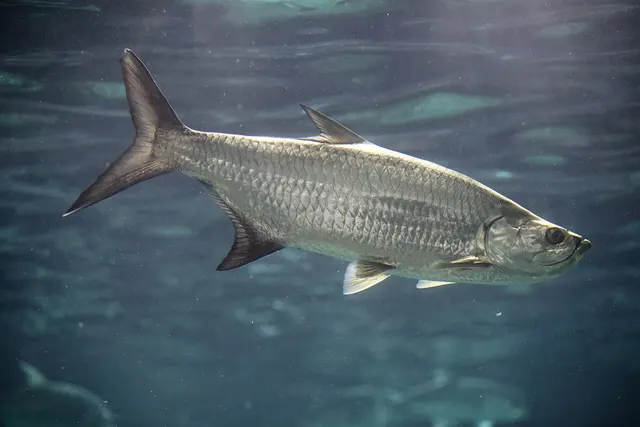 Atlantic tarponRepeatedly reported2 places · 3 fishery accounts · 2 independent sourcesSeven Mile Bridge, Bahia Honda BridgeOver bridge
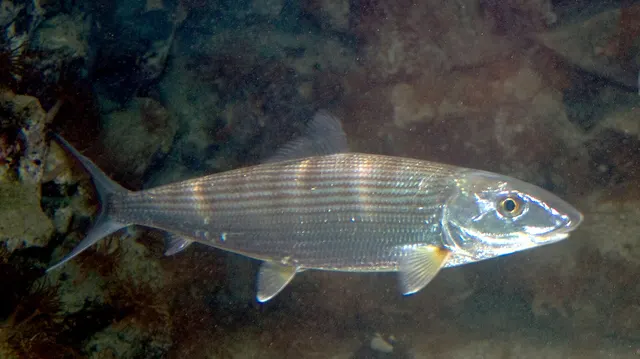 BonefishRepeatedly reported1 place · 2 fishery accounts · 2 independent sourcesThe Islamorada flatsOver shallow flat
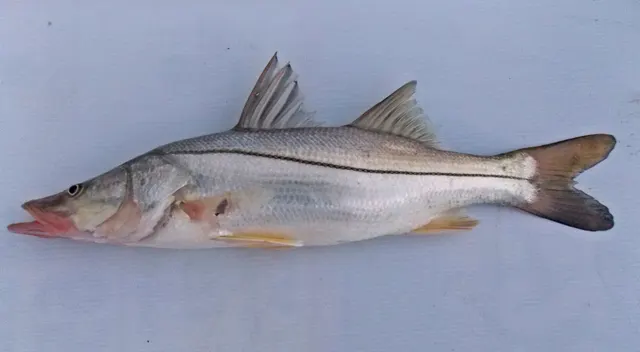 Common snookRepeatedly reported2 places · 2 fishery accounts · 1 sourceSeven Mile Bridge, Bahia Honda BridgeOver bridge
- Great barracudaRecorded here2 placesSeven Mile Bridge, Bahia Honda BridgeOver bridge
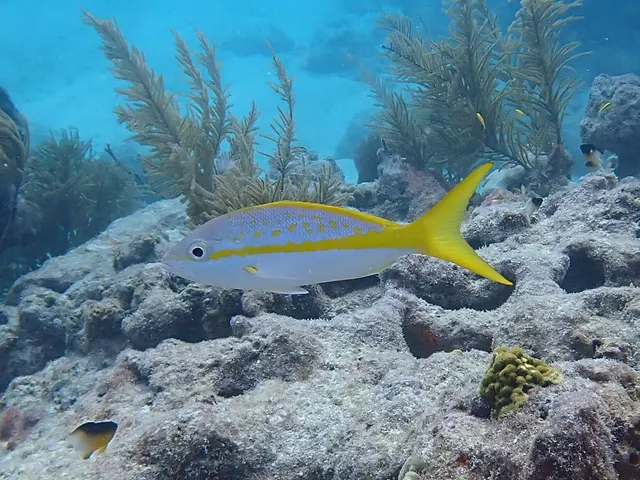 Yellowtail snapperRecorded here1 placeSeven Mile BridgeOver bridge
From a boat · 11
- Atlantic tarponRepeatedly reported4 places · 5 fishery accounts · 2 independent sourcesSeven Mile Bridge, Bahia Honda Bridge, The Islamorada flats, The Florida Bay backcountryOver bridge, mangrove shore, shallow flat
- BonefishRepeatedly reported1 place · 2 fishery accounts · 2 independent sourcesThe Islamorada flatsOver shallow flat
- Common snookRepeatedly reported3 places · 3 fishery accounts · 1 sourceSeven Mile Bridge, The Florida Bay backcountry, Bahia Honda BridgeOver bridge, mangrove shore
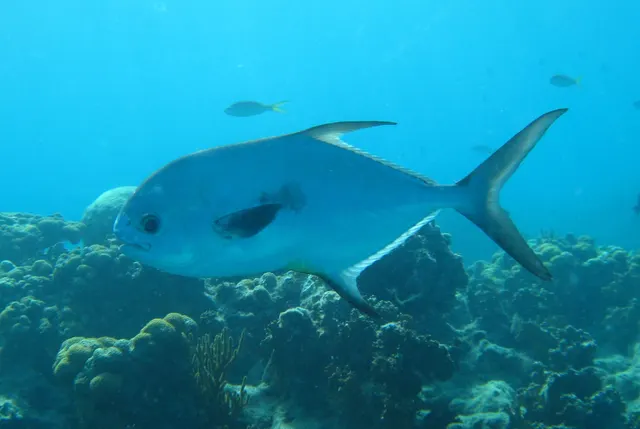 PermitRepeatedly reported2 places · 1 fishery account · 1 sourceThe Islamorada flats, Seven Mile BridgeOver bridge, shallow flat
- Yellowtail snapperRepeatedly reported2 places · 1 fishery account · 1 sourceThe Upper Keys reef line, Seven Mile BridgeOver bridge, reef
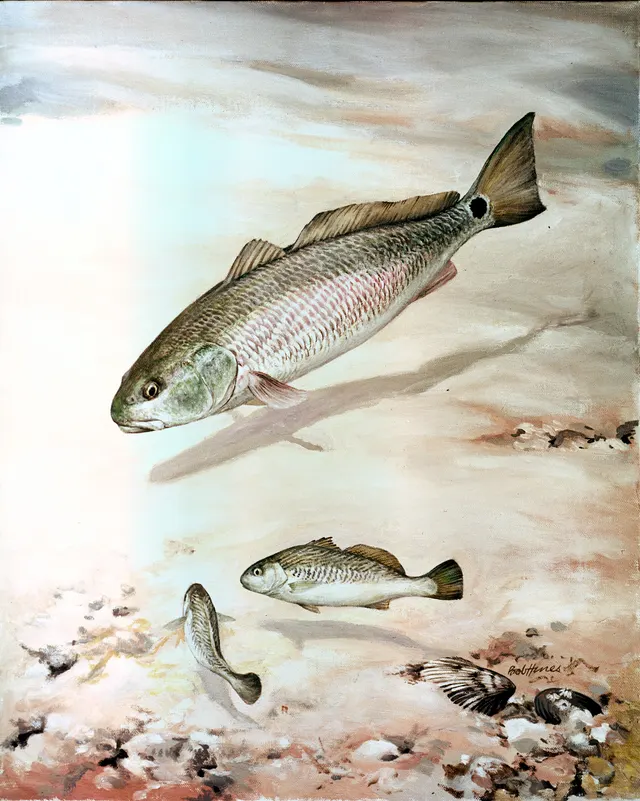 Red drumRepeatedly reported1 place · 1 fishery account · 1 sourceThe Florida Bay backcountryOver mangrove shore
Also documented from a boat: Sailfish · King mackerel · Spotted seatrout · Great barracuda · Cobia
On a charter · 5
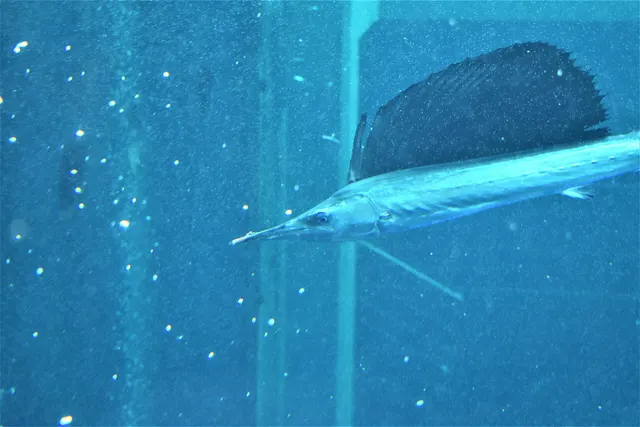 SailfishRepeatedly reported1 place · 1 fishery account · 1 sourceThe Keys offshore groundsOver sea area
- Yellowtail snapperRepeatedly reported1 place · 1 fishery account · 1 sourceThe Upper Keys reef lineOver reef
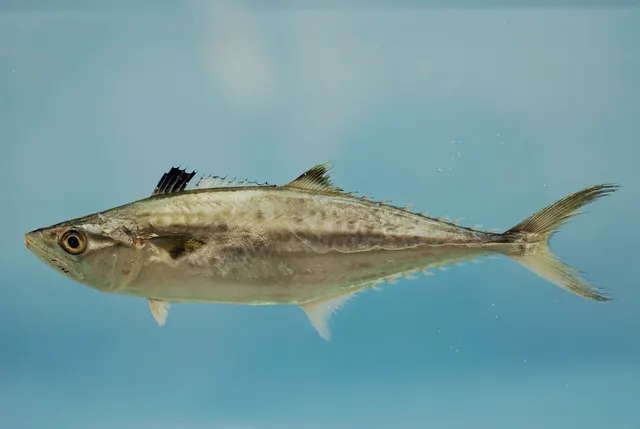 King mackerelRecorded here2 places · 1 fishery account · 1 sourceThe Upper Keys reef line, The Keys offshore groundsOver reef, sea area
- CobiaRecorded here2 placesThe Upper Keys reef line, The Keys offshore groundsOver reef, sea area
- Great barracudaRecorded here1 placeThe Upper Keys reef lineOver reef
Fly fishing · 7
- BonefishRepeatedly reported1 place · 2 fishery accounts · 2 independent sourcesThe Islamorada flatsOver shallow flat
- Atlantic tarponRepeatedly reported2 places · 2 fishery accounts · 1 sourceThe Islamorada flats, The Florida Bay backcountryOver mangrove shore, shallow flat
- Common snookRepeatedly reported1 place · 1 fishery account · 1 sourceThe Florida Bay backcountryOver mangrove shore
- PermitRepeatedly reported1 place · 1 fishery account · 1 sourceThe Islamorada flatsOver shallow flat
- Red drumRepeatedly reported1 place · 1 fishery account · 1 sourceThe Florida Bay backcountryOver mangrove shore
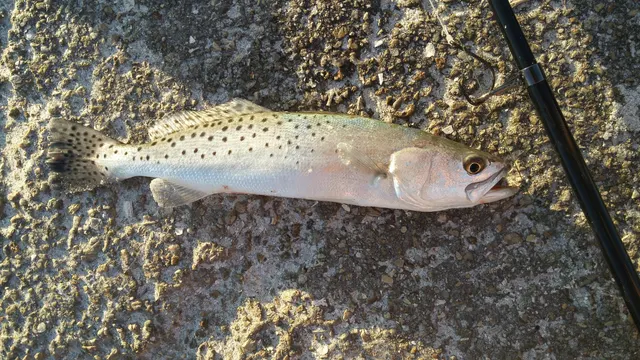 Spotted seatroutRecorded here1 place · 1 fishery account · 1 sourceThe Florida Bay backcountryOver mangrove shore
Also documented fly fishing: Great barracuda
What these strengths mean
- Repeatedly reported
- Several independent public accounts. Enough to say it happens more than once; not enough to call it a fishery.
- Recorded here
- At least one credible public account of this species being caught here. That is all it means.
- How breadth is counted
- A fish documented at six marks is shown as six marks: breadth never raises the strength on its own. A fishery account describes the fishing; a recorded catch reports one specific catch. How evidence is weighed.
How people fish here
6 methods are recorded on the places documented here, counted from the records themselves rather than from what is practised in the country. Each opens a full guide to the technique.
Livebaiting at sea
Recorded at 6 places here, over bridge, mangrove shore, reef, sea area.
Presenting a living fish where a predator will find it — the most effective method for many species and the one with the clearest welfare questions attached.
Documented on the same ground: Atlantic tarpon, Bonefish, Common snook, Permit, Red drum, Sailfish.
Spinning
Recorded at 4 places here, over bridge, mangrove shore, shallow flat.
Casting an artificial lure and retrieving it so that it moves like something alive — the most direct form of lure fishing.
Documented on the same ground: Atlantic tarpon, Bonefish, Common snook, Permit, Red drum, Cobia.
Ledgering
Recorded at 3 places here, over bridge, reef.
Fishing a bait on the bottom held by a weight, with no float — the simplest way to fish at distance, in depth, or in wind.
Documented on the same ground: Atlantic tarpon, Common snook, Yellowtail snapper, Cobia, Great barracuda, King mackerel.
Jigging
Recorded at 2 places here, over reef, sea area.
Working a weighted lure with a rising-and-falling motion, usually vertically, so it behaves like a wounded or fleeing baitfish.
Documented on the same ground: Sailfish, Yellowtail snapper, Cobia, Great barracuda, King mackerel.
Saltwater fly fishing
Recorded at 2 places here, over mangrove shore, shallow flat.
Fly fishing adapted to the sea: heavier lines, corrosion-proof tackle, fish that run rather than fight, and wind as the permanent constraint.
Documented on the same ground: Atlantic tarpon, Bonefish, Common snook, Permit, Red drum, Cobia.
Trolling
Recorded at 1 place here, over sea area.
Towing lures or baits behind a moving boat to cover large volumes of water and locate scattered fish.
Documented on the same ground: Sailfish, Cobia, King mackerel.
These are the methods documented at the places FishingHQ holds here. A species listed beside a method is documented on the same ground, which is not the same as being taken that way — where a source establishes the method a fish was caught on, it is stated on that place’s own page. All fishing methods.
Areas within this one
One coast, island group or system inside this area has a fishing guide of its own.
Florida
7 documented places
A peninsula between two seas with more distinct fisheries than most countries: flats, reef, offshore, backcountry, spring-fed rivers and a bass fishery, all within a day of each other.
Documented here: Atlantic tarpon, Bonefish, Common snook, Permit, Yellowtail snapper
Fished by: livebaiting at sea, spinning, ledgering, jigging
What dominates
Freshwater bass fishing above everything, with its own professional tournament circuit and equipment culture. Walleye, panfish, catfish and trout fishing are all major in their own regions. On the coasts: surf and inshore fishing for striped bass in the north-east, sight fishing on flats in Florida and the Gulf, salmon and steelhead in the Pacific north-west, and offshore big-game and bottom fishing on both seaboards. Fly fishing has a strong and distinct tradition, both in the western trout rivers and increasingly in salt water. Ice fishing is significant across the northern tier.
The water available
Everything a continent provides. Very large natural lakes including the Great Lakes; an enormous number of man-made reservoirs, which are the backbone of the bass fishery; cold western freestone and tailwater rivers; warm southern rivers and swamps; the Atlantic surf and estuary coast; the Gulf's shallow flats, marsh and passes; the Pacific's rock, kelp and deep water close inshore; and the offshore Atlantic, Gulf and Pacific. Alaska and Hawaii extend that further still.
How the rules are structured
Layered and genuinely different between states. Inland and state coastal waters are managed by state fisheries agencies, each issuing its own licence and setting its own seasons, size limits, bag limits and gear rules; a licence from one state is generally not valid in another. Federal authority applies in the exclusive economic zone beyond state waters, to highly migratory species, and to species protected under federal law. Federally recognised tribes hold treaty fishing rights administered separately. Some states participate in reciprocal arrangements on shared waters. FishingHQ does not state what any current rule is, and in this jurisdiction more than most that restraint is doing real work.
Who to ask
- The fish and wildlife or natural resources agency of the specific state you are fishing in — the primary authority, and different in every state
- The federal fisheries agency, for waters of the exclusive economic zone, highly migratory species and federally protected species
- Regional fishery management councils, which develop federal management plans for their areas
- Interstate marine fisheries commissions, which coordinate management of stocks shared between states on each coast
- Tribal fisheries authorities, where treaty rights apply
Words you will meet
- Bobber
- A float. The standard American term for what Britain calls a float.
- Sinker
- A weight. Britain calls it a lead, which is a name derived from the material and increasingly awkward as non-lead weights spread.
- Leader
- The length of line between the main line and the hook or lure. Britain uses trace for the same thing, particularly in sea and predator fishing, and hooklength in coarse fishing.
- Panfish
- A loose category of small edible freshwater fish — crappie, bluegill, perch and relatives. There is no British equivalent term because the category is defined by ending up in a pan.
- Skunked
- To blank; to catch nothing. The British term is blanked.
- Structure and cover
- American bass fishing distinguishes these carefully: structure is the shape of the bottom — points, humps, drop-offs — while cover is objects on it, such as timber or weed. British usage tends to conflate them as features.
Conditions and hazards
The range of hazards matches the range of environments and there is no single briefing. Cold water dominates in the north and on the Pacific coast, where immersion is rapidly incapacitating. Heat, sun and dehydration dominate in the south. Lightning is a serious and underestimated risk on open water across much of the country in summer, and boats on large reservoirs are exposed to storms that build quickly. Wildlife hazards differ sharply by region: alligators in southern fresh and brackish water, bears where salmon run, venomous snakes across much of the south, and sharks in coastal salt water. Boat traffic on popular waters is heavy. And distances are large, so being some way from help is the normal condition rather than the exception.
Fifty agencies, and why no rules question has one answer
This is the structural fact that governs everything practical about fishing here, and it is the one most often got wrong by writers outside the country.
FISHERIES ARE ADMINISTERED BY STATES. Each state has its own agency, its own licensing, its own size and bag limits, its own seasons and its own permitted methods. Rules change at a state line rather than gradually, and a licence for one state is not valid in the next.
A FEDERAL LAYER applies offshore beyond state waters and to certain migratory and protected species, which means one fish can be under two regimes depending on where it is caught.
TRIBAL FISHERIES operate under separate treaty-based frameworks in a number of states, which is a genuine third structure rather than an exception to the second.
AND SOME WATERS ARE SHARED — the Great Lakes and interstate rivers involve multiple states and, on the Lakes, another country.
THE PRACTICAL CONSEQUENCE. There is no such thing as 'the American fishing rules'. Any answer must name a state, and any writing that gives one national answer is either wrong or describing the federal layer only.
FishingHQ does not state what any state currently requires. The state fish and wildlife agency is the source, and the answer must be obtained per state.
Bass fishing as the numerically dominant discipline
The centre of gravity of American angling is somewhere a European reader rarely expects: freshwater black bass, in reservoirs, from a boat.
WHY IT DOMINATES. An enormous number of man-made reservoirs built through the twentieth century created warmwater habitat at continental scale, and largemouth bass filled it. Around that grew a tackle industry, a boat industry, a televised competitive circuit and a technical vocabulary — structure against cover, patterns, presentations — that is genuinely sophisticated and almost entirely absent from British angling writing.
SALTWATER splits by coast. Atlantic and Gulf inshore fishing for striped bass, redfish, seatrout and flounder; surf and pier traditions on both coasts; Pacific rockfish, salmon and halibut; and offshore fishing for pelagics from Florida to the Pacific North-west.
FLY FISHING has its own strong tradition, western trout rivers and tailwaters in particular, and increasingly saltwater flats.
ICE FISHING is mainstream across the northern states rather than a curiosity.
AND PANFISH ANGLING — crappie, bluegill, perch — carries a very large share of participation and almost none of the writing, which is the closest American equivalent to what Britain calls coarse fishing.
A continent's worth of water, and the reservoir backbone
Everything a continent provides, and one category that is largely man-made.
RESERVOIRS are the backbone of the freshwater fishery — thousands of them, many very large, created for flood control, power and water supply and stocked or colonised into the most fished water in the country. Their drawdown cycles, standing timber and creek arms produce the structure that bass fishing is built around.
THE GREAT LAKES are inland seas with their own weather, their own salmon and trout fisheries and genuine offshore conditions.
RIVERS range from cold western freestone and tailwater trout streams to warm southern rivers and swamp systems that hold a completely different fauna.
THE COASTS are three unrelated systems: an Atlantic seaboard from cold Maine to subtropical Florida, a Gulf of shallow bays, marsh and oil-platform structure, and a Pacific coast of rock, kelp and cold upwelled water.
AND THE DISTANCES MATTER. A single state can contain more fishable water than a small European country, which is why local knowledge here is genuinely local and why national generalisations describe nothing.
Words that mean something else here
American and British angling vocabulary diverged early, and several terms are false friends rather than unfamiliar words.
BOBBER is a float. SINKER is a lead — and the American word is the more accurate one now that leads are frequently not lead. LEADER is the length between mainline and hook or lure, used far more broadly than in British usage.
PANFISH is a category with no British equivalent: small edible freshwater fish, crappie and bluegill above all, fished for seriously and eaten.
SKUNKED is blanked.
AND THE ONE THAT MATTERS MOST TECHNICALLY: STRUCTURE AND COVER are carefully distinguished in American bass fishing and are routinely conflated everywhere else. Structure is the shape of the bottom — points, ledges, humps, channels. Cover is what sits on it — timber, weed, rock, docks. A fish relates to structure and hides in cover, and the distinction is load-bearing in a way the single British word 'features' is not. FishingHQ uses the American distinction because it is the more precise model, and says where it came from.
A fishing year that depends entirely on where you are
The country spans subarctic to subtropical, so there is no national fishing calendar and any month-based advice is wrong somewhere by definition.
WHAT DOES GENERALISE is the mechanism rather than the timing. Warmwater species — bass, panfish, catfish — follow a cycle of pre-spawn movement into shallow water as it warms, spawning, a post-spawn dispersal, a summer pattern driven by heat and oxygen, and an autumn feeding period as water cools. That sequence holds everywhere; the dates differ by months between Texas and Minnesota.
COLDWATER SPECIES run the inverse pattern, being most active in the shoulders and least in summer heat.
ICE imposes a hard structural season across the north, and ice fishing is a distinct discipline rather than a lesser version of open-water angling.
COASTAL FISHING follows migration more than temperature directly — striped bass moving along the Atlantic seaboard, salmon returning to Pacific rivers, pelagics following warm water north and south.
Seasons, closures and limits are set per state and revised. Check the current position with the state agency for the water you intend to fish.
A fishery the anglers pay for, and what that buys
American angling culture is organised around a financial arrangement that most other countries do not have, and it explains more about the culture than any single tradition does.
ANGLERS FUND THE MANAGEMENT DIRECTLY. State licence fees pay for state fisheries agencies, and a federal excise levied on fishing tackle and related equipment is distributed back to the states for conservation, research, habitat work and access. The money an angler spends on a rod returns to the agency managing the water they fish it in. The arrangement dates from the mid-twentieth century, it is substantial, and it is the reason state agencies do the volume of biological work they do.
WHAT FOLLOWS FROM IT CULTURALLY. A licensing norm that is genuinely internalised — buying a licence is not experienced as a tax but as paying into something. A relationship with agencies that is participatory rather than adversarial, with public comment on regulation changes taken seriously by both sides. And a strong sense that access is a public good worth funding, which is why boat ramps, piers and public water exist at the scale they do.
COMPETITION IS MAINSTREAM. Tournament bass fishing is a professional sport with televised events, sponsored anglers and a very large industry behind it, and its influence reaches ordinary fishing: the boats, the electronics, the tackle categories and much of the vocabulary come from it. Competitive angling exists elsewhere; nowhere else does it set the tone for the general fishery to this extent.
CATCH AND RELEASE IS SELECTIVE RATHER THAN GENERAL. Bass are overwhelmingly released; panfish, walleye and most saltwater species are commonly kept and eating them is unremarkable. The ethic attaches to particular fisheries rather than to fishing as such, which frequently confuses British anglers used to a near-total release norm in coarse fishing and Americans used to the opposite assumption abroad.
AND ACCESS IS THE LIVE ARGUMENT. Public access to water crossing private land — stream access, navigability, the high-water mark — is contested, litigated and answered differently state by state. It is the most consequential cultural fault line in American freshwater fishing and there is no national answer to it.
A species list that has to be read by region, not by country
There is no American species list. There are several, they overlap unevenly, and the mistake a visitor makes is treating a continent's fauna as one fishery.
THE BLACK BASSES are the numerical centre of American freshwater fishing. Largemouth are the widespread warm-water fish of lakes, reservoirs and slow rivers; smallmouth prefer cooler, cleaner, rockier and often flowing water and fight differently enough that anglers treat them as a separate pursuit; spotted bass and a growing list of regionally restricted species fill in between. The industry, the tournaments and much of the tackle vocabulary are built on this group.
THE COOL-WATER FISHERY of the northern states and the Great Lakes runs on walleye, northern pike, muskellunge and yellow perch. Walleye is a food fishery as much as a sport one and is culturally central in the upper Midwest. Muskellunge is the opposite: a low-density, high-effort, almost entirely released fish with a specialist following.
PANFISH — bluegill, crappie, sunfish generally — are the most-caught fish in the country by a wide margin and the way most Americans start fishing. They are abundant, accessible and eaten.
THE SALMONIDS split three ways: native brook trout and cutthroat in cold headwaters; introduced brown and rainbow trout almost everywhere suitable; and Pacific salmon and steelhead on the west coast and, through introduction, in the Great Lakes. The Great Lakes salmon fishery is entirely a management creation and is one of the largest introduced fisheries in the world.
SALTWATER IS TWO DIFFERENT COASTS AND A GULF. The Atlantic seaboard runs on striped bass, bluefish, fluke, tautog and, offshore, tuna. The Gulf and southeast run on redfish, spotted seatrout, snook, tarpon, snapper and grouper. The Pacific runs on rockfish, lingcod, halibut, salmon and, in the south, the tuna and yellowtail fishery. These share almost nothing.
AND THE INVASIVES ARE A MAJOR MANAGEMENT STORY. Introduced carp species in the Mississippi basin, northern snakehead in the east, and lionfish along the southeast coast are all subject to removal encouragement rather than protection. Where a fish sits on that spectrum is a state question, and it changes.
WHAT NOT TO ASSUME. That a limit, a season or a legal method for a species in one state applies in the next. It frequently does not, and for migratory saltwater species the rules can change mid-season by federal or interstate action.
The century that stocked everything, and the one that had to undo it
American fisheries history is dominated by a single nineteenth-century idea and by the twentieth century's slow reckoning with it.
THE STOCKING ERA. From the 1870s a federal fish commission and its state counterparts set out to distribute desirable fish across the country, and did so with remarkable energy — railroad fish cars moved live fish across the continent, and species were introduced far outside their native ranges as a matter of policy. Largemouth bass, brown trout, rainbow trout, common carp and many others were moved deliberately and widely. The modern distribution of American sport fish is substantially an artefact of that programme rather than a natural one.
SOME OF IT WORKED SPECTACULARLY and some of it was a mistake that is still being paid for. Common carp were introduced as a food fish and became the species American agencies spend the most effort discouraging. Rainbow trout in native brook trout and cutthroat water displaced them. The pattern — introduce, succeed, discover the cost decades later — is the single most instructive thread in the whole history.
THE CONSERVATION MOVEMENT AND THE FUNDING MODEL followed. Angler and hunter organisations drove early habitat and pollution politics, and the mid-century excise-tax arrangement described in the culture section gave state agencies durable funding. Clean-water legislation from the 1970s onward then did something no stocking programme could: it made rivers habitable again, and several major fisheries recovered because the water improved rather than because fish were added.
THE STRIPED BASS RECOVERY is the case worth knowing. The Atlantic stock collapsed severely in the late twentieth century, coordinated interstate management imposed hard restrictions, and the stock rebuilt to a degree that was genuinely not expected. It is one of the clearest demonstrations anywhere that a coastal fishery can be brought back, and it is also — as subsequent declines have shown — a demonstration that recovery is not permanent.
AND TOURNAMENT BASS FISHING is a distinct and recent history: an organised competitive circuit established in the 1960s that built an industry, standardised the equipment, professionalised the sport and, by requiring fish to be weighed alive and returned, did more to establish catch-and-release in American freshwater fishing than any conservation campaign.
WHAT THE HISTORY EXPLAINS. Why the management is state-led and biologically intensive, why the fishery is so heavily engineered, and why American anglers generally regard fisheries as something managed rather than something found.
Safety
Weather and lightning — Can cause serious injury or death
Summer thunderstorms build quickly over large lakes and reservoirs and over coastal water, and a person in a boat holding a long conductive rod on open water is in one of the worst possible positions. Storms can arrive faster than a boat can reach shore.
What reduces it: Watch the forecast and the sky, and leave early rather than late. Get off the water at the first sign of a building storm rather than waiting for it to be close. Put rods down. Do not shelter under isolated tall trees.
Cold water shock — Can cause serious injury or death
In the northern states, the Great Lakes and on the Pacific coast, water is cold enough for much of the year that immersion causes gasping and rapid loss of limb function regardless of swimming ability.
What reduces it: Wear a life jacket. If immersed, float until the initial response passes rather than trying to swim. In ice fishing conditions, carry ice picks and know the ice thickness rather than assuming it.
Species that bite — Can cause injury needing treatment
Regional wildlife hazards differ enormously: alligators in southern fresh and brackish water, bears where salmon run, venomous snakes across much of the south, and sharks in coastal salt water. Anglers moving between regions carry the wrong mental model with them.
What reduces it: Find out what is present where you are going before you go, and treat local signage and agency guidance as authoritative. Do not clean fish at the water's edge where large predators are present. Keep clear of banks and vegetation where snakes are likely.
Precautions that always apply here
- Wear a buoyancy aid or lifejacket. Cold water incapacitates strong swimmers within a minute, long before swimming ability matters.
- Tell somebody where you are going and when you expect to be back.
- Carry a charged phone in a waterproof case, or another means of calling for help.
- Check, clean and dry your kit between different waters — the published guidance is 48 hours’ drying, in sunlight where possible, because a number of invasive species survive over two weeks in damp conditions. Nets, boots and wet mats move invasive species and disease more effectively than anything else anglers do.
Further safety reading
- Cold water shock and immersion — In the northern states, the Great Lakes and on the Pacific coast the water is cold enough for much of the year that immersion incapacitates quickly — a different briefing from the southern states entirely.
Check the rules before you fish
Fishing laws, bylaws, access rules, seasons, bait restrictions and permitted methods vary by location and can change. Check the current rules from the relevant authority and the water you intend to fish before fishing.
Check with:
- Current national or regional law for where you are fishing
- Current local bylaws
- The relevant fisheries authority
- The landowner, club or fishery whose water it is
- Any restrictions specific to the species or the method you intend to use
Where to go next
How this compares
- North American freshwater fishingThe freshwater story — public access under a state licence, a bass fishery that became an industry — is continental rather than national, and this is where the national record connects to it.
- North American saltwater fishingThe national record sits inside a continental one, and the continental view is where the four coasts and the state-versus-federal complication are set out.
Rules and access
- Licences and permissionFifty state agencies, a federal layer offshore, and tribal rights administered separately — so the answer to almost any question about the rules is that it depends which state.
- Who regulates fishing, and how to find your rulesA federal system in which the state, the federal government and a regional council can all be answering the same question differently is the clearest possible case for understanding the layers before travelling.
Sources and evidence
- FishBase: a global information system on fishes — Froese, R. and D. Pauly, eds. — FishBase Consortium (Scientific institute)Relied on for: The distributions and identities of the species named as regionally characteristic, including largemouth and smallmouth bass, walleye, striped bass and red drum.Background and mechanism onlyPassage read and verified
- Check Clean Dry — biosecurity guidance for water users — GB Non-native Species Secretariat (Conservation authority)Relied on for: The general framework by which introduced aquatic species are assessed and managed, applied here to the movement of live fish and equipment between waters.FishingHQ's interpretation of what it saysPassage read and verified
- RNLI water safety guidance: cold water shock and Float to Live — Royal National Lifeboat Institution (Water-safety or diver-training authority)Relied on for: Cold water shock, the float-to-live response, and the value of flotation and a means of calling for help.States this directlyPassage read and verified
Why the 6 connections on this page are here, and the sources
How people fish here
What experienced anglers do — 1 connection
Widely and independently recommended by experienced anglers and specialist sources. This is real angling knowledge, not proof: controlled evidence for it is limited, and FishingHQ records it as convention rather than as a demonstrated effect.
Lure fishing
A claim about the shape of a national fishing culture and its effect on the wider tackle industry.
- General angling website restatements of established technique — Various (Credible secondary source)Relied on for: General descriptions of the scale and dominance of bass fishing within American recreational angling.Citation checked — the work exists and is described correctly
- Angling Times — Bauer Media (Specialist angling publication)Relied on for: Contemporary coverage of lure fishing technique and tackle derived from that industry.Citation checked — the work exists and is described correctly
How this compares
What experienced anglers do — 2 connections
Widely and independently recommended by experienced anglers and specialist sources. This is real angling knowledge, not proof: controlled evidence for it is limited, and FishingHQ records it as convention rather than as a demonstrated effect.
North American freshwater fishing
Two places or records a reader will hold together, joined where the comparison teaches something neither states alone.
- Coarse Fishing — A. & C. Black, 1912 (Specialist angling publication)Relied on for: Classical British coarse angling practice: river and stillwater reading, baits and seasonal observation.States this directlyCitation checked — the work exists and is described correctly
- Angling Times — Bauer Media (Specialist angling publication)Relied on for: Contemporary UK coarse angling practice as reported by practitioners, including venue character and method convention.States this directlyCitation checked — the work exists and is described correctly
North American saltwater fishing
Two places or records a reader will hold together, joined where the comparison teaches something neither states alone.
- Sea Angler — Bauer Media (Specialist angling publication)Relied on for: Contemporary UK and European sea angling practice as reported by practitioners, including regional ground and species behaviour.States this directlyCitation checked — the work exists and is described correctly
- General angling website restatements of established technique — Various (Credible secondary source)Relied on for: Widely restated descriptions of regional angling practice, recorded as consensus rather than as scholarship.Background and mechanism onlyCitation checked — the work exists and is described correctly
Safety reading
Official guidance — 1 connection
Stated by a fisheries authority, scientific institute or recognised angling body. Authoritative, but summarising rather than demonstrating.
Cold water shock and immersion
A regional safety claim sourced to a water safety authority.
- RNLI water safety guidance: cold water shock and Float to Live — Royal National Lifeboat Institution (Water-safety or diver-training authority)Relied on for: Cold water shock, the float-to-live response, and the value of flotation.States this directlyPassage read and verified
Rules and access
Official guidance — 2 connections
Stated by a fisheries authority, scientific institute or recognised angling body. Authoritative, but summarising rather than demonstrating.
Licences and permission
A regulatory-structure claim, stated as structure. In this jurisdiction more than any other in FishingHQ, the restraint about not stating rules is doing real work.
- Environment Agency fisheries management, byelaws and rod licensing information — Environment Agency (Government fisheries body)Relied on for: That licensing frameworks are administered at the jurisdiction level holding the competence, providing the contrast this page draws.FishingHQ's interpretation of what it saysCitation checked — the work exists and is described correctly
- FAO fishing gear types and fishing technology information — Food and Agriculture Organization of the United Nations (Scientific institute)Relied on for: That fisheries management measures are administered at the level of the authority holding competence.Background and mechanism onlyCitation checked — the work exists and is described correctly
Who regulates fishing, and how to find your rules
This points to the kind of rule that applies rather than to a rule itself. The layering is described from published sources; what any current rule requires is a matter for the competent authority and is not stated here.
- Code of Conduct for Responsible Fisheries — Food and Agriculture Organization of the United Nations, Rome, 1995 (Standards body)Relied on for: International principles for responsible fisheries including the role and layering of national and regional authorities.States this directlyCitation checked — the work exists and is described correctly
- Good Fish Guide — Marine Conservation Society (Conservation authority)Relied on for: Synthesis of stock and management information across jurisdictions, including how measures are set and revised.Background and mechanism onlyCitation checked — the work exists and is described correctly
How FishingHQ labels evidence is explained in the evidence policy.