Aberavon Sands
Surf beach · Salt water · in The Severn Estuary
A long, flat, clean sand beach running from the Afan mouth up towards Port Talbot's breakwater, shelving so gently that the tide moves a very long way across it. Featureless ground that fishes on the surf rather than on structure.
Safety: tides and being cut off — can cause serious injury or death. 2 more points apply here.
FishingHQ describes what this place is, not whether you may fish it. Access, permits and who to ask.
What you can catch here
Documented at this place, grouped by how you would be fishing, with how strongly the sources support each one. This is what has been written down, not a forecast, and being listed is never permission to fish.
From the shore · 4
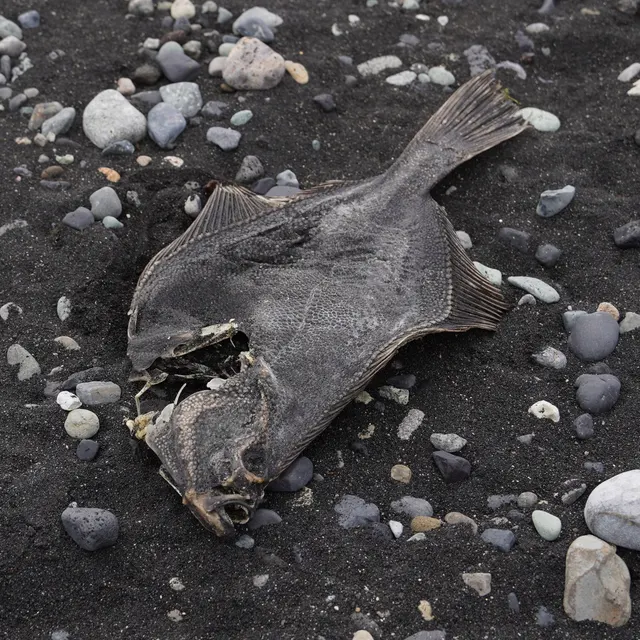
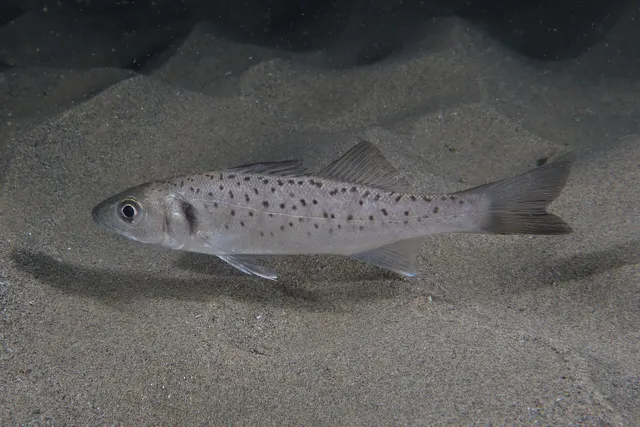
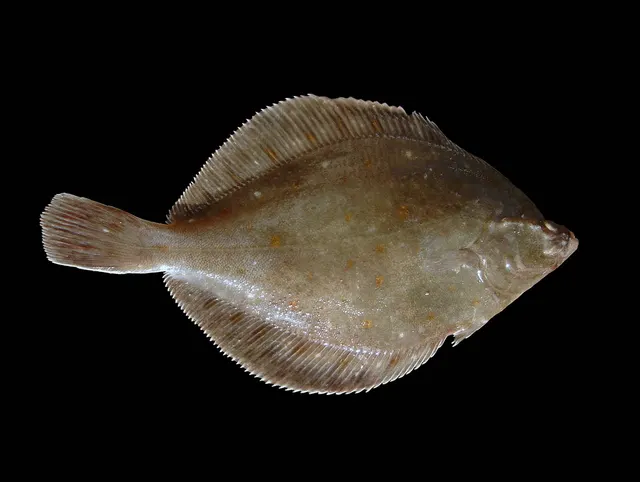
What these strengths mean
- Regular local target
- Fishing sources describe this as a normal local target here, not merely as caught.
- Seasonal
- Well supported, and concentrated in part of the year rather than spread through it.
- Recorded here
- At least one credible public account of this species being caught here. That is all it means.
- How breadth is counted
- A fish documented at six marks is shown as six marks: breadth never raises the strength on its own. A fishery account describes the fishing; a recorded catch reports one specific catch. How evidence is weighed.
Fish documented nearby, not here
Nothing below has been documented at Aberavon Sands itself. Each one has been documented at a named place on the same ground, and the places are listed with it. Treat this as what the water around here holds rather than as a catch list for this mark.
Widely documented on this ground
Documented at three or more neighbouring places, fished a way this place is also fished. That is a pattern about the ground rather than about any one mark, and it is the closest this site comes to saying you will probably meet a fish somewhere nothing has been written about.
From the shore
- Atlantic cod — documented at Nash Point; The Cardiff foreshore; Sully Island (+1 more)
- Conger eel — documented at Nash Point; Aberthaw; The Cardiff foreshore (+3 more)
- Whiting — documented at Lavernock Point; Aberthaw; The Cardiff foreshore (+2 more)
- Starry smooth-hound — documented at Nash Point; Aberthaw; Monknash and the Nash ledges (+1 more)
- Thornback ray — documented at Aberthaw; Sully Island; Lynmouth (+1 more)
- Small-spotted catshark — documented at Monknash and the Nash ledges; The Cardiff foreshore; Sully Island
- Spotted ray — documented at Nash Point; Aberthaw; Monknash and the Nash ledges
- Blonde ray — documented at Nash Point; Aberthaw; Sully Island
- Bull huss — documented at Nash Point; Aberthaw; Sully Island
Also documented at neighbouring places
One or two accounts each, on the ground around here. Enough to know the fish is caught in these waters; not enough to say anything about this place.
From the shore
- Turbot — documented at Monknash and the Nash ledges
- Common sole — documented at Monknash and the Nash ledges
- Pouting — documented at The Cardiff foreshore; Lavernock Point
- Small-eyed ray — documented at Nash Point; Aberthaw
- Brown trout — documented at Lynmouth
How people fish it
Practised here: Sea fishing.
Methods the sources name for this ground. Each one is explained in full on its own page.
- Surfcasting
Casting heavy baited tackle from a beach into surf — a method defined by distance, by tide, and by reading water that all looks the same.
- Ledgering
Fishing a bait on the bottom held by a weight, with no float — the simplest way to fish at distance, in depth, or in wind.
- Spinning
Casting an artificial lure and retrieving it so that it moves like something alive — the most direct form of lure fishing.
Baits and lures for these fish
The baits and lures each of the fish above is commonly taken on, from that fish’s own page. This is what works for the fish, not a report of what people use on this particular water — local knowledge and the conditions on the day still decide.
Baits
- Ragworm — for European flounder, European sea bass, Dab, European plaice
- Lugworm — for Dab, European plaice
- Peeler crab — for European flounder, European sea bass
- Crab and shellfish — for European sea bass
- Sand eel — for European sea bass
- Squid and cuttlefish — for Dab
Lures
- Jerkbaits — for European sea bass
- Metal jigs — for European sea bass
- Soft plastics — for European sea bass
- Streamers — for European sea bass
- Surface lures — for European sea bass
The ground and the water
- The ground
- A long, flat, clean sand beach running from the Afan mouth up towards Port Talbot's breakwater, shelving so gently that the tide moves a very long way across it. Featureless ground that fishes on the surf rather than on structure.
- Exposure
- Wide open to the south-west across Swansea Bay, which is where its surf comes from.
- Tide and flow
- Very large range over very flat sand: the water's edge travels hundreds of metres.
Through the year
A summer bass beach above everything else, with flatfish through the year.
Safety
Tides and being cut off — Can cause serious injury or death
The tidal range exposes enormous areas of sand and mud and then covers them. The flood advances across level ground faster than a person can walk, and channels fill behind before the flat itself covers, so the route back closes first. People are cut off on the sands of this estuary regularly and some are killed.
What reduces it: Never go onto the intertidal zone without knowing the turn time and the route back, treat the filling of channels behind you rather than the water in front as the signal to leave, and do not walk out at all without local knowledge of which ground is firm. Carry a means of calling for help that survives immersion.
Worse when:
- On spring tides, when the exposed area is greatest and the flood fastest.
- In fog or poor light, when there is no reference to walk back on.
- On soft ground, where walking out is far quicker than walking back.
Moving water and currents — Can cause serious injury or death
Tidal streams here are among the strongest around Britain and are unsurvivable to swim against. Underwater visibility is effectively nil, so anybody in the water cannot see and cannot easily be seen. Soft mud can trap a person, and being stuck in mud on a rising tide in this estuary is a recognised recurring emergency.
What reduces it: Stay off soft mud entirely, fish from hard ground, wear a buoyancy aid where there is any chance of going in, and if trapped in mud call for help immediately rather than after struggling. Do not enter the water for any reason.
Cold water shock — Can cause serious injury or death
Water temperature is low enough for most of the year that immersion triggers gasping and hyperventilation, and the ability to swim is lost in the first minute. Combined with a strong tidal stream and zero visibility, an immersion here is a very serious event at any time of year.
What reduces it: Wear a buoyancy aid, keep off slippery hard structures near deep fast water, and if immersed, float and control breathing before attempting anything else.
Rules and access
FishingHQ does not know the current access position here. Shore angling in Wales is not rod-licensed, but access rights, landowner permission, local authority and harbour byelaws, national and inshore fisheries measures, and site designations all apply and all change. Check the current position with Natural Resources Wales, the harbour or local authority, and the landowner before going.
Who holds the answer:
- Natural Resources Wales, which administers marine and fisheries regulation in Welsh waters.
- The local authority and, where one exists, the harbour authority, for access, byelaws and shellfish classification.
- The environment agency in England and natural resources Wales, for migratory salmonids, eels, elvers and the historic net and fixed-engine fisheries.
- The inshore fisheries and conservation authority for the English side, and the Welsh government's marine and fisheries function on the Welsh side, for sea fishing.
- The statutory nature conservation bodies, for the European habitat and bird designations and the site of special scientific interest covering the estuary.
- The harbour authority for the port and navigation areas, whose rules govern access to piers, walls and navigable channels.
- The local authority and food standards agency, for shellfish ground classification and biotoxin monitoring.
Nearby fishing
Other publicly documented places within about 40 km, by distance. Positions are approximate public geography and are never exact marks.
- Port Talbot breakwater — 2–5 km · Breakwater
- Swansea Bay — 5–10 km · Bay
- Swansea West Pier — 5–10 km · Pier
- Sker Point and Rest Bay — 10–25 km · Rock mark
- Mumbles Pier — 10–25 km · Pier
- Mumbles Head — 10–25 km · Rock mark
- Caswell and Langland — 10–25 km · Bay
- Porthcawl breakwater — 10–25 km · Breakwater
Sources for this place
- Sea Angler — Bauer Media (Specialist angling publication)Relied on for: Long-running published description of British sea angling practice by region, ground type and named mark.FishingHQ's interpretation of what it saysCitation checked — the work exists and is described correctly
- General angling website restatements of established technique — Various (Credible secondary source)Relied on for: Widely restated public descriptions of which places are conventionally fished and how, recorded as practitioner consensus rather than as scholarship, and not relied on for access, permission or any current rule.Background and mechanism onlyCitation checked — the work exists and is described correctly
- British Sea Fishing: Welsh shore marks — British Sea Fishing (Credible secondary source)Relied on for: Mark-by-mark Welsh shore angling: which species are fished for at each named mark, in which season, and with which baits and methods.States this directlyPassage read and verified
How FishingHQ labels evidence is explained in the evidence policy. Last reviewed 2026-08-16.