White Bay
Cove · Salt water · in Cork Harbour and the east Cork coast
A small sand cove on the eastern shore of the entrance to Cork Harbour, with rock at both horns and clean sand in the bay giving onto the deep dredged channel a long way out.
Safety: cold water shock — can cause serious injury or death. One more point applies here.
FishingHQ describes what this place is, not whether you may fish it. Access, permits and who to ask.
What you can catch here
Documented at this place, grouped by how you would be fishing, with how strongly the sources support each one. This is what has been written down, not a forecast, and being listed is never permission to fish.
From the shore · 8
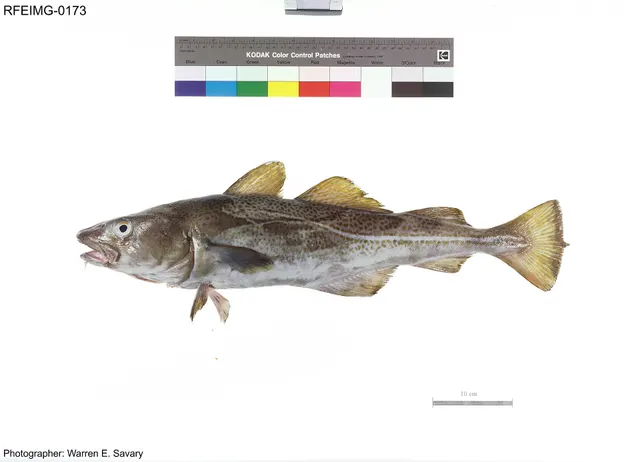 Atlantic codRegular local target1 placeWhite BayOver coveAround Jan–Mar, Nov–Dec
Photo: The U.S. Food and Drug Administration, via Wikimedia Commons, public domain; resized and trimmed to fit
- Blonde rayRegular local target1 placeWhite BayOver cove
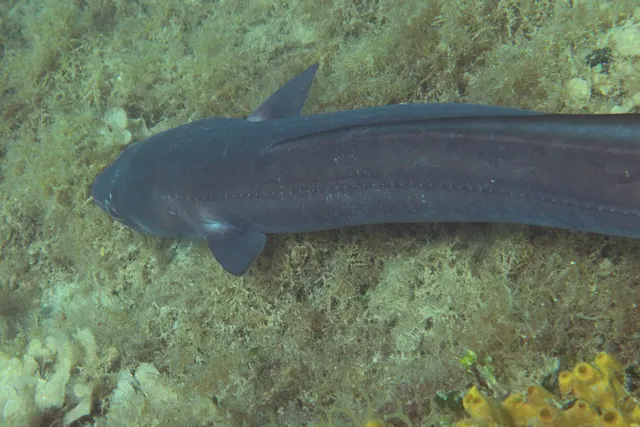 Conger eelRegular local target1 placeWhite BayOver cove
Photo: Holger Krisp, via Wikimedia Commons, CC BY 3.0; resized and trimmed to fit
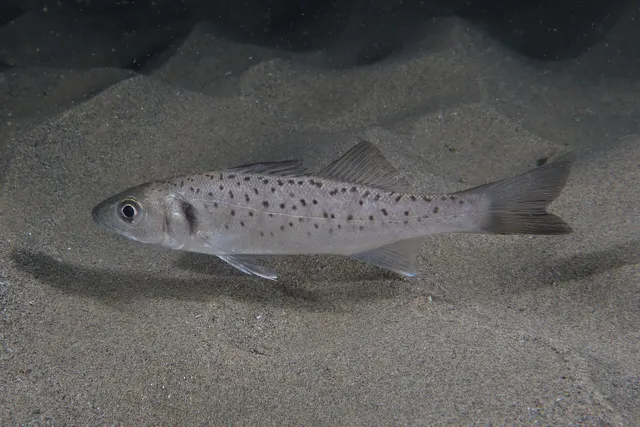 European sea bassRegular local target1 placeWhite BayOver cove
Photo: Julien Renoult, via Wikimedia Commons, CC BY 4.0; resized and trimmed to fit
- Small-eyed rayRegular local target1 placeWhite BayOver cove
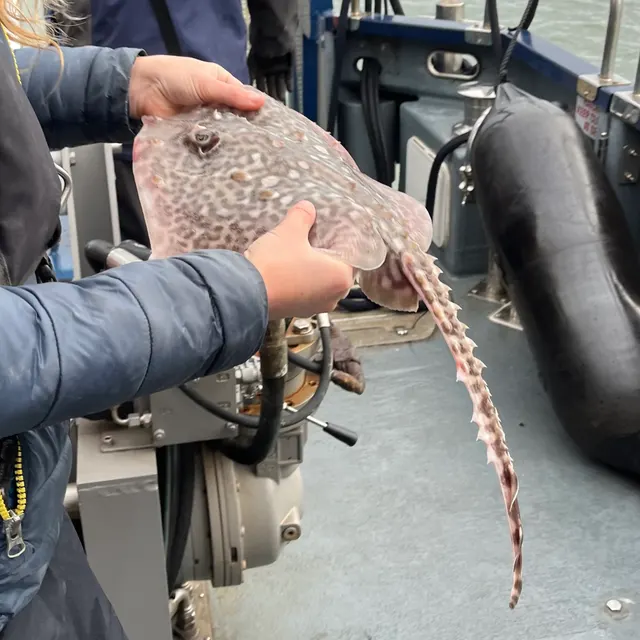 Thornback rayRegular local target1 placeWhite BayOver cove
Photo: Ella McCausland, via iNaturalist, CC BY; resized and trimmed to fit
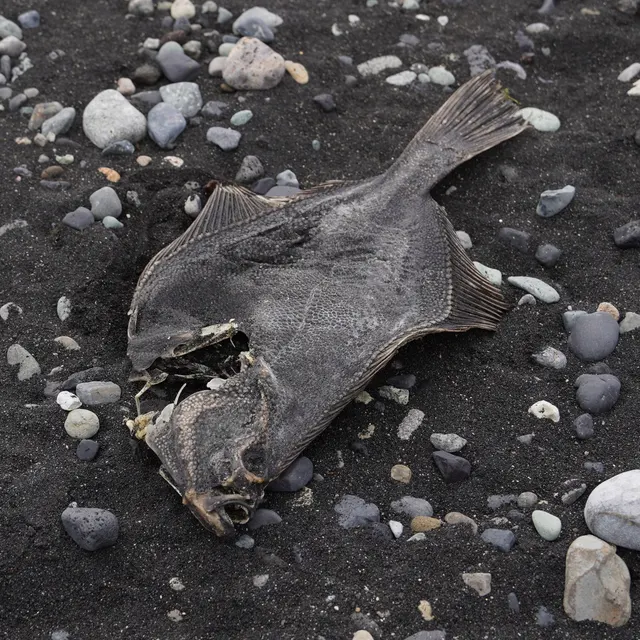 European flounderRecorded here1 placeWhite BayOver cove
Photo: nbasargin, via iNaturalist, CC BY; resized and trimmed to fit
- Small-spotted catsharkRecorded here1 placeWhite BayOver cove
.jpg)


What these strengths mean
- Regular local target
- Fishing sources describe this as a normal local target here, not merely as caught.
- Recorded here
- At least one credible public account of this species being caught here. That is all it means.
- How breadth is counted
- A fish documented at six marks is shown as six marks: breadth never raises the strength on its own. A fishery account describes the fishing; a recorded catch reports one specific catch. How evidence is weighed.
Fish documented nearby, not here
Nothing below has been documented at White Bay itself. Each one has been documented at a named place on the same ground, and the places are listed with it. Treat this as what the water around here holds rather than as a catch list for this mark.
Widely documented on this ground
Documented at three or more neighbouring places, fished a way this place is also fished. That is a pattern about the ground rather than about any one mark, and it is the closest this site comes to saying you will probably meet a fish somewhere nothing has been written about.
From the shore
- Saithe — documented at Ringaskiddy Deepwater Quay; Redbarn Strand; Ferry Point, Youghal
Also documented at neighbouring places
One or two accounts each, on the ground around here. Enough to know the fish is caught in these waters; not enough to say anything about this place.
From the shore
- Atlantic mackerel — documented at Cork Harbour and Roches Point; Ferry Point, Youghal
- Dab — documented at Ballycotton Harbour; Ringaskiddy Deepwater Quay
- Thick-lipped grey mullet — documented at Cork Harbour and Roches Point; Ballycotton Harbour
- Three-bearded rockling — documented at Ringaskiddy Deepwater Quay; Ballycotton Harbour
- Whiting — documented at Ringaskiddy Deepwater Quay; Ferry Point, Youghal
- Ballan wrasse — documented at Guileen
- Brown trout — documented at Ferry Point, Youghal
- Bull huss — documented at Ringaskiddy Deepwater Quay
- European plaice — documented at Ferry Point, Youghal
- Pollack — documented at Guileen
How people fish it
Practised here: Sea fishing.
Methods the sources name for this ground. Each one is explained in full on its own page.
- Ledgering
Fishing a bait on the bottom held by a weight, with no float — the simplest way to fish at distance, in depth, or in wind.
Baits and lures for these fish
The baits and lures each of the fish above is commonly taken on, from that fish’s own page. This is what works for the fish, not a report of what people use on this particular water — local knowledge and the conditions on the day still decide.
Baits
- Fish strip and cut bait — for Atlantic cod, Blonde ray, Conger eel, Thornback ray and 1 more
- Peeler crab — for Atlantic cod, European sea bass, European flounder
- Ragworm — for European sea bass, European flounder, Small-spotted catshark
- Sand eel — for Blonde ray, European sea bass, Small-eyed ray
- Squid and cuttlefish — for Atlantic cod, Conger eel, Small-spotted catshark
- Crab and shellfish — for European sea bass
- Lugworm — for Atlantic cod
- Sea deadbaits — for Small-spotted catshark
Lures
- Metal jigs — for Atlantic cod, European sea bass
- Soft plastics — for Atlantic cod, European sea bass
- Jerkbaits — for European sea bass
- Streamers — for European sea bass
- Surface lures — for European sea bass
How to catch them: Cod fishing · Conger fishing · Bass fishing · Thornback ray fishing · Flounder fishing
The ground and the water
- The ground
- A small sand cove on the eastern shore of the entrance to Cork Harbour, with rock at both horns and clean sand in the bay giving onto the deep dredged channel a long way out.
- Exposure
- Partly sheltered inside the harbour entrance, and the fishing is at range rather than in the cove.
- Depth
- Shallow sand close in and the main harbour channel a very long cast away — the practitioner directory puts the distance at about a hundred and thirty metres, which is the mark's defining fact.
Safety
Cold water shock — Can cause serious injury or death
The water is cold enough to trigger the involuntary gasp and hyperventilation of cold water shock for most of the year, which incapacitates a swimmer in the first minute regardless of how well they swim, and it does not stop being cold in a warm summer week.
What reduces it: Wear a buoyancy aid so the first minute does not have to be survived by swimming. Fish with somebody. Know where you would get out before you need to.
Moving water and currents — Can cause serious injury or death
Narrow sounds, estuary mouths, harbour entrances and channel edges run hard on the tide, and the water moving through them is a whole bay emptying and filling through a gap. Somebody who enters that water is carried, not swum, and shingle and sandbanks shift under the current.
What reduces it: Treat the state of the tide as part of the mark rather than as a timing detail. Do not wade a channel edge. Stay off shifting banks on a making tide.
Rules and access
FishingHQ does not know the current access position here. Sea angling in Ireland is not generally licensed, but access rights, landowner permission, harbour and local authority rules, conservation designations and national fisheries measures all apply and all change. Check the current position with Inland Fisheries Ireland, the harbour or local authority and the landowner before going.
Who holds the answer:
- Inland Fisheries Ireland, which administers angling and fisheries protection.
- The harbour or local authority, for access to structures and the shore.
- The harbour authority and the operators of individual quays, piers and slipways, whose decision about angling on their structures is theirs and changes without notice.
- Inland Fisheries Ireland, for freshwater fisheries, for salmon and sea trout licensing and tagging, and for the sea angling conservation measures it administers.
- The government department responsible for the marine, and the Sea-Fisheries Protection Authority, for sea fisheries measures, minimum sizes, bag limits and protected species.
- The National Parks and Wildlife Service, where a designation constrains access, disturbance or collection.
- The Food Safety Authority of Ireland and the shellfish classification and biotoxin monitoring programme, before anything filter-feeding is taken.
- The harbour authority, local authority, club or landowner controlling the specific structure or shore, whose permission is theirs to give and is not stated here.
- The Irish Coast Guard and the RNLI, for safety guidance on this coast.
Nearby fishing
Other publicly documented places within about 40 km, by distance. Positions are approximate public geography and are never exact marks.
- Ringaskiddy Deepwater Quay — 2–5 km · Harbour wall
- Cork Harbour and Roches Point — 2–5 km · Estuary
- Guileen — 5–10 km · Rock mark
- Ballycotton Harbour — 10–25 km · Harbour wall
- Redbarn Strand — 25–40 km · Surf beach
- Ferry Point, Youghal — 25–40 km · Beach section
- Ring Harbour — 25–40 km · Estuary mark
Sources for this place
- Sea Angler — Bauer Media (Specialist angling publication)Relied on for: Long-running published description of British sea angling practice by region, ground type and named mark.FishingHQ's interpretation of what it saysCitation checked — the work exists and is described correctly
- General angling website restatements of established technique — Various (Credible secondary source)Relied on for: Widely restated public descriptions of which places are conventionally fished and how, recorded as practitioner consensus rather than as scholarship, and not relied on for access, permission or any current rule.Background and mechanism onlyCitation checked — the work exists and is described correctly
- Sea Angling in Ireland: the shore marks of Cork — Sea Angling Ireland (Credible secondary source)Relied on for: A practitioner shore directory describing this mark's ground, species, methods, baits and the character of the access.States this directlyPassage read and verified
How FishingHQ labels evidence is explained in the evidence policy. Last reviewed 2026-08-16.