The Tay at Stanley
River reach · Fresh water · in The River Tay
A wide, powerful, deep reach of the lower Tay above Perth, carrying the largest volume of water of any river in Britain over a bed of gravel, boulder and bedrock, with defined streams, deep holding water and rock ledges.
Safety: moving water and currents — can cause serious injury or death. 2 more points apply here.
FishingHQ describes what this place is, not whether you may fish it. Access, permits and who to ask.
What you can catch here
Documented at this place, grouped by how you would be fishing, with how strongly the sources support each one. This is what has been written down, not a forecast, and being listed is never permission to fish.
From the shore · 1
From a boat · 1
Fly fishing · 3
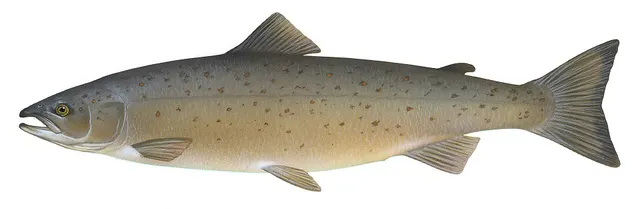
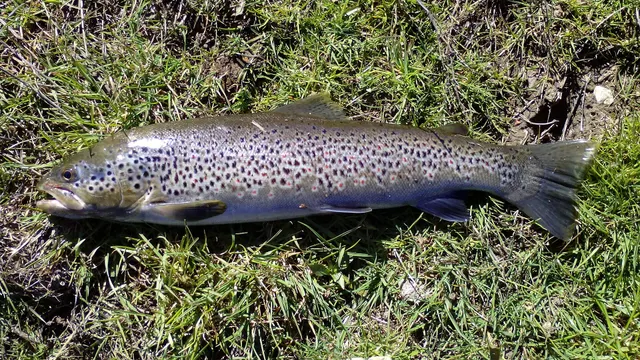
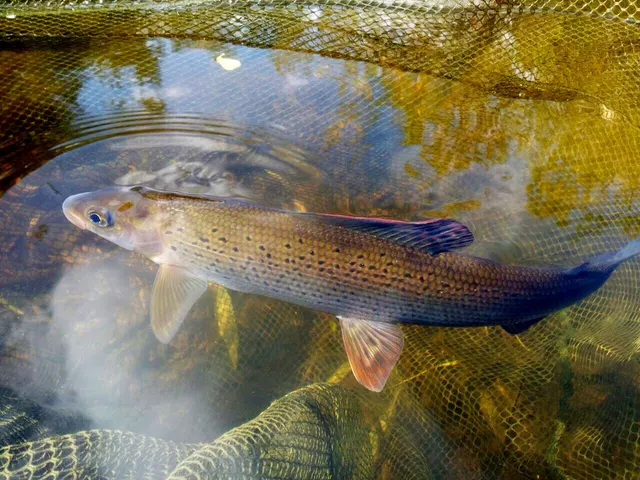
What these strengths mean
- Characteristic of this water
- This water is strongly identified with this species by the sources that cover it.
- Regular local target
- Fishing sources describe this as a normal local target here, not merely as caught.
- Seasonal
- Well supported, and concentrated in part of the year rather than spread through it.
- Recorded here
- At least one credible public account of this species being caught here. That is all it means.
- How breadth is counted
- A fish documented at six marks is shown as six marks: breadth never raises the strength on its own. A fishery account describes the fishing; a recorded catch reports one specific catch. How evidence is weighed.
Fish documented nearby, not here
Nothing below has been documented at The Tay at Stanley itself. Each one has been documented at a named place on the same ground, and the places are listed with it. Treat this as what the water around here holds rather than as a catch list for this mark.
Also documented at neighbouring places
One or two accounts each, on the ground around here. Enough to know the fish is caught in these waters; not enough to say anything about this place.
From the shore
- European perch — documented at Loch Tay
From a boat
- Arctic char — documented at Loch Tay
How people fish it
Practised here: Fly fishing.
Methods the sources name for this ground. Each one is explained in full on its own page.
- Spinning
Casting an artificial lure and retrieving it so that it moves like something alive — the most direct form of lure fishing.
- Dry fly fishing
Presenting a floating artificial to a fish feeding at the surface, so that it drifts exactly as a natural insect would.
The ground and the water
- The ground
- A wide, powerful, deep reach of the lower Tay above Perth, carrying the largest volume of water of any river in Britain over a bed of gravel, boulder and bedrock, with defined streams, deep holding water and rock ledges.
- Exposure
- Open river valley with wooded banks in places; the river is large enough that wind affects fishing rather than safety.
- Depth
- Deep and strong — a big-river reach where much of the water cannot be waded at all.
- Tide and flow
- Non-tidal here and tidal at Perth a short distance below. The Tay's discharge is the greatest in Britain and it rises hard and fast after Highland rainfall or snowmelt.
Through the year
A spring salmon river of historic reputation, with runs from the opening of the season in January through to autumn — one of the very few British rivers where a genuine spring run persists.
The months the sources attach to each species here. Where a species carries no season it is listed underneath rather than assumed to run through the year.
| Species | J | F | M | A | M | J | J | A | S | O | N | D |
|---|---|---|---|---|---|---|---|---|---|---|---|---|
| Atlantic salmon — characteristic of this water, recorded in January, February, March, April, May, August, September, October. | ||||||||||||
| Grayling — seasonal, recorded in October, November, December, January, February. |
Recorded here with no season stated: Brown trout, Northern pike.
Safety
Moving water and currents — Can cause serious injury or death
The Tay carries more water than any other British river and rises very fast on Highland rainfall and snowmelt. A wadeable stream becomes unwadeable within an hour, and the volume means the river does not fall as quickly as it rises.
What reduces it: Check the upstream rainfall and river-level data rather than the sky overhead, identify the exit before wading, use a wading staff, and get out on the first sign of rising or colouring water rather than the second.
Worse when:
- During snowmelt, when a warm spell after a cold one produces a rise with no rain at all.
Moving water and currents — Can cause serious injury or death
Wading a big river in cold, fast, deep water in early spring is the specific circumstance in which most game-angling deaths in Scotland occur. The water is near-freezing, the flow is strong, and waders that fill are very difficult to swim in.
What reduces it: Wear a wading belt and an inflatable buoyancy aid, use a staff, do not wade beyond the depth at which you can turn round, and treat a boat and a boatman as the correct answer on water that cannot be waded rather than as a luxury.
Cold water shock — Can cause serious injury or death
UK coastal and inland water is cold enough for most of the year to trigger the involuntary gasp and the loss of swimming ability that decides most immersion deaths, and it does so within the first minute, long before hypothermia is relevant.
What reduces it: Wear a buoyancy aid rather than carry one, carry a means of calling for help on the person rather than in a bag, and plan on the assumption that an unplanned entry into the water is survivable only if somebody knows immediately.
Rules and access
Licence
Scotland has no general rod licence for freshwater fishing. That is the opposite of the position in England and Wales, and it is not a relaxation.
Permission to fish
The whole question. Fishing rights on almost every river and loch belong to a proprietor, estate, angling association or district salmon fishery board, and permission must come from them.
FishingHQ does not know the current access position here. Scotland has no general rod licence, and the fishing rights on almost every river and loch belong to somebody: a proprietor, an estate, an angling association or a district salmon fishery board. Permission is a separate question from access, and both change. Check with the relevant fishery board or association before going.
Who holds the answer:
- The district salmon fishery board for the catchment, where the water holds migratory fish.
- The proprietor, estate or angling association that holds the fishing rights.
- The Scottish Government, for freshwater fisheries policy and protection orders.
- The Tay District Salmon Fishery Board, which administers salmon and sea trout fishing across this river system.
- Marine Directorate of the Scottish Government, for national salmon conservation measures including the river grading system.
- The proprietor, estate, hotel or angling association that holds the fishing rights, since freshwater fishing rights in Scotland are private property and permission is required.
- NatureScot, where a conservation designation affects the river, its habitats or its protected species.
- The Scottish Environment Protection Agency, for water quality, abstraction and the regulation of impoundments.
Nearby fishing
Other publicly documented places within about 40 km, by distance. Positions are approximate public geography and are never exact marks.
- The Tay at Dunkeld — 10–25 km · River reach
- The Tummel and Loch Faskally — 25–40 km · River reach
- Loch Leven — 25–40 km · Loch
- The Tay estuary and Broughty Ferry — 25–40 km · Estuary
Sources for this place
- Trout & Salmon — Bauer Media (Specialist angling publication)Relied on for: Long-running published description of British and Irish game angling practice by river, beat and season.FishingHQ's interpretation of what it saysCitation checked — the work exists and is described correctly
- General angling website restatements of established technique — Various (Credible secondary source)Relied on for: Widely restated public descriptions of which waters are conventionally fished and how, recorded as practitioner consensus rather than as scholarship, and not relied on for access, permission or any current rule.Background and mechanism onlyCitation checked — the work exists and is described correctly
- Freshwater Fishes of the British Isles — HarperCollins (New Naturalist 75), 1992 (Reference work)Relied on for: Distribution, habitat requirements and biology of the freshwater fishes of Britain and Ireland named here.States this directlyCitation checked — the work exists and is described correctly
- RNLI water safety guidance: cold water shock and Float to Live — Royal National Lifeboat Institution (Water-safety or diver-training authority)Relied on for: Cold water shock and the immersion response, tidal cut-off, and water-safety guidance for shore anglers and small-craft users.States this directlyPassage read and verified
How FishingHQ labels evidence is explained in the evidence policy. Last reviewed 2026-08-16.