Kielder Water
Reservoir · Fresh water · in England and Wales
The largest artificial lake in northern Europe by volume, in a deep afforested valley on the Northumberland border, with acidic peaty water, steep drowned sides and great depth.
Safety: cold water shock — can cause serious injury or death (general advice, not specific to this place).
FishingHQ describes what this place is, not whether you may fish it. Access, permits and who to ask.
What you can catch here
Documented at this place, grouped by how you would be fishing, with how strongly the sources support each one. This is what has been written down, not a forecast, and being listed is never permission to fish.
From the shore · 3
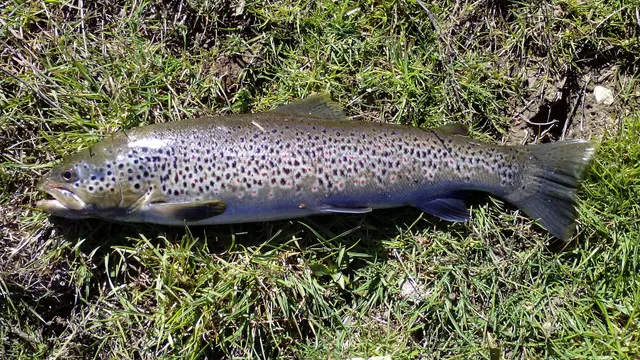 Brown troutCharacteristic of this water1 placeKielder WaterOver reservoir
Photo: Robermix, via Wikimedia Commons, CC0; resized and trimmed to fit
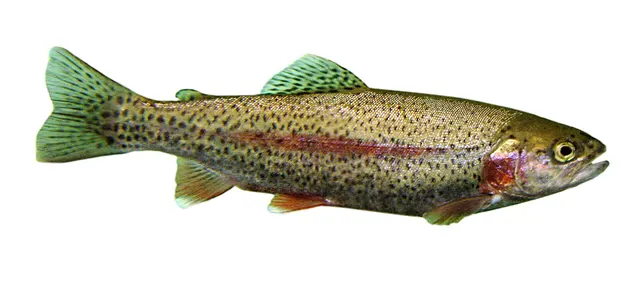 Rainbow troutRegular local target1 placeKielder WaterOver reservoir
Photo: Jonathunder, via Wikimedia Commons, CC BY-SA 3.0; resized and trimmed to fit; shared under the same licence
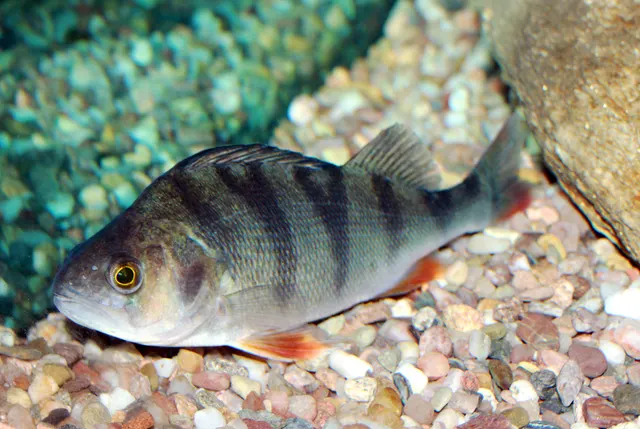 European perchRepeatedly reported1 placeKielder WaterOver reservoir
Photo: Karelj, via Wikimedia Commons, public domain; resized and trimmed to fit


From a boat · 3
- Brown troutCharacteristic of this water1 placeKielder WaterOver reservoir
Photo: Robermix, via Wikimedia Commons, CC0; resized and trimmed to fit
- Rainbow troutRegular local target1 placeKielder WaterOver reservoir
Photo: Jonathunder, via Wikimedia Commons, CC BY-SA 3.0; resized and trimmed to fit; shared under the same licence
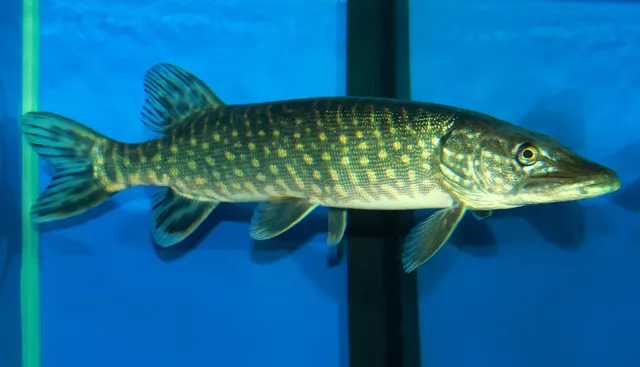 Northern pikeRecorded here1 placeKielder WaterOver reservoir
Photo: Karelj, via Wikimedia Commons, public domain; resized and trimmed to fit

Fly fishing · 2
- Brown troutCharacteristic of this water1 placeKielder WaterOver reservoir
Photo: Robermix, via Wikimedia Commons, CC0; resized and trimmed to fit
- Rainbow troutRegular local target1 placeKielder WaterOver reservoir
Photo: Jonathunder, via Wikimedia Commons, CC BY-SA 3.0; resized and trimmed to fit; shared under the same licence
What these strengths mean
- Characteristic of this water
- This water is strongly identified with this species by the sources that cover it.
- Regular local target
- Fishing sources describe this as a normal local target here, not merely as caught.
- Repeatedly reported
- Several independent public accounts. Enough to say it happens more than once; not enough to call it a fishery.
- Recorded here
- At least one credible public account of this species being caught here. That is all it means.
- How breadth is counted
- A fish documented at six marks is shown as six marks: breadth never raises the strength on its own. A fishery account describes the fishing; a recorded catch reports one specific catch. How evidence is weighed.
How people fish it
Practised here: Fly fishing.
Methods the sources name for this ground. Each one is explained in full on its own page.
- Stillwater fly fishing
Fly fishing without current, where the angler supplies every movement and the problem becomes finding fish rather than presenting to them.
Baits and lures for these fish
The baits and lures each of the fish above is commonly taken on, from that fish’s own page. This is what works for the fish, not a report of what people use on this particular water — local knowledge and the conditions on the day still decide.
Baits
- Maggots — for Brown trout, European perch
- Lobworms and worms — for European perch
- Sea deadbaits — for Northern pike
Lures
- Crankbaits — for European perch, Northern pike
- Dry flies — for Brown trout, Rainbow trout
- Nymphs — for Brown trout, Rainbow trout
- Soft plastics — for European perch, Northern pike
- Spinners — for Rainbow trout, European perch
- Streamers — for Brown trout, Rainbow trout
- Jerkbaits — for Northern pike
- Jigs and jig heads — for European perch
Also: Spinnerbaits and bladed jigs · Spoons · Terrestrial fly patterns · Wet flies
How to catch them: Brown trout fishing · Perch fishing · Pike fishing
Rods, reels and rigs for them: Brown trout · European perch · Northern pike
The ground and the water
- The ground
- The largest artificial lake in northern Europe by volume, in a deep afforested valley on the Northumberland border, with acidic peaty water, steep drowned sides and great depth.
Getting there
What public sources describe, last checked 2026-10-23. Car parks fill, services change and a path existing is not a path anybody may use — none of this is a guarantee of availability and none of it is permission to be anywhere.
- Getting to it
- Northumbrian Water's fishery, run by Waterside Parks, fished on its permit with a rod licence as well. Bank fishing from 6 am to 8 pm or sunset, whichever is sooner. Boats carry two to four people, at least two of them adults and none under eight, with lifejackets worn by everyone.
Where this access information comes from
- Angling Safety and Rules 2026 — Northumbrian Water (Waterside Parks) (Angling or fisheries organisation)Relied on for: Kielder's permit, bank hours and boat rules.States this directlyPassage read and verified
What is there
Public rescue equipment recorded
Northumbrian Water provides lifejackets free of charge for boat anglers, its 2026 rules say.
Safety
Cold water shock — Can cause serious injury or death
General safety for this kind of ground, not a finding about this place.
Water around these islands stays cold enough all year to trigger cold water shock — involuntary gasping and hyperventilation on sudden immersion, which can cause somebody to inhale water in the first seconds regardless of swimming ability.
What reduces it: Wear a buoyancy aid where immersion is credible. If immersed, float on your back until the initial response passes rather than trying to swim immediately.
Rules and access
Licence
A rod licence is required for freshwater rod fishing in England, issued by the Environment Agency — except on the River Tweed, which the licence does not cover even in England. Children under 13 do not need one.
Permission to fish
Separate. Almost all fishing rights are held by a club, association, riparian owner or navigation authority, and the licence does not grant access to any of them.
Particular to this water: Northumbrian Water's 2026 angling rules, read on 23 October 2026: the brown trout season at Kielder is 1 May to 31 October; no live fish bait; single hooks when bait fishing; wild brown trout under 9 inches are returned; a landing net and a priest must be carried. Everyone in a boat wears a lifejacket over their clothing. Kielder is very cold and deep with underwater obstructions, and the weather changes quickly; in an electrical storm, stop and move away from the rod.
Beyond what is stated above, FishingHQ does not know the current access position here. Freshwater rod fishing in England requires a current rod licence AND separate permission from whoever controls the fishing, which is frequently a club, riparian owner or navigation authority rather than a public body. Close seasons, byelaws and local rules apply and change. Check with the Environment Agency and with the controlling club or owner before going.
Who holds the answer:
- The Environment Agency, for rod licensing, close seasons and fisheries byelaws in England.
- The club, association, riparian owner or navigation authority that controls the fishing.
- The environmental regulator for England, which issues the rod licence, makes fisheries byelaws and enforces them.
- The equivalent Welsh environmental body, which administers fisheries in Wales and has set salmon and sea trout measures differently from England.
- The owner, club, syndicate or commercial fishery controlling the water, whose permission is separate from and additional to any licence.
- The body managing any marine protected area, national park or designated site where the fishing takes place.
- The national conservation body, for protected species and habitat designations that override general rules.
- Northumbrian Water, which owns the reservoir and runs the fishery through Waterside Parks; a rod licence is needed as well as the permit.
Nearby fishing
Other publicly documented places within about 40 km, by distance. Positions are approximate public geography and are never exact marks.
- The Tyne at Hexham — 25–40 km · River reach
Sources for this place
- Environment Agency fisheries management, byelaws and rod licensing information — Environment Agency (Government fisheries body)Relied on for: Freshwater and transitional-water fisheries management in England, the structure of rod licensing, close seasons and byelaws, and the monitoring of rivers and stillwaters.States this directlyCitation checked — the work exists and is described correctly
- Angling Times — Bauer Media (Specialist angling publication)Relied on for: Long-running published description of British coarse and match angling practice by water and by named reach.FishingHQ's interpretation of what it saysCitation checked — the work exists and is described correctly
- General angling website restatements of established technique — Various (Credible secondary source)Relied on for: Widely restated public descriptions of which waters are conventionally fished and how, recorded as practitioner consensus rather than as scholarship, and not relied on for access, permission or any current rule.Background and mechanism onlyCitation checked — the work exists and is described correctly
- Angling Safety and Rules 2026 — Northumbrian Water (Waterside Parks) (Angling or fisheries organisation)Relied on for: The 2026 rules for Kielder.States this directlyPassage read and verified
How FishingHQ labels evidence is explained in the evidence policy. Last reviewed 2026-08-16.
Something wrong or out of date?
If something on this page has changed, email us from your own account using the link that fits, with a link to where you saw the change if you can. Every report is checked by a person before anything is changed, and a report never appears on the site by itself. Please don’t send exact private marks.
Before you go
- Fish documented here
- 8 at this place itself. See them.
- Getting there
- Described from public sources, last checked 2026-10-23. Getting there.
- Rules particular to this water
- Northumbrian Water's 2026 angling rules, read on 23 October 2026: the brown trout season at Kielder is 1 May to 31 October; no live fish bait; single hooks when bait fishing; wild brown trout under 9 inches are returned; a landing net and a priest must be carried. Everyone in a boat wears a lifejacket over their clothing. Kielder is very cold and deep with underwater obstructions, and the weather changes quickly; in an electrical storm, stop and move away from the rod. From the body that sets it: Northumbrian Water (Waterside Parks), read 2026-10-23. Applies to: place-kielder-water.
Nothing here is watched for change. Sources and who to ask.
- Hazards particular to this place
- None recorded for this place; the hazards of the wider coast or water still apply.
Check before you travel
- Whether you may fish here, and whether a licence or permit is needed — start with the Environment Agency.
- Who holds the fishing right on the water you mean to fish.
- Anything recorded here was true when it was read; it is not watched for change.