How to keep ragworm alive
Keeping ragworm in usable condition, and what follows for the water it came from.
Why keeping it alive matters
Ragworm are bought and dug for movement and scent, and both fade fast once they die. A live ragworm on a hook works in a way a dead one does not, and a bunch that has been allowed to go off will break up on the cast rather than staying on it. Ragworm are also expensive when bought, which makes keeping them properly a practical as well as a welfare matter.
The container
A shallow tray or box with the worms laid out rather than heaped. Depth is the enemy: ragworm crushed under the weight of the worms above them die and then foul everything around them. A single layer wrapped in newspaper, or laid in shallow trays, is the standard approach for a reason.
Temperature
Cool — the principle being fridge-cool rather than freezing, and never warm. Ragworm deteriorate quickly at room temperature and very quickly in a warm car. Because they come from cold intertidal sediment, cold is close to their normal condition and does them no harm; heat is what kills them.
Oxygen
Kept damp and cool in newspaper, ragworm need no aeration. Kept in seawater, they need it — a closed tub of standing seawater goes anoxic quickly and will kill a batch overnight. The damp-newspaper approach is generally preferred precisely because it removes the oxygen problem rather than managing it.
What to keep it in
Damp newspaper, or clean seawater changed regularly, but not a mixture of wet paper and standing water. The paper approach keeps them moist without immersing them; the water approach requires the water to be cold, clean and refreshed. Fresh water kills them — they are marine animals and tap water is lethal.
How long it keeps
Several days in good conditions, and considerably less if they are warm, heaped or sitting in stale water. Buy or dig for the session rather than for the month, and check them before each trip: a batch that smells strongly is already lost, whatever the calendar says.
Signs it is going wrong
Catching these early is the difference between losing a few and losing the lot.
- A strong ammonia or rotten smell, which means some have already died and are fouling the rest.
- Worms going limp, pale or breaking apart when lifted.
- Worms that no longer contract when touched.
- Discoloured or cloudy water if they are being kept wet.
- Fluid or slime pooling in the bottom of the tray.
Transporting it
In a cool box, laid flat in damp newspaper, out of the sun. The bank is usually warmer than storage, so keep the main stock in the cool box and take out only what is needed. Do not carry them in standing seawater in a warm vehicle — that combination goes bad faster than either alone.
What not to do
Each of these is a common and avoidable way of killing this bait.
- Do not put ragworm in fresh water, which kills them.
- Do not heap them in a deep container where the lower layers are crushed.
- Do not leave dead worms among live ones; sort them out at every opportunity.
- Do not seal them in standing seawater without changing it.
- Do not tip unused worms or their water into a different water body from the one they came from.
Biosecurity
Ragworm are marine animals dug from intertidal sediment, and both the worms and the water and sediment associated with them can carry organisms. Never tip bait water into a water body, and never move worms from one coast to another and release them. Digging also disturbs intertidal habitat directly, which is why collection is restricted or prohibited on many shores — filling holes back in and working over a spread area rather than a single patch reduces the damage.
Welfare
Ragworm are invertebrates and proportionate care means buying or digging for the session rather than in bulk, keeping them cool and uncrushed rather than slowly suffocating under their own weight, and not holding stock for long periods in conditions that are gradually deteriorating. Sorting dead worms out promptly is both the welfare measure and the practical one.
Unused bait
Return unused live ragworm to storage if they are still in good condition. Where they must be discarded, put them in household waste rather than into a water body — including the sea, if they were dug from a different shore. Do not empty bait water into any water.
Rules vary, and they vary a lot
Collecting, transporting, keeping and using live bait are regulated differently almost everywhere, and some of these baits may not be used at all in some waters. Restrictions commonly cover where and how much may be collected, whether live bait may be moved between waters, whether a species may be used as bait at all, and whether a licence or permit is required. FishingHQ does not state what any rule is or where it applies — check with the authority responsible for the water and the shore you intend to use before collecting or using live bait.
Check the rules before you fish
Fishing laws, bylaws, access rules, seasons, bait restrictions and permitted methods vary by location and can change. Check the current rules from the relevant authority and the water you intend to fish before fishing.
Check with:
- Current national or regional law for where you are fishing
- Current local bylaws
- The relevant fisheries authority
- The landowner, club or fishery whose water it is
- Any restrictions specific to the species or the method you intend to use
The full bait record
This page covers keeping ragworm alive. The Ragworm record covers the whole lifecycle — identifying it, obtaining it responsibly, preparing it, presenting it and disposing of it.
What this bait is for
The fish it catches, how it is fished and what you present it on.
Fish it catches
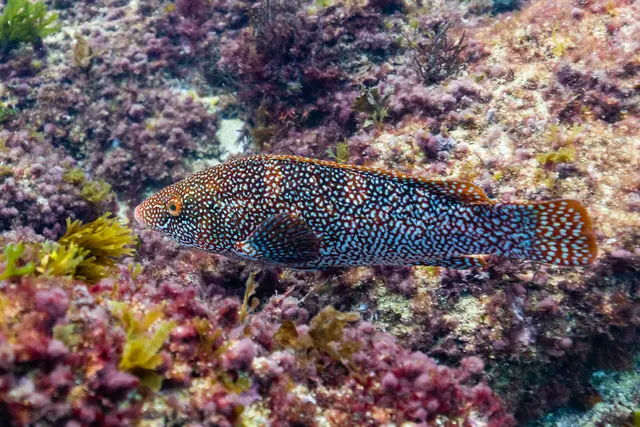 Ballan wrasseWhere the wrasse are under the angler's feet rather than at range, worm on a single-hook paternoster is what the sources give — Carnsore Point specifically, where the directory says the best fish are directly below and lugworm on a single hook is the way to reach them.
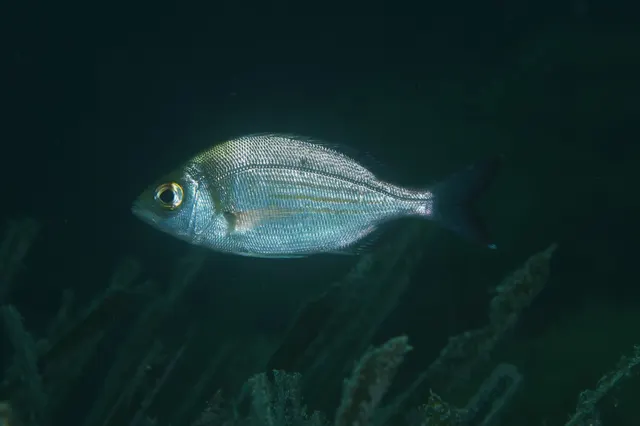 Black seabreamAn excellent bream bait, again used small and on small hooks.
- DabInterchangeable with lugworm for dabs and often better where ragworm is the local worm.
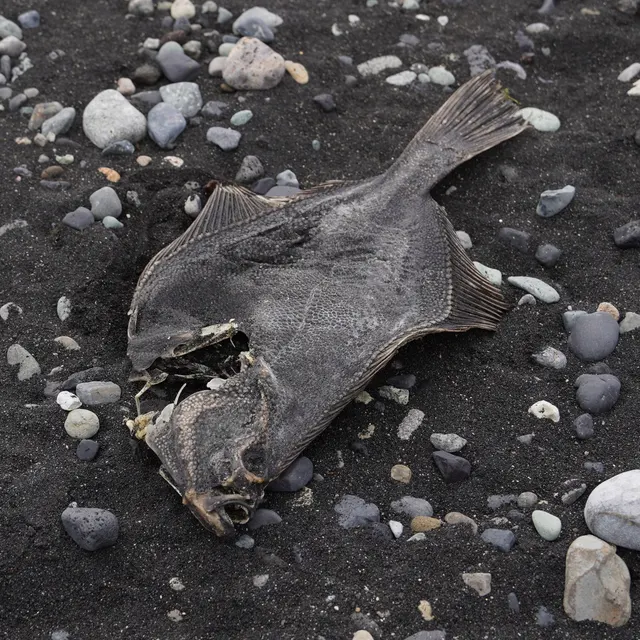 European flounderThe near-universal flounder bait, because it is the thing the fish is already eating in quantity on intertidal mud.
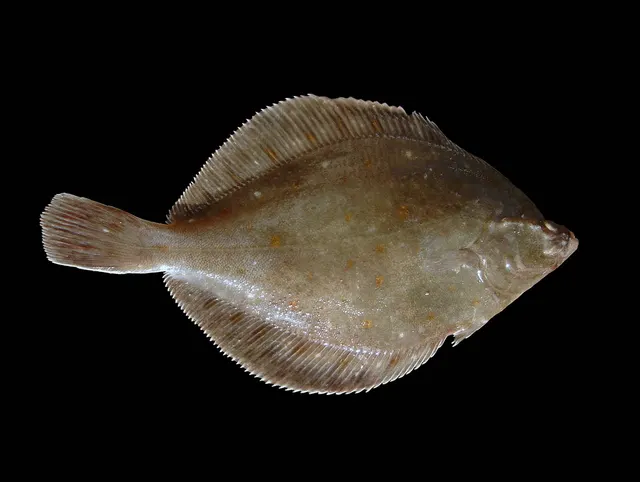 European plaicePlaice and dab come to worm over clean sand, and the Waterford directory records a fine plaice and a small dab taken at distance off a rock mark on lugworm dug that morning at a beach in the next county.
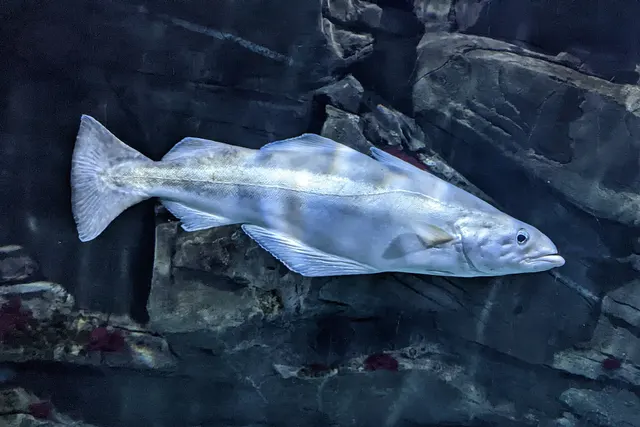 PollackThe bait that fills the gap in the pollack answer. A Wicklow contributor describes masses of pollack sweeping in on the evening flood under the pier and taking ragworm fished just under the surface on 2/0 hooks — which is bait fishing for a fish more often taken on lures.
- Small-spotted catsharkWorm baits meant for flatfish are taken freely; the species is entirely undiscriminating.
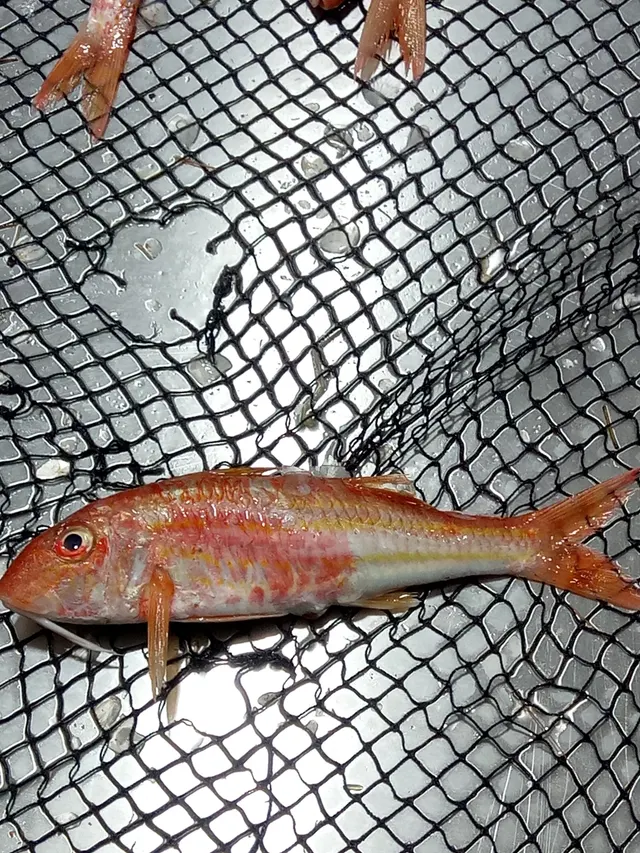 Striped red mulletRagworm fished on the clean sand the fish probes with its barbels.
2 more
- Tub gurnard Fish
- European sea bass Fish
How it is fished
Why the 11 connections on this page are here, and the sources
Fish it catches
What experienced anglers do — 10 connections
Widely and independently recommended by experienced anglers and specialist sources. This is real angling knowledge, not proof: controlled evidence for it is limited, and FishingHQ records it as convention rather than as a demonstrated effect.
Ballan wrasse
Two independent county pages naming worm for wrasse, each with the presentation attached — one close in on a paternoster, one on a float.
- Sea Angling in Ireland: the shore marks of Wexford — Sea Angling Ireland (Credible secondary source)Relied on for: A county directory naming lugworm on a single-hook paternoster fished close in for the wrasse of a named rough-ground point.Passage read and verified
- Sea Angling in Ireland: the shore marks of Donegal — Sea Angling Ireland (Credible secondary source)Relied on for: A county directory describing float-fished worm keeping an angler in wrasse all day at a named Donegal headland.Passage read and verified
Black seabream
A bait joined to the fish it is conventionally used for. Convention, recorded as convention.
- Sea Angler — Bauer Media (Specialist angling publication)Relied on for: Contemporary UK and European sea angling practice as reported by practitioners, including ground, seasonal timing, bait and method convention.States this directlyCitation checked — the work exists and is described correctly
- General angling website restatements of established technique — Various (Credible secondary source)Relied on for: Widely restated descriptions of species behaviour and regional angling practice, recorded as consensus rather than as scholarship.Background and mechanism onlyCitation checked — the work exists and is described correctly
Dab
A bait joined to the fish it is conventionally used for. Convention, recorded as convention.
- Sea Angler — Bauer Media (Specialist angling publication)Relied on for: Contemporary UK and European sea angling practice as reported by practitioners, including ground, seasonal timing, bait and method convention.States this directlyCitation checked — the work exists and is described correctly
- General angling website restatements of established technique — Various (Credible secondary source)Relied on for: Widely restated descriptions of species behaviour and regional angling practice, recorded as consensus rather than as scholarship.Background and mechanism onlyCitation checked — the work exists and is described correctly
European flounder
A bait joined to the fish it is conventionally used for. Convention, recorded as convention.
- Sea Angler — Bauer Media (Specialist angling publication)Relied on for: Contemporary UK and European sea angling practice as reported by practitioners, including ground, seasonal timing, bait and method convention.States this directlyCitation checked — the work exists and is described correctly
- General angling website restatements of established technique — Various (Credible secondary source)Relied on for: Widely restated descriptions of species behaviour and regional angling practice, recorded as consensus rather than as scholarship.Background and mechanism onlyCitation checked — the work exists and is described correctly
European plaice
Two independent county pages naming worm for plaice, one of them attached to a dated capture with the bait's provenance stated.
- Sea Angling in Ireland: the shore marks of Waterford — Sea Angling Ireland (Credible secondary source)Relied on for: A county directory recording a plaice and a dab taken at distance on fresh worm at a named rock mark, on a dated visit.Passage read and verified
- Sea Angling in Ireland: the shore marks of northern and western Donegal — Sea Angling Ireland (Credible secondary source)Relied on for: A county directory naming worm baits for the plaice and dabs of the northern piers and strands.Passage read and verified
Pollack
Two independent county pages naming ragworm for pollack from structure, one of them with a presentation depth and a hook size.
- Sea Angling in Ireland: the shore marks of Wicklow, Dublin, Louth and Meath — Sea Angling Ireland (Credible secondary source)Relied on for: A named contributor describing ragworm fished just under the surface for pollack on an evening flood, with the hook size.Passage read and verified
- Sea Angling in Ireland: the shore marks of Clare and the Shannon estuary — Sea Angling Ireland (Credible secondary source)Relied on for: A county directory naming locally dug harbour ragworm for small pollack and whiting from a deepwater pier.Passage read and verified
Small-spotted catshark
A bait joined to the fish it is conventionally used for. Convention, recorded as convention.
- Sea Angler — Bauer Media (Specialist angling publication)Relied on for: Contemporary UK sea angling practice as reported by practitioners, including ground, seasonal timing, bait and method convention.States this directlyCitation checked — the work exists and is described correctly
- General angling website restatements of established technique — Various (Credible secondary source)Relied on for: Widely restated descriptions of species behaviour and regional angling practice, recorded as consensus rather than as scholarship.Background and mechanism onlyCitation checked — the work exists and is described correctly
Striped red mullet
A practitioner claim about tackle commonly used for Mullus surmuletus.
- General angling website restatements of established technique — Various (Credible secondary source)Relied on for: Widely restated practitioner accounts of this presentation for striped red mullet.Citation checked — the work exists and is described correctly
- Angling Times — Bauer Media (Specialist angling publication)Relied on for: Practitioner treatment of comparable presentations for the species group.Citation checked — the work exists and is described correctly
Tub gurnard
A bait joined to the fish it is conventionally used for. Convention, recorded as convention.
- Sea Angler — Bauer Media (Specialist angling publication)Relied on for: Contemporary UK and European sea angling practice as reported by practitioners, including ground, seasonal timing, bait and method convention.States this directlyCitation checked — the work exists and is described correctly
- General angling website restatements of established technique — Various (Credible secondary source)Relied on for: Widely restated descriptions of species behaviour and regional angling practice, recorded as consensus rather than as scholarship.Background and mechanism onlyCitation checked — the work exists and is described correctly
European sea bass
Established sea angling practice, independently described.
- Sea Angler — Bauer Media (Specialist angling publication)Relied on for: Ragworm as an inshore bait for bass and flatfish.Citation checked — the work exists and is described correctly
- Angling Times — Bauer Media (Specialist angling publication)Relied on for: Contemporary ragworm practice.Citation checked — the work exists and is described correctly
How it is fished
What experienced anglers do — 1 connection
Widely and independently recommended by experienced anglers and specialist sources. This is real angling knowledge, not proof: controlled evidence for it is limited, and FishingHQ records it as convention rather than as a demonstrated effect.
Surfcasting
The ragworm record's whole presentation instruction is to leave the tail free to work. In a surf table that movement is supplied continuously by the water, which is the condition the bait is best suited to and the reason practitioners reach for it there rather than for lugworm.
- Sea Angler — Bauer Media (Specialist angling publication)Relied on for: Specialist treatment of which bait or lure family this technique is fished with.States this directlyCitation checked — the work exists and is described correctly
- General angling website restatements of established technique — Various (Credible secondary source)Relied on for: The independently restated practitioner pairing of this technique with this family.Background and mechanism onlyCitation checked — the work exists and is described correctly
Reviewed 2026-08-10.