Canada
Fishing regions · Last reviewed 2026-08-14
Three oceans, two million lakes and a federal-provincial split that means the rules change when you cross a provincial line without the water changing at all.
Being listed here is not permission to fish. What that meansClose
Access, fishing rights, seasons, licences, local bylaws and permitted methods vary and can change. Check current access, permission, local regulations, closures and restrictions before you travel or fish. FishingHQ describes what the ground is and names who holds the answer; it does not hold the answer itself.
Find the authority for a jurisdiction · What FishingHQ does and does not cover
Canada is a jurisdiction-tier record because the fishing is genuinely national in scale and the governance is genuinely not, and both facts have to be held at once.
THE SCALE IS THE FIRST THING. Canada touches the Atlantic, the Pacific and the Arctic, holds a very large share of the world's surface fresh water, and contains lake and river systems that would be a country's entire fishery elsewhere. There is no single Canadian fishery any more than there is a single Canadian climate.
SO THE USEFUL DIVISION IS BY WATER RATHER THAN BY PROVINCE. On the Pacific coast the fishing is the salmon fishery, the rockfish and lingcod bottom fishery, the halibut fishery and the Dungeness crab fishery — the same physical system FishingHQ describes as the Pacific Northwest coast, continuing north. On the Atlantic coast it is cod, mackerel, striped bass, bluefin tuna and the lobster fishery that dominates the Maritimes economically. In the interior it is walleye, pike, lake trout, smallmouth bass and muskellunge across the shield lakes and the Great Lakes basin. In the north it is Arctic char, lake trout and grayling in water that is frozen for much of the year.
THE SHIELD LAKES ARE THE DISTINCTIVE CONTRIBUTION and they deserve naming as a type. Tens of thousands of cold, deep, rocky, nutrient-poor lakes carved by ice and holding lake trout, walleye, pike and smallmouth in low densities of large old fish. It is the habitat the lake trout page describes, at continental scale, and the fly-in fishery that grew around it is a genuine Canadian tradition rather than a marketing category.
ICE FISHING IS NOT A NOVELTY HERE, it is a major seasonal discipline with its own equipment, its own culture and, in places, its own temporary settlements on the ice.
AND THE GOVERNANCE IS SPLIT IN A WAY THAT CATCHES VISITORS OUT. Fisheries are a federal responsibility, but recreational freshwater fishing is administered provincially and territorially under delegated authority, so licensing, seasons, limits and permitted methods differ across a provincial boundary in the middle of a lake. Indigenous fishing rights are constitutionally protected and separately administered, and are not a subset of the recreational framework. Nothing here states what any current rule is.
What fishing here is like
A country whose fishing is defined by fresh water more than by its three coasts, despite having more coastline than any other. The shield lakes and the Great Lakes basin support the largest recreational fishery — walleye, pike, lake trout, smallmouth bass and muskellunge — and the Pacific and Atlantic coasts support salmon, groundfish and shellfish fisheries of considerable economic weight. Ice fishing is a mainstream winter discipline across most of the country. Distances are large, access is frequently by float plane or boat rather than by road, and the practical character of much Canadian fishing is remoteness rather than technique.
What dominates
Freshwater lure and bait fishing for walleye, pike, lake trout, smallmouth bass and muskellunge across the shield and the Great Lakes basin. Fly fishing for trout, char and Pacific salmon in the west and for Atlantic salmon in the east. Pacific salmon trolling, mooching and river fishing on the west coast. Groundfish jigging for halibut, lingcod and rockfish. Ice fishing throughout the winter across most of the country. Recreational crab and lobster potting where permitted. Sea-run brook trout and Arctic char fishing in the north and east.
The water available
Tens of thousands of cold, deep, rocky, nutrient-poor lakes on the Canadian Shield; the enormous connected basin of the Great Lakes; major river systems including the Fraser, the Mackenzie and the St Lawrence; a deeply indented and glacially carved Pacific coast with sheltered inside waters and long inlets; an Atlantic coast of rock, sand and estuary with a wide continental shelf; extensive Arctic coast and tundra rivers frozen for much of the year; and prairie rivers and reservoirs in the interior.
How the rules are structured
Fisheries are a federal responsibility under the national fisheries department, which manages marine and anadromous fisheries directly. Recreational freshwater fishing is administered by the provinces and territories under delegated authority, so licences, seasons, size limits, bag limits and permitted gear are set provincially and differ across provincial boundaries — including boundaries that run through the middle of a lake. Indigenous fishing rights are protected constitutionally and are administered under separate arrangements and treaties, legally distinct from the recreational framework. Marine protected areas, salmon closures and in-season adjustments are common on both coasts. FishingHQ does not state what any current rule is.
Who to ask
- Fisheries and Oceans Canada, for marine, anadromous and federally managed fisheries throughout the country.
- The provincial or territorial natural resources or environment ministry of the province being fished, for recreational freshwater licensing, seasons and limits.
- The relevant First Nation, Métis or Inuit authority, whose fishing rights are constitutionally protected and separately administered.
- Provincial and territorial park authorities, where fishing takes place within a park and additional rules apply.
- The Great Lakes Fishery Commission, for cross-border management of the Great Lakes basin.
Words you will meet
- The Shield
- The Canadian Shield: an enormous area of exposed ancient rock scoured by glaciation, holding tens of thousands of cold, deep, rocky, nutrient-poor lakes. The defining freshwater fishing environment of the country.
- Fly-in
- A fishery reached by float plane rather than by road, common across the shield and the north. The term describes access rather than a method, and it is why so much Canadian fishing happens on water that is otherwise unreachable.
- Shore lunch
- The tradition of cooking part of the day's catch on the bank at midday. A genuine cultural institution in the shield-lake fishery rather than a tourist offering.
- Hut / shack / shanty
- A portable or semi-permanent shelter placed on the ice for winter fishing. In some places these form substantial temporary communities that appear and disappear with the ice.
Conditions and hazards
Cold water is the dominant hazard across the entire country and for most of the year. Immersion in water near freezing produces cold water shock and rapid incapacitation, and much Canadian fishing takes place a long way from help. Ice is a hazard of its own: thickness varies across a single lake, is unreliable near inlets, outlets, currents and pressure ridges, and local guidance on it is authoritative rather than cautious. Remoteness compounds everything — a minor incident on a fly-in lake or a northern river is a serious one because assistance is hours away, which makes communications equipment and a filed plan more important than in almost any other fishery FishingHQ describes. On the Pacific coast, bar crossings, large ground swell and strong tidal streams through narrows apply as they do further south. Wildlife encounters, particularly with bears, are a genuine consideration on remote water and are managed by food storage and awareness rather than by avoidance.
Why the shield lake is the defining Canadian fishing environment
If a single environment explains Canadian freshwater fishing it is the shield lake, and it is worth describing properly because nothing in Britain or continental Europe is quite like it.
THE ROCK IS ANCIENT AND THE LAKES ARE YOUNG. The Canadian Shield is exposed Precambrian bedrock scoured by successive glaciations, and the lakes sitting in it are the flooded hollows the ice left behind. They are consequently deep, steep-sided, rocky, cold and — critically — nutrient-poor, because there is very little soil to wash into them.
LOW PRODUCTIVITY SETS EVERYTHING ELSE. A nutrient-poor lake supports less biomass, so fish grow slowly, mature late and live a long time. A shield lake holds a small number of large old fish rather than a large number of small ones. That is why the lake trout page describes a species that recovers from losses over decades, and why a remote lake can be fished out by a small number of anglers in a way a rich lowland water cannot.
WHICH MAKES REMOTENESS A CONSERVATION MECHANISM RATHER THAN AN INCONVENIENCE. Much of the shield's fishery is protected principally by being hard to reach, and the arrival of road access to a previously fly-in lake changes its fish population within a few seasons. That is a well-understood dynamic in Canadian fisheries management and it is why access, rather than gear, is frequently the thing being controlled.
THE SPECIES ASSEMBLAGE IS CONSISTENT AND SMALL. Lake trout in the deep cold water, walleye on the structure and in the stained bays, northern pike in the weed and the shallows, smallmouth bass on the rock where it is warm enough, and whitefish and cisco as the forage base. Muskellunge where the lake is large and warm enough. That is most of it, and the same handful of species recur across thousands of lakes.
AND THE SEASON IS SHORT AND SHARP. Ice-out to freeze-up is the open-water year, and it is a matter of months in the north. The record's lake trout material explains what stratification then does to accessibility, and the whole shield fishery organises around that window.
Backed by research — why, and the sources (2)
Supported by peer-reviewed research or fisheries science. The sources are listed and can be checked.
- NASCO conservation and management of North Atlantic salmon — North Atlantic Salmon Conservation Organization (Government fisheries body)Relied on for: Anadromous salmonid biology, run timing, freshwater habitat requirements and the management principles applied to them.Background and mechanism onlyCitation checked — the work exists and is described correctly
- FishBase: a global information system on fishes — Froese, R. and D. Pauly, eds. — FishBase Consortium (Scientific institute)Relied on for: Distribution, habitat association, migratory behaviour and life history of the species occurring in the area.States this directlyPassage read and verified
One country, thirteen freshwater regulators, and rights that predate all of them
Canada's fishing governance is the clearest illustration on FishingHQ of why FishingHQ describes frameworks and refuses to state rules.
FISHERIES ARE FEDERAL AND FRESHWATER FISHING IS NOT, IN PRACTICE. Constitutionally, fisheries are a federal responsibility, and the national fisheries department manages marine and anadromous fisheries directly. But administration of recreational freshwater fishing has been delegated to the provinces and territories, so in practice thirteen separate authorities set licences, seasons, size limits, bag limits and permitted gear for inland waters.
WHICH MEANS A PROVINCIAL BOUNDARY IS A REGULATORY BOUNDARY AND FREQUENTLY AN INVISIBLE ONE. A lake straddling two provinces is governed by two sets of rules, and a river forming a border may require a different licence depending on which bank you cast from. This is not an edge case; it is an ordinary feature of fishing in a country of this shape.
INDIGENOUS FISHING RIGHTS ARE CONSTITUTIONALLY PROTECTED AND ARE NOT PART OF THE RECREATIONAL FRAMEWORK. Aboriginal and treaty rights to fish are recognised and affirmed in the constitution and have been repeatedly confirmed and defined by the courts. Those fisheries are administered under separate arrangements with the relevant First Nation, Métis or Inuit authority, and they are legally prior to and distinct from the recreational licensing system rather than an allocation within it. Understanding that is basic to understanding how Canadian fisheries are governed.
THE COASTS ADD FEDERAL MANAGEMENT ON TOP. Pacific salmon fisheries are opened and closed in-season on the basis of actual returns, marine protected areas apply, and groundfish and shellfish carry their own measures. Atlantic fisheries likewise.
AND PARKS ADD A FOURTH LAYER, because fishing inside a national or provincial park is frequently governed by park regulations that differ from the surrounding province's.
SO THE PRACTICAL POSITION IS THAT FOUR KINDS OF AUTHORITY MAY BEAR ON ONE PIECE OF WATER, none of them a subset of another, all of them subject to change. The competent authorities are the sources and FishingHQ does not state what any current rule is.
Official guidance — why, and the sources (2)
Stated by a fisheries authority, scientific institute or recognised angling body. Authoritative, but summarising rather than demonstrating.
- NOAA National Ocean Service education on estuaries and the National Estuarine Research Reserve System — National Oceanic and Atmospheric Administration, United States (Government fisheries body)Relied on for: Estuarine and coastal structure and function in North American waters, and the nursery role of estuarine habitat.Background and mechanism onlyCitation checked — the work exists and is described correctly
- FishBase: a global information system on fishes — Froese, R. and D. Pauly, eds. — FishBase Consortium (Scientific institute)Relied on for: Distribution, habitat association and life history of the species occurring in the area.States this directlyPassage read and verified
A fishing year measured from ice-out, and a winter that is a season rather than a gap
The Canadian fishing year is organised around ice in a way that has no European equivalent outside the far north, and it produces a calendar with two open seasons rather than one.
ICE-OUT IS THE EVENT THAT STARTS THE YEAR. Across the shield and the north, the open-water season begins when the ice goes, and that date varies by weeks between years and by more than a month between southern Ontario and the northern territories. Nothing about the spring fishing can be described by a date; it is described by how long the lake has been open.
THE EARLY OPEN-WATER PERIOD IS THE MOST PRODUCTIVE AND THE MOST FRAGILE. Immediately after ice-out the whole water column is cold, so lake trout are shallow and reachable, walleye are on spawning shoals and in the rivers, and pike are in the warming bays. That accessibility is why so many jurisdictions apply closed seasons and restrictions in exactly this window, and the reasons are reproductive rather than sporting.
SUMMER STRATIFIES THE LAKES AND SORTS THE SPECIES BY DEPTH, as the lake trout page describes: cold-water species retreat to a narrow band, warm-water species spread into the shallows, and the same lake fishes as two different waters at two different depths.
AUTUMN IS THE SECOND PEAK. Cooling water brings the deep species back up, triggers pre-winter feeding, and produces the largest fish of the open-water year for pike, muskellunge and lake trout alike.
THEN THE ICE ARRIVES AND THE SECOND SEASON BEGINS. Ice fishing is not a diminished version of summer fishing; it reaches water that is unreachable from shore, returns the whole water column to a uniform cold temperature so deep species become accessible again, and supports a substantial culture of its own. In much of the country the winter fishery is as significant as the summer one.
AND THE PACIFIC AND ATLANTIC COASTS RUN THEIR OWN CALENDARS ENTIRELY, driven by salmon run timing and by groundfish and shellfish seasons that are set in-season and by authority rather than by biology alone. Nothing above indicates when anything is open.
What experienced anglers do — why, and the sources (2)
Widely and independently recommended by experienced anglers and specialist sources. This is real angling knowledge, not proof: controlled evidence for it is limited, and FishingHQ records it as convention rather than as a demonstrated effect.
- NASCO conservation and management of North Atlantic salmon — North Atlantic Salmon Conservation Organization (Government fisheries body)Relied on for: Anadromous salmonid biology, run timing, freshwater habitat requirements and the management principles applied to them.Background and mechanism onlyCitation checked — the work exists and is described correctly
- FishBase: a global information system on fishes — Froese, R. and D. Pauly, eds. — FishBase Consortium (Scientific institute)Relied on for: Distribution, habitat association, migratory behaviour and life history of the species occurring in the area.States this directlyPassage read and verified
The fly-in camp, the ice hut and the lodge
Canadian fishing culture is built around access, because in a country this size the question is always how you get to the water.
THE FLY-IN FISHERY IS THE DEFINING FORM. Float planes carrying anglers to remote shield lakes for a week at a camp is a genuinely Canadian institution, and it exists because road access to most of the country's water does not. It also functions as a conservation mechanism: remoteness limits effort more effectively than any regulation.
THE ICE FISHING CULTURE IS THE OTHER HALF OF THE YEAR. Huts, communities of huts, and a social form built around a frozen lake is ordinary winter life across much of the country rather than an eccentricity, and in many places the winter fishery matters as much as the summer one.
THE LODGE AND OUTFITTER SECTOR is a substantial rural economy, particularly in the north and in the Atlantic salmon provinces, and guiding is a recognised profession.
INDIGENOUS FISHING IS DISTINCT, CONSTITUTIONALLY PROTECTED AND CULTURALLY CENTRAL, administered under separate arrangements and legally prior to the recreational system rather than an allocation within it. Any account of who fishes in Canada that treated it as a subset of recreational angling would be wrong.
THE PACIFIC SALMON CULTURE IS ITS OWN WORLD, with a public attachment to salmon runs that is closer to a civic concern than a sporting interest, and in-season closures and openings are followed by people who do not fish.
THE ATLANTIC SALMON RIVERS have a long sporting tradition with a strict conservation culture attached, and release is the norm.
AND THE BASS AND WALLEYE TOURNAMENT SCENE is large, professionalised and North American in character, sharing much with the United States and very little with the fly-in wilderness fishery in the same country.
What experienced anglers do — why, and the sources (2)
Widely and independently recommended by experienced anglers and specialist sources. This is real angling knowledge, not proof: controlled evidence for it is limited, and FishingHQ records it as convention rather than as a demonstrated effect.
- General angling website restatements of established technique — Various (Credible secondary source)Relied on for: Widely restated practice associating this discipline or technique with this place, recorded as practitioner consensus rather than as tested fact.Background and mechanism onlyCitation checked — the work exists and is described correctly
- Fishers' Craft and Lettered Art: Tracts on Fishing from the End of the Middle Ages — University of Toronto Press, 1997 (Scientific literature)Relied on for: That fishing traditions develop around the water and fish available to them, and the historical method of reading such traditions from their documentary record.States this directlyCitation checked — the work exists and is described correctly
Ice, troll, fly and the fishery for each
Canada's disciplines are separated by water type and by season more sharply than in most countries.
ICE FISHING IS A MAJOR DISCIPLINE, not a curiosity. Augering through thick ice and fishing jigs or set lines for walleye, perch, lake trout, pike and whitefish is a mainstream winter activity across the country, and it reaches water that cannot be fished from shore in summer.
LAKE TROLLING AND DEEP FISHING takes the cold-water species in summer, when stratification pushes lake trout into a narrow band and finding them is a depth-and-temperature problem.
LURE AND JIG FISHING FOR WALLEYE AND PIKE is the mainstream open-water freshwater discipline across the shield and the prairies.
BASS FISHING IS SUBSTANTIAL IN THE SOUTH, with smallmouth on rock and largemouth in weed, and a tournament structure attached.
MUSKELLUNGE FISHING IS A SPECIALIST PURSUIT with very heavy tackle, long hours and a strong release ethic, on the larger warm lakes and rivers.
FLY FISHING FOR ATLANTIC SALMON on the eastern rivers is a classic tradition with strict rules and a strong conservation culture.
PACIFIC SALMON FISHING is a coastal and river discipline in its own right, with trolling, drift fishing and fly fishing all practised, and openings decided in-season.
SALTWATER BOTTOM AND SPORT FISHING works both coasts, with halibut, rockfish and lingcod on the Pacific and cod, mackerel, striped bass and tuna on the Atlantic, alongside a lobster fishery that dominates the Maritimes economically.
AND THE FLY-IN REMOTE FISHERY cuts across all of this, because a great deal of the country's water is reachable only by air.
What experienced anglers do — why, and the sources (2)
Widely and independently recommended by experienced anglers and specialist sources. This is real angling knowledge, not proof: controlled evidence for it is limited, and FishingHQ records it as convention rather than as a demonstrated effect.
- General angling website restatements of established technique — Various (Credible secondary source)Relied on for: Widely restated practice associating this discipline or technique with this place, recorded as practitioner consensus rather than as tested fact.Background and mechanism onlyCitation checked — the work exists and is described correctly
- Fishers' Craft and Lettered Art: Tracts on Fishing from the End of the Middle Ages — University of Toronto Press, 1997 (Scientific literature)Relied on for: That fishing traditions develop around the water and fish available to them, and the historical method of reading such traditions from their documentary record.States this directlyCitation checked — the work exists and is described correctly
Ice-out, shield lake, portage: a Canadian vocabulary
Canadian fishing vocabulary describes access, ice and lake type, which is a fair summary of what matters here.
ICE-OUT NAMES THE DATE THE ICE LEAVES A LAKE, and it is the event the whole open-water year is measured from. It varies by weeks between years and by more than a month across the country, which is why nothing about the spring fishing can be stated as a date.
SHIELD LAKE NAMES THE LAKE TYPE that defines Canadian freshwater fishing: deep, rocky, cold, nutrient-poor, sitting in glacially scoured Precambrian bedrock, holding a small number of large old fish rather than a large number of small ones.
PORTAGE NAMES THE CARRY BETWEEN WATERS, and it is both a noun and a verb. Canoe access to remote lakes across portages is an established route into the wilderness fishery and it structures how a trip is planned.
FLY-IN NAMES ACCESS BY FLOAT PLANE, and it names an entire category of fishery — remote, seasonal, camp-based and limited in effort by the cost and logistics of getting there.
SHORE LUNCH NAMES THE INSTITUTION of cooking part of the day's catch on the bank at midday, which is a genuine cultural form in the guided fishery rather than an incidental meal.
SKINNY WATER, WEED EDGE AND STRUCTURE are the North American structural vocabulary shared with the United States, and they name the features the lure fishery reads.
AND WALLEYE, PICKEREL AND DORÉ ARE THE SAME FISH under three regional names — English, colloquial and French — which is a useful reminder that a country with two official languages has two fish vocabularies to match.
What experienced anglers do — why, and the sources (2)
Widely and independently recommended by experienced anglers and specialist sources. This is real angling knowledge, not proof: controlled evidence for it is limited, and FishingHQ records it as convention rather than as a demonstrated effect.
- General angling website restatements of established technique — Various (Credible secondary source)Relied on for: Widely restated practice associating this discipline or technique with this place, recorded as practitioner consensus rather than as tested fact.Background and mechanism onlyCitation checked — the work exists and is described correctly
- Fishers' Craft and Lettered Art: Tracts on Fishing from the End of the Middle Ages — University of Toronto Press, 1997 (Scientific literature)Relied on for: That fishing traditions develop around the water and fish available to them, and the historical method of reading such traditions from their documentary record.States this directlyCitation checked — the work exists and is described correctly
Cod, treaty rights and the collapse that changed fisheries thinking
Canada's fishing history contains one of the most consequential events in modern fisheries science and several long continuities.
INDIGENOUS FISHERIES ARE THE OLDEST AND ARE CONTINUOUS. Fishing has been central to Indigenous economies and cultures across the country for thousands of years, and Aboriginal and treaty rights to fish are recognised and affirmed in the constitution and repeatedly confirmed by the courts. Those fisheries are legally prior to the recreational and commercial systems rather than allocations within them.
THE ATLANTIC COD FISHERY WAS ONE OF THE GREAT FISHERIES OF THE WORLD, worked from the fifteenth century by European fleets on the Grand Banks and later by a Canadian industry, and it sustained the economy of Newfoundland and the Maritimes for centuries.
ITS COLLAPSE AND THE 1992 MORATORIUM IS THE DEFINING MODERN EVENT. The northern cod stock collapsed and the fishery was closed, putting tens of thousands of people out of work in a single announcement and devastating communities that had no alternative economy. It is the single most-cited example in the world of a fishery managed past the point of recovery, and the stock has not returned to anything like its former abundance in the decades since.
THE PACIFIC SALMON FISHERY HAS ITS OWN LONG DECLINE, with runs reduced by habitat loss, dams, marine survival and historical exploitation, and with in-season management now the norm.
THE FUR TRADE AND THE FLY-IN ECONOMY shaped how the interior was accessed, and the float plane fishery grew out of that infrastructure.
THE LOBSTER FISHERY BECAME THE MARITIMES' ECONOMIC MAINSTAY as groundfish declined, and it is now one of the most valuable fisheries in North America.
AND THE LESSON DRAWN FROM THE COD COLLAPSE — that a large, apparently inexhaustible stock can be fished to a point from which it does not recover — is the reason precaution entered fisheries management vocabulary worldwide.
Official guidance — why, and the sources (2)
Stated by a fisheries authority, scientific institute or recognised angling body. Authoritative, but summarising rather than demonstrating.
- Fishers' Craft and Lettered Art: Tracts on Fishing from the End of the Middle Ages — University of Toronto Press, 1997 (Scientific literature)Relied on for: The historical development of fishing practice and its transmission, and the method of reading a fishing tradition from its documentary record.States this directlyCitation checked — the work exists and is described correctly
- Code of Conduct for Responsible Fisheries — Food and Agriculture Organization of the United Nations, Rome, 1995 (Standards body)Relied on for: Principles for fisheries management including the treatment of traditional, small-scale and shared fisheries, against which historical arrangements can be read.Background and mechanism onlyCitation checked — the work exists and is described correctly
Some of what lives here
Fish recorded here that FishingHQ holds a reviewed photograph of. It is not a complete list of what Canada holds, and it is not a prediction that you will catch any of them — it is a way in to the ones we can show you.
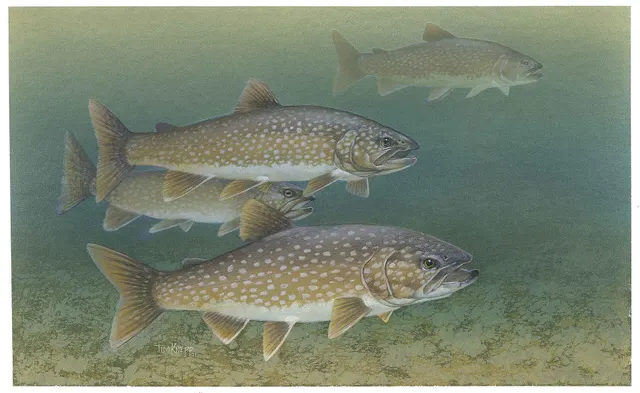 Lake troutA deep, cold, slow-growing char of northern lakes that can live decades and takes a very long time to replace anything removed.
Knepp Timothy, U.S. Fish and Wildlife Service — Public domain, via Wikimedia Commons
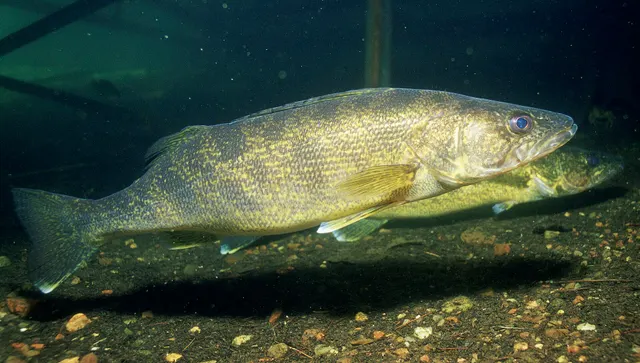 WalleyeA low-light predator of large North American lakes and rivers whose reflective eye lets it hunt in conditions where its prey cannot see it coming.
Engbretson, Eric / U.S. Fish and Wildlife Service, Public domain, via Wikimedia Commons
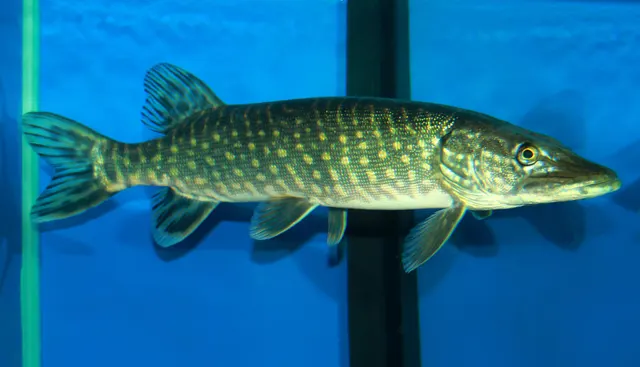 Northern pikeThe dominant freshwater ambush predator of the northern hemisphere: long, cryptic, and built for one violent acceleration rather than pursuit.
Karelj, Public domain, via Wikimedia Commons
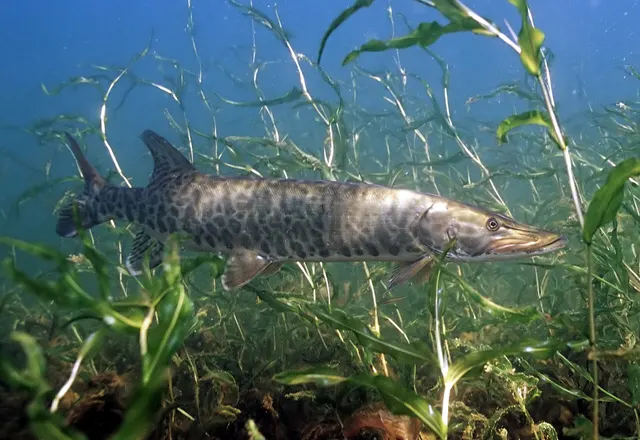 MuskellungeNorth America's largest pike and the fish that gave rise to the phrase "the fish of ten thousand casts" — a solitary ambush predator with a well-earned reputation for refusal.
Engbretson, Eric / U.S. Fish and Wildlife Service — Public domain, via Wikimedia Commons
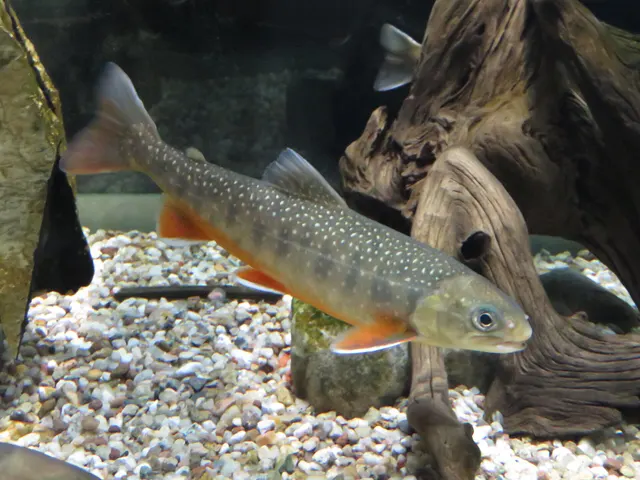 Arctic charThe most northerly freshwater fish in the world, a cold-demanding char with brilliant orange-red spawning bellies and highly distinct landlocked populations.
Xepheid — CC BY-SA 4.0, via Wikimedia Commons
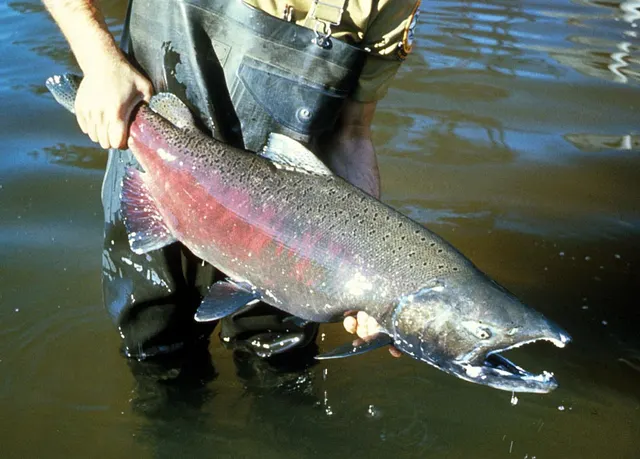 Chinook salmonThe largest Pacific salmon, reaching over sixty kilograms, and the one whose runs carry the most cultural and ecological weight on that coast.
U.S. Geological Survey — public domain, via Wikimedia Commons
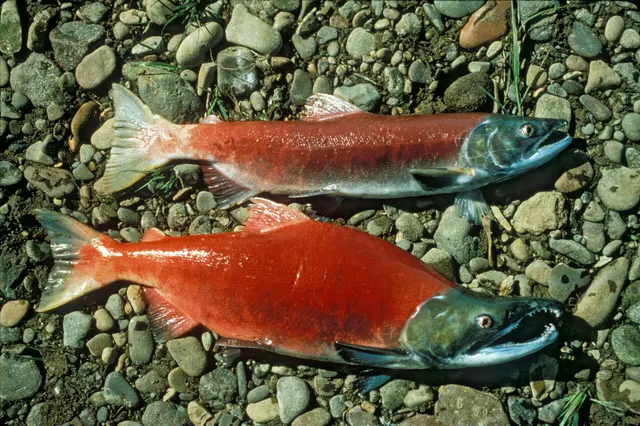 Sockeye salmonThe plankton-feeding Pacific salmon that turns brilliant scarlet to spawn, depends on lakes rather than just rivers, and barely takes a lure at all.
David Menke — Public domain, via Wikimedia Commons
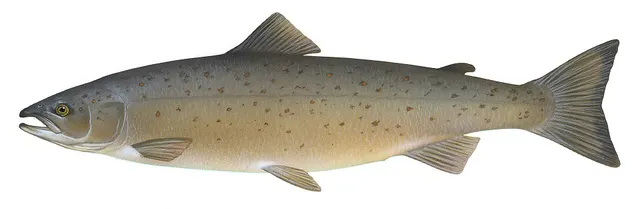 Atlantic salmonAn anadromous salmonid that migrates from its natal river to the North Atlantic and returns to spawn — and a species in serious, well-documented decline.
Knepp, Timothy, Public domain, via Wikimedia Commons
Safety
Further safety reading
- Cold water shock and immersion — Water is cold enough to incapacitate for most of the year across most of the country, and much of the fishery is hours from assistance.
- Fishing alone — Remoteness is the defining Canadian risk multiplier: a minor incident on a fly-in lake or a northern river is a serious one because help is a long way off.
Check the rules before you fish
Fishing laws, bylaws, access rules, seasons, bait restrictions and permitted methods vary by location and can change. Check the current rules from the relevant authority and the water you intend to fish before fishing.
Check with:
- Current national or regional law for where you are fishing
- Current local bylaws
- The relevant fisheries authority
- The landowner, club or fishery whose water it is
- Any restrictions specific to the species or the method you intend to use
Where to go next
What swims here
- Arctic charThe northernmost freshwater fish of the country, occurring in deep cold lakes and as sea-run populations across the Arctic coast.
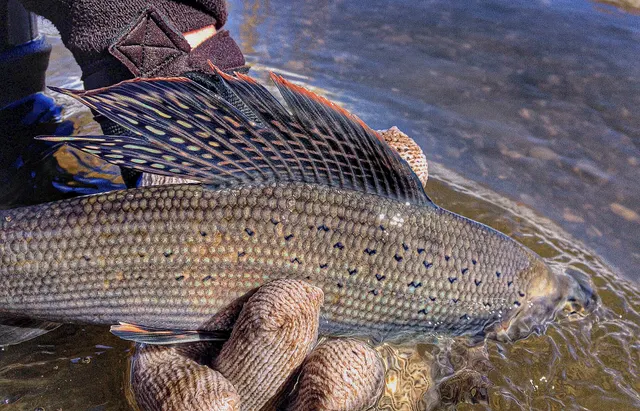 Arctic graylingOccupies cold, clean, connected rivers across the north and west, requiring separate spawning, feeding and overwintering habitat within reach of one another.
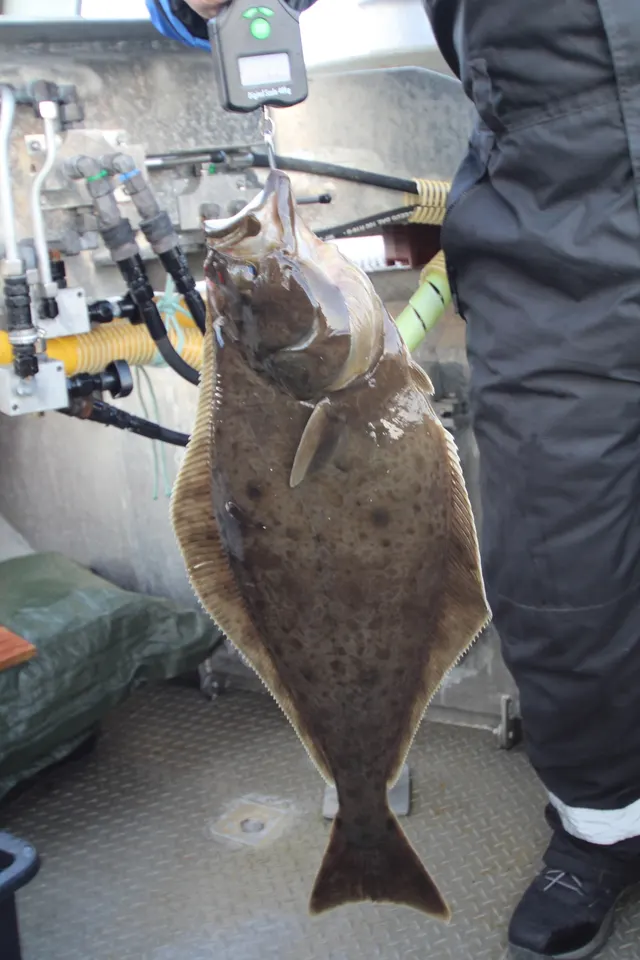 Atlantic halibutOccupies the deep shelf and basin waters off the Atlantic provinces, where it is severely reduced and slow to recover.
- Atlantic salmonRuns the rivers of the Atlantic provinces and Quebec, where the fishery is heavily restricted and substantially catch-and-release.
- Chinook salmonRuns the Pacific drainages of British Columbia and is the largest of the five Pacific salmon returning to Canadian rivers.
- Lake troutThe defining deep cold-water species of the Canadian Shield lakes and the Great Lakes basin, and the fish most of the country's northern lake fishing is built around.
- MuskellungeOccupies the larger, warmer lakes and rivers of the eastern and central provinces at characteristically low density.
- Northern pikePresent across essentially the whole country in lakes, slow rivers and weedy bays, and the shield's most accessible large predator.
3 more
- Smallmouth bass Fish
- Sockeye salmon Fish
- Walleye Fish
How people fish here
- Fly fishingFly fishing for Pacific salmon, steelhead, Atlantic salmon, trout and char is long established on both coasts and across the interior.
- Predator fishingLake and river predator fishing for walleye, pike, lake trout and muskellunge is the country's largest recreational fishery by participation.
How this compares
Environment and conservation
Sources and evidence
- NASCO conservation and management of North Atlantic salmon — North Atlantic Salmon Conservation Organization (Government fisheries body)Relied on for: Anadromous salmonid biology, run timing, freshwater habitat requirements and the management principles applied to them.Background and mechanism onlyCitation checked — the work exists and is described correctly
- FishBase: a global information system on fishes — Froese, R. and D. Pauly, eds. — FishBase Consortium (Scientific institute)Relied on for: Distribution, habitat association, migratory behaviour and life history of the species occurring in the area.States this directlyPassage read and verified
Why the 17 connections on this page are here, and the sources
What swims here
Backed by research — 11 connections
Supported by peer-reviewed research or fisheries science. The sources are listed and can be checked.
Arctic char
A distribution association between an animal and a kind of water, rather than a claim about any named mark.
- FishBase: a global information system on fishes — Froese, R. and D. Pauly, eds. — FishBase Consortium (Scientific institute)Relied on for: Distribution, habitat association and depth range recorded for the species, including its occurrence in the water body concerned.States this directlyPassage read and verified
- The IUCN Red List of Threatened Species — International Union for Conservation of Nature (Conservation authority)Relied on for: Assessment and range account for the species, including the systems and coasts it occupies.Background and mechanism onlyCitation checked — the work exists and is described correctly
Arctic grayling
A distribution association between an animal and a kind of water, rather than a claim about any named mark.
- FishBase: a global information system on fishes — Froese, R. and D. Pauly, eds. — FishBase Consortium (Scientific institute)Relied on for: Distribution, habitat association and depth range recorded for the species, including its occurrence in the water body concerned.States this directlyPassage read and verified
- The IUCN Red List of Threatened Species — International Union for Conservation of Nature (Conservation authority)Relied on for: Assessment and range account for the species, including the systems and coasts it occupies.Background and mechanism onlyCitation checked — the work exists and is described correctly
Atlantic halibut
A distribution association between an animal and a kind of water, rather than a claim about any named mark.
- FishBase: a global information system on fishes — Froese, R. and D. Pauly, eds. — FishBase Consortium (Scientific institute)Relied on for: Distribution, habitat association and depth range recorded for the species, including its occurrence in the water body concerned.States this directlyPassage read and verified
- The IUCN Red List of Threatened Species — International Union for Conservation of Nature (Conservation authority)Relied on for: Assessment and range account for the species, including the systems and coasts it occupies.Background and mechanism onlyCitation checked — the work exists and is described correctly
Atlantic salmon
A distribution association between an animal and a kind of water, rather than a claim about any named mark.
- FishBase: a global information system on fishes — Froese, R. and D. Pauly, eds. — FishBase Consortium (Scientific institute)Relied on for: Distribution, habitat association and depth range recorded for the species, including its occurrence in the water body concerned.States this directlyPassage read and verified
- The IUCN Red List of Threatened Species — International Union for Conservation of Nature (Conservation authority)Relied on for: Assessment and range account for the species, including the systems and coasts it occupies.Background and mechanism onlyCitation checked — the work exists and is described correctly
Chinook salmon
A distribution association between an animal and a kind of water, rather than a claim about any named mark.
- FishBase: a global information system on fishes — Froese, R. and D. Pauly, eds. — FishBase Consortium (Scientific institute)Relied on for: Distribution, habitat association and depth range recorded for the species, including its occurrence in the water body concerned.States this directlyPassage read and verified
- The IUCN Red List of Threatened Species — International Union for Conservation of Nature (Conservation authority)Relied on for: Assessment and range account for the species, including the systems and coasts it occupies.Background and mechanism onlyCitation checked — the work exists and is described correctly
Lake trout
A distribution association between an animal and a kind of water, rather than a claim about any named mark.
- FishBase: a global information system on fishes — Froese, R. and D. Pauly, eds. — FishBase Consortium (Scientific institute)Relied on for: Distribution, habitat association and depth range recorded for the species, including its occurrence in the water body concerned.States this directlyPassage read and verified
- The IUCN Red List of Threatened Species — International Union for Conservation of Nature (Conservation authority)Relied on for: Assessment and range account for the species, including the systems and coasts it occupies.Background and mechanism onlyCitation checked — the work exists and is described correctly
Muskellunge
A distribution association between an animal and a kind of water, rather than a claim about any named mark.
- FishBase: a global information system on fishes — Froese, R. and D. Pauly, eds. — FishBase Consortium (Scientific institute)Relied on for: Distribution, habitat association and depth range recorded for the species, including its occurrence in the water body concerned.States this directlyPassage read and verified
- The IUCN Red List of Threatened Species — International Union for Conservation of Nature (Conservation authority)Relied on for: Assessment and range account for the species, including the systems and coasts it occupies.Background and mechanism onlyCitation checked — the work exists and is described correctly
Northern pike
A distribution association between an animal and a kind of water, rather than a claim about any named mark.
- FishBase: a global information system on fishes — Froese, R. and D. Pauly, eds. — FishBase Consortium (Scientific institute)Relied on for: Distribution, habitat association and depth range recorded for the species, including its occurrence in the water body concerned.States this directlyPassage read and verified
- The IUCN Red List of Threatened Species — International Union for Conservation of Nature (Conservation authority)Relied on for: Assessment and range account for the species, including the systems and coasts it occupies.Background and mechanism onlyCitation checked — the work exists and is described correctly
Smallmouth bass
A distribution association between an animal and a kind of water, rather than a claim about any named mark.
- FishBase: a global information system on fishes — Froese, R. and D. Pauly, eds. — FishBase Consortium (Scientific institute)Relied on for: Distribution, habitat association and depth range recorded for the species, including its occurrence in the water body concerned.States this directlyPassage read and verified
- The IUCN Red List of Threatened Species — International Union for Conservation of Nature (Conservation authority)Relied on for: Assessment and range account for the species, including the systems and coasts it occupies.Background and mechanism onlyCitation checked — the work exists and is described correctly
Sockeye salmon
A distribution association between an animal and a kind of water, rather than a claim about any named mark.
- FishBase: a global information system on fishes — Froese, R. and D. Pauly, eds. — FishBase Consortium (Scientific institute)Relied on for: Distribution, habitat association and depth range recorded for the species, including its occurrence in the water body concerned.States this directlyPassage read and verified
- The IUCN Red List of Threatened Species — International Union for Conservation of Nature (Conservation authority)Relied on for: Assessment and range account for the species, including the systems and coasts it occupies.Background and mechanism onlyCitation checked — the work exists and is described correctly
Walleye
A distribution association between an animal and a kind of water, rather than a claim about any named mark.
- FishBase: a global information system on fishes — Froese, R. and D. Pauly, eds. — FishBase Consortium (Scientific institute)Relied on for: Distribution, habitat association and depth range recorded for the species, including its occurrence in the water body concerned.States this directlyPassage read and verified
- The IUCN Red List of Threatened Species — International Union for Conservation of Nature (Conservation authority)Relied on for: Assessment and range account for the species, including the systems and coasts it occupies.Background and mechanism onlyCitation checked — the work exists and is described correctly
How people fish here
What experienced anglers do — 2 connections
Widely and independently recommended by experienced anglers and specialist sources. This is real angling knowledge, not proof: controlled evidence for it is limited, and FishingHQ records it as convention rather than as a demonstrated effect.
Fly fishing
A discipline that is characteristic of the place rather than merely possible there, joined so a reader can move between the place and the practice.
- General angling website restatements of established technique — Various (Credible secondary source)Relied on for: Widely restated practice associating this discipline with this place, recorded as practitioner consensus rather than as tested fact.Background and mechanism onlyCitation checked — the work exists and is described correctly
- Fishers' Craft and Lettered Art: Tracts on Fishing from the End of the Middle Ages — University of Toronto Press, 1997 (Scientific literature)Relied on for: That fishing traditions develop around the water and fish available to them, and the historical method of reading such traditions.States this directlyCitation checked — the work exists and is described correctly
Predator fishing
A discipline that is characteristic of the place rather than merely possible there, joined so a reader can move between the place and the practice.
- General angling website restatements of established technique — Various (Credible secondary source)Relied on for: Widely restated practice associating this discipline with this place, recorded as practitioner consensus rather than as tested fact.Background and mechanism onlyCitation checked — the work exists and is described correctly
- Fishers' Craft and Lettered Art: Tracts on Fishing from the End of the Middle Ages — University of Toronto Press, 1997 (Scientific literature)Relied on for: That fishing traditions develop around the water and fish available to them, and the historical method of reading such traditions.States this directlyCitation checked — the work exists and is described correctly
How this compares
What experienced anglers do — 1 connection
Widely and independently recommended by experienced anglers and specialist sources. This is real angling knowledge, not proof: controlled evidence for it is limited, and FishingHQ records it as convention rather than as a demonstrated effect.
The Pacific Northwest coast
Two places a reader would reasonably weigh against one another, joined where the comparison teaches something about both.
- General angling website restatements of established technique — Various (Credible secondary source)Relied on for: Widely restated practice associating this discipline with this place, recorded as practitioner consensus rather than as tested fact.Background and mechanism onlyCitation checked — the work exists and is described correctly
- Fishers' Craft and Lettered Art: Tracts on Fishing from the End of the Middle Ages — University of Toronto Press, 1997 (Scientific literature)Relied on for: That fishing traditions develop around the water and fish available to them, and the historical method of reading such traditions.States this directlyCitation checked — the work exists and is described correctly
Safety reading
Official guidance — 2 connections
Stated by a fisheries authority, scientific institute or recognised angling body. Authoritative, but summarising rather than demonstrating.
Cold water shock and immersion
A place is joined to the safety topic that explains a hazard genuinely characteristic of it, so the mechanism is reachable rather than restated as a weak warning.
- RNLI water safety guidance: cold water shock and Float to Live — Royal National Lifeboat Institution (Water-safety or diver-training authority)Relied on for: Cold water shock and the immersion response, shore angling hazards, small-craft guidance and the circumstances in which water users are most often killed.States this directlyPassage read and verified
- RoSPA water safety information and UK accidental drowning statistics — Royal Society for the Prevention of Accidents (Water-safety or diver-training authority)Relied on for: Accidental drowning statistics and the circumstances in which recreational water users are most often killed.Background and mechanism onlyPassage read and verified
Fishing alone
A place is joined to the safety topic that explains a hazard genuinely characteristic of it, so the mechanism is reachable rather than restated as a weak warning.
- RNLI water safety guidance: cold water shock and Float to Live — Royal National Lifeboat Institution (Water-safety or diver-training authority)Relied on for: Cold water shock and the immersion response, shore angling hazards, small-craft guidance and the circumstances in which water users are most often killed.States this directlyPassage read and verified
- RoSPA water safety information and UK accidental drowning statistics — Royal Society for the Prevention of Accidents (Water-safety or diver-training authority)Relied on for: Accidental drowning statistics and the circumstances in which recreational water users are most often killed.Background and mechanism onlyPassage read and verified
Environment and conservation
Backed by research — 1 connection
Supported by peer-reviewed research or fisheries science. The sources are listed and can be checked.
Fish stocks and sustainability
An environmental pressure that is specific to this place rather than general to fishing, joined so the issue is anchored to a real example.
- ICES Advice on fishing opportunities, catch and effort — International Council for the Exploration of the Sea (Scientific institute)Relied on for: Stock status, environmental pressures and the scientific basis for advice in the waters concerned.Background and mechanism onlyCitation checked — the work exists and is described correctly
- The IUCN Red List of Threatened Species — International Union for Conservation of Nature (Conservation authority)Relied on for: Assessment of the species and habitats affected, and the pressures acting on them.States this directlyCitation checked — the work exists and is described correctly
How FishingHQ labels evidence is explained in the evidence policy.