The western Indian Ocean coast
Fishing regions · Last reviewed 2026-08-14
A warm reef and mangrove coast running from the Horn of Africa to the Mozambique Channel, where a monsoon-sailed dhow fishery is being joined by flats, reef and offshore angling.
Safety: tides and being cut off — can cause serious injury or death. 3 more points apply here.
Being listed here is not permission to fish. What that meansClose
Access, fishing rights, seasons, licences, local bylaws and permitted methods vary and can change. Check current access, permission, local regulations, closures and restrictions before you travel or fish. FishingHQ describes what the ground is and names who holds the answer; it does not hold the answer itself.
Find the authority for a jurisdiction · What FishingHQ does and does not cover
This coast qualifies as a coast-tier record because ground, exposure, current and fauna change together along it and are shared across several jurisdictions, none of which explains the coast.
IT IS A FRINGING-REEF AND MANGROVE COAST. From the Horn of Africa southward the shore is a sequence of fringing reef, reef lagoon, mangrove creek and sand, with the reef sitting close inshore and a narrow shelf behind it. Where rivers reach the sea the reef breaks and mangrove and estuary take over.
THE MOZAMBIQUE CHANNEL IS THE OCEANOGRAPHIC ENGINE. Between the mainland and Madagascar, flow is dominated by large eddies rather than by a single continuous current, and those eddies drive local upwelling and concentrate life. Water leaving the channel southward feeds the Agulhas, so this coast is where that current is assembled.
THE MONSOON GOVERNS THE YEAR. Two seasonal wind regimes reverse along this coast, and they governed the Indian Ocean sailing trade for two thousand years before they governed a fishing calendar. The dhow fishery still runs on them.
THE FISHERY IS ARTISANAL AND VERY LARGE. Small boats, hand lines, gillnets, traps, beach seines and spears supply local markets across thousands of kilometres of coast, and reef fishing is a food fishery first.
AND THE RECREATIONAL LAYER IS GROWING AND DISTINCTIVE. Flats fishing for permit-type species, bonefish and trevally on sand and seagrass flats; offshore fishing for billfish, sailfish and tuna along the channel eddies; and reef fishing for grouper, snapper and kingfish. A handful of areas on this coast have an international reputation for fly fishing on flats that is a genuine speciality rather than a marketing claim.
What fishing here is like
A long, warm, tropical coast of fringing reef, shallow lagoon, mangrove creek and sand flats, with a narrow shelf and deep water not far offshore. The wind reverses twice a year and both the sailing tradition and the fishing calendar run on it. The working fishery is overwhelmingly artisanal — dhows, small boats, handlines, gillnets, traps and beach seines — and it is under real pressure. On top of it sits a small but internationally significant sport fishery for flats species, billfish and reef predators.
What dominates
Handlining and small-scale gillnetting from dhows and small boats, which is the bulk of the effort. Trap and basket fishing on the reef, an old and widespread practice. Beach seining, widely restricted and widely practised. Spearfishing, both traditional breath-hold reef fishing and a modern recreational form. Flats fishing on foot and by skiff for bonefish, permit-type species and trevally, which is the coast's speciality in the international sport fishery. Offshore trolling and live-baiting for sailfish, marlin and tuna along the channel and its eddies. Reef jigging and popping. Gleaning on reef flats and in mangrove for shellfish, octopus and crab.
The water available
Fringing coral reef close inshore with shallow back-reef lagoons and reef flats; extensive sand and seagrass flats that dry or nearly dry on spring tides, which are the flats fishery's ground; mangrove creeks and deltas where rivers reach the sea, functioning as nurseries and holding their own fishery; a narrow continental shelf with deep water close offshore; the Mozambique Channel with its large eddies and localised upwelling; coral islands and archipelagos offshore; and, in the north, a genuinely upwelling-influenced coast where the monsoon drives cooler productive water to the surface seasonally.
How the rules are structured
Each coastal country administers its own fisheries through a national authority, generally with district or provincial implementation, and several have established community or collaborative management arrangements giving village-level bodies a defined role over adjacent inshore water. Common instruments include gear restrictions — particularly on beach seines and small-mesh nets — closed areas, protected species lists covering turtles, dugongs, some sharks and rays, and licensing of vessels and of recreational operations. Marine protected areas and marine parks cover significant stretches of reef and island, and in several countries they are the principal management instrument on the coast; some are effectively enforced and some are not. Sport fishing generally operates through licensed operators and lodges, and where it works on flats or inside a marine park the operator's permissions and the park rules both apply. Migratory pelagic species are managed regionally through the Indian Ocean tuna commission framework as well as nationally. FishingHQ does not state what any current rule is.
Who to ask
- The national fisheries authority of the coastal country concerned, for licensing, gear rules and protected species.
- The marine park or protected area authority where the reef, flat or island sits inside a designated area.
- The village or community management body where a collaborative or community fisheries arrangement covers the inshore water.
- The regional Indian Ocean tuna commission framework, for the migratory pelagic stocks fished offshore.
- The licensed operator or lodge, which in practice governs how and where a visiting angler fishes on flats and reef.
Words you will meet
- Dhow
- The lateen-rigged sailing craft of the western Indian Ocean, in several regional forms. Built and sailed for both fishing and trade, and historically dependent on the monsoon reversal for its voyages, which is why the sailing seasons and the trade routes were the same thing.
- Kaskazi and kusi
- The two monsoon winds of the Swahili coast — the north-easterly and the south-easterly. They name seasons, sailing directions and fishing conditions all at once, and the local year is structured around them.
- Flats
- Shallow sand and seagrass areas that dry or nearly dry on spring low tides, over which fish move to feed on the flooding tide. The ground the sight-fishing fishery is conducted on, and a habitat this coast has in unusual quality.
- Mangrove creek
- A tidal channel through mangrove forest. Nursery habitat for a large number of reef and coastal species, a fishery in its own right for mangrove jack, mullet, crab and prawn, and the reason mangrove loss is a fisheries problem rather than only a forestry one.
- Mozambique Channel eddies
- Large rotating water masses that dominate flow between the mainland and Madagascar. They drive localised upwelling, concentrate plankton and pelagic fish, and are what the offshore fishery works.
Conditions and hazards
Tidal range on this coast is substantial and the flats are extensive, so being cut off while wading is a real hazard: the flood returns across level ground quickly and the channels behind fill first. Reef is sharp and wounds in warm water infect readily. The venomous and hazardous fauna is the full tropical set — stonefish, scorpionfish, lionfish, cone shells, sea snakes, stingrays on sand and seagrass. Sharks are present and encounters are more likely for spearfishers carrying fish. Currents through reef passes and channels are strong. Offshore, distances are large and rescue capacity is limited over much of the coast. Tropical cyclones affect the southern part of this coast, particularly the Mozambique Channel, on a seasonal cycle. Crocodiles occur in some river mouths and mangrove systems. Sun, heat and dehydration are constant, and malaria is present along most of the coast.
Reef, flat, mangrove and channel: four habitats within sight of each other
This coast packs four quite different fishing environments into a narrow band, and understanding which one you are on decides everything else.
THE FRINGING REEF SITS CLOSE INSHORE. A reef crest breaking a short distance off the beach, with a shallow lagoon behind it, is the default form along much of this coast. It gives shelter, it holds the reef fauna, and it means shore access to reef fishing is unusually easy.
THE FLATS ARE THE SPECIALITY. Extensive sand and seagrass areas that dry or nearly dry on spring low tides, and flood on the rise, are the ground the sight-fishing fishery is conducted on. Fish move onto them to feed as the tide covers them and off as it drops. This is a habitat that exists in quality in comparatively few places worldwide, and this coast has a great deal of it.
THE MANGROVE CREEKS ARE THE NURSERY SYSTEM. Where rivers reach the sea, mangrove forest and its tidal creeks take over from reef. Juvenile reef and coastal species use them, mangrove jack and mullet live in them, and mud crab and prawn are taken from them. Their nursery function is the reason mangrove clearance affects reef fisheries at a distance.
DEEP WATER IS CLOSE. The shelf is narrow, so offshore fishing is a short run from most of the coast. That is what makes billfish and tuna accessible from small boats.
THE MOZAMBIQUE CHANNEL BEHAVES UNUSUALLY. Rather than a single continuous current, flow between the mainland and Madagascar is dominated by a train of large eddies. Those eddies drive localised upwelling, concentrate plankton and pelagic fish, and are what the offshore fishery works. Water leaving the channel to the south feeds the Agulhas, so this coast is where that current is assembled.
AND THE NORTHERN COAST HAS GENUINE SEASONAL UPWELLING, driven by the monsoon, which makes it cooler and more productive at certain times of year than the reef coast further south.
Backed by research — why, and the sources (2)
Supported by peer-reviewed research or fisheries science. The sources are listed and can be checked.
- FAO Species Identification Guides for Fishery Purposes and the FAO Species Catalogues — Food and Agriculture Organization of the United Nations (Scientific institute)Relied on for: Distribution, habitat, depth and fishery accounts for the species of the eastern central Atlantic and western Indian Ocean in the FAO regional identification guides.States this directlyCitation checked — the work exists and is described correctly
- FishBase: a global information system on fishes — Froese, R. and D. Pauly, eds. — FishBase Consortium (Scientific institute)Relied on for: Distribution, habitat association and depth range recorded for the species.States this directlyPassage read and verified
Reef predators, flats species and the pelagics offshore
Three species groups occupy the three main habitats and they are fished by quite different people.
THE REEF HOLDS THE FOOD FISHERY'S CATCH. Groupers, snappers, emperors, rabbitfish, parrotfish and the reef trevallies are what the artisanal fishery takes, and reef fish is the everyday protein of the coast. Red emperor and mangrove jack are among the species FishingHQ holds that belong here.
THE FLATS HOLD THE SPORT FISHERY'S CATCH. Bonefish, permit-type species, milkfish and trevally move onto the flats to feed on the flood, and giant trevally hunting in inches of water on a flooding flat is one of the sights the international fishery comes for. This is sight fishing in the proper sense and it is technically demanding.
THE MANGROVE AND ESTUARY SYSTEM HOLDS ITS OWN SET — mangrove jack, mullet, kingfish, and the crabs and prawns that are a substantial part of the local fishery's value.
OFFSHORE IT IS BILLFISH AND TUNA. Sailfish in particular are abundant along parts of this coast, along with marlin, yellowfin tuna, wahoo and dorado. The eddies concentrate them.
DUSKY KOB, SPOTTED GRUNTER AND THE ESTUARINE SCIAENIDS occupy the river mouths in the south of the range, connecting this coast's fauna to the South African one.
TURTLES AND DUGONGS ARE PROTECTED AND PRESENT. Both occur along this coast, dugongs in seagrass in a few remaining strongholds, and both carry protection everywhere. Their presence is a constraint on netting in some areas and a conservation priority in others.
AND THE INVERTEBRATE FISHERY IS SUBSTANTIAL. Octopus taken from reef flats — frequently by women, on foot, at low water — is an economically important fishery on this coast and has been the subject of some of the better-known short-closure experiments in African fisheries management. Sea cucumber has been serially depleted. Shellfish and crab gleaning is widespread.
Backed by research — why, and the sources (2)
Supported by peer-reviewed research or fisheries science. The sources are listed and can be checked.
- FAO Species Identification Guides for Fishery Purposes and the FAO Species Catalogues — Food and Agriculture Organization of the United Nations (Scientific institute)Relied on for: Distribution, habitat, depth and fishery accounts for the species of the eastern central Atlantic and western Indian Ocean in the FAO regional identification guides.States this directlyCitation checked — the work exists and is described correctly
- FishBase: a global information system on fishes — Froese, R. and D. Pauly, eds. — FishBase Consortium (Scientific institute)Relied on for: Distribution, habitat association and depth range recorded for the species.States this directlyPassage read and verified
Dhows, traps and skiffs: a working fishery with a sport fishery beside it
Two quite different fishing cultures use this coast, and they overlap more than either always finds comfortable.
THE ARTISANAL FISHERY IS THE COAST'S FISHERY. Handlines and small gillnets worked from dhows, outrigger canoes and small boats account for most of the effort. Basket and fence traps set on the reef are an old technology still in wide use. Beach seines are widely restricted and widely used, for the same economic reasons they persist everywhere.
THE DHOW IS THE CHARACTERISTIC CRAFT. Lateen-rigged sailing vessels in several regional forms, historically both fishing boats and trading ships, and still sailed for fishing in many places. Their range and their voyages depended on the monsoon reversal, which is why the sailing calendar and the trading calendar were the same thing for two thousand years.
OCTOPUS GLEANING IS A DISTINCT AND IMPORTANT DISCIPLINE, worked on reef flats at low water with hooks and spears, and it is economically significant enough that temporary closure experiments on octopus grounds have become a well-known management approach on this coast.
THE FLATS FISHERY IS THE SPORT SPECIALITY. Wading flats or poling a skiff, casting to visible fish, is a technical fly and lure discipline requiring clear water, a big tidal range and good ground — and this coast has all three. It is guided, small-scale and internationally significant.
OFFSHORE SPORT FISHING WORKS THE EDDIES with trolling, live-baiting and fly fishing for sailfish, and there is a serious billfish fishery along parts of the coast.
SPEARFISHING SPANS BOTH WORLDS: a traditional breath-hold reef fishery for food and a modern recreational one, with the usual difference in equipment and intent.
AND THE INTERACTION IS THE THING TO NOTICE. A flat that is a sight-fishing destination is also somebody's netting and gleaning ground, and arrangements between lodges and communities — where they work — are the mechanism by which both continue.
What experienced anglers do — why, and the sources (2)
Widely and independently recommended by experienced anglers and specialist sources. This is real angling knowledge, not proof: controlled evidence for it is limited, and FishingHQ records it as convention rather than as a demonstrated effect.
- FAO fishing gear types and fishing technology information — Food and Agriculture Organization of the United Nations (Scientific institute)Relied on for: Descriptions of fishing gear types and their operation, including the small-scale gears used by artisanal fisheries in the region.States this directlyCitation checked — the work exists and is described correctly
- IGFA International Angling Rules and World Record Requirements — International Game Fish Association (Angling or fisheries organisation)Relied on for: International recreational angling practice, tackle categories and the conventions applied to recognised catches.Background and mechanism onlyPassage read and verified
Kaskazi and kusi: a year named after two winds
The seasonal structure of this coast is a monsoon structure, and the local vocabulary names the seasons after the winds because that is what they are.
THE NORTH-EASTERLY MONSOON IS THE SETTLED SEASON. Lighter winds, calmer sea, clearer water and easier small-boat work. It is the period when flats fishing is at its best, when offshore days are most reliable, and historically when sailing vessels ran south-west along the coast.
THE SOUTH-EASTERLY MONSOON IS THE ROUGH SEASON. Stronger, more persistent wind, bigger sea, reduced visibility. Small-boat work becomes weather-dependent and shore fishing dominates. The reversal is what carried the historical trade back north-east.
THE TRANSITIONS ARE SHORT AND ARE FREQUENTLY THE BEST FISHING. As one system gives way to the other, the sea settles and the fish move, and local knowledge treats these windows carefully.
BILLFISH SEASONS FOLLOW THE WATER RATHER THAN THE CALENDAR. Sailfish concentrations along parts of this coast are strongly seasonal and are tied to water temperature and to the eddy field in the channel, which varies between years.
THE CYCLONE SEASON AFFECTS THE SOUTHERN COAST. Tropical cyclones in the Mozambique Channel are a seasonal hazard, and they have caused severe damage to coastal communities. The northern part of the coast is largely outside the belt.
TIDES ARE THE DAILY SEASON AND THEY ARE LARGE. Spring tides expose the flats furthest and flood them fastest, which is exactly what makes the flats fishery possible and exactly what makes wading them hazardous. Neaps produce less movement and less feeding.
AND THE RAINS MATTER WHERE RIVERS REACH THE SEA. Wet-season discharge lowers salinity, colours the water and pushes estuarine species around, and mangrove and creek fishing changes character with it.
Backed by research — why, and the sources (2)
Supported by peer-reviewed research or fisheries science. The sources are listed and can be checked.
- FAO Species Identification Guides for Fishery Purposes and the FAO Species Catalogues — Food and Agriculture Organization of the United Nations (Scientific institute)Relied on for: Distribution, habitat, depth and fishery accounts for the species of the eastern central Atlantic and western Indian Ocean in the FAO regional identification guides.States this directlyCitation checked — the work exists and is described correctly
- FishBase: a global information system on fishes — Froese, R. and D. Pauly, eds. — FishBase Consortium (Scientific institute)Relied on for: Distribution, habitat association and depth range recorded for the species.States this directlyPassage read and verified
Marine parks, village agreements and a coast with limited enforcement
Fisheries governance on this coast varies substantially between countries, but the structural pattern is consistent enough to describe.
NATIONAL AUTHORITIES SET THE FRAMEWORK and district or provincial offices implement it. Licensing, gear rules and protected species lists are national; what happens on a particular reef is usually decided closer to it.
COMMUNITY AND COLLABORATIVE MANAGEMENT IS WIDESPREAD AND IS THE MOST PROMISING INSTRUMENT. Several countries on this coast have given village-level bodies a defined role over adjacent inshore water, with authority over gear, closures and access. Where those bodies are genuinely empowered, closures — including short temporary closures of octopus grounds — have produced measurable results, and the model has been influential.
MARINE PARKS AND PROTECTED AREAS COVER SIGNIFICANT REEF AND ISLAND. In several countries they are the principal management instrument on the coast. Their effectiveness ranges from strong to nominal, and a designation on a map is not evidence of protection on the water.
GEAR RESTRICTIONS TARGET BEACH SEINES AND SMALL MESH, because both take juveniles and damage inshore habitat. Compliance is an economic problem rather than an informational one.
PROTECTED SPECIES INCLUDE TURTLES, DUGONGS AND SEVERAL SHARKS AND RAYS, and their protection frequently constrains netting in particular habitats.
SPORT FISHING OPERATES THROUGH LICENSED OPERATORS in the ordinary case, and where it happens on flats inside a marine park or on community-managed water, both the park rules and the community arrangement apply. Getting that right is the operator's job and it is a real one.
MIGRATORY PELAGICS ARE MANAGED REGIONALLY as well as nationally, through the Indian Ocean tuna framework.
AND ENFORCEMENT CAPACITY IS THE LIMITING FACTOR ALONG MUCH OF THIS COAST. Distances are large, budgets are small, and industrial fishing offshore has historically been difficult to police. That is a structural fact rather than a criticism of any authority, and it is why community management matters so much here.
Official guidance — why, and the sources (2)
Stated by a fisheries authority, scientific institute or recognised angling body. Authoritative, but summarising rather than demonstrating.
- Good Fish Guide — Marine Conservation Society (Conservation authority)Relied on for: Assessment of fisheries and the management measures applied to them, including gear selectivity and spatial protection.Background and mechanism onlyCitation checked — the work exists and is described correctly
- Code of Conduct for Responsible Fisheries — Food and Agriculture Organization of the United Nations, Rome, 1995 (Standards body)Relied on for: Principles for responsible fisheries management, precaution, and the treatment of small-scale, shared and inland fisheries.States this directlyCitation checked — the work exists and is described correctly
Swahili words for winds, boats and grounds
The vocabulary of this coast is Swahili and Arabic in the main, and several of the terms carry meanings that no English word replaces.
KASKAZI AND KUSI NAME THE TWO MONSOONS and, by extension, the two halves of the year. They are not merely wind directions: they name a season, a sea state, a sailing direction and a fishing regime together, and a local statement about which one is running conveys all of it at once.
DHOW IS THE ENGLISH COVER TERM for a family of lateen-rigged craft with distinct regional names and forms. Using the English word is convenient and slightly imprecise, and a reader should know that the local names distinguish hull types the English word flattens.
FLATS IS AN IMPORTED SPORT-FISHING TERM that has become standard on this coast because the fishery that uses it is international. It names shallow sand and seagrass ground that floods and drains with the tide, and it is worth distinguishing from a reef flat, which is limestone and behaves differently.
MANGROVE CREEK NAMES A HABITAT AND A FISHERY. The tidal channels through mangrove forest are nursery ground, crab and prawn ground, and mangrove jack water, and the term should be read as naming a system rather than a piece of scenery.
EDDY IS THE OCEANOGRAPHIC TERM THAT MATTERS OFFSHORE. Understanding that the Mozambique Channel is dominated by rotating water masses rather than by a steady current is what makes the offshore fishing legible.
AND THE SWAHILI COAST IS A CULTURAL TERM AS WELL AS A GEOGRAPHIC ONE, naming the long-established trading civilisation of this seaboard, its language, and its maritime orientation. A record that treated this coast as a set of national coastlines would miss the unit that the people living on it have used for a millennium.
What experienced anglers do — why, and the sources (2)
Widely and independently recommended by experienced anglers and specialist sources. This is real angling knowledge, not proof: controlled evidence for it is limited, and FishingHQ records it as convention rather than as a demonstrated effect.
- FAO fishing gear types and fishing technology information — Food and Agriculture Organization of the United Nations (Scientific institute)Relied on for: Descriptions of fishing gear types and their operation, including the small-scale gears used by artisanal fisheries in the region.States this directlyCitation checked — the work exists and is described correctly
- IGFA International Angling Rules and World Record Requirements — International Game Fish Association (Angling or fisheries organisation)Relied on for: International recreational angling practice, tackle categories and the conventions applied to recognised catches.Background and mechanism onlyPassage read and verified
Two thousand years of monsoon trade, and what came after
This is one of the oldest continuously used maritime coasts in the world, and its fishing history is inseparable from its trading history.
THE MONSOON MADE THE TRADE POSSIBLE. Because the wind reverses seasonally, a sailing vessel could run from Arabia and India to this coast on one monsoon and return on the other. That single fact created a trading network across the western Indian Ocean that operated for around two thousand years, and the Swahili coast's cities were built on it.
THE DHOW IS THE SURVIVING TECHNOLOGY of that network, and it is still fished from. A boat design optimised for monsoon sailing continues to work as a fishing craft, which is an unusually direct continuity.
THE ARTISANAL REEF FISHERY IS EQUALLY OLD. Traps, handlines, spears and gleaning are long-established practices, and the reef has been a food source for as long as people have lived on the coast.
COLONIAL AND POST-COLONIAL PERIODS CHANGED OWNERSHIP AND ACCESS. As elsewhere, national law generally vested marine resources in the state, displacing customary arrangements without replacing their enforcement, and the consequences for inshore fishing pressure were similar to those documented across the tropics.
INDUSTRIAL FISHING ARRIVED OFFSHORE. Distant-water fleets fishing tuna and, in places, shrimp trawling inshore, added pressure that coastal communities did not benefit from proportionally, and the licensing of foreign fleets in national waters remains a contested issue along this coast.
CONFLICT AND INSTABILITY HAVE AFFECTED PARTS OF THE COAST at various times, with consequences for fisheries management, for the safety of fishing, and for the development of tourism-linked sport fisheries.
AND COMMUNITY MANAGEMENT IS THE RECENT AND MORE HOPEFUL CHAPTER. From the late twentieth century, collaborative and community-based management, temporary closures and locally enforced protected areas have been developed along this coast, with documented results in several places. It is a partial reconnection to the older logic of controlled local access, and it is currently the most effective thing happening on this coast.
Official guidance — why, and the sources (2)
Stated by a fisheries authority, scientific institute or recognised angling body. Authoritative, but summarising rather than demonstrating.
- Good Fish Guide — Marine Conservation Society (Conservation authority)Relied on for: Assessment of fisheries and the management measures applied to them, including gear selectivity and spatial protection.Background and mechanism onlyCitation checked — the work exists and is described correctly
- Code of Conduct for Responsible Fisheries — Food and Agriculture Organization of the United Nations, Rome, 1995 (Standards body)Relied on for: Principles for responsible fisheries management, precaution, and the treatment of small-scale, shared and inland fisheries.States this directlyCitation checked — the work exists and is described correctly
A lodge on a flat that somebody nets
The cultural situation on this coast is defined by the proximity of a high-value visiting fishery to a low-margin subsistence one, and the honest account holds both.
THE COASTAL FISHERY IS A LIVELIHOOD SYSTEM. Fishing, gleaning, drying and trading involve whole communities, and the reef and flats are working ground. Octopus gleaning in particular, largely done by women on foot at low water, is economically significant and is invisible in most accounts of the fishery.
THE SPORT FISHERY IS SMALL, EXPENSIVE AND CONCENTRATED. A handful of lodges and operators run flats and offshore fishing for international clients, generating substantial revenue per angler and employing local staff. Where the relationship with the neighbouring community is well constructed — access agreements, employment, a share of fees, participation in closures — it can support conservation. Where it is not, it is extraction with better manners.
THE OVERLAP IS PHYSICAL AND UNAVOIDABLE. The flat a guide poles a client across is the flat somebody gleans. The reef a visiting spearfisher dives is somebody's protein. Nothing about that is resolvable by good intentions alone, and it is why the community management arrangements described above matter more than any individual etiquette.
RELEASE PRACTICE IS DEMANDING AND IS PART OF THE SPORT FISHERY'S CLAIM. Warm water, hard-fighting fish and abundant reef sharks make a released fish's prospects worse than in temperate water. The handling material on FishingHQ is where the mechanism sits, and a fishery that claims release as its justification has to meet that standard rather than assert it.
THE SWAHILI MARITIME CULTURE IS STILL VISIBLE in boats, in navigation, in the seasonal rhythm of the coast, and in the persistence of sail in a working fishery.
AND FISHINGHQ DOES NOT SPEAK FOR THE COMMUNITIES OF THIS COAST. What is recorded is what the public and published record supports about how these fisheries work.
Official guidance — why, and the sources (2)
Stated by a fisheries authority, scientific institute or recognised angling body. Authoritative, but summarising rather than demonstrating.
- Good Fish Guide — Marine Conservation Society (Conservation authority)Relied on for: Assessment of fisheries and the management measures applied to them, including gear selectivity and spatial protection.Background and mechanism onlyCitation checked — the work exists and is described correctly
- Code of Conduct for Responsible Fisheries — Food and Agriculture Organization of the United Nations, Rome, 1995 (Standards body)Relied on for: Principles for responsible fisheries management, precaution, and the treatment of small-scale, shared and inland fisheries.States this directlyCitation checked — the work exists and is described correctly
A reef flat floods without an edge, and the way back cuts
The characteristic fishing ground of this coast is a reef flat — a wide, shallow, hard platform between the shore and the drop-off — and it produces a cut-off mechanism that people who learned tides on a beach are not prepared for.
ON A BEACH THE TIDE HAS AN EDGE. A visible line of water advances up a slope and a person can see how far it has come and estimate how long they have. That estimate is the thing that keeps beach anglers alive, and it works because a beach has a gradient.
A REEF FLAT HAS ALMOST NO GRADIENT. It is close to level for hundreds of metres or several kilometres, so the flood does not advance as a line — it deepens everywhere at once. There is no edge to watch and no visual cue that the water is a hand deeper than it was. And because the platform is level, a small increase in depth converts the whole flat from walkable to unwalkable simultaneously rather than progressively.
THEN THE SURFACE ITSELF BECOMES THE SECOND HAZARD. Coral rock, dead coral rubble and the shells embedded in it cut, and the cuts are shallow, dirty and slow to heal in tropical conditions. Somebody hurrying back across a flooding flat in rising water is doing so over a surface that punishes a stumble, in water they can no longer see through, and a cut foot converts a long wade into a very long one.
AND THE FLAT IS WHERE THE VENOMOUS SPECIES ARE. Stonefish and their relatives sit motionless on exactly this ground, buried or resting among rubble, and they are effectively invisible in stirred water. The injury is a puncture through the sole of the foot delivering venom that is intensely painful and can be systemically serious, and it happens to people who stand on the animal rather than to people who approach it. Rigid-soled footwear is the mitigation and it is worth being blunt about it: sandals are not footwear on a reef flat, and going barefoot is how this specific injury occurs.
WHAT THE THREE COMBINE INTO is a single scenario worth naming, because it is how people get into real trouble here: a puncture wound or a cut on a level platform that is filling invisibly, in warm water that gives no cold-shock urgency, some distance from a shore that all looks the same. Cross the flat with a fixed return time set from the tide table before you set out, wear proper footwear, do not go alone, and shuffle your feet rather than stepping — a foot sliding along the bottom pushes a resting fish away, and a foot placed from above lands on it.
Official guidance — why, and the sources (2)
Stated by a fisheries authority, scientific institute or recognised angling body. Authoritative, but summarising rather than demonstrating.
- RNLI water safety guidance: cold water shock and Float to Live — Royal National Lifeboat Institution (Water-safety or diver-training authority)Relied on for: Cold water shock and the immersion response, tidal cut-off, and water-safety guidance for shore anglers and small-craft users.States this directlyPassage read and verified
- FAO Species Identification Guides for Fishery Purposes and the FAO Species Catalogues — Food and Agriculture Organization of the United Nations (Scientific institute)Relied on for: Regional species identification and the distribution of venomous, spined and otherwise hazardous species in the waters named.States this directlyCitation checked — the work exists and is described correctly
Some of what lives here
Fish recorded here that FishingHQ holds a reviewed photograph of. It is not a complete list of what The western Indian Ocean coast holds, and it is not a prediction that you will catch any of them — it is a way in to the ones we can show you.
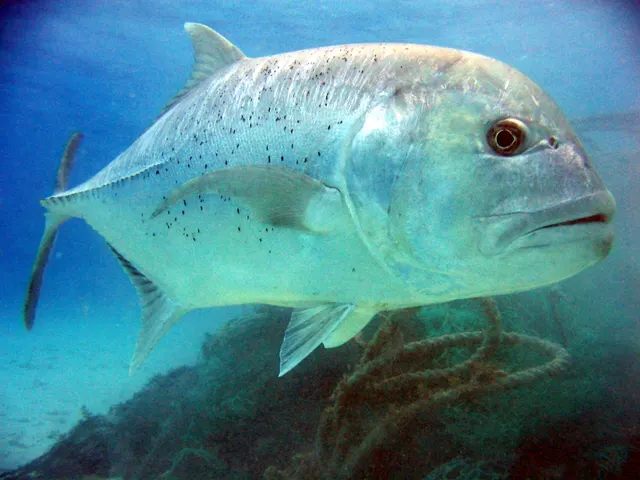 Giant trevallyA hugely powerful Indo-Pacific reef predator that hunts over shallow structure, and the fish popping was built around.
Dr. Dwayne Meadows, NOAA/NMFS/OPR — Public domain, via Wikimedia Commons
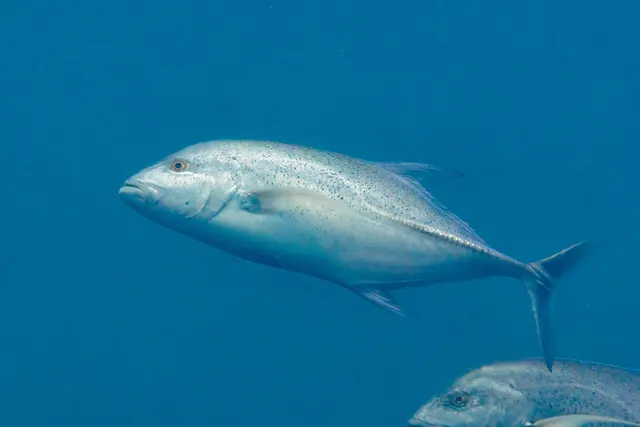 Bluefin trevallyA brilliantly marked reef trevally with electric blue fins that hunts cooperatively with other predators — including, remarkably, with octopus and moray eels.
Diego Delso — CC BY-SA 4.0, via Wikimedia Commons
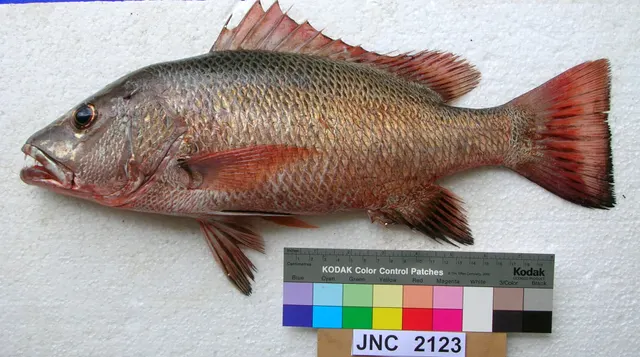 Mangrove jackA powerful red snapper of mangrove creeks and estuaries that moves to offshore reef as it matures, notorious for reaching structure the instant it is hooked.
Jean-Lou Justine — CC BY-SA 4.0, via Wikimedia Commons
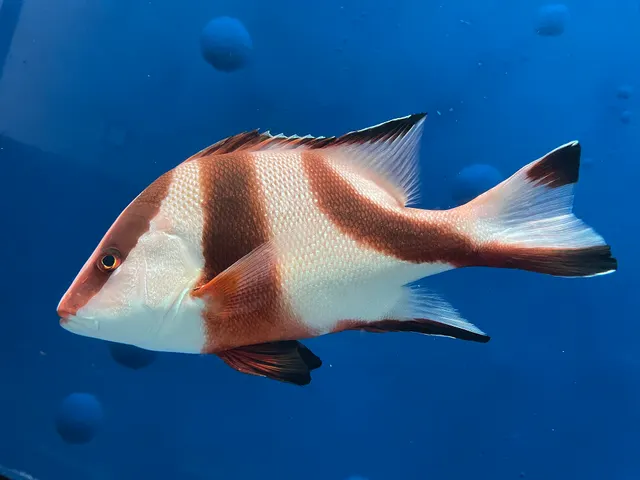 Red emperorA large deep-red Indo-Pacific snapper whose juveniles carry three bold dark bands that fade almost entirely with age.
Totti — CC BY-SA 4.0, via Wikimedia Commons
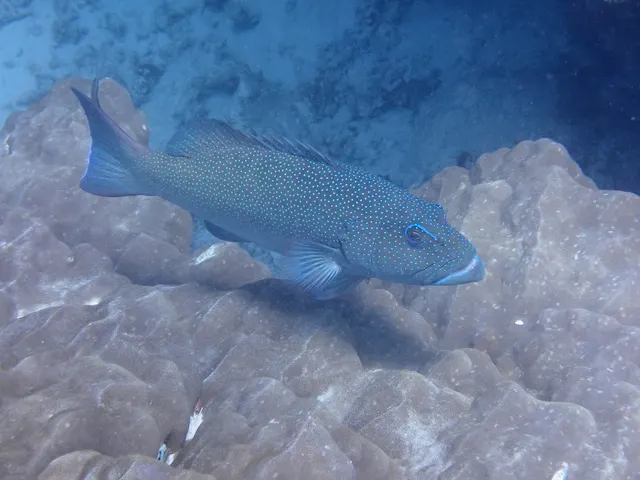 Coral troutA brilliant red-orange coral reef grouper marked with blue spots, known for cooperative hunting with moray eels, and a prime Great Barrier Reef target.
Donald Davesne — CC BY, via iNaturalist
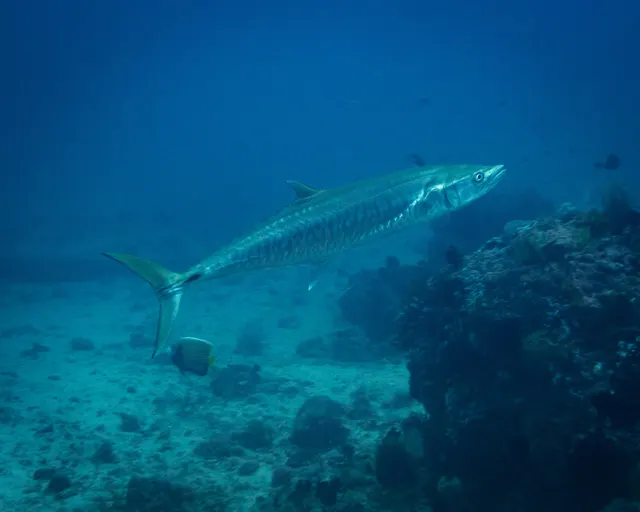 Narrow-barred Spanish mackerelA fast Indo-Pacific mackerel with vertical bars and shearing teeth that is a headline sport and food fish from South Africa to Australia — and a well-known ciguatera risk in parts of its range.
ppericard — CC BY 4.0, via Wikimedia Commons
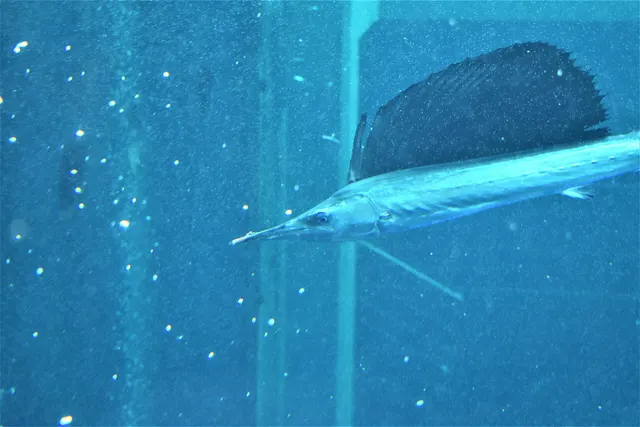 SailfishThe billfish with a sail — a dorsal fin taller than the fish is deep, raised when hunting, and probably the fastest accelerator in the ocean.
出羽雀台 — CC BY-SA 4.0, via Wikimedia Commons
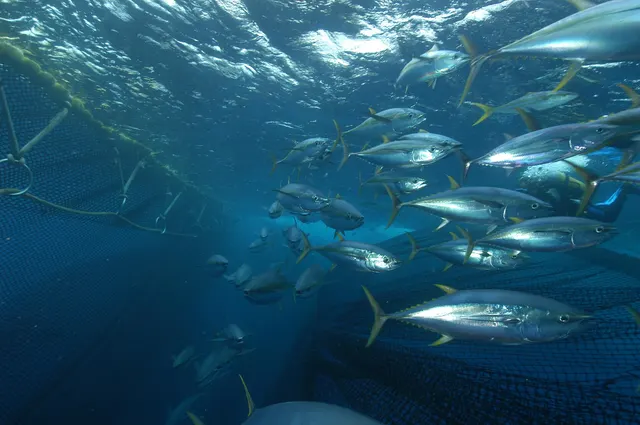 Yellowfin tunaA warm-blooded, high-speed oceanic predator that schools with dolphins and under floating debris, and one of the most commercially important fish in the world.
Marc Taquet — CC BY 4.0, via Wikimedia Commons
Safety
Tides and being cut off — Can cause serious injury or death
Tidal range on this coast is substantial and the flats are extensive. The flood returns across level ground quickly, and the channels between the flat and the shore fill before the flat itself covers, so the route back closes first. Anglers wading flats and people gleaning are both exposed to this.
What reduces it: Know the turn time before wading out, identify the channel that will close first and treat it as the deadline, and leave on the flood rather than at the flood. Do not wade alone, and carry water and a means of signalling.
Worse when:
- Spring tides, which expose the flats furthest and flood them fastest.
- Poor light or squally weather, when the return channel is hard to find.
- Unfamiliar ground, where the drainage pattern is unknown.
Venomous and spined species — Can cause serious injury or death
Reef and flats hold stonefish, scorpionfish, lionfish, cone shells, sea snakes and stingrays. Envenomation almost always follows from standing on or reaching for something unseen, and stonefish envenomation is intensely painful and medically serious. Reef cuts in warm water infect readily.
What reduces it: Wear stiff-soled reef footwear, shuffle on sand and seagrass, never reach blind under a ledge or into a hole, and identify a fish before handling it. Clean and dress every cut properly, and know how far definitive medical care is before you go.
Weather and lightning — Can cause serious injury or death
Tropical cyclones affect the southern part of this coast and the Mozambique Channel on a seasonal cycle and have caused severe damage to coastal communities. Offshore, distances are large and rescue capacity is limited over much of the coast.
What reduces it: Treat cyclone warnings as absolute, do not run offshore on a deteriorating tropical forecast, and plan small-boat trips on the assumption that no one will come quickly if something goes wrong.
Biosecurity and disease transfer — Can cause injury needing treatment
Malaria is present along most of this coast, and crocodiles occur in some river mouths and mangrove systems. Both are ordinary rather than exotic risks for anyone spending time on the water here.
What reduces it: Take malaria precautions seriously including nets, repellent and prophylaxis where advised, and do not enter or work the edge of river mouths and mangrove creeks where crocodiles are known without local guidance.
Further safety reading
- Dangerous animals where you fish — Estuarine crocodiles, stonefish and stingrays occupy the shallows and reef flats that shore anglers and gatherers work.
- Tides and being cut off — Tidal range here is substantial and the flats extensive, so the channels between the flat and the shore fill before the flat itself covers and the route back closes first.
- Venomous and spined fish — Reef and flats hold stonefish, scorpionfish, cone shells, sea snakes and stingrays, and reef cuts in warm water infect readily.
- Weather, lightning and open water — Tropical cyclones affect the southern part of this coast and the Mozambique Channel on a seasonal cycle and have caused severe damage to coastal communities.
Check the rules before you fish
Fishing laws, bylaws, access rules, seasons, bait restrictions and permitted methods vary by location and can change. Check the current rules from the relevant authority and the water you intend to fish before fishing.
Check with:
- Current national or regional law for where you are fishing
- Current local bylaws
- The relevant fisheries authority
- The landowner, club or fishery whose water it is
- Any restrictions specific to the species or the method you intend to use
Where to go next
What swims here
- Bluefin trevallyWorks the reef edges and channels along the whole length of the coast.
- Coral troutA resident reef grouper of the fringing reefs along this seaboard.
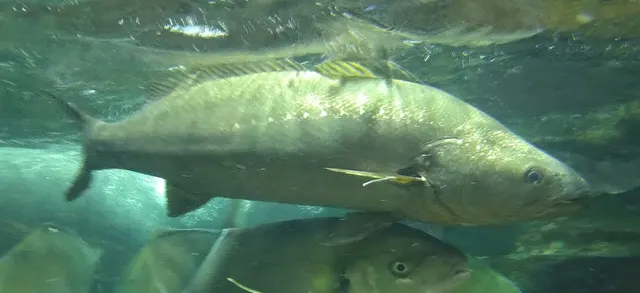 Dusky kobOccupies the estuaries and river mouths in the south of the range, connecting this coast's fauna to the southern African one.
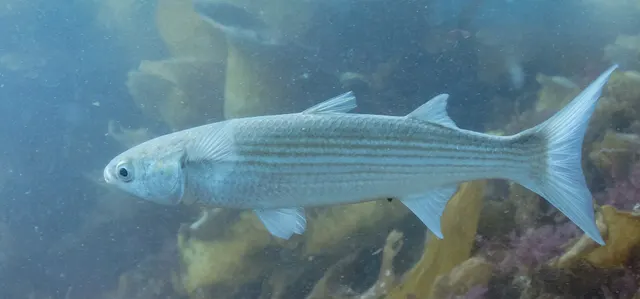 Flathead grey mulletWidespread in the creeks, lagoons and estuaries along the coast.
- Giant trevallyHunts over the sand and seagrass flats on the flooding tide, which is the sight that brings the international flats fishery to this coast.
- Mangrove jackOccupies the mangrove creeks that take over from reef where rivers reach the sea, using them as nursery and as adult habitat.
- Narrow-barred Spanish mackerelA fast pelagic predator of the reef edges and channel mouths, and an important species in the coast's small-scale fishery.
- Red emperorHolds deeper reef and slope ground and is a mainstay of the artisanal handline fishery.
3 more
- Sailfish Fish
- Spotted grunter Fish
- Yellowfin tuna Fish
How people fish here
- Fly fishingSight fishing the sand and seagrass flats for trevally and flats species is the coast's speciality in the international sport fishery.
- HandliningHandlining and small gillnetting from dhows and small boats is the bulk of the coast's fishing effort.
- SpearfishingReef spearfishing spans a traditional breath-hold food fishery and a modern recreational one along the same shore.
- Traps and potsBasket and fence traps set on reef are an old technology on this coast and remain in wide use.
How this compares
Rules and access
Environment and conservation
- Fish stocks and sustainabilityTemporary community closures of octopus grounds on this coast are among the better-documented cases anywhere of a short closure producing a measurable result.
- Marine protected areas and spearfishingMarine parks are the principal management instrument along much of this coast, and their effectiveness ranges from strong to nominal.
Sources and evidence
- FAO Species Identification Guides for Fishery Purposes and the FAO Species Catalogues — Food and Agriculture Organization of the United Nations (Scientific institute)Relied on for: Distribution, habitat, depth and fishery accounts for the species of the eastern central Atlantic and western Indian Ocean in the FAO regional identification guides.States this directlyCitation checked — the work exists and is described correctly
- FishBase: a global information system on fishes — Froese, R. and D. Pauly, eds. — FishBase Consortium (Scientific institute)Relied on for: Distribution, habitat association and depth range recorded for the species.States this directlyPassage read and verified
- Reef Fish Spawning Aggregations: Biology, Research and Management — Springer, Fish & Fisheries Series vol. 35, 2012 (Scientific literature)Relied on for: Reef fish spawning aggregations, their predictability in space and time, and the vulnerability and management responses that follow.States this directlyCitation checked — the work exists and is described correctly
- Fear of fishers: human predation explains behavioral changes in coral reef fishes — PLoS ONE 6(8): e22761, 2011 (Scientific literature)Relied on for: Behavioural change in coral reef fishes under fishing pressure, inside and outside protected areas.States this directlyCitation checked — the work exists and is described correctly
Why the 23 connections on this page are here, and the sources
What swims here
Backed by research — 11 connections
Supported by peer-reviewed research or fisheries science. The sources are listed and can be checked.
Bluefin trevally
A distribution association between an animal and a kind of water, rather than a claim about any named mark.
- FAO Species Identification Guides for Fishery Purposes and the FAO Species Catalogues — Food and Agriculture Organization of the United Nations (Scientific institute)Relied on for: Distribution, habitat, depth and fishery accounts for the species in the FAO regional identification guides for the ocean area concerned.States this directlyCitation checked — the work exists and is described correctly
- FishBase: a global information system on fishes — Froese, R. and D. Pauly, eds. — FishBase Consortium (Scientific institute)Relied on for: Distribution, habitat association and depth range recorded for the species.States this directlyPassage read and verified
Coral trout
A distribution association between an animal and a kind of water, rather than a claim about any named mark.
- FAO Species Identification Guides for Fishery Purposes and the FAO Species Catalogues — Food and Agriculture Organization of the United Nations (Scientific institute)Relied on for: Distribution, habitat, depth and fishery accounts for the species in the FAO regional identification guides for the ocean area concerned.States this directlyCitation checked — the work exists and is described correctly
- FishBase: a global information system on fishes — Froese, R. and D. Pauly, eds. — FishBase Consortium (Scientific institute)Relied on for: Distribution, habitat association and depth range recorded for the species.States this directlyPassage read and verified
Dusky kob
A distribution association between an animal and a kind of water, rather than a claim about any named mark.
- FishBase: a global information system on fishes — Froese, R. and D. Pauly, eds. — FishBase Consortium (Scientific institute)Relied on for: Distribution, habitat association and depth range recorded for the species, including its occurrence in the water body concerned.States this directlyPassage read and verified
- The IUCN Red List of Threatened Species — International Union for Conservation of Nature (Conservation authority)Relied on for: Assessment and range account for the species, including the systems and coasts it occupies.Background and mechanism onlyCitation checked — the work exists and is described correctly
Flathead grey mullet
A distribution association between an animal and a kind of water, rather than a claim about any named mark.
- FAO Species Identification Guides for Fishery Purposes and the FAO Species Catalogues — Food and Agriculture Organization of the United Nations (Scientific institute)Relied on for: Distribution, habitat, depth and fishery accounts for the species in the FAO regional identification guides for the ocean area concerned.States this directlyCitation checked — the work exists and is described correctly
- FishBase: a global information system on fishes — Froese, R. and D. Pauly, eds. — FishBase Consortium (Scientific institute)Relied on for: Distribution, habitat association and depth range recorded for the species.States this directlyPassage read and verified
Giant trevally
A distribution association between an animal and a kind of water, rather than a claim about any named mark.
- FAO Species Identification Guides for Fishery Purposes and the FAO Species Catalogues — Food and Agriculture Organization of the United Nations (Scientific institute)Relied on for: Distribution, habitat, depth and fishery accounts for the species in the FAO regional identification guides for the ocean area concerned.States this directlyCitation checked — the work exists and is described correctly
- FishBase: a global information system on fishes — Froese, R. and D. Pauly, eds. — FishBase Consortium (Scientific institute)Relied on for: Distribution, habitat association and depth range recorded for the species.States this directlyPassage read and verified
Mangrove jack
A distribution association between an animal and a kind of water, rather than a claim about any named mark.
- FAO Species Identification Guides for Fishery Purposes and the FAO Species Catalogues — Food and Agriculture Organization of the United Nations (Scientific institute)Relied on for: Distribution, habitat, depth and fishery accounts for the species in the FAO regional identification guides for the ocean area concerned.States this directlyCitation checked — the work exists and is described correctly
- FishBase: a global information system on fishes — Froese, R. and D. Pauly, eds. — FishBase Consortium (Scientific institute)Relied on for: Distribution, habitat association and depth range recorded for the species.States this directlyPassage read and verified
Narrow-barred Spanish mackerel
A distribution association between an animal and a kind of water, rather than a claim about any named mark.
- FAO Species Identification Guides for Fishery Purposes and the FAO Species Catalogues — Food and Agriculture Organization of the United Nations (Scientific institute)Relied on for: Distribution, habitat, depth and fishery accounts for the species in the FAO regional identification guides for the ocean area concerned.States this directlyCitation checked — the work exists and is described correctly
- FishBase: a global information system on fishes — Froese, R. and D. Pauly, eds. — FishBase Consortium (Scientific institute)Relied on for: Distribution, habitat association and depth range recorded for the species.States this directlyPassage read and verified
Red emperor
A distribution association between an animal and a kind of water, rather than a claim about any named mark.
- FAO Species Identification Guides for Fishery Purposes and the FAO Species Catalogues — Food and Agriculture Organization of the United Nations (Scientific institute)Relied on for: Distribution, habitat, depth and fishery accounts for the species in the FAO regional identification guides for the ocean area concerned.States this directlyCitation checked — the work exists and is described correctly
- FishBase: a global information system on fishes — Froese, R. and D. Pauly, eds. — FishBase Consortium (Scientific institute)Relied on for: Distribution, habitat association and depth range recorded for the species.States this directlyPassage read and verified
Sailfish
A distribution association between an animal and a kind of water, rather than a claim about any named mark.
- FAO Species Identification Guides for Fishery Purposes and the FAO Species Catalogues — Food and Agriculture Organization of the United Nations (Scientific institute)Relied on for: Distribution, habitat, depth and fishery accounts for the species in the FAO regional identification guides for the ocean area concerned.States this directlyCitation checked — the work exists and is described correctly
- FishBase: a global information system on fishes — Froese, R. and D. Pauly, eds. — FishBase Consortium (Scientific institute)Relied on for: Distribution, habitat association and depth range recorded for the species.States this directlyPassage read and verified
Spotted grunter
A distribution association between an animal and a kind of water, rather than a claim about any named mark.
- FishBase: a global information system on fishes — Froese, R. and D. Pauly, eds. — FishBase Consortium (Scientific institute)Relied on for: Distribution, habitat association and depth range recorded for the species, including its occurrence in the water body concerned.States this directlyPassage read and verified
- The IUCN Red List of Threatened Species — International Union for Conservation of Nature (Conservation authority)Relied on for: Assessment and range account for the species, including the systems and coasts it occupies.Background and mechanism onlyCitation checked — the work exists and is described correctly
Yellowfin tuna
A distribution association between an animal and a kind of water, rather than a claim about any named mark.
- FAO Species Identification Guides for Fishery Purposes and the FAO Species Catalogues — Food and Agriculture Organization of the United Nations (Scientific institute)Relied on for: Distribution, habitat, depth and fishery accounts for the species in the FAO regional identification guides for the ocean area concerned.States this directlyCitation checked — the work exists and is described correctly
- FishBase: a global information system on fishes — Froese, R. and D. Pauly, eds. — FishBase Consortium (Scientific institute)Relied on for: Distribution, habitat association and depth range recorded for the species.States this directlyPassage read and verified
How people fish here
What experienced anglers do — 4 connections
Widely and independently recommended by experienced anglers and specialist sources. This is real angling knowledge, not proof: controlled evidence for it is limited, and FishingHQ records it as convention rather than as a demonstrated effect.
Fly fishing
A discipline that is characteristic of the place rather than merely possible there, joined so a reader can move between the place and the practice.
- General angling website restatements of established technique — Various (Credible secondary source)Relied on for: Widely restated practice associating this discipline with this place, recorded as practitioner consensus rather than as tested fact.Background and mechanism onlyCitation checked — the work exists and is described correctly
- Fishers' Craft and Lettered Art: Tracts on Fishing from the End of the Middle Ages — University of Toronto Press, 1997 (Scientific literature)Relied on for: That fishing traditions develop around the water and fish available to them, and the historical method of reading such traditions.States this directlyCitation checked — the work exists and is described correctly
Handlining
A discipline that is characteristic of the place rather than merely possible there, joined so a reader can move between the place and the practice.
- General angling website restatements of established technique — Various (Credible secondary source)Relied on for: Widely restated practice associating this discipline with this place, recorded as practitioner consensus rather than as tested fact.Background and mechanism onlyCitation checked — the work exists and is described correctly
- Fishers' Craft and Lettered Art: Tracts on Fishing from the End of the Middle Ages — University of Toronto Press, 1997 (Scientific literature)Relied on for: That fishing traditions develop around the water and fish available to them, and the historical method of reading such traditions.States this directlyCitation checked — the work exists and is described correctly
Spearfishing
A discipline that is characteristic of the place rather than merely possible there, joined so a reader can move between the place and the practice.
- General angling website restatements of established technique — Various (Credible secondary source)Relied on for: Widely restated practice associating this discipline with this place, recorded as practitioner consensus rather than as tested fact.Background and mechanism onlyCitation checked — the work exists and is described correctly
- Fishers' Craft and Lettered Art: Tracts on Fishing from the End of the Middle Ages — University of Toronto Press, 1997 (Scientific literature)Relied on for: That fishing traditions develop around the water and fish available to them, and the historical method of reading such traditions.States this directlyCitation checked — the work exists and is described correctly
Traps and pots
A discipline that is characteristic of the place rather than merely possible there, joined so a reader can move between the place and the practice.
- General angling website restatements of established technique — Various (Credible secondary source)Relied on for: Widely restated practice associating this discipline with this place, recorded as practitioner consensus rather than as tested fact.Background and mechanism onlyCitation checked — the work exists and is described correctly
- Fishers' Craft and Lettered Art: Tracts on Fishing from the End of the Middle Ages — University of Toronto Press, 1997 (Scientific literature)Relied on for: That fishing traditions develop around the water and fish available to them, and the historical method of reading such traditions.States this directlyCitation checked — the work exists and is described correctly
How this compares
What experienced anglers do — 1 connection
Widely and independently recommended by experienced anglers and specialist sources. This is real angling knowledge, not proof: controlled evidence for it is limited, and FishingHQ records it as convention rather than as a demonstrated effect.
The Agulhas Current
Two places a reader would reasonably weigh against one another, joined where the comparison teaches something about both. It is also how the larger geography is linked to what sits inside it.
- General angling website restatements of established technique — Various (Credible secondary source)Relied on for: Widely restated practice associating this discipline with this place, recorded as practitioner consensus rather than as tested fact.Background and mechanism onlyCitation checked — the work exists and is described correctly
- Fishers' Craft and Lettered Art: Tracts on Fishing from the End of the Middle Ages — University of Toronto Press, 1997 (Scientific literature)Relied on for: That fishing traditions develop around the water and fish available to them, and the historical method of reading such traditions.States this directlyCitation checked — the work exists and is described correctly
Safety reading
Official guidance — 4 connections
Stated by a fisheries authority, scientific institute or recognised angling body. Authoritative, but summarising rather than demonstrating.
Dangerous animals where you fish
A place or practice joined to the hazard that is characteristic of it, so the hazard has real settings and the place cannot describe the fishing without the risk.
- The IUCN Red List of Threatened Species — International Union for Conservation of Nature (Conservation authority)Relied on for: Assessment, range and habitat account for the species concerned, including large predators and their distribution.States this directlyCitation checked — the work exists and is described correctly
- FishBase: a global information system on fishes — Froese, R. and D. Pauly, eds. — FishBase Consortium (Scientific institute)Relied on for: Habitat association, distribution and, where recorded, venom and injury risk for the species concerned.States this directlyPassage read and verified
Tides and being cut off
A place is joined to the safety topic that explains a hazard genuinely characteristic of it, so the mechanism is reachable rather than restated as a weak warning.
- RNLI water safety guidance: cold water shock and Float to Live — Royal National Lifeboat Institution (Water-safety or diver-training authority)Relied on for: Cold water shock and the immersion response, shore angling hazards, small-craft guidance and the circumstances in which water users are most often killed.States this directlyPassage read and verified
- RoSPA water safety information and UK accidental drowning statistics — Royal Society for the Prevention of Accidents (Water-safety or diver-training authority)Relied on for: Accidental drowning statistics and the circumstances in which recreational water users are most often killed.Background and mechanism onlyPassage read and verified
Venomous and spined fish
A place is joined to the safety topic that explains a hazard genuinely characteristic of it, so the mechanism is reachable rather than restated as a weak warning.
- NOAA National Weather Service marine forecasts and marine weather services — National Oceanic and Atmospheric Administration, United States (Government fisheries body)Relied on for: Marine forecasting, tropical cyclone warning practice and the products issued for coastal and offshore waters.States this directlyCitation checked — the work exists and is described correctly
- NOAA Diving Manual: Diving for Science and Technology — National Oceanic and Atmospheric Administration, US Department of Commerce (Scientific institute)Relied on for: Diving and in-water hazards, including hazardous marine life, currents and the management of operations in remote locations.Background and mechanism onlyCitation checked — the work exists and is described correctly
Weather, lightning and open water
A place is joined to the safety topic that explains a hazard genuinely characteristic of it, so the mechanism is reachable rather than restated as a weak warning.
- NOAA National Weather Service marine forecasts and marine weather services — National Oceanic and Atmospheric Administration, United States (Government fisheries body)Relied on for: Marine forecasting, tropical cyclone warning practice and the products issued for coastal and offshore waters.States this directlyCitation checked — the work exists and is described correctly
- NOAA Diving Manual: Diving for Science and Technology — National Oceanic and Atmospheric Administration, US Department of Commerce (Scientific institute)Relied on for: Diving and in-water hazards, including hazardous marine life, currents and the management of operations in remote locations.Background and mechanism onlyCitation checked — the work exists and is described correctly
Rules and access
Official guidance — 1 connection
Stated by a fisheries authority, scientific institute or recognised angling body. Authoritative, but summarising rather than demonstrating.
Licences and permission
A place joined to the regulatory concept whose structure it illustrates. The edge asserts that the concept applies here, never what any current rule says.
- Code of Conduct for Responsible Fisheries — Food and Agriculture Organization of the United Nations, Rome, 1995 (Standards body)Relied on for: Principles for the management of fisheries, including licensing, closed seasons, size limits and the treatment of small-scale and shared stocks.States this directlyCitation checked — the work exists and is described correctly
- Good Fish Guide — Marine Conservation Society (Conservation authority)Relied on for: Assessment of fisheries and the management measures applied to them, including the instruments used and their purpose.Background and mechanism onlyCitation checked — the work exists and is described correctly
Environment and conservation
Backed by research — 2 connections
Supported by peer-reviewed research or fisheries science. The sources are listed and can be checked.
Fish stocks and sustainability
An environmental pressure that is specific to this place rather than general to fishing, joined so the issue is anchored to a real example.
- The IUCN Red List of Threatened Species — International Union for Conservation of Nature (Conservation authority)Relied on for: Assessment of the species and habitats affected, and the pressures acting on them, including habitat change and exploitation.States this directlyCitation checked — the work exists and is described correctly
- Code of Conduct for Responsible Fisheries — Food and Agriculture Organization of the United Nations, Rome, 1995 (Standards body)Relied on for: Principles for responsible fisheries management, precaution, gear selectivity and the treatment of shared and small-scale fisheries.Background and mechanism onlyCitation checked — the work exists and is described correctly
Marine protected areas and spearfishing
An environmental pressure that is specific to this place rather than general to fishing, joined so the issue is anchored to a real example.
- Reef Fish Spawning Aggregations: Biology, Research and Management — Springer, Fish & Fisheries Series vol. 35, 2012 (Scientific literature)Relied on for: The vulnerability of aggregating and site-attached species and the role of spatial protection in managing them.States this directlyCitation checked — the work exists and is described correctly
- Fear of fishers: human predation explains behavioral changes in coral reef fishes — PLoS ONE 6(8): e22761, 2011 (Scientific literature)Relied on for: Measured behavioural differences in reef fishes inside and outside protected areas, and what they indicate about protection.States this directlyCitation checked — the work exists and is described correctly
How FishingHQ labels evidence is explained in the evidence policy.