How to keep maggots alive
Keeping maggots in usable condition, and what follows for the water it came from.
Why keeping it alive matters
A live maggot moves, and movement is most of what it offers. A dead maggot is a small pale object of the right size and none of the behaviour, and fish that are feeding confidently often ignore it. Keeping maggots alive is also keeping them at the right STAGE: a maggot's job is to be a maggot, and once it starts turning into a caster it is a different bait with different uses.
The container
A ventilated bait box with a lid that breathes. Maggots produce heat and ammonia in bulk, and a sealed container concentrates both — a tub of maggots left shut in a warm car does not suffocate so much as cook and poison itself. Shallow and wide beats deep and narrow, because depth is what causes a mass to overheat in the middle.
Temperature
Cool, and steady. Cold slows the maggot's development towards pupation, which is why bait fridges exist and why a bait box on a warm windowsill produces casters within a day or two. The principle is more useful than a number: the colder it is kept, the slower it turns, and the more consistent the temperature the more predictable the bait. Freezing kills them.
Oxygen
No aeration is needed, but air exchange is. Maggots breathe through spiracles and a mass of them consumes oxygen and produces carbon dioxide and ammonia steadily, so the container needs ventilation rather than an air pump. A lid clamped tight on a full box is the commonest way anglers kill maggots without noticing.
What to keep it in
Dry maize meal, sawdust or a proprietary bait maize, in enough quantity to separate the maggots and absorb moisture. The medium is not food — it keeps them clean, dry and apart. Damp bedding is the problem: maggots in wet medium sweat, the mass heats, and the whole box turns. Riddling the bait through a maggot riddle to replace fouled maize is the standard maintenance action.
How long it keeps
Days rather than weeks, and how many depends almost entirely on how cool they are kept and how recently they were riddled. Rather than a figure: expect them to turn faster than you want if they are warm, and to stay usable considerably longer if they are cold and clean. Judge by the bait, not by the calendar.
Signs it is going wrong
Catching these early is the difference between losing a few and losing the lot.
- The mass feels warm to the back of the hand — heat means it is already going wrong.
- A strong ammonia smell on opening the box, rather than the neutral smell of clean maize.
- Maggots crawling up the sides and clustering at the lid, which is escape behaviour rather than vigour.
- Dark or bloated individuals, or a wet, clumping mass instead of loose separate grubs.
- Skins hardening and darkening to chestnut — the beginning of pupation into casters.
Transporting it
In a cool box or insulated bag rather than loose in a warm vehicle, with the lid ventilated. The journey is often the warmest part of a maggot's life and does most of the damage. Keep the box out of direct sun on the bank, and out of the footwell of a car standing in it.
What not to do
Each of these is a common and avoidable way of killing this bait.
- Do not seal the container airtight, however convenient it is for carrying.
- Do not leave the box in a car, a boot or a bag in direct sun, even briefly.
- Do not add water to the maize meal to 'freshen' the bait — damp medium is what starts a box turning.
- Do not tip unused maggots into the water or onto the bank at the end of a session.
- Do not return warmed, ammoniated maggots to a bait fridge alongside clean stock.
Biosecurity
Maggots are the larvae of flies and are not aquatic, so the direct disease risk to fish is lower than for aquatic live baits. The real biosecurity issue is what leaves the bank with them and what is left behind. Unused maggots tipped into a water introduce a large pulse of protein that a small still water may not absorb, and maggots escaping into the wider environment become flies. Keep them contained, take the container home, and never move bait medium or water between fisheries.
Welfare
Maggots are invertebrates and welfare obligations are proportionate rather than absent. The practical version is the same as the practical version of keeping them useful: do not let a mass overheat and suffocate slowly, do not hold far more than the session needs, and do not keep bait indefinitely in deteriorating conditions because throwing it away feels wasteful. Buying what a session actually requires is the single most effective measure.
Unused bait
Take unused maggots home and keep them for the next session if they are still clean, or dispose of them in household waste in a sealed bag if they are not. Do not empty them into the water, do not leave them on the bank, and do not tip them into a hedge — in every case they either become a nutrient pulse in the fishery or hatch into flies where somebody has to deal with them.
Rules vary, and they vary a lot
Collecting, transporting, keeping and using live bait are regulated differently almost everywhere, and some of these baits may not be used at all in some waters. Restrictions commonly cover where and how much may be collected, whether live bait may be moved between waters, whether a species may be used as bait at all, and whether a licence or permit is required. FishingHQ does not state what any rule is or where it applies — check with the authority responsible for the water and the shore you intend to use before collecting or using live bait.
Check the rules before you fish
Fishing laws, bylaws, access rules, seasons, bait restrictions and permitted methods vary by location and can change. Check the current rules from the relevant authority and the water you intend to fish before fishing.
Check with:
- Current national or regional law for where you are fishing
- Current local bylaws
- The relevant fisheries authority
- The landowner, club or fishery whose water it is
- Any restrictions specific to the species or the method you intend to use
The full bait record
This page covers keeping maggots alive. The Maggots record covers the whole lifecycle — identifying it, obtaining it responsibly, preparing it, presenting it and disposing of it.
What this bait is for
The fish it catches, how it is fished and what you present it on.
Fish it catches
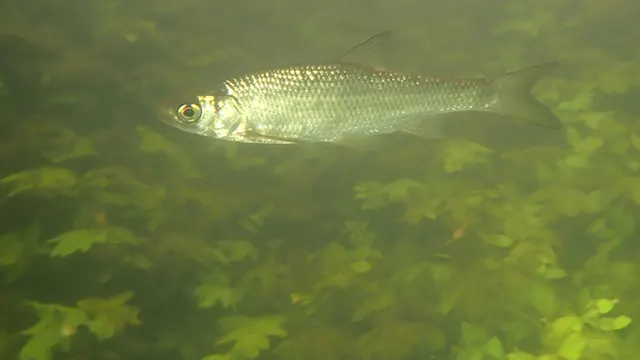 DaceThe standard dace bait, fished singly on a small hook. Dace take faster than any other British coarse fish, so a small hook and a light float are about hitting the bite rather than about hooking the fish.
- GudgeonSingle maggot on a small hook over disturbed gravel. Raking or stirring a gravel patch to release invertebrates is a traditional gudgeon technique and works for the reason the barbels exist.
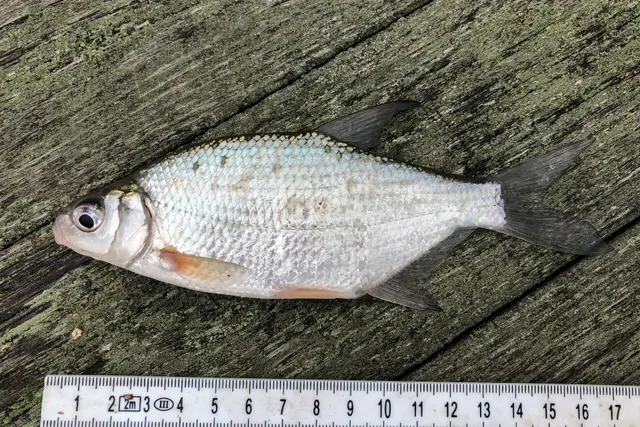 Silver breamMaggot and caster on float and feeder tackle over soft bottom.
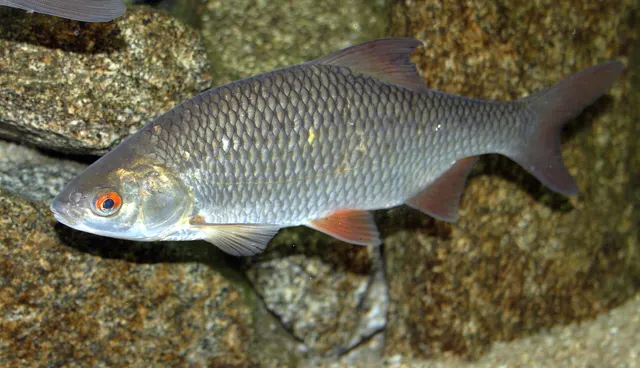 RoachThe most numerous and most frequently caught coarse fish across much of Europe, and the prey species that underpins the whole freshwater predator food web.
How it is fished
- Feeder fishingThe feeder carries the loose feed and the hook carries the same thing — that correspondence is the method.
- Float fishingThe bait a float is most often set to present.
- Pole fishingThe bait a pole rig's tiny shotting and fine hooks are scaled to.
- TrottingThe bait the running-water float was built for: loose-fed upstream and matched on the hook.
Why the 8 connections on this page are here, and the sources
Fish it catches
What experienced anglers do — 4 connections
Widely and independently recommended by experienced anglers and specialist sources. This is real angling knowledge, not proof: controlled evidence for it is limited, and FishingHQ records it as convention rather than as a demonstrated effect.
Dace
A statement about bait convention for a species, which is practice rather than biology.
- Coarse Fishing — A. & C. Black, 1912 (Specialist angling publication)Relied on for: Established coarse angling practice, including method selection, presentation and the reasoning behind them.States this directlyCitation checked — the work exists and is described correctly
- Freshwater Fishing — Macdonald & Jane's, 1975 (Specialist angling publication)Relied on for: Freshwater angling technique and the principles behind method selection.States this directlyCitation checked — the work exists and is described correctly
- General angling website restatements of established technique — Various (Credible secondary source)Relied on for: Widely restated angling practice, recorded as consensus rather than as scholarship.Background and mechanism onlyCitation checked — the work exists and is described correctly
Gudgeon
A statement about bait convention for a species, which is practice rather than biology.
- Coarse Fishing — A. & C. Black, 1912 (Specialist angling publication)Relied on for: Established coarse angling practice, including method selection, presentation and the reasoning behind them.States this directlyCitation checked — the work exists and is described correctly
- Freshwater Fishing — Macdonald & Jane's, 1975 (Specialist angling publication)Relied on for: Freshwater angling technique and the principles behind method selection.States this directlyCitation checked — the work exists and is described correctly
- General angling website restatements of established technique — Various (Credible secondary source)Relied on for: Widely restated angling practice, recorded as consensus rather than as scholarship.Background and mechanism onlyCitation checked — the work exists and is described correctly
Silver bream
A practitioner claim about tackle commonly used for Blicca bjoerkna.
- General angling website restatements of established technique — Various (Credible secondary source)Relied on for: Widely restated practitioner accounts of this presentation for silver bream.Citation checked — the work exists and is described correctly
- Angling Times — Bauer Media (Specialist angling publication)Relied on for: Practitioner treatment of comparable presentations for the species group.Citation checked — the work exists and is described correctly
Roach
The standard general coarse bait, independently described.
- Coarse Fishing — A. & C. Black, 1912 (Specialist angling publication)Relied on for: Maggot and gentle baits for coarse fish.Citation checked — the work exists and is described correctly
- Angling Times — Bauer Media (Specialist angling publication)Relied on for: Contemporary maggot practice for silver fish.Citation checked — the work exists and is described correctly
How it is fished
What experienced anglers do — 4 connections
Widely and independently recommended by experienced anglers and specialist sources. This is real angling knowledge, not proof: controlled evidence for it is limited, and FishingHQ records it as convention rather than as a demonstrated effect.
Feeder fishing
A feeder deposits bait at the hook rather than near it, and the technique depends on the hook bait being indistinguishable from what the feeder released. Maggots are the bait that is both the feed and the hookbait without alteration.
- Coarse Fishing — A. & C. Black, 1912 (Specialist angling publication)Relied on for: Specialist treatment of which bait or lure family this technique is fished with.States this directlyCitation checked — the work exists and is described correctly
- Angling Times — Bauer Media (Specialist angling publication)Relied on for: The independently restated practitioner pairing of this technique with this family.Background and mechanism onlyCitation checked — the work exists and is described correctly
Float fishing
The float-fishing page describes controlling depth and presentation, and the maggot page describes the bait whose whole use is being presented at a controlled depth.
- Sea Angler — Bauer Media (Specialist angling publication)Relied on for: Practitioner treatment of which lure or bait family this technique is fished with.States this directlyCitation checked — the work exists and is described correctly
- General angling website restatements of established technique — Various (Credible secondary source)Relied on for: The widely restated practitioner pairing of this technique with this family.Background and mechanism onlyCitation checked — the work exists and is described correctly
Pole fishing
A pole rig is built around hook sizes and shot weights an order below rod-and-line coarse tackle. That scale is chosen for a bait of a maggot's size and weight, and is the reason pole fishing and maggots are taught together.
- Coarse Fishing — A. & C. Black, 1912 (Specialist angling publication)Relied on for: Specialist treatment of which bait or lure family this technique is fished with.States this directlyCitation checked — the work exists and is described correctly
- Angling Times — Bauer Media (Specialist angling publication)Relied on for: The independently restated practitioner pairing of this technique with this family.Background and mechanism onlyCitation checked — the work exists and is described correctly
Trotting
Trotting works by matching the hook bait to a stream of loose feed travelling at the same pace as the float. That requires a bait that can be introduced by the handful and is identical to the one on the hook, which is what maggots are for.
- Coarse Fishing — A. & C. Black, 1912 (Specialist angling publication)Relied on for: Specialist treatment of which bait or lure family this technique is fished with.States this directlyCitation checked — the work exists and is described correctly
- Angling Times — Bauer Media (Specialist angling publication)Relied on for: The independently restated practitioner pairing of this technique with this family.Background and mechanism onlyCitation checked — the work exists and is described correctly
Reviewed 2026-08-10.