The Maldives
Fishing regions · Last reviewed 2026-08-14
A double chain of coral atolls with almost no land and no rivers at all, whose national fishery catches tuna one fish at a time on a pole and line and has done for centuries.
Safety: moving water and currents — can cause serious injury or death. 2 more points apply here.
Being listed here is not permission to fish. What that meansClose
Access, fishing rights, seasons, licences, local bylaws and permitted methods vary and can change. Check current access, permission, local regulations, closures and restrictions before you travel or fish. FishingHQ describes what the ground is and names who holds the answer; it does not hold the answer itself.
Find the authority for a jurisdiction · What FishingHQ does and does not cover
The Maldives qualify as an archipelago record for two reasons that reinforce each other: the physical form is genuinely unusual, and the national fishery is a method rather than a species.
THERE IS ALMOST NO LAND. The country is a double chain of coral atolls running north to south, with a total land area that is tiny relative to its sea area and an average elevation of a couple of metres. There are no rivers, no runoff, no sediment supply from land, and therefore no estuarine or freshwater fishing of any kind — which makes it the purest marine record on FishingHQ.
THE ATOLL IS THE UNIT AND IT IS A MACHINE. A ring of reef encloses a lagoon; channels through the ring carry the tidal and monsoonal exchange; the outer slope drops steeply into very deep ocean. Every fishing decision here is about which side of that structure you are on and which way the water is moving through it.
THE MONSOON DRIVES THE WHOLE SYSTEM. Two seasonal wind regimes reverse the current through the atolls, which changes which channels are inflowing and which outflowing, which sides of an atoll are sheltered, and where plankton and therefore predators concentrate. The manta and whale shark aggregations the country is known for are a direct readout of this.
THE POLE-AND-LINE TUNA FISHERY IS THE NATIONAL FISHERY AND IT IS THE INTERESTING PART. Skipjack and yellowfin tuna are taken one at a time on barbless hooks from the deck of a boat, with live baitfish thrown to raise the school and water sprayed to disguise the boat. It is among the most selective large-scale fishing methods in existence, it produces almost no bycatch, and it has been practised here for centuries. The country has largely refused purse seining in its own waters.
AND REEF FISHING IS DELIBERATELY CONSTRAINED, with substantial protection for sharks, rays and several reef species, because the reef's value to the country is now substantially as a diving and tourism resource.
What fishing here is like
A double chain of coral atolls with negligible land, no rivers and very deep ocean immediately outside the reef. The fishery is overwhelmingly oceanic: a centuries-old pole-and-line tuna fishery that takes skipjack and yellowfin one fish at a time with almost no bycatch, supported by a live-bait fishery inside the lagoons. Reef fishing is comparatively constrained, and sharks and rays carry strong protection because their value to the country is now as a diving resource. Recreational fishing exists as trolling, jigging, popping and traditional night handlining, mostly through resorts and licensed operators.
What dominates
Pole-and-line tuna fishing, the national commercial method and a genuinely distinctive discipline. Live-bait fishing inside lagoons with small nets and lights to supply it. Handlining for reef and deep-slope species, including the traditional night handline trip that is the standard local recreational form. Trolling for tuna, wahoo and mahi-mahi along the outer slope and channel mouths. Jigging on the outer reef and deep slope. Popping and stickbaiting for trevally around channel edges. Recreational and commercial diving, which is a major economic activity and constrains fishing in many areas. Spearfishing is heavily restricted.
The water available
Ring-shaped coral atolls enclosing lagoons of moderate depth, with reef flats and sand cays on the rim; channels through the atoll rim carrying strong tidal and monsoonal exchange; steep outer reef slopes falling into water thousands of metres deep within a very short distance; patch reefs and pinnacles inside the lagoons; seagrass beds and sheltered sand; and open ocean immediately beyond the reef. There is no river, no estuary, no freshwater habitat and no continental shelf.
How the rules are structured
Fisheries are administered nationally by the fisheries ministry, and the framework is unusual in several respects. The country reserves its own waters largely for its own vessels and has not permitted purse seining for tuna within them, which is why the pole-and-line fishery survives at industrial scale. Whale sharks, manta rays and all shark species carry protection, and a nationwide shark fishing ban has been in force since the twenty-first century — a substantial and deliberate policy choice driven by the value of sharks to diving tourism. The taking of a number of reef species, including some groupers and ornamental species, is controlled, and the export of certain reef products is restricted. Marine protected areas and biosphere reserves cover a number of atolls, channels and dive sites. Recreational fishing by visitors is generally conducted through licensed operators and resorts, and fishing from or near resort islands, house reefs and protected sites is controlled. Spearfishing is heavily restricted. FishingHQ does not state what any current rule is.
Who to ask
- The national fisheries ministry, which administers fisheries policy, licensing and species protection for the whole country.
- The national environment authority, for protected areas, biosphere reserves and protected species including sharks, mantas and whale sharks.
- The atoll or island council, for local matters and for the reefs adjacent to inhabited islands.
- The resort or licensed operator, which in practice controls how and where a visiting angler may fish.
- The relevant regional tuna commission, for the management of the oceanic tuna stocks the national fishery depends on.
Words you will meet
- Atoll
- A ring of coral reef enclosing a lagoon, formed as a fringing reef grew upward while the volcanic island it surrounded subsided. The Maldivian word for the formation is the origin of the English term, which is one of very few English fishing-relevant words to come from this language.
- Dhoni
- The traditional Maldivian boat: a shallow-draught vessel with a distinctive curved stem, historically sailed and now generally motorised, used for pole-and-line fishing, transport and diving. The pole-and-line fishery is worked from it.
- Kandu
- A channel through the atoll rim. The tidal and monsoonal exchange between lagoon and ocean runs through these, concentrating plankton and predators, and they are the most important fishing and diving features in the country.
- Live bait fishery
- The lagoon fishery for small baitfish — sprats, fusiliers and silversides — that supplies the pole-and-line boats. Without it the tuna fishery cannot operate, which makes lagoon health a direct input to the national fishery.
- Pole and line
- Taking tuna one at a time on a barbless hook attached to a short line on a pole, with live bait chummed to raise the school and water sprayed to break up the surface. Among the most selective high-volume fishing methods in existence.
Conditions and hazards
Channel currents are the dominant hazard and they are strong: exchange between a lagoon and the open ocean through a narrow gap runs fast, changes direction with the tide, and can carry a person or a small boat out into water thousands of metres deep with no shelter downstream. Down-currents on outer reef slopes are a documented hazard to divers. The country is low-lying and remote, medical facilities outside the capital are limited, and there is no recompression capability on most atolls, so a diving injury is a serious logistical problem. Equatorial sun on white sand and open water is intense. The reef fauna includes stonefish, scorpionfish, lionfish, cone shells, sea snakes and stingrays, and almost all envenomations follow from putting a hand or foot somewhere unseen. Sharks are common and are protected; incidents involving people are rare and the practical issue is respecting them rather than fearing them. The atolls sit largely outside the cyclone belt, which is one reason the fishery operates year-round, but monsoon squalls are sudden and can be violent.
How an atoll works, and why the channel is the whole story
An atoll is one of the few landforms whose fishing can be predicted almost entirely from its shape, and understanding the shape is most of the intelligence.
THE STRUCTURE IS A RING, A LAGOON AND A CLIFF. A coral rim encloses a lagoon of moderate depth; outside the rim the reef slope falls very steeply into water thousands of metres deep. There is no shelf, no gradual shoaling and no sediment plume, because there is no land to supply one.
THE CHANNELS ARE THE ORGANS. Gaps in the rim connect lagoon and ocean, and the entire exchange of water passes through them. On an inflowing tide, clean oceanic water pours in; on an outflowing tide, lagoon water pours out carrying whatever it holds. The current through a channel is strong, directional and predictable, and it concentrates plankton and therefore everything that eats plankton.
THAT IS WHY THE MANTAS AND WHALE SHARKS ARE WHERE THEY ARE. Plankton accumulates on the downstream side of the atoll under a given monsoon, and filter feeders gather there. When the monsoon reverses, the aggregations move to the other side of the atoll. This is one of the clearest examples anywhere of a large-animal aggregation being a direct readout of a physical process.
THE OUTER SLOPE IS WHERE THE OCEAN MEETS THE REEF and it is where the pelagic fishing happens: tuna, wahoo, mahi-mahi and trevally patrol the drop-off and the channel mouths, and deep-slope species hold below.
THE LAGOON IS THE NURSERY AND THE BAIT SUPPLY. Sheltered water, patch reefs, seagrass and sand hold juveniles and the small schooling baitfish the tuna fishery depends on. The health of the lagoons is therefore an input to the national fishery rather than a separate conservation matter.
AND THERE IS NO FRESHWATER COMPONENT AT ALL. No rivers, no estuaries, no runoff. A reader arriving with a question about brackish water or river mouths has arrived at the one place on FishingHQ where the answer is that the category does not exist.
Backed by research — why, and the sources (2)
Supported by peer-reviewed research or fisheries science. The sources are listed and can be checked.
- FAO Species Identification Guides for Fishery Purposes and the FAO Species Catalogues — Food and Agriculture Organization of the United Nations (Scientific institute)Relied on for: Distribution, habitat, depth and fishery accounts for the species of the western Indian Ocean in the FAO regional identification guides.States this directlyCitation checked — the work exists and is described correctly
- FishBase: a global information system on fishes — Froese, R. and D. Pauly, eds. — FishBase Consortium (Scientific institute)Relied on for: Distribution, habitat association and depth range recorded for the species.States this directlyPassage read and verified
Tuna first, reef second, and a great deal that is protected
The species picture here is unusual because the country's most important fish is oceanic rather than reef-dwelling.
SKIPJACK TUNA IS THE NATIONAL FISH BY VOLUME. It is what the pole-and-line fleet catches, what the country exports, and what a very large part of the economy has historically rested on. Yellowfin tuna is the second, taken by pole and line and by handline, and is the higher-value fish.
WAHOO, MAHI-MAHI AND BILLFISH work the same oceanic water and are taken by trolling along the outer slope and around channel mouths.
GIANT TREVALLY AND BLUEFIN TREVALLY HOLD THE CHANNELS AND REEF EDGES, and are the principal target of the visiting sport fishery that casts surface lures at them.
GROUPERS, SNAPPERS AND EMPERORS OCCUPY THE REEF AND DEEP SLOPE, and are the target of the traditional handline fishery. Several grouper species have been subject to a live export trade with the consequences FishingHQ describes for the Coral Triangle, and the taking of some is controlled.
THE BAITFISH ARE A FISHERY IN THEIR OWN RIGHT. Small sprats, fusiliers and silversides taken from the lagoons at night with lights and fine nets are what makes the pole-and-line method possible. Without them there is no tuna fishery, which is an unusually direct dependency of a large fishery on a small one.
AND THE LARGE ELASMOBRANCHS ARE PROTECTED RATHER THAN FISHED. Whale sharks, manta rays and all sharks carry protection, and shark fishing has been prohibited nationwide since the twenty-first century. The reasoning is economic as much as ecological: a live reef shark seen repeatedly by divers is worth far more to the country than a dead one, and the country made that calculation explicitly. It is one of the clearest cases anywhere of non-extractive value determining fisheries policy.
Backed by research — why, and the sources (2)
Supported by peer-reviewed research or fisheries science. The sources are listed and can be checked.
- FAO Species Identification Guides for Fishery Purposes and the FAO Species Catalogues — Food and Agriculture Organization of the United Nations (Scientific institute)Relied on for: Distribution, habitat, depth and fishery accounts for the species of the western Indian Ocean in the FAO regional identification guides.States this directlyCitation checked — the work exists and is described correctly
- FishBase: a global information system on fishes — Froese, R. and D. Pauly, eds. — FishBase Consortium (Scientific institute)Relied on for: Distribution, habitat association and depth range recorded for the species.States this directlyPassage read and verified
Pole and line: a large fishery that takes fish one at a time
The pole-and-line tuna fishery is the reason this page exists, and it deserves describing as a method rather than mentioning as a fact.
THE MECHANISM IS BEHAVIOURAL. A boat locates a tuna school, then throws live baitfish over the side. The tuna, competing for the bait, come up behind and alongside the boat in a feeding frenzy. Water is sprayed over the surface, which breaks up the visual outline of the hull and helps disguise it. Crew standing along the rail fish short poles with barbless hooks, swing a tuna aboard, flick it off the barbless hook without touching it, and drop the hook straight back in.
THE SELECTIVITY IS THE POINT. The method takes one fish at a time, from the surface, in a school the crew can see. It catches almost nothing else — no turtles, no dolphins, minimal sharks, and no juveniles of unrelated species. Compared with purse seining, and particularly with purse seining on fish aggregating devices, the bycatch is a small fraction. This is why the fishery is repeatedly cited as an example of a low-impact high-volume method.
THE DEPENDENCY IS THE LIVE BAIT. Everything above requires a supply of small live baitfish, caught in the lagoons at night with lights and fine mesh. That fishery is itself an ecological pressure and a constraint: no bait, no tuna trip. It ties the offshore fishery directly to the health of the enclosed lagoons.
THE COUNTRY PROTECTED THE METHOD BY POLICY. Purse seining has not been permitted in national waters, and the fishery is reserved substantially for national vessels. That is a deliberate choice to keep a labour-intensive, low-impact, locally-owned method rather than accept a more efficient one, and it is a rare example of a state choosing selectivity over yield.
THE HANDLINE FISHERY SITS ALONGSIDE IT, taking yellowfin and reef species, and the traditional night handline trip is the standard recreational form for both locals and visitors.
AND THE VISITING SPORT FISHERY IS TROLLING, JIGGING AND POPPING, worked along the outer slope and channel edges from licensed boats, and is small relative to everything above.
What experienced anglers do — why, and the sources (2)
Widely and independently recommended by experienced anglers and specialist sources. This is real angling knowledge, not proof: controlled evidence for it is limited, and FishingHQ records it as convention rather than as a demonstrated effect.
- FAO fishing gear types and fishing technology information — Food and Agriculture Organization of the United Nations (Scientific institute)Relied on for: Descriptions of fishing gear types and their operation, including the small-scale and pole-and-line gears used in the region.States this directlyCitation checked — the work exists and is described correctly
- IGFA International Angling Rules and World Record Requirements — International Game Fish Association (Angling or fisheries organisation)Relied on for: International recreational angling practice, tackle categories and the conventions applied to recognised catches.Background and mechanism onlyPassage read and verified
Two monsoons, one reversal, and a fishery that never closes
The Maldivian year has no winter and no cyclone season worth the name, so the seasonality is entirely about wind direction.
THE NORTH-EAST MONSOON IS THE DRY, CALM SEASON. Winds are lighter, the sea is settled, visibility is at its best, and the eastern sides of the atolls are sheltered while the western sides receive the current. This is the settled period for boat work and diving.
THE SOUTH-WEST MONSOON IS THE WET, WINDIER SEASON. Stronger winds, more rain, more swell and reduced visibility, with the sheltered and exposed sides of each atoll reversed. Fishing continues — this is not a closed season — but access changes and small-boat work becomes more weather-dependent.
THE REVERSAL MOVES THE PLANKTON AND THEREFORE THE ANIMALS. Because the current through the atolls changes direction with the monsoon, plankton accumulates on the downstream side, and manta and whale shark aggregations move from one side of an atoll to the other across the year. A visitor asking where the mantas are is really asking which monsoon is running.
THE TUNA FISHERY OPERATES YEAR-ROUND, which is unusual and is a consequence of sitting near the equator outside the main cyclone belt. Catches vary with tuna distribution and with the availability of bait rather than with a closed season.
TIDE IS THE DAILY SEASON. The channels flow in and out with the tide, and whether a channel is inflowing or outflowing determines the water clarity, the direction of drift and where predators sit. Local operators plan around the state of tide as a matter of course.
AND THE MOON MATTERS FOR BAIT AND FOR SPAWNING. Live-bait fishing at night with lights works better on dark nights, and a number of reef species spawn on lunar cycles at channel mouths. Both are ordinary planning considerations here rather than refinements.
Backed by research — why, and the sources (2)
Supported by peer-reviewed research or fisheries science. The sources are listed and can be checked.
- Reef Fish Spawning Aggregations: Biology, Research and Management — Springer, Fish & Fisheries Series vol. 35, 2012 (Scientific literature)Relied on for: Reef fish spawning aggregations, their predictability in space and time, and the management responses to them.States this directlyCitation checked — the work exists and is described correctly
- Fear of fishers: human predation explains behavioral changes in coral reef fishes — PLoS ONE 6(8): e22761, 2011 (Scientific literature)Relied on for: Behavioural change in coral reef fishes in response to fishing pressure, including inside and outside protected areas.Background and mechanism onlyCitation checked — the work exists and is described correctly
A country that banned shark fishing and refused the purse seine
Maldivian fisheries policy contains two decisions that are unusual enough to be worth explaining rather than listing.
THE SHARK BAN IS NATIONWIDE AND IT IS ECONOMIC AS WELL AS ECOLOGICAL. All shark fishing has been prohibited in national waters since the twenty-first century, following earlier partial bans. The reasoning given publicly was direct: the diving industry's revenue from live sharks substantially exceeded the value of the shark fishery, and a shark seen repeatedly by paying divers earns many times what it earns once on a quay. Whale sharks and manta rays carry their own protection. This is one of the clearest examples anywhere of non-extractive value being decisive in a fisheries decision, and it came at a real cost to the fishers who had held the shark licences.
THE REFUSAL OF PURSE SEINING IS THE OTHER. The country has not permitted purse seine tuna fishing in its own waters and has reserved the fishery substantially for national vessels using pole and line and handline. The effect is to preserve a labour-intensive, low-bycatch method against a more efficient one, deliberately.
THE OCEANIC STOCKS ARE NOT THE COUNTRY'S TO MANAGE ALONE. Skipjack and yellowfin move across the Indian Ocean, and their management sits with a regional commission of the fishing states. A national policy of selectivity coexists with a regional stock under pressure from fleets that do not share it, and that tension is a real one.
REEF PROTECTION IS EXTENSIVE. Marine protected areas, biosphere reserves, protected dive sites and controls on the taking and export of a number of reef species all apply. Where a reef sits next to a resort, the operator's own rules frequently govern in practice.
VISITOR FISHING GOES THROUGH LICENSED OPERATORS in the ordinary case, and where a person may fish is generally decided by the resort, the island council or the protected status of the water rather than by a general right.
AND NOTHING HERE STATES A CURRENT RULE. Protections have been extended and adjusted over time and the authorities above are the durable answer.
Official guidance — why, and the sources (2)
Stated by a fisheries authority, scientific institute or recognised angling body. Authoritative, but summarising rather than demonstrating.
- Good Fish Guide — Marine Conservation Society (Conservation authority)Relied on for: Assessment of fisheries and the management measures applied to them, including gear selectivity and spatial protection.States this directlyCitation checked — the work exists and is described correctly
- Code of Conduct for Responsible Fisheries — Food and Agriculture Organization of the United Nations, Rome, 1995 (Standards body)Relied on for: Principles for responsible fisheries management, precaution, gear selectivity and the treatment of small-scale and shared stocks.States this directlyCitation checked — the work exists and is described correctly
Atoll, kandu, dhoni: a small vocabulary that travels
This is a small country with a language most readers will not encounter elsewhere, and it has nevertheless given English one of its standard geographical terms.
ATOLL IS A MALDIVIAN WORD. The English term for a ring-shaped coral reef enclosing a lagoon derives from the Maldivian name for the formation, and the country is the type locality for the landform in more than a linguistic sense. It is worth knowing simply because it is one of very few words on FishingHQ's vocabulary to come from the Indian Ocean.
KANDU NAMES A CHANNEL THROUGH THE ATOLL RIM, and it is the most operationally important word in Maldivian fishing and diving. Almost every decision about where to fish, dive or drift is a decision about a kandu and which way it is running.
DHONI NAMES THE TRADITIONAL BOAT, a shallow-draught vessel with a distinctive upswept stem, historically sailed with a lateen rig and now generally motorised. The pole-and-line fishery is worked from it, and the design is genuinely local rather than an imported hull.
POLE AND LINE IS A METHOD NAME THAT UNDERSELLS ITSELF. It sounds like a simple description and it names a coordinated operation involving bait supply, school location, water spray and a crew fishing barbless hooks in unison. A reader meeting the term should understand it as a system rather than as a rod.
LIVE BAIT FISHERY NAMES THE DEPENDENCY. It is worth having as a term because it explains why lagoon health is a tuna-fishery question, which is not obvious from the outside.
AND HOUSE REEF IS THE WORD A VISITOR WILL MEET IMMEDIATELY. It names the reef adjacent to a particular island, and it is generally where fishing is most tightly controlled, because it is the reef that island's divers and guests use. Knowing the term is the difference between understanding a restriction and resenting it.
What experienced anglers do — why, and the sources (2)
Widely and independently recommended by experienced anglers and specialist sources. This is real angling knowledge, not proof: controlled evidence for it is limited, and FishingHQ records it as convention rather than as a demonstrated effect.
- FAO fishing gear types and fishing technology information — Food and Agriculture Organization of the United Nations (Scientific institute)Relied on for: Descriptions of fishing gear types and their operation, including the small-scale and pole-and-line gears used in the region.States this directlyCitation checked — the work exists and is described correctly
- IGFA International Angling Rules and World Record Requirements — International Game Fish Association (Angling or fisheries organisation)Relied on for: International recreational angling practice, tackle categories and the conventions applied to recognised catches.Background and mechanism onlyPassage read and verified
Dried tuna, a trading past and a tourism present
The history of this country is a fishing history more completely than almost anywhere else on FishingHQ, because there was never much else.
TUNA AND TRADE WERE THE ECONOMY FOR CENTURIES. With negligible agricultural land, the islands lived on fish and on their position in Indian Ocean trade routes. Dried and smoked tuna was the export product, preserved for a long voyage and traded across the ocean, and cowrie shells gathered from the lagoons were used as currency across a wide part of the world.
THE POLE-AND-LINE METHOD IS OLD. Taking tuna on a pole with live bait is a long-established Maldivian practice rather than a modern conservation initiative that happens to look traditional, and the fishery's continuity is part of why it survived the industrialisation of tuna fishing elsewhere.
MECHANISATION IN THE TWENTIETH CENTURY CHANGED CAPACITY, NOT METHOD. The sailing dhoni gave way to the motorised one, which extended range and reliability without altering the way the fish are caught. That is an unusual outcome: most fisheries that mechanised also changed gear.
TOURISM ARRIVED IN THE 1970s AND BECAME THE LARGER ECONOMY. Resort development on uninhabited islands created a second economy alongside fishing, and it is the source of the diving revenue that later drove the shark ban. It also created a structure in which most visitors experience the country through a resort rather than through its inhabited islands.
THE 2004 TSUNAMI STRUCK A COUNTRY WITH NO HIGH GROUND. Waves crossed low islands rather than breaking against them, causing widespread damage and displacement, and the event is a permanent part of how the country thinks about its own exposure.
AND SEA LEVEL AND CORAL BLEACHING ARE THE PRESENT HISTORY. A nation whose land averages a couple of metres above sea level, whose islands are built by coral, and whose economy rests on reefs and reef-fed fisheries has an unusually direct exposure to both. Major bleaching events have damaged reefs across the atolls within recent decades, and the recovery of those reefs is a national economic question rather than only an environmental one.
Official guidance — why, and the sources (2)
Stated by a fisheries authority, scientific institute or recognised angling body. Authoritative, but summarising rather than demonstrating.
- Good Fish Guide — Marine Conservation Society (Conservation authority)Relied on for: Assessment of fisheries and the management measures applied to them, including gear selectivity and spatial protection.States this directlyCitation checked — the work exists and is described correctly
- Code of Conduct for Responsible Fisheries — Food and Agriculture Organization of the United Nations, Rome, 1995 (Standards body)Relied on for: Principles for responsible fisheries management, precaution, gear selectivity and the treatment of small-scale and shared stocks.States this directlyCitation checked — the work exists and is described correctly
A fishing nation with a diving economy on top of it
The culture here is shaped by an unusual overlay: a genuine fishing society with a large tourism industry built beside it, and the two do not always see the same water the same way.
FISHING IS FOUNDATIONAL RATHER THAN RECREATIONAL. On inhabited islands, fishing is a livelihood and a food source, the pole-and-line crews are skilled professionals, and the fishery has a status in national life that a European reader should not underestimate. Fisherman's Day is a national occasion.
THE NIGHT HANDLINE TRIP IS THE ORDINARY LOCAL FISHING FORM. Going out after dark on a dhoni with handlines for reef and slope species is what fishing means socially here, and it is also the form most commonly offered to visitors.
THE DIVING INDUSTRY IS THE OTHER CULTURE AND IT IS ECONOMICALLY DOMINANT. It values the same reefs and the same animals for not being caught, and its revenue is what made the shark ban politically possible. Where the two overlap — house reefs, protected channels, dive sites — the diving interest usually prevails, and a visiting angler should expect that.
RESORT ISLANDS AND INHABITED ISLANDS ARE DIFFERENT WORLDS. Most tourism happens on islands with no resident local community, and the customs, rules and expectations on an inhabited island are different. That includes what is appropriate to catch and where.
HANDLING IS DEMANDING IN THIS WATER, as everywhere warm. The pole-and-line fishery is a food fishery and dispatches its fish immediately. The sport fishery increasingly releases, and doing so responsibly in warm water with abundant reef sharks requires more care than in a temperate fishery.
AND THE PROTECTED ANIMALS ARE PART OF THE ETIQUETTE. Sharks, mantas and whale sharks are protected and are also the basis of a large industry. Handling, chasing or crowding them is both a legal and a social problem, and the local expectation is unambiguous.
Official guidance — why, and the sources (2)
Stated by a fisheries authority, scientific institute or recognised angling body. Authoritative, but summarising rather than demonstrating.
- Good Fish Guide — Marine Conservation Society (Conservation authority)Relied on for: Assessment of fisheries and the management measures applied to them, including gear selectivity and spatial protection.States this directlyCitation checked — the work exists and is described correctly
- Code of Conduct for Responsible Fisheries — Food and Agriculture Organization of the United Nations, Rome, 1995 (Standards body)Relied on for: Principles for responsible fisheries management, precaution, gear selectivity and the treatment of small-scale and shared stocks.States this directlyCitation checked — the work exists and is described correctly
The channels: several knots under a surface that looks like a swimming pool
An atoll is a ring of reef around a lagoon, and the water inside has to exchange with the ocean outside twice a day through a limited number of gaps. That single geometric fact produces the Maldives' defining hazard.
THE CHANNELS RUN HARD AND THEY DO NOT LOOK LIKE IT. The volume of a lagoon many kilometres across is forced through passes that may be only a few hundred metres wide, so the stream in a channel reaches speeds no swimmer can make ground against. In warm, clear, glassy tropical water there is almost none of the surface texture that signals current in a temperate estuary — no wind chop standing up against the flow, no cold, no colour change, no debris line. The water looks like a swimming pool and is moving like a river.
AND THE CHANNELS ARE WHERE THE FISH ARE, which is not a coincidence and is the reason this matters to anglers rather than only to divers. Moving water concentrates food and the predators that follow it, so the productive ground and the dangerous ground are the same ground. That is a recurring structure in tropical fishing and the Maldives is its clearest expression.
THE DIRECTION OF THE FLOW IS THE PART THAT DECIDES OUTCOMES. On an outgoing stream a channel sets from the lagoon towards open ocean, and a person or a small craft in it is being carried away from land, in deep water, in a place where the next land downstream may be a long way off or nowhere. That is a fundamentally different problem from being carried along a coast. Know which way the water is going before entering it, and treat an outgoing channel as somewhere not to be rather than somewhere to be careful.
THE SURROUNDING REEF ADDS THE SECOND LAYER. Fire coral, urchins, stonefish and scorpionfish occupy the reef flats and the channel margins, and the injuries are punctures and envenomations rather than lacerations. Rigid footwear on any reef, no hand-holds on unidentified coral, and no barefoot wading.
AND THE SUN AND THE DISTANCE ARE THE QUIET THIRD. Equatorial sun over water, all day, with reflected UV from a pale sand bottom, on somebody concentrating on fishing, produces serious burn and heat illness faster than people expect, and the nearest definitive medical care may be a boat journey rather than a drive. Plan fluid, shade and covering before the day rather than during it, because the cost of getting this wrong here is not measured in discomfort.
Official guidance — why, and the sources (3)
Stated by a fisheries authority, scientific institute or recognised angling body. Authoritative, but summarising rather than demonstrating.
- RNLI water safety guidance: cold water shock and Float to Live — Royal National Lifeboat Institution (Water-safety or diver-training authority)Relied on for: Cold water shock and the immersion response, tidal cut-off, and water-safety guidance for shore anglers and small-craft users.States this directlyPassage read and verified
- NOAA Diving Manual: Diving for Science and Technology — National Oceanic and Atmospheric Administration, US Department of Commerce (Scientific institute)Relied on for: Diving physiology and operational practice, including barotrauma mechanisms, ascent behaviour and the constraints imposed by remoteness from definitive care.States this directlyCitation checked — the work exists and is described correctly
- DAN guidance on freediving safety, hypoxia and shallow-water blackout — Divers Alert Network (Water-safety or diver-training authority)Relied on for: Breath-hold diving safety practice, the mechanism of hypoxic blackout, and the buddy procedures that address it.States this directlyPassage read and verified
Some of what lives here
Fish recorded here that FishingHQ holds a reviewed photograph of. It is not a complete list of what The Maldives holds, and it is not a prediction that you will catch any of them — it is a way in to the ones we can show you.
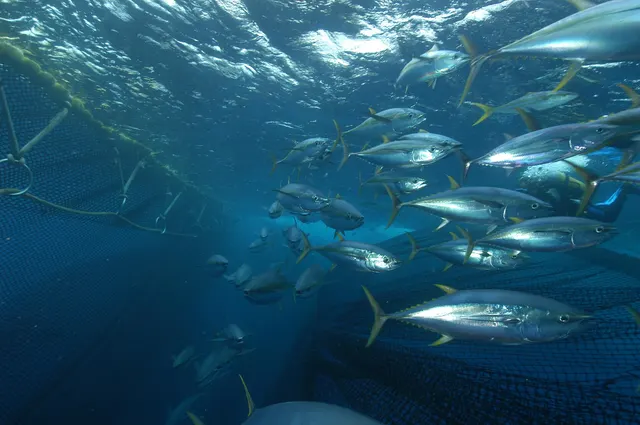 Yellowfin tunaA warm-blooded, high-speed oceanic predator that schools with dolphins and under floating debris, and one of the most commercially important fish in the world.
Marc Taquet — CC BY 4.0, via Wikimedia Commons
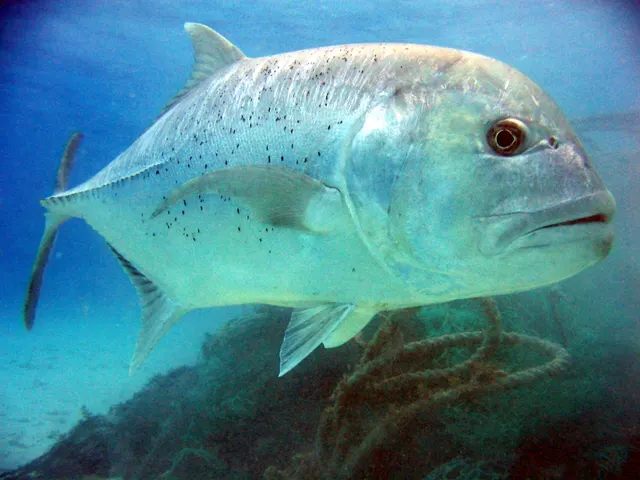 Giant trevallyA hugely powerful Indo-Pacific reef predator that hunts over shallow structure, and the fish popping was built around.
Dr. Dwayne Meadows, NOAA/NMFS/OPR — Public domain, via Wikimedia Commons
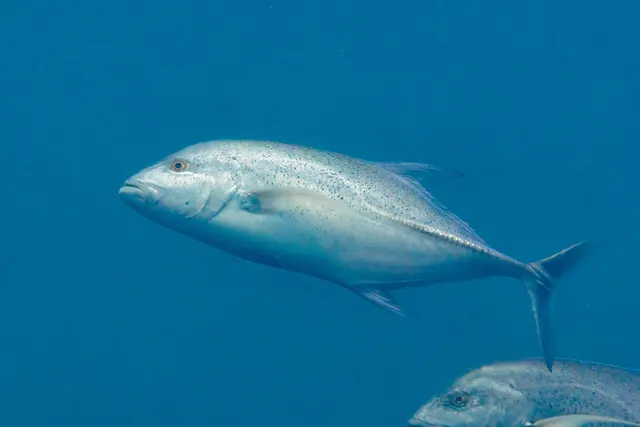 Bluefin trevallyA brilliantly marked reef trevally with electric blue fins that hunts cooperatively with other predators — including, remarkably, with octopus and moray eels.
Diego Delso — CC BY-SA 4.0, via Wikimedia Commons
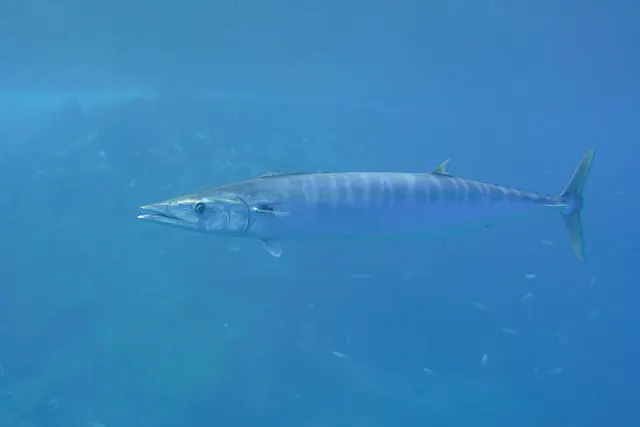 WahooAn extremely fast blue-water mackerel with razor teeth and a long slender body, taken by high-speed trolling and almost always fished on wire.
Bommerer — CC BY 4.0, via Wikimedia Commons
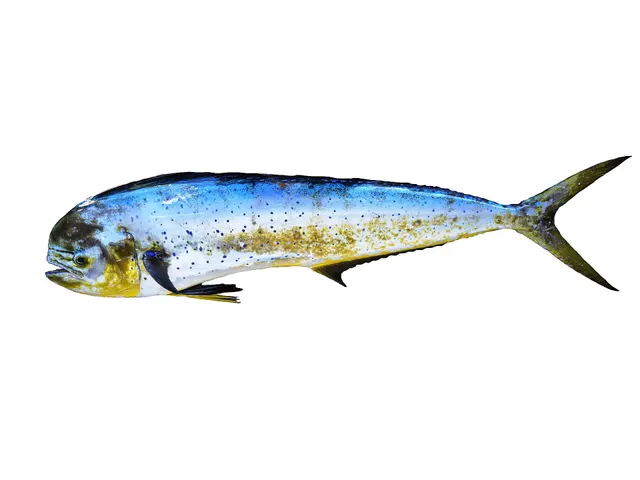 Mahi-mahiThe fastest-growing large fish an angler is likely to meet — brilliantly coloured, mature within months, and gathered around anything floating in the open ocean.
Hugues Evano (IFREMER, Délégation océan Indien (DOI), Département Ressources Biologiques et Environnement (RBE), F-97420 Le Port, France) — CC BY 4.0, via Wikimedia Commons
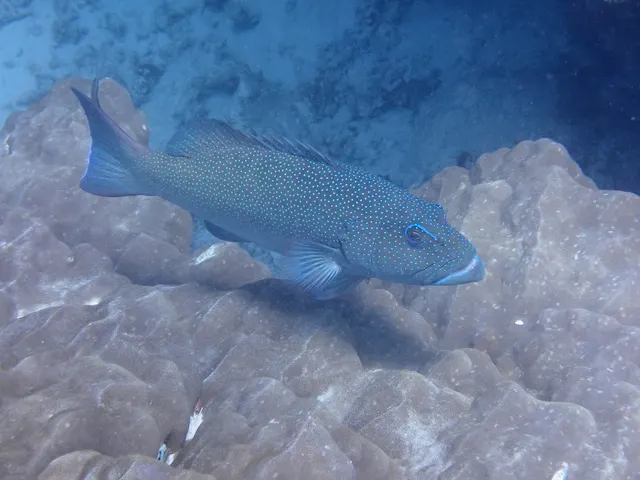 Coral troutA brilliant red-orange coral reef grouper marked with blue spots, known for cooperative hunting with moray eels, and a prime Great Barrier Reef target.
Donald Davesne — CC BY, via iNaturalist
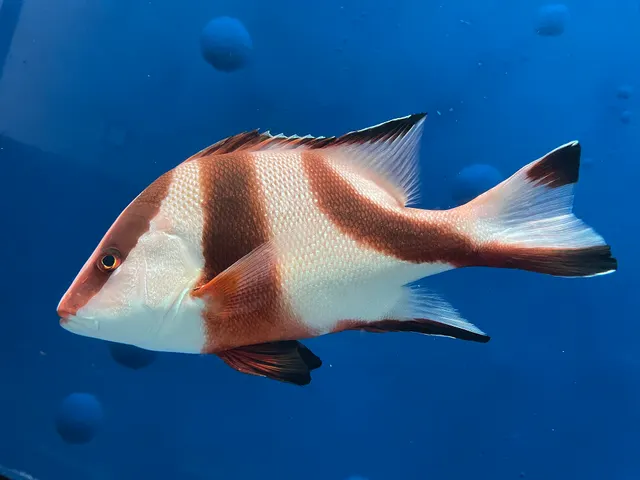 Red emperorA large deep-red Indo-Pacific snapper whose juveniles carry three bold dark bands that fade almost entirely with age.
Totti — CC BY-SA 4.0, via Wikimedia Commons
Safety
Moving water and currents — Can cause serious injury or death
Tidal and monsoonal exchange through atoll channels runs fast and reverses. A person or a small craft carried out of a channel on the ebb is in open ocean thousands of metres deep with nothing downstream. Down-currents on the outer reef slope are a documented hazard to divers.
What reduces it: Plan channel work around the state of tide, know which way the channel is running before entering the water, carry a surface marker and a signalling device, and never work a channel without a boat that can recover you promptly.
Worse when:
- Spring tides, when exchange volume and therefore current speed are greatest.
- The outflowing phase, which carries seaward into open ocean.
- Late in the day, when a drift that goes wrong leaves little daylight for recovery.
Venomous and spined species — Can cause serious injury or death
Reef flats and lagoon sand hold stonefish, scorpionfish, lionfish, cone shells, sea snakes and stingrays. Envenomation almost always follows from standing on, reaching under or picking up something unseen, and stonefish envenomation in particular is intensely painful and medically serious.
What reduces it: Wear stiff-soled reef footwear and shuffle on sand, never reach blind into a hole or under a ledge, do not handle cone shells, and identify a fish before handling it. Know the evacuation route: definitive care is a long way from most atolls.
Sun, dehydration and fatigue — Can cause injury needing treatment
Equatorial sun reflected off white sand and shallow water is intense, boat days are long and unshaded, and dehydration and heat exhaustion degrade judgement before producing obvious symptoms.
What reduces it: Cover up rather than relying on sunscreen alone, carry far more water than seems necessary, rig shade on small boats, and treat fatigue as a safety condition rather than a comfort one.
Further safety reading
- Boat safety for anglers — Tidal exchange through the atoll channels runs fast and reverses, and anything carried out of a channel on the ebb is in ocean thousands of metres deep with nothing downstream.
- Sun, dehydration and fatigue — Equatorial sun reflected off white sand and shallow water, on long unshaded boat days, produces dehydration that degrades judgement before it produces symptoms.
- Venomous and spined fish — Reef flats and lagoon sand hold stonefish, scorpionfish, lionfish, cone shells and stingrays, and definitive medical care is a long way from most atolls.
Check the rules before you fish
Fishing laws, bylaws, access rules, seasons, bait restrictions and permitted methods vary by location and can change. Check the current rules from the relevant authority and the water you intend to fish before fishing.
Check with:
- Current national or regional law for where you are fishing
- Current local bylaws
- The relevant fisheries authority
- The landowner, club or fishery whose water it is
- Any restrictions specific to the species or the method you intend to use
Where to go next
What swims here
- Bluefin trevallyOccupies the same channel edges and outer reef slopes throughout the atolls.
- Coral troutA resident reef grouper of the atoll reefs, and one of the species whose taking is controlled because of its value in the live trade.
- Giant trevallyHolds the channels through the atoll rims where tidal exchange concentrates bait, and is the principal target of the visiting sport fishery.
- Great barracudaAbundant on the reef edges and in the channels through the atoll rims.
- Mahi-mahiOccurs in the open water beyond the atolls and is taken by trolling along the drop-off and around floating structure.
- Red emperorOccupies the deeper outer slope, which drops away very steeply here, and is a target of the traditional night handline fishery.
- WahooWorks the outer reef slope and channel mouths, where deep ocean water comes within a very short distance of the reef.
- Yellowfin tunaThe higher-value half of the national tuna fishery, taken by pole and line and by handline in the ocean immediately outside the atolls.
How people fish here
- HandliningThe traditional night handline trip for reef and deep-slope species is the standard local recreational form and a substantial commercial method.
- Lure fishingTrolling, jigging and popping along the outer slope and around channel mouths are the visiting sport fishery's methods.
- Sea fishingThere is no river, no estuary and no freshwater habitat in the country, so the whole of its fishing is marine.
How this compares
- Coastal lagoonsAn atoll lagoon is the same geometry produced by reef rather than by sand, with the same consequences: restricted exchange, a dominant pass, and water unlike the ocean outside.
- The Egyptian Red Sea coastTwo Indian Ocean reef destinations with opposite access models: one has a shore a person can walk along, the other runs almost everything through a resort.
Rules and access
- Licences and permissionThe country reserves its own waters largely for its own vessels and has not permitted purse seining in them, which is why the pole-and-line fishery survives at industrial scale.
- Size limits and retentionA nationwide shark fishing ban and protection for whale sharks and manta rays are among the clearest cases anywhere of non-extractive value deciding a retention rule.
Environment and conservation
- Bycatch and discardsPole-and-line tuna fishing takes one fish at a time from a visible surface school and produces almost no bycatch, which is why it is repeatedly cited as the low-impact alternative to purse seining.
- Fish stocks and sustainabilityA national policy of selectivity sits inside a regional tuna stock fished by fleets that do not share it, which is the structural tension in this fishery.
- Marine protected areas and spearfishingProtected atolls, channels and dive sites, together with biosphere reserve designations, cover a significant part of the country's reef.
Sources and evidence
- FAO Species Identification Guides for Fishery Purposes and the FAO Species Catalogues — Food and Agriculture Organization of the United Nations (Scientific institute)Relied on for: Distribution, habitat, depth and fishery accounts for the species of the western Indian Ocean in the FAO regional identification guides.States this directlyCitation checked — the work exists and is described correctly
- FishBase: a global information system on fishes — Froese, R. and D. Pauly, eds. — FishBase Consortium (Scientific institute)Relied on for: Distribution, habitat association and depth range recorded for the species.States this directlyPassage read and verified
- Good Fish Guide — Marine Conservation Society (Conservation authority)Relied on for: Assessment of fisheries and the management measures applied to them, including gear selectivity and spatial protection.States this directlyCitation checked — the work exists and is described correctly
- Code of Conduct for Responsible Fisheries — Food and Agriculture Organization of the United Nations, Rome, 1995 (Standards body)Relied on for: Principles for responsible fisheries management, precaution, gear selectivity and the treatment of small-scale and shared stocks.States this directlyCitation checked — the work exists and is described correctly
Why the 21 connections on this page are here, and the sources
What swims here
Backed by research — 8 connections
Supported by peer-reviewed research or fisheries science. The sources are listed and can be checked.
Bluefin trevally
A distribution association between an animal and a kind of water, rather than a claim about any named mark.
- FAO Species Identification Guides for Fishery Purposes and the FAO Species Catalogues — Food and Agriculture Organization of the United Nations (Scientific institute)Relied on for: Distribution, habitat, depth and fishery accounts for the species in the FAO regional identification guides for the ocean area concerned.States this directlyCitation checked — the work exists and is described correctly
- FishBase: a global information system on fishes — Froese, R. and D. Pauly, eds. — FishBase Consortium (Scientific institute)Relied on for: Distribution, habitat association and depth range recorded for the species.States this directlyPassage read and verified
Coral trout
A distribution association between an animal and a kind of water, rather than a claim about any named mark.
- FAO Species Identification Guides for Fishery Purposes and the FAO Species Catalogues — Food and Agriculture Organization of the United Nations (Scientific institute)Relied on for: Distribution, habitat, depth and fishery accounts for the species in the FAO regional identification guides for the ocean area concerned.States this directlyCitation checked — the work exists and is described correctly
- FishBase: a global information system on fishes — Froese, R. and D. Pauly, eds. — FishBase Consortium (Scientific institute)Relied on for: Distribution, habitat association and depth range recorded for the species.States this directlyPassage read and verified
Giant trevally
A distribution association between an animal and a kind of water, rather than a claim about any named mark.
- FAO Species Identification Guides for Fishery Purposes and the FAO Species Catalogues — Food and Agriculture Organization of the United Nations (Scientific institute)Relied on for: Distribution, habitat, depth and fishery accounts for the species in the FAO regional identification guides for the ocean area concerned.States this directlyCitation checked — the work exists and is described correctly
- FishBase: a global information system on fishes — Froese, R. and D. Pauly, eds. — FishBase Consortium (Scientific institute)Relied on for: Distribution, habitat association and depth range recorded for the species.States this directlyPassage read and verified
Great barracuda
A distribution association between an animal and a kind of water, rather than a claim about any named mark.
- FAO Species Identification Guides for Fishery Purposes and the FAO Species Catalogues — Food and Agriculture Organization of the United Nations (Scientific institute)Relied on for: Distribution, habitat, depth and fishery accounts for the species in the FAO regional identification guides for the ocean area concerned.States this directlyCitation checked — the work exists and is described correctly
- FishBase: a global information system on fishes — Froese, R. and D. Pauly, eds. — FishBase Consortium (Scientific institute)Relied on for: Distribution, habitat association and depth range recorded for the species.States this directlyPassage read and verified
Mahi-mahi
A distribution association between an animal and a kind of water, rather than a claim about any named mark.
- FAO Species Identification Guides for Fishery Purposes and the FAO Species Catalogues — Food and Agriculture Organization of the United Nations (Scientific institute)Relied on for: Distribution, habitat, depth and fishery accounts for the species in the FAO regional identification guides for the ocean area concerned.States this directlyCitation checked — the work exists and is described correctly
- FishBase: a global information system on fishes — Froese, R. and D. Pauly, eds. — FishBase Consortium (Scientific institute)Relied on for: Distribution, habitat association and depth range recorded for the species.States this directlyPassage read and verified
Red emperor
A distribution association between an animal and a kind of water, rather than a claim about any named mark.
- FAO Species Identification Guides for Fishery Purposes and the FAO Species Catalogues — Food and Agriculture Organization of the United Nations (Scientific institute)Relied on for: Distribution, habitat, depth and fishery accounts for the species in the FAO regional identification guides for the ocean area concerned.States this directlyCitation checked — the work exists and is described correctly
- FishBase: a global information system on fishes — Froese, R. and D. Pauly, eds. — FishBase Consortium (Scientific institute)Relied on for: Distribution, habitat association and depth range recorded for the species.States this directlyPassage read and verified
Wahoo
A distribution association between an animal and a kind of water, rather than a claim about any named mark.
- FAO Species Identification Guides for Fishery Purposes and the FAO Species Catalogues — Food and Agriculture Organization of the United Nations (Scientific institute)Relied on for: Distribution, habitat, depth and fishery accounts for the species in the FAO regional identification guides for the ocean area concerned.States this directlyCitation checked — the work exists and is described correctly
- FishBase: a global information system on fishes — Froese, R. and D. Pauly, eds. — FishBase Consortium (Scientific institute)Relied on for: Distribution, habitat association and depth range recorded for the species.States this directlyPassage read and verified
Yellowfin tuna
A distribution association between an animal and a kind of water, rather than a claim about any named mark.
- FAO Species Identification Guides for Fishery Purposes and the FAO Species Catalogues — Food and Agriculture Organization of the United Nations (Scientific institute)Relied on for: Distribution, habitat, depth and fishery accounts for the species in the FAO regional identification guides for the ocean area concerned.States this directlyCitation checked — the work exists and is described correctly
- FishBase: a global information system on fishes — Froese, R. and D. Pauly, eds. — FishBase Consortium (Scientific institute)Relied on for: Distribution, habitat association and depth range recorded for the species.States this directlyPassage read and verified
How people fish here
What experienced anglers do — 3 connections
Widely and independently recommended by experienced anglers and specialist sources. This is real angling knowledge, not proof: controlled evidence for it is limited, and FishingHQ records it as convention rather than as a demonstrated effect.
Handlining
A discipline that is characteristic of the place rather than merely possible there, joined so a reader can move between the place and the practice.
- General angling website restatements of established technique — Various (Credible secondary source)Relied on for: Widely restated practice associating this discipline with this place, recorded as practitioner consensus rather than as tested fact.Background and mechanism onlyCitation checked — the work exists and is described correctly
- Fishers' Craft and Lettered Art: Tracts on Fishing from the End of the Middle Ages — University of Toronto Press, 1997 (Scientific literature)Relied on for: That fishing traditions develop around the water and fish available to them, and the historical method of reading such traditions.States this directlyCitation checked — the work exists and is described correctly
Lure fishing
A discipline that is characteristic of the place rather than merely possible there, joined so a reader can move between the place and the practice.
- General angling website restatements of established technique — Various (Credible secondary source)Relied on for: Widely restated practice associating this discipline with this place, recorded as practitioner consensus rather than as tested fact.Background and mechanism onlyCitation checked — the work exists and is described correctly
- Fishers' Craft and Lettered Art: Tracts on Fishing from the End of the Middle Ages — University of Toronto Press, 1997 (Scientific literature)Relied on for: That fishing traditions develop around the water and fish available to them, and the historical method of reading such traditions.States this directlyCitation checked — the work exists and is described correctly
Sea fishing
A discipline that is characteristic of the place rather than merely possible there, joined so a reader can move between the place and the practice.
- General angling website restatements of established technique — Various (Credible secondary source)Relied on for: Widely restated practice associating this discipline with this place, recorded as practitioner consensus rather than as tested fact.Background and mechanism onlyCitation checked — the work exists and is described correctly
- Fishers' Craft and Lettered Art: Tracts on Fishing from the End of the Middle Ages — University of Toronto Press, 1997 (Scientific literature)Relied on for: That fishing traditions develop around the water and fish available to them, and the historical method of reading such traditions.States this directlyCitation checked — the work exists and is described correctly
How this compares
Backed by research — 1 connection
Supported by peer-reviewed research or fisheries science. The sources are listed and can be checked.
Coastal lagoons
A named water joined to the kind of habitat it is an example of, so the habitat page carries real examples and the place page can stop restating the physics.
- NOAA National Ocean Service education on estuaries and the National Estuarine Research Reserve System — National Oceanic and Atmospheric Administration, United States (Government fisheries body)Relied on for: The physical structure and ecology of estuarine, lagoon and coastal systems, including salinity gradients, exchange and nursery function.States this directlyCitation checked — the work exists and is described correctly
- Cefas science, advice and data on marine and freshwater environments — Centre for Environment, Fisheries and Aquaculture Science (Government fisheries body)Relied on for: Coastal and transitional water science, including salinity, water quality and the biology those conditions support.States this directlyCitation checked — the work exists and is described correctly
What experienced anglers do — 1 connection
Widely and independently recommended by experienced anglers and specialist sources. This is real angling knowledge, not proof: controlled evidence for it is limited, and FishingHQ records it as convention rather than as a demonstrated effect.
The Egyptian Red Sea coast
A comparison a traveller choosing between two destinations genuinely needs.
- General angling website restatements of established technique — Various (Credible secondary source)Relied on for: Widely restated descriptions of regional practice, ground and species, recorded as consensus rather than as scholarship.Background and mechanism onlyCitation checked — the work exists and is described correctly
- Code of Conduct for Responsible Fisheries — Food and Agriculture Organization of the United Nations, Rome, 1995 (Standards body)Relied on for: International principles for responsible fisheries, including the management of small-scale and artisanal fisheries.Background and mechanism onlyCitation checked — the work exists and is described correctly
Safety reading
Official guidance — 3 connections
Stated by a fisheries authority, scientific institute or recognised angling body. Authoritative, but summarising rather than demonstrating.
Boat safety for anglers
A place is joined to the safety topic that explains a hazard genuinely characteristic of it, so the mechanism is reachable rather than restated as a weak warning.
- RNLI water safety guidance: cold water shock and Float to Live — Royal National Lifeboat Institution (Water-safety or diver-training authority)Relied on for: Cold water shock and the immersion response, shore angling hazards, small-craft guidance and the circumstances in which water users are most often killed.States this directlyPassage read and verified
- RoSPA water safety information and UK accidental drowning statistics — Royal Society for the Prevention of Accidents (Water-safety or diver-training authority)Relied on for: Accidental drowning statistics and the circumstances in which recreational water users are most often killed.Background and mechanism onlyPassage read and verified
Sun, dehydration and fatigue
A place is joined to the safety topic that explains a hazard genuinely characteristic of it, so the mechanism is reachable rather than restated as a weak warning.
- NOAA National Weather Service marine forecasts and marine weather services — National Oceanic and Atmospheric Administration, United States (Government fisheries body)Relied on for: Marine forecasting, tropical cyclone warning practice and the products issued for coastal and offshore waters.States this directlyCitation checked — the work exists and is described correctly
- NOAA Diving Manual: Diving for Science and Technology — National Oceanic and Atmospheric Administration, US Department of Commerce (Scientific institute)Relied on for: Diving and in-water hazards, including hazardous marine life, currents and the management of operations in remote locations.Background and mechanism onlyCitation checked — the work exists and is described correctly
Venomous and spined fish
A place is joined to the safety topic that explains a hazard genuinely characteristic of it, so the mechanism is reachable rather than restated as a weak warning.
- NOAA National Weather Service marine forecasts and marine weather services — National Oceanic and Atmospheric Administration, United States (Government fisheries body)Relied on for: Marine forecasting, tropical cyclone warning practice and the products issued for coastal and offshore waters.States this directlyCitation checked — the work exists and is described correctly
- NOAA Diving Manual: Diving for Science and Technology — National Oceanic and Atmospheric Administration, US Department of Commerce (Scientific institute)Relied on for: Diving and in-water hazards, including hazardous marine life, currents and the management of operations in remote locations.Background and mechanism onlyCitation checked — the work exists and is described correctly
Rules and access
Official guidance — 2 connections
Stated by a fisheries authority, scientific institute or recognised angling body. Authoritative, but summarising rather than demonstrating.
Licences and permission
A place joined to the regulatory concept whose structure it illustrates. The edge asserts that the concept applies here, never what any current rule says.
- Code of Conduct for Responsible Fisheries — Food and Agriculture Organization of the United Nations, Rome, 1995 (Standards body)Relied on for: Principles for the management of fisheries, including licensing, closed seasons, size limits and the treatment of small-scale and shared stocks.States this directlyCitation checked — the work exists and is described correctly
- Good Fish Guide — Marine Conservation Society (Conservation authority)Relied on for: Assessment of fisheries and the management measures applied to them, including the instruments used and their purpose.Background and mechanism onlyCitation checked — the work exists and is described correctly
Size limits and retention
A place joined to the regulatory concept whose structure it illustrates. The edge asserts that the concept applies here, never what any current rule says.
- Code of Conduct for Responsible Fisheries — Food and Agriculture Organization of the United Nations, Rome, 1995 (Standards body)Relied on for: Principles for the management of fisheries, including licensing, closed seasons, size limits and the treatment of small-scale and shared stocks.States this directlyCitation checked — the work exists and is described correctly
- Good Fish Guide — Marine Conservation Society (Conservation authority)Relied on for: Assessment of fisheries and the management measures applied to them, including the instruments used and their purpose.Background and mechanism onlyCitation checked — the work exists and is described correctly
Environment and conservation
Backed by research — 3 connections
Supported by peer-reviewed research or fisheries science. The sources are listed and can be checked.
Bycatch and discards
An environmental pressure that is specific to this place rather than general to fishing, joined so the issue is anchored to a real example.
- The IUCN Red List of Threatened Species — International Union for Conservation of Nature (Conservation authority)Relied on for: Assessment of the species and habitats affected, and the pressures acting on them, including habitat change and exploitation.States this directlyCitation checked — the work exists and is described correctly
- Code of Conduct for Responsible Fisheries — Food and Agriculture Organization of the United Nations, Rome, 1995 (Standards body)Relied on for: Principles for responsible fisheries management, precaution, gear selectivity and the treatment of shared and small-scale fisheries.Background and mechanism onlyCitation checked — the work exists and is described correctly
Fish stocks and sustainability
An environmental pressure that is specific to this place rather than general to fishing, joined so the issue is anchored to a real example.
- The IUCN Red List of Threatened Species — International Union for Conservation of Nature (Conservation authority)Relied on for: Assessment of the species and habitats affected, and the pressures acting on them, including habitat change and exploitation.States this directlyCitation checked — the work exists and is described correctly
- Code of Conduct for Responsible Fisheries — Food and Agriculture Organization of the United Nations, Rome, 1995 (Standards body)Relied on for: Principles for responsible fisheries management, precaution, gear selectivity and the treatment of shared and small-scale fisheries.Background and mechanism onlyCitation checked — the work exists and is described correctly
Marine protected areas and spearfishing
An environmental pressure that is specific to this place rather than general to fishing, joined so the issue is anchored to a real example.
- Reef Fish Spawning Aggregations: Biology, Research and Management — Springer, Fish & Fisheries Series vol. 35, 2012 (Scientific literature)Relied on for: The vulnerability of aggregating and site-attached species and the role of spatial protection in managing them.States this directlyCitation checked — the work exists and is described correctly
- Fear of fishers: human predation explains behavioral changes in coral reef fishes — PLoS ONE 6(8): e22761, 2011 (Scientific literature)Relied on for: Measured behavioural differences in reef fishes inside and outside protected areas, and what they indicate about protection.States this directlyCitation checked — the work exists and is described correctly
How FishingHQ labels evidence is explained in the evidence policy.