Sydney Harbour
Estuary · Salt water · in New South Wales
Port Jackson, from its heads past the city to the Parramatta and Lane Cove rivers, with Middle and North Harbour branching north. The state department counts more than 120 known land-based fishing places — rock platforms, wharves, piers, parks and reserves — and numbers seventy of them on its maps. It gives dusky flathead, mulloway, bream, luderick, mullet, tarwhine, silver trevally, squid and leatherjacket as the common fish, with Australian salmon, bonito, frigate mackerel and kingfish arriving in the warmer months.
FishingHQ describes what this place is, not whether you may fish it. Access, permits and who to ask.
Fishing places on Sydney Harbour
9 publicly documented places inside this one, each with its own ground, catch and access.
Balls Head Reserve
Headland
A bushland headland reserve at Waverton on the harbour's north shore, west of the Harbour Bridge, numbered among the department's land-based places. It names Balls Head as a hot spot for kingfish and Australian salmon, and as the upstream end of the deeper water where salmon are cast for down to the heads.
Documented here: Yellowtail kingfish, Kahawai
Headland
A point reserve at Woolwich where the Lane Cove and Parramatta rivers meet, west of the Harbour Bridge. The department names it as a hot spot for kingfish, Australian salmon, bream and mulloway — the only place in its harbour guide named for all four.
Documented here: Dusky kob, Yellowtail kingfish, Kahawai
Clifton Gardens Wharf
Jetty
The wharf at Clifton Gardens on the harbour's northern shore near Mosman, east of the Harbour Bridge, numbered among the department's land-based places. It names Clifton Gardens as one of the five harbour hot spots for kingfish and for Australian salmon.
Documented here: Yellowtail kingfish, Kahawai
Estuary
The tidal river that joins the harbour at Woolwich, fished from wharves, parks and reserves, and in its upper reaches inside Lane Cove National Park, where the department says a kayak or canoe reaches wild Australian bass among the eucalypts.
Documented here: Australian bass, Dusky kob, Estuary perch
McMahons Point
Jetty
The public wharf and ferry wharf at McMahons Point on the north shore, just west of the Harbour Bridge, both numbered among the department's land-based places. It names McMahons Point as a hot spot for kingfish and Australian salmon.
Documented here: Yellowtail kingfish, Kahawai
Estuary
Middle Harbour, deep and river-like with many arms and bays, part of the same catchment as Sydney Harbour, and the bay of North Harbour off the main entrance beside Manly. The department numbers twenty land-based places across the two and says Middle Harbour has a deserved reputation for quality kingfish, mulloway, bream and squid, and North Harbour a name for luderick, silver trevally and bream. It adds that cobia, samson fish, amberjack, spangled emperor and Watson's leaping bonito turn up in summer.
Documented here: Dusky kob, Luderick, Silver trevally and 1 more
North Harbour Aquatic Reserve
Bay
The bay branching north from the harbour's main entrance beside Manly, much of it an aquatic reserve set up to protect seagrasses, other marine plants, cunjevoi and invertebrates. The department says it has a name for quality luderick, silver trevally and bream, and numbers Federation Point, Little Manly Point and Manly Point Park among its land-based places here.
Documented here: Luderick, Silver trevally
Estuary
The tidal river from the harbour up to Parramatta, fished from wharves, parks, reserves and rocky outcrops; the department maps twenty-eight places on it and gives dusky flathead, bream, mulloway, whiting, luderick, mullet and silver trevally as common fish, with Australian bass and estuary perch in the upper reaches.
Documented here: Australian bass, Dusky flathead, Dusky kob and 3 more
Pier
The finger piers of Walsh Bay on the city side of the harbour, just west of the Harbour Bridge; the department numbers piers 2 and 3, 4 and 5, and 7 and 8 among its land-based places. It names Walsh Bay as a hot spot for kingfish, Australian salmon and mulloway, in deep water.
Documented here: Dusky kob, Yellowtail kingfish, Kahawai
What you can catch here
Documented at this place, grouped by how you would be fishing, with how strongly the sources support each one. This is what has been written down, not a forecast, and being listed is never permission to fish.
From the shore · 6
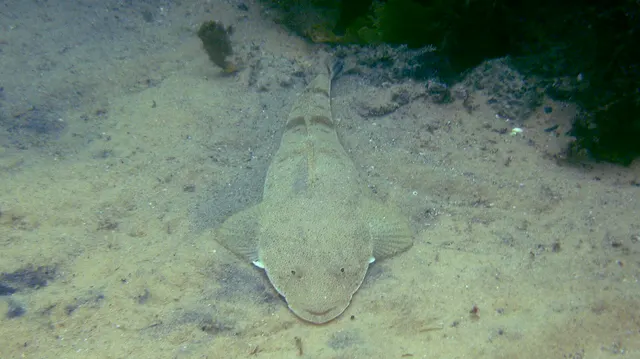 Dusky flatheadRegular local target1 placeSydney HarbourOver estuary
Photo: Sylke Rohrlach from Sydney, via Wikimedia Commons, CC BY-SA 2.0; resized and trimmed to fit; shared under the same licence
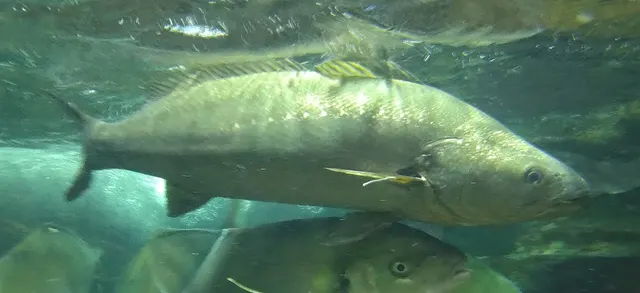 Dusky kobRegular local target1 placeSydney HarbourOver estuary
Photo: タウナギ, via Wikimedia Commons, CC BY-SA 4.0; resized and trimmed to fit; shared under the same licence
- LuderickRegular local target1 placeSydney HarbourOver estuary
- Silver trevallyRegular local target1 placeSydney HarbourOver estuary
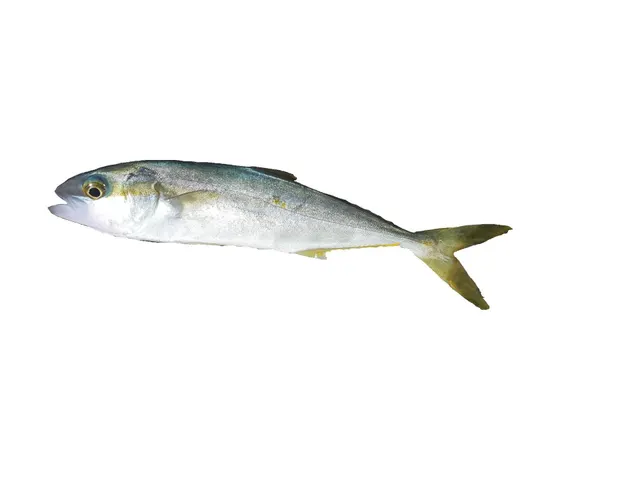 Yellowtail kingfishRegular local target1 placeSydney HarbourOver estuary
Photo: Hugues Evano (IFREMER, Délégation océan Indien (DOI), Département Ressources Biologiques et Environnement (RBE), F-97420 Le Port, France), via Wikimedia Commons, CC BY 4.0; resized
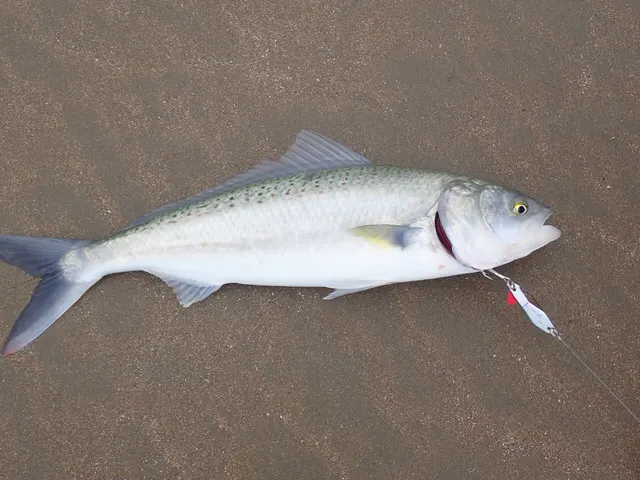 KahawaiSeasonal1 placeSydney HarbourOver estuaryAround Jan–Apr, Oct–Dec
Photo: zoology, via Wikimedia Commons, public domain; resized


What these strengths mean
- Regular local target
- Fishing sources describe this as a normal local target here, not merely as caught.
- Seasonal
- Well supported, and concentrated in part of the year rather than spread through it.
- How breadth is counted
- A fish documented at six marks is shown as six marks: breadth never raises the strength on its own. A fishery account describes the fishing; a recorded catch reports one specific catch. How evidence is weighed.
Fish documented nearby, not here
Nothing below has been documented at Sydney Harbour itself. Each one has been documented at a named place on the same ground, and the places are listed with it. Treat this as what the water around here holds rather than as a catch list for this mark.
Also documented at neighbouring places
One or two accounts each, on the ground around here. Enough to know the fish is caught in these waters; not enough to say anything about this place.
From the shore
- Australian bass — documented at Georges River; Hawkesbury River and Broken Bay
- Estuary perch — documented at Georges River; Hawkesbury River and Broken Bay
- Bluefish — documented at Botany Bay
Named only as a group
The guide for Sydney Harbour also names these fish by a name that covers more than one species here. It does not say which, so none is attached to this place.
- bream — could be Black bream or Yellowfin bream. Black bream and yellowfin bream overlap in south-east Australia and hybridise in Victoria; the working difference is the colour of the pelvic and anal fins.
- mullet — could be Yellow-eye mullet or Sea mullet. Both occur in south-east Australian estuaries: on the Hopkins the Victorian agency names yellow eye mullet as a key fish and sea mullet as an occasional one, and "mullet" alone does not say which.
How people fish it
Practised here: Sea fishing, Lure fishing.
Methods the sources name for this ground. Each one is explained in full on its own page.
- Livebaiting at sea
Presenting a living fish where a predator will find it — the most effective method for many species and the one with the clearest welfare questions attached.
- Spinning
Casting an artificial lure and retrieving it so that it moves like something alive — the most direct form of lure fishing.
- Ledgering
Fishing a bait on the bottom held by a weight, with no float — the simplest way to fish at distance, in depth, or in wind.
- Float fishing
Suspending a bait at a controlled depth beneath a buoyant indicator — the most visual, most controllable and most widely applicable method in angling.
- Eging
Jigging for squid and cuttlefish with a barbed, weighted lure worked in lifts and pauses — a Japanese discipline with its own tackle, vocabulary and competitive scene.
Baits and lures for these fish
The baits and lures each of the fish above is commonly taken on, from that fish’s own page. This is what works for the fish, not a report of what people use on this particular water — local knowledge and the conditions on the day still decide.
Lures
- Metal jigs — for Yellowtail kingfish, Kahawai
- Soft plastics — for Dusky flathead, Silver trevally
- Surface lures — for Yellowtail kingfish, Kahawai
The ground and the water
- The ground
- Port Jackson, from its heads past the city to the Parramatta and Lane Cove rivers, with Middle and North Harbour branching north. The state department counts more than 120 known land-based fishing places — rock platforms, wharves, piers, parks and reserves — and numbers seventy of them on its maps. It gives dusky flathead, mulloway, bream, luderick, mullet, tarwhine, silver trevally, squid and leatherjacket as the common fish, with Australian salmon, bonito, frigate mackerel and kingfish arriving in the warmer months.
Through the year
The department gives kingfish, bream and mulloway as year-round targets and Australian salmon from October to April, when pelagic fish come into the harbour.
Rules and access
Particular to this water: Sydney Harbour and all its tributaries are an intertidal protected area: shellfish, molluscs and crustaceans may not be taken. The department says council, leased and private land has its own rules and that anglers should check fishing is allowed at each place; on ferry wharves, vessels and passengers have priority. The department says a number of fishing closures are in place in the harbour, most of them signposted.
Beyond what is stated above, FishingHQ does not know the current access position here. New South Wales requires its recreational fishing fee to be paid in all its waters, with exemptions the state lists. Marine parks and aquatic reserves have zones where fishing is not allowed or only some methods are, much of the shore is an intertidal protected area where shellfish and other invertebrates may not be taken, the state publishes advice against eating fish from some waters, and wearing a lifejacket is the law when rock fishing in declared council areas. Bag and size limits change. Check the current position with the NSW Department of Primary Industries and Regional Development before going.
Who holds the answer:
- The NSW Department of Primary Industries and Regional Development, which collects the fishing fee and publishes the rules, closures and marine park zoning.
- The council, port or land manager, where the shore or wharf is theirs.
- The NSW Department of Primary Industries and Regional Development, which sets the recreational fishing fee and its exemptions and publishes the rules, closures, marine park zoning and freshwater seasons.
- Service NSW, the state's service through which the licence is bought.
- The council, port or land manager, for wharves, parks, reserves and other land it owns or leases, which carry rules of their own.
- The NSW Food Authority, for advice on eating fish from waters with a contamination advisory, including Sydney Harbour.
- The managers of Booderee National Park, on Jervis Bay's southern shore, which is Commonwealth land with its own fishing rules.
- The NSW Department of Primary Industries and Regional Development: collects the fishing fee and publishes the bag and size limits, closures and reserve rules for this water.
Nearby fishing
Other publicly documented places within about 40 km, by distance. Positions are approximate public geography and are never exact marks.
- North Harbour Aquatic Reserve — under 2 km · Bay
- Federation Point — under 2 km · Headland
- The Spit Bridge — 2–5 km · Bridge
- Clifton Gardens Wharf — 2–5 km · Jetty
- Middle Harbour — 2–5 km · Estuary
- McMahons Point — 5–10 km · Jetty
- Walsh Bay piers — 5–10 km · Pier
- Balls Head Reserve — 5–10 km · Headland
Sources for this place
- Go Fishing — Sydney Harbour's wharves, piers and parks — NSW Department of Primary Industries and Regional Development, 2024 (Government fisheries body)Relied on for: The state fisheries department's Sydney Harbour guide: this place on its land-based maps, the fish it names here as hot spots, the methods and tackle it gives, the intertidal protected area and the dioxin advice.States this directlyPassage read and verified
- Recreational fishing fee — NSW Department of Primary Industries and Regional Development (Government fisheries body)Relied on for: That the NSW recreational fishing fee must be paid, and a receipt carried, when fishing in any NSW water.States this directlyPassage read and verified
- FishBase: a global information system on fishes — Froese, R. and D. Pauly, eds. — FishBase Consortium (Scientific institute)Relied on for: That Arripis truttaceus ranges from Western Australia to Victoria and Tasmania and Arripis trutta from Brisbane to western Victoria, so 'Australian salmon' on this coast is Arripis trutta.States this directlyPassage read and verified
How FishingHQ labels evidence is explained in the evidence policy. Last reviewed 2026-10-22.
Before you go
- Fish documented here
- 6 at this place itself. See them.
- Getting there
- Not recorded. FishingHQ holds no sourced description of the way in.
- Rules particular to this water
- Sydney Harbour and all its tributaries are an intertidal protected area: shellfish, molluscs and crustaceans may not be taken. The department says council, leased and private land has its own rules and that anglers should check fishing is allowed at each place; on ferry wharves, vessels and passengers have priority. The department says a number of fishing closures are in place in the harbour, most of them signposted. Dated 2024: NSW Department of Primary Industries and Regional Development and NSW Department of Primary Industries and Regional Development. Whether it still applies is not established. Applies to: Sydney Harbour.
Nothing here is watched for change. Sources and who to ask.
- Hazards particular to this place
- None recorded for this place; the hazards of the wider coast or water still apply.
Check before you travel
- Whether you may fish here, and whether a licence or permit is needed — start with the NSW Department of Primary Industries and Regional Development.
- The tide times and the forecast for the day you go.
- Anything recorded here was true when it was read; it is not watched for change.