The Mekong system
Fishing regions · Last reviewed 2026-08-14
The largest inland fishery on earth by catch, organised around an annual flood pulse and a lake that reverses the direction of its own river every year.
Safety: drowning and immersion — can cause serious injury or death. 3 more points apply here.
Being listed here is not permission to fish. What that meansClose
Access, fishing rights, seasons, licences, local bylaws and permitted methods vary and can change. Check current access, permission, local regulations, closures and restrictions before you travel or fish. FishingHQ describes what the ground is and names who holds the answer; it does not hold the answer itself.
Find the authority for a jurisdiction · What FishingHQ does and does not cover
The Mekong is a system-tier record in the strictest sense: the physical behaviour of the river explains the fishery completely, and no jurisdiction along it can be described without it.
THE FLOOD PULSE IS THE ORGANISING FACT. The basin has a monsoon climate, and the river's discharge between dry season and wet season differs by a very large multiple. Every year the rising water spreads out of the channel across floodplains, forests and rice land, and every year it drains back. Fish production in the basin is driven by that expansion: the flooded area is where fish feed, grow and breed, and the catch that follows is the harvest of it.
THE TONLE SAP REVERSES. The lake in the middle of the basin is connected to the mainstem by a river that flows out of the lake in the dry season and back into it when the Mekong rises, expanding the lake several-fold. It is one of the clearest examples anywhere of a hydrological cycle producing a fishery, and it supports an extraordinary catch and an entire floating society.
THE MIGRATIONS ARE LONG AND CONNECTED. A great many Mekong species are migratory, moving between floodplain feeding habitat, mainstem refuges and upstream spawning reaches over hundreds of kilometres. That connectivity is why obstructions to the mainstem and its tributaries are the central conservation issue in the basin.
THE FAUNA IS ENORMOUS AND CONTAINS GIANTS. The basin holds one of the richest freshwater fish faunas in the world, including several of the largest freshwater fish on earth — giant catfish, giant barb, giant freshwater stingray — a number of which are critically endangered.
AND THE FISHERY IS OVERWHELMINGLY SUBSISTENCE AND SMALL-SCALE. Tens of millions of people take fish from this basin, most of it outside any commercial statistic, using traps, nets, lines and fences worked at household scale. Recreational angling exists and is growing, but it sits inside a food fishery of a size that has no European equivalent.
What fishing here is like
A monsoon river system whose fishery is produced by an annual flood that expands the water surface enormously and then withdraws it. Overwhelmingly a subsistence and small-scale food fishery worked with traps, nets, fences and lines by tens of millions of people, alongside a growing sport fishery for the basin's large species. The Tonle Sap lake, which reverses its own outflow each year, is the single most productive part of it. Migration and connectivity define both the biology and the conservation politics.
What dominates
Small-scale trap, fence, gillnet and cast-net fishing at household and village scale, which is the overwhelming majority of effort. Lift nets and stationary gear on the mainstem and in the flood zone. Handlining and simple rod fishing for catfish and predators. Recreational lure and bait fishing for snakeheads, hampala barb and catfish, mostly on reservoirs, tributaries and managed waters. Bowfishing and gigging in shallow flooded habitat in places. Aquaculture in cages on the mainstem, which is now a large part of the basin's fish production and interacts with the wild fishery.
The water available
A large monsoonal mainstem with deep dry-season pools that act as refuges; a vast seasonal floodplain of forest, grassland and rice land inundated for months each year; the Tonle Sap lake and its reversing connector river; a delta of distributaries, canals and brackish transition running to the sea; rapids and rocky reaches in the middle basin; and steep, cool upper tributaries draining the eastern Himalaya and the Yunnan plateau, which are a different fishery again.
How the rules are structured
The basin crosses six countries, so there is no single fisheries authority and no single set of rules. Each riparian state administers its own inland fisheries through its national ministry, generally with provincial implementation and with community fishery arrangements operating at village level in several of them. Closed seasons in the spawning and migration period, gear restrictions, protected species lists and conservation zones covering dry-season pools are common instruments, and they differ by country and by province. A river basin commission provides a cooperative framework for water management and data sharing between several of the riparian states, but it is a coordinating body rather than a fisheries regulator. Several of the basin's largest species carry national and international protection. Recreational fishing is regulated inconsistently and is frequently governed by the owner or manager of the specific water rather than by a public fishery rule. FishingHQ does not state what any current rule is.
Who to ask
- The national fisheries administration of the country concerned, which is the primary regulator for inland fishing in each riparian state.
- The provincial fisheries office, which usually implements closed seasons, gear rules and conservation zones on the ground.
- The community fishery organisation where one exists, which manages defined local waters in several parts of the basin.
- The river basin commission, for basin-scale water management and hydrology, which is coordination rather than fisheries regulation.
- The protected area authority where a fishery lies inside a conservation zone or a designated dry-season refuge pool.
Words you will meet
- Flood pulse
- The annual cycle of expansion and withdrawal of water across a floodplain. In this basin it is the single mechanism that produces the fishery: fish feed and grow on the flooded area and are harvested as the water drains.
- Dai fishery
- The stationary bagnet fishery worked in the Tonle Sap river during the outflow season, in which nets are set across the current to intercept fish leaving the lake. One of the most intensively monitored fisheries in the basin.
- Dry-season refuge pool
- A deep pool in the mainstem or a tributary that holds water and fish through the dry months when surrounding habitat has drained. These pools are the bottleneck in the annual cycle and are frequently the focus of local conservation rules.
- Trey riel
- The small migratory cyprinids that make up an enormous share of the basin's catch by weight. A fishery built on small fish rather than large ones, and the base of the region's fermented fish paste economy.
- White fish and black fish
- A basin-wide working distinction between long-distance migratory species that need connected river habitat, and floodplain-resident species tolerant of low oxygen and stagnant water. It predicts which species survive habitat change and which do not.
Conditions and hazards
This is a large, fast, silty river with poor visibility and strong currents, and drowning is the principal risk to anyone working or fishing on it. Water levels change by many metres seasonally and can rise quickly during the monsoon, and flooded terrain conceals channels, snags and drop-offs. Boat traffic on the mainstem is heavy and includes large vessels with limited manoeuvrability. The heat and sun are severe and dehydration is a genuine hazard on open water. Waterborne disease and parasites are present, and raw or undercooked freshwater fish carries a documented liver fluke risk in parts of the basin. Some of the fauna is genuinely hazardous to handle, including large stingrays with a serrated spine capable of causing severe injury, and catfish with strong pectoral spines. Unexploded ordnance remains a hazard in some riparian areas away from the water.
The flood pulse, and why it is the fishery rather than a feature of it
If a reader takes one mechanism away from this page it should be this one, because it explains nearly everything else.
MONSOON RIVERS DO NOT FLOW STEADILY. The Mekong's wet-season discharge is many times its dry-season discharge, and the difference does not stay in the channel. As the river rises it spills across floodplains, seasonally flooded forest, grassland and rice land, and the wetted area of the basin expands enormously for several months.
THAT EXPANSION IS A PRODUCTION EVENT. Newly flooded ground releases nutrients, terrestrial and aquatic invertebrates become available in quantity, and the physical space for fish multiplies. Fish move out of the channel onto the flood, feed hard, grow fast and in many cases spawn on the rising water. Recruitment in this basin is a function of how much area was flooded, for how long, and how early.
THE WITHDRAWAL IS THE HARVEST. As the water drains, fish are funnelled back off the floodplain into channels and pools, concentrating as they go, and that is when the fishery takes them. A great deal of Mekong gear — fences, traps, bagnets set in outflow channels — is designed to intercept fish that are being moved by falling water rather than to find fish that are hiding.
AND THE DRY SEASON IS THE BOTTLENECK. When the flood has gone, what is left is the channel and a set of deep pools. Those pools hold the surviving population until the next rise, which is why they are the focus of local protection rules and why losing one matters out of proportion to its size.
SO THE PRODUCTIVITY IS NOT A PROPERTY OF THE WATER, IT IS A PROPERTY OF THE CYCLE. A river that carried the same total volume steadily through the year would support a small fraction of this catch. That is the single most important thing to understand about why altering the timing and amplitude of the flow is a fisheries question and not only a hydrology one.
Backed by research — why, and the sources (2)
Supported by peer-reviewed research or fisheries science. The sources are listed and can be checked.
- The IUCN Red List of Threatened Species — International Union for Conservation of Nature (Conservation authority)Relied on for: Assessment and habitat accounts for the migratory and large-bodied freshwater fishes of the system, and the pressures acting on them.States this directlyCitation checked — the work exists and is described correctly
- Code of Conduct for Responsible Fisheries — Food and Agriculture Organization of the United Nations, Rome, 1995 (Standards body)Relied on for: Principles for inland and small-scale fisheries management, including the treatment of subsistence and shared-stock fisheries.Background and mechanism onlyCitation checked — the work exists and is described correctly
Giants, small fish and the distinction that predicts which survive
The Mekong fauna is among the richest freshwater faunas on earth, and it is easiest to hold in two pieces.
THE GIANTS ARE THE FAMOUS PART AND THE SMALLEST PART OF THE CATCH. The basin holds several of the largest freshwater fishes in the world: giant catfish, giant barb, giant freshwater stingray, and large predatory catfish among them. Several are critically endangered, principally because they are long-lived, late-maturing, highly migratory and easy to intercept. FishingHQ holds the giant freshwater stingray and the goonch as records, and the basin is where the first of those belongs.
THE ACTUAL CATCH IS DOMINATED BY SMALL MIGRATORY CYPRINIDS. Enormous numbers of small fish move between floodplain and channel each year and are taken in bulk. They are the base of the region's fermented fish paste economy and they supply a very large share of the animal protein consumed in the lower basin. A fishery statistic that counted only large fish would miss most of what the river actually produces.
SNAKEHEADS AND OTHER AIR-BREATHING FLOODPLAIN FISH ARE THE RESIDENT GROUP. Giant snakehead, striped snakehead and great snakehead tolerate warm, stagnant, deoxygenated water because they breathe air, guard their young, and can survive in a shrinking pool that would kill a cyprinid. They are also the principal recreational target in the basin's lure fishery.
HAMPALA BARB, MAHSEER-TYPE CYPRINIDS AND PREDATORY BARBS occupy the clearer, faster reaches, and jungle perch occur in the smaller tributaries.
AND THE WHITE-FISH AND BLACK-FISH DISTINCTION IS THE USEFUL LENS. Long-distance migratory species — the 'white' fish — need continuous river habitat and free passage between floodplain, channel and spawning reaches. Floodplain-resident 'black' fish do not. When connectivity is lost, the first group declines and the second does not, so the composition of the catch shifts even when the total tonnage does not fall immediately. That shift is the early warning signal in this basin.
Backed by research — why, and the sources (2)
Supported by peer-reviewed research or fisheries science. The sources are listed and can be checked.
- The IUCN Red List of Threatened Species — International Union for Conservation of Nature (Conservation authority)Relied on for: Assessment and habitat accounts for the migratory and large-bodied freshwater fishes of the system, and the pressures acting on them.States this directlyCitation checked — the work exists and is described correctly
- Code of Conduct for Responsible Fisheries — Food and Agriculture Organization of the United Nations, Rome, 1995 (Standards body)Relied on for: Principles for inland and small-scale fisheries management, including the treatment of subsistence and shared-stock fisheries.Background and mechanism onlyCitation checked — the work exists and is described correctly
Gear built to intercept water rather than to find fish
Mekong fishing practice is unusually legible once the flood pulse is understood, because most of the gear is positional.
FENCES AND TRAPS WORK THE DRAINING FLOODPLAIN. Barriers of bamboo, net or brush set across outflow channels guide fish moving off the flood into traps. The angler does not locate the fish; the falling water delivers them, and the skill is in knowing which channel drains which area and when.
STATIONARY BAGNETS WORK THE MAINSTEM MIGRATION. Large nets set in the current of the Tonle Sap river during the outflow season intercept fish leaving the lake. This is one of the most intensively studied fisheries in the basin precisely because the catch passes through a small number of measurable points.
GILLNETS AND CAST NETS ARE THE UNIVERSAL HOUSEHOLD GEAR, worked from banks, small boats and while wading, everywhere, all year. The cast net in particular is the ordinary tool of the basin, and FishingHQ's cast-netting page describes the practice that is used here at a scale it is used almost nowhere else.
LIFT NETS, LINES, LONGLINES AND SPEARS FILL THE REST, alongside hand collection of shellfish, snails and crustaceans from the flooded ground.
RECREATIONAL ANGLING IS A DIFFERENT AND MUCH SMALLER ACTIVITY. Lure fishing for snakeheads, hampala barb and predatory catfish is established and growing, largely on tributaries, reservoirs and managed waters rather than on the mainstem, and it is frequently governed by whoever manages the specific water rather than by a public fishery rule.
CAGE AQUACULTURE ON THE MAINSTEM IS NOW A MAJOR PRODUCTION SYSTEM and it belongs in any honest account of the basin's disciplines. It supplies a large volume of fish, it depends on wild-caught feed and seed in places, and it interacts with the wild fishery rather than sitting beside it.
WHAT IS ABSENT IS THE EUROPEAN RECREATIONAL STRUCTURE. There is no widespread rod-licence-and-club model here. Fishing is food, done by everybody, and the sport version is a recent and geographically limited overlay.
What experienced anglers do — why, and the sources (2)
Widely and independently recommended by experienced anglers and specialist sources. This is real angling knowledge, not proof: controlled evidence for it is limited, and FishingHQ records it as convention rather than as a demonstrated effect.
- FAO fishing gear types and fishing technology information — Food and Agriculture Organization of the United Nations (Scientific institute)Relied on for: Descriptions of fishing gear types and their operation, including the small-scale gears used in the region.States this directlyCitation checked — the work exists and is described correctly
- IGFA International Angling Rules and World Record Requirements — International Game Fish Association (Angling or fisheries organisation)Relied on for: International recreational angling practice, tackle categories and the conventions applied to recognised catches.Background and mechanism onlyPassage read and verified
One season, two states, and the timing that matters more than the volume
The Mekong year has two halves and the transition between them is what the whole fishery is organised around.
THE DRY SEASON CONCENTRATES EVERYTHING. Flow falls, the floodplain drains, and fish are confined to the channel and to deep pools. Water is clear by monsoon standards, fish are accessible, and pressure on the refuge pools is at its highest. This is also when many species are in poor condition and when protection of the pools does most good.
THE RISE IS THE TRIGGER. As the monsoon arrives and levels start to climb, migratory species move — upstream to spawn in some cases, laterally onto the flood in others — and the timing of that movement is cued by rising water rather than by a calendar date. An early or late rise moves the whole biological year.
THE FLOOD IS THE GROWING SEASON. For several months the basin is at its largest, fish are dispersed across a huge area, feeding and growing, and fishing is comparatively difficult because the fish are everywhere rather than anywhere. The Tonle Sap expands several-fold during this period as the Mekong pushes water back up the connector river into the lake.
THE FALL IS THE HARVEST. As levels drop, fish are forced back off the floodplain through a shrinking set of channels, and the fishery takes them in bulk. The Tonle Sap outflow fishery is the emblematic case: the lake drains, the fish leave with the water, and the bagnets are waiting.
AND AMPLITUDE AND TIMING MATTER MORE THAN TOTAL VOLUME. A flood that arrives late, peaks lower or recedes early produces less inundated area for less time, and the recruitment that follows is smaller. That is why changes to the flow regime — from water storage, from land use, from climate — are a fisheries question even when the annual total discharge is unchanged. The fishery is tuned to the shape of the hydrograph, not to its area.
Backed by research — why, and the sources (2)
Supported by peer-reviewed research or fisheries science. The sources are listed and can be checked.
- The IUCN Red List of Threatened Species — International Union for Conservation of Nature (Conservation authority)Relied on for: Assessment and habitat accounts for the migratory and large-bodied freshwater fishes of the system, and the pressures acting on them.States this directlyCitation checked — the work exists and is described correctly
- Code of Conduct for Responsible Fisheries — Food and Agriculture Organization of the United Nations, Rome, 1995 (Standards body)Relied on for: Principles for inland and small-scale fisheries management, including the treatment of subsistence and shared-stock fisheries.Background and mechanism onlyCitation checked — the work exists and is described correctly
Six countries, one river, and no single regulator
The governance of this basin is genuinely different from anything else on FishingHQ, and the difference is structural rather than a matter of detail.
THERE IS NO BASIN FISHERIES AUTHORITY. The Mekong crosses six countries. Each administers inland fisheries through its own ministry, generally with provincial implementation, and the rules differ across borders that the fish cross freely. A migratory species may be protected in one country, seasonally closed in the next and unrestricted in a third, within the range of a single population.
A RIVER BASIN COMMISSION EXISTS AND IS A COORDINATING BODY. Several of the riparian states cooperate on water management, hydrology, data and impact assessment through a shared commission. It is genuinely useful and it is not a regulator: it does not set fishing rules and cannot enforce them.
COMMUNITY FISHERIES ARE A SIGNIFICANT INSTITUTION in several parts of the basin. Defined waters are managed by village-level organisations with their own rules on gear, timing and access, sometimes including protected pools. This is a real allocation of management responsibility rather than a consultation exercise, and it is often the body that decides what happens on a particular stretch.
CLOSED SEASONS, GEAR RULES AND PROTECTED SPECIES LISTS ARE THE COMMON INSTRUMENTS, generally aimed at the spawning migration and at the dry-season refuges. Several of the basin's largest species carry national protection and international listing, and taking or trading them is restricted.
HYDROPOWER IS THE DOMINANT POLICY QUESTION AND IT IS NOT A FISHERIES DECISION. Dams on the mainstem and on major tributaries affect the timing and amplitude of the flood pulse and the passage of migratory fish, and they are decided under energy and development policy in which fisheries are one input among several. Any honest account of Mekong fisheries governance has to say that the most consequential decisions for the fishery are made outside the fisheries system.
AND RECREATIONAL FISHING SITS AWKWARDLY INSIDE ALL OF THIS. It is regulated inconsistently, is often a matter for the manager of a specific water, and a visitor's practical answer is almost always local. FishingHQ does not state what is currently permitted anywhere in this basin.
Official guidance — why, and the sources (2)
Stated by a fisheries authority, scientific institute or recognised angling body. Authoritative, but summarising rather than demonstrating.
- Good Fish Guide — Marine Conservation Society (Conservation authority)Relied on for: Assessment of fisheries and the management measures applied to them, including spatial protection and gear restriction.Background and mechanism onlyCitation checked — the work exists and is described correctly
- Code of Conduct for Responsible Fisheries — Food and Agriculture Organization of the United Nations, Rome, 1995 (Standards body)Relied on for: Principles for responsible fisheries management, precaution, and the treatment of small-scale and shared stocks.States this directlyCitation checked — the work exists and is described correctly
Basin vocabulary: pulse, pool, dai and the two kinds of fish
A handful of terms carry most of the technical meaning in this basin, and several of them are used by scientists and fishers alike.
FLOOD PULSE IS THE FOUNDATIONAL CONCEPT and it is a technical term rather than a description. It names the annual expansion and contraction of the inundated area and the ecological consequences that follow from it, and it is the framework within which every other statement about the basin's productivity makes sense.
DRY-SEASON REFUGE POOL NAMES A SPECIFIC AND CRITICAL HABITAT. Deep pools in the mainstem and larger tributaries hold water when everything around them has drained, and they carry the population through the bottleneck. A pool is a named, known, locally recognised place, and protecting one is a common and effective local measure.
DAI NAMES THE STATIONARY BAGNET FISHERY of the Tonle Sap outflow. It is worth knowing because the dai catch is one of the longest and best monitored fishery time series in the basin, so a great deal of what is known about Mekong fish abundance comes through this word.
TREY RIEL NAMES THE SMALL MIGRATORY CYPRINIDS that dominate the catch by weight and underpin the fermented fish paste that is a staple across the lower basin. The word also gave its name to a currency, which is a fair indication of how central the fish is.
WHITE FISH AND BLACK FISH IS THE MOST USEFUL WORKING DISTINCTION IN THE BASIN. White fish migrate long distances and need connected habitat; black fish live on the floodplain, tolerate low oxygen and often breathe air. It is not a taxonomic split and it is not folk taxonomy either — it is a functional grouping that predicts response to habitat change, and it is used in both village and scientific conversation.
AND SNAKEHEAD IS THE NAME AN ANGLER WILL MEET FIRST, covering several species with quite different sizes and behaviour. Distinguishing giant, striped and great snakehead matters, because they are not interchangeable as a catch or as fish.
What experienced anglers do — why, and the sources (2)
Widely and independently recommended by experienced anglers and specialist sources. This is real angling knowledge, not proof: controlled evidence for it is limited, and FishingHQ records it as convention rather than as a demonstrated effect.
- The IUCN Red List of Threatened Species — International Union for Conservation of Nature (Conservation authority)Relied on for: Assessment and habitat accounts for the migratory and large-bodied freshwater fishes of the system, and the pressures acting on them.States this directlyCitation checked — the work exists and is described correctly
- Code of Conduct for Responsible Fisheries — Food and Agriculture Organization of the United Nations, Rome, 1995 (Standards body)Relied on for: Principles for inland and small-scale fisheries management, including the treatment of subsistence and shared-stock fisheries.Background and mechanism onlyCitation checked — the work exists and is described correctly
A fishery older than any state on the river, and the century that changed it
The Mekong fishery is ancient, continuous and currently undergoing the largest change in its recorded history.
THE FISHERY PREDATES EVERY MODERN BOUNDARY. Settlement in the lower basin has been organised around the flood cycle for millennia; the fermented fish paste economy, the trap and fence technology, and the calendar of festivals tied to the rise and fall of the water are all long-established. Angkorian bas-reliefs depict fish and fishing, and the Tonle Sap's productivity is part of the explanation for how a large pre-modern state was fed there.
COLONIAL AND POST-COLONIAL PERIODS ADDED CONCESSIONS AND STATISTICS. Fishing lots were auctioned as concessions in parts of the basin under systems that persisted well into the modern era, and their abolition and replacement with community fisheries in some countries is a comparatively recent reform.
THE TWENTIETH CENTURY'S CONFLICTS INTERRUPTED BOTH THE FISHERY AND ITS RECORD. War, displacement and the loss of institutional continuity in parts of the basin left gaps in both management and data that are still being filled, and unexploded ordnance remains a hazard in some riparian areas.
THE MODERN TRANSFORMATION IS HYDROLOGICAL. Mainstem and tributary dams built and planned across the basin change the timing, amplitude and sediment load of the flow, and block or impede migration. Sediment matters as much as water: the delta is built and maintained by sediment the river carries, and reduced supply has consequences for the delta's fertility and its resistance to the sea.
AQUACULTURE HAS BECOME A MAJOR PRODUCTION SYSTEM within a few decades, particularly in the delta, and it has changed the economics of fish in the region substantially.
AND THE GIANTS ARE THE VISIBLE CASUALTY. The basin's largest species have declined sharply within living memory, and several are critically endangered. They are the species most exposed to the combination of long migration, late maturity and interception, which makes them the leading indicator of what is happening to the connectivity of the system as a whole.
Official guidance — why, and the sources (2)
Stated by a fisheries authority, scientific institute or recognised angling body. Authoritative, but summarising rather than demonstrating.
- Good Fish Guide — Marine Conservation Society (Conservation authority)Relied on for: Assessment of fisheries and the management measures applied to them, including spatial protection and gear restriction.Background and mechanism onlyCitation checked — the work exists and is described correctly
- Code of Conduct for Responsible Fisheries — Food and Agriculture Organization of the United Nations, Rome, 1995 (Standards body)Relied on for: Principles for responsible fisheries management, precaution, and the treatment of small-scale and shared stocks.States this directlyCitation checked — the work exists and is described correctly
Fishing as food, at a scale that changes what the word means
The Mekong is the strongest case on FishingHQ for the distinction between fishing as recreation and fishing as subsistence, and the record would be dishonest if it blurred them.
TENS OF MILLIONS OF PEOPLE TAKE FISH FROM THIS BASIN. For a great many households in the lower basin, wild-caught fish is the principal source of animal protein, and it is taken by the household rather than bought. That is not a picturesque survival; it is the ordinary economy of the river, and it means fishing effort is distributed across the entire population rather than concentrated in a fishing industry.
MOST OF THAT CATCH NEVER APPEARS IN A STATISTIC. Fish taken with a cast net at the end of a garden and eaten the same evening is not landed anywhere. Estimating the basin's true catch has required survey methods designed around that fact, and the resulting figures are far larger than any commercial landing record would suggest.
FERMENTED FISH PASTE IS THE STORAGE TECHNOLOGY THAT MAKES IT WORK. A seasonal glut of small fish at the fall of the flood is preserved by fermentation and eaten through the year. The paste is a cultural signature across the lower basin and it is the reason the small-cyprinid fishery matters so much more than its individual fish sizes suggest.
THE FLOATING VILLAGES OF THE TONLE SAP ARE THE EXTREME CASE. Communities living on and moving with a lake that changes area several-fold annually are organised around the water in a way that has no analogue elsewhere on FishingHQ.
RECREATIONAL ANGLING IS GROWING AND IS A DIFFERENT ACTIVITY. Lure fishing for snakehead and predatory barbs, and a commercial pay-lake and managed-fishery sector holding large introduced and native species, serve a domestic and visiting sport market. It coexists with the food fishery rather than replacing it, and it is where the catch-and-release conventions FishingHQ describes are being negotiated for the first time.
AND FISHINGHQ DOES NOT SPEAK FOR THESE COMMUNITIES. What is recorded here is what the public and scientific evidence supports about how the fishery works. The meaning it has for the people who depend on it is theirs to state.
Official guidance — why, and the sources (2)
Stated by a fisheries authority, scientific institute or recognised angling body. Authoritative, but summarising rather than demonstrating.
- Good Fish Guide — Marine Conservation Society (Conservation authority)Relied on for: Assessment of fisheries and the management measures applied to them, including spatial protection and gear restriction.Background and mechanism onlyCitation checked — the work exists and is described correctly
- Code of Conduct for Responsible Fisheries — Food and Agriculture Organization of the United Nations, Rome, 1995 (Standards body)Relied on for: Principles for responsible fisheries management, precaution, and the treatment of small-scale and shared stocks.States this directlyCitation checked — the work exists and is described correctly
A river that reverses, and water you cannot see into
The Mekong's hazards come from the flood pulse — the annual rise and fall that organises the entire system — and from the fact that this is a working river carrying tens of millions of people's traffic rather than a recreational one.
THE FLOOD PULSE CHANGES THE RIVER INTO A DIFFERENT RIVER. In the wet season discharge multiplies many times over, the river rises metres, floods vast areas of forest and floodplain, and runs opaque brown with a full load of sediment and debris — whole trees, vegetation mats, and everything the rising water has picked up. In the dry season the same reaches are a fraction of the width with exposed rock, sandbars and channels between them. A place known in one season is unrecognisable in the other, and knowledge acquired in the dry season is actively misleading in the wet.
MOST FAMOUSLY, PART OF THE SYSTEM REVERSES. The Tonlé Sap river runs backwards for months of the year when the Mekong's flood overwhelms it, filling the lake behind it to several times its dry-season area. It is a spectacular piece of hydrology and it is also a warning about assumptions: on this system, which way the water is going is a seasonal question rather than a fixed one.
THE TURBIDITY IS THE HAZARD THAT COMPOUNDS EVERY OTHER ONE. You cannot see into this water. That means you cannot see depth, you cannot see submerged timber or rock, you cannot see the edge of a drop-off from a bank, and a person in the water cannot be seen from a boat. Wading anywhere unfamiliar is guesswork, and the combination of a strong flow, an invisible bottom and a bank that may be undercut is how people drown in big tropical rivers.
THE TRAFFIC IS DENSE AND IT DOES NOT EXPECT YOU. This is a major transport artery: cargo vessels, ferries, long-tail boats and fishing craft, in channels that are narrow in places, frequently at night, frequently without the lighting or the watchkeeping a European boater would assume. A small craft here is in traffic rather than on open water, and being visible is the whole of the mitigation — which is difficult in daylight on brown water and close to impossible after dark.
AND THE HANDLING RISKS ARE REAL BECAUSE THE FISH ARE. This system holds some of the largest freshwater fish on earth alongside catfish with serrated spines, and stingrays occupy soft bottoms in the lower river and its floodplain. The mitigations are ordinary — do not put hands into an unseen fish's mouth, control a spined fish before unhooking, shuffle rather than step in shallow soft-bottomed water — and they matter more here because the fish are bigger and the hospital is further.
Official guidance — why, and the sources (3)
Stated by a fisheries authority, scientific institute or recognised angling body. Authoritative, but summarising rather than demonstrating.
- RNLI water safety guidance: cold water shock and Float to Live — Royal National Lifeboat Institution (Water-safety or diver-training authority)Relied on for: Cold water shock and the immersion response, tidal cut-off, and water-safety guidance for shore anglers and small-craft users.States this directlyPassage read and verified
- FAO Species Identification Guides for Fishery Purposes and the FAO Species Catalogues — Food and Agriculture Organization of the United Nations (Scientific institute)Relied on for: Regional species identification and the distribution of venomous, spined and otherwise hazardous species in the waters named.States this directlyCitation checked — the work exists and is described correctly
- General angling website restatements of established technique — Various (Credible secondary source)Relied on for: Widely restated descriptions of how these waters are conventionally fished and what local practice treats as dangerous, recorded as practitioner consensus rather than as scholarship.Background and mechanism onlyCitation checked — the work exists and is described correctly
Some of what lives here
Fish recorded here that FishingHQ holds a reviewed photograph of. It is not a complete list of what The Mekong system holds, and it is not a prediction that you will catch any of them — it is a way in to the ones we can show you.
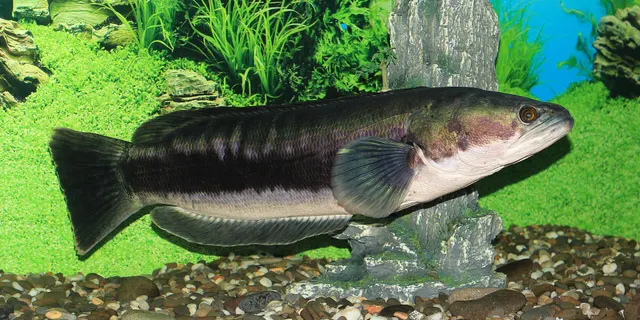 Giant snakeheadAn air-breathing Southeast Asian predator that guards its young in a shoal and defends them aggressively — the fish that made topwater lure fishing a South-East Asian sport.
George Chernilevsky — Public domain, via Wikimedia Commons
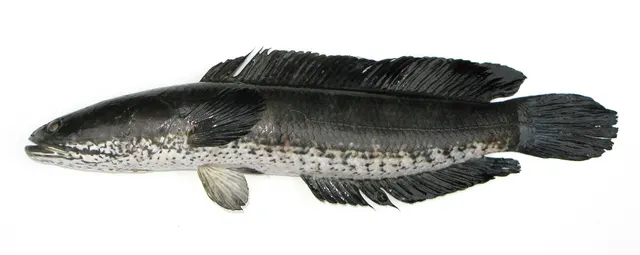 Striped snakeheadThe most widely distributed and most farmed Asian snakehead, air-breathing, able to survive in mud through dry seasons, and a staple food fish across the region.
Reyes, R.B., CC BY 4.0, via Wikimedia Commons
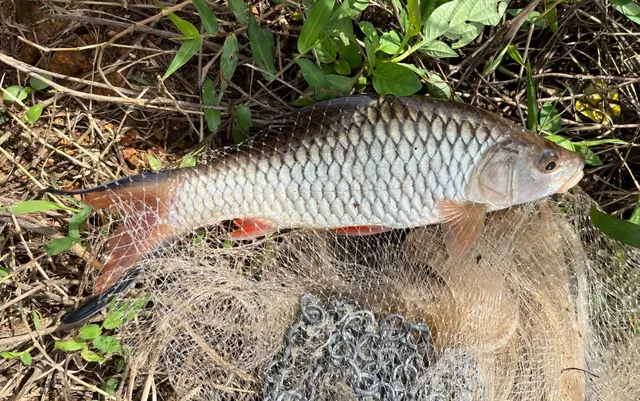 Hampala barbA predatory Southeast Asian barb with a bold black vertical bar and red-edged tail, hunting small fish in clear rivers and taken on lures.
Zakqary Roy — CC BY, via iNaturalist
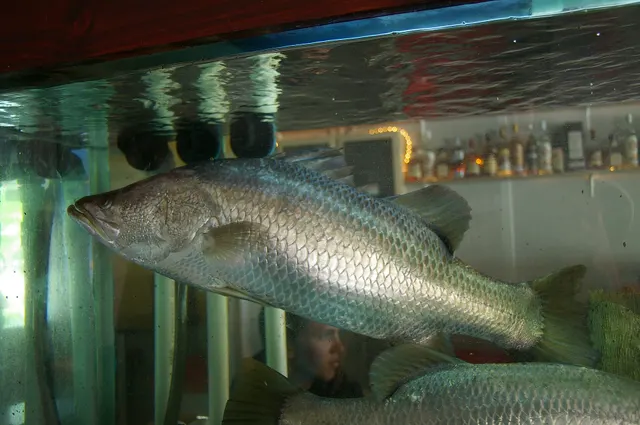 BarramundiAn estuarine ambush predator that begins life as a male and changes sex to female, so the largest fish are all breeding hens.
John Robert McPherson — CC0 1.0 Public Domain Dedication, via Wikimedia Commons
Safety
Drowning and immersion — Can cause serious injury or death
The mainstem is large, fast, deep and silt-laden with effectively no underwater visibility. Currents are strong, banks undercut, and submerged snags are common. Water levels rise by many metres over the monsoon and can rise quickly, and flooded terrain hides channels, wells and drop-offs that were dry ground weeks earlier.
What reduces it: Treat the mainstem as unswimmable regardless of appearance, wear a buoyancy aid on any small boat, and never wade unfamiliar flooded ground. Check level trends rather than the level itself in the wet season, and leave rising water early.
Worse when:
- The monsoon rise, when levels change fastest and debris is moving.
- Flooded ground, where the bottom is unknown and channels are invisible.
- Night, when boat traffic is hardest to see and the bank is hard to find.
Boat traffic and being seen — Can cause injury needing treatment
The mainstem carries heavy commercial traffic including large vessels that cannot manoeuvre or stop quickly and cannot see a small craft close ahead. Small fishing boats working stationary gear sit in the navigable channel.
What reduces it: Stay out of the navigable channel where possible, be visible, and assume a large vessel has not seen you. Do not anchor in a shipping line.
Venomous and spined species — Can cause injury needing treatment
Large freshwater stingrays carry a serrated barb capable of causing deep, contaminated wounds, and several catfish species have strong locking pectoral and dorsal spines. Wounds in warm fresh water infect readily.
What reduces it: Do not handle a large ray without knowing what you are doing and where the tail is. Control catfish behind the pectoral fins rather than by gripping the body, use a tool rather than a hand for unhooking, and treat any puncture as an infection risk requiring proper cleaning.
Sun, dehydration and fatigue — Can cause injury needing treatment
Heat and humidity are extreme for much of the year and there is no shade on open water. Heat exhaustion develops quietly, and dehydration degrades judgement before it produces obvious symptoms.
What reduces it: Carry far more water than seems necessary, cover up rather than relying on sunscreen alone, take the middle of the day off the water where possible, and recognise that fatigue on a boat in this climate is a safety problem rather than a comfort one.
Further safety reading
- Boat safety for anglers — A large, fast, silt-laden mainstem carrying heavy commercial traffic, with submerged snags and no underwater visibility, is a hazardous environment for a small craft.
- Sun, dehydration and fatigue — Heat and humidity on open water in this basin degrade judgement well before obvious symptoms appear, and there is no shade.
- Venomous and spined fish — Large freshwater stingrays carry a serrated barb capable of deep contaminated wounds, and the basin's catfish have strong locking pectoral spines.
Check the rules before you fish
Fishing laws, bylaws, access rules, seasons, bait restrictions and permitted methods vary by location and can change. Check the current rules from the relevant authority and the water you intend to fish before fishing.
Check with:
- Current national or regional law for where you are fishing
- Current local bylaws
- The relevant fisheries authority
- The landowner, club or fishery whose water it is
- Any restrictions specific to the species or the method you intend to use
Where to go next
What swims here
- BarramundiUses the delta and the lower brackish reaches, moving between fresh and salt water as its catadromous life history requires.
- Giant freshwater stingrayOne of the largest freshwater fishes on earth, occupying deep mainstem pools, and among the basin's most threatened species.
- Giant snakeheadA large air-breathing floodplain predator of the basin, tolerant of the warm deoxygenated water that a draining flood leaves behind.
- GoonchLarge bottom-dwelling catfish of the basin's deeper pools and rocky reaches, adapted to hold station on the bed in heavy current.
- Great snakeheadOccupies deeper and more riverine habitat than its floodplain relatives, and is a recognised sport fish where lure fishing has developed.
- Hampala barbA predatory barb of the clearer, faster tributaries and reservoirs, and the principal target of the basin's small lure fishery.
- Jungle perchOccurs in the clearer upland tributaries of the basin, in the fast rocky habitat the lowland species do not use.
- Nile tilapiaIntroduced and now widely established across the basin, in aquaculture and in the wild fishery alike.
1 more
- Striped snakehead Fish
How people fish here
- HandliningSimple line fishing from bank and boat is universal here and is a food practice rather than a recreational one.
- Lure fishingLure fishing for snakeheads and predatory barbs is the basin's growing recreational discipline, largely on tributaries, reservoirs and managed waters.
- Traditional net fishingCast nets, gillnets, lift nets, fences and traps worked at household scale account for the overwhelming majority of fishing effort in the basin.
- Traps and potsFence-and-trap systems set to intercept fish draining off the flood are the basin's characteristic gear, because the falling water delivers the fish rather than the fisher finding them.
How this compares
Rules and access
- Close seasonsClosed seasons over the spawning migration and protection of dry-season refuge pools are the common instruments across the basin, set separately by each riparian state.
- Licences and permissionSix countries, provincial implementation and village-level community fisheries mean the operative permission here is almost always local rather than national.
Environment and conservation
- Bycatch and discardsFence and trap gear set across draining floodplain channels is inherently unselective, taking whatever the falling water delivers.
- Fish stocks and sustainabilityMigratory species requiring connected river habitat decline when the flood pulse is altered or the mainstem obstructed, and the composition of the catch shifts before the tonnage falls.
History and culture
Sources and evidence
- The IUCN Red List of Threatened Species — International Union for Conservation of Nature (Conservation authority)Relied on for: Assessment and habitat accounts for the migratory and large-bodied freshwater fishes of the system, and the pressures acting on them.States this directlyCitation checked — the work exists and is described correctly
- Code of Conduct for Responsible Fisheries — Food and Agriculture Organization of the United Nations, Rome, 1995 (Standards body)Relied on for: Principles for inland and small-scale fisheries management, including the treatment of subsistence and shared-stock fisheries.Background and mechanism onlyCitation checked — the work exists and is described correctly
- Good Fish Guide — Marine Conservation Society (Conservation authority)Relied on for: Assessment of fisheries and the management measures applied to them, including spatial protection and gear restriction.Background and mechanism onlyCitation checked — the work exists and is described correctly
- Code of Conduct for Responsible Fisheries — Food and Agriculture Organization of the United Nations, Rome, 1995 (Standards body)Relied on for: Principles for responsible fisheries management, precaution, and the treatment of small-scale and shared stocks.States this directlyCitation checked — the work exists and is described correctly
Why the 22 connections on this page are here, and the sources
What swims here
Backed by research — 9 connections
Supported by peer-reviewed research or fisheries science. The sources are listed and can be checked.
Barramundi
A distribution association between an animal and a kind of water, rather than a claim about any named mark.
- The IUCN Red List of Threatened Species — International Union for Conservation of Nature (Conservation authority)Relied on for: Assessment and habitat account for the species, including the river or lake system it occupies and the pressures acting on it.States this directlyCitation checked — the work exists and is described correctly
- FishBase: a global information system on fishes — Froese, R. and D. Pauly, eds. — FishBase Consortium (Scientific institute)Relied on for: Distribution, habitat association, size and life history recorded for the species in the system concerned.States this directlyPassage read and verified
Giant freshwater stingray
A distribution association between an animal and a kind of water, rather than a claim about any named mark.
- The IUCN Red List of Threatened Species — International Union for Conservation of Nature (Conservation authority)Relied on for: Assessment and habitat account for the species, including the river or lake system it occupies and the pressures acting on it.States this directlyCitation checked — the work exists and is described correctly
- FishBase: a global information system on fishes — Froese, R. and D. Pauly, eds. — FishBase Consortium (Scientific institute)Relied on for: Distribution, habitat association, size and life history recorded for the species in the system concerned.States this directlyPassage read and verified
Giant snakehead
A distribution association between an animal and a kind of water, rather than a claim about any named mark.
- The IUCN Red List of Threatened Species — International Union for Conservation of Nature (Conservation authority)Relied on for: Assessment and habitat account for the species, including the river or lake system it occupies and the pressures acting on it.States this directlyCitation checked — the work exists and is described correctly
- FishBase: a global information system on fishes — Froese, R. and D. Pauly, eds. — FishBase Consortium (Scientific institute)Relied on for: Distribution, habitat association, size and life history recorded for the species in the system concerned.States this directlyPassage read and verified
Goonch
A distribution association between an animal and a kind of water, rather than a claim about any named mark.
- The IUCN Red List of Threatened Species — International Union for Conservation of Nature (Conservation authority)Relied on for: Assessment and habitat account for the species, including the river or lake system it occupies and the pressures acting on it.States this directlyCitation checked — the work exists and is described correctly
- FishBase: a global information system on fishes — Froese, R. and D. Pauly, eds. — FishBase Consortium (Scientific institute)Relied on for: Distribution, habitat association, size and life history recorded for the species in the system concerned.States this directlyPassage read and verified
Great snakehead
A distribution association between an animal and a kind of water, rather than a claim about any named mark.
- The IUCN Red List of Threatened Species — International Union for Conservation of Nature (Conservation authority)Relied on for: Assessment and habitat account for the species, including the river or lake system it occupies and the pressures acting on it.States this directlyCitation checked — the work exists and is described correctly
- FishBase: a global information system on fishes — Froese, R. and D. Pauly, eds. — FishBase Consortium (Scientific institute)Relied on for: Distribution, habitat association, size and life history recorded for the species in the system concerned.States this directlyPassage read and verified
Hampala barb
A distribution association between an animal and a kind of water, rather than a claim about any named mark.
- The IUCN Red List of Threatened Species — International Union for Conservation of Nature (Conservation authority)Relied on for: Assessment and habitat account for the species, including the river or lake system it occupies and the pressures acting on it.States this directlyCitation checked — the work exists and is described correctly
- FishBase: a global information system on fishes — Froese, R. and D. Pauly, eds. — FishBase Consortium (Scientific institute)Relied on for: Distribution, habitat association, size and life history recorded for the species in the system concerned.States this directlyPassage read and verified
Jungle perch
A distribution association between an animal and a kind of water, rather than a claim about any named mark.
- The IUCN Red List of Threatened Species — International Union for Conservation of Nature (Conservation authority)Relied on for: Assessment and habitat account for the species, including the river or lake system it occupies and the pressures acting on it.States this directlyCitation checked — the work exists and is described correctly
- FishBase: a global information system on fishes — Froese, R. and D. Pauly, eds. — FishBase Consortium (Scientific institute)Relied on for: Distribution, habitat association, size and life history recorded for the species in the system concerned.States this directlyPassage read and verified
Nile tilapia
A distribution association between an animal and a kind of water, rather than a claim about any named mark.
- The IUCN Red List of Threatened Species — International Union for Conservation of Nature (Conservation authority)Relied on for: Assessment and habitat account for the species, including the river or lake system it occupies and the pressures acting on it.States this directlyCitation checked — the work exists and is described correctly
- FishBase: a global information system on fishes — Froese, R. and D. Pauly, eds. — FishBase Consortium (Scientific institute)Relied on for: Distribution, habitat association, size and life history recorded for the species in the system concerned.States this directlyPassage read and verified
Striped snakehead
A distribution association between an animal and a kind of water, rather than a claim about any named mark.
- The IUCN Red List of Threatened Species — International Union for Conservation of Nature (Conservation authority)Relied on for: Assessment and habitat account for the species, including the river or lake system it occupies and the pressures acting on it.States this directlyCitation checked — the work exists and is described correctly
- FishBase: a global information system on fishes — Froese, R. and D. Pauly, eds. — FishBase Consortium (Scientific institute)Relied on for: Distribution, habitat association, size and life history recorded for the species in the system concerned.States this directlyPassage read and verified
How people fish here
What experienced anglers do — 4 connections
Widely and independently recommended by experienced anglers and specialist sources. This is real angling knowledge, not proof: controlled evidence for it is limited, and FishingHQ records it as convention rather than as a demonstrated effect.
Handlining
A discipline that is characteristic of the place rather than merely possible there, joined so a reader can move between the place and the practice.
- General angling website restatements of established technique — Various (Credible secondary source)Relied on for: Widely restated practice associating this discipline with this place, recorded as practitioner consensus rather than as tested fact.Background and mechanism onlyCitation checked — the work exists and is described correctly
- Fishers' Craft and Lettered Art: Tracts on Fishing from the End of the Middle Ages — University of Toronto Press, 1997 (Scientific literature)Relied on for: That fishing traditions develop around the water and fish available to them, and the historical method of reading such traditions.States this directlyCitation checked — the work exists and is described correctly
Lure fishing
A discipline that is characteristic of the place rather than merely possible there, joined so a reader can move between the place and the practice.
- General angling website restatements of established technique — Various (Credible secondary source)Relied on for: Widely restated practice associating this discipline with this place, recorded as practitioner consensus rather than as tested fact.Background and mechanism onlyCitation checked — the work exists and is described correctly
- Fishers' Craft and Lettered Art: Tracts on Fishing from the End of the Middle Ages — University of Toronto Press, 1997 (Scientific literature)Relied on for: That fishing traditions develop around the water and fish available to them, and the historical method of reading such traditions.States this directlyCitation checked — the work exists and is described correctly
Traditional net fishing
A discipline that is characteristic of the place rather than merely possible there, joined so a reader can move between the place and the practice.
- General angling website restatements of established technique — Various (Credible secondary source)Relied on for: Widely restated practice associating this discipline with this place, recorded as practitioner consensus rather than as tested fact.Background and mechanism onlyCitation checked — the work exists and is described correctly
- Fishers' Craft and Lettered Art: Tracts on Fishing from the End of the Middle Ages — University of Toronto Press, 1997 (Scientific literature)Relied on for: That fishing traditions develop around the water and fish available to them, and the historical method of reading such traditions.States this directlyCitation checked — the work exists and is described correctly
Traps and pots
A discipline that is characteristic of the place rather than merely possible there, joined so a reader can move between the place and the practice.
- General angling website restatements of established technique — Various (Credible secondary source)Relied on for: Widely restated practice associating this discipline with this place, recorded as practitioner consensus rather than as tested fact.Background and mechanism onlyCitation checked — the work exists and is described correctly
- Fishers' Craft and Lettered Art: Tracts on Fishing from the End of the Middle Ages — University of Toronto Press, 1997 (Scientific literature)Relied on for: That fishing traditions develop around the water and fish available to them, and the historical method of reading such traditions.States this directlyCitation checked — the work exists and is described correctly
How this compares
What experienced anglers do — 1 connection
Widely and independently recommended by experienced anglers and specialist sources. This is real angling knowledge, not proof: controlled evidence for it is limited, and FishingHQ records it as convention rather than as a demonstrated effect.
South-East Asian fishing
A continental overview joined to a record it sits above, so that the synthesis and the detail are reachable from one another rather than duplicating each other.
- FAO fishing gear types and fishing technology information — Food and Agriculture Organization of the United Nations (Scientific institute)Relied on for: Classification and description of world fishing gears and the regions in which each is used.States this directlyCitation checked — the work exists and is described correctly
- General angling website restatements of established technique — Various (Credible secondary source)Relied on for: Widely restated descriptions of regional angling practice, recorded as consensus rather than as scholarship.Background and mechanism onlyCitation checked — the work exists and is described correctly
Safety reading
Official guidance — 3 connections
Stated by a fisheries authority, scientific institute or recognised angling body. Authoritative, but summarising rather than demonstrating.
Boat safety for anglers
A place is joined to the safety topic that explains a hazard genuinely characteristic of it, so the mechanism is reachable rather than restated as a weak warning.
- RNLI water safety guidance: cold water shock and Float to Live — Royal National Lifeboat Institution (Water-safety or diver-training authority)Relied on for: Cold water shock and the immersion response, shore angling hazards, small-craft guidance and the circumstances in which water users are most often killed.States this directlyPassage read and verified
- RoSPA water safety information and UK accidental drowning statistics — Royal Society for the Prevention of Accidents (Water-safety or diver-training authority)Relied on for: Accidental drowning statistics and the circumstances in which recreational water users are most often killed.Background and mechanism onlyPassage read and verified
Sun, dehydration and fatigue
A place is joined to the safety topic that explains a hazard genuinely characteristic of it, so the mechanism is reachable rather than restated as a weak warning.
- NOAA National Weather Service marine forecasts and marine weather services — National Oceanic and Atmospheric Administration, United States (Government fisheries body)Relied on for: Marine forecasting, tropical cyclone warning practice and the products issued for coastal and offshore waters.States this directlyCitation checked — the work exists and is described correctly
- NOAA Diving Manual: Diving for Science and Technology — National Oceanic and Atmospheric Administration, US Department of Commerce (Scientific institute)Relied on for: Diving and in-water hazards, including hazardous marine life, currents and the management of operations in remote locations.Background and mechanism onlyCitation checked — the work exists and is described correctly
Venomous and spined fish
A place is joined to the safety topic that explains a hazard genuinely characteristic of it, so the mechanism is reachable rather than restated as a weak warning.
- NOAA National Weather Service marine forecasts and marine weather services — National Oceanic and Atmospheric Administration, United States (Government fisheries body)Relied on for: Marine forecasting, tropical cyclone warning practice and the products issued for coastal and offshore waters.States this directlyCitation checked — the work exists and is described correctly
- NOAA Diving Manual: Diving for Science and Technology — National Oceanic and Atmospheric Administration, US Department of Commerce (Scientific institute)Relied on for: Diving and in-water hazards, including hazardous marine life, currents and the management of operations in remote locations.Background and mechanism onlyCitation checked — the work exists and is described correctly
Rules and access
Official guidance — 2 connections
Stated by a fisheries authority, scientific institute or recognised angling body. Authoritative, but summarising rather than demonstrating.
Close seasons
A place joined to the regulatory concept whose structure it illustrates. The edge asserts that the concept applies here, never what any current rule says.
- Code of Conduct for Responsible Fisheries — Food and Agriculture Organization of the United Nations, Rome, 1995 (Standards body)Relied on for: Principles for the management of fisheries, including licensing, closed seasons, size limits and the treatment of small-scale and shared stocks.States this directlyCitation checked — the work exists and is described correctly
- Good Fish Guide — Marine Conservation Society (Conservation authority)Relied on for: Assessment of fisheries and the management measures applied to them, including the instruments used and their purpose.Background and mechanism onlyCitation checked — the work exists and is described correctly
Licences and permission
A place joined to the regulatory concept whose structure it illustrates. The edge asserts that the concept applies here, never what any current rule says.
- Code of Conduct for Responsible Fisheries — Food and Agriculture Organization of the United Nations, Rome, 1995 (Standards body)Relied on for: Principles for the management of fisheries, including licensing, closed seasons, size limits and the treatment of small-scale and shared stocks.States this directlyCitation checked — the work exists and is described correctly
- Good Fish Guide — Marine Conservation Society (Conservation authority)Relied on for: Assessment of fisheries and the management measures applied to them, including the instruments used and their purpose.Background and mechanism onlyCitation checked — the work exists and is described correctly
Environment and conservation
Backed by research — 2 connections
Supported by peer-reviewed research or fisheries science. The sources are listed and can be checked.
Bycatch and discards
An environmental pressure that is specific to this place rather than general to fishing, joined so the issue is anchored to a real example.
- The IUCN Red List of Threatened Species — International Union for Conservation of Nature (Conservation authority)Relied on for: Assessment of the species and habitats affected, and the pressures acting on them, including habitat change and exploitation.States this directlyCitation checked — the work exists and is described correctly
- Code of Conduct for Responsible Fisheries — Food and Agriculture Organization of the United Nations, Rome, 1995 (Standards body)Relied on for: Principles for responsible fisheries management, precaution, gear selectivity and the treatment of shared and small-scale fisheries.Background and mechanism onlyCitation checked — the work exists and is described correctly
Fish stocks and sustainability
An environmental pressure that is specific to this place rather than general to fishing, joined so the issue is anchored to a real example.
- The IUCN Red List of Threatened Species — International Union for Conservation of Nature (Conservation authority)Relied on for: Assessment of the species and habitats affected, and the pressures acting on them, including habitat change and exploitation.States this directlyCitation checked — the work exists and is described correctly
- Code of Conduct for Responsible Fisheries — Food and Agriculture Organization of the United Nations, Rome, 1995 (Standards body)Relied on for: Principles for responsible fisheries management, precaution, gear selectivity and the treatment of shared and small-scale fisheries.Background and mechanism onlyCitation checked — the work exists and is described correctly
History and culture
Official guidance — 1 connection
Stated by a fisheries authority, scientific institute or recognised angling body. Authoritative, but summarising rather than demonstrating.
Fishing, communities and economies
A place joined to the documented fishing tradition it belongs to, so the history has a real setting and the place has a real past.
- Fishers' Craft and Lettered Art: Tracts on Fishing from the End of the Middle Ages — University of Toronto Press, 1997 (Scientific literature)Relied on for: The historical development of fishing practice and its transmission, and the method of reading a fishing tradition from its documentary record.States this directlyCitation checked — the work exists and is described correctly
- Words of the Lagoon: Fishing and Marine Lore in the Palau District of Micronesia — University of California Press, Berkeley, 1981 (Reference work)Relied on for: Documented traditional marine knowledge and fishing practice, and the social organisation of fishing rights and closures.Background and mechanism onlyCitation checked — the work exists and is described correctly
How FishingHQ labels evidence is explained in the evidence policy.