Hawaii
Fishing regions · Last reviewed 2026-08-14
The most isolated major island group on earth, where deep water lies within sight of the beach, a distinctive shore-casting discipline evolved, and a traditional management system is being formally revived.
Safety: cliffs and rock platforms — can cause serious injury or death. 2 more points apply here.
Being listed here is not permission to fish. What that meansClose
Access, fishing rights, seasons, licences, local bylaws and permitted methods vary and can change. Check current access, permission, local regulations, closures and restrictions before you travel or fish. FishingHQ describes what the ground is and names who holds the answer; it does not hold the answer itself.
Find the authority for a jurisdiction · What FishingHQ does and does not cover
Hawaii qualifies as an archipelago record because its isolation produces a fauna, a fishery and a management history that none of them could be explained without.
IT IS THE MOST ISOLATED MAJOR ARCHIPELAGO IN THE WORLD. Thousands of kilometres from any continent, the islands were colonised by whatever could cross that gap, which produced an unusually high proportion of endemic species and an unusually impoverished one in some groups. The reef fauna is Indo-Pacific in origin but distinctly Hawaiian in composition.
THE ISLANDS ARE YOUNG VOLCANOES AND THE WATER GETS DEEP FAST. They rise from the abyssal plain, so shelf is minimal and depth increases rapidly from shore. Blue water is within a short run of a harbour and, in places, within casting distance of a cliff. That single fact produced the archipelago's most distinctive discipline.
SHORE CASTING FOR LARGE PELAGICS IS THE HAWAIIAN SPECIALITY. Casting heavy sliding baits and lures from rock and cliff for ulua — the large trevallies — is a serious, technical, nocturnal discipline with its own gear and its own culture, and it exists because deep water is reachable from land.
BIG-GAME FISHING DEVELOPED HERE AS AN INDUSTRY. The leeward coast of the largest island has calm water, a very steep drop-off and a long record of exceptionally large blue marlin, and the sport fishery built around that is internationally significant.
AND THE TRADITIONAL MANAGEMENT SYSTEM IS THE MOST INTERESTING PART. Pre-contact Hawaii operated a land-to-sea resource management system with seasonal closures, species restrictions and clear authority, and elements of it are now being formally revived in state-recognised community management areas — one of the clearest cases anywhere of customary practice being rebuilt into modern law.
What fishing here is like
An isolated volcanic archipelago with minimal shelf and very deep water close inshore, holding a reef fauna with high endemism and a blue-water fishery within reach of small boats and, in places, of the shore. Shore casting for large trevally from rock and cliff is the signature local discipline; offshore big-game fishing for marlin and tuna is the internationally known one. A strong subsistence and cultural fishing tradition persists, and a traditional resource management system is being formally revived in community-managed areas.
What dominates
Shore casting with slide bait and heavy lures from rock and cliff for large trevally, a distinctive and technical nocturnal discipline. Offshore trolling for blue marlin, yellowfin and other tuna, and mahi-mahi, from small boats and charter vessels. Deep-drop and bottom fishing for the deepwater snappers and groupers that are the archipelago's prized food fish. Spearfishing, both breath-hold and, historically, with traditional gear, and a strong contemporary culture. Throw-net fishing, a traditional practice still widely used. Reef and shoreline gathering for limpets, seaweed, octopus and shellfish, which is culturally central. Kayak fishing, well developed because deep water is close inshore.
The water available
Steep volcanic islands rising from the deep ocean with almost no continental shelf; rocky cliff and lava shoreline dropping directly into deep water; fringing reef and reef flats, more extensive on the older islands; sand beaches between rocky headlands; sheltered leeward coasts in the lee of high volcanoes, which are strikingly calmer than the windward sides; exposed windward coasts receiving persistent trade-wind swell and, in winter, very large north-westerly swell; deep offshore banks and seamounts; and no significant freshwater fishery, the streams being short, steep and holding a small endemic fauna of their own.
How the rules are structured
Marine fishing is administered by the state's aquatic resources division within state waters and by federal authorities beyond them, with the federal regional fishery management council responsible for the offshore pelagic and bottomfish fisheries. Instruments include size limits, bag limits, seasonal closures for particular species, gear restrictions, and a network of marine protected areas of varying strictness including fishery management areas and no-take reserves. A distinctive and important feature is the community-based subsistence fishing area, a state-recognised designation allowing a community to propose and manage rules for its adjacent waters based on traditional practice; the establishment of these areas is one of the more significant developments in United States fisheries governance. Traditional and customary practice carries constitutional protection at state level, which affects how access and gathering rights are treated. Aquatic life, coral and live rock are protected from take in various ways. FishingHQ does not state what any current rule is.
Who to ask
- The state division of aquatic resources, which administers fishing rules, size and bag limits and protected areas within state waters.
- The federal regional fishery management council and national marine fisheries service, for the offshore pelagic and bottomfish fisheries beyond state waters.
- The community body administering a community-based subsistence fishing area, where one is established for the adjacent waters.
- The marine national monument or sanctuary authority in the north-western islands and other designated areas.
- The state department of land and natural resources for shoreline access, gathering and traditional practice questions.
Words you will meet
- Ulua
- The large trevallies, principally giant trevally, and the fish of the shore-casting fishery. A fish with real cultural weight as well as sporting status, and the target that the entire slide-bait discipline exists for.
- Slide bait
- A shore-casting technique in which a heavy lead is cast out first and a bait is then slid down the line to it. It allows a large bait to be presented at distance from rock where casting it directly would be impossible, and it is the defining Hawaiian shore method.
- Ahupuaa
- A traditional land division running from the mountains to the sea, encompassing forest, cultivated land, shoreline and reef as one managed unit. The organising concept of pre-contact Hawaiian resource management, and the model that modern community management areas draw on.
- Konohiki
- The person responsible for managing the resources of a traditional land division, including the authority to close a fishery seasonally or restrict the taking of a species. Effectively a resource manager with real authority, operating centuries before the concept had a modern name.
- Opihi
- The endemic limpets gathered from wave-washed rock. Culturally prized, and gathering them is among the most dangerous shoreline activities in the islands because it is done in the surge zone.
Conditions and hazards
The shoreline is the hazard here and it is a serious one. Lava rock drops directly into deep water, waves arrive from an open ocean with an enormous fetch, and people are swept from rocks regularly. Winter north-westerly swell reaching the islands is very large and arrives on shorelines that look manageable in summer. Gathering limpets from the surge zone is the single most dangerous shoreline activity in the islands and has a substantial fatality record. Rip currents on the beaches are strong. Because there is no shelf, water is deep immediately, so being swept off is immediately a deep-water problem rather than a wading one. Shore casting is largely done at night, which compounds everything above. Offshore, the trade winds are persistent and the channels between islands are notoriously rough. Sun exposure is severe. Reef cuts from lava and coral infect readily, and the fauna includes venomous and spined species and, on the reef, sharks.
No shelf, deep water, and a shoreline that is the edge of the ocean
The physical setting of these islands explains why the fishing is unlike other Pacific archipelagos.
THE ISLANDS RISE FROM THE ABYSSAL PLAIN. They are volcanic peaks built from the deep sea floor, so there is essentially no continental shelf. Depth increases rapidly from the shore, and in places a cliff drops into water hundreds of metres deep within a short distance.
THAT PUTS BLUE WATER WITHIN REACH FROM LAND. It is the reason a shore angler can realistically cast at large pelagic predators, the reason kayak fishing for pelagic species is a developed discipline here, and the reason a small boat can reach marlin water in a short run.
THE ISLANDS ARE AGE-GRADED FROM SOUTH-EAST TO NORTH-WEST. The chain formed as the plate moved over a stationary hot spot, so the south-eastern islands are young and steep with limited reef, and the north-western ones are older, more eroded and have more extensive reef development. That gradient produces genuinely different fishing along the chain.
WINDWARD AND LEEWARD COASTS ARE DIFFERENT WORLDS. High volcanoes block the persistent north-easterly trade winds, so the leeward coasts are strikingly calm and clear while the windward coasts receive constant wind and swell. The famous big-game fishery sits on a leeward coast for exactly this reason.
WINTER SWELL IS THE OTHER SEASONAL FORCE. Very large north-westerly swell generated by North Pacific storms arrives on north- and west-facing shores in winter, and it transforms a summer shoreline into something else entirely.
AND THERE IS NO FRESHWATER FISHERY WORTH THE NAME. Streams are short, steep and flashy, holding a small endemic fauna including gobies that climb waterfalls. Introduced species occur in reservoirs, but a reader arriving with a freshwater question has arrived at a marine archipelago.
Backed by research — why, and the sources (2)
Supported by peer-reviewed research or fisheries science. The sources are listed and can be checked.
- FAO Species Identification Guides for Fishery Purposes and the FAO Species Catalogues — Food and Agriculture Organization of the United Nations (Scientific institute)Relied on for: Distribution, habitat, depth and fishery accounts for the species of the western central Pacific and eastern Pacific in the FAO regional identification guides.States this directlyCitation checked — the work exists and is described correctly
- FishBase: a global information system on fishes — Froese, R. and D. Pauly, eds. — FishBase Consortium (Scientific institute)Relied on for: Distribution, habitat association and depth range recorded for the species.States this directlyPassage read and verified
Endemic reef fish, deepwater snappers and the ulua
Isolation shaped this fauna, and the resulting species list is Indo-Pacific in ancestry and Hawaiian in detail.
ENDEMISM IS HIGH. A substantial proportion of Hawaiian reef fishes occur nowhere else, because the archipelago is far enough from any source population that colonisation was rare and divergence followed. The reef fish community is correspondingly less diverse than the Coral Triangle's and considerably more distinctive.
ULUA — THE LARGE TREVALLIES — ARE THE SHORE ANGLER'S CATCH. Giant trevally and its relatives patrol the rocky shoreline and reef edges, feeding at night, and they are the target the entire slide-bait discipline was built for. They carry cultural weight as well as sporting status.
THE DEEPWATER BOTTOMFISH ARE THE PRIZED FOOD FISH. A group of deepwater snappers and a grouper, taken from steep slopes at substantial depth, are the archipelago's most valued table fish and are managed as a distinct federal fishery with its own history of stock concern and rebuilding.
PELAGICS ARE THE OFFSHORE FISHERY. Blue marlin — the islands have produced exceptional fish — along with yellowfin and bigeye tuna, skipjack, mahi-mahi, wahoo and spearfish. The leeward big-game fishery is built on these.
REEF FISH ARE THE SUBSISTENCE AND CULTURAL FISHERY: goatfish, surgeonfish, parrotfish, jacks and others taken by net, spear and line for eating, with a body of traditional knowledge about seasons and sizes attached.
NON-FINFISH ARE CULTURALLY CENTRAL. Octopus taken from reef holes, limpets gathered from wave-washed rock, seaweed harvested from the shoreline, and spiny lobster all matter here in a way that a finfish-only account would miss entirely. Limpet gathering in particular is both prized and lethal.
AND THE NORTH-WESTERN ISLANDS ARE A DIFFERENT PROPOSITION. Largely uninhabited and now within a very large protected area, they hold reef and predator communities in a condition that the main islands no longer have, and they are effectively a reference point for what the archipelago's reefs once were.
Backed by research — why, and the sources (2)
Supported by peer-reviewed research or fisheries science. The sources are listed and can be checked.
- FAO Species Identification Guides for Fishery Purposes and the FAO Species Catalogues — Food and Agriculture Organization of the United Nations (Scientific institute)Relied on for: Distribution, habitat, depth and fishery accounts for the species of the western central Pacific and eastern Pacific in the FAO regional identification guides.States this directlyCitation checked — the work exists and is described correctly
- FishBase: a global information system on fishes — Froese, R. and D. Pauly, eds. — FishBase Consortium (Scientific institute)Relied on for: Distribution, habitat association and depth range recorded for the species.States this directlyPassage read and verified
Slide bait, throw net and the deep drop
Hawaii has produced at least two fishing disciplines that exist in this form almost nowhere else, and both are worth explaining.
SLIDE BAIT SHORE FISHING IS THE SIGNATURE METHOD. A heavy lead is cast out from a rock platform first, and a large bait is then attached to a slider and allowed to run down the line to the sinker. The point is that a bait too big to cast can be presented at distance, which is what it takes to interest a large trevally from a cliff. The tackle — long powerful rods, large conventional reels, heavy line — and the practice of fishing multiple rods overnight from a rock platform make it a discipline with its own equipment, etiquette and vocabulary.
IT IS PRACTISED AT NIGHT AND THAT IS PART OF THE POINT. Large trevally feed along the rocky shore after dark, so the fishery is nocturnal, which compounds every hazard the shoreline already has.
THROW-NET FISHING IS THE TRADITIONAL METHOD STILL IN WIDE USE. A circular weighted net thrown by hand over fish in shallow water, requiring genuine skill to open properly. It is the practice FishingHQ holds as cast netting, and in Hawaii it carries cultural continuity as well as practical value.
DEEP-DROP BOTTOM FISHING targets the deepwater snappers on steep slopes at depths where electric reels are common and barotrauma is a real consideration for any released fish.
OFFSHORE TROLLING IS THE INTERNATIONAL FISHERY. Lures worked at speed on the leeward drop-off for marlin and tuna, from small boats as well as charters, and the region's lure designs and rigging conventions have been exported worldwide.
SPEARFISHING IS STRONG, both breath-hold on the reef and in a blue-water form, with a long local history.
KAYAK FISHING IS UNUSUALLY DEVELOPED because deep water is close: a paddler can reach genuine pelagic ground from a beach, which is rare.
AND SHORELINE GATHERING — OCTOPUS, LIMPETS, SEAWEED — IS A DISCIPLINE IN ITS OWN RIGHT, with seasons, techniques and rules of its own, and it is the part of the fishery most tightly bound to cultural practice.
What experienced anglers do — why, and the sources (2)
Widely and independently recommended by experienced anglers and specialist sources. This is real angling knowledge, not proof: controlled evidence for it is limited, and FishingHQ records it as convention rather than as a demonstrated effect.
- FAO fishing gear types and fishing technology information — Food and Agriculture Organization of the United Nations (Scientific institute)Relied on for: Descriptions of fishing gear types and their operation, including the small-scale gears used in the region.States this directlyCitation checked — the work exists and is described correctly
- IGFA International Angling Rules and World Record Requirements — International Game Fish Association (Angling or fisheries organisation)Relied on for: International recreational angling practice, tackle categories and the conventions applied to recognised catches.Background and mechanism onlyPassage read and verified
Trade winds, winter swell and a lunar fishing calendar
Subtropical latitude means the seasons here are about water movement and light rather than about temperature.
SEA TEMPERATURE VARIES LITTLE, so there is no thermal closed season and reef fish are active year-round. What changes is access and behaviour.
THE TRADE WINDS ARE THE BACKGROUND CONDITION. Persistent north-easterlies make windward coasts rough for much of the year and leeward coasts calm, which is why fishing effort is distributed the way it is. Periods when the trades break down are prized.
WINTER SWELL IS THE DOMINANT SEASONAL FORCE. Very large north-westerly swell from North Pacific storms reaches north- and west-facing shores in the northern winter, closing shorelines that are benign in summer and making gathering and shore fishing genuinely dangerous.
SUMMER BRINGS SOUTHERN SWELL to the south-facing shores, smaller but relevant, and the calmest overall conditions.
THE PELAGIC SEASONS ARE REAL. Blue marlin fishing peaks in the warmer months, and other pelagic species have their own patterns tied to water temperature and current.
SPAWNING SEASONS DRIVE SEVERAL CLOSURES, particularly for reef species and for the deepwater bottomfish, and traditional knowledge of when particular species spawn and should be left alone is well documented.
AND THE HAWAIIAN LUNAR CALENDAR IS A GENUINE FISHING CALENDAR. The traditional month is divided into named nights of the moon, and specific nights are recorded as better or worse for particular fishing and gathering activities. That is a real and detailed body of knowledge tied to observable phenomena — tide, light, spawning — rather than folklore, and it is being actively documented and used in community management planning.
Backed by research — why, and the sources (2)
Supported by peer-reviewed research or fisheries science. The sources are listed and can be checked.
- Words of the Lagoon: Fishing and Marine Lore in the Palau District of Micronesia — University of California Press, Berkeley, 1981 (Reference work)Relied on for: Traditional Pacific island marine knowledge, customary tenure and reef management practice, including closures, spawning-aggregation knowledge and the social organisation of fishing rights.States this directlyCitation checked — the work exists and is described correctly
- Code of Conduct for Responsible Fisheries — Food and Agriculture Organization of the United Nations, Rome, 1995 (Standards body)Relied on for: Principles for responsible fisheries management, including the recognition of traditional and community-based management arrangements.Background and mechanism onlyCitation checked — the work exists and is described correctly
State rules, federal fisheries and a community's right to manage its own reef
Hawaii's governance combines a conventional American structure with something genuinely unusual layered into it.
STATE WATERS AND FEDERAL WATERS ARE SEPARATELY ADMINISTERED. The state aquatic resources division sets size limits, bag limits, closures and gear rules inshore; the federal regional fishery management council and the national fisheries service manage the offshore pelagic and bottomfish fisheries. Which body applies depends on where the boat is.
MARINE PROTECTED AREAS EXIST AT SEVERAL STRENGTHS, from areas with gear restrictions to full no-take reserves, and the evidence from the strongest of them on fish biomass recovery is well documented.
THE COMMUNITY-BASED SUBSISTENCE FISHING AREA IS THE DISTINCTIVE INSTRUMENT. State law allows a community to propose management rules for its adjacent waters grounded in traditional and customary practice, which — once approved — become enforceable state rules. That is a formal route by which a community can restore seasonal closures, species restrictions and gear rules derived from its own knowledge, and the establishment of the first such areas is among the more significant developments in United States fisheries governance.
TRADITIONAL AND CUSTOMARY PRACTICE CARRIES CONSTITUTIONAL PROTECTION at state level, which affects how gathering, access and subsistence rights are treated and is a genuine legal factor rather than a statement of respect.
THE NORTH-WESTERN ISLANDS SIT INSIDE A VERY LARGE PROTECTED AREA, where commercial fishing has been phased out and access is tightly controlled.
SHORELINE ACCESS IS ITSELF A LEGAL QUESTION with its own history, and public access to the shoreline has been the subject of significant litigation.
AND FISHINGHQ DOES NOT STATE WHAT ANY OF THIS CURRENTLY PERMITS. Where a community area's rules apply, the community and the state are the answer.
Official guidance — why, and the sources (2)
Stated by a fisheries authority, scientific institute or recognised angling body. Authoritative, but summarising rather than demonstrating.
- Words of the Lagoon: Fishing and Marine Lore in the Palau District of Micronesia — University of California Press, Berkeley, 1981 (Reference work)Relied on for: Traditional Pacific island marine knowledge, customary tenure and reef management practice, including closures, spawning-aggregation knowledge and the social organisation of fishing rights.States this directlyCitation checked — the work exists and is described correctly
- Code of Conduct for Responsible Fisheries — Food and Agriculture Organization of the United Nations, Rome, 1995 (Standards body)Relied on for: Principles for responsible fisheries management, including the recognition of traditional and community-based management arrangements.Background and mechanism onlyCitation checked — the work exists and is described correctly
Ahupuaa, konohiki and a vocabulary of management
Hawaiian fishing vocabulary is unusual on FishingHQ because a large part of it names management concepts rather than gear or fish.
AHUPUAA NAMES A LAND DIVISION FROM MOUNTAIN TO SEA. A traditional unit encompassing upland forest, cultivated land, shoreline and reef, managed as one system on the understanding that what happens on the ridge affects the reef. It is a ridge-to-reef management concept that modern integrated coastal management arrived at independently centuries later, and it is the organising idea behind current community management proposals.
KONOHIKI NAMES THE MANAGER. The person responsible for the resources of an ahupuaa, with authority to close a fishery, restrict a species or regulate gathering. A resource manager with enforceable authority, operating within a system that assumed resources needed managing.
KAPU NAMES THE RESTRICTION ITSELF — a prohibition, frequently seasonal or species-specific, with religious as well as practical force. Closing a fishery during spawning was a kapu, and the mechanism was social and spiritual rather than administrative.
ULUA NAMES THE FISH AND, BY EXTENSION, THE FISHERY. To go ulua fishing is a specific plan involving specific gear, a rock platform and a night.
SLIDE BAIT NAMES THE METHOD, and it is a technical term rather than a description: cast the lead, then slide the bait down to it.
OPIHI NAMES THE LIMPETS and, in practice, names a hazard. Gathering them from the surge zone is culturally valued and genuinely lethal, and the word carries that weight locally.
AND THE NIGHTS OF THE MOON HAVE INDIVIDUAL NAMES. The traditional lunar calendar names each night of the month, and specific nights are associated with specific fishing and gathering activity. It is a working calendar rather than a symbolic one, and it is being documented and used in current management work.
What experienced anglers do — why, and the sources (2)
Widely and independently recommended by experienced anglers and specialist sources. This is real angling knowledge, not proof: controlled evidence for it is limited, and FishingHQ records it as convention rather than as a demonstrated effect.
- Words of the Lagoon: Fishing and Marine Lore in the Palau District of Micronesia — University of California Press, Berkeley, 1981 (Reference work)Relied on for: Traditional Pacific island marine knowledge, customary tenure and reef management practice, including closures, spawning-aggregation knowledge and the social organisation of fishing rights.States this directlyCitation checked — the work exists and is described correctly
- Code of Conduct for Responsible Fisheries — Food and Agriculture Organization of the United Nations, Rome, 1995 (Standards body)Relied on for: Principles for responsible fisheries management, including the recognition of traditional and community-based management arrangements.Background and mechanism onlyCitation checked — the work exists and is described correctly
A management system, its dismantling and its partial return
Hawaii's fisheries history is unusually well documented and has a clear arc that is directly relevant to fisheries management everywhere.
PRE-CONTACT HAWAII MANAGED ITS RESOURCES DELIBERATELY. The ahupuaa system divided land and adjacent sea into managed units running from ridge to reef; the konohiki held authority over the resources of each; and kapu — restrictions, frequently seasonal or species-specific and religiously enforced — closed fisheries during spawning and protected particular species. Fishponds were built and operated on a substantial scale. This was a functioning, enforced, ecologically informed management system supporting a large population on a small land area.
THE NINETEENTH CENTURY DISMANTLED IT. Changes in land tenure, the abolition of the kapu system, disease and population collapse, and the imposition of a Western legal framework removed both the authority and the social mechanism that had operated the system. Marine resources became, in effect, open access.
TWENTIETH-CENTURY FISHERIES DEVELOPED ON THAT BASIS. Commercial and recreational fishing expanded, the reef fisheries declined measurably over decades, and the deepwater bottomfish fishery went through its own stock concern and rebuilding cycle.
THE BIG-GAME FISHERY GREW INTO AN INDUSTRY on the leeward coast of the largest island, producing exceptional blue marlin and exporting lure designs and techniques worldwide.
AND THE REVIVAL IS THE RECENT AND SIGNIFICANT PART. From the late twentieth century, community-led efforts to restore traditional management gained legal recognition, and the community-based subsistence fishing area mechanism gives communities a route to enforceable rules derived from their own practice. Fishpond restoration has proceeded in parallel. This is one of the clearest cases anywhere of an indigenous management system being formally rebuilt into contemporary law, and it is being watched internationally for that reason.
FISHINGHQ RECORDS WHAT THE PUBLIC AND DOCUMENTED RECORD SUPPORTS about this history and does not speak for Native Hawaiian communities about its meaning.
Official guidance — why, and the sources (2)
Stated by a fisheries authority, scientific institute or recognised angling body. Authoritative, but summarising rather than demonstrating.
- Words of the Lagoon: Fishing and Marine Lore in the Palau District of Micronesia — University of California Press, Berkeley, 1981 (Reference work)Relied on for: Traditional Pacific island marine knowledge, customary tenure and reef management practice, including closures, spawning-aggregation knowledge and the social organisation of fishing rights.States this directlyCitation checked — the work exists and is described correctly
- Code of Conduct for Responsible Fisheries — Food and Agriculture Organization of the United Nations, Rome, 1995 (Standards body)Relied on for: Principles for responsible fisheries management, including the recognition of traditional and community-based management arrangements.Background and mechanism onlyCitation checked — the work exists and is described correctly
Fishing as identity, and the risk people accept for a limpet
Fishing in Hawaii carries cultural weight that a visitor should understand before stepping onto a rock platform.
SUBSISTENCE AND CULTURAL FISHING ARE LIVE PRACTICES, not heritage. Families fish and gather for food, share the catch, and teach the practice, and the associated knowledge about seasons, sizes and places is transmitted rather than published. Traditional and customary practice has legal standing here, which is a formal recognition of that.
SHARING THE CATCH IS A NORM WITH REAL FORCE. Distribution of fish within family and community is an expectation attached to a good catch rather than a courtesy, and it is one of the reasons the subsistence fishery reaches further than its participant numbers suggest.
THE ULUA FISHERY HAS ITS OWN INTENSE CULTURE. Overnight sessions on rock platforms, established etiquette about who fishes where, tournaments, and a long history of hand-built and modified gear. It is competitive, technical and locally rooted, and it is a fishery a visitor joins as a guest.
OPIHI GATHERING IS THE CLEAREST CASE OF ACCEPTED RISK. The limpets grow in the surge zone on wave-washed rock, they are culturally prized, and gathering them kills people with grim regularity. The practice continues because it matters, which is a fact about value rather than about recklessness, and it deserves recording without either romanticising or lecturing.
THE BIG-GAME FISHERY IS A SEPARATE WORLD, professionalised and internationally oriented, sharing water with the local fishery and very little else.
RESPECT FOR PLACE IS AN EXPLICIT LOCAL EXPECTATION, and it extends to not taking more than needed, not fishing where a community has asked that people do not, and not treating a shoreline as a venue.
AND FISHINGHQ DOES NOT SPEAK FOR NATIVE HAWAIIAN COMMUNITIES. What is recorded here rests on the public and documented record of practice and management.
Official guidance — why, and the sources (2)
Stated by a fisheries authority, scientific institute or recognised angling body. Authoritative, but summarising rather than demonstrating.
- Words of the Lagoon: Fishing and Marine Lore in the Palau District of Micronesia — University of California Press, Berkeley, 1981 (Reference work)Relied on for: Traditional Pacific island marine knowledge, customary tenure and reef management practice, including closures, spawning-aggregation knowledge and the social organisation of fishing rights.States this directlyCitation checked — the work exists and is described correctly
- Code of Conduct for Responsible Fisheries — Food and Agriculture Organization of the United Nations, Rome, 1995 (Standards body)Relied on for: Principles for responsible fisheries management, including the recognition of traditional and community-based management arrangements.Background and mechanism onlyCitation checked — the work exists and is described correctly
The same shoreline is two different places in summer and winter
The local instruction here — never turn your back on the ocean — is repeated so often that visitors treat it as a slogan. It is a mechanical description of how people die on this shoreline, and it is worth unpacking rather than repeating.
THERE IS NO SHELF. These islands are the tops of enormous volcanoes rising from deep ocean, so the lava rock of the shoreline drops directly into deep water. Everywhere else on FishingHQ, a shelving margin does two things: it bleeds energy out of an approaching wave, and it gives a person in the water somewhere to stand. Here it does neither. A wave arrives with close to its full ocean energy, and being swept off is immediately a deep-water problem rather than a wading one.
THE FETCH IS AN ENTIRE OCEAN, and that produces the second half. Waves reaching these shores have been generated thousands of kilometres away and travel as long-period swell, arriving in sets. A set wave substantially larger than the preceding twenty minutes is not an anomaly here; it is the normal structure of the sea, and it is what takes people off rocks that have been dry all afternoon.
AND THE SEASON CHANGES WHICH SHORE IS DANGEROUS. Winter north-westerly swell is very large and arrives on north- and west-facing shorelines that are benign all summer. A person's own experience of a place in July is misleading about the same place in January — worse than no experience, because it feels like knowledge.
GATHERING LIMPETS FROM THE SURGE ZONE is the single most dangerous shoreline activity in the islands and it has a substantial fatality record. The reason is again posture and attention: the animals are in the wash zone, the gatherer works low, close to the water, facing the rock, prising with both hands. Everything about the task requires being exactly where the danger is and looking away from it.
SHORE CASTING IS LARGELY DONE AT NIGHT here, which removes the ability to see a set coming at all.
OFFSHORE, THE CHANNELS BETWEEN THE ISLANDS ARE THE HAZARD. Persistent trade winds accelerate through the gaps, and a small boat or kayak caught in a channel in a fresh trade is in a genuinely serious situation with a long way to go in either direction. Rips on the beaches are strong and are the standard surf-beach mechanism.
WHAT ACTUALLY HELPS. Check the surf forecast for the specific shore and the season rather than the wind, and understand that north- and west-facing shores in winter are a different proposition entirely. Watch any rock position through several full set cycles from high ground before going down to it, and choose one with a way up. Never turn your back on the water, and never work low in the surge zone alone. Wear flotation. And treat reef cuts seriously afterwards: lava and coral lacerations in warm water infect readily, and the fauna includes scorpionfish, urchins and cone shells that make a hand placed carelessly a medical problem.
Official guidance — why, and the sources (3)
Stated by a fisheries authority, scientific institute or recognised angling body. Authoritative, but summarising rather than demonstrating.
- Rock fishing safety and the declared lifejacket areas of New South Wales — NSW Department of Primary Industries and Surf Life Saving NSW (Water-safety or diver-training authority)Relied on for: Rock-platform fishing hazards, the mechanism by which anglers are swept from platforms by sets rather than by average conditions, the fatality record that produced the response, and the measures that address it including mandatory lifejacket areas.States this directlyCitation checked — the work exists and is described correctly
- United States Lifesaving Association public education on rip currents and the surf zone — United States Lifesaving Association (Water-safety or diver-training authority)Relied on for: Surf-zone hazards including rip currents, sneaker waves and shore dump, how they are recognised, and the public guidance on escaping them.States this directlyCitation checked — the work exists and is described correctly
- RNLI water safety guidance: cold water shock and Float to Live — Royal National Lifeboat Institution (Water-safety or diver-training authority)Relied on for: Cold water shock and the immersion response, and water-safety guidance for shore anglers and small-craft users.States this directlyPassage read and verified
Some of what lives here
Fish recorded here that FishingHQ holds a reviewed photograph of. It is not a complete list of what Hawaii holds, and it is not a prediction that you will catch any of them — it is a way in to the ones we can show you.
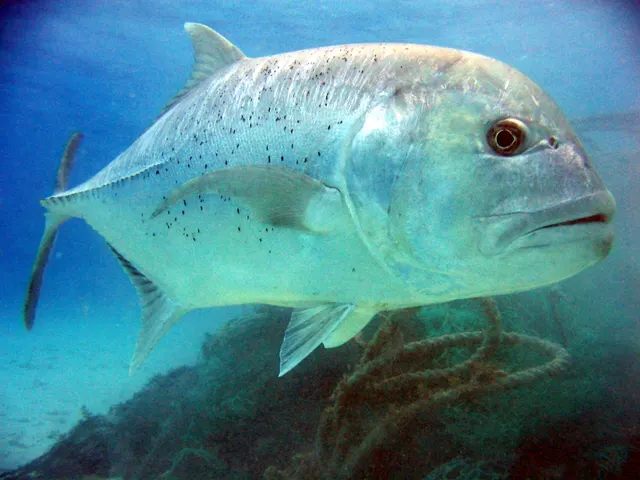 Giant trevallyA hugely powerful Indo-Pacific reef predator that hunts over shallow structure, and the fish popping was built around.
Dr. Dwayne Meadows, NOAA/NMFS/OPR — Public domain, via Wikimedia Commons
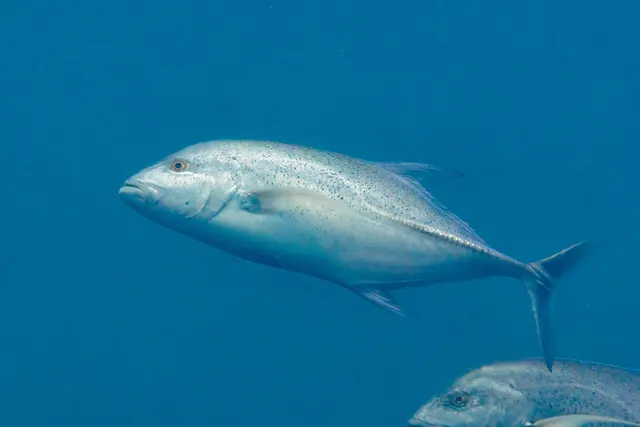 Bluefin trevallyA brilliantly marked reef trevally with electric blue fins that hunts cooperatively with other predators — including, remarkably, with octopus and moray eels.
Diego Delso — CC BY-SA 4.0, via Wikimedia Commons
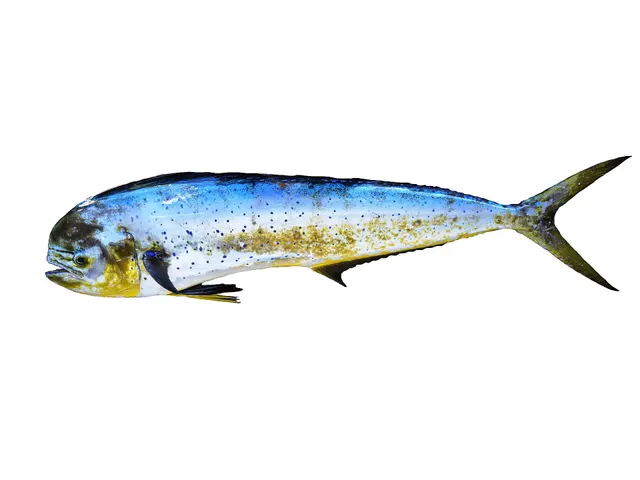 Mahi-mahiThe fastest-growing large fish an angler is likely to meet — brilliantly coloured, mature within months, and gathered around anything floating in the open ocean.
Hugues Evano (IFREMER, Délégation océan Indien (DOI), Département Ressources Biologiques et Environnement (RBE), F-97420 Le Port, France) — CC BY 4.0, via Wikimedia Commons
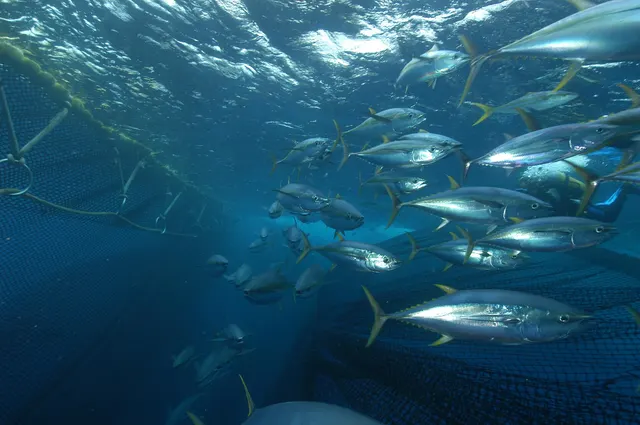 Yellowfin tunaA warm-blooded, high-speed oceanic predator that schools with dolphins and under floating debris, and one of the most commercially important fish in the world.
Marc Taquet — CC BY 4.0, via Wikimedia Commons
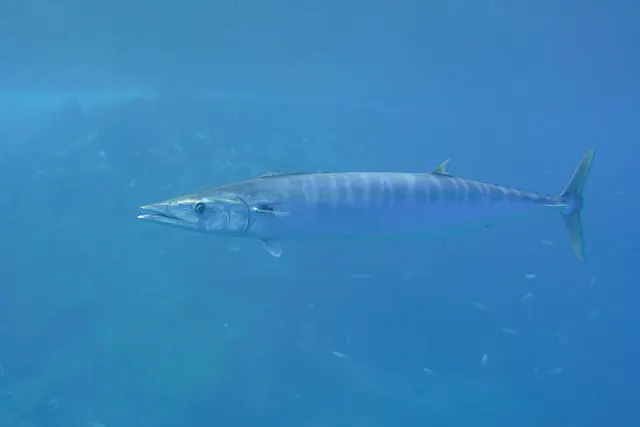 WahooAn extremely fast blue-water mackerel with razor teeth and a long slender body, taken by high-speed trolling and almost always fished on wire.
Bommerer — CC BY 4.0, via Wikimedia Commons
Safety
Cliffs and rock platforms — Can cause serious injury or death
Lava rock shorelines drop directly into deep water and receive waves generated across an entire ocean. Anglers and gatherers are swept from rocks by sets substantially larger than the preceding waves, and because there is no shelf, the water below is immediately deep and moving. Winter north-westerly swell transforms shorelines that are benign in summer.
What reduces it: Watch a full set before committing to a platform, check the swell forecast for height, period and direction rather than the wind, never turn your back on the sea, stand higher than feels necessary, wear a buoyancy aid, and do not fish exposed rock alone or at night without somebody who knows the ground.
Worse when:
- Winter, when north-westerly swell from North Pacific storms reaches the islands.
- At night, which is when the shore casting fishery operates.
- While gathering limpets, which is done in the surge zone by definition and is the single most dangerous shoreline activity in the islands.
Moving water and currents — Can cause serious injury or death
Rip currents on the beaches are strong, and the channels between islands are notoriously rough where trade winds accelerate through them. A small boat or kayak caught in a channel in a fresh trade wind is in a genuinely serious situation.
What reduces it: Recognise rips as darker calmer water running seaward and stay out of them. Do not attempt inter-island channel crossings in a small craft without experience of them, and treat the trade wind forecast as the governing constraint on kayak fishing.
Venomous and spined species — Can cause injury needing treatment
Reef and shoreline hold scorpionfish, urchins, cone shells and eels, and lava and coral cuts in warm water infect readily. Sharks are present on the reef and around the shoreline.
What reduces it: Wear footwear on reef and lava, do not reach blind into holes, clean and dress every cut properly, and do not carry speared fish on your person while diving.
Further safety reading
- Rock platform and cliff safety — Lava shorelines drop directly into deep water and receive waves generated across an entire ocean, and winter north-westerly swell transforms shores that are benign in summer.
- Shore entry and exit for divers — Gathering limpets from the surge zone on wave-washed rock is the single most dangerous shoreline activity in the islands and has a substantial fatality record.
- Venomous and spined fish — Reef and shoreline hold scorpionfish, urchins, cone shells and eels, and lava and coral cuts in warm water infect readily.
Check the rules before you fish
Fishing laws, bylaws, access rules, seasons, bait restrictions and permitted methods vary by location and can change. Check the current rules from the relevant authority and the water you intend to fish before fishing.
Check with:
- Current national or regional law for where you are fishing
- Current local bylaws
- The relevant fisheries authority
- The landowner, club or fishery whose water it is
- Any restrictions specific to the species or the method you intend to use
Where to go next
What swims here
- Bluefin trevallyWorks the same shoreline and reef ground and is taken on the same gear as its larger relative.
- Giant trevallyThe ulua of the shore-casting fishery, patrolling the rocky shoreline and reef edges at night, and the target the whole slide-bait discipline exists for.
- Great barracudaOccurs on the reef and inshore ground around the islands.
- Mahi-mahiOccurs in the blue water that the absence of any shelf puts within a short run of harbour.
- WahooWorks the drop-offs and current lines close to the islands, where deep water comes within reach of small boats.
- Yellowfin tunaA principal species of the offshore fishery, taken by trolling and handline off the leeward drop-offs.
How people fish here
- Blue-water spearfishingThe absence of a shelf puts blue water within reach of shore and small boats, which is what makes blue-water hunting practical here.
- HandliningHandline and throw-net fishing persist as food practices with genuine cultural continuity rather than as survivals.
- Sea fishingShore casting from lava rock into deep water, and offshore trolling from small boats, are the two halves of a fishery with no freshwater component worth the name.
- SpearfishingReef spearfishing has a long local history and a strong contemporary culture, both breath-hold and in a blue-water form.
How this compares
- Fiji and MelanesiaTwo Pacific archipelagos where a customary management system either survived or is being formally rebuilt, arriving at similar instruments by different legal routes.
- Pacific island fishingHawaii carries the same Polynesian fishing inheritance under a completely different modern legal system, which makes the pair a useful demonstration that customary knowledge and national law are separate questions.
Rules and access
- Close seasonsSeasonal closures for particular species, and the traditional kapu system of seasonal and species restriction they partly descend from, are the archipelago's oldest management instrument.
- Customary, community and indigenous fishing rightsA long tradition of place-based marine management and community stewardship sits alongside the state framework.
- Size limits and retentionState size and bag limits sit alongside community-based subsistence fishing area rules that a community can propose from its own traditional practice, which is an unusual route into enforceable law.
Environment and conservation
History and culture
- Pacific fish hook technologyPre-contact Hawaiian fishing technology, including the hook forms recovered archaeologically across the Pacific, belongs to this archipelago's documented material record.
- Pacific island spearfishingBreath-hold reef spearfishing and shoreline gathering are continuous documented practices here rather than reconstructions.
Sources and evidence
- FAO Species Identification Guides for Fishery Purposes and the FAO Species Catalogues — Food and Agriculture Organization of the United Nations (Scientific institute)Relied on for: Distribution, habitat, depth and fishery accounts for the species of the western central Pacific and eastern Pacific in the FAO regional identification guides.States this directlyCitation checked — the work exists and is described correctly
- FishBase: a global information system on fishes — Froese, R. and D. Pauly, eds. — FishBase Consortium (Scientific institute)Relied on for: Distribution, habitat association and depth range recorded for the species.States this directlyPassage read and verified
- Words of the Lagoon: Fishing and Marine Lore in the Palau District of Micronesia — University of California Press, Berkeley, 1981 (Reference work)Relied on for: Traditional Pacific island marine knowledge, customary tenure and reef management practice, including closures, spawning-aggregation knowledge and the social organisation of fishing rights.States this directlyCitation checked — the work exists and is described correctly
- Code of Conduct for Responsible Fisheries — Food and Agriculture Organization of the United Nations, Rome, 1995 (Standards body)Relied on for: Principles for responsible fisheries management, including the recognition of traditional and community-based management arrangements.Background and mechanism onlyCitation checked — the work exists and is described correctly
- Rock fishing safety and the declared lifejacket areas of New South Wales — NSW Department of Primary Industries and Surf Life Saving NSW (Water-safety or diver-training authority)Relied on for: Rock and ledge fishing hazards, the mechanism by which anglers are swept from exposed platforms, and the measures that reduce it.States this directlyCitation checked — the work exists and is described correctly
- United States Lifesaving Association public education on rip currents and the surf zone — United States Lifesaving Association (Water-safety or diver-training authority)Relied on for: Surf zone hazards, rip current formation and behaviour, and the circumstances in which people are carried offshore.States this directlyCitation checked — the work exists and is described correctly
Why the 21 connections on this page are here, and the sources
What swims here
Backed by research — 6 connections
Supported by peer-reviewed research or fisheries science. The sources are listed and can be checked.
Bluefin trevally
A distribution association between an animal and a kind of water, rather than a claim about any named mark.
- FAO Species Identification Guides for Fishery Purposes and the FAO Species Catalogues — Food and Agriculture Organization of the United Nations (Scientific institute)Relied on for: Distribution, habitat, depth and fishery accounts for the species in the FAO regional identification guides for the ocean area concerned.States this directlyCitation checked — the work exists and is described correctly
- FishBase: a global information system on fishes — Froese, R. and D. Pauly, eds. — FishBase Consortium (Scientific institute)Relied on for: Distribution, habitat association and depth range recorded for the species.States this directlyPassage read and verified
Giant trevally
A distribution association between an animal and a kind of water, rather than a claim about any named mark.
- FAO Species Identification Guides for Fishery Purposes and the FAO Species Catalogues — Food and Agriculture Organization of the United Nations (Scientific institute)Relied on for: Distribution, habitat, depth and fishery accounts for the species in the FAO regional identification guides for the ocean area concerned.States this directlyCitation checked — the work exists and is described correctly
- FishBase: a global information system on fishes — Froese, R. and D. Pauly, eds. — FishBase Consortium (Scientific institute)Relied on for: Distribution, habitat association and depth range recorded for the species.States this directlyPassage read and verified
Great barracuda
A distribution association between an animal and a kind of water, rather than a claim about any named mark.
- FAO Species Identification Guides for Fishery Purposes and the FAO Species Catalogues — Food and Agriculture Organization of the United Nations (Scientific institute)Relied on for: Distribution, habitat, depth and fishery accounts for the species in the FAO regional identification guides for the ocean area concerned.States this directlyCitation checked — the work exists and is described correctly
- FishBase: a global information system on fishes — Froese, R. and D. Pauly, eds. — FishBase Consortium (Scientific institute)Relied on for: Distribution, habitat association and depth range recorded for the species.States this directlyPassage read and verified
Mahi-mahi
A distribution association between an animal and a kind of water, rather than a claim about any named mark.
- FAO Species Identification Guides for Fishery Purposes and the FAO Species Catalogues — Food and Agriculture Organization of the United Nations (Scientific institute)Relied on for: Distribution, habitat, depth and fishery accounts for the species in the FAO regional identification guides for the ocean area concerned.States this directlyCitation checked — the work exists and is described correctly
- FishBase: a global information system on fishes — Froese, R. and D. Pauly, eds. — FishBase Consortium (Scientific institute)Relied on for: Distribution, habitat association and depth range recorded for the species.States this directlyPassage read and verified
Wahoo
A distribution association between an animal and a kind of water, rather than a claim about any named mark.
- FAO Species Identification Guides for Fishery Purposes and the FAO Species Catalogues — Food and Agriculture Organization of the United Nations (Scientific institute)Relied on for: Distribution, habitat, depth and fishery accounts for the species in the FAO regional identification guides for the ocean area concerned.States this directlyCitation checked — the work exists and is described correctly
- FishBase: a global information system on fishes — Froese, R. and D. Pauly, eds. — FishBase Consortium (Scientific institute)Relied on for: Distribution, habitat association and depth range recorded for the species.States this directlyPassage read and verified
Yellowfin tuna
A distribution association between an animal and a kind of water, rather than a claim about any named mark.
- FAO Species Identification Guides for Fishery Purposes and the FAO Species Catalogues — Food and Agriculture Organization of the United Nations (Scientific institute)Relied on for: Distribution, habitat, depth and fishery accounts for the species in the FAO regional identification guides for the ocean area concerned.States this directlyCitation checked — the work exists and is described correctly
- FishBase: a global information system on fishes — Froese, R. and D. Pauly, eds. — FishBase Consortium (Scientific institute)Relied on for: Distribution, habitat association and depth range recorded for the species.States this directlyPassage read and verified
How people fish here
What experienced anglers do — 4 connections
Widely and independently recommended by experienced anglers and specialist sources. This is real angling knowledge, not proof: controlled evidence for it is limited, and FishingHQ records it as convention rather than as a demonstrated effect.
Blue-water spearfishing
A discipline that is characteristic of the place rather than merely possible there, joined so a reader can move between the place and the practice.
- General angling website restatements of established technique — Various (Credible secondary source)Relied on for: Widely restated practice associating this discipline with this place, recorded as practitioner consensus rather than as tested fact.Background and mechanism onlyCitation checked — the work exists and is described correctly
- Fishers' Craft and Lettered Art: Tracts on Fishing from the End of the Middle Ages — University of Toronto Press, 1997 (Scientific literature)Relied on for: That fishing traditions develop around the water and fish available to them, and the historical method of reading such traditions.States this directlyCitation checked — the work exists and is described correctly
Handlining
A discipline that is characteristic of the place rather than merely possible there, joined so a reader can move between the place and the practice.
- General angling website restatements of established technique — Various (Credible secondary source)Relied on for: Widely restated practice associating this discipline with this place, recorded as practitioner consensus rather than as tested fact.Background and mechanism onlyCitation checked — the work exists and is described correctly
- Fishers' Craft and Lettered Art: Tracts on Fishing from the End of the Middle Ages — University of Toronto Press, 1997 (Scientific literature)Relied on for: That fishing traditions develop around the water and fish available to them, and the historical method of reading such traditions.States this directlyCitation checked — the work exists and is described correctly
Sea fishing
A discipline that is characteristic of the place rather than merely possible there, joined so a reader can move between the place and the practice.
- General angling website restatements of established technique — Various (Credible secondary source)Relied on for: Widely restated practice associating this discipline with this place, recorded as practitioner consensus rather than as tested fact.Background and mechanism onlyCitation checked — the work exists and is described correctly
- Fishers' Craft and Lettered Art: Tracts on Fishing from the End of the Middle Ages — University of Toronto Press, 1997 (Scientific literature)Relied on for: That fishing traditions develop around the water and fish available to them, and the historical method of reading such traditions.States this directlyCitation checked — the work exists and is described correctly
Spearfishing
A discipline that is characteristic of the place rather than merely possible there, joined so a reader can move between the place and the practice.
- General angling website restatements of established technique — Various (Credible secondary source)Relied on for: Widely restated practice associating this discipline with this place, recorded as practitioner consensus rather than as tested fact.Background and mechanism onlyCitation checked — the work exists and is described correctly
- Fishers' Craft and Lettered Art: Tracts on Fishing from the End of the Middle Ages — University of Toronto Press, 1997 (Scientific literature)Relied on for: That fishing traditions develop around the water and fish available to them, and the historical method of reading such traditions.States this directlyCitation checked — the work exists and is described correctly
How this compares
What experienced anglers do — 2 connections
Widely and independently recommended by experienced anglers and specialist sources. This is real angling knowledge, not proof: controlled evidence for it is limited, and FishingHQ records it as convention rather than as a demonstrated effect.
Fiji and Melanesia
Two places a reader would reasonably weigh against one another, joined where the comparison teaches something about both. It is also how the larger geography is linked to what sits inside it.
- General angling website restatements of established technique — Various (Credible secondary source)Relied on for: Widely restated practice associating this discipline with this place, recorded as practitioner consensus rather than as tested fact.Background and mechanism onlyCitation checked — the work exists and is described correctly
- Fishers' Craft and Lettered Art: Tracts on Fishing from the End of the Middle Ages — University of Toronto Press, 1997 (Scientific literature)Relied on for: That fishing traditions develop around the water and fish available to them, and the historical method of reading such traditions.States this directlyCitation checked — the work exists and is described correctly
Pacific island fishing
A continental overview joined to a record it sits above, so that the synthesis and the detail are reachable from one another rather than duplicating each other.
- FAO fishing gear types and fishing technology information — Food and Agriculture Organization of the United Nations (Scientific institute)Relied on for: Classification and description of world fishing gears and the regions in which each is used.States this directlyCitation checked — the work exists and is described correctly
- General angling website restatements of established technique — Various (Credible secondary source)Relied on for: Widely restated descriptions of regional angling practice, recorded as consensus rather than as scholarship.Background and mechanism onlyCitation checked — the work exists and is described correctly
Safety reading
Official guidance — 3 connections
Stated by a fisheries authority, scientific institute or recognised angling body. Authoritative, but summarising rather than demonstrating.
Rock platform and cliff safety
A place is joined to the safety topic that explains a hazard genuinely characteristic of it, so the mechanism is reachable rather than restated as a weak warning.
- Rock fishing safety and the declared lifejacket areas of New South Wales — NSW Department of Primary Industries and Surf Life Saving NSW (Water-safety or diver-training authority)Relied on for: Rock and ledge fishing hazards, the mechanism by which anglers are swept from exposed platforms, and the measures that reduce it.States this directlyCitation checked — the work exists and is described correctly
- United States Lifesaving Association public education on rip currents and the surf zone — United States Lifesaving Association (Water-safety or diver-training authority)Relied on for: Surf zone hazards, rip current formation and behaviour, and the circumstances in which people are carried offshore.States this directlyCitation checked — the work exists and is described correctly
Shore entry and exit for divers
A place is joined to the safety topic that explains a hazard genuinely characteristic of it, so the mechanism is reachable rather than restated as a weak warning.
- Rock fishing safety and the declared lifejacket areas of New South Wales — NSW Department of Primary Industries and Surf Life Saving NSW (Water-safety or diver-training authority)Relied on for: Rock and ledge fishing hazards, the mechanism by which anglers are swept from exposed platforms, and the measures that reduce it.States this directlyCitation checked — the work exists and is described correctly
- United States Lifesaving Association public education on rip currents and the surf zone — United States Lifesaving Association (Water-safety or diver-training authority)Relied on for: Surf zone hazards, rip current formation and behaviour, and the circumstances in which people are carried offshore.States this directlyCitation checked — the work exists and is described correctly
Venomous and spined fish
A place is joined to the safety topic that explains a hazard genuinely characteristic of it, so the mechanism is reachable rather than restated as a weak warning.
- NOAA National Weather Service marine forecasts and marine weather services — National Oceanic and Atmospheric Administration, United States (Government fisheries body)Relied on for: Marine forecasting, tropical cyclone warning practice and the products issued for coastal and offshore waters.States this directlyCitation checked — the work exists and is described correctly
- NOAA Diving Manual: Diving for Science and Technology — National Oceanic and Atmospheric Administration, US Department of Commerce (Scientific institute)Relied on for: Diving and in-water hazards, including hazardous marine life, currents and the management of operations in remote locations.Background and mechanism onlyCitation checked — the work exists and is described correctly
Rules and access
Official guidance — 3 connections
Stated by a fisheries authority, scientific institute or recognised angling body. Authoritative, but summarising rather than demonstrating.
Close seasons
A place joined to the regulatory concept whose structure it illustrates. The edge asserts that the concept applies here, never what any current rule says.
- Code of Conduct for Responsible Fisheries — Food and Agriculture Organization of the United Nations, Rome, 1995 (Standards body)Relied on for: Principles for the management of fisheries, including licensing, closed seasons, size limits and the treatment of small-scale and shared stocks.States this directlyCitation checked — the work exists and is described correctly
- Good Fish Guide — Marine Conservation Society (Conservation authority)Relied on for: Assessment of fisheries and the management measures applied to them, including the instruments used and their purpose.Background and mechanism onlyCitation checked — the work exists and is described correctly
Customary, community and indigenous fishing rights
A place joined to the regulatory concept whose structure it illustrates. The edge asserts that the concept applies here, never what any current arrangement requires.
- Words of the Lagoon: Fishing and Marine Lore in the Palau District of Micronesia — University of California Press, Berkeley, 1981 (Reference work)Relied on for: Customary marine tenure, traditional fishing rights, closed areas and local marine knowledge, and the way community-held rights operate in practice.States this directlyCitation checked — the work exists and is described correctly
- Code of Conduct for Responsible Fisheries — Food and Agriculture Organization of the United Nations, Rome, 1995 (Standards body)Relied on for: The international framework for responsible fisheries, including recognition of traditional and small-scale fishing rights.States this directlyCitation checked — the work exists and is described correctly
Size limits and retention
A place joined to the regulatory concept whose structure it illustrates. The edge asserts that the concept applies here, never what any current rule says.
- Code of Conduct for Responsible Fisheries — Food and Agriculture Organization of the United Nations, Rome, 1995 (Standards body)Relied on for: Principles for the management of fisheries, including licensing, closed seasons, size limits and the treatment of small-scale and shared stocks.States this directlyCitation checked — the work exists and is described correctly
- Good Fish Guide — Marine Conservation Society (Conservation authority)Relied on for: Assessment of fisheries and the management measures applied to them, including the instruments used and their purpose.Background and mechanism onlyCitation checked — the work exists and is described correctly
Environment and conservation
Backed by research — 1 connection
Supported by peer-reviewed research or fisheries science. The sources are listed and can be checked.
Marine protected areas and spearfishing
An environmental pressure that is specific to this place rather than general to fishing, joined so the issue is anchored to a real example.
- Reef Fish Spawning Aggregations: Biology, Research and Management — Springer, Fish & Fisheries Series vol. 35, 2012 (Scientific literature)Relied on for: The vulnerability of aggregating and site-attached species and the role of spatial protection in managing them.States this directlyCitation checked — the work exists and is described correctly
- Fear of fishers: human predation explains behavioral changes in coral reef fishes — PLoS ONE 6(8): e22761, 2011 (Scientific literature)Relied on for: Measured behavioural differences in reef fishes inside and outside protected areas, and what they indicate about protection.States this directlyCitation checked — the work exists and is described correctly
History and culture
Official guidance — 2 connections
Stated by a fisheries authority, scientific institute or recognised angling body. Authoritative, but summarising rather than demonstrating.
Pacific fish hook technology
A place joined to the documented fishing tradition it belongs to, so the history has a real setting and the place has a real past.
- Fishers' Craft and Lettered Art: Tracts on Fishing from the End of the Middle Ages — University of Toronto Press, 1997 (Scientific literature)Relied on for: The historical development of fishing practice and its transmission, and the method of reading a fishing tradition from its documentary record.States this directlyCitation checked — the work exists and is described correctly
- Words of the Lagoon: Fishing and Marine Lore in the Palau District of Micronesia — University of California Press, Berkeley, 1981 (Reference work)Relied on for: Documented traditional marine knowledge and fishing practice, and the social organisation of fishing rights and closures.Background and mechanism onlyCitation checked — the work exists and is described correctly
Pacific island spearfishing
A place joined to the documented fishing tradition it belongs to, so the history has a real setting and the place has a real past.
- Fishers' Craft and Lettered Art: Tracts on Fishing from the End of the Middle Ages — University of Toronto Press, 1997 (Scientific literature)Relied on for: The historical development of fishing practice and its transmission, and the method of reading a fishing tradition from its documentary record.States this directlyCitation checked — the work exists and is described correctly
- Words of the Lagoon: Fishing and Marine Lore in the Palau District of Micronesia — University of California Press, Berkeley, 1981 (Reference work)Relied on for: Documented traditional marine knowledge and fishing practice, and the social organisation of fishing rights and closures.Background and mechanism onlyCitation checked — the work exists and is described correctly
How FishingHQ labels evidence is explained in the evidence policy.