Striped bass vs White bass
How to tell them apart, and what follows from getting it right.
Why they get confused
Same genus, same silver flank with dark horizontal stripes, same two separate dorsal fins, and in the reservoirs and large rivers of the United States they are caught on the same cast out of the same surface-feeding school. A small striped bass and a large white bass are the same length. And the two hybridise, deliberately in stocking programmes and naturally where they meet, so a third animal is in the boat with them.
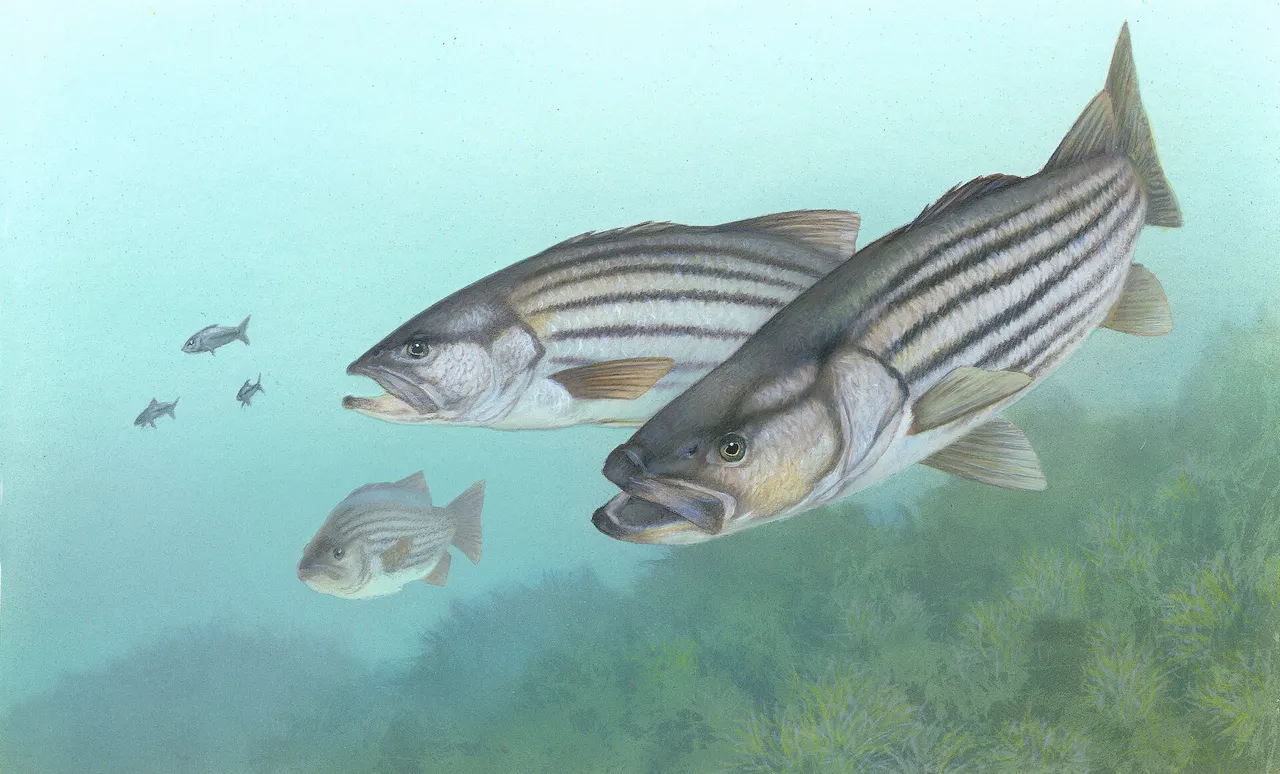
Striped bass
Morone saxatilis — Moronidae

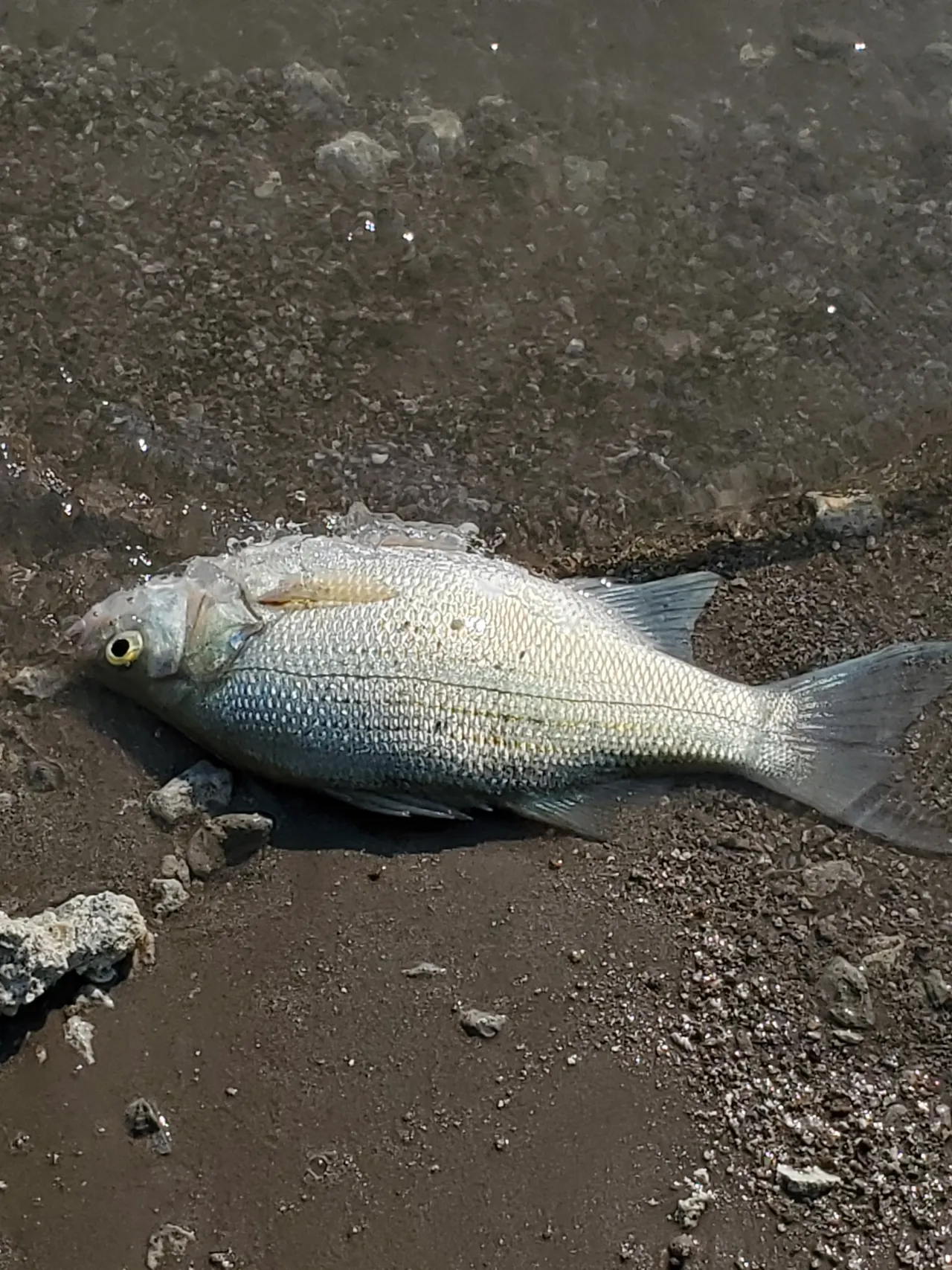
White bass
Morone chrysops — Moronidae
The differences
Each difference is marked with how far it can be trusted on its own. A single diagnostic character settles the identification; suggestive ones only narrow it.
| Character | Striped bass | White bass | Reliability |
|---|---|---|---|
| Tooth patches on the tongueIdentification | TWO parallel patches of small teeth on the tongue. Open the mouth, run a fingertip back along the tongue, and there are two. | ONE patch. This is the test that survives everything else — it is unaffected by the fish's condition, by the light, and by whether the stripes look broken, and it is the only character here that a hybrid does not blur reliably. | Diagnostic on its own |
| Whether the stripes are continuousIdentification | Seven to eight distinct UNBROKEN dark stripes running the length of the silver flank — the character the fish is named for. | Faint and usually BROKEN stripes, offset above and below the lateral line rather than running clean. Useful, but this is exactly what a hybrid also shows. | Supporting — use with others |
| How deep the body is for its lengthIdentification | Elongate and only moderately deep — a fish built along its length, silver-white below shading to olive or blue-grey above. | Noticeably deeper for its length and more strongly compressed side to side. Side by side it is obvious; alone it is a judgement. | Supporting — use with others |
| The size the fish reachesSize | Ordinary fish run 2–7 kg, large ones 10–18, and the maximum published weight is 57 kg. | Ordinary fish run 400–900 g, a good one under two kilos, and FishBase records a maximum of 45 cm and 3.1 kg. A five-kilo Morone is not a white bass. | Supporting — use with others |
| Where each one spawns, and how the year runsSeason | Migrates along the coast north and inshore as water warms, with a spring run into fresh or brackish river water on top of it. Landlocked reservoir populations run the river part only. | Runs upstream into tributaries in spring, spends summer in open water following shad, feeds hard at the surface in autumn as shad school, and drops into deeper water off structure in winter. | Supporting — use with others |
| What a concentrated run does to the fishHandling | A large strong fish best handled in the water, supported horizontally rather than lifted by the jaw, and given time to recover after a long fight in warm water. | Hardy individually and vulnerable collectively: the fish schools densely on a spawning run, which is where a full cooler and a poor piece of arithmetic meet. | Suggestive only — varies |
Why it matters
Bag and size limits for the two are set separately and are frequently very different in the same water, and slot limits for striped bass exist because large females produce disproportionately more eggs — which is the reason the identification is a management question rather than a naming one. The hybrid makes it harder rather than easier: hybrid striped bass are stocked widely, they show broken stripes like a white bass, and they reach a size no white bass reaches. That is why the tongue patches lead this page. A fish with broken stripes and two tooth patches is not a white bass, and a reader who has only learned the stripes will call it one.
The full records
This page compares two species. Each of them has a complete record covering biology, behaviour, handling and the evidence behind all of it.
More about striped bass
Where it lives, how it is caught, and what else it is confused with.
Similar and related fish
- AlewifeRiver herring runs are a major spring feeding opportunity for striped bass in coastal rivers, and landlocked striped bass populations depend on alewife almost entirely.
- Atlantic herringAdult herring are taken by large striped bass in the northern part of the range, particularly at night over structure.
- Atlantic menhadenMenhaden are the principal prey of coastal striped bass, and the autumn bass fishery along the American Atlantic coast is organised entirely around where the menhaden shoals are.
How it is caught
Gear for this fish
- Soft plasticsA soft plastic on a leadhead covers the whole column and is the standard answer to stripers holding in current around structure, where the fish are stationed facing flow and the lure has to be presented moving with it.
- Surface luresNight and low-light surface fishing for stripers is a distinct tradition, and it works because the fish move shallow after dark to feed against structure they will not approach in daylight.
- SwimbaitsLarge swimbaits answer stripers keyed on big single prey items — herring, menhaden, mackerel — where a small lure in a shoal of large bait is simply not seen.
Where it lives
- EstuaryAnadromous, so the estuary is not habitat it uses but the corridor it must pass through — which makes river passability a determinant of the population independent of anything done at sea.
- Surf beachesOne of the few very large fish an angler without a boat can genuinely expect to catch, feeding in water shallow enough to wade — which is why the surf fishery on that coast is what it is.
Why the 9 connections on this page are here, and the sources
Similar and related fish
Backed by research — 3 connections
Supported by peer-reviewed research or fisheries science. The sources are listed and can be checked.
Alewife
Recorded diet evidence identifies Alosa pseudoharengus as a food item of this predator at species level. The edge is written at that granularity and no further.
- FishBase: a global information system on fishes — Froese, R. and D. Pauly, eds. — FishBase Consortium (Scientific institute)Relied on for: Food items recorded for this predator, including Alosa pseudoharengus.States this directlyPassage read and verified
- FAO Species Identification Guides for Fishery Purposes and the FAO Species Catalogues — Food and Agriculture Organization of the United Nations (Scientific institute)Relied on for: Species account describing the diet of this predator in the region where Alosa pseudoharengus occurs.Background and mechanism onlyCitation checked — the work exists and is described correctly
Atlantic herring
Recorded diet evidence identifies Clupea harengus as a food item of this predator at species level. The edge is written at that granularity and no further.
- FishBase: a global information system on fishes — Froese, R. and D. Pauly, eds. — FishBase Consortium (Scientific institute)Relied on for: Food items recorded for this predator, including Clupea harengus.States this directlyPassage read and verified
- FAO Species Identification Guides for Fishery Purposes and the FAO Species Catalogues — Food and Agriculture Organization of the United Nations (Scientific institute)Relied on for: Species account describing the diet of this predator in the region where Clupea harengus occurs.Background and mechanism onlyCitation checked — the work exists and is described correctly
Atlantic menhaden
Recorded diet evidence identifies Brevoortia tyrannus as a food item of this predator at species level. The edge is written at that granularity and no further.
- FishBase: a global information system on fishes — Froese, R. and D. Pauly, eds. — FishBase Consortium (Scientific institute)Relied on for: Food items recorded for this predator, including Brevoortia tyrannus.States this directlyPassage read and verified
- FAO Species Identification Guides for Fishery Purposes and the FAO Species Catalogues — Food and Agriculture Organization of the United Nations (Scientific institute)Relied on for: Species account describing the diet of this predator in the region where Brevoortia tyrannus occurs.Background and mechanism onlyCitation checked — the work exists and is described correctly
How it is caught
What experienced anglers do — 1 connection
Widely and independently recommended by experienced anglers and specialist sources. This is real angling knowledge, not proof: controlled evidence for it is limited, and FishingHQ records it as convention rather than as a demonstrated effect.
Surfcasting
A practitioner claim about the defining method for the species.
- Sea Angler — Bauer Media (Specialist angling publication)Relied on for: Practitioner treatment of surf and beach technique for large inshore predators.Citation checked — the work exists and is described correctly
- General angling website restatements of established technique — Various (Credible secondary source)Relied on for: Widely restated accounts of striped bass as a surf-fishing species.Citation checked — the work exists and is described correctly
Gear for this fish
What experienced anglers do — 3 connections
Widely and independently recommended by experienced anglers and specialist sources. This is real angling knowledge, not proof: controlled evidence for it is limited, and FishingHQ records it as convention rather than as a demonstrated effect.
Soft plastics
A practitioner claim about which lure family answers this species' feeding or holding behaviour.
- General angling website restatements of established technique — Various (Credible secondary source)Relied on for: Widely restated North American lure practice for this species.Background and mechanism onlyCitation checked — the work exists and is described correctly
- IGFA International Angling Rules and World Record Requirements — International Game Fish Association (Angling or fisheries organisation)Relied on for: Recognition of the species as an established sport fish taken on artificial lures, and the tackle conventions used for it.States this directlyPassage read and verified
Surface lures
A practitioner claim about which lure family answers this species' feeding or holding behaviour.
- General angling website restatements of established technique — Various (Credible secondary source)Relied on for: Widely restated North American lure practice for this species.Background and mechanism onlyCitation checked — the work exists and is described correctly
- IGFA International Angling Rules and World Record Requirements — International Game Fish Association (Angling or fisheries organisation)Relied on for: Recognition of the species as an established sport fish taken on artificial lures, and the tackle conventions used for it.States this directlyPassage read and verified
Swimbaits
A practitioner claim about which lure family answers this species' feeding or holding behaviour.
- General angling website restatements of established technique — Various (Credible secondary source)Relied on for: Widely restated North American lure practice for this species.Background and mechanism onlyCitation checked — the work exists and is described correctly
- IGFA International Angling Rules and World Record Requirements — International Game Fish Association (Angling or fisheries organisation)Relied on for: Recognition of the species as an established sport fish taken on artificial lures, and the tackle conventions used for it.States this directlyPassage read and verified
Where it lives
Backed by research — 2 connections
Supported by peer-reviewed research or fisheries science. The sources are listed and can be checked.
Estuary
A life-history claim with direct management consequences.
- FishBase: a global information system on fishes — Froese, R. and D. Pauly, eds. — FishBase Consortium (Scientific institute)Relied on for: That Morone saxatilis is anadromous, moving into fresh or brackish water to spawn, with adults inhabiting coastal waters and bays and entering rivers during the spring spawning season.States this directlyPassage read and verified
Surf beaches
A habitat claim held to a scientific standard.
- FishBase: a global information system on fishes — Froese, R. and D. Pauly, eds. — FishBase Consortium (Scientific institute)Relied on for: That Morone saxatilis inhabits coastal waters and bays, occurs in marine, fresh and brackish water, and enters rivers to spawn in spring.States this directlyPassage read and verified
Reviewed 2026-08-16. FishingHQ does not state what any rule is or where any rule applies. Where this page says the two species are managed differently, that is a reason to check the authority for the water you are on — not a statement of what it requires.