Lake Vänern
Fishing regions · Last reviewed 2026-08-15
The largest lake in the European Union, a freshwater inland sea holding Atlantic salmon that complete their whole life cycle without ever reaching salt water — under a public-access tradition that visitors routinely misread.
Safety: boat safety — can cause serious injury or death. 2 more points apply here.
Being listed here is not permission to fish. What that meansClose
Access, fishing rights, seasons, licences, local bylaws and permitted methods vary and can change. Check current access, permission, local regulations, closures and restrictions before you travel or fish. FishingHQ describes what the ground is and names who holds the answer; it does not hold the answer itself.
Find the authority for a jurisdiction · What FishingHQ does and does not cover
Vänern is the largest lake in the European Union and the third largest in Europe, covering some five and a half thousand square kilometres of southern Sweden, and it functions far more like an inland sea than like a lake.
IT IS BIG ENOUGH TO HAVE ITS OWN WEATHER AND ITS OWN HORIZON. Open water reaches where land is out of sight, thousands of islands and skerries, a maximum depth exceeding a hundred metres, and a wave regime that requires the boat handling of a coast rather than of a lake.
ITS MOST REMARKABLE FISH ARE LANDLOCKED ATLANTIC SALMON. Salmon and sea trout in Vänern run into its tributary rivers to spawn and return to the lake to feed, completing the entire anadromous life cycle in fresh water — the lake standing in for the sea. The Gullspång and Klarälven strains are genetically distinct populations of considerable conservation importance, and they are among very few such wild landlocked Atlantic salmon populations anywhere.
THE WIDER FISH COMMUNITY IS THE NORDIC ONE: pike, perch, zander, whitefish, char in the deeper cold water, burbot, and a substantial forage base of smelt on which the salmon feed.
THE FISHING IS SUBSTANTIALLY TROLLING, and Vänern is one of Europe's principal trolling destinations. Long lines, downriggers, planer boards and days on open water in pursuit of large salmon and trout.
AND THE ACCESS FRAMEWORK IS THE THING VISITORS MISUNDERSTAND. Sweden's allemansrätten — the right of public access — is real, generous and famous, and it is not a right to fish. It governs walking, being and camping on land, not taking fish from water. Fishing rights are a separate matter with a separate structure, and the two are constantly conflated by people who have read about the first.
What fishing here is like
An inland freshwater sea: five and a half thousand square kilometres, thousands of islands and skerries, open water with no land in sight, and a wave regime that demands coastal rather than lake seamanship. Cold, clear, deep in places and shallow in vast archipelago areas.
The angling culture is Nordic and boat-centred, with trolling for salmon and trout at its heart and a strong pike and perch culture alongside it. Winter brings ice fishing where conditions allow, which is a separate discipline with a separate set of risks.
How people fish here
3 methods are recorded on the places documented here, counted from the records themselves rather than from what is practised in the country. Each opens a full guide to the technique.
Jigging
Recorded at 1 place here, over lake.
Working a weighted lure with a rising-and-falling motion, usually vertically, so it behaves like a wounded or fleeing baitfish.
Spinning
Recorded at 1 place here, over lake.
Casting an artificial lure and retrieving it so that it moves like something alive — the most direct form of lure fishing.
Trolling
Recorded at 1 place here, over lake.
Towing lures or baits behind a moving boat to cover large volumes of water and locate scattered fish.
These are the methods documented at the places FishingHQ holds here. A species listed beside a method is documented on the same ground, which is not the same as being taken that way — where a source establishes the method a fish was caught on, it is stated on that place’s own page. All fishing methods.
What dominates
Trolling for landlocked Atlantic salmon and lake-run trout, using downriggers, planer boards and multiple-rod spreads over open water — the lake's international reputation and the reason most visitors come. Pike fishing throughout the archipelago and shallow bays, on lures and dead baits, with a strong specimen tradition. Perch fishing on structure, which is the everyday local angling. Zander fishing in the warmer and more coloured areas. Whitefish and char fishing in specific deeper areas. Ice fishing in winter where ice forms and is safe, principally for perch, pike and burbot.
The water available
Vast open-water basins with a maximum depth exceeding a hundred metres. Extensive archipelagos of thousands of rocky islands and skerries. Shallow warm bays with weed and reed. Major tributary river mouths, principally the Klarälven and the Gullspångsälven, which are the salmon rivers. Rocky exposed shorelines and sheltered inner archipelago water. The outflow to the Göta älv at the southern end.
How the rules are structured
Sweden's right of public access — allemansrätten — is a right to move over and be on land, and it does not include a right to fish. That distinction is the single most misunderstood point about Swedish fishing among visitors. Fishing rights in Sweden attach to water ownership, with a separate national framework of free fishing on the largest lakes and along the coast that has its own defined scope, gear limits and exceptions. Vänern is one of the great lakes within that national framework, and the framework's scope, the gear it covers, the areas excluded from it and the species restrictions inside it are all matters of current law rather than of general description. Protection of the lake's wild salmon strains is a live and specific management concern, with measures covering the tributary rivers, retention of wild fish, and gear. Commercial fishing operates on the lake alongside angling. County administrative boards handle fisheries administration regionally. FishingHQ does not state what any current rule is and asserts no permission: confirm the current position with the county administrative board for the area and with the fishery-rights holder or fishing conservation area concerned before fishing.
Who to ask
- The county administrative board for the area of the lake concerned, which handles regional fisheries administration in Sweden
- The Swedish national agency for marine and water management, for the national framework governing fishing on the great lakes
- The fishing conservation area association or fishery-rights holder for a specific water, particularly on the tributary rivers where the salmon run
- The harbour, marina or launching facility operator, for boat access and local navigation arrangements
- The regional or national environmental authority, for the protection measures attaching to the wild salmon strains
Words you will meet
- Allemansrätten
- The right of public access: a right to walk, be and camp on most land, subject to duties of care and distance. It is not a right to fish, and treating it as one is the commonest visitor error in Sweden.
- Fiskekort
- The fishing permit for a specific water, sold by the fishery-rights holder or fishing conservation area association. The document that answers 'may I fish this water', as distinct from any general right.
- Fiskevårdsområde
- A fishing conservation area — an association of water owners managing fishing over a defined water jointly and issuing permits for it. The body a visitor most often actually deals with.
- Skärgård
- The archipelago: the rocky island and skerry country that covers large parts of Vänern's shoreline and governs both the fishing and the navigation.
Conditions and hazards
Vänern is an inland sea and drowns people who treat it as a lake. It is large enough to build a serious and steep sea in wind, wave conditions can change quickly, and open crossings put a small boat a long way from shelter.
The water is cold. Cold-water shock is a year-round consideration and a hypothermia risk follows immersion quickly even in summer.
The archipelago is rock, and much of it is unmarked, shallow and immediately below the surface. Navigation among skerries requires charts and attention rather than local instinct.
Winter ice forms unevenly, is affected by current, wind and depth, and is never uniformly safe across a water this size. Ice fishing here is a discipline with its own equipment and its own rules, not an extension of summer fishing.
Distances are large and shore access is limited in the outer archipelago, so a breakdown is a serious situation rather than an inconvenience.
And daylight is short in winter and long in summer to a degree that affects planning more than visitors expect.
An inland sea rather than a lake
Vänern covers around five and a half thousand square kilometres and behaves accordingly.
THERE IS OPEN WATER WITH NO LAND IN SIGHT. That single fact changes the seamanship required: fetch is long enough to build a steep sea, and a small boat caught out in a blow is in a coastal situation rather than a lake one.
THE ARCHIPELAGO IS ENORMOUS. Thousands of rocky islands and skerries fringe much of the lake, producing sheltered inner water, complex navigation and a vast amount of fishable structure. Much of the rock is unmarked and just below the surface.
IT IS DEEP IN PLACES AND SHALLOW ACROSS OTHERS. A maximum depth exceeding a hundred metres coexists with extensive shallow warm bays, and the two hold entirely different fish.
THE TRIBUTARY RIVERS MATTER OUT OF PROPORTION TO THEIR SIZE. The Klarälven and the Gullspångsälven are where the lake's salmon spawn, and the condition and management of those rivers governs the fishery on the whole lake.
AND THE OUTFLOW at the southern end runs to the sea via the Göta älv, which is why the salmon here are landlocked by history and hydrology rather than by geology alone.
Backed by research — why, and the sources (2)
Supported by peer-reviewed research or fisheries science. The sources are listed and can be checked.
- Freshwater Fishes of the British Isles — HarperCollins (New Naturalist 75), 1992 (Reference work)Relied on for: Biology, distribution, life history and conservation status of northern European freshwater and diadromous fishes.States this directlyCitation checked — the work exists and is described correctly
- FishBase: a global information system on fishes — Froese, R. and D. Pauly, eds. — FishBase Consortium (Scientific institute)Relied on for: Distribution, habitat association, life history, size and feeding behaviour recorded for the species concerned.States this directlyPassage read and verified
Salmon that never see the sea
THE LAKE'S REMARKABLE FISH ARE ITS ATLANTIC SALMON. They run into the tributary rivers to spawn, the young drop back to the lake to feed and grow, and they return to the rivers to spawn again — the complete anadromous cycle, with a freshwater lake performing the sea's role.
THE GULLSPÅNG AND KLARÄLVEN STRAINS are genetically distinct populations and are of considerable conservation importance. Wild landlocked Atlantic salmon populations are rare, and these are among the significant ones.
LAKE-RUN TROUT do the same thing, growing large on the lake's forage.
SMELT ARE THE ENGINE. A large pelagic forage population is what allows salmon and trout to reach the sizes they do, and where the smelt are is substantially where the trolling is.
PIKE are abundant through the archipelago and shallow bays and reach specimen sizes, and are the reason a second group of visitors comes.
PERCH are the everyday fish and the local staple. ZANDER occupy the warmer coloured water. WHITEFISH AND CHAR hold in deeper cold areas, and BURBOT are a winter fish with a following.
AND THE WILD SALMON ARE UNDER SPECIFIC MANAGEMENT. Measures covering the rivers, the retention of wild fish and the gear used are a live concern rather than a settled one, and are exactly the sort of thing a visitor must check currently.
Backed by research — why, and the sources (2)
Supported by peer-reviewed research or fisheries science. The sources are listed and can be checked.
- Freshwater Fishes of the British Isles — HarperCollins (New Naturalist 75), 1992 (Reference work)Relied on for: Biology, distribution, life history and conservation status of northern European freshwater and diadromous fishes.States this directlyCitation checked — the work exists and is described correctly
- FishBase: a global information system on fishes — Froese, R. and D. Pauly, eds. — FishBase Consortium (Scientific institute)Relied on for: Distribution, habitat association, life history, size and feeding behaviour recorded for the species concerned.States this directlyPassage read and verified
Trolling as a discipline, and everything else
TROLLING IS WHAT VÄNERN IS KNOWN FOR INTERNATIONALLY. Downriggers to hold lures at a chosen depth, planer boards to spread lines wide of the boat, multiple rods, and long days covering open water in search of salmon and large trout. It is a boat, electronics and organisation discipline as much as an angling one, and it is unfamiliar to most British freshwater anglers.
THE DEPTH IS THE PUZZLE. Salmon follow the smelt and the temperature, and finding the productive layer is the daily problem that the sounder and the downrigger exist to solve.
PIKE FISHING through the archipelago is a strong second tradition, on lures and dead baits, with a specimen culture around it and a great deal of structure to work.
PERCH FISHING on rock and structure is the everyday local angling and the most accessible thing a visitor without a big boat can do well.
ZANDER FISHING works the warmer and more coloured areas, mostly at low light.
ICE FISHING in winter, where ice forms and is genuinely safe, is a separate discipline with its own gear, targeting perch, pike and burbot — and it carries risks that are not an extension of open-water fishing.
What experienced anglers do — why, and the sources (2)
Widely and independently recommended by experienced anglers and specialist sources. This is real angling knowledge, not proof: controlled evidence for it is limited, and FishingHQ records it as convention rather than as a demonstrated effect.
- General angling website restatements of established technique — Various (Credible secondary source)Relied on for: Widely restated descriptions of European venue character and method convention, recorded as practitioner consensus rather than as scholarship.Background and mechanism onlyCitation checked — the work exists and is described correctly
- Pike and the Pike Angler — Stanley Paul, 1981 (Specialist angling publication)Relied on for: Pike angling practice on large waters, including deep-water location, trolling and the handling of very large fish.States this directlyCitation checked — the work exists and is described correctly
A short season with very long days in it
SPRING is the trolling period most visitors aim for. As the ice goes and the surface begins to warm, salmon and trout are high in the water column and reachable without heavy depth control, and this is widely regarded as the peak.
EARLY SUMMER continues that while pushing fish gradually deeper, and brings extraordinarily long daylight — a factor in planning that anglers from further south consistently underestimate in both directions.
HIGH SUMMER stratifies the deeper water and moves the salmon fishing down. The shallow bays warm and the pike and perch fishing in the archipelago comes into its own.
AUTUMN cools the lake, brings fish back up, and produces a second strong trolling period alongside excellent pike fishing as fish feed hard before winter.
WINTER brings ice to the sheltered inner archipelago in many years and rarely to the open lake, short daylight, and ice fishing where conditions genuinely permit it.
CLOSED SEASONS, PROTECTED PERIODS AND THE MEASURES COVERING WILD SALMON are regulatory matters, they are subject to revision, and they are not stated here.
What experienced anglers do — why, and the sources (2)
Widely and independently recommended by experienced anglers and specialist sources. This is real angling knowledge, not proof: controlled evidence for it is limited, and FishingHQ records it as convention rather than as a demonstrated effect.
- General angling website restatements of established technique — Various (Credible secondary source)Relied on for: Widely restated descriptions of European venue character and method convention, recorded as practitioner consensus rather than as scholarship.Background and mechanism onlyCitation checked — the work exists and is described correctly
- Freshwater Fishes of the British Isles — HarperCollins (New Naturalist 75), 1992 (Reference work)Relied on for: Biology, distribution, life history and conservation status of northern European freshwater and diadromous fishes.States this directlyCitation checked — the work exists and is described correctly
Four Swedish words, and one of them is a trap
ALLEMANSRÄTTEN is the right of public access, and it is the trap. It grants a genuine and generous freedom to walk, be and camp across most land, subject to duties of care and distance from dwellings. IT IS NOT A RIGHT TO FISH. Visitors who have read about it — and it is much written about — routinely arrive believing it covers fishing. It does not, and that misunderstanding is the single most common way a visitor to Sweden ends up fishing without permission.
FISKEKORT is the fishing permit for a specific water, sold by whoever holds the fishing rights. This is the document that answers the question allemansrätten does not.
FISKEVÅRDSOMRÅDE is a fishing conservation area: an association of water owners managing a water jointly and issuing permits over it. On most Swedish waters this is the body a visitor actually deals with.
SKÄRGÅRD is the archipelago — the rock, island and skerry country that shapes both the fishing and the navigation.
AND THE PRACTICAL POINT is that these words are how Swedish fishing information is organised. A visitor who knows them can find the right authority in minutes; one who does not will search for a national licence that works differently from what they expect.
What experienced anglers do — why, and the sources (2)
Widely and independently recommended by experienced anglers and specialist sources. This is real angling knowledge, not proof: controlled evidence for it is limited, and FishingHQ records it as convention rather than as a demonstrated effect.
- General angling website restatements of established technique — Various (Credible secondary source)Relied on for: Widely restated descriptions of European venue character and method convention, recorded as practitioner consensus rather than as scholarship.Background and mechanism onlyCitation checked — the work exists and is described correctly
- Code of Conduct for Responsible Fisheries — Food and Agriculture Organization of the United Nations, Rome, 1995 (Standards body)Relied on for: International principles for responsible fisheries, including the layering of national and regional authority and the management of shared and transboundary waters.States this directlyCitation checked — the work exists and is described correctly
The right to roam is not the right to fish
THE DISTINCTION IS THE WHOLE SECTION. Allemansrätten governs access to land — walking, being, camping, passing through. Fishing rights in Sweden are a separate matter attaching to water ownership, and a right of access across a shore says nothing about a right to take fish from the water beyond it.
SWEDEN ALSO HAS A NATIONAL FRAMEWORK OF FREE FISHING on its largest lakes and along its coast, with a defined scope. Vänern is one of the great lakes within that framework. What that framework actually covers — which gear, which areas, which species, which exceptions, and what is excluded from it — is a matter of current law and is exactly the kind of detail that changes. FishingHQ describes that such a framework exists and does not state its current content, because a visitor acting on a stale summary of it would be acting on the wrong information in the one place it matters.
WILD SALMON PROTECTION is the live management question on this lake. Measures covering the tributary rivers, the retention of wild fish and permitted gear are specific, are revised, and are the first thing to ask about.
COUNTY ADMINISTRATIVE BOARDS handle fisheries administration regionally, and FISHING CONSERVATION AREAS manage and issue permits for particular waters.
COMMERCIAL FISHING operates on the lake alongside angling under its own arrangements.
FISHINGHQ ASSERTS NO PERMISSION. Confirm the current position with the county administrative board for the area, and with the fishing conservation area or rights holder for any specific water, before fishing.
Official guidance — why, and the sources (2)
Stated by a fisheries authority, scientific institute or recognised angling body. Authoritative, but summarising rather than demonstrating.
- Code of Conduct for Responsible Fisheries — Food and Agriculture Organization of the United Nations, Rome, 1995 (Standards body)Relied on for: International principles for responsible fisheries, including the layering of national and regional authority and the management of shared and transboundary waters.States this directlyCitation checked — the work exists and is described correctly
- Freshwater Fishes of the British Isles — HarperCollins (New Naturalist 75), 1992 (Reference work)Relied on for: Biology, distribution, life history and conservation status of northern European freshwater and diadromous fishes.States this directlyCitation checked — the work exists and is described correctly
A lake at the centre of a country's water
Vänern sits at the heart of the Swedish waterway system and has been a working water for as long as there has been a Sweden.
THE FISHERY WAS A FOOD FISHERY FIRST, as everywhere in northern Europe: nets, traps and weirs on the lake and in the river mouths, supplying towns and monasteries, with fishing rights held as property in the same broad pattern that governed European inland water generally.
THE SALMON RIVERS WERE ALTERED HEAVILY. Hydroelectric development on the tributaries in the twentieth century, the Klarälven above all, cut migration routes and changed the salmon fishery fundamentally — the same story as the Danube's sturgeons at a smaller scale and with a less complete ending, since the strains survived and are actively managed.
THE CANAL SYSTEM connecting Vänern to the sea and to Vättern made the lake part of a national transport network, and shipping is still part of its character.
THE MODERN ANGLING CULTURE is Nordic and outdoor rather than club-and-beat: boat-centred, self-reliant, comfortable with distance and weather, and organised around trolling and archipelago fishing.
AND ALLEMANSRÄTTEN IS ITSELF A PIECE OF CULTURE, not just a rule. It reflects a settled national relationship with land and outdoor life — which is precisely why visitors assume it extends further than it does.
What experienced anglers do — why, and the sources (2)
Widely and independently recommended by experienced anglers and specialist sources. This is real angling knowledge, not proof: controlled evidence for it is limited, and FishingHQ records it as convention rather than as a demonstrated effect.
- Fishers' Craft and Lettered Art: Tracts on Fishing from the End of the Middle Ages — University of Toronto Press, 1997 (Scientific literature)Relied on for: Medieval and early-modern European fishing practice, fishery organisation, and the legal and tenurial arrangements governing rivers, lakes and ponds.States this directlyCitation checked — the work exists and is described correctly
- General angling website restatements of established technique — Various (Credible secondary source)Relied on for: Widely restated descriptions of European venue character and method convention, recorded as practitioner consensus rather than as scholarship.Background and mechanism onlyCitation checked — the work exists and is described correctly
An inland sea with skerries under it, and a season when it is solid
Vänern is the largest lake in the European Union and it presents two entirely separate safety problems in the same year, which is unusual and is the reason this section exists.
THE OPEN-WATER PROBLEM IS SCALE PLUS ROCK. This is 5,600 square kilometres of water — large enough that the far shore is below the horizon from much of it, and large enough to generate a genuine sea in a strong wind. Distributed through it are thousands of skerries, islands and shoals, many of them just below the surface, in an archipelago that is charted but is not obvious from a boat. The combination is what matters: a rising sea and reduced visibility on a lake where the hazards are rock at or just under the waterline. A boat that would ride out the conditions in open water is in a different situation among shoals, and the shoals are exactly where the fishing is.
THE WATER IS COLD FOR MOST OF THE YEAR, and at this latitude that is not a footnote. Cold water shock decides immersions here in every season except high summer, and the distance from a landable shore over much of the lake is such that self-rescue is not a realistic plan. Wear a buoyancy aid, file a plan with somebody ashore, and treat the size of this lake as a reason to carry the means of calling for help rather than as a reason to feel safe because it is not the sea.
AND THEN THERE IS THE ICE, WHICH IS A DIFFERENT ACTIVITY WITH A DIFFERENT FAILURE MODE. Vänern freezes in part in most winters and is fished on the ice, and ice on a large lake is not uniform. Thickness varies with depth, with current, with wind history and with proximity to inflows and outflows, so ice that bore weight two hundred metres back may not here. Wind moves ice sheets and opens leads. And a person who goes through is in water at zero degrees, under a lid, with a hole behind them that is difficult to find and an edge that breaks as they try to lever onto it.
WHAT THAT REQUIRES IS SPECIFIC AND IS NOT OPTIONAL. Do not go onto ice without current local knowledge of that specific area of the lake in that specific winter — not last winter, and not the next bay. Carry ice picks on the person where they can be reached with the arms extended, go with somebody, carry a throw line, and treat published thickness guidance as a minimum that has to be verified where you are standing rather than assumed from where somebody else stood.
Official guidance — why, and the sources (3)
Stated by a fisheries authority, scientific institute or recognised angling body. Authoritative, but summarising rather than demonstrating.
- Met Office shipping forecast, inshore waters forecast and marine warnings — Met Office, United Kingdom (Government fisheries body)Relied on for: That marine and inshore forecasts, sea state, swell and wind are the operative inputs for shore and small-craft decisions, and the spatial and temporal resolution at which such forecasts are issued.States this directlyCitation checked — the work exists and is described correctly
- NOAA National Weather Service marine forecasts and marine weather services — National Oceanic and Atmospheric Administration, United States (Government fisheries body)Relied on for: Marine forecasting practice, the interpretation of sea state and swell products, and the limits of forecast resolution in coastal and enclosed waters.States this directlyCitation checked — the work exists and is described correctly
- RNLI water safety guidance: cold water shock and Float to Live — Royal National Lifeboat Institution (Water-safety or diver-training authority)Relied on for: Cold water shock and the immersion response, tidal cut-off, and water-safety guidance for shore anglers and small-craft users.States this directlyPassage read and verified
Some of what lives here
Fish recorded here that FishingHQ holds a reviewed photograph of. It is not a complete list of what Lake Vänern holds, and it is not a prediction that you will catch any of them — it is a way in to the ones we can show you.
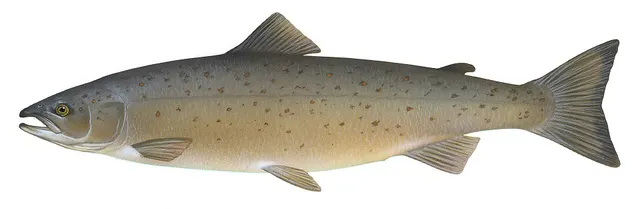 Atlantic salmonAn anadromous salmonid that migrates from its natal river to the North Atlantic and returns to spawn — and a species in serious, well-documented decline.
Knepp, Timothy, Public domain, via Wikimedia Commons
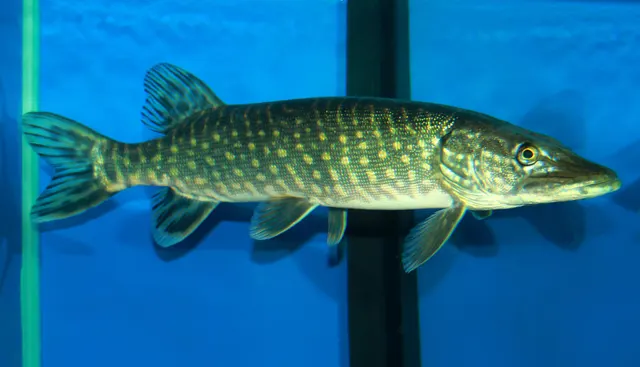 Northern pikeThe dominant freshwater ambush predator of the northern hemisphere: long, cryptic, and built for one violent acceleration rather than pursuit.
Karelj, Public domain, via Wikimedia Commons
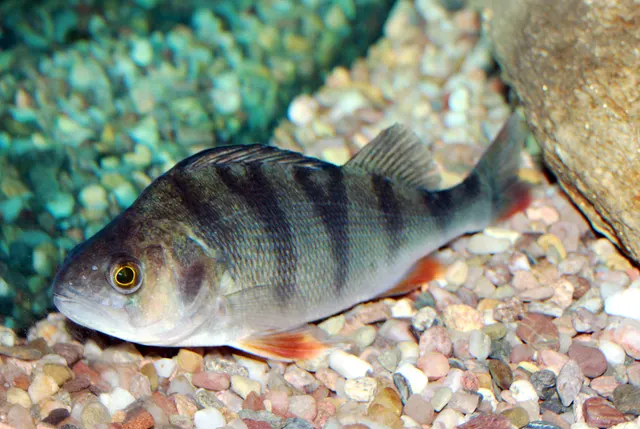 European perchA small, shoaling, spiny-finned predator that is both the most accessible predator to catch and the one most anglers first learn on.
Karelj, Public domain, via Wikimedia Commons
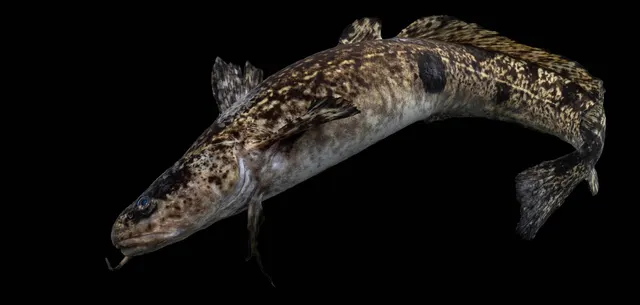 BurbotThe only freshwater cod, a nocturnal cold-water bottom predator with a single chin barbel that spawns under ice in midwinter.
U.S. Fish and Wildlife Service — public domain, via Wikimedia Commons
Places within this area
Publicly documented fishing geography. FishingHQ describes what the ground is; it does not say whether you may fish it, and every one of these sends that question to the body that holds the answer. Browse every place in this part of the world.
Who to ask before fishing any of these
FishingHQ does not know the current access position here. On the great majority of Swedish inland water the fishing right belongs to a landowner or to a fishery conservation area formed by the owners together, and the document is bought from them. Which waters are treated differently, and the seasons, methods and species measures that apply, all change. Check with the fishery conservation area or the rights-holder before going.
Vänern's western basin
Lake · Fresh water
The western of Vänern's two basins: an inland sea on ancient rock with a rocky, island-strewn shoreline, deep open water in the middle and extensive shallow bays where the rivers enter.
Large enough to build a genuine sea in wind, with long fetches in several directions and few places to shelter on the open water.
Particular to this ground: cold water shock, drowning and immersion.
Severe hazards of Lake Vänern apply here: boat safety.
Safety
Boat safety — Can cause serious injury or death
Vänern is large enough to build a serious steep sea, with open crossings that put a small boat a long way from shelter and an archipelago of unmarked rock immediately below the surface. Conditions change faster than the distance back to harbour allows for.
What reduces it: Treat it as coastal water rather than a lake: charts, a marine forecast, buoyancy worn rather than stowed, a planned route with bail-out harbours, a means of calling for help that does not depend on a phone, and someone ashore who knows the plan.
Cold water shock — Can cause serious injury or death
The water is cold year-round and immersion produces the involuntary gasp and rapid loss of coordination that drowns strong swimmers, followed quickly by hypothermia. Long distances to shore make self-rescue unrealistic in much of the lake.
What reduces it: Wear buoyancy whenever afloat, dress for the water temperature rather than the air, never fish alone in the outer archipelago, and carry the means to summon help and to get back into a boat unaided.
Drowning and immersion — Can cause serious injury or death
Winter ice on a water this size forms unevenly and is affected by current, wind, depth and inflow. Ice that is sound in a sheltered bay may be unsafe a short distance away, and there is no thickness that is uniformly reliable across the lake.
What reduces it: Do not go on ice without local knowledge of that specific bay, carry ice picks, a throw line and a means of flotation, go with someone, keep well clear of inflows, outflows and shipping channels, and accept that no ice is safe ice on an open lake.
Further safety reading
- Boat safety for anglers — An inland sea with open crossings out of sight of land, unmarked rock immediately below the surface through the archipelago, and conditions that change faster than the distance back to harbour allows for.
- Cold water shock and immersion — Cold water year-round with long distances to shore, and a winter ice regime that forms unevenly across five and a half thousand square kilometres — ice sound in one bay may be unsafe a short distance away, and no thickness is uniformly reliable on a lake this size.
Check the rules before you fish
Fishing laws, bylaws, access rules, seasons, bait restrictions and permitted methods vary by location and can change. Check the current rules from the relevant authority and the water you intend to fish before fishing.
Check with:
- Current national or regional law for where you are fishing
- Current local bylaws
- The relevant fisheries authority
- The landowner, club or fishery whose water it is
- Any restrictions specific to the species or the method you intend to use
Where to go next
What swims here
- Atlantic salmonThe Gullspång and Klarälven strains complete their entire life cycle in fresh water, feeding in the lake rather than at sea. Wild landlocked Atlantic salmon populations are rare, and these are among the significant ones.
- BurbotA cold-water fish with a winter following, taken through the ice where conditions allow and largely ignored in summer.
- European perchThe everyday fish of the lake, worked on rock and structure, and the most accessible good fishing available to a visitor without a large boat.
- Northern pikeAbundant through an archipelago of thousands of islands and skerries, reaching specimen sizes, and the reason a second group of visitors comes.
Local knowledge
How this compares
- Lake GenevaTwo great northern lakes fished largely by trolling, one Alpine and deep, one shallow and sea-sized, and each with an access framework a British visitor will misread in a different way.
- Loch LomondTwo large northern lakes where visitors carry the wrong permission model with them: Scotland has no national rod licence in the English sense, and Sweden's right to roam does not extend to fishing. Different errors, same shape.
- TrollingDownriggers, planer boards and long days on open water in pursuit of large salmon and trout. Vänern is one of Europe's principal trolling destinations, and the method page is the place to learn what that actually involves.
Rules and access
Sources and evidence
- Freshwater Fishes of the British Isles — HarperCollins (New Naturalist 75), 1992 (Reference work)Relied on for: Biology, distribution, life history and conservation status of northern European freshwater and diadromous fishes.States this directlyCitation checked — the work exists and is described correctly
- FishBase: a global information system on fishes — Froese, R. and D. Pauly, eds. — FishBase Consortium (Scientific institute)Relied on for: Distribution, habitat association, life history, size and feeding behaviour recorded for the species concerned.States this directlyPassage read and verified
- Code of Conduct for Responsible Fisheries — Food and Agriculture Organization of the United Nations, Rome, 1995 (Standards body)Relied on for: International principles for responsible fisheries, including the layering of national and regional authority and the management of shared and transboundary waters.States this directlyCitation checked — the work exists and is described correctly
Why the 12 connections on this page are here, and the sources
What swims here
Backed by research — 4 connections
Supported by peer-reviewed research or fisheries science. The sources are listed and can be checked.
Atlantic salmon
A distributional claim taken from reference works and databases on the fishes of the region rather than from angling report. It states presence and asserts nothing about a fishery.
- FishBase: a global information system on fishes — Froese, R. and D. Pauly, eds. — FishBase Consortium (Scientific institute)Relied on for: Distribution, habitat association, life history and size recorded for the species concerned.States this directlyPassage read and verified
- Freshwater Fishes of the British Isles — HarperCollins (New Naturalist 75), 1992 (Reference work)Relied on for: Biology, distribution, life history and conservation status of northern European freshwater and diadromous fishes.States this directlyCitation checked — the work exists and is described correctly
Burbot
A distributional claim taken from reference works and databases on the fishes of the region rather than from angling report. It states presence and asserts nothing about a fishery.
- FishBase: a global information system on fishes — Froese, R. and D. Pauly, eds. — FishBase Consortium (Scientific institute)Relied on for: Distribution, habitat association, life history and size recorded for the species concerned.States this directlyPassage read and verified
- Freshwater Fishes of the British Isles — HarperCollins (New Naturalist 75), 1992 (Reference work)Relied on for: Biology, distribution, life history and conservation status of northern European freshwater and diadromous fishes.States this directlyCitation checked — the work exists and is described correctly
European perch
A distributional claim taken from reference works and databases on the fishes of the region rather than from angling report. It states presence and asserts nothing about a fishery.
- FishBase: a global information system on fishes — Froese, R. and D. Pauly, eds. — FishBase Consortium (Scientific institute)Relied on for: Distribution, habitat association, life history and size recorded for the species concerned.States this directlyPassage read and verified
- Freshwater Fishes of the British Isles — HarperCollins (New Naturalist 75), 1992 (Reference work)Relied on for: Biology, distribution, life history and conservation status of northern European freshwater and diadromous fishes.States this directlyCitation checked — the work exists and is described correctly
Northern pike
A distributional claim taken from reference works and databases on the fishes of the region rather than from angling report. It states presence and asserts nothing about a fishery.
- Pike and the Pike Angler — Stanley Paul, 1981 (Specialist angling publication)Relied on for: Predator angling practice on large waters, including deep-water location, trolling and the handling of very large fish.States this directlyCitation checked — the work exists and is described correctly
- Pike: Biology and Exploitation — Chapman & Hall (Fish and Fisheries Series 19), 1996 (Scientific literature)Relied on for: The biology, growth, feeding ecology and habitat use of pike across its Holarctic range.States this directlyCitation checked — the work exists and is described correctly
How people fish here
What experienced anglers do — 1 connection
Widely and independently recommended by experienced anglers and specialist sources. This is real angling knowledge, not proof: controlled evidence for it is limited, and FishingHQ records it as convention rather than as a demonstrated effect.
Predator fishing
Which branch of fishing dominates a water is a statement about practice rather than about the place, and is recorded as convention.
- Pike and the Pike Angler — Stanley Paul, 1981 (Specialist angling publication)Relied on for: Predator angling practice on large waters, including deep-water location, trolling and the handling of very large fish.States this directlyCitation checked — the work exists and is described correctly
- Pike: Biology and Exploitation — Chapman & Hall (Fish and Fisheries Series 19), 1996 (Scientific literature)Relied on for: The biology, growth, feeding ecology and habitat use of pike across its Holarctic range.States this directlyCitation checked — the work exists and is described correctly
Local knowledge
What experienced anglers do — 1 connection
Widely and independently recommended by experienced anglers and specialist sources. This is real angling knowledge, not proof: controlled evidence for it is limited, and FishingHQ records it as convention rather than as a demonstrated effect.
How salmon find their way home
A place joined to the mechanism that explains what is distinctive about fishing there, which is what makes a location page transferable rather than local colour.
- FishBase: a global information system on fishes — Froese, R. and D. Pauly, eds. — FishBase Consortium (Scientific institute)Relied on for: Distribution, habitat association, life history and size recorded for the species concerned.States this directlyPassage read and verified
- Freshwater Fishes of the British Isles — HarperCollins (New Naturalist 75), 1992 (Reference work)Relied on for: Biology, distribution, life history and conservation status of northern European freshwater and diadromous fishes.States this directlyCitation checked — the work exists and is described correctly
How this compares
What experienced anglers do — 3 connections
Widely and independently recommended by experienced anglers and specialist sources. This is real angling knowledge, not proof: controlled evidence for it is limited, and FishingHQ records it as convention rather than as a demonstrated effect.
Lake Geneva
Two records a reader will hold together, joined where the comparison teaches something neither states alone.
- General angling website restatements of established technique — Various (Credible secondary source)Relied on for: Widely restated descriptions of European venue character and method convention, recorded as consensus rather than as scholarship.Background and mechanism onlyCitation checked — the work exists and is described correctly
- Angling Times — Bauer Media (Specialist angling publication)Relied on for: Contemporary angling practice as reported by practitioners, including continental destination fishing undertaken from the UK.States this directlyCitation checked — the work exists and is described correctly
Loch Lomond
Two records a reader will hold together, joined where the comparison teaches something neither states alone.
- General angling website restatements of established technique — Various (Credible secondary source)Relied on for: Widely restated descriptions of European venue character and method convention, recorded as consensus rather than as scholarship.Background and mechanism onlyCitation checked — the work exists and is described correctly
- Angling Times — Bauer Media (Specialist angling publication)Relied on for: Contemporary angling practice as reported by practitioners, including continental destination fishing undertaken from the UK.States this directlyCitation checked — the work exists and is described correctly
Trolling
Two records a reader will hold together, joined where the comparison teaches something neither states alone.
- Pike and the Pike Angler — Stanley Paul, 1981 (Specialist angling publication)Relied on for: Predator angling practice on large waters, including deep-water location, trolling and the handling of very large fish.States this directlyCitation checked — the work exists and is described correctly
- Pike: Biology and Exploitation — Chapman & Hall (Fish and Fisheries Series 19), 1996 (Scientific literature)Relied on for: The biology, growth, feeding ecology and habitat use of pike across its Holarctic range.States this directlyCitation checked — the work exists and is described correctly
Safety reading
Official guidance — 2 connections
Stated by a fisheries authority, scientific institute or recognised angling body. Authoritative, but summarising rather than demonstrating.
Boat safety for anglers
A hazard characteristic of the water, joined to the topic that treats it in full, on guidance published by water safety bodies.
- RNLI water safety guidance: cold water shock and Float to Live — Royal National Lifeboat Institution (Water-safety or diver-training authority)Relied on for: Water safety guidance including immersion, cold water shock and the circumstances in which water users get into difficulty.States this directlyPassage read and verified
- RoSPA water safety information and UK accidental drowning statistics — Royal Society for the Prevention of Accidents (Water-safety or diver-training authority)Relied on for: Accident-prevention guidance on inland and open water, including small craft, banks, exposure and lone working.States this directlyPassage read and verified
Cold water shock and immersion
A hazard characteristic of the water, joined to the topic that treats it in full, on guidance published by water safety bodies.
- RNLI water safety guidance: cold water shock and Float to Live — Royal National Lifeboat Institution (Water-safety or diver-training authority)Relied on for: Water safety guidance including immersion, cold water shock and the circumstances in which water users get into difficulty.States this directlyPassage read and verified
- RoSPA water safety information and UK accidental drowning statistics — Royal Society for the Prevention of Accidents (Water-safety or diver-training authority)Relied on for: Accident-prevention guidance on inland and open water, including small craft, banks, exposure and lone working.States this directlyPassage read and verified
Rules and access
Official guidance — 1 connection
Stated by a fisheries authority, scientific institute or recognised angling body. Authoritative, but summarising rather than demonstrating.
Who regulates fishing, and how to find your rules
This points to the kind of rule that applies rather than to a rule itself. The structure is described from published sources; what any current rule requires is a matter for the competent authority and is not stated here.
- Code of Conduct for Responsible Fisheries — Food and Agriculture Organization of the United Nations, Rome, 1995 (Standards body)Relied on for: International principles for responsible fisheries including the role, layering and co-ordination of national and regional authorities over shared waters.States this directlyCitation checked — the work exists and is described correctly
- Good Fish Guide — Marine Conservation Society (Conservation authority)Relied on for: Synthesis of stock and management information across jurisdictions, including how measures are set and revised.Background and mechanism onlyCitation checked — the work exists and is described correctly
How FishingHQ labels evidence is explained in the evidence policy.