Greenland and the high Arctic
Fishing regions · Last reviewed 2026-08-14
A coast where the season is measured in light rather than in temperature, the ice is a fishing platform rather than an obstacle, and one fish — Arctic char — carries almost the whole freshwater fishery.
Safety: cold water shock — can cause serious injury or death. 3 more points apply here.
Being listed here is not permission to fish. What that meansClose
Access, fishing rights, seasons, licences, local bylaws and permitted methods vary and can change. Check current access, permission, local regulations, closures and restrictions before you travel or fish. FishingHQ describes what the ground is and names who holds the answer; it does not hold the answer itself.
Find the authority for a jurisdiction · What FishingHQ does and does not cover
Greenland and the high Arctic qualify as a coast record because the physical constraints are shared across an enormous area and produce a fishery unlike any other on FishingHQ.
LIGHT IS THE SEASON, NOT TEMPERATURE. Above the Arctic Circle the sun does not set for part of the summer and does not rise for part of the winter. Biological productivity is compressed into a short intense burst when light returns, and the fishing year is organised around that pulse rather than around a thermal spring and autumn.
ICE IS INFRASTRUCTURE. Sea ice and lake ice are the platform from which a great deal of Arctic fishing is done, and they are also the thing that decides where a boat can go and when. A frozen fjord is a road; a breaking one is a hazard.
THE COAST IS FJORD AND ICE. Deep fjords cut into an ice sheet-covered land mass, with glaciers calving into them, cold nutrient-rich water, and a narrow ice-free margin that widens and narrows with the season.
ARCTIC CHAR IS THE FRESHWATER FISHERY, effectively alone. The most northerly-distributed freshwater fish in the world, anadromous in most Greenlandic populations, running to sea to feed in summer and returning to fresh water to overwinter because the rivers do not stay open. There is no coarse fishery, no cyprinids, no trout in most of it — one species carries the whole thing.
GREENLAND HALIBUT AND COD ARE THE MARINE FISHERY, along with northern shrimp, which is economically the most important species of all.
AND SUBSISTENCE HUNTING AND FISHING ARE LEGALLY AND CULTURALLY CENTRAL rather than residual, which shapes the whole regulatory framework.
What fishing here is like
A high-latitude fjord coast where the season is set by light and ice rather than by temperature. Arctic char is effectively the entire freshwater and inshore sport fishery, running to sea in summer and returning to fresh water to overwinter. The commercial fishery is northern shrimp, Greenland halibut and cod, and it is economically dominant. Ice fishing, both on sea ice and on lakes, is a normal part of the year rather than a novelty. Subsistence fishing and hunting are legally recognised and culturally central.
What dominates
Fly and spinning fishing for Arctic char in rivers and river mouths through the short open-water season, which is the recreational fishery. Ice fishing through sea ice and lake ice, using jigs and set lines, a normal and long-established practice. Longlining and jigging for Greenland halibut, worked through the ice in winter in some fjords and from boats in summer. Small-boat handlining and jigging for cod and redfish. Commercial trawling and potting for northern shrimp, which is the economically dominant fishery. Subsistence net fishing and hunting, legally recognised and culturally central. Some sea-run char fishing from the coast, which is a genuinely distinctive shore fishery.
The water available
Deep fjords cutting into an ice-sheet-covered land mass, with glacier fronts calving into several of them; a narrow ice-free coastal margin whose width varies through the year; sea ice covering much of the coast for part of the year and forming a working platform; short, cold, clear rivers running from lakes to the sea, open for only a few months; deep cold lakes that freeze thickly; offshore banks and deep fjord basins holding halibut and shrimp; and, in the far north and east, coastline that is ice-bound for most of the year.
How the rules are structured
Greenland administers its own fisheries under a self-government arrangement, through its own fisheries and hunting authority, with a national research institute providing advice. The framework distinguishes clearly between commercial, subsistence and recreational fishing, and subsistence rights held by residents are a recognised category rather than an exemption. Licences are required for recreational fishing and differ for residents and visitors; quotas, seasons and gear restrictions apply to the commercial fisheries, with the offshore shrimp and halibut fisheries quota-managed on scientific advice. Some rivers are subject to specific rules on methods, quotas or closure because char populations are small and slow to recover. Protected areas including a very large national park in the north-east carry their own restrictions, and access to parts of the country requires separate permission. Marine mammal hunting is separately regulated and internationally scrutinised. Elsewhere in the high Arctic, national frameworks of the relevant Arctic states apply, and a moratorium arrangement covers commercial fishing in the central Arctic Ocean pending scientific understanding. FishingHQ does not state what any current rule is.
Who to ask
- The Greenlandic fisheries, hunting and agriculture authority, for licensing, quotas, seasons and the distinction between subsistence, recreational and commercial fishing.
- The Greenland institute of natural resources, which provides the scientific advice on which quotas and river-specific measures rest.
- The municipality, which administers a number of local fishing and access matters.
- The national park or protected area authority for the north-east national park and other designated areas, and the expedition permitting system for access to remote regions.
- The relevant national authority of the Arctic state concerned where the fishing takes place outside Greenland.
Words you will meet
- Arctic char
- The most northerly-distributed freshwater fish in the world, and effectively the whole freshwater sport fishery here. Most Greenlandic populations are anadromous: they run to sea to feed through the short summer and return to fresh water to overwinter because the rivers cannot support them in winter otherwise.
- Sea ice as platform
- For part of the year the fjord surface is the working surface. Fishing, travel and hunting are conducted from it, and its formation and break-up define the practical calendar more sharply than any date does.
- Polar day and polar night
- The periods when the sun does not set and does not rise. They compress the biological year into a short intense productive burst and a long dormant one, which is why the season here is a light season rather than a temperature one.
- Greenland halibut
- A deep-water flatfish taken commercially by longline and trawl, and in some fjords fished through the ice in winter using long lines set through holes. One of the country's principal fisheries.
- Kalaallit Nunaat
- The Greenlandic name for Greenland. Worth knowing because it signals the point that this is a self-governing country with its own language and its own fisheries administration rather than a remote territory.
Conditions and hazards
Cold is the constant and it is genuinely lethal: water temperatures are near freezing, cold water shock incapacitates within a minute of immersion, and hypothermia follows quickly for anyone who survives the first stage. Ice is the second hazard and it is complex — thickness varies, tidal cracks and currents create weak areas, and sea ice near a glacier front or a tidal narrows can be unsafe when the surrounding ice is thick. Calving glaciers generate waves without warning and floating ice can roll. Weather changes fast, visibility can close down, and there is no infrastructure over most of the coast: distances are enormous, settlements are far apart, and rescue may be many hours or days away. Polar bears are present along much of this coast and are a serious hazard requiring specific preparation. In winter, darkness compounds everything. In summer, continuous daylight causes people to overrun their own endurance because the usual cue to stop is absent.
Fjords, ice and a productive band that moves with the season
The Arctic coast's physical structure is unlike anything else on FishingHQ, and it decides both where fish are and where people can go.
THE COAST IS FJORD. Deep glacial valleys flooded by the sea cut far inland, with steep sides, great depth and, in many cases, a glacier calving at the head. Fjord systems are sheltered relative to the open coast and are where most inshore fishing happens.
GLACIER FRONTS ARE PRODUCTIVE AND DANGEROUS. Meltwater discharge at depth drives upwelling that brings nutrients to the surface, so the water in front of a calving glacier is frequently rich and attracts fish, seabirds and marine mammals. It is also where ice falls without warning and generates waves.
SEA ICE COVERS MUCH OF THE COAST FOR PART OF THE YEAR and its extent and duration vary enormously between the west, east and north. In the west a substantial part of the coast stays workable by boat for much of the year; in the north and east, ice dominates.
THE ICE-FREE MARGIN IS NARROW AND SEASONAL. Land is largely ice sheet, so human activity and freshwater habitat are confined to a coastal strip that widens as summer advances.
THE RIVERS ARE SHORT, COLD AND BRIEFLY OPEN. Running from lakes to the sea over rock, they are ice-free for only a few months, they carry glacial flour in places which colours them, and they hold almost nothing except char.
THE LAKES FREEZE THICKLY and are fished through the ice.
AND OFFSHORE, DEEP FJORD BASINS AND BANKS hold Greenland halibut and northern shrimp, which are the economic fisheries. The shrimp fishery in particular has been the country's most valuable, and its distribution has shifted northward measurably as water has warmed.
Backed by research — why, and the sources (2)
Supported by peer-reviewed research or fisheries science. The sources are listed and can be checked.
- FishBase: a global information system on fishes — Froese, R. and D. Pauly, eds. — FishBase Consortium (Scientific institute)Relied on for: Distribution, habitat association, depth range and life history recorded for the species occurring in the area.States this directlyPassage read and verified
- The IUCN Red List of Threatened Species — International Union for Conservation of Nature (Conservation authority)Relied on for: Assessment and range account for the species of the region, including the habitats they depend on and the pressures acting on them.States this directlyCitation checked — the work exists and is described correctly
One freshwater fish, and a marine fishery that pays for the country
The species picture is the simplest on FishingHQ in fresh water and the most economically concentrated in salt.
ARCTIC CHAR IS THE FRESHWATER FISHERY. It is the most northerly-distributed freshwater fish in the world, and across most of Greenland it is the only one available to an angler. There are no cyprinids, no pike, no perch, and trout only in limited introduced situations. A whole national sport fishery rests on one species.
ITS LIFE HISTORY IS THE INTERESTING PART. Most Greenlandic char are anadromous: they run to sea in early summer to feed in productive coastal water, put on condition rapidly over a few weeks, and return to fresh water in late summer to overwinter and spawn. They must return, because they cannot survive the winter at sea at these temperatures. The run is therefore a compressed and predictable event, and the fishing is built around intercepting it.
SEA-RUN CHAR IN COASTAL WATER ARE A DISTINCTIVE FISHERY, silver, in condition and takeable from the shore, which is a genuinely unusual shore fishing proposition.
GREENLAND HALIBUT IS THE PRINCIPAL FINFISH FISHERY, taken by longline and trawl in deep fjord basins and offshore, and in some fjords through the ice in winter.
ATLANTIC COD RETURNED AND LEFT AND RETURNED AGAIN. The Greenlandic cod fishery boomed in the mid-twentieth century during a warm period, collapsed as conditions cooled and fishing continued, and has responded again to recent warming. It is a clear illustration of a fishery at the edge of a species' range being driven by climate as much as by effort.
NORTHERN SHRIMP IS THE ECONOMIC MAINSTAY, and its distribution has moved northward as the water has warmed.
CAPELIN AND POLAR COD ARE THE FORAGE BASE, and the whole system — char, halibut, seabirds, seals and whales — depends on them.
AND MARINE MAMMAL HUNTING IS PART OF THE SUBSISTENCE ECONOMY, separately regulated and internationally scrutinised, and it is part of an honest account of what people take from this sea.
Backed by research — why, and the sources (2)
Supported by peer-reviewed research or fisheries science. The sources are listed and can be checked.
- FishBase: a global information system on fishes — Froese, R. and D. Pauly, eds. — FishBase Consortium (Scientific institute)Relied on for: Distribution, habitat association, depth range and life history recorded for the species occurring in the area.States this directlyPassage read and verified
- The IUCN Red List of Threatened Species — International Union for Conservation of Nature (Conservation authority)Relied on for: Assessment and range account for the species of the region, including the habitats they depend on and the pressures acting on them.States this directlyCitation checked — the work exists and is described correctly
Fishing from ice, and a short season on open water
The disciplines here divide by whether the surface is solid, which is a division no other record on FishingHQ has to make.
ICE FISHING IS ORDINARY PRACTICE. Fishing through holes cut in lake ice or sea ice is a normal part of the year, not a novelty. On sea ice, long lines set through holes take Greenland halibut in deep fjords, worked with dog sledge or snowmobile access, and it is a commercial as well as a subsistence activity in places.
THE OPEN-WATER SEASON IS SHORT AND INTENSE. Once rivers clear and the char run, the recreational fishery is concentrated into a few weeks. Fly and spinning tackle in river mouths, estuaries and lower rivers is the standard approach, and fish are frequently in numbers and in condition.
SHORE FISHING FOR SEA-RUN CHAR is a genuine and distinctive discipline: silver fish feeding in cold clear coastal water, takeable from the beach, in a landscape with no infrastructure.
SMALL-BOAT JIGGING AND HANDLINING for cod and redfish is the everyday coastal fishery, and it continues through much of the open-water period.
LONGLINING FOR HALIBUT is worked from small boats in summer and through the ice in winter, and it is a substantial part of the small-scale commercial fishery.
COMMERCIAL TRAWLING AND POTTING FOR SHRIMP is the industrial fishery and is economically dominant, operating offshore and largely out of sight of the coastal fishery.
SUBSISTENCE NETTING is a recognised category with its own rules, and it is not a marginal activity.
AND EVERYTHING IS CONSTRAINED BY ACCESS. There is no road network between settlements. Boat, snowmobile, dog sledge and aircraft are the transport, and the fishery a person can reach is determined by which of those they have and what the ice is doing.
What experienced anglers do — why, and the sources (2)
Widely and independently recommended by experienced anglers and specialist sources. This is real angling knowledge, not proof: controlled evidence for it is limited, and FishingHQ records it as convention rather than as a demonstrated effect.
- FAO fishing gear types and fishing technology information — Food and Agriculture Organization of the United Nations (Scientific institute)Relied on for: Descriptions of fishing gear types and their operation, including the small-scale gears used in the region.States this directlyCitation checked — the work exists and is described correctly
- IGFA International Angling Rules and World Record Requirements — International Game Fish Association (Angling or fisheries organisation)Relied on for: International recreational angling practice, tackle categories and the conventions applied to recognised catches.Background and mechanism onlyPassage read and verified
A year measured in light, ice and one run of fish
The Arctic seasonal cycle is the clearest case on FishingHQ of a fishing calendar set by something other than temperature.
POLAR NIGHT IS THE DORMANT PERIOD. For weeks or months depending on latitude, the sun does not rise. Primary production stops, the system runs on stored energy, and human activity moves onto the ice.
THE RETURN OF LIGHT IS THE TRIGGER FOR EVERYTHING. When the sun comes back, ice algae and then phytoplankton bloom rapidly under and then in the water, zooplankton follow, and the entire year's productivity is compressed into a few months. Every animal in the system is organised around being in the right place for that pulse.
BREAK-UP IS THE OPERATIONAL EVENT. When the ice goes out of a fjord decides when boats can work, when rivers clear and when the char can run. It varies by weeks between years and by much more between regions, and nothing about the season can be stated as a date.
THE CHAR RUN IS THE FISHERY'S CENTRAL EVENT. Fish drop to sea early in the open-water period, feed hard for a few weeks, and return to fresh water in late summer. Both movements are predictable in sequence and variable in timing, and the fishing follows them rather than a calendar.
POLAR DAY REMOVES THE CUE TO STOP. Continuous daylight through midsummer means there is no dusk, no dawn and no natural end to a fishing day, which is delightful and is a genuine cause of people overrunning their endurance in a place where that has consequences.
FREEZE-UP CLOSES THE OPEN-WATER YEAR and opens the ice one. There is a difficult transitional period at each end when the ice is neither reliable nor absent, and it is the most dangerous time of year for travel.
AND THE WHOLE PATTERN IS SHIFTING. Sea ice extent and duration have declined measurably, species distributions have moved north, and the fisheries have followed. The Arctic is where climate change is most visible in a fishing calendar.
Backed by research — why, and the sources (2)
Supported by peer-reviewed research or fisheries science. The sources are listed and can be checked.
- FishBase: a global information system on fishes — Froese, R. and D. Pauly, eds. — FishBase Consortium (Scientific institute)Relied on for: Distribution, habitat association, depth range and life history recorded for the species occurring in the area.States this directlyPassage read and verified
- The IUCN Red List of Threatened Species — International Union for Conservation of Nature (Conservation authority)Relied on for: Assessment and range account for the species of the region, including the habitats they depend on and the pressures acting on them.States this directlyCitation checked — the work exists and is described correctly
Self-government, subsistence rights and quotas set on ice-limited science
Governance here has features that follow directly from geography and from constitutional history.
GREENLAND ADMINISTERS ITS OWN FISHERIES. Under its self-government arrangement, the country's fisheries and hunting authority sets licensing, quotas and seasons, advised by its own natural resources institute. This is a national fisheries administration rather than a regional office of somewhere else, and treating it otherwise misdescribes the country.
SUBSISTENCE IS A RECOGNISED CATEGORY, NOT AN EXEMPTION. The framework distinguishes commercial, subsistence and recreational fishing, and subsistence rights held by residents are a substantive part of the system reflecting the continuing role of hunting and fishing in the economy and in food supply. That is a genuinely different starting point from most European frameworks.
RECREATIONAL FISHING IS LICENSED, with different arrangements for residents and visitors, and specific rivers carry their own rules.
CHAR RIVERS ARE MANAGED CAREFULLY BECAUSE THE POPULATIONS ARE SMALL. Anadromous char populations in short Arctic rivers are limited in number and slow to recover from over-exploitation, so quotas, method restrictions and closures on particular rivers are used, and their basis is population biology rather than sport.
THE COMMERCIAL FISHERIES ARE QUOTA-MANAGED ON SCIENTIFIC ADVICE, and the science is harder here than elsewhere because ice limits survey access for part of the year and the stocks straddle national boundaries.
PROTECTED AREAS AND ACCESS PERMITS MATTER MORE THAN USUAL. The north-east national park is one of the largest protected areas in the world, and access to remote parts of the country requires expedition permitting that has nothing to do with fishing and everything to do with rescue capacity.
THE CENTRAL ARCTIC OCEAN IS SUBJECT TO A PRECAUTIONARY ARRANGEMENT among Arctic and fishing states, deferring commercial fishing in newly accessible high-seas waters until the science exists. It is a rare instance of fisheries policy arriving before a fishery.
AND FISHINGHQ DOES NOT STATE WHAT ANY OF THIS CURRENTLY PERMITS.
Official guidance — why, and the sources (2)
Stated by a fisheries authority, scientific institute or recognised angling body. Authoritative, but summarising rather than demonstrating.
- Good Fish Guide — Marine Conservation Society (Conservation authority)Relied on for: Assessment of fisheries and the management measures applied to them, including gear selectivity and spatial protection.Background and mechanism onlyCitation checked — the work exists and is described correctly
- Code of Conduct for Responsible Fisheries — Food and Agriculture Organization of the United Nations, Rome, 1995 (Standards body)Relied on for: Principles for responsible fisheries management, precaution and the treatment of small-scale, shared and highly variable stocks.States this directlyCitation checked — the work exists and is described correctly
Words for ice, light and a fish that goes both ways
The vocabulary that matters here describes conditions rather than gear, because conditions are what decide everything.
BREAK-UP AND FREEZE-UP NAME THE TWO EVENTS THAT STRUCTURE THE YEAR. They are not dates and they are not weather; they are transitions in the state of the surface, and every plan here is expressed relative to them.
POLAR DAY AND POLAR NIGHT NAME THE LIGHT REGIME. Understanding that the season here is a light season rather than a temperature season is the single conceptual shift a temperate reader needs to make.
FAST ICE AND DRIFT ICE ARE A DISTINCTION THAT MATTERS TO SAFETY. Ice attached to the shore is a platform; ice moving with wind and current is not. Confusing the two is how people get into serious trouble, and the vocabulary exists because the difference is consequential.
ANADROMOUS DESCRIBES THE CHAR AND EXPLAINS THE FISHERY. A fish that runs to sea to feed and returns to fresh water to overwinter and spawn produces a compressed, predictable, interceptable movement, which is what the fishing is built on.
KALAALLIT NUNAAT IS THE COUNTRY'S OWN NAME, and using it signals that this is a self-governing nation with its own language and its own fisheries administration.
GREENLAND HALIBUT IS A NAME WORTH GETTING RIGHT because it is a different fish from the Atlantic halibut FishingHQ holds separately — a deep-water species with a different fishery, taken in ways Atlantic halibut is not.
AND SUBSISTENCE IS A LEGAL TERM HERE RATHER THAN A DESCRIPTIVE ONE. It names a recognised category of fishing and hunting with its own rules and its own standing, and reading it as a synonym for poverty or for tradition misunderstands what the framework is doing.
What experienced anglers do — why, and the sources (2)
Widely and independently recommended by experienced anglers and specialist sources. This is real angling knowledge, not proof: controlled evidence for it is limited, and FishingHQ records it as convention rather than as a demonstrated effect.
- Good Fish Guide — Marine Conservation Society (Conservation authority)Relied on for: Assessment of fisheries and the management measures applied to them, including gear selectivity and spatial protection.Background and mechanism onlyCitation checked — the work exists and is described correctly
- Code of Conduct for Responsible Fisheries — Food and Agriculture Organization of the United Nations, Rome, 1995 (Standards body)Relied on for: Principles for responsible fisheries management, precaution and the treatment of small-scale, shared and highly variable stocks.States this directlyCitation checked — the work exists and is described correctly
Four thousand years of ice-edge hunting, and a cod that came and went
The human history of this coast is a long record of adaptation to an environment that changes on several timescales.
PEOPLE HAVE HUNTED AND FISHED THIS COAST FOR MILLENNIA. Successive Arctic cultures occupied Greenland over thousands of years, developing the technologies — kayak, harpoon, sledge, ice-edge hunting — that make life at the ice edge possible. The kayak in particular is a Greenlandic invention that has spread worldwide, and FishingHQ's kayak fishing material descends from it.
THE NORSE SETTLEMENTS CAME AND WENT. Scandinavian colonies established in the medieval warm period persisted for several centuries and then disappeared, in circumstances that included a cooling climate and a subsistence strategy less suited to it than the Inuit one. It is one of the better-known cases of a European settlement failing where an indigenous adaptation continued.
COLONIAL ADMINISTRATION AND MONOPOLY TRADE shaped the eighteenth and nineteenth centuries, and the commercial focus was on marine mammal products before it was on fish.
THE COD BOOM AND BUST IS THE DEFINING TWENTIETH-CENTURY FISHERIES EVENT. Warming in the early twentieth century brought cod to Greenlandic waters in quantity, a substantial fishery developed, and cooling combined with continued fishing removed it again. Communities and infrastructure built around cod had to convert to shrimp. It is one of the clearest illustrations available of a fishery at the edge of a species' range being governed by climate.
SHRIMP BECAME THE ECONOMY and remains the principal export fishery, with halibut alongside it.
SELF-GOVERNMENT ARRIVED IN STAGES through the later twentieth century and into this one, giving Greenland control of its own fisheries and resources.
AND THE PRESENT CHAPTER IS WARMING. Declining sea ice, northward shifts in species distribution, changing shrimp and cod distributions, and newly accessible waters are all documented and are changing both the fishery and the politics around it faster than anywhere else on FishingHQ.
Official guidance — why, and the sources (2)
Stated by a fisheries authority, scientific institute or recognised angling body. Authoritative, but summarising rather than demonstrating.
- Good Fish Guide — Marine Conservation Society (Conservation authority)Relied on for: Assessment of fisheries and the management measures applied to them, including gear selectivity and spatial protection.Background and mechanism onlyCitation checked — the work exists and is described correctly
- Code of Conduct for Responsible Fisheries — Food and Agriculture Organization of the United Nations, Rome, 1995 (Standards body)Relied on for: Principles for responsible fisheries management, precaution and the treatment of small-scale, shared and highly variable stocks.States this directlyCitation checked — the work exists and is described correctly
Where fishing is food, and the kayak came from
The culture of fishing here is a survival culture that became a modern one without discarding the first part.
HUNTING AND FISHING ARE FOOD AND IDENTITY TOGETHER. In a country with limited agriculture and long supply lines, locally caught fish and marine mammals are a substantial part of what people eat, and the practice is central to Greenlandic cultural identity rather than incidental to it. The subsistence category in the fisheries framework reflects that.
SHARING IS AN ESTABLISHED NORM. Distribution of catch within family and community is a long-standing practice with real social weight, and it is part of how a hunting and fishing economy manages variable returns.
THE KAYAK IS A GREENLANDIC TECHNOLOGY. The skin-on-frame hunting kayak, the roll that bears the country's name, and the associated hunting techniques were developed here for hunting at the ice edge in cold water where a capsize is fatal. Every kayak angler in the world is using a descendant of it, which is worth stating in a guide that holds kayak fishing as a method.
MARINE MAMMAL HUNTING IS PART OF THE PICTURE and is internationally contentious. It is regulated, it is culturally and nutritionally significant, and an account of what people take from this sea that omitted it would be incomplete. FishingHQ records that it exists and is regulated, and does not adjudicate the argument.
THE SPORT FISHERY IS SMALL, SEASONAL AND VISITOR-DRIVEN, built around the char run and around the landscape as much as the fish.
SELF-RELIANCE IS ASSUMED. With no roads between settlements, long distances and limited rescue capacity, the expectation that a person can look after themselves is a practical necessity rather than a cultural preference, and a visitor who arrives without that capability is a burden on people who have other things to do.
AND FISHINGHQ DOES NOT SPEAK FOR GREENLANDIC COMMUNITIES. What is recorded here rests on the public record of the fishery, its management and its history.
Official guidance — why, and the sources (2)
Stated by a fisheries authority, scientific institute or recognised angling body. Authoritative, but summarising rather than demonstrating.
- Good Fish Guide — Marine Conservation Society (Conservation authority)Relied on for: Assessment of fisheries and the management measures applied to them, including gear selectivity and spatial protection.Background and mechanism onlyCitation checked — the work exists and is described correctly
- Code of Conduct for Responsible Fisheries — Food and Agriculture Organization of the United Nations, Rome, 1995 (Standards body)Relied on for: Principles for responsible fisheries management, precaution and the treatment of small-scale, shared and highly variable stocks.States this directlyCitation checked — the work exists and is described correctly
Every hazard here is ordinary; the timescale after it is not
Nothing in the list of dangers here is unfamiliar. Cold water, cold air, ice, weather, distance, and a large animal. What is unfamiliar is the timescale on which each of them operates, and the arithmetic that follows, and neither is something experience elsewhere prepares anybody for.
COLD WATER STOPS BEING A RISK AND BECOMES AN OUTCOME. At or near freezing, immersion produces the gasp and hyperventilation immediately, and the ability to swim or to grip is lost in about a minute. Grip is the one that matters: a person who cannot close their hands cannot hold a rope, a gunwale or the edge of ice, so the rescue that would work at ten degrees does not work here. Going through ice or out of a boat is a life-threatening event within seconds rather than minutes, and the plan has to be about not entering the water rather than about what to do in it.
ICE IS NOT A SURFACE, IT IS A CONDITION WITH LOCAL EXCEPTIONS. Thickness varies. Tidal cracks, currents and the ground beneath all produce weak areas, and sea ice near a glacier front or in a tidal narrows can be unsafe while the ice a short distance away is thick. Floating ice rolls without warning as it melts and its balance changes. And calving glaciers generate waves that arrive across open water with no sound to announce them and no time to react. These are not things to judge from a distance; they are things to be told about by somebody who works this ice.
HYPOTHERMIA IS THE SLOW VERSION AND ITS FIRST SYMPTOM IS BAD JUDGEMENT. Wind chill is severe, there is no shelter, and wet clothing plus a wait for transport is a sufficient cause. The person it is happening to is the last to recognise it, which is why the useful precaution is a companion who will call it.
POLAR BEARS ARE PRESENT WHERE PEOPLE FISH. They are large, capable predators and they may approach. This is a hazard requiring specific preparation, local advice and — in many places — specific arrangements that are not a visitor's to improvise. It is also the clearest case on FishingHQ of a danger where the correct action is to defer entirely to people who live with it.
AND THE LIGHT IS A HAZARD IN BOTH DIRECTIONS. In winter, darkness shortens every margin. In summer, continuous daylight removes the cue that tells people to stop, so they overrun their own endurance without noticing.
WHICH BRINGS THE ARITHMETIC. There are no roads between settlements, distances are enormous, weather closes visibility quickly, and rescue may be many hours or days away. An engine failure or a twisted ankle is not a minor event here; it is a survival situation created by where it happened rather than by what it was. So the margin has to be built in advance: tell somebody the plan and the return, travel with people who know the ground and the ice, carry more than the day requires, and treat every decision as one whose recovery has to be self-funded.
Official guidance — why, and the sources (3)
Stated by a fisheries authority, scientific institute or recognised angling body. Authoritative, but summarising rather than demonstrating.
- RNLI water safety guidance: cold water shock and Float to Live — Royal National Lifeboat Institution (Water-safety or diver-training authority)Relied on for: Cold water shock and the immersion response, and water-safety guidance for shore anglers and small-craft users.States this directlyPassage read and verified
- NOAA National Weather Service marine forecasts and marine weather services — National Oceanic and Atmospheric Administration, United States (Government fisheries body)Relied on for: Marine forecasting, warning products, sea state and swell information, and the coastal and offshore zones at which those forecasts are issued.States this directlyCitation checked — the work exists and is described correctly
- Code of Conduct for Responsible Fisheries — Food and Agriculture Organization of the United Nations, Rome, 1995 (Standards body)Relied on for: That responsible fishing includes the safety of fishers, and the international framework within which national fisheries authorities set and revise measures.Background and mechanism onlyCitation checked — the work exists and is described correctly
Some of what lives here
Fish recorded here that FishingHQ holds a reviewed photograph of. It is not a complete list of what Greenland and the high Arctic holds, and it is not a prediction that you will catch any of them — it is a way in to the ones we can show you.
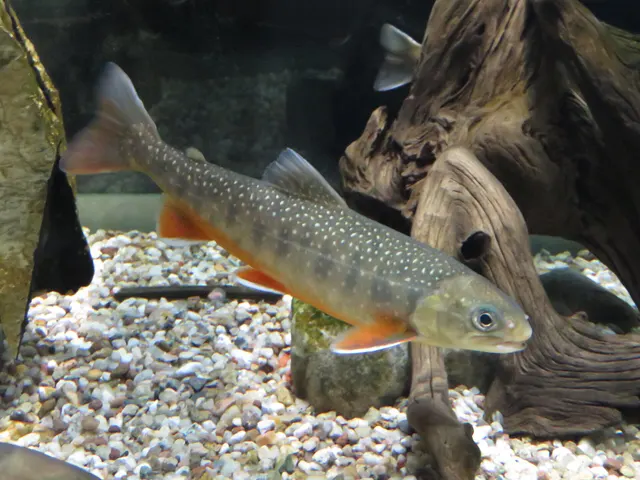 Arctic charThe most northerly freshwater fish in the world, a cold-demanding char with brilliant orange-red spawning bellies and highly distinct landlocked populations.
Xepheid — CC BY-SA 4.0, via Wikimedia Commons
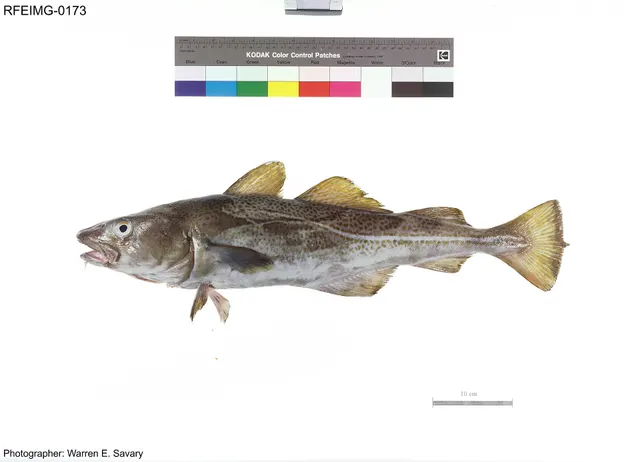 Atlantic codA large, heavily-built demersal predator of the North Atlantic, and the species whose commercial history is the standard example of stock collapse.
The U.S. Food and Drug Administration, Public domain, via Wikimedia Commons
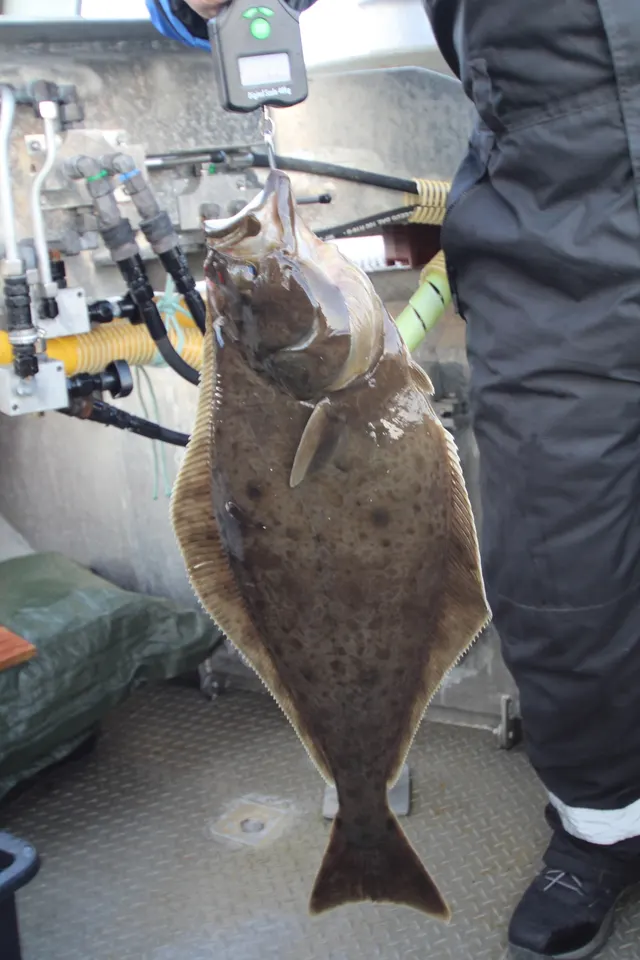 Atlantic halibutThe largest flatfish in the world, reaching over four metres, and a species whose commercial collapse made it one of the clearest cautionary tales in North Atlantic fisheries.
portulaca — CC BY, via iNaturalist
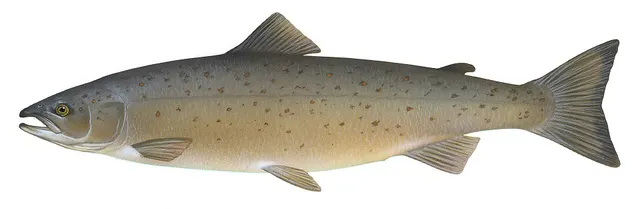 Atlantic salmonAn anadromous salmonid that migrates from its natal river to the North Atlantic and returns to spawn — and a species in serious, well-documented decline.
Knepp, Timothy, Public domain, via Wikimedia Commons
Safety
Cold water shock — Can cause serious injury or death
Water temperature is at or near freezing. Immersion triggers an immediate involuntary gasp and hyperventilation, and the ability to swim or to grip is lost within about a minute. Anyone who survives that stage faces rapid incapacitation from cold. Going through ice or out of a small boat here is a life-threatening event within seconds rather than minutes.
What reduces it: Wear an immersion suit or a buoyancy aid appropriate to the water rather than to the air, never travel on ice or water alone, carry ice picks when on ice, and plan every trip on the assumption that self-rescue is the only rescue available in time.
Worse when:
- During break-up and freeze-up, when ice is neither reliable nor absent.
- Near glacier fronts and tidal narrows, where ice is thinner than the surrounding cover.
- In polar night, when darkness removes any chance of being seen.
Hypothermia — Can cause serious injury or death
Air temperatures are low, wind chill is severe, and there is no shelter over most of this coast. Wet clothing, a long wait for transport or an unplanned night out lead to hypothermia quickly, and impaired judgement is one of its earliest effects.
What reduces it: Carry more insulation and more food than the plan requires, keep a means of making shelter and heat, change out of wet clothing immediately, and treat any delay in transport as the scenario to be equipped for.
Species that bite — Can cause serious injury or death
Polar bears are present along much of this coast, including areas where people fish. They are large, capable predators that may approach people, and encounters at a camp or on the ice are a serious and documented risk.
What reduces it: Travel with people who know the area and are equipped for bear encounters, camp with deterrents and a watch where appropriate, store food properly, and treat local advice about which areas to avoid as essential rather than cautious. Do not travel in bear country unprepared.
Fishing alone — Can cause serious injury or death
There are no roads between settlements, distances are enormous, weather closes visibility quickly, and rescue may be many hours or days away. A minor injury or an engine failure becomes a survival situation because of where it happens rather than what it is.
What reduces it: Never travel alone, file a plan with somebody who will act on it, carry a satellite communicator and the means to survive several days unsupported, and build weather delay into every plan rather than treating it as an exception.
Further safety reading
- Buoyancy aids for anglers — In water this cold, flotation is what buys the minutes in which anything else can be attempted, and an immersion suit rather than a buoyancy aid is frequently the appropriate equipment.
- Cold water shock and immersion — Water at or near freezing removes the ability to swim or grip within about a minute, so going through ice or out of a boat here is life-threatening within seconds rather than minutes.
- Fishing alone — No roads between settlements, enormous distances, fast weather and rescue many hours or days away turn a minor problem into a survival situation because of where it happens.
Check the rules before you fish
Fishing laws, bylaws, access rules, seasons, bait restrictions and permitted methods vary by location and can change. Check the current rules from the relevant authority and the water you intend to fish before fishing.
Check with:
- Current national or regional law for where you are fishing
- Current local bylaws
- The relevant fisheries authority
- The landowner, club or fishery whose water it is
- Any restrictions specific to the species or the method you intend to use
Where to go next
What swims here
- Arctic charThe most northerly-distributed freshwater fish in the world and effectively the whole of the region's freshwater fishery, running to sea in summer and returning to overwinter.
- Atlantic codPresent at the edge of its range here, with a documented boom and collapse driven by warming, cooling and fishing together within the twentieth century.
- Atlantic halibutOccurs on the deeper ground of the coast alongside the deep-water Greenland halibut that dominates the commercial fishery.
- Atlantic salmonFeeds off West Greenland as a marine phase of populations spawning in rivers on both sides of the Atlantic, which is why this coast matters to European and North American rivers.
- CapelinA principal forage species of the coast, on which char, cod, seabirds and marine mammals all depend.
How people fish here
- Fly fishingFly fishing for Arctic char in rivers and river mouths through the short open-water season is the region's recreational fishery.
- HandliningHandlining and jigging through ice and from small boats is ordinary practice and is a subsistence method as much as a recreational one.
- LongliningLonglining for Greenland halibut is worked from small boats in summer and through the sea ice in winter, and is a substantial small-scale commercial fishery.
- Lure fishingSpinning for char in rivers and from the coast, and jigging for cod and redfish from small boats, are the everyday methods.
Local knowledge
How this compares
Rules and access
- Close seasonsChar rivers here carry small, slow-recovering populations, so quotas, method restrictions and closures on particular rivers rest on population biology rather than on sporting convention.
- Licences and permissionGreenland administers its own fisheries under self-government, and subsistence fishing by residents is a recognised legal category rather than an exemption from the recreational framework.
Environment and conservation
Sources and evidence
- FishBase: a global information system on fishes — Froese, R. and D. Pauly, eds. — FishBase Consortium (Scientific institute)Relied on for: Distribution, habitat association, depth range and life history recorded for the species occurring in the area.States this directlyPassage read and verified
- The IUCN Red List of Threatened Species — International Union for Conservation of Nature (Conservation authority)Relied on for: Assessment and range account for the species of the region, including the habitats they depend on and the pressures acting on them.States this directlyCitation checked — the work exists and is described correctly
- Good Fish Guide — Marine Conservation Society (Conservation authority)Relied on for: Assessment of fisheries and the management measures applied to them, including gear selectivity and spatial protection.Background and mechanism onlyCitation checked — the work exists and is described correctly
- Code of Conduct for Responsible Fisheries — Food and Agriculture Organization of the United Nations, Rome, 1995 (Standards body)Relied on for: Principles for responsible fisheries management, precaution and the treatment of small-scale, shared and highly variable stocks.States this directlyCitation checked — the work exists and is described correctly
- RNLI water safety guidance: cold water shock and Float to Live — Royal National Lifeboat Institution (Water-safety or diver-training authority)Relied on for: Cold water shock, the physiological response to sudden immersion, and the guidance issued to recreational water users about it.States this directlyPassage read and verified
- RoSPA water safety information and UK accidental drowning statistics — Royal Society for the Prevention of Accidents (Water-safety or diver-training authority)Relied on for: Accidental drowning statistics and the circumstances in which recreational water users are most often killed, including immersion in cold water.Background and mechanism onlyPassage read and verified
Why the 17 connections on this page are here, and the sources
What swims here
Backed by research — 5 connections
Supported by peer-reviewed research or fisheries science. The sources are listed and can be checked.
Arctic char
A distribution association between an animal and a kind of water, rather than a claim about any named mark.
- FishBase: a global information system on fishes — Froese, R. and D. Pauly, eds. — FishBase Consortium (Scientific institute)Relied on for: Distribution, habitat association and depth range recorded for the species, including its occurrence in the water body concerned.States this directlyPassage read and verified
- The IUCN Red List of Threatened Species — International Union for Conservation of Nature (Conservation authority)Relied on for: Assessment and range account for the species, including the systems and coasts it occupies.Background and mechanism onlyCitation checked — the work exists and is described correctly
Atlantic cod
A distribution association between an animal and a kind of water, rather than a claim about any named mark.
- FishBase: a global information system on fishes — Froese, R. and D. Pauly, eds. — FishBase Consortium (Scientific institute)Relied on for: Distribution, habitat association and depth range recorded for the species, including its occurrence in the water body concerned.States this directlyPassage read and verified
- The IUCN Red List of Threatened Species — International Union for Conservation of Nature (Conservation authority)Relied on for: Assessment and range account for the species, including the systems and coasts it occupies.Background and mechanism onlyCitation checked — the work exists and is described correctly
Atlantic halibut
A distribution association between an animal and a kind of water, rather than a claim about any named mark.
- FishBase: a global information system on fishes — Froese, R. and D. Pauly, eds. — FishBase Consortium (Scientific institute)Relied on for: Distribution, habitat association and depth range recorded for the species, including its occurrence in the water body concerned.States this directlyPassage read and verified
- The IUCN Red List of Threatened Species — International Union for Conservation of Nature (Conservation authority)Relied on for: Assessment and range account for the species, including the systems and coasts it occupies.Background and mechanism onlyCitation checked — the work exists and is described correctly
Atlantic salmon
A distribution association between an animal and a kind of water, rather than a claim about any named mark.
- FishBase: a global information system on fishes — Froese, R. and D. Pauly, eds. — FishBase Consortium (Scientific institute)Relied on for: Distribution, habitat association and depth range recorded for the species, including its occurrence in the water body concerned.States this directlyPassage read and verified
- The IUCN Red List of Threatened Species — International Union for Conservation of Nature (Conservation authority)Relied on for: Assessment and range account for the species, including the systems and coasts it occupies.Background and mechanism onlyCitation checked — the work exists and is described correctly
Capelin
A distribution association between an animal and a kind of water, rather than a claim about any named mark.
- FishBase: a global information system on fishes — Froese, R. and D. Pauly, eds. — FishBase Consortium (Scientific institute)Relied on for: Distribution, habitat association and depth range recorded for the species, including its occurrence in the water body concerned.States this directlyPassage read and verified
- The IUCN Red List of Threatened Species — International Union for Conservation of Nature (Conservation authority)Relied on for: Assessment and range account for the species, including the systems and coasts it occupies.Background and mechanism onlyCitation checked — the work exists and is described correctly
How people fish here
What experienced anglers do — 4 connections
Widely and independently recommended by experienced anglers and specialist sources. This is real angling knowledge, not proof: controlled evidence for it is limited, and FishingHQ records it as convention rather than as a demonstrated effect.
Fly fishing
A discipline that is characteristic of the place rather than merely possible there, joined so a reader can move between the place and the practice.
- General angling website restatements of established technique — Various (Credible secondary source)Relied on for: Widely restated practice associating this discipline with this place, recorded as practitioner consensus rather than as tested fact.Background and mechanism onlyCitation checked — the work exists and is described correctly
- Fishers' Craft and Lettered Art: Tracts on Fishing from the End of the Middle Ages — University of Toronto Press, 1997 (Scientific literature)Relied on for: That fishing traditions develop around the water and fish available to them, and the historical method of reading such traditions.States this directlyCitation checked — the work exists and is described correctly
Handlining
A discipline that is characteristic of the place rather than merely possible there, joined so a reader can move between the place and the practice.
- General angling website restatements of established technique — Various (Credible secondary source)Relied on for: Widely restated practice associating this discipline with this place, recorded as practitioner consensus rather than as tested fact.Background and mechanism onlyCitation checked — the work exists and is described correctly
- Fishers' Craft and Lettered Art: Tracts on Fishing from the End of the Middle Ages — University of Toronto Press, 1997 (Scientific literature)Relied on for: That fishing traditions develop around the water and fish available to them, and the historical method of reading such traditions.States this directlyCitation checked — the work exists and is described correctly
Longlining
A discipline that is characteristic of the place rather than merely possible there, joined so a reader can move between the place and the practice.
- General angling website restatements of established technique — Various (Credible secondary source)Relied on for: Widely restated practice associating this discipline with this place, recorded as practitioner consensus rather than as tested fact.Background and mechanism onlyCitation checked — the work exists and is described correctly
- Fishers' Craft and Lettered Art: Tracts on Fishing from the End of the Middle Ages — University of Toronto Press, 1997 (Scientific literature)Relied on for: That fishing traditions develop around the water and fish available to them, and the historical method of reading such traditions.States this directlyCitation checked — the work exists and is described correctly
Lure fishing
A discipline that is characteristic of the place rather than merely possible there, joined so a reader can move between the place and the practice.
- General angling website restatements of established technique — Various (Credible secondary source)Relied on for: Widely restated practice associating this discipline with this place, recorded as practitioner consensus rather than as tested fact.Background and mechanism onlyCitation checked — the work exists and is described correctly
- Fishers' Craft and Lettered Art: Tracts on Fishing from the End of the Middle Ages — University of Toronto Press, 1997 (Scientific literature)Relied on for: That fishing traditions develop around the water and fish available to them, and the historical method of reading such traditions.States this directlyCitation checked — the work exists and is described correctly
Local knowledge
Backed by research — 1 connection
Supported by peer-reviewed research or fisheries science. The sources are listed and can be checked.
Day length, and what it does to fish
A place that describes a physical process in prose and cannot point at it is restating something FishingHQ should explain once. This is the link that turns the restatement into a reference.
- ICES Advice on fishing opportunities, catch and effort — International Council for the Exploration of the Sea (Scientific institute)Relied on for: Stock assessment and advice for north-east Atlantic stocks, including the environmental drivers of small pelagic productivity and recruitment.States this directlyCitation checked — the work exists and is described correctly
- Cefas science, advice and data on marine and freshwater environments — Centre for Environment, Fisheries and Aquaculture Science (Government fisheries body)Relied on for: Marine environmental science including coastal physical processes, productivity and the monitoring behind them.States this directlyCitation checked — the work exists and is described correctly
How this compares
What experienced anglers do — 1 connection
Widely and independently recommended by experienced anglers and specialist sources. This is real angling knowledge, not proof: controlled evidence for it is limited, and FishingHQ records it as convention rather than as a demonstrated effect.
Alaska
Two places a reader would reasonably weigh against one another, joined where the comparison teaches something about both. It is also how the larger geography is linked to what sits inside it.
- General angling website restatements of established technique — Various (Credible secondary source)Relied on for: Widely restated practice associating this discipline with this place, recorded as practitioner consensus rather than as tested fact.Background and mechanism onlyCitation checked — the work exists and is described correctly
- Fishers' Craft and Lettered Art: Tracts on Fishing from the End of the Middle Ages — University of Toronto Press, 1997 (Scientific literature)Relied on for: That fishing traditions develop around the water and fish available to them, and the historical method of reading such traditions.States this directlyCitation checked — the work exists and is described correctly
Safety reading
Official guidance — 3 connections
Stated by a fisheries authority, scientific institute or recognised angling body. Authoritative, but summarising rather than demonstrating.
Buoyancy aids for anglers
A place is joined to the safety topic that explains a hazard genuinely characteristic of it, so the mechanism is reachable rather than restated as a weak warning.
- RNLI water safety guidance: cold water shock and Float to Live — Royal National Lifeboat Institution (Water-safety or diver-training authority)Relied on for: Cold water shock and the immersion response, shore angling hazards, small-craft guidance and the circumstances in which water users are most often killed.States this directlyPassage read and verified
- RoSPA water safety information and UK accidental drowning statistics — Royal Society for the Prevention of Accidents (Water-safety or diver-training authority)Relied on for: Accidental drowning statistics and the circumstances in which recreational water users are most often killed.Background and mechanism onlyPassage read and verified
Cold water shock and immersion
A place is joined to the safety topic that explains a hazard genuinely characteristic of it, so the mechanism is reachable rather than restated as a weak warning.
- RNLI water safety guidance: cold water shock and Float to Live — Royal National Lifeboat Institution (Water-safety or diver-training authority)Relied on for: Cold water shock and the immersion response, shore angling hazards, small-craft guidance and the circumstances in which water users are most often killed.States this directlyPassage read and verified
- RoSPA water safety information and UK accidental drowning statistics — Royal Society for the Prevention of Accidents (Water-safety or diver-training authority)Relied on for: Accidental drowning statistics and the circumstances in which recreational water users are most often killed.Background and mechanism onlyPassage read and verified
Fishing alone
A place is joined to the safety topic that explains a hazard genuinely characteristic of it, so the mechanism is reachable rather than restated as a weak warning.
- RNLI water safety guidance: cold water shock and Float to Live — Royal National Lifeboat Institution (Water-safety or diver-training authority)Relied on for: Cold water shock and the immersion response, shore angling hazards, small-craft guidance and the circumstances in which water users are most often killed.States this directlyPassage read and verified
- RoSPA water safety information and UK accidental drowning statistics — Royal Society for the Prevention of Accidents (Water-safety or diver-training authority)Relied on for: Accidental drowning statistics and the circumstances in which recreational water users are most often killed.Background and mechanism onlyPassage read and verified
Rules and access
Official guidance — 2 connections
Stated by a fisheries authority, scientific institute or recognised angling body. Authoritative, but summarising rather than demonstrating.
Close seasons
A place joined to the regulatory concept whose structure it illustrates. The edge asserts that the concept applies here, never what any current rule says.
- Code of Conduct for Responsible Fisheries — Food and Agriculture Organization of the United Nations, Rome, 1995 (Standards body)Relied on for: Principles for the management of fisheries, including licensing, closed seasons, size limits and the treatment of small-scale and shared stocks.States this directlyCitation checked — the work exists and is described correctly
- Good Fish Guide — Marine Conservation Society (Conservation authority)Relied on for: Assessment of fisheries and the management measures applied to them, including the instruments used and their purpose.Background and mechanism onlyCitation checked — the work exists and is described correctly
Licences and permission
A place joined to the regulatory concept whose structure it illustrates. The edge asserts that the concept applies here, never what any current rule says.
- Code of Conduct for Responsible Fisheries — Food and Agriculture Organization of the United Nations, Rome, 1995 (Standards body)Relied on for: Principles for the management of fisheries, including licensing, closed seasons, size limits and the treatment of small-scale and shared stocks.States this directlyCitation checked — the work exists and is described correctly
- Good Fish Guide — Marine Conservation Society (Conservation authority)Relied on for: Assessment of fisheries and the management measures applied to them, including the instruments used and their purpose.Background and mechanism onlyCitation checked — the work exists and is described correctly
Environment and conservation
Backed by research — 1 connection
Supported by peer-reviewed research or fisheries science. The sources are listed and can be checked.
Fish stocks and sustainability
An environmental pressure that is specific to this place rather than general to fishing, joined so the issue is anchored to a real example.
- The IUCN Red List of Threatened Species — International Union for Conservation of Nature (Conservation authority)Relied on for: Assessment of the species and habitats affected, and the pressures acting on them, including habitat change and exploitation.States this directlyCitation checked — the work exists and is described correctly
- Code of Conduct for Responsible Fisheries — Food and Agriculture Organization of the United Nations, Rome, 1995 (Standards body)Relied on for: Principles for responsible fisheries management, precaution, gear selectivity and the treatment of shared and small-scale fisheries.Background and mechanism onlyCitation checked — the work exists and is described correctly
How FishingHQ labels evidence is explained in the evidence policy.