How to keep crab and shellfish alive
Keeping crab and shellfish in usable condition, and what follows for the water it came from.
Why keeping it alive matters
Crabs and shellfish used as bait span a wide range of conditions — hardback crabs kept alive for wrasse and smoothhound, shellfish opened fresh for their scent. Where the animal is used alive, keeping it in good condition is what preserves both the scent and the texture that keeps it on the hook.
The container
Cool, damp and uncrowded, with damp weed for crabs and a cool box for shellfish. Crabs kept in a heap damage each other and drop limbs; shellfish left warm spoil quickly and become useless as bait as well as unpleasant to handle.
Temperature
Cool throughout. Both crabs and shellfish are collected from cold intertidal conditions and neither tolerates warmth. A cool box in the shade is the practical requirement; a bucket in the sun ruins either within hours.
Oxygen
Crabs kept damp in weed need air rather than aeration and should not be immersed in standing water. Shellfish being kept alive need cool damp conditions rather than fresh water. In both cases sealing the animals in still water is worse than keeping them damp and airy.
What to keep it in
Damp seaweed for crabs; cool damp conditions for shellfish, without immersion in fresh water. Refresh the weed as it dries or fouls, and keep the container out of the sun.
How long it keeps
Short. Hardback crabs keep better than peelers, and shellfish keep only as long as they stay cool. Collect for the session rather than for the week, and treat anything that smells strongly as spoiled.
Signs it is going wrong
Catching these early is the difference between losing a few and losing the lot.
- Crabs limp, unresponsive or shedding limbs.
- Shellfish gaping and not closing when handled, which indicates they are dead.
- A strong ammonia or rotting smell in the container.
- Weed that has dried out completely or become sodden and foul.
Transporting it
In a cool box, damp but not immersed, out of the sun and away from engine heat. Keep collecting containers and storage containers separate so shore water and sediment are not carried between locations.
What not to do
Each of these is a common and avoidable way of killing this bait.
- Do not immerse crabs in sealed standing water.
- Do not use fresh water on any of these baits.
- Do not crowd crabs together where they damage each other.
- Do not keep gaping shellfish among live ones.
- Do not move animals between shores and release them there.
Biosecurity
Collecting crabs and shellfish means turning rocks and working intertidal ground, and the habitat impact is direct: a rock turned and not replaced as it lay destroys the community beneath it. Shellfish gathering is additionally regulated in many places for public health as well as conservation reasons, and closed areas exist because of contamination and biotoxin risk. Return rocks as they lay, take only what is needed, do not move animals between shores, and never tip bait water into a water body.
Welfare
Crabs and shellfish are invertebrates increasingly recognised as capable of experiencing pain in the case of decapods. Collect what the session needs, avoid crowding and heat, keep animals for the shortest reasonable time, and dispatch crabs properly rather than using them alive where a dispatched bait works as well.
Unused bait
Return unused live animals to the shore they came from where practical and permitted. Otherwise dispose of them in household waste. Do not leave shells, weed or dead animals on the beach, and do not empty bait containers into any water.
Rules vary, and they vary a lot
Collecting, transporting, keeping and using live bait are regulated differently almost everywhere, and some of these baits may not be used at all in some waters. Restrictions commonly cover where and how much may be collected, whether live bait may be moved between waters, whether a species may be used as bait at all, and whether a licence or permit is required. FishingHQ does not state what any rule is or where it applies — check with the authority responsible for the water and the shore you intend to use before collecting or using live bait.
Check the rules before you fish
Fishing laws, bylaws, access rules, seasons, bait restrictions and permitted methods vary by location and can change. Check the current rules from the relevant authority and the water you intend to fish before fishing.
Check with:
- Current national or regional law for where you are fishing
- Current local bylaws
- The relevant fisheries authority
- The landowner, club or fishery whose water it is
- Any restrictions specific to the species or the method you intend to use
The full bait record
This page covers keeping crab and shellfish alive. The Crab and shellfish record covers the whole lifecycle — identifying it, obtaining it responsibly, preparing it, presenting it and disposing of it.
What this bait is for
The fish it catches, how it is fished and what you present it on.
Fish it catches
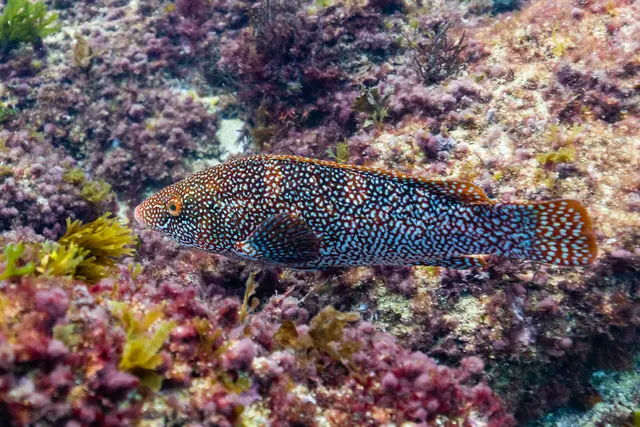 Ballan wrasseCrab is the wrasse bait the sources name most, and where crab is not to hand they name what is: the Clare directory records specimen wrasse and triggerfish taken on local LIMPETS prised off the rock at the mark.
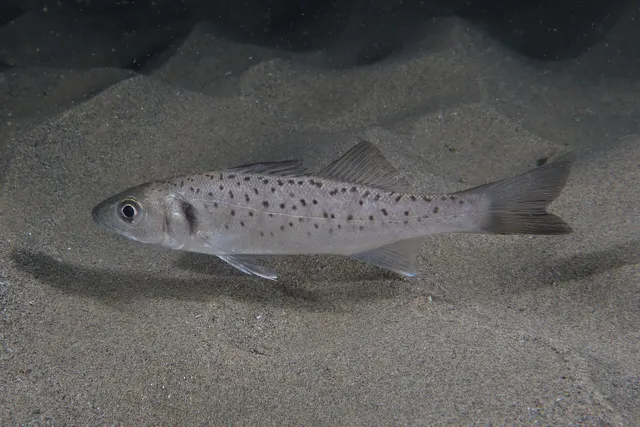 European sea bassPeeler crab during the moulting season is the outstanding bass bait, and the reason a great many anglers spend more time collecting than fishing.
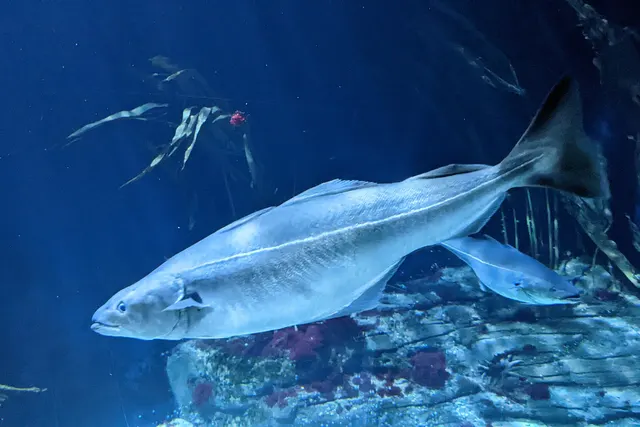 SaitheA Wicklow directory rates mussel far above the alternatives for the coalfish of one named beach, and draws the inference itself: mussel working that well suggests offshore mussel beds, which suggests plaice.
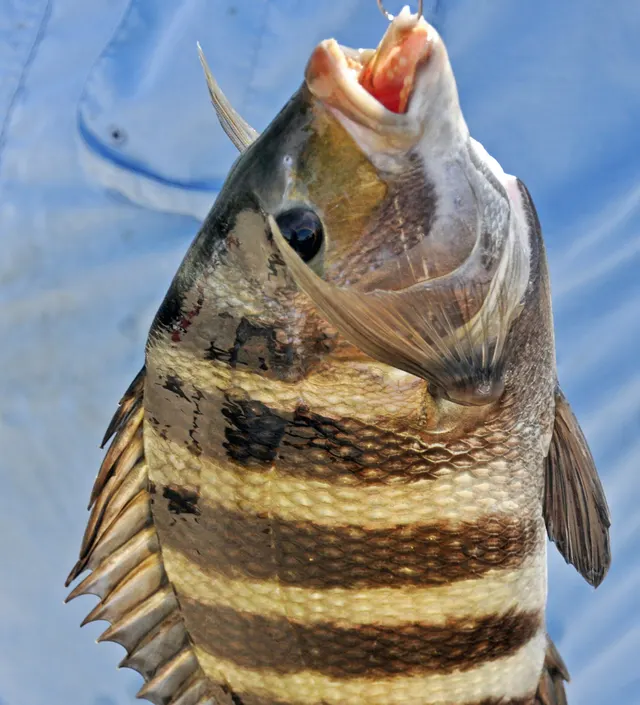 SheepsheadFiddler crab and shellfish presented tight to encrusted pilings.
- Spotted rayCrab and shellfish baits are conventionally rated above fish baits for spotted ray, which is the reverse of the blonde ray convention.
- Starry smooth-houndPeeler and hermit crab fished on the bottom over sand.
- TautogGreen and white-legger crab fished tight to wreck and rock.
How it is fished
- Digging and raking for shellfishThe bait half of the same tide: what is dug for the table is also what goes on the hook.
- Sea fishingPeeler crab is the best bait there is for several species and the most demanding to obtain, keep and present — three separate problems, none optional.
- Whelk pottingCrab, which is what whelks are drawn to and what the fishery has always used.
Why the 10 connections on this page are here, and the sources
Fish it catches
What experienced anglers do — 7 connections
Widely and independently recommended by experienced anglers and specialist sources. This is real angling knowledge, not proof: controlled evidence for it is limited, and FishingHQ records it as convention rather than as a demonstrated effect.
Ballan wrasse
Named for wrasse by a statutory guide and a practitioner directory independently, the second recording an improvised shellfish bait taken at the mark.
- Inland Fisheries Ireland: South West Sea Angling Guide — the west and south Cork angling marks — Inland Fisheries Ireland, 2020 (Government fisheries body)Relied on for: The statutory body naming crab, shrimp or worm baits for wrasse at the Sheep's Head and Mizen marks.Passage read and verified
- Sea Angling in Ireland: the shore marks of Clare and the Shannon estuary — Sea Angling Ireland (Credible secondary source)Relied on for: A county directory recording specimen wrasse and triggerfish on many baits including local limpets at a named gully.Passage read and verified
European sea bass
A practitioner claim about a species-bait pairing.
- Sea Angler — Bauer Media (Specialist angling publication)Relied on for: Practitioner treatment of peeler crab as a bass bait through the moulting season.Citation checked — the work exists and is described correctly
- Cefas science, advice and data on marine and freshwater environments — Centre for Environment, Fisheries and Aquaculture Science (Government fisheries body)Relied on for: The inshore and estuarine habitat use of European sea bass that puts it on the ground where peeler crab is found.Citation checked — the work exists and is described correctly
Saithe
Two independent county pages naming mussel on two different coasts, one of them explaining what the bait's effectiveness implies about the ground.
- Sea Angling in Ireland: the shore marks of Wicklow, Dublin, Louth and Meath — Sea Angling Ireland (Credible secondary source)Relied on for: A county directory rating mussel far above the alternatives for coalfish at a named beach, and reasoning from it to the ground offshore.Passage read and verified
- Sea Angling in Ireland: the shore marks of Cork — Sea Angling Ireland (Credible secondary source)Relied on for: A county directory naming mussel as the local bait at a named deepwater quay where coalfish are taken year round.Passage read and verified
Sheepshead
A practitioner claim about tackle commonly used for Archosargus probatocephalus.
- General angling website restatements of established technique — Various (Credible secondary source)Relied on for: Widely restated practitioner accounts of this presentation for sheepshead.Citation checked — the work exists and is described correctly
- Angling Times — Bauer Media (Specialist angling publication)Relied on for: Practitioner treatment of comparable presentations for the species group.Citation checked — the work exists and is described correctly
Spotted ray
A bait joined to the fish it is conventionally used for. Convention, recorded as convention.
- Sea Angler — Bauer Media (Specialist angling publication)Relied on for: Contemporary UK sea angling practice as reported by practitioners, including ground, seasonal timing, bait and method convention.States this directlyCitation checked — the work exists and is described correctly
- General angling website restatements of established technique — Various (Credible secondary source)Relied on for: Widely restated descriptions of species behaviour and regional angling practice, recorded as consensus rather than as scholarship.Background and mechanism onlyCitation checked — the work exists and is described correctly
Starry smooth-hound
A practitioner claim about tackle commonly used for Mustelus asterias.
- General angling website restatements of established technique — Various (Credible secondary source)Relied on for: Widely restated practitioner accounts of this presentation for starry smooth hound.Citation checked — the work exists and is described correctly
- Angling Times — Bauer Media (Specialist angling publication)Relied on for: Practitioner treatment of comparable presentations for the species group.Citation checked — the work exists and is described correctly
Tautog
A practitioner claim about tackle commonly used for Tautoga onitis.
- General angling website restatements of established technique — Various (Credible secondary source)Relied on for: Widely restated practitioner accounts of this presentation for tautog.Citation checked — the work exists and is described correctly
- Angling Times — Bauer Media (Specialist angling publication)Relied on for: Practitioner treatment of comparable presentations for the species group.Citation checked — the work exists and is described correctly
How it is fished
What experienced anglers do — 3 connections
Widely and independently recommended by experienced anglers and specialist sources. This is real angling knowledge, not proof: controlled evidence for it is limited, and FishingHQ records it as convention rather than as a demonstrated effect.
Digging and raking for shellfish
This is the one method on FishingHQ whose output is simultaneously food and terminal tackle. Razor and mussel are dug on the same tide, from the same ground, with the same fork, and then bound to a hook with elastic — which is why the bait record's presentation instructions read as though the reader already has the animal.
- Sea Angler — Bauer Media (Specialist angling publication)Relied on for: Practitioner treatment of shore-dug shellfish and worm as sea bait.States this directlyCitation checked — the work exists and is described correctly
- General angling website restatements of established technique — Various (Credible secondary source)Relied on for: The widely restated practice of digging one's own bait on the tide before fishing it.Background and mechanism onlyCitation checked — the work exists and is described correctly
Sea fishing
The definitional relationship, framed by the difficulty that defines the bait.
- Sea Angler — Bauer Media (Specialist angling publication)Relied on for: Practitioner treatment of peeler crab collection, storage and presentation with bait elastic.Citation checked — the work exists and is described correctly
- General angling website restatements of established technique — Various (Credible secondary source)Relied on for: Widely restated practitioner guidance on keeping peeler crab alive in damp cool conditions rather than in water.Citation checked — the work exists and is described correctly
Whelk potting
Whelks are scavengers found by scent. Crushed crab is the traditional and current pot bait for them, and the pairing is specific to whelks rather than shared with crustacean potting.
- Sea Angler — Bauer Media (Specialist angling publication)Relied on for: Specialist treatment of which bait or lure family this technique is fished with.States this directlyCitation checked — the work exists and is described correctly
- FAO fishing gear types and fishing technology information — Food and Agriculture Organization of the United Nations (Scientific institute)Relied on for: The independently restated practitioner pairing of this technique with this family.Background and mechanism onlyCitation checked — the work exists and is described correctly
Reviewed 2026-08-10.