Chum salmon vs Pink salmon
How to tell them apart, and what follows from getting it right.
Why they get confused
Both run in autumn, both are the smaller Pacific salmon, and in the river they are separated at a glance by the pink's hump. The problem is in salt water and in the first hours of fresh, where both are bright silver fish of similar build and the spawning characters everybody knows have not developed yet. The two also hybridise where they overlap, and the hybrids are fertile, so an intermediate fish is a genuine possibility.
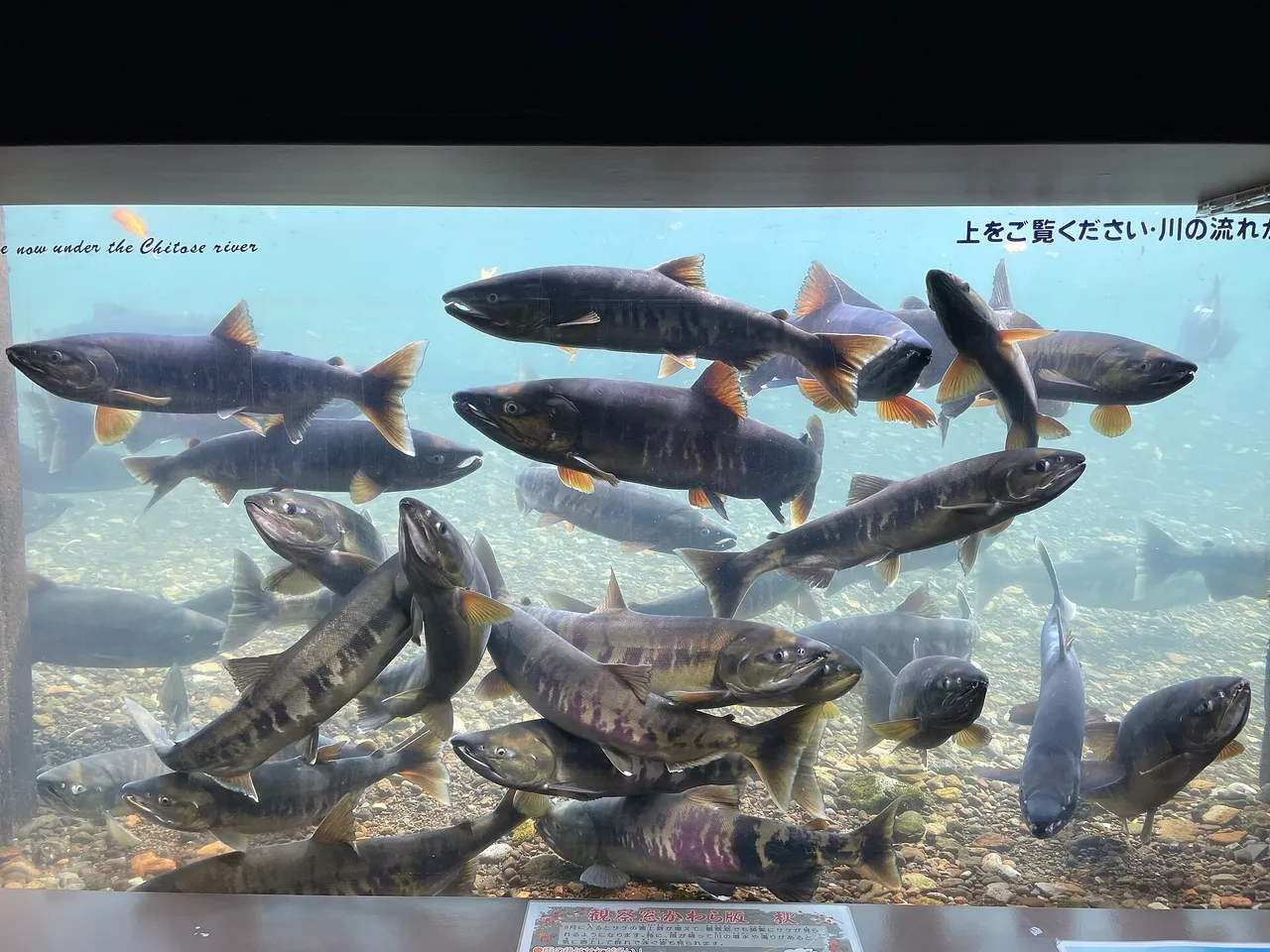
Chum salmon
Oncorhynchus keta — Salmonidae
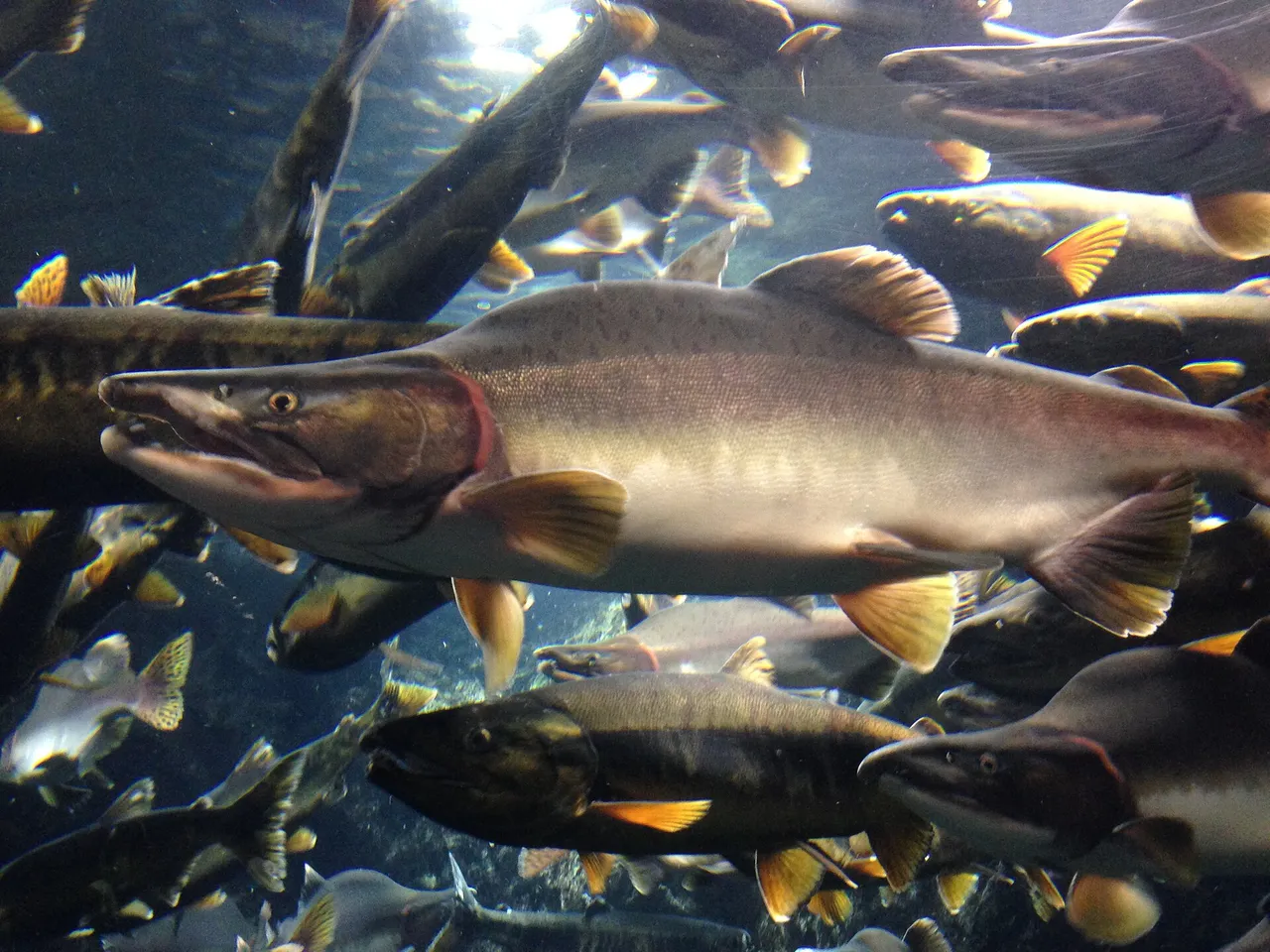
Pink salmon
Oncorhynchus gorbuscha — Salmonidae
The differences
Each difference is marked with how far it can be trusted on its own. A single diagnostic character settles the identification; suggestive ones only narrow it.
| Character | Chum salmon | Pink salmon | Reliability |
|---|---|---|---|
| Spots on the tailIdentification | None. Spread the caudal fin and there is nothing on either lobe — the character that separates chum from every other Pacific salmon. | Large oval black spots on both lobes, bigger than any other Pacific salmon's. Spread the fin rather than judging it folded. | Diagnostic on its own |
| Tips of the anal and pelvic finsIdentification | White or cream tips against darker membrane, present in sea-bright as well as spawning fish, with dark edges to the tail. | No pale fin tips of that kind. | Supporting — use with others |
| What the spawning male growsIdentification | Greatly enlarged canine-like teeth and a heavily hooked jaw, but no pronounced hump. | A steep hump behind the head and a long hooked jaw, to a degree no other Pacific salmon approaches. | Supporting — use with others |
| Colour change in the riverIdentification | Bold vertical calico bars of purple and olive along the flank. | Dark back and blotchy flanks without the bar pattern; the hump is the change that dominates. | Suggestive only — varies |
| Scale sizeIdentification | Scales of ordinary salmon size. | Very small scales, noticeably finer to the thumb than any other Pacific salmon's. | Supporting — use with others |
| When the run arrivesSeason | Returns in autumn and early winter, later than most Pacific salmon in many systems, which extends the season where it runs. | Runs in late summer and autumn in enormous compressed numbers, with the timing varying little between years in a given system. | Suggestive only — varies |
Why it matters
Pacific salmon fisheries are managed species by species, with separate openings, separate bag limits and in many places separate retention rules for hatchery and wild fish, so the identification is what the licence condition actually means. Pink salmon also runs in strict alternate-year cycles in much of its range, which means that in the off year a river holds effectively none and a lone silver fish is likelier to be something else. And pink salmon has established outside its native range in northern Europe, where it is treated as invasive and reporting may be required — verify with the responsible authority rather than assuming the rules of one coast apply to another.
The full records
This page compares two species. Each of them has a complete record covering biology, behaviour, handling and the evidence behind all of it.
More about chum salmon
Where it lives, how it is caught, and what else it is confused with.
Similar and related fish


How it is caught
Where it lives
- Lowland riversReturns to the lower reaches of rivers in autumn and early winter.
- Open oceanReturns to the lower reaches of rivers in autumn and early winter.
- Spate riversSpawns in the lower reaches of rain-fed rivers, frequently in areas of upwelling groundwater within the gravel, and depends on autumn flows to enter them.
Why the 7 connections on this page are here, and the sources
Similar and related fish
Backed by research — 2 connections
Supported by peer-reviewed research or fisheries science. The sources are listed and can be checked.
Pink salmon
An identification comparison naming both binomials: Oncorhynchus gorbuscha and Oncorhynchus keta.
- FishBase: a global information system on fishes — Froese, R. and D. Pauly, eds. — FishBase Consortium (Scientific institute)Relied on for: Morphological and distributional data for Oncorhynchus gorbuscha and for Oncorhynchus keta.States this directlyPassage read and verified
- The IUCN Red List of Threatened Species — International Union for Conservation of Nature (Conservation authority)Relied on for: Separate assessments treating Oncorhynchus gorbuscha and Oncorhynchus keta as distinct species.States this directlyCitation checked — the work exists and is described correctly
Sockeye salmon
An identification comparison naming both binomials: Oncorhynchus keta and Oncorhynchus nerka.
- FishBase: a global information system on fishes — Froese, R. and D. Pauly, eds. — FishBase Consortium (Scientific institute)Relied on for: Morphological and distributional data for Oncorhynchus keta and for Oncorhynchus nerka.States this directlyPassage read and verified
- The IUCN Red List of Threatened Species — International Union for Conservation of Nature (Conservation authority)Relied on for: Separate assessments treating Oncorhynchus keta and Oncorhynchus nerka as distinct species.States this directlyCitation checked — the work exists and is described correctly
How it is caught
What experienced anglers do — 2 connections
Widely and independently recommended by experienced anglers and specialist sources. This is real angling knowledge, not proof: controlled evidence for it is limited, and FishingHQ records it as convention rather than as a demonstrated effect.
Spinning
A practitioner claim about how Oncorhynchus keta is commonly fished, following from where and how it feeds.
- General angling website restatements of established technique — Various (Credible secondary source)Relied on for: Widely restated practitioner accounts of fishing for chum salmon.Citation checked — the work exists and is described correctly
- Sea Angler — Bauer Media (Specialist angling publication)Relied on for: Practitioner treatment of the methods used for chum salmon and comparable species.Citation checked — the work exists and is described correctly
Stillwater fly fishing
A practitioner claim about how Oncorhynchus keta is commonly fished, following from where and how it feeds.
- General angling website restatements of established technique — Various (Credible secondary source)Relied on for: Widely restated practitioner accounts of fishing for chum salmon.Citation checked — the work exists and is described correctly
- Sea Angler — Bauer Media (Specialist angling publication)Relied on for: Practitioner treatment of the methods used for chum salmon and comparable species.Citation checked — the work exists and is described correctly
Where it lives
Backed by research — 3 connections
Supported by peer-reviewed research or fisheries science. The sources are listed and can be checked.
Lowland rivers
A habitat association for Oncorhynchus keta taken from the environment and distribution data on its FishBase summary.
- FishBase: a global information system on fishes — Froese, R. and D. Pauly, eds. — FishBase Consortium (Scientific institute)Relied on for: The environment, depth range and habitat description recorded for Oncorhynchus keta.States this directlyPassage read and verified
Open ocean
A habitat association for Oncorhynchus keta taken from the environment and distribution data on its FishBase summary.
- FishBase: a global information system on fishes — Froese, R. and D. Pauly, eds. — FishBase Consortium (Scientific institute)Relied on for: The environment, depth range and habitat description recorded for Oncorhynchus keta.States this directlyPassage read and verified
Spate rivers
A claim that the species uses rain-fed rivers on impermeable geology, resting on documented distribution and spawning habitat rather than on angling report.
- FishBase: a global information system on fishes — Froese, R. and D. Pauly, eds. — FishBase Consortium (Scientific institute)Relied on for: Recorded depth range, temperature tolerance and habitat association for the species outside north-west Europe.States this directlyPassage read and verified
- The IUCN Red List of Threatened Species — International Union for Conservation of Nature (Conservation authority)Relied on for: Global conservation assessment, range and recorded threats for the species.States this directlyCitation checked — the work exists and is described correctly
Reviewed 2026-08-15. FishingHQ does not state what any rule is or where any rule applies. Where this page says the two species are managed differently, that is a reason to check the authority for the water you are on — not a statement of what it requires.