How to keep prawns and shrimp alive
Keeping prawns and shrimp in usable condition, and what follows for the water it came from.
Why keeping it alive matters
Live prawns and shrimps flick and dart, and that movement is what triggers a take from bass, pollack, wrasse and a long list of warm-water species. Dead ones still work on scent, but they are a different bait used in a different way. Prawns are also fragile and short-lived out of good conditions, so keeping them alive is a genuine skill rather than a formality.
The container
A smooth-sided container with plenty of water and something for them to hold onto — a little weed or a piece of mesh reduces the constant swimming that exhausts them. Crowding is the usual killer; prawns are cannibalistic when stressed and crowded, and a dense bucket produces losses quickly.
Temperature
Cool seawater at close to the temperature they were collected from. Prawns tolerate cool water well and warm water badly, and warming reduces dissolved oxygen at the same time as it raises their demand for it — the same trap that kills sand eels.
Oxygen
Aeration is needed for anything beyond a short period. A battery aerator transforms how long a container of prawns stays healthy, and standing water in a sealed bucket does not last a session.
What to keep it in
Clean seawater, kept cool and refreshed. Fresh water is fatal. Removing dead individuals promptly matters more here than with most baits, because a decomposing prawn fouls a small volume of water quickly.
How long it keeps
A session rather than a stock, unless a proper aerated system is available. Prawns can be kept longer in circulating cool seawater, but a bucket on a boat is a few hours of usable bait.
Signs it is going wrong
Catching these early is the difference between losing a few and losing the lot.
- Prawns going opaque or milky rather than translucent.
- Individuals lying still on the bottom rather than flicking when disturbed.
- Cannibalism, or damaged and partly eaten individuals.
- Cloudy, foaming or warm water.
- A strong smell from the container.
Transporting it
Cool, aerated and uncrowded, out of the sun. As with sand eels the journey does most of the damage, and an insulated container with an aerator makes far more difference than any other measure.
What not to do
Each of these is a common and avoidable way of killing this bait.
- Do not use fresh water at any point.
- Do not crowd them into a small volume — cannibalism and oxygen depletion both follow.
- Do not leave dead individuals in the container.
- Do not let the water warm in sun or in a boat cabin.
- Do not release unused prawns, or empty their water, into a different water body.
Biosecurity
Prawns and shrimps are collected from the wild and can carry parasites and disease. Moving them between coasts or between fresh and salt water risks moving those organisms with them, and the use of live crustaceans as bait is restricted in some jurisdictions. Do not release them anywhere other than where they were collected, and never empty bait water into any water body.
Welfare
Crustaceans are increasingly regarded as capable of experiencing pain, and the proportionate measures are practical ones: collect only what is needed, avoid crowding that causes cannibalism, keep the water cool and aerated, and dispatch rather than hold animals in deteriorating conditions. Prolonged holding in a warm bucket is both poor welfare and poor bait management.
Unused bait
Return unused live prawns to the water they came from where practical and permitted. Otherwise put them in household waste, and never empty the container into a water body.
Rules vary, and they vary a lot
Collecting, transporting, keeping and using live bait are regulated differently almost everywhere, and some of these baits may not be used at all in some waters. Restrictions commonly cover where and how much may be collected, whether live bait may be moved between waters, whether a species may be used as bait at all, and whether a licence or permit is required. FishingHQ does not state what any rule is or where it applies — check with the authority responsible for the water and the shore you intend to use before collecting or using live bait.
Check the rules before you fish
Fishing laws, bylaws, access rules, seasons, bait restrictions and permitted methods vary by location and can change. Check the current rules from the relevant authority and the water you intend to fish before fishing.
Check with:
- Current national or regional law for where you are fishing
- Current local bylaws
- The relevant fisheries authority
- The landowner, club or fishery whose water it is
- Any restrictions specific to the species or the method you intend to use
The full bait record
This page covers keeping prawns and shrimp alive. The Prawns and shrimp record covers the whole lifecycle — identifying it, obtaining it responsibly, preparing it, presenting it and disposing of it.
What this bait is for
The fish it catches, how it is fished and what you present it on.
Fish it catches
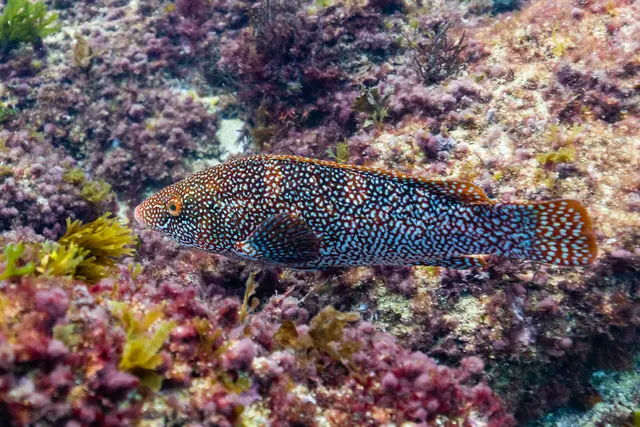 Ballan wrasseThe statutory guide gives crab, SHRIMP or worm for the wrasse of the Sheep's Head marks, and it is the only reading in this set where a shrimp bait is named for a rock species.
- Blue threadfinPrawn baits worked slowly near the bottom in turbid water.
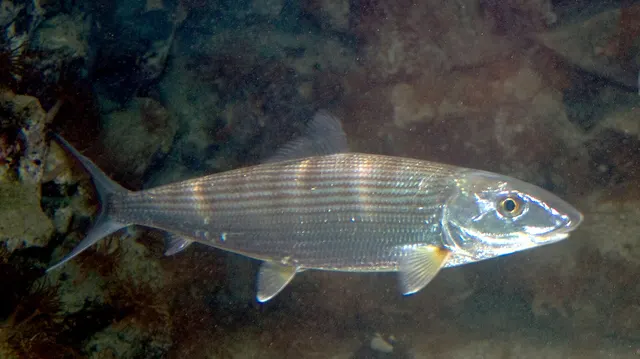 BonefishShrimp are the staple of a bonefish's diet, which is why almost every fly pattern for the species is a shrimp imitation and why a live one is close to irresistible.
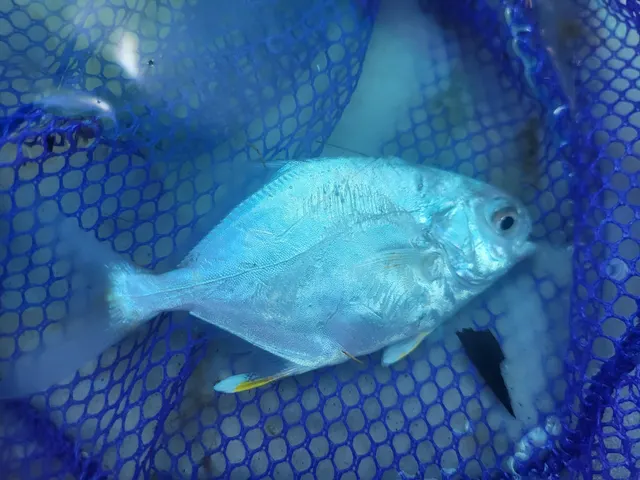 Florida pompanoShrimp and sand fleas fished in the swash zone.
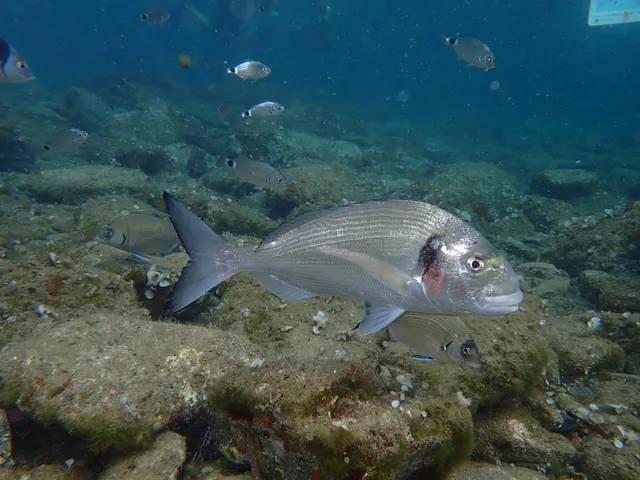 Gilthead breamCrushing jaws built for crustaceans, and a prawn is exactly that — fished whole with the shell on so it survives the cast and the fish.
- Spotted grunterLive and dead mud prawn over estuary sandbanks.
Why the 6 connections on this page are here, and the sources
Fish it catches
What experienced anglers do — 6 connections
Widely and independently recommended by experienced anglers and specialist sources. This is real angling knowledge, not proof: controlled evidence for it is limited, and FishingHQ records it as convention rather than as a demonstrated effect.
Ballan wrasse
Named by a statutory guide and a practitioner directory on two different Irish coasts, in both cases as one of a short list rather than as the bait.
- Inland Fisheries Ireland: South West Sea Angling Guide — the west and south Cork angling marks — Inland Fisheries Ireland, 2020 (Government fisheries body)Relied on for: The statutory body naming crab, shrimp or worm baits for float-fished wrasse at a named headland path.Passage read and verified
- Sea Angling in Ireland: the shore marks of Galway — Sea Angling Ireland (Credible secondary source)Relied on for: A county directory naming prawn and shellfish among the baits taking the ray and wrasse of the shallow Connemara bays.Passage read and verified
Blue threadfin
A practitioner claim about tackle commonly used for Eleutheronema tetradactylum.
- General angling website restatements of established technique — Various (Credible secondary source)Relied on for: Widely restated practitioner accounts of this presentation for blue threadfin.Citation checked — the work exists and is described correctly
- Angling Times — Bauer Media (Specialist angling publication)Relied on for: Practitioner treatment of comparable presentations for the species group.Citation checked — the work exists and is described correctly
Bonefish
A practitioner claim about a bait-species pairing, with the diet supported separately on the species page.
- IGFA International Angling Rules and World Record Requirements — International Game Fish Association (Angling or fisheries organisation)Relied on for: That live bait and fly tackle are recognised methods in saltwater flats angling.Passage read and verified
- General angling website restatements of established technique — Various (Credible secondary source)Relied on for: Widely restated practitioner accounts of shrimp and shrimp imitations for bonefish.Citation checked — the work exists and is described correctly
Florida pompano
A practitioner claim about tackle commonly used for Trachinotus carolinus.
- General angling website restatements of established technique — Various (Credible secondary source)Relied on for: Widely restated practitioner accounts of this presentation for florida pompano.Citation checked — the work exists and is described correctly
- Angling Times — Bauer Media (Specialist angling publication)Relied on for: Practitioner treatment of comparable presentations for the species group.Citation checked — the work exists and is described correctly
Gilthead bream
A practitioner claim following from the species' verified crushing dentition.
- Sea Angler — Bauer Media (Specialist angling publication)Relied on for: Practitioner treatment of prawn and shellfish baits for sea bream.Citation checked — the work exists and is described correctly
- General angling website restatements of established technique — Various (Credible secondary source)Relied on for: Widely restated practitioner guidance on shell-on prawn presentation.Citation checked — the work exists and is described correctly
Spotted grunter
A practitioner claim about tackle commonly used for Pomadasys commersonnii.
- General angling website restatements of established technique — Various (Credible secondary source)Relied on for: Widely restated practitioner accounts of this presentation for spotted grunter.Citation checked — the work exists and is described correctly
- Angling Times — Bauer Media (Specialist angling publication)Relied on for: Practitioner treatment of comparable presentations for the species group.Citation checked — the work exists and is described correctly
Reviewed 2026-08-10.