How to identify muskellunge
Esox masquinongy · Esocidae
The characters that identify muskellunge, ranked by how far each one can be trusted on its own.
Safety: species that bite — can cause serious injury or death. One more point applies here.
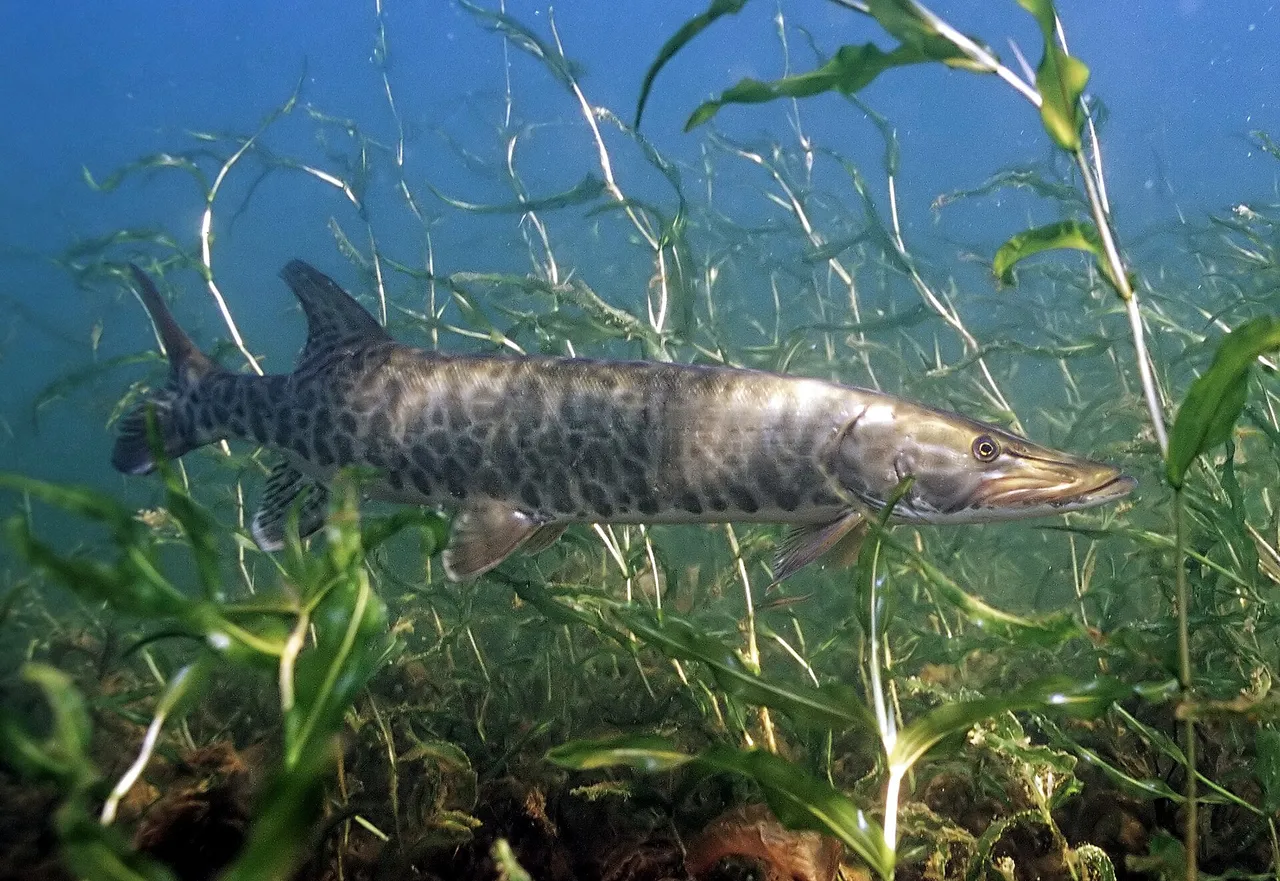
How this was identified, and who took it
Identified by: Full lateral view in weed. The pattern is the point: dark vertical bars and spots on a PALE ground, the inverse of a pike's pale spots on a dark ground, which is the character that separates the two congeners in one look.Engbretson, Eric / U.S. Fish and Wildlife Service — Public domain, via Wikimedia Commons — source, licenceLook at this first
Check the cheek and count the pores. A muskellunge has a bare lower cheek and six to nine sensory pits under each side of the jaw; a northern pike has a fully scaled cheek and five or fewer. Colour and pattern will not settle it and are the reason people get it wrong.
Diagnostic — settles it on its own
Each of these settles the identification on its own. If one is clear, you have your answer.
The lower half of the cheek is unscaled
Scales cover only the top of the cheek, leaving the lower half bare. A pike's cheek is scaled throughout. This is the quickest structural separation and it works on a photograph if the head is sharp.
Six to nine jaw pores on each side
Count the pits along the underside of the lower jaw. Pike carry five or fewer. The count is unaffected by age, colour or condition, which makes it the character to fall back on when everything else is ambiguous.
Supporting — use with other characters
Real characters that are not conclusive by themselves. Use two or three together.
Dark markings on a pale ground
Bars, spots or nothing at all, but dark on light — the opposite arrangement from a pike's pale marks on a dark flank. Reliable as a direction of contrast and not as a specific pattern, because some fish are effectively plain.
More sharply pointed tail lobes
The tips of the caudal fin are more acute than a pike's rounded ones. A real difference and a subtle one, best used as a confirmation.
Suggestive only — varies with condition
Hints only. These vary with condition, season, water and how long the fish has been out of it, and a fish that contradicts them is still the same species.
Very large size
Adult muskellunge outgrow pike in most shared waters. Size is a hint about probability rather than a character: a small muskellunge and a large pike overlap completely.
What it gets confused with
- Northern pike, which is the whole problem. Cheek scaling and pore count.
- Tiger musky, the hybrid, which is intermediate and often shows bold vermiculation.
Side by side: Muskellunge vs Northern pike.
Where this stops working
Pattern varies so much between the barred, spotted and clear forms that two muskellunge from different waters can look unrelated, which is why the pattern sits below the countable characters here. Hybrids are fertile enough to occur naturally and are genuinely intermediate. Muskellunge fisheries commonly operate strict size limits and near-universal release, and misidentifying one as a pike has consequences that vary by jurisdiction — check locally.
The full record
This page covers identification only. The Muskellunge record covers behaviour, lifecycle, distribution, handling and the sources behind all of it.
Reviewed 2026-08-13.
More about this fish
Telling it apart is one question. Here are the others.
Similar and related fish
- CiscoCisco are a substantial prey item for large muskellunge in northern lakes, and their open-water habit is one of the reasons big muskies are found well away from cover.
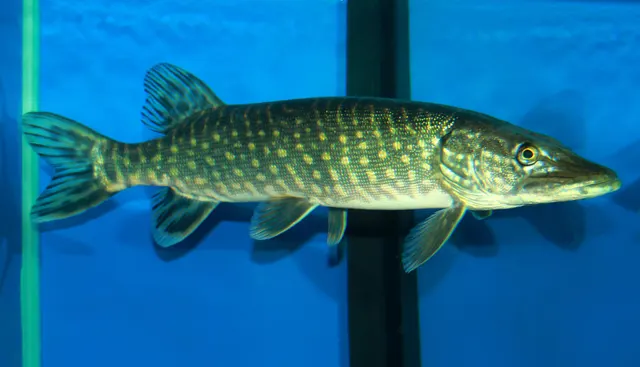 Northern pikeCongeners in Esox that share water across much of the range and are separated by the markings: pike pale on dark, muskellunge dark on pale. They hybridise naturally.
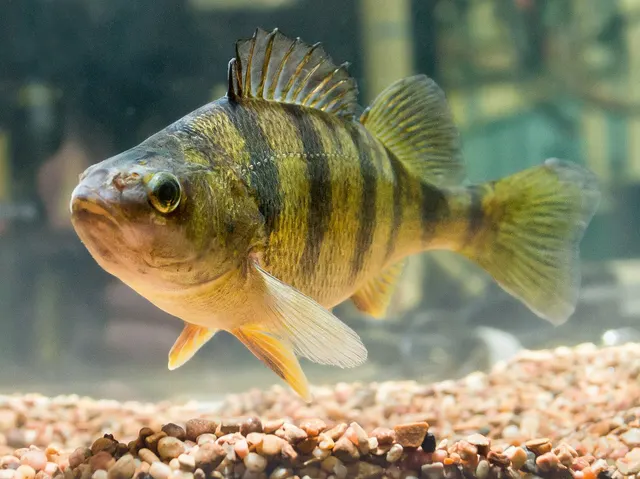 Yellow perchEsocids take percids readily and muskellunge attack prey up to a third of their own length, which is why the lures used for them look absurd to anglers from other traditions.
How it is caught
- SpinningA low-density apex predator in large water is found by covering it, and casting large lures across structure at speed is the whole search strategy of the fishery.
- TrollingTrolling covers open-water and deep-structure fish that a casting angler never reaches, and it is how the largest fish are disproportionately taken.
Where you will find it
Why the 7 connections on this page are here, and the sources
Similar and related fish
Backed by research — 3 connections
Supported by peer-reviewed research or fisheries science. The sources are listed and can be checked.
Cisco
Recorded diet evidence identifies Coregonus artedi as a food item of this predator at species level. The edge is written at that granularity and no further.
- FishBase: a global information system on fishes — Froese, R. and D. Pauly, eds. — FishBase Consortium (Scientific institute)Relied on for: Food items recorded for this predator, including Coregonus artedi.States this directlyPassage read and verified
- FAO Species Identification Guides for Fishery Purposes and the FAO Species Catalogues — Food and Agriculture Organization of the United Nations (Scientific institute)Relied on for: Species account describing the diet of this predator in the region where Coregonus artedi occurs.Background and mechanism onlyCitation checked — the work exists and is described correctly
Northern pike
A taxonomic and identification comparison naming both binomials.
- FishBase: a global information system on fishes — Froese, R. and D. Pauly, eds. — FishBase Consortium (Scientific institute)Relied on for: That Esox masquinongy is an Esocidae of the genus Esox, sharing range with Esox lucius across the Great Lakes and St Lawrence.States this directlyPassage read and verified
- Pike: Biology and Exploitation — Chapman & Hall (Fish and Fisheries Series 19), 1996 (Scientific literature)Relied on for: Esocid morphology and the characters separating congeneric pikes.States this directlyCitation checked — the work exists and is described correctly
Yellow perch
A diet claim naming the prey binomial, resting on documented esocid feeding ecology and the prey species' co-occurrence.
- FishBase: a global information system on fishes — Froese, R. and D. Pauly, eds. — FishBase Consortium (Scientific institute)Relied on for: That Perca flavescens is a Percidae widely distributed across the Great Lakes and St Lawrence basins where Esox masquinongy occurs.States this directlyPassage read and verified
- Pike: Biology and Exploitation — Chapman & Hall (Fish and Fisheries Series 19), 1996 (Scientific literature)Relied on for: Esocid feeding ecology and prey size selection, including percid prey.States this directlyCitation checked — the work exists and is described correctly
How it is caught
What experienced anglers do — 2 connections
Widely and independently recommended by experienced anglers and specialist sources. This is real angling knowledge, not proof: controlled evidence for it is limited, and FishingHQ records it as convention rather than as a demonstrated effect.
Spinning
Established angling practice for this species, recorded as convention. The note states the property of the animal or its water that makes the method the answer.
- IGFA International Angling Rules and World Record Requirements — International Game Fish Association (Angling or fisheries organisation)Relied on for: Recognition of the species as an established sport fish and the angling methods and tackle classes conventionally used for it.States this directlyPassage read and verified
- General angling website restatements of established technique — Various (Credible secondary source)Relied on for: Widely restated practice connecting this species and method.Background and mechanism onlyCitation checked — the work exists and is described correctly
Trolling
Established angling practice for this species, recorded as convention. The note states the property of the animal or its water that makes the method the answer.
- IGFA International Angling Rules and World Record Requirements — International Game Fish Association (Angling or fisheries organisation)Relied on for: Recognition of the species as an established sport fish and the angling methods and tackle classes conventionally used for it.States this directlyPassage read and verified
- General angling website restatements of established technique — Various (Credible secondary source)Relied on for: Widely restated practice connecting this species and method.Background and mechanism onlyCitation checked — the work exists and is described correctly
Where you will find it
Backed by research — 2 connections
Supported by peer-reviewed research or fisheries science. The sources are listed and can be checked.
Canada
A distribution association between an animal and a kind of water, rather than a claim about any named mark.
- FishBase: a global information system on fishes — Froese, R. and D. Pauly, eds. — FishBase Consortium (Scientific institute)Relied on for: Distribution, habitat association and depth range recorded for the species, including its occurrence in the water body concerned.States this directlyPassage read and verified
- The IUCN Red List of Threatened Species — International Union for Conservation of Nature (Conservation authority)Relied on for: Assessment and range account for the species, including the systems and coasts it occupies.Background and mechanism onlyCitation checked — the work exists and is described correctly
The Great Lakes
Occurrence of the species in this system or along this coast: a statement about the animal's distribution, not a venue recommendation.
- FishBase: a global information system on fishes — Froese, R. and D. Pauly, eds. — FishBase Consortium (Scientific institute)Relied on for: Distribution, salinity tolerance and habitat association recorded for the species, including its occurrence in this system.States this directlyPassage read and verified
- The IUCN Red List of Threatened Species — International Union for Conservation of Nature (Conservation authority)Relied on for: Assessment and range description for the species, including the waters in which it occurs.Background and mechanism onlyCitation checked — the work exists and is described correctly
Safety
Species that bite — Can cause serious injury or death
A large mouth densely set with sharp teeth, on a powerful fish handled at close quarters in a boat, frequently with large lures carrying multiple treble hooks still in it.
What reduces it: Never put a hand near the mouth. Use a cradle or large net, long-nosed pliers and hook cutters, and have them to hand before landing. Two people for a large fish. Keep the fish in the water throughout wherever possible.
Hooks and barbs — Can cause serious injury or death
Very large lures carrying several treble hooks, attached to a thrashing fish in a net, are the classic route to a serious hook injury requiring medical removal.
What reduces it: Cut hooks rather than working them free when a fish is difficult. Carry proper hook cutters. Control the fish before touching the lure, and keep hands out of the net.