How to identify ide
Leuciscus idus · Leuciscidae
The characters that identify ide, ranked by how far each one can be trusted on its own.
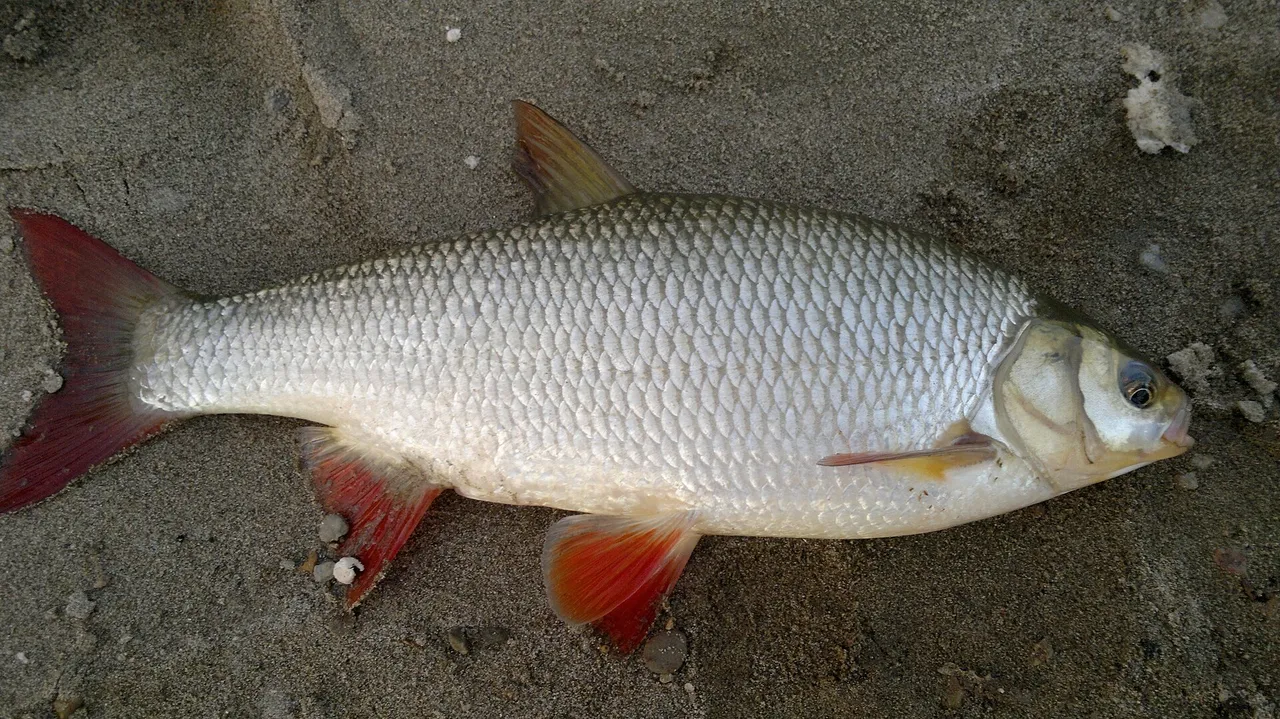
How this was identified, and who took it
Identified by: No single character is diagnostic and the identification rests on a combination, stated rather than disguised. The body is deep and thick-set with a distinctly SMALL blunt head and a small slightly oblique mouth — the head and mouth proportions carry the weight, because chub, the usual confusion, has a markedly larger terminal mouth and a more cylindrical body. The red-orange lower fins are SUPPORTING only: roach also carries red fins and fin colour varies with water and season.Kristian Kostov (kriki) — CC BY-SA 3.0, via Wikimedia Commons — source, licenceLook at this first
There is no single character that settles an ide, and a page that pretended otherwise would be lying. What identifies it is a PROPORTION: a deep, thick, heavy body carrying a conspicuously small head with a short blunt snout and a small mouth. If the head looks too small for the fish, think ide.
No single character settles this one. Everything below is supporting or suggestive, and a confident identification needs several of them together — or, for the hardest cases, a count that cannot be made from a photograph.
Supporting — use with other characters
Real characters that are not conclusive by themselves. Use two or three together.
A small head on a deep body
The head is short and blunt and looks undersized against a deep, thick-set body. Chub — the main confusion — has a large head with a wide terminal mouth on a more cylindrical body, and the difference is obvious once both have been seen. It is a judgement of proportion rather than a measurement, which is why it is ranked as the best available character rather than as diagnostic.
A small, slightly oblique mouth
The mouth is small relative to the head and set at a slight upward angle, and it does not extend back to under the eye. A chub's mouth is markedly larger and wider. Read this together with head size rather than alone.
The shape of the anal fin margin
An ide's anal fin has a straight or slightly concave margin; a chub's is distinctly convex, bulging outward. This is the most structural character on the page and it is genuinely useful on a fish in hand, which is why it is worth checking even though it needs the fin spread.
Suggestive only — varies with condition
Hints only. These vary with condition, season, water and how long the fish has been out of it, and a fish that contradicts them is still the same species.
Red or orange lower fins
Often striking, and not diagnostic. Roach also carries red fins, chub carries reddish ones, and the intensity varies with water chemistry, season, condition and age — pale in some populations, brilliant in others. Ornamental golden orfe are the same species and carry none of the usual colouring at all.
What it gets confused with
- Chub, across the whole shared range and by a wide margin the important one. Head size, mouth size and anal fin margin, read together.
- Roach, which is smaller-bodied with a distinctly red eye and a smaller mouth still.
- Silver bream and common bream in the deeper-bodied fish, separated by the much longer anal fin of the breams.
- Golden orfe, which is an ornamental colour form of this same species rather than a different fish.
Side by side: Ide vs Asp, Ide vs Chub.
Where this stops working
This is one of the pages where the honest answer is that no field character is diagnostic and the identification rests on reading several weak ones together. Small ide and small chub are genuinely difficult and are regularly confused by experienced anglers. The two also hybridise with each other and with other cyprinids, and a hybrid is intermediate in exactly the proportions this page relies on. Where it matters — and in waters where ide are stocked or protected it can — a photograph showing the whole fish in profile with the anal fin spread is worth more than any description.
The full record
This page covers identification only. The Ide record covers behaviour, lifecycle, distribution, handling and the sources behind all of it.
Reviewed 2026-08-13.
More about this fish
Telling it apart is one question. Here are the others.
Similar and related fish
How it is caught
Where it lives
Why the 6 connections on this page are here, and the sources
Similar and related fish
Backed by research — 2 connections
Supported by peer-reviewed research or fisheries science. The sources are listed and can be checked.
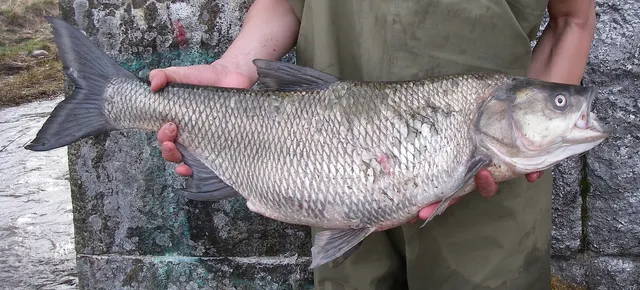
Asp
An identification comparison naming both binomials: Leuciscus aspius and Leuciscus idus.
- FishBase: a global information system on fishes — Froese, R. and D. Pauly, eds. — FishBase Consortium (Scientific institute)Relied on for: Morphological and distributional data for Leuciscus aspius and for Leuciscus idus.States this directlyPassage read and verified
- The IUCN Red List of Threatened Species — International Union for Conservation of Nature (Conservation authority)Relied on for: Separate assessments treating Leuciscus aspius and Leuciscus idus as distinct species.States this directlyCitation checked — the work exists and is described correctly
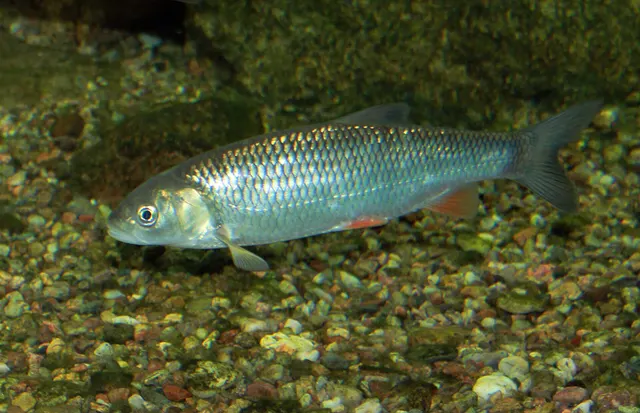
Chub
An identification comparison naming both binomials: Leuciscus idus and Squalius cephalus.
- FishBase: a global information system on fishes — Froese, R. and D. Pauly, eds. — FishBase Consortium (Scientific institute)Relied on for: Morphological and distributional data for Leuciscus idus and for Squalius cephalus.States this directlyPassage read and verified
- The IUCN Red List of Threatened Species — International Union for Conservation of Nature (Conservation authority)Relied on for: Separate assessments treating Leuciscus idus and Squalius cephalus as distinct species.States this directlyCitation checked — the work exists and is described correctly
How it is caught
What experienced anglers do — 3 connections
Widely and independently recommended by experienced anglers and specialist sources. This is real angling knowledge, not proof: controlled evidence for it is limited, and FishingHQ records it as convention rather than as a demonstrated effect.
Dry fly fishing
A practitioner claim about how Leuciscus idus is commonly fished, following from where and how it feeds.
- General angling website restatements of established technique — Various (Credible secondary source)Relied on for: Widely restated practitioner accounts of fishing for ide.Citation checked — the work exists and is described correctly
- Sea Angler — Bauer Media (Specialist angling publication)Relied on for: Practitioner treatment of the methods used for ide and comparable species.Citation checked — the work exists and is described correctly
Float fishing
A practitioner claim about how Leuciscus idus is commonly fished, following from where and how it feeds.
- General angling website restatements of established technique — Various (Credible secondary source)Relied on for: Widely restated practitioner accounts of fishing for ide.Citation checked — the work exists and is described correctly
- Sea Angler — Bauer Media (Specialist angling publication)Relied on for: Practitioner treatment of the methods used for ide and comparable species.Citation checked — the work exists and is described correctly
Spinning
A practitioner claim about how Leuciscus idus is commonly fished, following from where and how it feeds.
- General angling website restatements of established technique — Various (Credible secondary source)Relied on for: Widely restated practitioner accounts of fishing for ide.Citation checked — the work exists and is described correctly
- Sea Angler — Bauer Media (Specialist angling publication)Relied on for: Practitioner treatment of the methods used for ide and comparable species.Citation checked — the work exists and is described correctly
Where it lives
Backed by research — 1 connection
Supported by peer-reviewed research or fisheries science. The sources are listed and can be checked.
Lowland rivers
A habitat association for Leuciscus idus taken from the environment and distribution data on its FishBase summary.
- FishBase: a global information system on fishes — Froese, R. and D. Pauly, eds. — FishBase Consortium (Scientific institute)Relied on for: The environment, depth range and habitat description recorded for Leuciscus idus.States this directlyPassage read and verified