Asp vs Ide
How to tell them apart, and what follows from getting it right.
Why they get confused
Two large silvery cyprinids sharing rivers across central and eastern Europe, similar in size, both taken on lures and both frequently reported as chub by anglers who meet neither often. The confusion runs in both directions and is resolved by the head rather than the body.
Asp
Leuciscus aspius — Leuciscidae
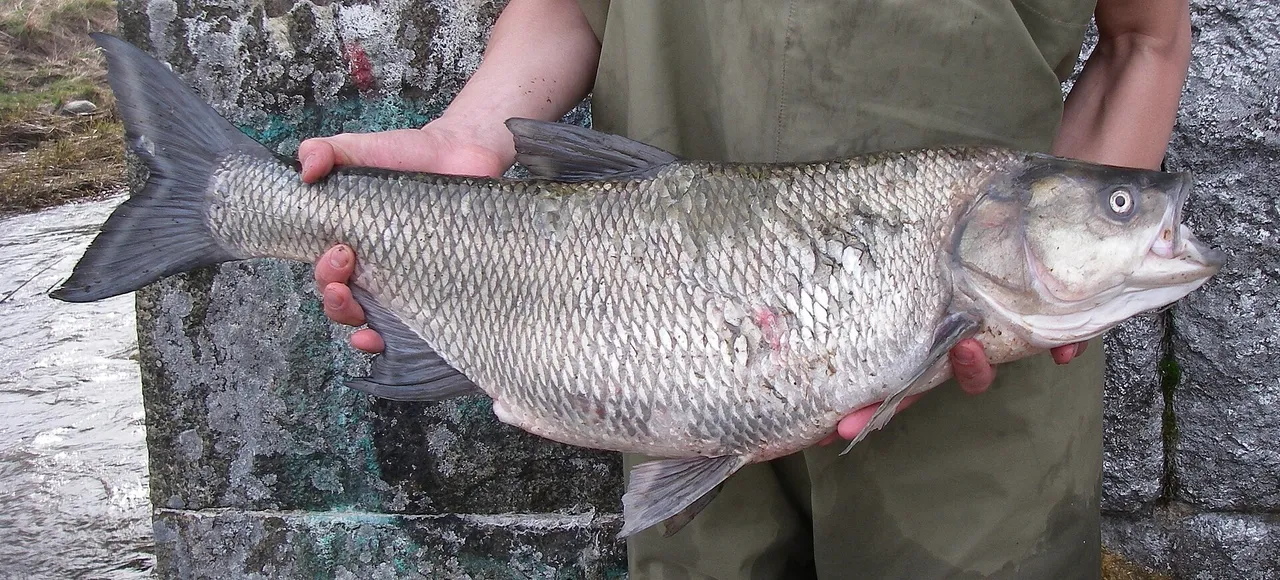

Ide
Leuciscus idus — Leuciscidae
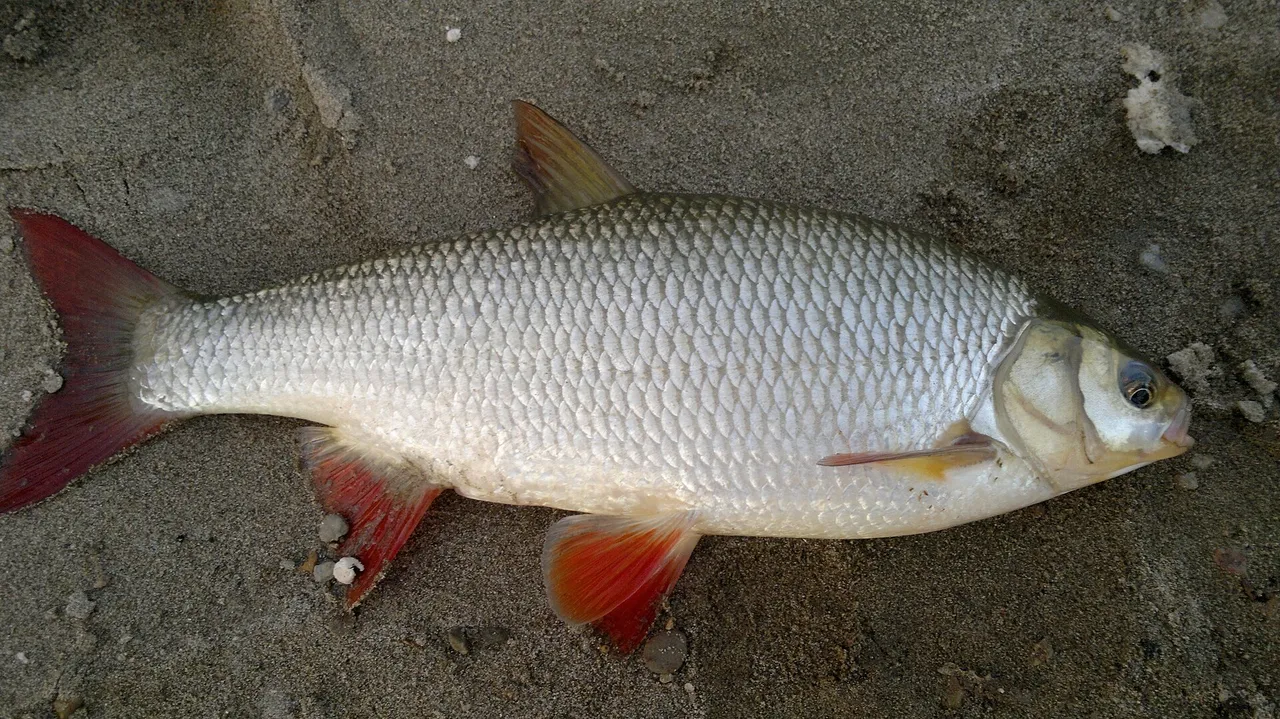

The differences
Each difference is marked with how far it can be trusted on its own. A single diagnostic character settles the identification; suggestive ones only narrow it.
| Character | Asp | Ide | Reliability |
|---|---|---|---|
| How the jaws meetIdentification | Lower jaw projects beyond the upper and rises into a notch in it — a large, obliquely set predator's mouth. | Small mouth with the jaws meeting level or the upper very slightly overhanging. | Diagnostic on its own |
| Head size against body depthIdentification | Pointed head in proportion to a long, laterally compressed body. | Conspicuously small blunt head on a deep, thick-set body — the head looks undersized. | Diagnostic on its own |
| Colour of the lower finsIdentification | Grey to dusky throughout; no red anywhere on the fish. | Pelvic, anal and caudal fins distinctly red-orange, though intensity varies widely. | Supporting — use with others |
| What the fish is doingFeeding | An open-water piscivore that herds small fish against the surface and strikes upward through them. | A generalist omnivore taking invertebrates, plant material and small fish, feeding through the column. | Supporting — use with others |
Why it matters
Both are subject to protection or specific management in parts of Europe, and asp in particular is a species of conservation interest in a number of jurisdictions. The two also want completely different fishing: an asp is hunted visually in open water on lures, an ide is fished for on bait or small lures around structure, and an angler who has misidentified the fish is looking in the wrong place for the next one.
The full records
This page compares two species. Each of them has a complete record covering biology, behaviour, handling and the evidence behind all of it.
More about asp
Where it lives, how it is caught, and what else it is confused with.
Similar and related fish
How it is caught
Gear for this fish
Where it lives
Why the 6 connections on this page are here, and the sources
Similar and related fish
Backed by research — 1 connection
Supported by peer-reviewed research or fisheries science. The sources are listed and can be checked.
Ide
An identification comparison naming both binomials: Leuciscus aspius and Leuciscus idus.
- FishBase: a global information system on fishes — Froese, R. and D. Pauly, eds. — FishBase Consortium (Scientific institute)Relied on for: Morphological and distributional data for Leuciscus aspius and for Leuciscus idus.States this directlyPassage read and verified
- The IUCN Red List of Threatened Species — International Union for Conservation of Nature (Conservation authority)Relied on for: Separate assessments treating Leuciscus aspius and Leuciscus idus as distinct species.States this directlyCitation checked — the work exists and is described correctly
How it is caught
What experienced anglers do — 2 connections
Widely and independently recommended by experienced anglers and specialist sources. This is real angling knowledge, not proof: controlled evidence for it is limited, and FishingHQ records it as convention rather than as a demonstrated effect.
Popping and stickbaiting
A practitioner claim about how Leuciscus aspius is commonly fished, following from where and how it feeds.
- General angling website restatements of established technique — Various (Credible secondary source)Relied on for: Widely restated practitioner accounts of fishing for asp.Citation checked — the work exists and is described correctly
- Sea Angler — Bauer Media (Specialist angling publication)Relied on for: Practitioner treatment of the methods used for asp and comparable species.Citation checked — the work exists and is described correctly
Spinning
A practitioner claim about how Leuciscus aspius is commonly fished, following from where and how it feeds.
- General angling website restatements of established technique — Various (Credible secondary source)Relied on for: Widely restated practitioner accounts of fishing for asp.Citation checked — the work exists and is described correctly
- Sea Angler — Bauer Media (Specialist angling publication)Relied on for: Practitioner treatment of the methods used for asp and comparable species.Citation checked — the work exists and is described correctly
Gear for this fish
What experienced anglers do — 2 connections
Widely and independently recommended by experienced anglers and specialist sources. This is real angling knowledge, not proof: controlled evidence for it is limited, and FishingHQ records it as convention rather than as a demonstrated effect.
Spinners
A practitioner claim about tackle commonly used for Leuciscus aspius.
- General angling website restatements of established technique — Various (Credible secondary source)Relied on for: Widely restated practitioner accounts of this presentation for asp.Citation checked — the work exists and is described correctly
- Angling Times — Bauer Media (Specialist angling publication)Relied on for: Practitioner treatment of comparable presentations for the species group.Citation checked — the work exists and is described correctly
Surface lures
A practitioner claim about which lure family answers this species' feeding or holding behaviour.
- Freshwater Fishing — Macdonald & Jane's, 1975 (Specialist angling publication)Relied on for: Lure and spinning practice for freshwater predators in Britain and northern Europe.States this directlyCitation checked — the work exists and is described correctly
- Angling Times — Bauer Media (Specialist angling publication)Relied on for: Contemporary British and European lure practice for this species in the weekly angling press.Background and mechanism onlyCitation checked — the work exists and is described correctly
Where it lives
Backed by research — 1 connection
Supported by peer-reviewed research or fisheries science. The sources are listed and can be checked.
Lowland rivers
A habitat association for Leuciscus aspius taken from the environment and distribution data on its FishBase summary.
- FishBase: a global information system on fishes — Froese, R. and D. Pauly, eds. — FishBase Consortium (Scientific institute)Relied on for: The environment, depth range and habitat description recorded for Leuciscus aspius.States this directlyPassage read and verified
Reviewed 2026-08-13. FishingHQ does not state what any rule is or where any rule applies. Where this page says the two species are managed differently, that is a reason to check the authority for the water you are on — not a statement of what it requires.