What does cutthroat trout eat?
What is established about how cutthroat trout feeds, kept separate from what anglers infer from it.
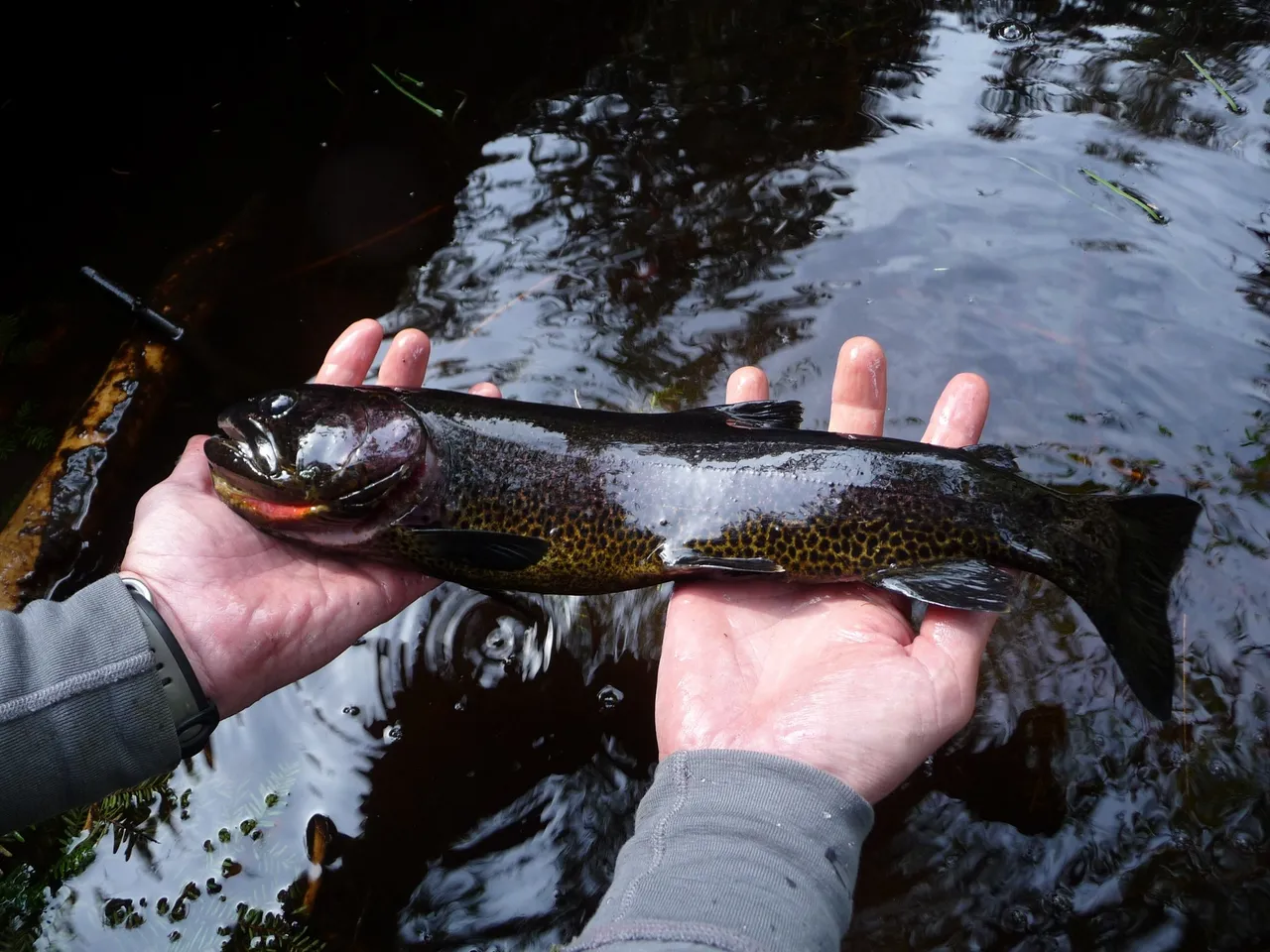
How this was identified, and who took it
Identified by: The character the species is named for is unmistakable here: a bright red-orange slash along the underside of the lower jaw on the near side. Supported by heavy dark spotting concentrated over the rear flank and caudal peduncle, an olive-gold ground and a well-developed adipose fin. Six agreeing identifications, none disagreeing.Bruce Deagle — CC BY, via iNaturalist — source, licenceWhat is known about how it feeds
The cutthroat is a species that exists as a set of subspecies in separate drainages, and the diet is best read as a common strategy expressed in very different waters.
The verified relationship is aquatic insect larvae at group level, and in the cold, clear western streams that hold most cutthroat populations that is the staple: mayfly and stonefly nymphs, caddis larvae, and the terrestrial insects that fall in from the bank during summer.
The drift economics applies as it does to any stream salmonid. What separates cutthroat in practice is a reputation for taking surface food more readily than the trout they share water with, which is consistently reported and is not something FishingHQ can point to controlled work on.
Some populations diverge substantially. Lake-dwelling cutthroat become piscivorous where forage is available, and the sea-run coastal form feeds in estuaries and nearshore water on crustaceans and small fish before returning.
The conservation dimension is unavoidable on this page. Several cutthroat subspecies are threatened, principally by hybridisation with introduced rainbow trout and by competition with introduced brown and brook trout — which means the animal's principal problem is other fish that eat the same things it does.
That makes the diet a conservation subject rather than only an angling one.
The food
Prey with a verified dietary link to this fish. Each entry carries its own evidence, and each is written at the precision the source actually used: a named species where the source named one, a group or food category where it said “polychaetes”, “crustaceans” or “detritus” and meant it. That is why this list is shorter than the animal’s real diet rather than longer.
- Aquatic insect larvae as prey — a group rather than a species: the evidence names the group
Cutthroat feed principally on aquatic insect larvae in the streams that hold them, with terrestrial insects and small fish supplementing seasonally.
Food with no page of its own here yet
These are real components of the diet, listed as plain text because FishingHQ has no page for them yet. Inventing pages to make the list look fuller would be the fabrication this whole approach exists to prevent.
- terrestrial insects
- small fish, in lake populations
- fish eggs
- freshwater shrimp
- crustaceans, in sea-run coastal fish
What anglers do with this
Everything below is interpretation, not finding. It is what experienced anglers conclude from the biology above, and the reasoning is usually sound and almost never tested. It is separated from the biology deliberately.
The reported willingness to take surface food is the basis of the species' reputation among fly anglers, and it is practitioner consensus of long standing rather than a demonstrated difference.
The drift reasoning converts into the same stream tactics used for any holding salmonid.
The conservation position is the part that is not interpretation. Several subspecies are protected, catch-and-release is mandatory on many waters, and biosecurity measures against the spread of introduced competitors are enforced in a number of drainages. What applies where you are fishing is a question for the relevant authority.
What this does not establish
One group-level relationship for a species that exists as multiple subspecies in isolated drainages with quite different food webs, plus lake and sea-run forms not described here. Nothing establishes proportions, and diet in any particular drainage may differ substantially from this account.
Where this connects
These are the baits, lures, methods and explainers FishingHQ already joins to this fish — which is why the list is sometimes short. They are not chosen for this page, and a link here means an evidenced relationship exists, not that it follows from the diet.
Methods used for it
This page covers feeding. The Cutthroat trout record covers identification, lifecycle, seasonal behaviour, handling and the sources behind all of it.
Reviewed 2026-08-12.