Shellfish biotoxins, algal blooms and the closure system
Explainer · Last reviewed 2026-08-15
Filter feeders concentrate toxins produced by algae. The toxins are invisible, tasteless and survive cooking, and the only usable answer to 'is this bed safe' is the competent authority's current determination.
Safety: injury while handling fish — can cause serious injury or death.
This is the one area of catch-to-table where the right advice is to go and ask somebody else, and where explaining why is more useful than description.
THE MECHANISM. Certain microscopic algae produce potent toxins. Bivalves — mussels, oysters, clams, cockles, scallops — feed by filtering enormous volumes of water and concentrate whatever is in it. The animal is unharmed, the toxin accumulates in its tissue, and a bed sitting in a bloom becomes hazardous without changing in any way a person can detect.
AND IT CANNOT BE DETECTED. The FDA puts it as plainly as a regulatory document ever does: natural toxins are odourless, tasteless, colourless and stable to temperature, and "cannot be reliably eliminated through cooking or freezing." Every folk test fails — no smell, no discoloration, no bitter taste, no silver spoon, and no rule about months with an R in them predicts a bloom.
THE TOXINS DO NOT CLEAR QUICKLY. Most bivalves eliminate toxin "within weeks", but others — butter clams, sea scallops, Atlantic surfclams — "have been known to retain high levels of toxins for months to more than five years." A bloom that visibly ended last month has not necessarily ended in the animals.
PREDATORY SHELLFISH CAN BE WORSE THAN THE FILTER FEEDERS. Whelks, conch, moon snails and other predatory gastropods eat toxic bivalves and accumulate toxin at concentrations that "exceed the levels found in the bivalves", and they clear it more slowly.
AND THIS IS NOT THE ONLY CONTAMINATION QUESTION. Filter feeders concentrate sewage-derived pathogens by the same mechanism, which is why bed classification turns on faecal indicator bacteria as well as biotoxins, and why beds near outfalls and after heavy rain are treated differently.
SO THERE IS A SYSTEM, AND IT IS THE ANSWER. Classified production areas are monitored for biotoxins and phytoplankton, closed when results exceed safe limits and reopened when they fall. In England, Northern Ireland and Wales the Food Standards Agency administers this; Scotland is separate, and every other country has its own competent authority.
HOW OFTEN DOES IT CHANGE? Often enough to settle the argument. The FSA's biotoxin monitoring page was read on 15 August 2026 and carried an update dated two days earlier, naming individual production areas as they closed and reopened. That is why FishingHQ will never tell you a bed is safe: any static page making that claim is wrong within the week.
WHAT THIS MEANS FOR SOMEBODY WITH A BUCKET. The classification system governs commercial harvesting, and recreational gathering sits in a different and more variable position country to country — sometimes covered by the same closures, sometimes by separate public health notices, sometimes by local byelaw. Whether you may gather here today is a question for the local authority, the food safety agency and the fisheries authority for that coast. Nobody publishing a website knows the answer for your beach this morning.
Ciguatera: the one that has no harvest-area system at all
Ciguatera is the tropical and subtropical reef version of the same problem and it is handled completely differently, because the control that works for mussels does not work for it.
The toxin originates in microalgae living on reef surfaces, enters the food chain through grazing fish, and concentrates upwards into large predators. It accumulates in the animal over its life, so the biggest fish of a species on a given reef is the most likely to carry it — and the toxin is heat-stable and undetectable by any of the usual means.
What makes it structurally different is that it is not a bloom passing through a monitored area. The FDA's position is explicit: "a harvest water management system similar to the molluscan shellfish system is not an appropriate control measure", and the guidance levels that exist are used to confirm ciguatera as the cause of an outbreak after the fact rather than to clear fish beforehand.
So the practical control is local knowledge and local advisories: which reefs, which species and which sizes have caused illness in that place. Barracuda, large groupers, some snappers, amberjacks and moray eels are commonly implicated, and the list varies by region. Anybody fishing an unfamiliar tropical coast should ask locally rather than reason from a general species list — this is one of the clearest cases in fishing where the people who live there know something no reference work does.
Official guidance — why, and the sources (1)
Stated by a fisheries authority, scientific institute or recognised angling body. Authoritative, but summarising rather than demonstrating.
- Fish and Fishery Products Hazards and Controls Guidance — US Food and Drug Administration, Center for Food Safety and Applied Nutrition, 2022 (Standards body)Relied on for: Hazards and controls for fish and fishery products: scombrotoxin (histamine) formation, seafood parasites and the conditions that kill them, and natural toxins including their stability to cooking and freezing.States this directlyPassage read and verified
Why the viscera keep coming up
A pattern runs through the whole natural-toxin chapter: the toxin is concentrated in the digestive organs rather than distributed evenly through the animal, and removing them removes much of the hazard.
The FDA records that removal and destruction of the viscera "may eliminate the hazard, and at times is required by state public health authorities", giving eviscerating fish and taking only the adductor muscle from a scallop as examples. It also records the two-way nature of that: the shucked adductor muscle of a scallop is treated as reasonably free of natural toxins, while the whole animal is not.
This is the reason the crustacean page treats the brown meat and tomalley of crabs and lobsters as a separate question from the white meat, and why several jurisdictions publish advice about the two differently. It is not squeamishness about offal; it is where the toxin is.
It is also a control with a limit that must be stated: it applies to the toxins the guidance describes as concentrating in viscera. It is not a general decontamination step, and it does nothing whatever for a bivalve, which has no separable viscera worth speaking of.
Official guidance — why, and the sources (1)
Stated by a fisheries authority, scientific institute or recognised angling body. Authoritative, but summarising rather than demonstrating.
- Fish and Fishery Products Hazards and Controls Guidance — US Food and Drug Administration, Center for Food Safety and Applied Nutrition, 2022 (Standards body)Relied on for: Hazards and controls for fish and fishery products: scombrotoxin (histamine) formation, seafood parasites and the conditions that kill them, and natural toxins including their stability to cooking and freezing.States this directlyPassage read and verified
Where the rules come into it
Shellfish gathering is governed by an official classification and closure regime, and recreational gathering sits differently in every jurisdiction. Closures change continually — the monitoring page consulted for this page had been updated two days before it was read. Whether you may gather here today is a question for the food safety agency, the local authority and the fisheries authority for that coast, and for nobody else.
Official guidance — why, and the sources
Stated by a fisheries authority, scientific institute or recognised angling body. Authoritative, but summarising rather than demonstrating.
Safety
Injury while handling fish — Can cause serious injury or death
Filter-feeding shellfish concentrate algal biotoxins from the water and predatory shellfish concentrate them further from their prey. The toxins are odourless, colourless, tasteless and heat-stable, so neither inspection nor cooking identifies or removes them, and some species retain them for months or years after a bloom has passed.
What reduces it: Do not gather bivalves or predatory gastropods without checking the current status of that area with the food safety authority, the local authority and the fisheries authority for that coast. Treat any historical or static information — including this page — as incapable of telling you whether a bed is safe today. Anybody who becomes unwell after eating shellfish should seek medical help urgently and report it.
Worse when:
- During or after a visible algal bloom, and for an unpredictable period afterwards
- Predatory gastropods such as whelks, which accumulate above the levels in their prey
- Species known to retain toxins for long periods
- Beds near sewage outfalls or after heavy rainfall, where the contamination question is a different one
Check the rules before you fish
Fishing laws, bylaws, access rules, seasons, bait restrictions and permitted methods vary by location and can change. Check the current rules from the relevant authority and the water you intend to fish before fishing.
Check with:
- Current national or regional law for where you are fishing
- Current local bylaws
- The relevant fisheries authority
- The landowner, club or fishery whose water it is
- Any restrictions specific to the species or the method you intend to use
Where to go next
Fish this applies to
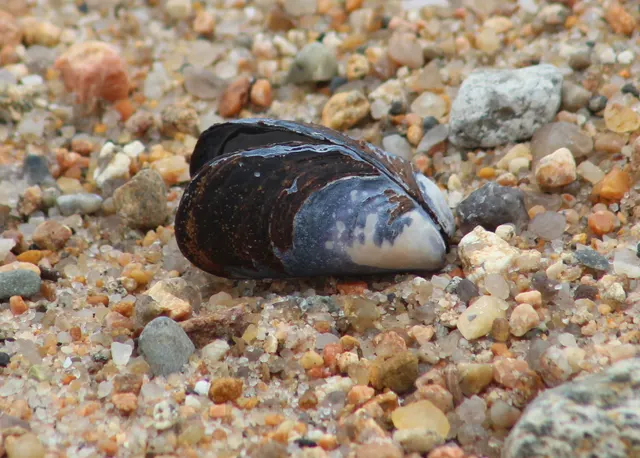 Blue musselThe filter feeder the whole closure system exists for. A mussel concentrates whatever is in the water it filters, and does so without changing in any way a person can detect.
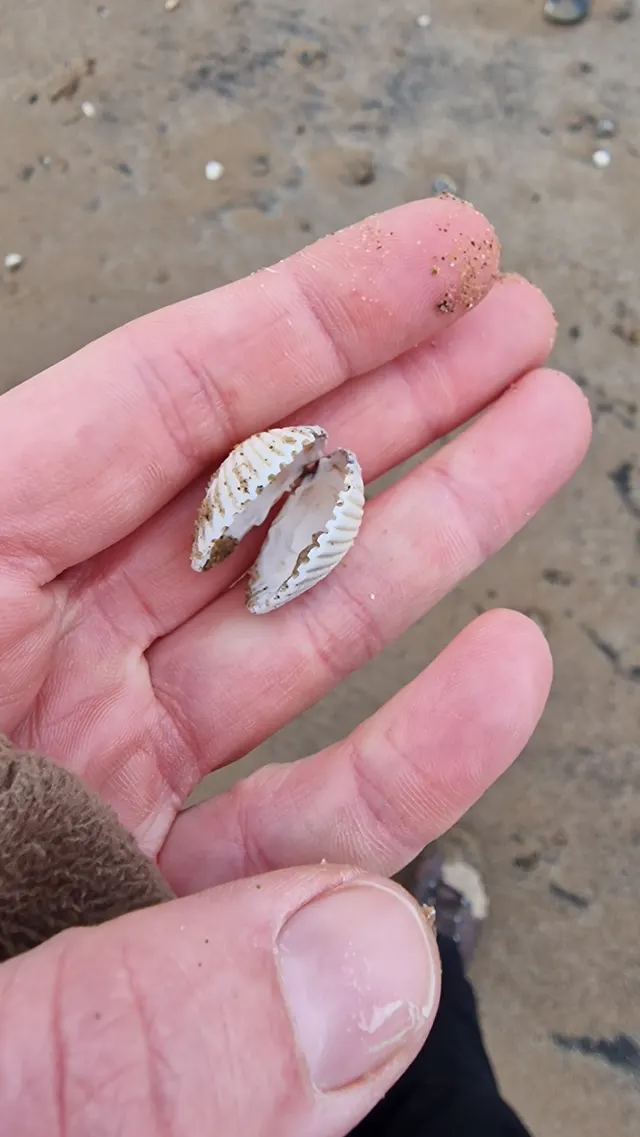 Common cockleGathered recreationally more than almost any other shellfish in Britain and Ireland, from exactly the intertidal flats where closures are declared.
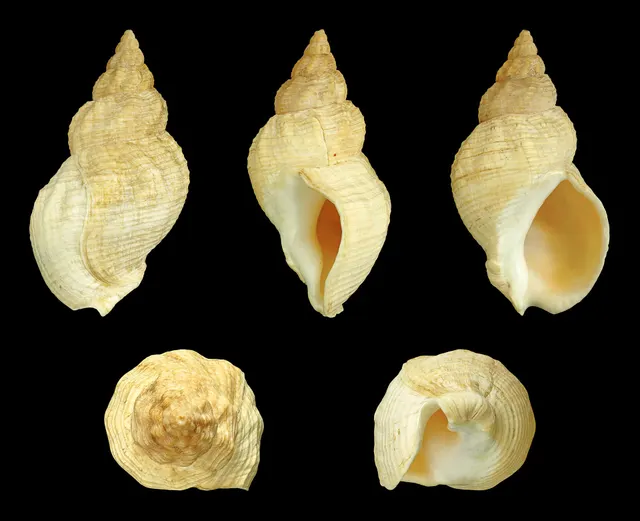 Common whelkA predatory gastropod, which the guidance treats as a worse case than the bivalves it eats: whelks accumulate paralytic shellfish toxins at concentrations exceeding those in their prey, and clear them more slowly.
- King scallopHarvesting areas are opened and closed on monitoring results a gatherer cannot see, which is the fact the whole activity depends on.
Related reading
- Gathering shellfish, and the hazard that cooking does not removeThe gathering record covers what a person does on the shore; this one covers the official system that decides whether they should be doing it there today, and why no static page can answer that.
- Handling crabs and lobsters: alive, and then notThe viscera question. Paralytic shellfish toxins have been recorded in the viscera of lobster and several crabs, which is why brown meat and white meat are treated separately in official consumption advice.
How this compares
Rules and access
Sources and evidence
- Fish and Fishery Products Hazards and Controls Guidance — US Food and Drug Administration, Center for Food Safety and Applied Nutrition, 2022 (Standards body)Relied on for: Hazards and controls for fish and fishery products: scombrotoxin (histamine) formation, seafood parasites and the conditions that kill them, and natural toxins including their stability to cooking and freezing.States this directlyPassage read and verified
- Biotoxin and phytoplankton monitoring — Food Standards Agency, 2026 (Government fisheries body)Relied on for: The existence and operation of official biotoxin and phytoplankton monitoring of classified shellfish production areas, and the fact that closures are added and lifted continually.States this directlyPassage read and verified
- Shellfish classification — Food Standards Agency, 2026 (Government fisheries body)Relied on for: The existence of a statutory classification regime for shellfish production areas and the body that administers it.States this directlyCitation checked — the work exists and is described correctly
Why the 8 connections on this page are here, and the sources
Fish this applies to
Official guidance — 3 connections
Stated by a fisheries authority, scientific institute or recognised angling body. Authoritative, but summarising rather than demonstrating.
Blue mussel
A claim that a bivalve accumulates algal biotoxins by filter feeding, which is the mechanism the FDA natural-toxins chapter sets out.
- Fish and Fishery Products Hazards and Controls Guidance — US Food and Drug Administration, Center for Food Safety and Applied Nutrition, 2022 (Standards body)Relied on for: Hazards and controls for fish and fishery products: scombrotoxin formation and the species groups associated with it, seafood parasites, and natural toxins.States this directlyPassage read and verified
Common cockle
A claim that a bivalve accumulates algal biotoxins by filter feeding, per the FDA natural-toxins chapter.
- Fish and Fishery Products Hazards and Controls Guidance — US Food and Drug Administration, Center for Food Safety and Applied Nutrition, 2022 (Standards body)Relied on for: Hazards and controls for fish and fishery products: scombrotoxin formation and the species groups associated with it, seafood parasites, and natural toxins.States this directlyPassage read and verified
Common whelk
A claim that predatory gastropods accumulate toxin above the level in the bivalves they consume, which the FDA natural-toxins chapter states directly.
- Fish and Fishery Products Hazards and Controls Guidance — US Food and Drug Administration, Center for Food Safety and Applied Nutrition, 2022 (Standards body)Relied on for: Hazards and controls for fish and fishery products: scombrotoxin formation and the species groups associated with it, seafood parasites, and natural toxins.States this directlyPassage read and verified
What experienced anglers do — 1 connection
Widely and independently recommended by experienced anglers and specialist sources. This is real angling knowledge, not proof: controlled evidence for it is limited, and FishingHQ records it as convention rather than as a demonstrated effect.
King scallop
An explainer that carries the mechanism the subject record depends on.
- Shellfish classification — Food Standards Agency, 2026 (Government fisheries body)Relied on for: The classification of shellfish harvesting areas, the monitoring behind it, and the biotoxin and microbiological risks that make gathered bivalves a food-safety matter.States this directlyCitation checked — the work exists and is described correctly
- Cefas science, advice and data on marine and freshwater environments — Centre for Environment, Fisheries and Aquaculture Science (Government fisheries body)Relied on for: UK biotoxin surveillance and shellfish monitoring.States this directlyCitation checked — the work exists and is described correctly
Related reading
Official guidance — 2 connections
Stated by a fisheries authority, scientific institute or recognised angling body. Authoritative, but summarising rather than demonstrating.
Gathering shellfish, and the hazard that cooking does not remove
A link from the practice record to the regulatory and monitoring structure that governs it.
- Fish and Fishery Products Hazards and Controls Guidance — US Food and Drug Administration, Center for Food Safety and Applied Nutrition, 2022 (Standards body)Relied on for: Hazards and controls for fish and fishery products: scombrotoxin formation and the species groups associated with it, seafood parasites, and natural toxins.States this directlyPassage read and verified
Handling crabs and lobsters: alive, and then not
A link resting on the natural-toxins chapter's record of PSP in crustacean viscera and on the resulting separation of viscera from muscle in official advice.
- Fish and Fishery Products Hazards and Controls Guidance — US Food and Drug Administration, Center for Food Safety and Applied Nutrition, 2022 (Standards body)Relied on for: Hazards and controls for fish and fishery products: scombrotoxin formation and the species groups associated with it, seafood parasites, and natural toxins.States this directlyPassage read and verified
How this compares
What experienced anglers do — 1 connection
Widely and independently recommended by experienced anglers and specialist sources. This is real angling knowledge, not proof: controlled evidence for it is limited, and FishingHQ records it as convention rather than as a demonstrated effect.
Parasites in fish, and what freezing actually does about them
A navigational claim that a reader on one of these pages is likely to want the other. It asserts adjacency of subject matter rather than a fact about the world.
- Sea Angler — Bauer Media (Specialist angling publication)Relied on for: Contemporary UK and European sea angling practice as reported by practitioners, including catch handling convention.States this directlyCitation checked — the work exists and is described correctly
- General angling website restatements of established technique — Various (Credible secondary source)Relied on for: Widely restated angling practice, recorded as consensus rather than as scholarship.Background and mechanism onlyCitation checked — the work exists and is described correctly
Rules and access
Official guidance — 1 connection
Stated by a fisheries authority, scientific institute or recognised angling body. Authoritative, but summarising rather than demonstrating.
Taking crabs, lobsters, squid and shellfish: how the rules are structured
This points to the kind of rule that applies rather than to a rule itself. The page already carries the notice that requirements vary; this says WHICH rules bear on it, which turns a generic warning into a route to the body that sets them.
- Shellfish classification — Food Standards Agency, 2026 (Government fisheries body)Relied on for: That shellfish harvesting areas are classified for food safety, that the classification governs what may be taken and how it must be treated, and that it is set and revised on monitoring results rather than fixed.States this directlyCitation checked — the work exists and is described correctly
- Biotoxin and phytoplankton monitoring — Food Standards Agency, 2026 (Government fisheries body)Relied on for: The monitoring programme behind biotoxin closures, and that closures are imposed and lifted on results a gatherer cannot observe.States this directlyPassage read and verified
How FishingHQ labels evidence is explained in the evidence policy.