Krill and planktonic crustaceans as prey
Explainer · Last reviewed 2026-08-11
Krill, copepods and the other small drifting crustaceans that convert plankton into fish food, and that many shoaling predators feed on directly.
Background, not a fishing profile
This page is here so FishingHQ can describe a biological relationship accurately — usually because a fish covered elsewhere on the site feeds on this. It covers what it is, where it lives and the evidence behind that relationship, and deliberately nothing about methods, bait or tackle. Its presence here is not a statement that anybody fishes for it.
This page covers the small planktonic crustaceans that occupy the step between primary production and fish: euphausiids, which are krill, and calanoid copepods, which are smaller and far more numerous.
They matter to angling because a surprising number of substantial fish eat them directly rather than at one remove. Mackerel filter-feed on copepods and euphausiids through much of the year. Horse mackerel, sardine, sprat and anchovy do the same. Sockeye salmon feed heavily on zooplankton at sea and are the least piscivorous of the Pacific salmon because of it. Basking sharks and several whales do it at a different scale entirely.
The consequence for fishing is that a fish feeding on plankton is not looking for a bait-sized item, which is why plankton-feeding shoals can be visibly present and completely uninterested in a lure.
The scope is the order Euphausiacea together with the planktonic copepods. It does not cover benthic crustaceans, which are covered elsewhere, nor larval stages of decapods, which are frequently reported separately in diet studies.
Where to go next
Fish this applies to
- Atlantic horse mackerelHorse mackerel feed on planktonic crustaceans through much of the year, taking small fish as they grow, which is the same ontogenetic shift mackerel make.
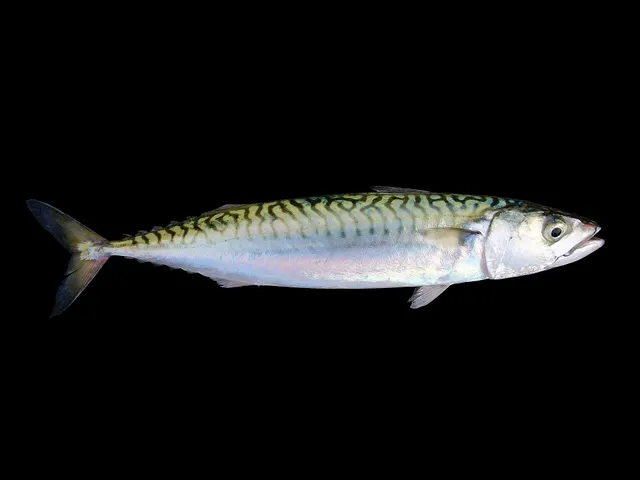 Atlantic mackerelFor much of the year mackerel filter-feed on planktonic crustaceans, which is why shoals can be visibly present at the surface and completely uninterested in anything bait-sized.
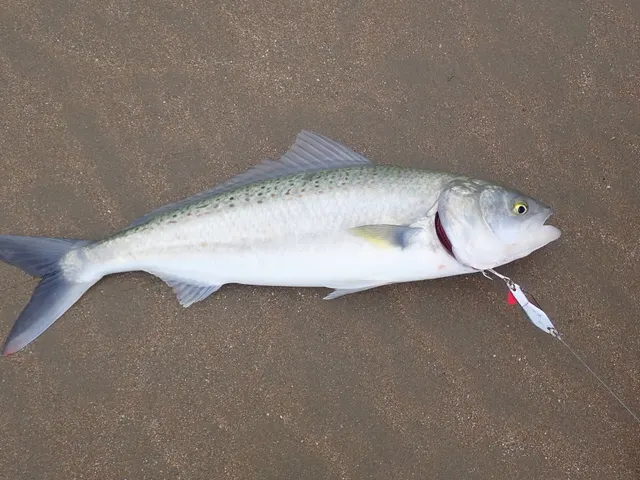 KahawaiKahawai feed on krill and other planktonic crustaceans as well as small fish, and the surface workups they form are frequently krill-driven rather than baitfish-driven.
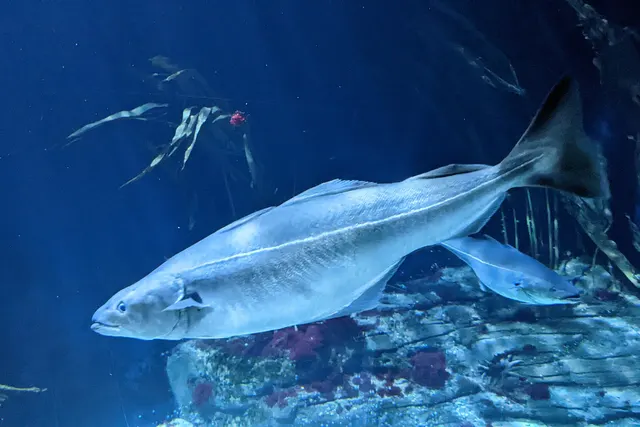 SaitheSmaller saithe feed heavily on planktonic crustaceans before becoming piscivorous, which is why juvenile and adult saithe are found in different places doing different things.
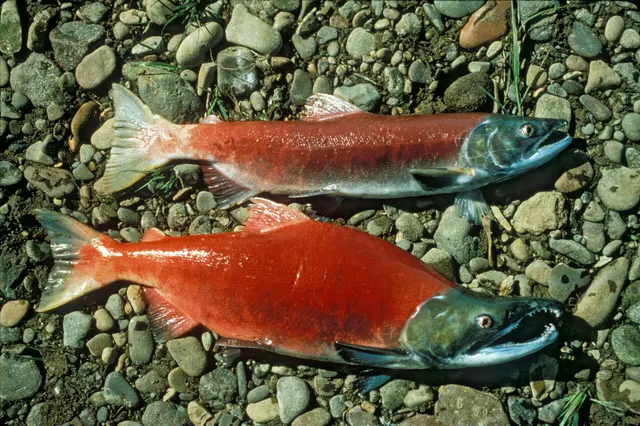 Sockeye salmonSockeye are the least piscivorous of the Pacific salmon and feed principally on zooplankton at sea, which is why their flesh colour comes from a crustacean diet.
- VendaceA specialist plankton feeder, taking copepods and cladocerans from open water with closely-spaced gill rakers. Recorded at FUNCTIONAL GROUP level rather than at species: the prey record covers planktonic crustaceans as a feeding category, and a vendace's diet shifts between copepod and cladoceran taxa with season and lake in a way no single species edge could state honestly. The diet is why the fish lives in the middle of the lake rather than along its edge.
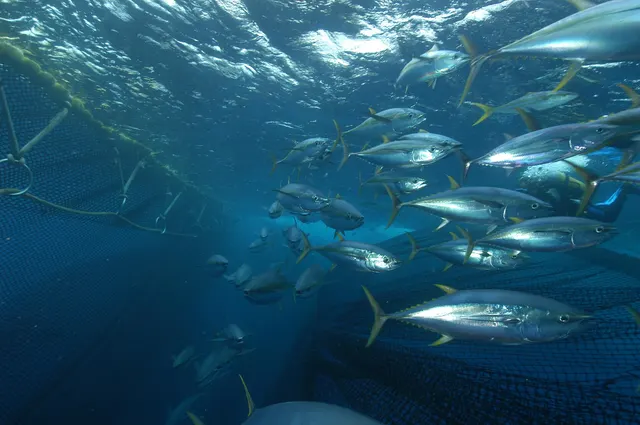 Yellowfin tunaCrustaceans form a measurable part of the diet, and yellowfin feeding on small crustacean swarms are notoriously difficult to interest in a lure.
Sources and evidence
- FishBase: a global information system on fishes — Froese, R. and D. Pauly, eds. — FishBase Consortium (Scientific institute)Relied on for: Recorded food items for the predatory species this taxon is cited as prey for, at the granularity the database records them.States this directlyPassage read and verified
- FAO Species Identification Guides for Fishery Purposes and the FAO Species Catalogues — Food and Agriculture Organization of the United Nations (Scientific institute)Relied on for: Species and family accounts describing food items, given at family or functional-group level where that is what the account states.States this directlyCitation checked — the work exists and is described correctly
Why the 7 connections on this page are here, and the sources
Fish this applies to
Backed by research — 7 connections
Supported by peer-reviewed research or fisheries science. The sources are listed and can be checked.
Atlantic horse mackerel
Recorded diet evidence identifies euphausiids and planktonic crustaceans as a food item of this predator at group level rather than to species. The edge points at the taxon record for that reason, and encoding it as a species-level claim would assert something the source does not.
- FishBase: a global information system on fishes — Froese, R. and D. Pauly, eds. — FishBase Consortium (Scientific institute)Relied on for: Food items recorded for this predator, given as euphausiids and planktonic crustaceans.States this directlyPassage read and verified
- FAO Species Identification Guides for Fishery Purposes and the FAO Species Catalogues — Food and Agriculture Organization of the United Nations (Scientific institute)Relied on for: Species account describing this predator's diet, recorded at the level of euphausiids and planktonic crustaceans.Background and mechanism onlyCitation checked — the work exists and is described correctly
Atlantic mackerel
Recorded diet evidence identifies calanoid copepods and euphausiids as a food item of this predator at group level rather than to species. The edge points at the taxon record for that reason, and encoding it as a species-level claim would assert something the source does not.
- FishBase: a global information system on fishes — Froese, R. and D. Pauly, eds. — FishBase Consortium (Scientific institute)Relied on for: Food items recorded for this predator, given as calanoid copepods and euphausiids.States this directlyPassage read and verified
- FAO Species Identification Guides for Fishery Purposes and the FAO Species Catalogues — Food and Agriculture Organization of the United Nations (Scientific institute)Relied on for: Species account describing this predator's diet, recorded at the level of calanoid copepods and euphausiids.Background and mechanism onlyCitation checked — the work exists and is described correctly
Kahawai
Recorded diet evidence identifies euphausiids and planktonic crustaceans as a food item of this predator at group level rather than to species. The edge points at the taxon record for that reason, and encoding it as a species-level claim would assert something the source does not.
- FishBase: a global information system on fishes — Froese, R. and D. Pauly, eds. — FishBase Consortium (Scientific institute)Relied on for: Food items recorded for this predator, given as euphausiids and planktonic crustaceans.States this directlyPassage read and verified
- FAO Species Identification Guides for Fishery Purposes and the FAO Species Catalogues — Food and Agriculture Organization of the United Nations (Scientific institute)Relied on for: Species account describing this predator's diet, recorded at the level of euphausiids and planktonic crustaceans.Background and mechanism onlyCitation checked — the work exists and is described correctly
Saithe
Recorded diet evidence identifies euphausiids and planktonic crustaceans as a food item of this predator at group level rather than to species. The edge points at the taxon record for that reason, and encoding it as a species-level claim would assert something the source does not.
- FishBase: a global information system on fishes — Froese, R. and D. Pauly, eds. — FishBase Consortium (Scientific institute)Relied on for: Food items recorded for this predator, given as euphausiids and planktonic crustaceans.States this directlyPassage read and verified
- FAO Species Identification Guides for Fishery Purposes and the FAO Species Catalogues — Food and Agriculture Organization of the United Nations (Scientific institute)Relied on for: Species account describing this predator's diet, recorded at the level of euphausiids and planktonic crustaceans.Background and mechanism onlyCitation checked — the work exists and is described correctly
Sockeye salmon
Recorded diet evidence identifies euphausiids and copepods as a food item of this predator at group level rather than to species. The edge points at the taxon record for that reason, and encoding it as a species-level claim would assert something the source does not.
- FishBase: a global information system on fishes — Froese, R. and D. Pauly, eds. — FishBase Consortium (Scientific institute)Relied on for: Food items recorded for this predator, given as euphausiids and copepods.States this directlyPassage read and verified
- FAO Species Identification Guides for Fishery Purposes and the FAO Species Catalogues — Food and Agriculture Organization of the United Nations (Scientific institute)Relied on for: Species account describing this predator's diet, recorded at the level of euphausiids and copepods.Background and mechanism onlyCitation checked — the work exists and is described correctly
Vendace
A dietary claim recorded at FUNCTIONAL GROUP level rather than at species level: the object is a prey-taxon record covering planktonic crustaceans as a feeding category, and the specific copepod and cladoceran taxa taken shift with season and with lake. It rests on the biological literature rather than on stomach contents anybody here examined.
- Freshwater Fishes of the British Isles — HarperCollins (New Naturalist 75), 1992 (Reference work)Relied on for: Distribution, habitat association, identification and life history of the freshwater fishes of the British Isles.States this directlyCitation checked — the work exists and is described correctly
- FishBase: a global information system on fishes — Froese, R. and D. Pauly, eds. — FishBase Consortium (Scientific institute)Relied on for: Distribution, habitat association, depth range, diet and reproductive parameters recorded for the species.States this directlyPassage read and verified
Yellowfin tuna
Recorded diet evidence identifies euphausiids and other planktonic crustaceans as a food item of this predator at group level rather than to species. The edge points at the taxon record for that reason, and encoding it as a species-level claim would assert something the source does not.
- FishBase: a global information system on fishes — Froese, R. and D. Pauly, eds. — FishBase Consortium (Scientific institute)Relied on for: Food items recorded for this predator, given as euphausiids and other planktonic crustaceans.States this directlyPassage read and verified
- FAO Species Identification Guides for Fishery Purposes and the FAO Species Catalogues — Food and Agriculture Organization of the United Nations (Scientific institute)Relied on for: Species account describing this predator's diet, recorded at the level of euphausiids and other planktonic crustaceans.Background and mechanism onlyCitation checked — the work exists and is described correctly
How FishingHQ labels evidence is explained in the evidence policy.